
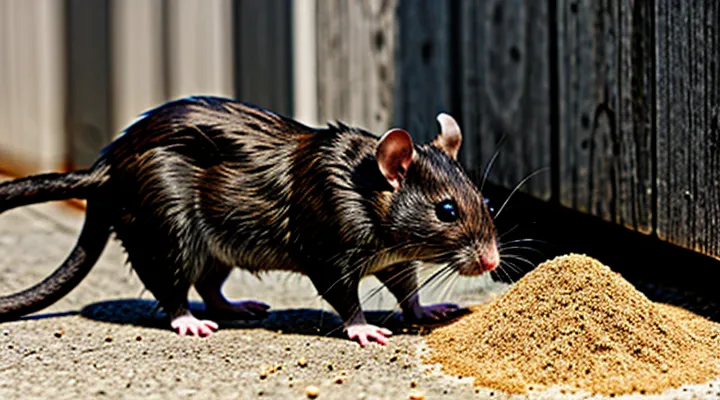
Understanding Rat Nutrition
Why Granular Food Matters
Essential Nutrients for Rats
Essential nutrients form the foundation of rat nutrition, especially when provided through granular feed. Proper formulation ensures growth, reproduction, immune competence, and longevity.
- Protein: 18–22 % of diet; source of amino acids for tissue repair and enzyme synthesis.
- Fat: 4–6 % of diet; supplies essential fatty acids and concentrates energy.
- Carbohydrate: 45–55 % of diet; delivers readily available glucose for metabolic processes.
- Fiber: 3–5 % of diet; promotes gastrointestinal motility and gut‑microbiota health.
Vitamins and minerals must be present in bioavailable forms and at levels that meet established rodent requirements.
- Vitamins: A, D₃, E, K₁, B₁, B₂, B₆, B₁₂, niacin, pantothenic acid, folic acid, C.
- Minerals: Calcium, phosphorus, magnesium, potassium, sodium, chloride, iron, zinc, copper, manganese, selenium, iodine.
Water intake directly influences nutrient absorption and waste elimination; continuous access to clean water is non‑negotiable.
Balanced ratios prevent deficiencies and excesses. Recommended guidelines specify protein ≈ 20 % of total calories, calcium : phosphorus ≈ 1 : 1, and vitamin/mineral premixes calibrated to the rat’s life stage. Adherence to these parameters maximizes the health benefits of granular diets.
Balanced Diet Requirements
Balanced nutrition for laboratory or pet rats hinges on precise proportions of macronutrients, micronutrients, and physical characteristics of the feed.
- Protein content should range from 14 % to 18 % of the diet, sourced from high‑quality animal or plant proteins to support growth, tissue repair, and immune function.
- Fat levels must stay between 4 % and 6 % to supply essential fatty acids without promoting obesity.
- Fiber, primarily insoluble, should constitute 5 % to 7 % of the formula, facilitating gastrointestinal motility and preventing hindgut fermentation disorders.
- Moisture content of dry granules must not exceed 10 % to preserve shelf life and prevent mold growth; water should be offered separately.
Vitamins and minerals require careful balancing.
- Vitamin A, D3, E, and K must be present in amounts that meet the National Research Council (NRC) recommendations for rodents.
- B‑complex vitamins, especially B12 and riboflavin, support metabolic pathways and neurological health.
- Calcium and phosphorus should maintain a ratio close to 1.2 : 1 to ensure proper bone development and prevent renal calcification.
- Trace elements such as zinc, copper, manganese, and selenium are essential in micro‑quantities; excesses can be toxic.
Physical attributes of granules influence intake and health.
- Particle size between 2 mm and 4 mm encourages natural gnawing behavior and reduces the risk of dental malocclusion.
- Uniform shape and hardness prevent selective feeding, ensuring each rat consumes the full nutrient spectrum.
Feeding schedules affect metabolic stability.
- Provide measured portions twice daily to align with the rat’s nocturnal activity pattern and to avoid overconsumption.
- Monitor body condition regularly; adjust rations if weight deviates more than 5 % from target.
Overall, a balanced diet for rats that utilizes granular feed must integrate accurate nutrient percentages, appropriate mineral ratios, controlled moisture, suitable particle characteristics, and consistent feeding routines. This framework maximizes health outcomes, supports reproductive performance, and sustains the physiological benefits associated with granular nutrition.
Key Advantages of Granular Rat Food
Nutritional Completeness
Preventing Selective Eating
Granular diets encourage uniform consumption because the small, uniformly sized particles reduce the visual and tactile cues that lead rats to favor preferred pieces. When each bite offers similar texture and size, the animal is less likely to discriminate based on shape or color, resulting in a more balanced intake of nutrients.
Key practices for minimizing selective eating include:
- Mixing batches thoroughly before presentation to eliminate clusters of larger or differently colored granules.
- Rotating the source of granules weekly to prevent habituation to a single batch’s subtle flavor variations.
- Providing the feed in shallow, wide dishes that limit the ability of rats to isolate preferred sections.
- Supplementing the diet with occasional micronutrient‑rich pellets to ensure that any residual preferences do not create deficiencies.
Research indicates that rats offered consistently blended granular feed exhibit steadier weight gain and fewer deficiencies compared with those receiving irregularly sized or visually distinct pieces. By standardizing particle dimensions and presentation, caretakers can maintain nutritional equilibrium without relying on corrective measures after selective consumption has occurred.
Consistent Nutrient Intake
Consistent nutrient intake is critical for maintaining optimal health, growth, and reproductive performance in laboratory and pet rats. When rats receive a steady supply of essential vitamins, minerals, and macronutrients, metabolic processes operate within expected ranges, reducing the risk of deficiencies and associated disorders.
Granular feed delivers nutrients in a uniform particle size that promotes even consumption throughout the day. The physical structure limits selective eating, ensuring that each bite contains a balanced proportion of the formulated diet. This reduces the likelihood of nutrient gaps that can arise with mixed or mash feeds where animals may favor preferred components.
Key outcomes of reliable nutrient delivery through granular formulations include:
- Stable body weight and lean tissue development
- Predictable feed conversion ratios, facilitating accurate experimental dosing
- Enhanced immune function, reflected in lower incidence of opportunistic infections
- Consistent breeding cycles, with improved litter size and pup viability
- Reduced variability in physiological studies, improving data reliability
By providing a predictable nutrient profile, granular diets support both scientific research objectives and the welfare of companion rats.
Dental Health Benefits
Aiding in Teeth Wear
Granular diets provide a consistent abrasive surface that encourages continuous gnawing, which naturally trims rat incisors. The coarse particles stimulate the mandibular muscles, promoting regular tooth shortening and preventing overgrowth.
Key effects on dental wear include:
- Uniform abrasion across the cutting edge, reducing uneven spikes.
- Increased chewing frequency, which accelerates enamel removal at a controlled rate.
- Enhanced saliva production, aiding in mineral balance and reducing plaque buildup on worn surfaces.
By incorporating suitably sized, hard-textured granules, caretakers can ensure that rats maintain optimal incisor length, lower the risk of dental malocclusion, and experience fewer related health complications.
Reducing Dental Issues
Granular diets provide continuous abrasion that naturally wears down rat incisors, preventing overgrowth and associated pain. The coarse texture encourages gnawing behavior, which maintains a balanced tooth length without the need for manual trimming.
- Consistent mechanical wear reduces the frequency of malocclusion.
- Lower incidence of oral lesions results from smoother enamel edges.
- Improved chewing efficiency supports better nutrient intake and digestion.
- Reduced veterinary interventions lower overall care costs.
By integrating a high‑fiber, pellet‑based regimen, owners can rely on the diet’s intrinsic properties to sustain dental health and minimize complications.
Hygiene and Storage
Ease of Handling
Granular feed for laboratory rats streamlines daily operations. The uniform particle size permits precise weighing, reducing preparation time and minimizing waste. Dry texture prevents clumping, allowing straightforward storage in sealed containers and easy dispensing from bulk bins or automated feeders. Cleanup is simplified because residues are limited to small, dry fragments that can be swept or vacuumed without moisture damage.
- Accurate portioning: scales measure exact gram amounts without manual scooping adjustments.
- Efficient inventory management: bulk bins track weight loss accurately, supporting reorder calculations.
- Compatible with automated systems: pellets flow freely through dispensing mechanisms, reducing mechanical jams.
- Minimal contamination risk: dry form limits bacterial growth and eliminates the need for frequent sterilization of wet mixtures.
- Simplified waste handling: dry leftovers are inert, safe for disposal, and do not require special liquid waste protocols.
Reduced Spoilage
Granular feed minimizes moisture retention, which directly slows microbial growth. The dry particle structure limits exposure to air, reducing oxidation and preserving nutritional integrity for longer periods.
Key mechanisms that lower spoilage include:
- Low water activity prevents bacteria and mold proliferation.
- Uniform particle size ensures even distribution of preservatives throughout the batch.
- Compact packaging retains freshness by limiting oxygen ingress.
- Stable formulation resists clumping, avoiding pockets of humidity that accelerate decay.
Extended shelf life translates into lower waste for laboratory facilities and pet owners. Fewer replacements lower operational costs and maintain consistent dietary quality for the animals.
Cost-Effectiveness and Availability
Long-Term Value
Granular diets provide rats with consistent nutrient intake that supports physiological stability over extended periods. The uniform particle size ensures reliable dosing of vitamins, minerals, and protein, reducing the risk of deficiencies that can develop with irregular feeding practices.
Long‑term cost efficiency derives from the low waste rate of dry granules. Their dense composition permits precise portion control, limiting excess consumption and extending the lifespan of each batch. Shelf stability further contributes to savings; moisture‑resistant packaging preserves nutritional value for months, eliminating frequent replenishment.
Research facilities benefit from reproducible results. Standardized feed eliminates variability in experimental subjects, enhancing data reliability across longitudinal studies. The predictable composition also simplifies protocol documentation and regulatory compliance.
Breeding colonies experience improved reproductive performance. Consistent energy provision maintains optimal body condition, supporting higher litter sizes and healthier offspring. The stable diet reduces stress‑related behaviors, fostering a calmer environment that promotes mating success.
Overall, the sustained advantages of a grain‑based feeding regimen encompass health maintenance, economic prudence, experimental consistency, and reproductive efficiency, establishing it as a pragmatic choice for long‑term rat husbandry.
Widely Accessible Options
Granular feed provides rats with balanced nutrition that supports growth, reproduction, and normal behavior. Readily available products simplify the task of meeting these dietary requirements.
- Commercial laboratory chow sold through scientific suppliers. Formulated to meet precise nutrient ratios, packaged in bulk for cost‑effective distribution.
- Pet‑store grain mixes marketed for small rodents. Contain a blend of seeds, cereals, and fortified pellets, suitable for home‑cage environments.
- Bulk grain blends offered by agricultural co‑ops. Allow owners to create custom granule mixtures by adding vitamins and minerals according to established guidelines.
- DIY granule recipes using readily sourced ingredients such as rolled oats, cornmeal, and dried legumes, combined with a premixed vitamin‑mineral supplement.
These options share common advantages: low purchase price, widespread retail presence, long shelf life, and compliance with nutritional standards when properly formulated. Their accessibility reduces the risk of nutrient deficiencies, promotes consistent intake, and facilitates routine feeding schedules across research facilities and private households alike.
Choosing the Right Granular Food
Factors to Consider
Ingredient Quality
High‑quality ingredients are the foundation of effective granular diets for laboratory and pet rats. Precise sourcing guarantees that each component meets established purity standards, eliminating contaminants that could compromise health or experimental outcomes. Consistent nutrient profiles, verified through batch testing, ensure that protein, fiber, vitamins, and minerals remain within the specified ranges required for optimal growth, reproduction, and immune function.
Key aspects of ingredient quality include:
- Certified origin of raw materials, with documentation of supplier compliance.
- Verification of macronutrient composition using accredited analytical methods.
- Absence of mycotoxins, heavy metals, and pesticide residues confirmed by routine screening.
- Stability of vitamins and essential fatty acids during processing and storage.
- Uniform particle size distribution to promote even consumption and digestibility.
Maintaining these standards supports predictable feed intake, reduces variability in physiological data, and enhances overall welfare of the animals.
Brand Reputation
Brand reputation determines the perceived reliability of granular rodent nutrition. A strong reputation signals that the product meets established nutritional standards, reduces the risk of contamination, and delivers consistent particle size and nutrient composition.
Consumers rely on reputation when selecting feed because it correlates with animal health outcomes. Trusted brands are associated with lower mortality rates, stable weight gain, and fewer digestive issues among laboratory and pet rats.
Key elements that shape reputation include:
- Verified ingredient sourcing and traceability.
- Compliance with veterinary and food‑safety regulations.
- Independent laboratory analyses confirming nutrient levels.
- Transparent labeling that lists exact formulation and batch numbers.
- Documented customer feedback and responsive service.
Manufacturers can preserve reputation by implementing:
- Continuous quality‑control cycles covering raw material receipt, processing, and final product testing.
- Third‑party certification audits that validate claims of purity and nutritional adequacy.
- Clear communication channels for reporting concerns and delivering corrective actions promptly.
- Ongoing research collaborations that update formulations according to the latest rodent dietary science.
Rat's Life Stage
Rats experience distinct physiological demands at each developmental phase, and a granulated diet aligns with those requirements. The small particle size ensures consistent intake, reduces choking risk, and facilitates precise nutrient distribution, which is essential for optimal growth and maintenance.
- Neonatal (0–3 weeks): Granular feed provides readily digestible protein and essential fatty acids, supporting rapid tissue formation and immune system maturation. The uniform texture encourages uniform chewing activity, promoting jaw development.
- Weaning (3–6 weeks): Transition to granules supplies balanced vitamins and minerals that sustain skeletal ossification and metabolic stabilization. The controlled portion size helps prevent over‑consumption during this vulnerable period.
- Adult (6 weeks–12 months): Continuous access to granulated food maintains steady energy levels, preserves lean muscle mass, and supports reproductive health. The predictable nutrient profile aids in weight management and reduces the incidence of obesity‑related disorders.
- Senior (12 months+): Softened granules deliver necessary fiber and antioxidants while minimizing dental strain, assisting gastrointestinal motility and mitigating age‑related decline in organ function.
Implementing a granulated feeding regimen across all stages eliminates abrupt dietary shifts, preserves gut microbiota balance, and simplifies nutritional monitoring. Consistent formulation enables caretakers to adjust caloric density without altering feed texture, ensuring that each life stage receives tailored support while maintaining overall health stability.
Avoiding Harmful Ingredients
Common Fillers to Watch Out For
Granular diets for laboratory and pet rats often contain inexpensive bulking agents that dilute nutritional value. These fillers can interfere with digestion, alter gut microbiota, and reduce the efficiency of vitamin and mineral absorption.
- Wheat bran – high fiber content may cause loose stools and hinder nutrient uptake.
- Soy hulls – contain phytates that bind minerals, limiting their bioavailability.
- Corn cobs – low protein, high indigestible cellulose, contributes little to growth.
- Rice hulls – inert material that adds bulk without providing calories or essential amino acids.
- Cellulose powder – synthetic fiber that can impede the absorption of fat‑soluble vitamins.
Manufacturers list these components in the ingredient panel. Identify them by scanning for terms such as “bran,” “hull,” “cob,” “fiber,” or “cellulose.” Choose formulations where the primary components are high‑quality protein sources (e.g., casein, soy protein isolate) and balanced carbohydrate profiles, with filler percentages below 5 % of the total mix.
Avoiding excessive fillers ensures that rats receive a diet that supports optimal growth, reproductive health, and immune function.
Artificial Additives and Dyes
Artificial additives and dyes are common components of commercially produced granular rodent feed. Their primary functions include enhancing shelf stability, improving palatability, and providing visual cues that aid in product identification.
- Preservatives such as BHT or propionic acid inhibit microbial growth, extending the usable life of the feed under typical storage conditions.
- Flavor enhancers, including monosodium glutamate or yeast extracts, increase acceptance rates among laboratory rats, supporting consistent intake during experimental protocols.
- Synthetic dyes, for example tartrazine or erythrosine, serve as batch markers, allowing quick verification of correct formulation without analytical testing.
Regulatory agencies impose maximum residue limits for each additive, ensuring that concentrations remain well below toxic thresholds for rodents. Studies indicate that, when used within approved limits, these substances do not interfere with physiological parameters measured in standard toxicity or nutritional assessments.
Nevertheless, uncontrolled inclusion of non‑approved additives may lead to altered gut microbiota, reduced nutrient absorption, or confounding effects in behavioral experiments. Therefore, manufacturers should disclose additive composition on the label, and researchers should verify compliance with institutional animal care guidelines before integrating the feed into study protocols.
Integrating Granular Food into a Rat's Diet
Transitioning to Granular Food
Gradual Introduction Techniques
Introducing a granular diet to laboratory or pet rats requires a systematic transition to maintain digestive health and encourage acceptance. Sudden changes can cause gastrointestinal upset, reduced feed intake, and stress‑related behaviors, undermining the nutritional advantages of the granules.
Begin the transition by mixing a small proportion of granules with the current feed. A typical starting ratio is 10 % granules to 90 % familiar diet, offered for 2–3 days. Observe consumption patterns; if the rats readily eat the mixture, increase the granule share by 10 % increments every 48 hours. Continue this progression until the diet consists entirely of granules.
Key techniques for a successful rollout include:
- Pre‑soaking: Lightly dampen granules with water or a broth to enhance palatability during the early phases.
- Texture adaptation: Combine granules with a soft substrate (e.g., softened pellets) to ease the shift from mushy to dry textures.
- Scheduled feeding: Provide the mixed ration at consistent times to establish a predictable routine.
- Monitoring: Record daily intake and stool consistency; adjust the increment schedule if signs of indigestion appear.
- Environmental enrichment: Disperse granules within nesting material or toys to stimulate natural foraging behavior and promote acceptance.
Conclude the process with a brief stabilization period of 5–7 days on the full granular diet. During this time, verify that body weight, activity levels, and fecal quality remain within normal ranges. A controlled introduction safeguards health while allowing rats to reap the metabolic and dental benefits associated with granular nutrition.
Monitoring Rat's Acceptance
Monitoring a rat’s acceptance of a granular diet is essential for validating nutritional benefits and ensuring experimental consistency. Acceptance is determined by observable feeding behavior, consumption volume, and physiological responses.
Key indicators include:
- Frequency of visits to the feeding station
- Duration of eating bouts
- Amount of feed consumed per unit time
- Weight gain or loss relative to baseline
- Signs of stress or aversion, such as excessive grooming or avoidance
Quantitative assessment relies on precise measurements. Daily feed weight should be recorded before and after a defined access period, allowing calculation of average intake per animal. Body mass should be measured at consistent intervals (e.g., every 24 hours) to correlate intake with growth. Automated feeders can log timestamps for each access event, providing data on feeding patterns and peak activity periods.
Data management requires systematic entry into a structured spreadsheet or database. Variables must be labeled consistently (e.g., “Intake_g”, “BodyWeight_g”, “VisitCount”). Statistical analysis—such as repeated‑measures ANOVA or mixed‑effects modeling—identifies significant trends and isolates factors influencing acceptance.
Practical recommendations:
- Acclimate rats to the feeding apparatus for at least 48 hours before data collection.
- Offer the granular formulation alongside a familiar control to detect preference shifts.
- Maintain constant environmental conditions (temperature, lighting) to reduce confounding variables.
- Review intake data daily; adjust formulation texture or particle size if persistent low consumption is observed.
Rigorous monitoring of acceptance provides objective evidence that the granular diet supports the intended health outcomes and reinforces the reliability of subsequent experimental findings.
Supplementing the Diet
Appropriate Fresh Foods
Fresh foods enhance a granular diet for laboratory and pet rats by supplying nutrients that pellets lack. Vegetables such as carrots, broccoli, and kale provide vitamins A, C, and K, as well as dietary fiber that promotes gastrointestinal health. Fruits like apples, berries, and melons contribute antioxidants and natural sugars for energy, but should be offered in limited quantities to prevent obesity. Protein‑rich options, including boiled eggs, cooked chicken, and low‑fat cottage cheese, supply essential amino acids and support muscle development.
When integrating fresh items, follow these guidelines:
- Introduce one new food at a time, observing the rat for adverse reactions over 24–48 hours.
- Serve portions no larger than a thumb‑sized piece per rat per day; excess can lead to spoilage and waste.
- Wash produce thoroughly to remove pesticide residues; peel when appropriate.
- Store leftovers in the refrigerator and discard after 24 hours to prevent bacterial growth.
Balanced inclusion of appropriate fresh foods improves coat condition, immune function, and overall activity levels, complementing the consistent nutrient profile of a granular feed.
Occasional Treats and Enrichment
Occasional treats complement a base diet of granular feed by providing sensory variety and reinforcing positive behaviors. Small portions of fruit, vegetable pieces, or specially formulated rodent treats introduce new textures and flavors, encouraging exploratory chewing and preventing monotony.
- Enhanced dental health: occasional soft foods stimulate different chewing motions, promoting balanced wear of incisors.
- Nutrient diversification: treats supply vitamins and minerals that may be limited in a single‑ingredient pellet, supporting overall metabolism.
- Behavioral enrichment: novel foods trigger foraging instincts, reducing boredom‑related stereotypies.
When integrating treats, follow these guidelines to maintain dietary balance:
- Limit treats to 5–10 % of total daily intake to avoid excess calories.
- Choose fresh, low‑sugar items and avoid processed foods with artificial additives.
- Introduce new items gradually, monitoring for digestive upset or allergic reactions.
Strategic use of occasional treats strengthens the nutritional profile of granular feeding programs while fostering natural behaviors and improving welfare outcomes.