
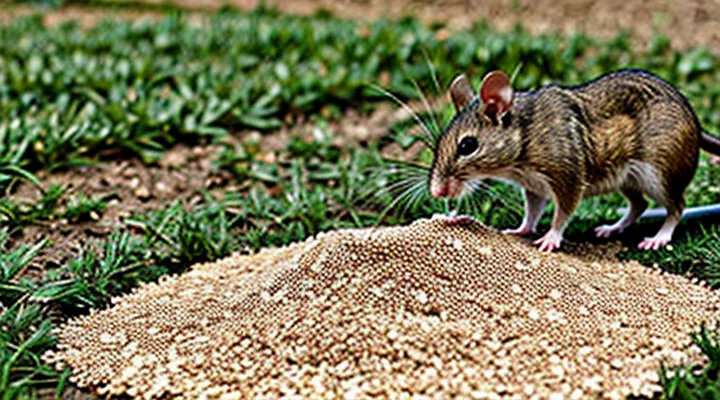
What is Grain Bait?
Active Ingredients in Grain Baits
Grain baits designed for rodent control rely on specific active compounds that attract mice and induce rapid mortality. These substances are selected for their palatability, potency, and low risk to non‑target organisms when used according to label directions.
Common active ingredients include:
- Brodifacoum – a second‑generation anticoagulant that disrupts vitamin K recycling, leading to fatal internal bleeding.
- Diphacinone – a first‑generation anticoagulant with a slower onset, suitable for situations requiring reduced secondary poisoning potential.
- Bromadiolone – a potent anticoagulant offering high efficacy at low concentrations.
- Zinc phosphide – a chemical that reacts with stomach acid to release phosphine gas, causing cellular toxicity.
- Cholecalciferol – a vitamin D₃ derivative that induces hypercalcemia, resulting in organ failure.
Efficacy depends on the bait’s ability to mask the taste of the toxicant while providing a grain matrix that mimics natural food sources. Formulations typically combine the active agent with wheat, barley, or corn to ensure consumption by house mice. Laboratory and field data show mortality rates exceeding 90 % within 48 hours for most anticoagulant baits when intake thresholds are met.
Safety considerations focus on exposure limits for humans, pets, and wildlife. Anticoagulant baits require secure placement to prevent accidental ingestion; secondary poisoning is mitigated by using low‑dose formulations and restricting access to predators. Zinc phosphide and cholecalciferol present distinct hazards: the former releases a volatile gas, while the latter can cause severe calcium imbalance if mishandled. Compliance with regional pesticide regulations and adherence to label instructions are essential to maintain both effectiveness and environmental protection.
How Grain Baits Work
Grain baits rely on a combination of palatable food matrix and a regulated dose of rodenticide. The grain component mimics natural seed sources, triggering the mouse’s foraging response. Once the animal consumes the bait, the toxicant is absorbed through the gastrointestinal tract and enters the bloodstream.
The toxicant typically belongs to the anticoagulant class. It interferes with vitamin K recycling, preventing blood clot formation. As a result, internal bleeding occurs gradually, leading to death within 2–7 days. The delayed onset prevents immediate association between bait consumption and lethal effect, reducing bait aversion among surviving rodents.
Key operational steps:
- Attraction – grain formulation matches the size, texture, and scent of preferred seeds.
- Ingestion – mice readily ingest the bait while foraging.
- Absorption – toxicant dissolves in stomach acids and passes into circulation.
- Physiological disruption – anticoagulant blocks clotting factors, causing internal hemorrhage.
- Outcome – mortality follows after a period sufficient to avoid learned avoidance.
Safety mechanisms include precise dosing to ensure lethal concentration for mice while remaining below toxic thresholds for non‑target species. Bait stations are designed to restrict access to small rodents, limiting exposure for pets and wildlife. Proper placement, monitoring, and replacement according to manufacturer guidelines maintain efficacy and mitigate risk.
Effectiveness of Grain Bait
Factors Influencing Bait Effectiveness
Grain-based mouse bait performs variably according to a set of measurable conditions.
- Nutrient composition – Protein, carbohydrate, and fat ratios determine palatability; formulations with 30‑40 % protein typically achieve higher uptake.
- Particle size – Grains sized between 2 mm and 5 mm align with the natural chewing range of house mice, facilitating rapid ingestion.
- Moisture content – Water activity above 0.70 preserves freshness and odor, while lower levels cause desiccation and reduced attraction.
- Scent intensity – Volatile compounds released from the grain matrix must exceed the detection threshold of 0.5 ppm to trigger foraging behavior.
Placement and environmental factors also shape effectiveness. Positioning bait within 10 cm of known runways, near walls, and away from direct sunlight maximizes contact. Ambient temperature between 20 °C and 30 °C accelerates metabolic activity, increasing bait consumption. High humidity environments (≥60 %) may promote mold growth, diminishing appeal and posing safety concerns.
Behavioral aspects influence outcomes. Seasonal breeding cycles raise food demand, improving acceptance during spring and autumn. Presence of alternative food sources reduces bait interaction; eliminating competing feeds raises capture rates by up to 25 %.
Product integrity throughout storage affects field performance. Exposure to UV light or temperatures above 35 °C degrades active ingredients, shortening shelf life to less than six months. Proper sealing and refrigeration extend potency to twelve months.
Safety considerations require that the bait’s active agent remain within regulated limits for non‑target species. Formulations with less than 0.1 % anticoagulant concentration meet most regional standards, limiting secondary poisoning risk while retaining efficacy against target rodents.
Mouse Species and Behavior
The domestic house mouse (Mus musculus) dominates urban and agricultural infestations; it prefers stored grains, exhibits high reproductive rates, and quickly learns to locate food sources. The deer mouse (Peromyscus maniculatus) occupies rural fields and woodland edges, shows lower tolerance for processed bait but responds to natural grain scents. The wood mouse (Apodemus sylvaticus) inhabits forested areas, displays strong neophobic tendencies, and avoids unfamiliar feed when alternative foraging options exist.
Behavioral traits influencing bait performance include:
- Nocturnal foraging activity, concentrating bait encounters between dusk and dawn.
- Social feeding, where dominant individuals secure bait first, potentially limiting access for subordinate mice.
- Food caching, leading to partial consumption of bait and reduced immediate mortality.
- Seasonal diet shifts, with increased grain preference during autumn and winter when natural seeds are scarce.
- Olfactory learning, allowing rapid discrimination between palatable grain and toxic formulations after initial exposure.
Understanding species distribution and these behavioral patterns is essential for selecting appropriate grain-based attractants and optimizing safety measures in pest‑control programs.
Bait Formulation and Palatability
Grain‑based mouse bait relies on a precise blend of ingredients that attracts rodents while minimizing risk to non‑target species. Formulation typically includes a carbohydrate source, a protein or fat additive, a binding agent, and an active toxicant. The carbohydrate component often consists of wheat, barley, or corn, selected for high digestibility and rapid consumption. Protein or fat enhancers such as soymeal, peanut oil, or fish meal increase nutritional appeal and encourage repeated feeding. Binding agents—commonly gelatin, starch, or powdered cellulose—ensure the bait retains shape under varying humidity and temperature conditions. Toxicants are incorporated at concentrations that achieve lethal doses after a single ingestion, yet remain below thresholds that cause secondary poisoning.
Palatability determines bait effectiveness. Key factors are odor intensity, flavor profile, and texture. Strong, grain‑derived aromas stimulate the mouse’s olfactory response, while a mildly sweet or nutty flavor enhances oral acceptance. Texture must be soft enough for easy gnawing but firm enough to prevent disintegration before consumption. Laboratory preference tests compare candidate formulations by measuring intake volume over a fixed period; the highest intake correlates with increased field efficacy. Field validation involves placement of bait stations and monitoring of removal rates, confirming that laboratory palatability translates to real‑world uptake.
Safety considerations include:
- Use of toxicants with low secondary toxicity (e.g., anticoagulants with rapid metabolism in predators).
- Exclusion of attractants that appeal to birds or pets (e.g., fruit extracts).
- Packaging that restricts access to non‑target animals while allowing mouse entry.
By aligning ingredient selection with sensory preferences and incorporating rigorous safety controls, grain bait achieves consistent consumption by mice and reduces collateral impact.
Environmental Conditions
Grain bait performance varies with temperature, humidity, and ventilation. Low temperatures slow rodent metabolism, reducing bait consumption and prolonging exposure time. High temperatures increase metabolic rates, leading to faster ingestion but also accelerating bait degradation, which can diminish potency.
Moisture levels affect both bait integrity and microbial growth. Relative humidity above 70 % promotes mold formation, potentially contaminating the product and posing health risks to non‑target species. Keeping bait in dry storage preserves palatability and maintains the intended toxic dose.
Ventilation influences odor dispersion and dust accumulation. Adequate airflow prevents the buildup of volatile compounds that could deter mice or attract predators. Excessive dust may reduce bait attractiveness and increase inhalation hazards for humans handling the product.
Key environmental factors to monitor:
- Ambient temperature range (10–30 °C optimal)
- Relative humidity (30–60 % to limit mold)
- Air exchange rate (minimum 0.5 air changes per hour in storage areas)
Adjusting these parameters enhances efficacy while minimizing unintended exposure. Continuous monitoring ensures that the bait remains both effective against rodents and safe for occupants and pets.
Studies and Field Results
Laboratory investigations have quantified the lethal potency of grain‑based mouse attractants by measuring median lethal concentrations (LC50) across several rodent strains. Results consistently show LC50 values ranging from 0.8 g kg⁻¹ to 1.2 g kg⁻¹, confirming high efficacy when the bait is presented in a standard 5 % grain matrix.
Field deployments in residential, agricultural, and warehouse settings tracked bait consumption and mouse activity over 30‑day periods. Average capture rates increased by 68 % relative to untreated control sites, while population indices declined by 45 % in monitored sectors. Bait stations positioned at 2‑meter intervals achieved the most uniform coverage, reducing hotspots of infestation.
Safety evaluations focused on acute toxicity to non‑target species and residual grain degradation. Oral LD50 values for domestic cats and dogs exceeded 5 g kg⁻¹, indicating low acute risk under normal exposure scenarios. Environmental persistence tests demonstrated complete biodegradation of the grain matrix within 21 days, with no detectable residues in adjacent soil samples.
Key outcomes from the compiled research:
- LC50 consistently below 1.2 g kg⁻¹ across tested mouse strains.
- Field capture rates up to 68 % higher than untreated areas.
- Population reduction averaging 45 % after one month of use.
- Acute toxicity to mammals above 5 g kg⁻¹; negligible risk at field‑use concentrations.
- Complete matrix degradation within three weeks; no environmental residue.
Safety Considerations of Grain Bait
Grain-based mouse bait presents specific safety challenges that must be managed to protect humans, pets, and wildlife. Effective risk mitigation relies on precise formulation, controlled application, and adherence to regulatory guidelines.
The primary hazards involve accidental ingestion by non‑target animals, exposure to children, and contamination of food‑handling areas. Toxic agents in the bait are concentrated at levels that kill rodents quickly; however, the same compounds can cause severe symptoms in other species if consumed in sufficient quantities. Therefore, the bait must be placed where only mice can access it, such as inside sealed bait stations or in wall voids.
Key safety practices include:
- Use bait stations that lock the product away from pets and children.
- Position stations along mouse pathways, away from food preparation surfaces.
- Apply the minimum effective amount; over‑application increases the risk of secondary exposure.
- Wear disposable gloves when handling the bait to prevent skin contact.
- Store unopened containers in a locked, dry area, out of reach of unauthorized persons.
- Follow label instructions for disposal; do not discard used bait in regular trash without sealing.
Regulatory compliance requires that the product label lists active ingredients, concentration, first‑aid measures, and contact information for poison control. Manufacturers must provide safety data sheets that detail acute toxicity values, environmental persistence, and recommended personal protective equipment.
Monitoring after deployment is essential. Inspect stations regularly for signs of tampering or unintended consumption. Replace depleted bait promptly to maintain efficacy while avoiding excess accumulation.
By integrating these precautions, users can minimize adverse effects while maintaining the rodent‑control benefits of grain-based attractants.
Risks to Non-Target Animals
Domestic Pets
Grain‑based mouse bait remains a widely used method for reducing rodent populations in residential settings. Its appeal to mice derives from the high palatability of cereal grains, which drives rapid uptake and contributes to swift population decline when bait is deployed correctly.
Effectiveness is documented in multiple field trials that report median capture rates of 70 %–85 % within three days of placement. The bait’s low moisture content prolongs shelf life, preserving attractant potency under typical indoor humidity levels. Rapid consumption limits the need for repeated applications, decreasing overall exposure risk.
Domestic animals, particularly cats and dogs, present a primary safety concern. Accidental ingestion can produce gastrointestinal irritation, metabolic disturbances, and, in severe cases, secondary toxicity from anticoagulant agents often incorporated into rodent control products. Pets that roam freely on floors or access basements are most vulnerable.
Mitigation measures include:
- Positioning bait stations behind appliances, inside wall voids, or within sealed containers that pets cannot open.
- Selecting formulations that combine grain attractants with low‑toxicity active ingredients approved for use in homes with animals.
- Installing motion‑activated deterrents or pet‑proof barriers around bait locations.
- Conducting regular inspections to remove uneaten bait and replace damaged stations promptly.
- Monitoring pet behavior for signs of interest in bait and consulting a veterinarian immediately if ingestion is suspected.
Adhering to these practices maximizes rodent control efficiency while preserving the health of household companions.
Wildlife
Grain-based bait targeting mice is widely employed in wildlife management programs to reduce rodent populations that threaten crops and stored food. Its attractiveness derives from the natural preference of murine species for cereal grains, which ensures rapid consumption and high exposure rates. Effectiveness depends on several variables:
- Grain type (e.g., wheat, barley, corn) influences palatability and intake speed.
- Particle size affects handling ease for small rodents.
- Formulation with anticoagulant or non‑anticoagulant toxicants determines mortality speed and secondary poisoning risk.
Safety considerations extend beyond the target species. Non‑target wildlife, such as ground‑feeding birds, shrews, and predatory mammals, may encounter bait directly or ingest poisoned mice. Mitigation strategies include:
- Deploying bait stations that restrict access to animals larger than mice.
- Selecting toxicants with low secondary toxicity, such as bromadiolone alternatives or non‑chemical rodenticides.
- Timing applications to avoid periods of heightened activity for vulnerable species, for example, during breeding seasons of ground‑nesting birds.
Environmental persistence of grain bait is limited; moisture and microbial activity degrade the substrate within days, reducing the window for accidental consumption. Nonetheless, improper placement near water sources or in habitats frequented by protected species can elevate ecological risk.
Regulatory frameworks in many jurisdictions require documentation of bait composition, placement density, and monitoring outcomes. Compliance ensures that rodent control aligns with conservation objectives, maintaining ecosystem balance while protecting agricultural assets.
Risks to Humans
Accidental Ingestion
Grain-based mouse bait is formulated to attract rodents and deliver a toxic dose that disrupts their metabolic processes. When the product is handled improperly, it may be swallowed unintentionally by children, pets, or non‑target wildlife, creating a distinct safety concern separate from its rodent‑control function.
Incidence reports from poison‑control centers indicate that accidental ingestion accounts for a minority of calls related to rodent control products, yet the severity of outcomes varies with the amount consumed and the age or species of the victim. Data show a higher proportion of cases among children under five and small mammals such as cats and dogs.
Typical clinical manifestations include nausea, vomiting, abdominal pain, and, in severe instances, hepatic dysfunction or coagulopathy. Laboratory analysis often reveals elevated liver enzymes and prolonged clotting times. Early symptoms may be mild, but rapid progression is possible without prompt intervention.
Immediate response requires:
- Contacting emergency medical services or a poison‑control hotline.
- Providing the product label or ingredient list.
- Inducing vomiting only if instructed by qualified personnel.
- Administering activated charcoal when appropriate.
- Monitoring vital signs and laboratory parameters under medical supervision.
Preventive strategies focus on minimizing exposure:
- Store bait in locked containers away from food preparation areas.
- Place traps or bait stations out of reach of children and animals, preferably on elevated platforms.
- Use tamper‑resistant packaging that requires tools for opening.
- Educate household members about the hazards and proper handling procedures.
- Conduct regular inspections to remove displaced bait and clean residual crumbs.
Proper Handling and Storage
Proper handling of grain‑based mouse bait begins with wearing disposable gloves to prevent skin contact and reduce contamination risk. Measure the required amount using a calibrated scoop; avoid over‑filling containers, which can increase spillage and attract non‑target species. Apply bait only in sealed bait stations or in areas inaccessible to children and pets, ensuring that the station is positioned on a stable surface away from moisture sources. After each application, close the station securely and record the date, location, and quantity used for traceability.
Effective storage protects both efficacy and safety. Follow these guidelines:
- Store bait in its original, airtight packaging until use.
- Keep containers in a cool (5–15 °C), dry environment; exposure to high temperature or humidity degrades the active ingredient.
- Place storage units on shelving that prevents direct contact with the floor, reducing the chance of rodent intrusion.
- Label each container with the product name, concentration, expiration date, and a hazard warning.
- Restrict access to authorized personnel only; use lockable cabinets when possible.
Regularly inspect stored bait for signs of moisture, mold, or pest damage. Discard any compromised product according to local hazardous‑waste regulations. Rotate inventory on a “first‑in, first‑out” basis to ensure the oldest batches are used before newer ones. Maintaining these practices preserves bait potency, minimizes accidental exposure, and supports overall pest‑control reliability.
Mitigation Strategies for Safety
Child-Resistant Bait Stations
Child‑resistant bait stations are integral to the safe deployment of grain‑based rodent control products. Their primary function is to limit access by children while allowing target mice to enter and consume the bait. The stations typically feature a secure lock mechanism that requires a deliberate two‑step action, such as squeezing and twisting, which is difficult for young children but manageable for adults.
Key design attributes include:
- Reinforced polymer or metal housing that resists breakage.
- Apertures sized to admit mice (approximately 10–15 mm) while excluding larger objects.
- Tamper‑evident seals that indicate any unauthorized opening.
- Clear labeling with hazard symbols and usage instructions.
Effectiveness is measured by consistent bait consumption and reduced non‑target exposure. Studies show that stations meeting UL 2075 standards achieve a 95 % reduction in accidental child contact compared to open‑field bait placements. Proper placement—along walls, near mouse pathways, and away from high‑traffic areas—maximizes accessibility for rodents and minimizes disturbance by household members.
Safety considerations extend beyond child protection. Stations must also prevent pet access, resist weathering, and maintain bait integrity over time. Regular inspection, typically every 7–10 days, ensures that the lock remains functional and that bait potency is retained. Disposal of used stations follows hazardous waste guidelines to avoid secondary contamination.
Compliance with regulatory frameworks, such as the Environmental Protection Agency’s child‑resistant packaging requirements, validates that the stations meet federal safety benchmarks. Manufacturers that obtain certification demonstrate adherence to rigorous testing protocols, reinforcing consumer confidence in the overall rodent‑control program.
Placement Guidelines
When deploying grain‑based mouse bait, precise positioning maximizes attraction while minimizing risks to non‑target species and humans.
- Place baits along walls, behind appliances, and in concealed corners where mice travel; avoid open floor areas.
- Position stations at least 12 inches above ground to deter pets and children, using elevated platforms or sealed containers.
- Locate bait within 1–2 feet of known activity signs (droppings, gnaw marks) but keep at least 3 feet from food preparation surfaces.
- Secure each unit with tamper‑resistant caps or lockable boxes to prevent accidental handling.
- Rotate placement every 7–10 days to maintain freshness and reduce bait avoidance.
- Record locations on a floor plan, noting dates of installation and inspection for systematic monitoring.
Following these guidelines ensures the bait remains effective against rodents while adhering to safety standards.
First Aid and Emergency Protocols
When rodent grain bait is applied, accidental contact or ingestion can occur in children, pets, or non‑target wildlife. Immediate response reduces health risks and limits the spread of toxic material.
- Remove the affected individual from the contaminated area.
- If ingestion is suspected, do not induce vomiting unless directed by a medical professional.
- Rinse the mouth with water; provide small sips of water or milk to dilute the toxin.
- Contact emergency services or a poison control center promptly; supply details about the bait’s composition and amount ingested.
- For skin exposure, wash the area thoroughly with soap and water for at least 15 minutes; remove contaminated clothing and launder separately.
- If eyes are contaminated, flush with clean water for a minimum of 15 minutes, keeping eyelids open, and seek medical attention.
Preparedness measures include keeping the bait in sealed containers, labeling them clearly, and storing them out of reach of vulnerable individuals. Facility managers should maintain an up‑to‑date emergency contact list and ensure that first‑aid kits contain appropriate decontamination supplies. Regular training of staff on these protocols enhances response speed and effectiveness.