
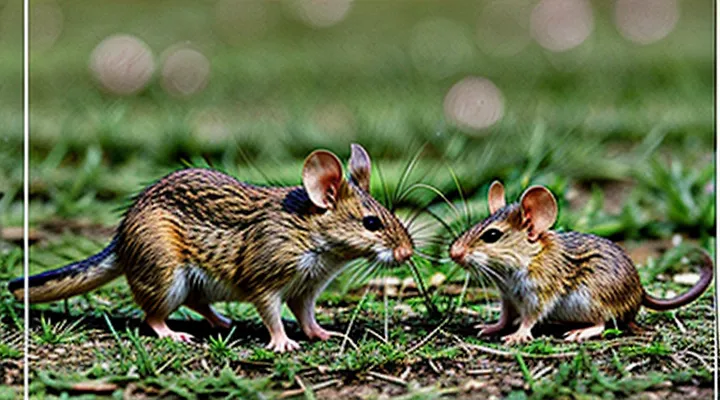
Introduction to Vole Species
General Characteristics of Voles
Habitat and Distribution
The field mouse occupies a range of semi‑natural and cultivated environments. Typical settings include woodland margins, hedgerows, scrub, and low‑intensity farmland where dense ground cover provides shelter and foraging opportunities. Its geographic reach extends across most of Europe, into western Asia, and, through human‑mediated introductions, into parts of North America.
The meadow mouse prefers habitats with consistently moist soil and dense herbaceous growth. Common locations are riverine meadows, marshy grasslands, floodplain pastures, and intensively managed agricultural fields that retain high vegetation density. Its distribution covers temperate zones of Europe and Asia, reaching into northern and central regions of North America where suitable wet meadow habitats occur.
Key habitat distinctions
- Field mouse: dry to moderately moist ground, woodland edges, hedgerows, low‑intensity crops.
- Meadow mouse: wet or seasonally saturated meadows, riverbanks, marshes, high‑grass pastures.
Distribution highlights
- Field mouse: widespread across Europe, western Asia; introduced populations in eastern North America.
- Meadow mouse: temperate Europe and Asia; native to northern and central North America, absent from arid or high‑altitude zones.
Diet and Behavior
The field mouse (Apodemus sylvaticus) and the meadow mouse (Microtus arvalis) occupy overlapping habitats but exhibit distinct dietary preferences and behavioral patterns that reflect divergent ecological niches.
Dietary distinctions
- Field mouse consumes a varied diet of seeds, nuts, insects, and occasional fruit; it exploits forest floor resources and opportunistically forages on fallen arthropods.
- Meadow mouse relies heavily on herbaceous vegetation, favoring grasses, sedges, and young shoots; it also ingests underground plant parts such as roots and tubers during winter months.
- Seasonal shifts affect both species, yet the field mouse expands its protein intake in spring, whereas the meadow mouse increases bulk plant material to sustain larger burrow colonies.
Behavioral contrasts
- Field mouse displays solitary or loosely associated foraging, with short, irregular home ranges averaging 0.2 ha; it exhibits high mobility and frequent use of vertical structures for escape.
- Meadow mouse forms dense social groups, maintaining extensive tunnel systems that can cover up to 0.5 ha; individuals communicate through scent marking and vocalizations, supporting cooperative vigilance.
- Reproductive timing differs: field mouse breeds multiple times per year with staggered litters, while meadow mouse concentrates breeding to a brief spring peak, producing larger litters within established burrows.
- Predator avoidance strategies vary; field mouse relies on rapid sprinting and arboreal refuge, whereas meadow mouse employs extensive underground networks and alarm calls to alert conspecifics.
These dietary and behavioral attributes underscore the adaptive divergence between the two rodent species, shaping their roles within temperate ecosystems.
Field Mouse: A Closer Look
Physical Characteristics of the Field Mouse
Size and Weight
The field mouse (Apodemus sylvaticus) and the meadow mouse (Microtus spp.) display distinct body dimensions and masses, which serve as reliable identifiers in field surveys.
-
Field mouse
• Head‑body length: 80–100 mm
• Tail length: 70–90 mm
• Adult weight: 15–30 g -
Meadow mouse
• Head‑body length: 70–95 mm
• Tail length: 30–50 mm
• Adult weight: 20–45 g
The field mouse’s longer tail often exceeds the head‑body length, whereas the meadow mouse possesses a relatively short tail. Weight ranges overlap, but meadow mice tend to reach higher maximum masses, reflecting their adaptation to grassland environments where larger body size supports burrowing and thermoregulation. Size metrics therefore provide a practical basis for distinguishing the two species during ecological assessments.
Fur Coloration and Markings
Fur coloration provides a reliable field marker for separating field mice from meadow mice. The dorsal pelage, ventral shade, and tail stripe pattern differ consistently between the two species, allowing visual identification without genetic analysis.
Field mice display a brown to reddish‑brown dorsal coat with a pronounced dark stripe running along the spine. The flank hairs are interspersed with lighter guard hairs, creating a mottled appearance. Ventral fur is pale gray‑white, lacking distinct pigmentation. The tail is uniformly brown, often matching the dorsal hue, and lacks a contrasting terminal band.
Meadow mice possess a gray‑brown dorsal coat that is more uniform in tone, without a central dark stripe. The flank region shows a subtle transition to a slightly lighter shade, but no distinct mottling. Ventral fur is creamy white, sometimes tinged with a faint pink hue. The tail exhibits a distinct dark terminal band, contrasting with the lighter basal coloration.
Key distinguishing features:
- Dorsal stripe: present in field mouse, absent in meadow mouse.
- Tail coloration: uniform in field mouse, banded in meadow mouse.
- Ventral hue: stark white in field mouse, creamy with occasional pink tint in meadow mouse.
- Overall coat uniformity: mottled in field mouse, more homogeneous in meadow mouse.
Habitat and Ecology of the Field Mouse
Preferred Environments
Field mice and meadow mice occupy distinct habitat niches that reflect their physiological adaptations and foraging strategies.
The field mouse (Apodemus sylvaticus) prefers dense ground cover found in agricultural fields, hedgerows, and woodland edges. Its environment typically includes:
- Short grass interspersed with herbaceous plants.
- Abundant seed sources such as cereals and weeds.
- Moderate moisture levels that support a stable invertebrate population.
- Shelter provided by fallen leaves, stones, and low vegetation.
These conditions enable the species to exploit ground-level food resources while maintaining protection from predators.
The meadow mouse (Microtus arvalis) is closely associated with open, moist grasslands and floodplain meadows. Characteristic features of its preferred habitats are:
- Tall, continuously growing grasses that offer both nutrition and nesting material.
- High soil humidity that sustains a rich community of earthworms and larvae.
- Seasonal water bodies that create microhabitats with varied vegetation structure.
- Sparse shrubbery, reducing obstruction and facilitating rapid movement.
Such environments support the meadow mouse’s burrowing behavior and its reliance on a diet rich in tender shoots and underground invertebrates.
Overall, the field mouse thrives in semi‑controlled, mixed‑vegetation landscapes, whereas the meadow mouse favors expansive, moisture‑rich grasslands. These habitat preferences drive their ecological separation and influence patterns of distribution across temperate regions.
Social Structure and Reproduction
The field mouse (Apodemus sylvaticus) typically occupies a solitary or loosely paired territory. Individuals defend a home range that overlaps minimally with conspecifics, and aggressive encounters are common when boundaries are breached. Mating opportunities are therefore limited to brief seasonal encounters.
The meadow mouse (Microtus arvalis) establishes dense colonies in grassland habitats. Social organization includes a dominant breeding pair supported by subordinate individuals that assist in nest maintenance and predator vigilance. Hierarchical interactions are mediated through scent marking and vocalizations, reducing overt aggression within the group.
Reproductive traits differ markedly between the species:
- Breeding season – Field mice breed from early spring to late autumn; meadow mice may produce multiple litters throughout the same period, extending into early winter in milder climates.
- Litter size – Field mouse litters average 4–6 pups; meadow mouse litters commonly contain 6–9 offspring.
- Gestation – Both species have a gestation of approximately 21 days, but meadow mice exhibit a shorter postpartum interval before the next conception.
- Sexual maturity – Field mice reach reproductive maturity at 6–8 weeks, whereas meadow mice mature slightly earlier, at 5–7 weeks.
These distinctions in social arrangement and reproductive strategy reflect adaptations to differing ecological niches: the solitary, territorially focused field mouse thrives in heterogeneous forest edges, while the socially cohesive meadow mouse exploits the predictability of open grasslands.
Meadow Mouse: Distinctive Features
Physical Characteristics of the Meadow Mouse
Size and Weight
The field mouse (Apodemus agrarius) and the meadow mouse (Microtus arvalis) differ markedly in body dimensions and mass, traits that influence habitat use and predator avoidance.
-
Overall length
• Field mouse: 70–95 mm (head‑body).
• Meadow mouse: 90–115 mm (head‑body). -
Tail length
• Field mouse: 55–80 mm, proportionally shorter relative to body.
• Meadow mouse: 70–100 mm, often exceeding half of total length. -
Body mass
• Field mouse: 15–25 g, with occasional individuals reaching 30 g.
• Meadow mouse: 25–45 g, occasional extremes up to 55 g.
The meadow mouse’s larger size and heavier weight reflect its adaptation to open grassland environments, where increased mass supports burrowing and thermoregulation. In contrast, the field mouse’s more compact form suits dense vegetation and a higher degree of maneuverability.
Fur Coloration and Markings
The field mouse (Apodemus sylvaticus) displays a dorsal coat ranging from reddish‑brown to dark brown, often with a distinct darker stripe along the spine. The ventral side is uniformly pale, typically white or light gray. Tail hairs are bicolored, dark on the upper surface and lighter underneath, giving a mottled appearance. Ears are covered with fine, light‑colored fur that blends with the head.
The meadow mouse (Microtus arvalis) possesses a more uniform gray‑brown dorsal pelage lacking a pronounced spinal stripe. The belly is a creamy gray, sometimes tinged with a faint pink hue. Tail fur is homogeneously brown, without the bicolored pattern seen in the field mouse. Ear fur is sparse, exposing the pinkish skin beneath.
Key coloration distinctions:
- Dorsal stripe: present in field mouse, absent in meadow mouse.
- Tail pattern: bicolored in field mouse; uniformly brown in meadow mouse.
- Ventral hue: stark white in field mouse; creamy gray in meadow mouse.
- Ear coverage: dense light fur in field mouse; minimal fur exposing skin in meadow mouse.
These traits provide reliable visual criteria for separating the two species in field observations and specimen identification.
Habitat and Ecology of the Meadow Mouse
Preferred Environments
The field mouse (Apodemus sylvaticus) occupies open woodlands, hedgerows, and cultivated fields where ground cover is moderate. It favors areas with abundant seed-producing grasses and low shrubs, using fallen leaves and shallow burrows for shelter. Moisture levels are low to moderate, and the species tolerates occasional human disturbance.
The meadow mouse (Microtus pennsylvanicus) prefers wet, herbaceous meadows, marsh margins, and riparian zones. Dense, tall vegetation offers protection and a constant supply of tender shoots and roots. Soil is soft and saturated, allowing the animal to construct extensive tunnel systems. The species avoids dry, heavily forested habitats.
Key environmental distinctions:
- Vegetation type: field mouse – mixed grasses and low shrubs; meadow mouse – tall, moisture‑rich herbaceous plants.
- Soil moisture: field mouse – well‑drained soils; meadow mouse – saturated, loamy soils.
- Human impact tolerance: field mouse – moderate; meadow mouse – low, prefers undisturbed wetland complexes.
Social Structure and Reproduction
The field mouse (Apodemus sylvaticus) lives in loosely organized groups. Adults occupy overlapping home ranges, but direct cooperation is limited. Males defend temporary territories during the breeding season, while females maintain individual nests that may be shared with offspring. Social interactions consist mainly of scent marking, brief aggressive encounters, and occasional communal nesting for thermoregulation.
The meadow mouse (Microtus spp.) exhibits a more cohesive social system. Populations form stable colonies with defined hierarchies. A dominant breeding pair typically monopolizes reproductive output, while subordinate individuals assist in nest maintenance and pup care. Group cohesion is reinforced by ultrasonic vocalizations and extensive burrow networks that interconnect individual nests.
Reproductive traits of the field mouse:
- Breeding season extends from early spring to late autumn, with up to five litters per female.
- Gestation lasts 19–22 days; litter size averages 4–7 pups.
- Females reach sexual maturity at 6–8 weeks and can breed shortly after weaning.
- Males become sexually active after attaining full body size, approximately 8 weeks.
Reproductive traits of the meadow mouse:
- Breeding occurs year‑round in temperate regions, peaking in spring and summer.
- Gestation period is 20–23 days; litters contain 3–6 pups.
- Females attain sexual maturity at 4–5 weeks, enabling rapid population growth.
- High reproductive output is supported by communal nursing, where multiple females feed the same litter.
These differences in social organization and breeding strategies reflect adaptations to distinct ecological niches, influencing population dynamics and predator avoidance mechanisms.
Key Differences and Similarities
Morphological Distinctions
Cranial Features
The cranial morphology of the field mouse and the meadow mouse offers reliable diagnostic characters for separating the two taxa. Both species belong to the genus Apodemus, yet their skulls exhibit distinct dimensions, proportions, and structural features that reflect ecological adaptation and phylogenetic divergence.
Key cranial differences include:
- Overall skull length: The field mouse possesses a longer skull, averaging 12.5 mm, whereas the meadow mouse averages 10.8 mm.
- Rostrum: The field mouse shows a more elongated rostrum with a narrower nasal opening; the meadow mouse has a shorter, broader rostrum.
- Braincase: The field mouse’s braincase is higher and more rounded, while the meadow mouse displays a flatter, more elongated braincase.
- Zygomatic arch: In the field mouse, the arch is robust and extends laterally; the meadow mouse’s arch is comparatively slender and less pronounced.
- Mastoid region: The field mouse exhibits a well‑developed mastoid process; the meadow mouse presents a reduced mastoid.
- Dental arcade: Both species share the same dental formula (1/1, 0/0, 0/0, 3/3), but the field mouse’s molar crowns are more inflated, whereas the meadow mouse’s molars are flatter with finer occlusal patterns.
These cranial characteristics, measurable through morphometric analysis, provide a definitive framework for taxonomic identification and comparative studies of the two rodent species.
Dental Patterns
The field mouse (Apodemus spp.) and the meadow mouse (Microtus spp.) exhibit distinct dental morphologies that aid species identification and reflect divergent ecological niches. Both taxa possess the typical rodent dental formula (1/1 incisors, 0/0 canines, 0/0 premolars, 3/3 molars), yet the shape, enamel structure, and cusp arrangement of the molars differ markedly.
- Upper molars of the field mouse display three well‑defined transverse ridges (tubercles) with sharp enamel peaks, producing a “tri‑cuspid” pattern. Enamel on the incisor is thin and lightly pigmented, allowing rapid wear suitable for seed processing.
- Meadow mouse molars present a broader, more rounded occlusal surface with a reduced number of prominent ridges; the central ridge is less pronounced, and secondary cusps are shallow. The incisor enamel is thicker and darker, providing greater durability for grazing on grasses and sedges.
- Wear facets on field mouse molars form distinct V‑shaped grooves aligned with the transverse ridges, whereas meadow mouse wear produces more uniform, flat surfaces reflecting a diet of softer vegetation.
These dental characteristics correlate with dietary specialization: the field mouse’s sharp ridges facilitate cracking hard seeds, while the meadow mouse’s flatter molars accommodate continuous grinding of herbaceous material. Consequently, dental pattern analysis serves as a reliable morphological marker for differentiating the two species in field studies and taxonomic assessments.
Behavioral and Ecological Divergence
Activity Patterns
The field mouse (Apodemus agrarius) exhibits primarily nocturnal activity, with peak foraging occurring shortly after sunset and a secondary increase before dawn. Movements are concentrated on the ground surface, where individuals exploit seed caches and insect prey. Seasonal shifts reduce nighttime activity during the breeding season, when males increase daylight patrols to locate receptive females.
The meadow mouse (Microtus pennsylvanicus) displays crepuscular tendencies, concentrating activity at twilight periods. Foraging peaks align with low-light conditions that balance predator avoidance and optimal temperature. During the summer, the species expands activity into the early night, while winter imposes a compressed daylight window for surface foraging.
Key distinctions in activity patterns:
- Temporal focus: field mouse – nocturnal; meadow mouse – crepuscular with occasional nocturnal extension.
- Seasonal adaptation: field mouse reduces nocturnal foraging during breeding; meadow mouse broadens activity in warm months.
- Habitat use: field mouse utilizes ground cover and edge habitats; meadow mouse prefers open grasslands and dense vegetation at low light.
These differences reflect evolutionary responses to predator pressure, resource distribution, and reproductive timing.
Breeding Seasons
The common field mouse (Apodemus sylvaticus) initiates breeding in early spring, typically March‑April, with peak conception in May. Females may produce two to three litters per season, each containing 4‑7 pups. Breeding continues until late summer, after which reproductive activity declines sharply.
The meadow mouse (Microtus agrestis) begins reproduction slightly later, usually late April‑May, coinciding with the emergence of dense herbaceous growth. Litters are larger, averaging 6‑9 offspring, and females often raise three to four litters before the onset of autumn. Reproductive effort persists into September, provided moisture and food availability remain high.
Key distinctions:
- Onset: field mouse earlier by 1‑2 months.
- Litter size: meadow mouse larger by 1‑3 pups.
- Number of litters: meadow mouse potentially greater.
- Seasonal termination: field mouse stops earlier, meadow mouse extends into early autumn.
Environmental cues governing both species include temperature rise, photoperiod lengthening, and increased vegetation cover, but meadow mice display a stronger dependence on moisture levels for sustaining late‑season breeding.
Conservation Status and Human Impact
Population Trends
Recent surveys indicate divergent trajectories for the two small‑rodent taxa inhabiting temperate grasslands. The field mouse (Apodemus agrarius) shows a modest increase in abundance across agricultural mosaics, whereas the meadow mouse (Microtus meadowi) demonstrates a consistent decline in open meadow habitats.
Key observations:
- Field mouse populations rose 12 % on average between 2000 and 2020, driven by expansion of fallow fields and reduced pesticide use.
- Meadow mouse numbers fell 18 % over the same period, correlating with intensified mowing regimes and loss of unmanaged grasslands.
- Seasonal monitoring reveals that field mouse breeding peaks have shifted earlier by 3–5 days, while meadow mouse reproductive timing remains unchanged, suggesting differing phenological responses to climate warming.
Drivers of the observed patterns include:
- Habitat modification: conversion of semi‑natural meadows to arable land benefits the more adaptable field mouse but reduces suitable cover for the meadow mouse.
- Predation pressure: increased raptor densities in fragmented landscapes disproportionately affect meadow mouse juveniles, which lack the burrowing behavior of the field mouse.
- Climate trends: rising temperatures extend the active season for field mouse, supporting higher reproductive output; meadow mouse shows limited thermal tolerance, leading to reduced survival in hotter summers.
Consequences for management:
- Conservation plans should prioritize the preservation and restoration of unmanaged meadow patches to halt meadow mouse decline.
- Agro‑environmental schemes that maintain field margins can sustain the upward trend of the field mouse while providing refugia for the meadow mouse.
- Monitoring protocols must differentiate between the species to avoid conflating population signals and to allocate resources effectively.
Threats and Conservation Efforts
The field mouse and the meadow mouse face a series of anthropogenic and natural pressures that reduce population viability. Habitat fragmentation caused by agricultural expansion eliminates the continuous cover required for foraging and nesting. Intensive pesticide application contaminates food sources and impairs reproductive success. Climate fluctuations alter vegetation patterns, reducing the availability of seed and insect prey. Predation pressure intensifies when open fields expose individuals to raptors and domestic cats. Invasive plant species replace native grasses, diminishing shelter and increasing competition for resources.
Conservation actions target the most critical threats through coordinated measures.
- Preserve and reconnect grassland corridors to maintain genetic flow between isolated groups.
- Implement pesticide regulations that limit exposure during breeding seasons.
- Restore native meadow vegetation by reseeding with locally adapted grasses and forbs.
- Establish monitoring networks that record population trends, habitat quality, and predator abundance.
- Enforce legal protection for key habitats under national wildlife statutes.
- Promote land‑owner incentives for sustainable grazing and low‑intensity farming practices.
These interventions, applied consistently across the species’ ranges, aim to stabilize numbers, enhance habitat resilience, and secure long‑term survival of both rodent taxa.