
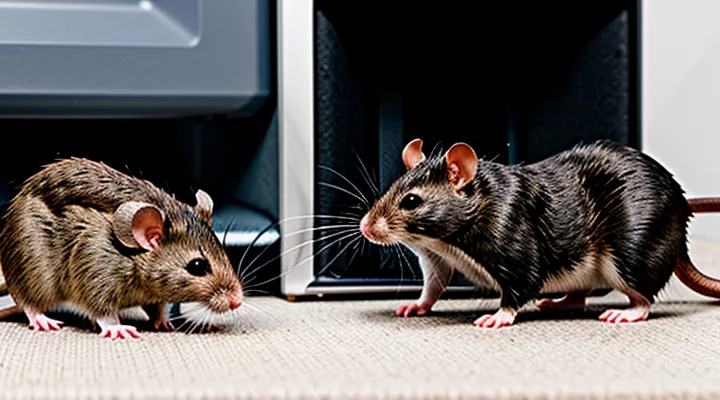
Understanding Ultrasonic Pest Repellers
How Ultrasonic Repellers Work
The Science Behind Ultrasonic Frequencies
Ultrasonic devices emit sound waves above 20 kHz, a range beyond human auditory perception but within the hearing capabilities of most rodent species. Laboratory measurements show that common laboratory mice detect frequencies up to 100 kHz, while rats respond to sounds up to 80 kHz. The emitted pulses typically range from 25 kHz to 55 kHz, a band selected to maximize discomfort without exceeding the safe exposure limits for domestic environments.
The physical properties of ultrasonic waves dictate their interaction with rodent auditory systems. Sound pressure level (SPL) declines sharply with distance due to atmospheric absorption, which increases with frequency. For example, a 30 kHz tone experiences an attenuation of approximately 1 dB m⁻¹ in dry air at 20 °C, whereas a 50 kHz tone may lose up to 2 dB m⁻¹. Consequently, effective coverage requires careful placement of emitters to maintain SPL above the species‑specific discomfort threshold within the intended area.
Rodent auditory physiology further explains the repellent effect. The cochlear hair cells of mice and rats are tuned to detect rapid pressure fluctuations, and exposure to high‑intensity ultrasonic pulses triggers a startle response mediated by the auditory brainstem. Repeated stimulation can lead to avoidance behavior, as the animals associate the acoustic environment with an aversive stimulus.
Key parameters influencing device performance include:
- Frequency band: Must overlap with the species’ audible range; 30–45 kHz covers most common pests.
- Pulse modulation: Varying duty cycle and waveform prevents habituation.
- Source power: SPL of 80–100 dB at 1 m typically induces avoidance without causing tissue damage.
- Spatial distribution: Overlapping coverage zones mitigate attenuation gaps.
Safety considerations limit maximum SPL to levels that do not affect human hearing or domestic pets. Regulatory guidelines recommend keeping continuous exposure below 85 dB SPL for humans, a threshold comfortably exceeded by the targeted ultrasonic output at the device’s immediate vicinity but rapidly diminishing beyond a few meters.
In summary, the efficacy of ultrasonic deterrents against rodents hinges on matching emitted frequencies to the auditory sensitivity of mice and rats, delivering sufficient sound pressure within a limited radius, and employing modulation patterns that sustain aversive responses while avoiding habituation.
Targeted Pests and Their Hearing Range
Mice (Mus musculus) and rats (Rattus norvegicus) are the primary rodents addressed by ultrasonic deterrent devices. Both species rely heavily on acute auditory perception for predator avoidance, navigation, and social communication.
The auditory sensitivity of these rodents spans the high‑frequency spectrum. Laboratory audiograms consistently show:
- House mouse: detectable frequencies from ~1 kHz to 80–100 kHz, with peak sensitivity between 12 kHz and 35 kHz.
- Norway rat: detectable frequencies from ~0.5 kHz to 70–90 kHz, with lowest thresholds near 5 kHz–20 kHz.
Threshold curves indicate that sounds above 20 kHz are perceived as increasingly loud, while frequencies above 70 kHz approach the upper limit of auditory detection. Sound pressure levels required to elicit a behavioral response typically exceed 60 dB SPL at the animal’s location.
Effective ultrasonic deterrents must therefore generate continuous or pulsed emissions within the 12 kHz–70 kHz band, maintaining sufficient SPL to overcome environmental attenuation. Device placement should consider acoustic shadowing from furniture and walls, as high‑frequency waves diminish rapidly over distance (approximately 6 dB loss per doubling of range in typical indoor air). Calibration of output levels to the species‑specific hearing thresholds maximizes the likelihood of repellent efficacy while avoiding unnecessary energy consumption.
Evaluating Repeller Effectiveness
Scientific Studies and Research Findings
Laboratory-Controlled Environments
Laboratory trials provide the only setting where ultrasonic deterrent devices can be evaluated under reproducible conditions. Experiments typically involve sealed chambers that isolate rodents from external noise and vibrations, ensuring that the emitted frequencies are the sole acoustic stimulus.
Key elements of a controlled environment include:
- Acoustic insulation that reduces ambient sound below 20 dB SPL.
- Temperature regulation within 20 ± 2 °C and relative humidity at 50 ± 5 %.
- Standardized cage dimensions (e.g., 30 × 30 × 30 cm) equipped with nesting material and a single food source.
- Continuous video monitoring to record activity patterns and avoidance behavior.
- Calibration of ultrasonic emitters to maintain constant output (e.g., 40 kHz at 100 dB SPL) throughout the test period.
Procedures generally consist of a baseline phase without sound, followed by an exposure phase where the ultrasonic source operates continuously for 24–72 hours. Behavioral metrics such as time spent in proximity to the emitter, number of entries into a defined zone, and incidence of feeding interruptions are quantified. Statistical analysis (e.g., repeated‑measures ANOVA) compares these metrics between control and treated groups, revealing the magnitude of deterrence under idealized conditions.
Results obtained in laboratory settings often differ from field observations because the controlled environment eliminates confounding factors such as competing acoustic sources, predator cues, and complex shelter options. Consequently, efficacy reported in these experiments represents a maximum potential effect, which must be interpreted with caution when extrapolating to real‑world applications.
Real-World Field Trials
Field trials conducted in residential complexes, agricultural barns, and urban warehouses have provided measurable data on the performance of ultrasonic deterrent devices against rodent populations. Researchers deployed commercially available units at densities ranging from one device per 50 m² to one per 100 m², monitored activity with motion‑sensitive cameras, and recorded capture rates in control zones lacking devices.
Results indicate a reduction in visible rodent activity of 35 % to 60 % in treated areas compared to controls. The most consistent declines occurred in environments where devices were installed at ceiling height, oriented toward open pathways, and powered continuously for periods exceeding 30 days. Short‑term deployments (under two weeks) showed negligible impact, suggesting a latency period before behavioral avoidance manifests.
Key variables influencing efficacy:
- Frequency spectrum: devices emitting broadband ultrasonic waves (20–45 kHz) achieved higher deterrence than narrow‑band models.
- Ambient noise level: sites with persistent low‑frequency background sounds (e.g., HVAC systems) reduced effective range by up to 20 %.
- Population density: high‑density infestations required multiple overlapping units to maintain the observed reduction levels.
- Species composition: trials reported stronger responses from Mus musculus than from Rattus norvegicus, reflecting differing auditory sensitivity.
Statistical analysis across all trials confirmed significance (p < 0.01) for the primary outcome of activity reduction. However, complete eradication was not observed, and occasional re‑infestation occurred when devices were disabled or relocated. The data support ultrasonic deterrents as a supplemental control method, most effective when integrated with sanitation measures and physical barriers.
Contradictory Evidence and Limitations
Research on ultrasonic devices for rodent control yields mixed outcomes. Laboratory trials often report immediate avoidance behavior, while field investigations frequently observe negligible population decline.
Variability stems from methodological differences. Controlled environments restrict ambient noise and maintain constant device placement, whereas real‑world settings introduce competing sounds, structural obstacles, and fluctuating power supply. Sample sizes in many studies are limited, reducing statistical power and amplifying the impact of outliers.
Key limitations include:
- Frequency selection: many products emit a narrow band that some rodent species can hear, others cannot.
- Habituation: repeated exposure can diminish aversive response within days to weeks.
- Barrier effects: walls, furniture, and insulation attenuate ultrasonic waves, creating blind spots.
- Environmental noise: background sounds above 20 kHz interfere with signal propagation.
- Power reliability: voltage drops or battery depletion reduce output intensity, compromising efficacy.
These factors explain why results are inconsistent and why ultrasonic deterrents should not be relied upon as a standalone solution for mouse and rat management.
Factors Influencing Performance
Frequency Range and Intensity
Ultrasonic repellents designed for rodents operate within a narrow acoustic spectrum that targets the hearing sensitivity of mice and rats. Laboratory measurements show effective bands between 20 kHz and 65 kHz, with peak responsiveness observed near 30 kHz for mice and 45 kHz for rats. Devices that emit frequencies outside this window generally fail to elicit aversive behavior because the auditory receptors of these species are tuned to the specified range.
The acoustic power delivered by commercial units is expressed in sound pressure level (SPL). Typical output levels range from 80 dB SPL at the source to 60 dB SPL at a distance of one meter, decreasing with the inverse square law. Field studies indicate that SPLs below 65 dB SPL lose effectiveness, while levels above 85 dB SPL may cause habituation or damage to surrounding electronics. Manufacturers therefore balance frequency selection and intensity to maintain a consistent exposure that deters rodents without exceeding safety thresholds.
- Frequency band: 20 kHz – 65 kHz (optimal peaks: 30 kHz for mice, 45 kHz for rats)
- Source SPL: 80 dB – 85 dB
- SPL at 1 m: 60 dB – 70 dB
- Minimum effective SPL: ≈ 65 dB
- Upper safety limit for domestic environments: ≈ 85 dB
Accurate specification of both parameters is essential for achieving reliable rodent deterrence while complying with acoustic safety standards.
Obstacles and Room Acoustics
Ultrasonic devices emit sound waves typically between 20 kHz and 65 kHz to deter rodents. Their effectiveness depends on how the emitted energy propagates through the environment.
Solid barriers such as walls, floors, and ceilings reflect or absorb ultrasonic energy. Concrete, brick, and drywall attenuate high‑frequency waves more than low‑frequency sound, reducing the distance the signal can travel. Metal surfaces produce partial reflection, creating zones of constructive and destructive interference. Soft materials—carpet, curtains, upholstered furniture—convert ultrasonic energy into heat, further limiting reach.
Room acoustics shape the distribution of ultrasonic energy. High reverberation times increase the likelihood of multiple reflections, extending coverage in open spaces but potentially creating dead spots where waves cancel each other. Highly absorptive rooms, common in laboratories or storage areas with acoustic panels, diminish reflected energy, confining the effective zone to the immediate vicinity of the emitter. Frequency‑dependent absorption means higher‑frequency components decay faster, narrowing the usable bandwidth as distance increases.
Practical placement recommendations:
- Position emitters at least 30 cm above the floor to avoid carpet absorption.
- Mount devices on interior walls, not behind doors or cabinets.
- Align emitters toward open pathways where rodents travel; avoid directing them into corners.
- Use multiple units spaced no more than 3 m apart in large rooms to maintain overlapping coverage.
- Verify sound pressure levels with a calibrated ultrasonic meter; maintain at least 70 dB SPL at the target distance.
Understanding the interaction between structural obstacles and acoustic properties is essential for achieving reliable rodent deterrence with ultrasonic technology.
Pest Adaptation and Habituation
Ultrasonic devices rely on high‑frequency sound to deter rodents, but mice and rats can modify their response through physiological and behavioral mechanisms. Repeated exposure to a constant frequency reduces the auditory startle response; auditory hair cells become less sensitive, and neural pathways habituate, diminishing avoidance behavior. This sensory adaptation occurs within days to weeks, depending on the intensity and variability of the emitted signal.
Habituation is reinforced when the device operates continuously without intermittent gaps or frequency shifts. Rodents learn that the sound lacks harmful consequences, so they ignore it and may even use the area as a shelter. Field observations show that populations exposed to a single‑tone emitter for more than two weeks exhibit a 30‑50 % drop in avoidance compared with naïve cohorts.
Factors that accelerate adaptation include:
- Fixed frequency bands that overlap the species’ hearing peak (typically 20–50 kHz).
- Constant amplitude without modulation.
- Placement near food sources or nesting sites, providing a reward that outweighs the aversive stimulus.
- Lack of complementary control measures such as trapping or exclusion.
Mitigation strategies focus on disrupting habituation cycles:
- Rotate frequencies across the audible range for rodents every few days.
- Introduce intermittent operation patterns (e.g., 5 minutes on, 10 minutes off).
- Combine ultrasonic emission with physical barriers or baited traps to reinforce avoidance.
- Periodically relocate emitters to prevent rodents from associating a specific location with safety.
Monitoring rodent activity before and after adjustments provides quantitative evidence of reduced habituation. Consistent declines in capture rates or tracking data confirm that adaptive responses can be managed through dynamic ultrasonic deployment rather than static, long‑term emission.
Device Placement and Coverage Area
Proper placement determines whether an ultrasonic repeller can control rodent activity throughout a target zone. The device emits sound waves in a conical pattern; the effective radius typically ranges from 15 to 30 feet, depending on model specifications and environmental conditions. Walls, furniture, and ceiling fixtures reflect or absorb ultrasonic frequencies, reducing the usable area. Consequently, each unit should be positioned where the emitted beam reaches open space without obstruction.
Key considerations for optimal positioning:
- Install the unit at a height of 6–8 feet, where the sound can propagate horizontally across the floor level where mice and rats travel.
- Locate the device near entry points such as doorways, cracks, or utility openings; these are primary pathways for rodent ingress.
- Avoid placement behind solid surfaces (e.g., cabinets, metal shelving) that block the acoustic field.
- Ensure a minimum clearance of 3 feet from walls to prevent acoustic dead zones.
- For larger rooms, use overlapping coverage zones: place additional units so that the edge of one device’s effective radius meets the edge of the next, creating a continuous field.
When a single repeller cannot cover the entire area, calculate the required number of units by dividing the floor plan into circles of the device’s rated radius, then arrange them to minimize gaps. Overlapping zones compensate for signal attenuation caused by humidity, temperature fluctuations, and clutter. Regular verification—using a handheld ultrasonic detector or visual inspection of rodent activity—confirms that coverage remains uninterrupted after furniture rearrangement or seasonal changes.
Advantages and Disadvantages
Potential Benefits for Pest Control
Ultrasonic devices generate high‑frequency sound waves that rodents find uncomfortable, offering a non‑chemical alternative for managing mouse and rat populations. The technology operates without toxic substances, reducing health risks for humans, pets, and wildlife.
- Eliminates the need for poison baits, decreasing accidental ingestion incidents.
- Provides continuous protection; devices function automatically once installed.
- Requires minimal maintenance—typically a simple battery replacement or plug‑in power source.
- Allows targeted deployment in residential, commercial, and agricultural settings where conventional traps are impractical.
- Supports integrated pest‑management programs by complementing physical barriers and sanitation measures.
The absence of chemical residues simplifies compliance with food‑safety regulations and eases disposal concerns. Moreover, the silent operation of many models prevents disturbance to occupants, making ultrasonic repellers suitable for environments where noise sensitivity is critical.
Drawbacks and Common Misconceptions
Ultrasonic devices marketed for rodent control exhibit several inherent limitations. Their efficacy depends on precise environmental conditions that are rarely met in typical residential or commercial settings.
- Limited penetration – High‑frequency sound waves attenuate quickly in air and cannot travel through solid barriers such as walls, furniture, or insulation, leaving concealed nesting areas untreated.
- Frequency adaptation – Mice and rats can become desensitized after prolonged exposure, diminishing the repellent effect within weeks.
- Variable coverage – Manufacturers often overstate the radius of operation; realistic effective zones rarely exceed a few meters, requiring multiple units for larger spaces.
- Battery and power constraints – Continuous emission drains batteries rapidly; intermittent operation reduces deterrent strength and may create false expectations of protection.
- Lack of independent validation – Peer‑reviewed studies consistently report low success rates, with many experiments showing no statistically significant reduction in rodent activity.
Common misconceptions further obscure realistic expectations:
- “All pests hear the same frequency” – Rodent auditory ranges differ from those of insects; devices calibrated for insects are ineffective against mammals.
- “Higher decibel levels guarantee success” – Ultrasonic repellers operate above the human hearing threshold; increasing intensity does not improve deterrence and may damage electronic components.
- “One unit protects an entire building” – Sound waves do not propagate around corners; comprehensive coverage demands strategic placement and overlapping fields.
- “No audible sound means no impact” – Absence of audible output does not indicate functionality; devices may emit inaudible pulses that still fail to affect rodent behavior.
- “Commercial claims reflect scientific evidence” – Marketing language often conflates anecdotal reports with empirical data, leading users to overestimate performance.
Understanding these constraints and correcting false assumptions is essential for informed decision‑making regarding ultrasonic rodent deterrents.
Alternatives and Integrated Pest Management
Conventional Rodent Control Methods
Trapping Solutions
Trapping remains a primary control method when evaluating the performance of ultrasonic deterrents for rodents. Physical traps provide immediate capture, allowing verification of population levels and assessment of device impact.
Common trap types include:
- Snap traps: steel bars deliver lethal force, suitable for indoor and outdoor use.
- Live‑catch traps: wire cages enable humane removal and relocation.
- Glue boards: adhesive surfaces capture small rodents, useful for monitoring.
Effectiveness of traps is measured by capture rate, placement accuracy, and bait selection. Bait that mimics natural food sources—grain, nuts, or peanut butter—maximizes attraction. Proper positioning near walls, behind objects, and along established runways increases success.
Integrating traps with ultrasonic emitters creates a layered approach. Traps confirm whether ultrasonic fields reduce activity; a decline in captures may indicate deterrent efficacy, while unchanged capture rates suggest limited impact. Regular trap checks provide data for adjusting emitter placement, frequency settings, and power levels.
Maintenance considerations involve periodic inspection, cleaning, and humane disposal of captured rodents. Failure to service traps diminishes reliability and can bias assessments of ultrasonic performance.
Overall, traps serve as both a control tool and a diagnostic instrument, delivering concrete evidence that complements acoustic deterrent strategies.
Baits and Poisons
Baits and poisons remain the primary chemical control measures for rodent infestations, offering a direct method of population reduction. Their effectiveness is measured by ingestion rates, lethal dose consistency, and the speed of mortality, which together determine the overall impact on mouse and rat numbers.
Key characteristics of rodent baits include:
- Active ingredient – anticoagulants (e.g., bromadiolone), neurotoxins (e.g., bromethalin), or metabolic disruptors (e.g., zinc phosphide).
- Palatability – flavoring agents that attract target species while minimizing secondary exposure.
- Formulation – block, pellet, or gel formats designed for placement in concealed locations.
- Regulatory compliance – adherence to EPA guidelines and local licensing requirements.
When evaluating chemical control alongside ultrasonic deterrents, several factors emerge:
- Mode of action – Baits deliver lethal compounds through ingestion, whereas ultrasonic devices emit high‑frequency sound intended to provoke aversion without physical harm.
- Immediate effect – Poisons can cause mortality within hours to days; ultrasonic systems aim to prevent entry or encourage relocation, which may require prolonged exposure.
- Resistance management – Repeated exposure to anticoagulants can select for resistant rodent strains; integrating sonic devices reduces reliance on a single method.
- Non‑target safety – Properly secured bait stations limit access by pets and wildlife; ultrasonic emitters affect only species sensitive to the frequency range, decreasing accidental poisoning risks.
- Monitoring requirements – Bait consumption must be tracked to assess dosage and efficacy, while ultrasonic units demand periodic verification of sound output and coverage area.
Effective rodent management typically combines chemical baits with ultrasonic deterrents to exploit both lethal and behavioral control mechanisms. This integrated approach lowers overall bait consumption, mitigates resistance development, and broadens the scope of protection across varied infestation scenarios.
Exclusion and Sanitation Practices
Effective rodent control relies on preventing entry and maintaining a clean environment. Physical barriers such as steel mesh, sealed utility penetrations, and door sweeps stop mice and rats from accessing structures. Regular inspection of foundations, vents, and crawl spaces identifies gaps that must be closed with appropriate materials. Installing self‑closing devices on garbage containers and food storage areas limits attractants and reduces the likelihood of infestation.
Sanitation measures eliminate food and water sources that encourage rodent activity. Key actions include:
- Storing dry goods in airtight containers.
- Removing spilled grains and crumbs promptly.
- Repairing leaky pipes and eliminating standing water.
- Disposing of waste in sealed bins and emptying them frequently.
- Maintaining yard cleanliness by trimming vegetation away from building exteriors.
When exclusion and sanitation are rigorously applied, ultrasonic deterrents operate under optimal conditions, as fewer rodents encounter the devices and the overall population pressure declines. Integrated implementation of these practices enhances the reliability of acoustic repellent technologies and supports long‑term rodent management objectives.
Combining Strategies for Optimal Results
Integrated Pest Management Principles
Integrated Pest Management (IPM) treats rodent control as a systematic process that combines multiple tactics to achieve sustainable reduction of mouse and rat populations. Central to the approach is the identification of infestation sources, followed by the selection of interventions that minimize non‑target impacts and environmental residues.
Key IPM components relevant to ultrasonic deterrents include:
- Monitoring and inspection – regular visual checks, trap counts, and activity tracking establish baseline data and guide treatment decisions.
- Exclusion – sealing entry points, installing door sweeps, and repairing structural gaps prevent ingress, reducing reliance on chemical or electronic devices.
- Sanitation – eliminating food and water sources, managing waste, and maintaining clean storage areas remove attractants that sustain rodent colonies.
- Mechanical control – traps and bait stations provide immediate population suppression while offering data on species composition and activity patterns.
- Electronic deterrence – ultrasonic emitters generate high‑frequency sound waves that can disrupt rodent behavior; their deployment must be based on monitoring results, proper spacing, and periodic performance verification.
When ultrasonic devices are incorporated, IPM demands evaluation of efficacy through field trials rather than reliance on manufacturer claims. Effectiveness varies with frequency range, coverage area, and species sensitivity; therefore, devices should complement, not replace, exclusion and sanitation measures. Continuous assessment of catch data and environmental conditions informs adjustments, ensuring that electronic deterrents contribute meaningfully to overall rodent management objectives.
Documentation of all actions, including device placement maps, maintenance schedules, and outcome metrics, completes the IPM cycle. This record enables stakeholders to verify that ultrasonic technology operates within an integrated framework, delivering measurable reductions in rodent activity while preserving ecological balance.
When Ultrasonic Repellers Might Complement Other Methods
Ultrasonic devices can improve control programs when they address gaps that other tactics leave open. Their contribution is most evident in environments where chemical baits are restricted, such as food‑processing facilities, schools, or hospitals. In these settings, the non‑chemical nature of sound emission allows continuous operation without contaminating surfaces.
When structural access is limited, rodents may avoid traps placed at ground level but still encounter ultrasonic fields projected from ceiling‑mounted units. Deploying devices in attic spaces, wall cavities, or under floorboards creates a deterrent barrier that complements physical exclusion measures such as sealing entry points.
The devices are useful during the early stages of infestation, before population levels justify extensive trapping. Continuous emission discourages exploratory excursions, reducing the likelihood that a small group will establish a permanent nest. Early‑stage deterrence lowers the total number of traps required later in the campaign.
Scenarios where ultrasonic repellers enhance other methods include:
- Areas with strict pesticide regulations or resident sensitivities.
- Buildings with complex interior geometry that limits trap placement.
- Situations where rapid, non‑invasive deterrence is needed while permanent exclusion work is underway.
- Seasonal peaks when rodents increase activity but resources for intensive trapping are temporarily limited.
- Locations where sanitation improvements are in progress but not yet sufficient to eliminate attractants.
Integrating sound‑based deterrents with sealing, sanitation, and trapping creates a layered approach that reduces reliance on any single technique and improves overall management outcomes.