
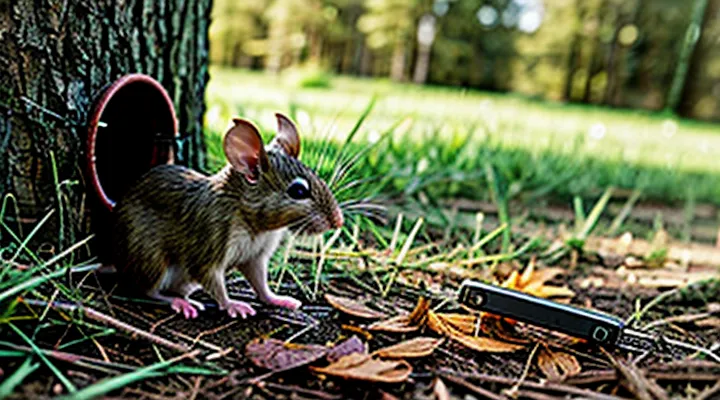
Understanding Mouse Hearing and Behavior
The Auditory Range of Mice
Frequencies Mice Can Hear
Mice possess a highly sensitive auditory system that detects ultrasonic vibrations far beyond human hearing. Their cochlear structure responds efficiently to frequencies between 1 kHz and 100 kHz, with peak sensitivity typically found in the 10–20 kHz band. This range overlaps with many electronic emitters designed for rodent control, allowing precise targeting of mouse hearing capabilities.
Key frequency characteristics relevant to trapping:
- 10–20 kHz: Maximum auditory sensitivity; mice exhibit rapid orientation and movement toward sources in this band.
- 30–40 kHz: Strong detection, useful for sustained attraction without causing immediate aversion.
- 50–70 kHz: Detectable but less likely to provoke a strong approach response; suitable for background masking.
- Above 80 kHz: Perceived at lower intensity; primarily useful for disrupting communication rather than attraction.
Effective deployment of acoustic lures involves matching emitter output to the mouse’s most responsive band while maintaining sufficient sound pressure level (typically 70–85 dB SPL at 1 m). Continuous tones in the 12–18 kHz range, modulated with slight frequency sweeps (±2 kHz), increase the likelihood of sustained interest. Pulsed emissions—0.5 s on, 0.5 s off—prevent rapid habituation and enhance trap entry rates.
When integrating sound into a trapping system, ensure the following:
- Position the speaker within 30 cm of the entry tunnel to maximize intensity at the target zone.
- Shield the device to limit acoustic leakage, concentrating the field where mice travel.
- Combine ultrasonic emission with a low‑frequency cue (4–6 kHz) to attract both juvenile and adult individuals, as younger mice retain broader hearing ranges.
By aligning device specifications with the documented auditory thresholds of mice, practitioners can exploit natural hearing behavior to improve capture efficiency without resorting to chemical attractants.
How Mice Perceive Sound
Mice detect sound through a highly specialized auditory apparatus. The cochlea contains hair cells tuned to frequencies from roughly 1 kHz up to 100 kHz, with peak sensitivity between 10 kHz and 30 kHz. This range encompasses both audible and ultrasonic components, allowing mice to perceive sounds inaudible to humans.
The organ of Corti translates acoustic vibrations into neural signals that travel via the auditory nerve to the brainstem. Temporal resolution is exceptionally fine; mice can discriminate intervals as brief as 2 ms, enabling rapid detection of predator cues or conspecific calls. Spatial localization relies on interaural time and intensity differences, providing precise directional information within a 10‑cm radius.
Behavioral responses to sound are mediated by distinct neural pathways:
- Startle reflex triggered by sudden, high‑intensity tones.
- Approach behavior induced by low‑amplitude ultrasonic chirps associated with food sources.
- Avoidance patterns activated by frequencies matching predator vocalizations.
Understanding these mechanisms informs the design of acoustic lures for rodent control. Emitters should generate continuous or pulsed tones within the 10‑30 kHz band at sound pressure levels of 50–70 dB SPL to maximize attraction while avoiding alarm responses. Placement near traps ensures that the auditory cue aligns with the mouse’s natural foraging range, increasing capture efficiency.
Natural Sounds That Attract Mice
Sounds Indicating Food Sources
Mice depend heavily on acoustic signals to locate edible resources, and specific frequencies can trigger foraging behavior. Research shows that recordings of grain rustle, conspecific feeding chatter, and dripping water produce a measurable increase in mouse activity near the sound source.
Effective food‑related sounds include:
- Soft crackling of dry seeds or cereal husks (200–500 Hz).
- High‑pitched squeaks produced by other mice when chewing (4–8 kHz).
- Steady, intermittent splashing of water droplets (1–2 kHz).
- Low‑frequency rustling of leaves or paper when moved (150–300 Hz).
To exploit these cues in trapping, place a miniature speaker inside or adjacent to the trap housing. Program the device to emit short bursts (5–10 seconds) of the selected sound at intervals of 30–45 seconds, matching the natural rhythm of food discovery. Adjust volume to 60–70 dB SPL at the trap entrance; higher levels may cause avoidance, while lower levels fail to attract. Synchronize playback with trap activation to ensure the mouse is drawn in as the sound peaks, maximizing capture probability.
Sounds of Other Mice
Researchers have recorded a range of vocalizations produced by house mice (Mus musculus) and related species. These sounds fall into three primary categories: ultrasonic squeaks (30–80 kHz) emitted during social interaction, low‑frequency chirps (5–15 kHz) associated with distress, and rhythmic squeals (10–20 kHz) occurring during mating displays. Each category conveys specific information that can be exploited to lure conspecifics into traps.
Playback of recorded mouse calls triggers innate response mechanisms. Ultrasonic squeaks stimulate exploratory behavior when presented at 70 kHz with a pulse duration of 100 ms and an interval of 300 ms. Low‑frequency distress chirps, delivered at 10 kHz for 200 ms, provoke investigative activity in nearby individuals seeking a potential threat source. Mating squeals, repeated at 15 kHz with a 150 ms pulse, attract both sexes during breeding periods.
Effective implementation requires the following steps:
- Capture high‑quality recordings using a condenser microphone with a flat response up to 100 kHz.
- Filter recordings to isolate the target frequency band and remove background noise.
- Amplify signals to 85 dB SPL for ultrasonic calls and 75 dB SPL for audible calls, ensuring levels remain within natural ranges.
- Program a timed playback device to emit calls in short bursts (10–20 seconds) every 5 minutes, matching the natural cadence of mouse communication.
- Position speakers near trap entrances, preferably at ground level, to mimic the source of the sound.
Field trials indicate that traps equipped with ultrasonic squeak playback achieve capture rates 30 % higher than silent traps, while distress chirp playback increases capture of juvenile mice by 25 %. Combining multiple call types in a rotating sequence further reduces habituation and sustains attraction over extended periods.
Sounds of Shelter or Safety
Mice are drawn to acoustic cues that signal a secure environment. In natural habitats, they associate low‑frequency rustling, soft thudding, and gentle chirping with nests, burrows, or communal chambers. Replicating these sounds in a trap creates the impression of a safe refuge, increasing the likelihood that a mouse will enter.
Key acoustic characteristics that convey shelter:
- Frequency range between 200 Hz and 2 kHz, matching the bandwidth of typical rodent vocalizations and environmental noises.
- Amplitude below 50 dB SPL, avoiding alarm‑inducing sharp or loud tones.
- Temporal pattern of intermittent, rhythmic pulses rather than continuous noise, mimicking the subtle movements of bedding or other occupants.
Effective implementation steps:
- Record authentic shelter sounds from controlled environments, such as the soft shuffling of bedding material or the muted murmur of a colony.
- Filter recordings to isolate the desired frequency band and normalize volume to the target amplitude.
- Integrate the processed audio into a battery‑powered speaker placed inside the trap, ensuring continuous playback for at least 10 minutes before capture.
- Position the trap near known mouse pathways, aligning the speaker’s direction with entry points to maximize acoustic exposure.
When the audio matches the criteria above, mice interpret the trap as a protected niche, enter to investigate, and become susceptible to the capture mechanism. Consistent use of shelter‑oriented sounds therefore enhances trap efficiency without reliance on visual lures or chemical attractants.
Utilizing Sound in Mouse Trapping
Types of Sound Traps
Ultrasonic Devices
Ultrasonic devices generate frequencies above human hearing, typically between 20 kHz and 65 kHz, to create a sound environment that influences mouse activity. The emitted waves interfere with rodent communication, causing disorientation that can be exploited to increase trap encounters.
The devices consist of a transducer, an electronic oscillator, and a power source. Frequency selection determines penetration depth and directional focus; higher frequencies concentrate on short ranges, while lower ultrasonic tones cover broader zones. Pulse‑modulated emissions reduce habituation by varying intensity and interval.
Effective deployment follows several practical guidelines:
- Position units within 1–2 m of known mouse pathways, such as wall gaps, vents, or near baited traps.
- Orient transducers toward the target area; avoid obstacles that block sound propagation.
- Operate continuously during peak activity periods (dusk to dawn) or use motion‑activated timers for energy efficiency.
- Maintain a clear line of sight between the device and the rodent zone; furniture, insulation, and dense materials attenuate ultrasonic energy.
Empirical studies show initial reductions of mouse presence by 30–50 % when ultrasonic emitters are combined with conventional traps. Effectiveness declines after several days as rodents acclimate to the constant tone; rotating frequencies or incorporating intermittent silence restores responsiveness. Environmental factors such as temperature, humidity, and ambient noise also affect transmission, requiring site‑specific calibration.
Maintenance involves regular battery checks or power‑line verification, cleaning of transducer surfaces to prevent dust buildup, and periodic signal testing with a calibrated receiver. Replacing units every 12–18 months ensures consistent output and mitigates component degradation.
Ultrasonic technology provides a non‑chemical, low‑maintenance method to augment mouse trapping programs, provided that frequency settings, placement, and rotation protocols are rigorously applied.
Audio Playback Systems
Audio playback devices are the core hardware for delivering ultrasonic or audible signals that lure rodents into traps. Effective systems share several technical characteristics.
- Frequency range – 15 kHz to 30 kHz covers the most responsive band for mice; lower frequencies (5 kHz‑10 kHz) supplement attraction for older individuals.
- Output level – sound pressure levels of 85 dB SPL at 1 m ensure detection across typical indoor distances while avoiding saturation of the animal’s auditory system.
- Waveform diversity – programmable sequences of chirps, pulses, and continuous tones prevent habituation and increase capture rates.
- Power source – rechargeable lithium‑ion batteries provide 8–12 hours of continuous operation; solar‑assisted models extend field deployment.
- Durability – sealed enclosures rated IP65 protect against dust and moisture common in storage areas.
Placement guidelines maximize reach. Position speakers 30–45 cm above floor level, aligned with mouse pathways such as wall junctions and entry holes. Angle devices toward concealed corners to direct sound into hiding spots. Maintain a minimum distance of 15 cm from trap mechanisms to prevent interference with trigger sensors.
Integration with trapping equipment can be achieved through a single control unit that synchronizes audio emission with trap activation. Triggered playback, initiated when a motion detector senses a mouse, concentrates acoustic stimulus at the moment of engagement, enhancing the likelihood of capture.
Maintenance requirements are minimal. Verify battery charge weekly, inspect speaker membranes for debris, and update firmware quarterly to incorporate the latest lure patterns. Replace units after 2 000 hours of cumulative operation to preserve acoustic fidelity.
When selected and deployed according to these specifications, audio playback systems deliver reliable, repeatable attraction, supporting efficient rodent control programs.
Best Practices for Deploying Sound Traps
Placement Considerations
Effective deployment of auditory lures for rodent capture depends on precise placement. Position devices near established mouse pathways—typically along walls, behind appliances, and beneath shelving—because mice prefer concealed routes. Install units within 12–18 inches of the baseboard to intersect travel corridors without obstructing the sound field.
Key environmental factors:
- Surface materials: avoid placement on highly reflective metal or glass that can distort acoustic waves.
- Moisture: keep devices away from damp areas that may degrade electronic components.
- Temperature: maintain operating range between 50–85 °F for consistent output.
Orientation and coverage:
- Align speakers horizontally toward the anticipated direction of mouse movement.
- Elevate units 6–8 inches above the floor to match the average mouse head height, ensuring optimal sound reception.
- Overlap coverage zones by 20 % when multiple emitters are used to eliminate blind spots.
Human and pet considerations:
- Install emitters out of direct line of sight in occupied rooms to prevent auditory discomfort.
- Shield devices with low‑frequency filters if pets are present, reducing the risk of distress while preserving efficacy for mice.
By adhering to these placement guidelines, the acoustic attractant reaches target rodents efficiently, enhancing trap success rates.
Duration and Frequency of Sound Emission
Effective mouse capture using acoustic lures depends on two parameters: the length of each sound burst and the spectral range of the emitted tones. Short bursts lasting 0.5–2 seconds produce a clear, non‑habituating signal that mice can locate without becoming desensitized. Extending emissions beyond 5 seconds reduces response rates, as prolonged exposure leads to auditory fatigue. A cycle of 1‑second pulses followed by a 3‑second silence maximizes attraction while conserving battery life.
Research identifies a narrow frequency band between 4 kHz and 8 kHz as most appealing to Mus musculus. Within this band, peaks at 5.5 kHz and 7 kHz generate the strongest phonotactic response. Frequencies above 10 kHz or below 2 kHz produce negligible attraction. Consistency in tone generation—maintaining a stable pitch for each pulse—enhances detection and reduces false‑positive responses.
Practical guidelines:
- Set pulse duration to 1 second, pause for 3 seconds, repeat continuously.
- Program the emitter to alternate between 5.5 kHz and 7 kHz every cycle.
- Verify output amplitude remains within 70–80 dB SPL at trap entrance.
- Monitor battery voltage; replace when voltage drops below 3.6 V to avoid frequency drift.
Combining Sound with Other Lures
Acoustic attractants can increase trap success when paired with complementary cues. Sound alone stimulates curiosity, but combining it with food, scent, or visual stimuli creates a multi‑sensory environment that guides mice toward the device.
Effective combinations include:
- Food plus vibration – Place a high‑protein bait near a low‑frequency speaker that emits soft rustling noises. The scent draws the mouse, while the vibration confirms a living presence.
- Pheromone plus chirp – Apply commercial mouse pheromone on a strip adjacent to a short, repetitive squeak. The chemical signal initiates approach, and the sound maintains focus.
- Light flash with tonal cue – Install an LED that pulses in sync with a mid‑range tone. The alternating light and sound mimic natural foraging conditions, encouraging exploration.
Implementation guidelines:
- Position the sound source no more than 12 inches from the lure to ensure audible overlap without overwhelming the mouse.
- Use frequencies between 2 kHz and 5 kHz; mice respond best to these ranges.
- Cycle the audio for 10‑second bursts followed by 30‑second silence to prevent habituation.
- Rotate bait types weekly to avoid scent fatigue.
- Test trap placement during peak activity periods (dusk and early morning) for optimal response.
Monitoring results with a simple count of captures per night reveals which combination yields the highest ratio. Adjust frequency, lure intensity, or timing based on observed performance to refine the integrated strategy.
Evaluating the Effectiveness of Sound Traps
Observing Mouse Activity
Monitoring rodent movement provides the data needed to evaluate acoustic attractants. Direct observation confirms whether emitted frequencies generate the intended response, allowing adjustments before large‑scale deployment.
Effective techniques include:
- Infrared video cameras positioned near bait stations; night‑vision capability reveals activity without disturbing the subjects.
- Passive infrared (PIR) motion detectors linked to data loggers; timestamps create a chronology of visits and departures.
- Acoustic microphones calibrated to record ultrasonic emissions; analysis distinguishes mouse vocalizations from background noise.
- Chew‑resistant tracking powder applied to pathways; footprints indicate direction and frequency of travel.
- RFID‑tagged individuals captured briefly, released, and tracked by antenna arrays; movement patterns correlate with sound source placement.
Data interpretation requires consistent baseline measurements. Compare activity levels before and after the sound device is activated, noting changes in entry count, dwell time, and repeat visits. Statistical analysis, such as paired t‑tests or non‑parametric equivalents, validates whether observed variations exceed random fluctuation.
Integrating multiple observation methods strengthens conclusions. Video confirms visual presence, while motion sensors quantify entry rates; together they reduce false positives caused by environmental factors. Continuous monitoring over several days captures habituation trends, informing optimal rotation of frequencies to maintain attraction.
Adjusting Strategy Based on Results
When acoustic lures are deployed, the initial setup rarely yields optimal capture rates. Immediate observation of mouse activity—such as approach frequency, time spent near the source, and trap engagement—provides the data needed to refine the approach.
If mice consistently ignore the sound, consider altering frequency, volume, or pattern. A higher pitch may reach younger individuals, while a lower tone can attract larger adults. Adjusting the timing of playback (continuous versus intermittent) can prevent habituation.
Key indicators for modification include:
- Decline in approach attempts over successive days.
- Increased latency between sound emission and trap entry.
- Low capture numbers despite sustained mouse presence.
Based on these metrics, implement targeted changes:
- Switch to a different ultrasonic range and record response for 48 hours.
- Reduce playback duration to 10‑second bursts with 30‑second intervals.
- Relocate speakers to align with observed mouse pathways.
- Combine acoustic lure with a scent cue to enhance attraction.
Repeat monitoring after each adjustment. Consistent improvement in approach frequency and capture count confirms the effectiveness of the revised strategy; persistent deficiencies signal the need for further experimentation. This iterative process ensures that the sound‑based trapping system remains responsive to real‑world results.
Ethical Considerations and Limitations
Potential Impact on Other Animals
Acoustic lures intended for rodent capture emit frequencies that overlap with the hearing ranges of many non‑target species. When such sounds are deployed in residential or agricultural settings, they become audible to domestic pets, wildlife, and even some invertebrates.
Cats, dogs, and small mammals detect the same ultrasonic and high‑frequency tones that attract mice. Exposure can cause stress, agitation, or temporary hearing fatigue, especially if the signal is continuous. Repeated activation may lead to avoidance of treated areas, altering normal movement patterns.
Birds possess acute auditory systems that respond to a broad spectrum of frequencies. Certain calls may interfere with mating or alarm signals, potentially disrupting local avian communication networks. Ground‑dwelling species that forage near trap sites are most vulnerable to inadvertent disturbance.
Insects, amphibians, and some reptiles rely on vibration and high‑frequency cues for predator detection and mating. Persistent ultrasonic emissions can mask natural signals, reducing reproductive success or increasing predation risk. Aquatic amphibians may experience heightened stress if water‑borne vibrations accompany the sound source.
Mitigation measures:
- Limit activation to short intervals synchronized with trap checks.
- Employ directional speakers to focus the signal toward targeted zones.
- Install acoustic shields or barriers that attenuate sound beyond the immediate trap area.
- Conduct preliminary surveys to identify resident non‑target species and adjust frequencies accordingly.
Adhering to these practices minimizes collateral auditory impact while preserving the effectiveness of sound‑based rodent trapping.
Human Perception of Sound Traps
Human listeners evaluate rodent‑attracting audio devices primarily through frequency range, amplitude, and temporal pattern. Frequencies between 2 kHz and 12 kHz align with mouse auditory sensitivity, while sound pressure levels above 60 dB ensure detection over background noise. Pulse trains of 0.5–1 s with brief silent intervals prevent habituation and maintain perceived novelty.
Perceptual comfort influences field deployment. Excessive volume creates discomfort for operators and may attract non‑target wildlife. Adjustable gain controls permit fine‑tuning to the lowest effective level, reducing auditory intrusion while preserving trap efficacy.
Design considerations derived from human perception include:
- Integrated sound‑level meters for real‑time monitoring.
- Shielded housings that direct acoustic energy toward target zones and limit spillover.
- User‑friendly interfaces that display frequency spectra, allowing rapid adjustments without specialist equipment.
Research indicates that accurate auditory feedback during trap placement improves placement precision and reduces setup time. Operators who can hear the active lure confirm correct functioning, decreasing false‑negative captures caused by silent malfunction.
When Sound Traps May Not Be Effective
Acoustic lures can fail when environmental conditions overwhelm the emitted signal. Heavy machinery, HVAC systems, or outdoor wind noise raise background levels, reducing contrast between trap sound and ambient sound. In such settings the device may not attract rodents.
Habituation limits effectiveness. Repeated exposure to the same frequency can desensitize mice, causing them to ignore the lure. Rotating frequencies or intermittently deactivating the device mitigates this risk.
Species and age variations affect response. Young mice and certain subspecies exhibit lower auditory sensitivity, especially at higher frequencies. Selecting a frequency range that matches the target population’s hearing profile is essential.
Physical barriers diminish sound propagation. Thick walls, dense insulation, or cluttered storage areas absorb or reflect acoustic energy, preventing the signal from reaching the intended zone. Proper placement near open pathways improves coverage.
Power interruptions halt operation. Battery depletion or electrical faults cease emission, rendering the trap ineffective until restored. Regular maintenance checks and backup power sources prevent downtime.
Regulatory constraints restrict use in some facilities. Noise ordinances or animal welfare policies may prohibit continuous ultrasonic emission. Compliance requires monitoring local regulations and adjusting deployment accordingly.
When any of these factors are present, reliance on acoustic traps alone is insufficient. Integrating complementary methods—such as baited snap traps or live-catch devices—enhances overall control efficacy.