
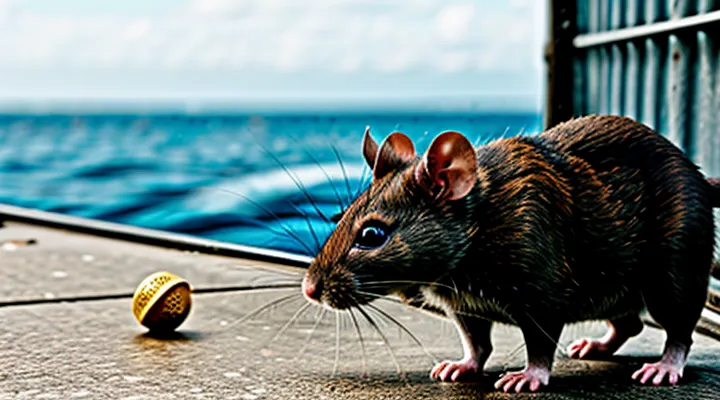
The Anatomy of a Ship Rat: Built for Escape
Physical Adaptations for Mobility
Agile Bodies and Flexible Skeletons
Rats escape confined vessels because their musculoskeletal design maximizes maneuverability. The vertebral column consists of numerous short, loosely articulated vertebrae, allowing the spine to bend sharply in multiple directions. This flexibility lets rats squeeze through openings as small as a quarter of their body width.
Key anatomical traits include:
- Compact musculature: Muscles attach close to the skeleton, reducing leverage loss and enabling rapid, precise movements.
- Reduced limb length: Short forelimbs and hindlimbs generate high torque, facilitating quick climbs and jumps.
- Highly mobile joints: Shoulder, hip, and elbow joints possess wide ranges of motion, supporting contortions necessary for tight spaces.
- Elastic tendons: Tendons store and release energy efficiently, enhancing sprint speed and sudden direction changes.
Together, these features create a body capable of extreme contortion and swift acceleration, allowing rats to navigate and exit even the most restricted ship environments.
Remarkable Climbing Abilities
Rats escape from maritime vessels largely because of their extraordinary climbing abilities. Their musculoskeletal structure supports rapid ascent on surfaces that would deter most rodents.
The forepaws possess sharp, curved claws that penetrate tiny crevices. Hind limbs generate powerful thrust, while a highly flexible spine permits the body to twist around obstacles. Plantar pads contain dense, friction‑enhancing hair, increasing grip on wet or oily decks.
Rats can scale:
- vertical steel railings, exploiting micro‑irregularities;
- rope rigging, using coordinated limb movements to ascend dozens of meters;
- ship hatch edges, leveraging their dentition to bite and pull loose covers;
- sloped bulkheads, adjusting body angle to maintain continuous contact.
These capabilities combine with a low body mass, allowing rats to balance on narrow ledges without toppling. Their tactile whiskers detect surface texture, prompting immediate adjustment of grip pressure. Consequently, even when bulkheads are sealed, rats locate minute gaps, exploit them, and climb to safety.
The synergy of clawed forelimbs, flexible spine, and sensory feedback equips rats with a climbing proficiency that directly facilitates their evasion of confinement on board ships.
Swimming Prowess and Water Survival
Rats possess anatomical and behavioral traits that enable them to navigate water effectively, allowing escape from a vessel in emergency situations. Their bodies are lightweight and covered with a dense fur layer that traps air, providing natural buoyancy. The tail functions as a stabilizer and rudder, while partially webbed hind feet generate thrust with minimal effort. Muscular control of the diaphragm permits breath-holding for up to three minutes, extending the window for reaching safety.
Key aspects of rat swimming and survival:
- Buoyancy: Air‑filled fur reduces sinking speed, keeping the animal afloat with little energy expenditure.
- Propulsion: Hind limbs execute rapid, coordinated strokes; the tail adjusts direction and balance.
- Breath control: Rats can close the glottis and store oxygen, delaying the need to surface.
- Thermoregulation: Fur insulates against cold water, preventing rapid loss of body heat.
- Instinctual behavior: When faced with flooding, rats immediately seek higher ground or open exits, often finding gaps in a ship’s structure.
These capabilities explain how rats routinely survive maritime incidents and emerge from flooded compartments, reinforcing their reputation for resilience in aquatic environments.
Sensory Skills that Aid Evasion
Acute Sense of Smell
Rats aboard vessels locate exits by detecting minute odor cues that permeate the hull, cargo holds, and ventilation shafts. Their olfactory system registers concentrations as low as a few parts per billion, allowing identification of fresh water, food residues, and the faint scent of corrosion that signals structural gaps.
The mammalian nasal cavity contains an exceptionally dense array of receptor neurons; rats possess roughly 10 million olfactory receptors, far exceeding the human count. These receptors converge on an enlarged olfactory bulb, which processes scent information with rapid temporal resolution. The neural pathways project directly to brain regions governing movement, enabling instantaneous behavioral responses to chemical gradients.
Scent detection directs navigation through complex ship interiors. Rats follow decreasing concentrations of waste-derived compounds to locate concealed passages, use the distinct smell of metal fatigue to pinpoint cracks, and sense human perspiration to avoid crew activity. This sensory advantage compensates for limited visual cues in dark, confined environments.
Key olfactory capabilities that facilitate escape:
- Detection threshold: few parts per billion for volatile organic compounds.
- Discrimination: ability to differentiate dozens of chemically similar substances.
- Gradient tracking: movement toward or away from odor concentration changes within seconds.
- Rapid signal transduction: neural response latency under 100 ms, supporting swift course correction.
Collectively, the acute sense of smell equips rats with a reliable navigation system that overrides visual limitations, ensuring successful egress from maritime habitats.
Excellent Hearing and Vibration Detection
Rats rely on an auditory system that surpasses many mammals in both range and sensitivity. Their cochlea processes frequencies from 1 kHz up to 80 kHz, allowing detection of subtle sounds produced by ship structures. When a vessel moves, metal hulls emit low‑frequency vibrations that travel through the deck and bulkheads. Rats’ tympanic membranes and middle‑ear muscles amplify these signals, enabling perception of disturbances invisible to human ears.
Key aspects of rat hearing and vibration detection:
- Broad frequency spectrum: Ability to hear ultrasonic calls and infrasonic rumblings generated by engine operation and water flow.
- Rapid signal transmission: Neural pathways deliver auditory information to the brain within milliseconds, supporting immediate behavioral responses.
- Mechanoreceptor integration: Whisker follicles and footpad receptors convert hull vibrations into tactile feedback, complementing auditory cues.
- Directional localization: Asymmetrical ear placement permits precise triangulation of sound sources, guiding movement toward or away from threats.
These capabilities allow rats to identify minute shifts in hull integrity, locate openings, and time escape routes with exceptional accuracy, explaining their success in navigating confined maritime environments.
Navigating in Darkness
Rats survive shipboard escapes by exploiting sensory systems that function without light. Their whiskers (vibrissae) detect minute air currents and surface textures, creating a tactile map of confined spaces. This ability allows rapid identification of gaps, vents, and structural weaknesses even in total darkness.
Auditory acuity complements tactile perception. Rats discern frequencies beyond human range, locate echoes from metal hulls, and pinpoint moving obstacles. Combined with a well‑developed hippocampus, they construct spatial memory of the vessel’s layout, recalling routes after repeated exposure.
Key adaptations that enable nocturnal navigation:
- Vibrissal feedback for precise distance measurement
- High‑frequency hearing for echo‑based mapping
- Large, odor‑sensitive olfactory epithelium for chemical trail tracking
- Hippocampal place cells that encode spatial coordinates without visual cues
These mechanisms collectively empower rats to locate exits, bypass sealed compartments, and exploit minute openings that remain invisible to human crews, ensuring successful egress from maritime environments.
Environmental Factors and Rat Resilience
The Ship as a Micro-Ecosystem
Abundance of Hiding Spots
Rats exploit the myriad concealment opportunities present on vessels, turning structural complexity into a survival advantage. Deck fittings, pipework, and bulkheads create pockets inaccessible to crew, allowing rodents to remain undetected while they navigate toward exits. Openings around ventilation shafts, cargo hatches, and wiring conduits serve as natural tunnels, linking interior compartments with the ship’s exterior.
Key hiding locations include:
- Gaps between deck planking and supporting beams
- Spaces behind insulated panels and firewalls
- Undersides of storage crates and pallets
- Loose fittings around engine rooms and galley equipment
- Crevices within ballast tanks and bilge areas
These sites provide shelter from light, noise, and human activity, while also offering routes that bypass conventional inspection zones. The abundance of such refuges reduces the likelihood of successful eradication, enabling rats to persist and ultimately escape when opportunities arise.
Constant Food and Water Sources
Rats survive aboard ships because they have uninterrupted access to nutrition and hydration. Ship kitchens generate daily waste that includes meat scraps, bread, and vegetables, while storage holds preserved foods such as salted fish, canned goods, and dried grain. Below are the primary provisions that sustain rodent populations during voyages:
- Fresh water from tanks or rain‑catching systems, often left unsealed.
- Organic waste from galley preparation, deposited in sculleries or open containers.
- Stored provisions in holds, pantry crates, and refrigerated compartments.
- Spilled liquids on decks, including broth, juice, and cleaning solutions.
Continuous intake of these resources fuels the high metabolic rate required for rapid movement, burrowing, and navigating tight ship structures. Energy derived from protein‑rich scraps supports muscle activity, while water intake maintains physiological balance, enabling rats to explore, reproduce, and ultimately exit the vessel when opportunities arise.
Protection from Predators
Rats survive aboard ships by employing a suite of defenses against natural predators such as cats, birds of prey, and larger rodents. Their acute sense of smell detects predator presence long before visual cues, prompting immediate retreat to concealed pathways. Flexible bodies enable them to squeeze through gaps as small as a quarter of an inch, granting access to hidden compartments where predators cannot follow.
Key protective mechanisms include:
- Rapid reflexes – sudden bursts of speed allow escape within seconds of detection.
- Social vigilance – individuals emit high‑frequency alarm calls that alert nearby conspecifics, creating a coordinated dispersal.
- Camouflage behavior – nocturnal activity patterns reduce exposure to diurnal hunters; dark fur blends with ship interiors.
These adaptations collectively reduce predation risk, ensuring that rats maintain a foothold on moving vessels and continue to exploit the resources ships provide.
Rat Behavior and Social Structures
Rapid Reproduction Rates
Rats survive shipboard environments largely because their populations rebound faster than removal efforts can keep pace. A single female can produce dozens of offspring within months, ensuring that any loss during an escape or extermination attempt is quickly offset.
- Gestation period: roughly 21 days.
- Sexual maturity: reached at 5–6 weeks of age.
- Litter size: 6–12 pups per birth.
- Breeding frequency: up to 10 litters per year per female.
- Population growth: theoretical increase of more than 1,000 % annually under optimal conditions.
Rapid turnover creates a constant supply of juveniles that are agile, curious, and more likely to locate gaps in hulls, ventilation shafts, or cargo holds. These traits combine with the high birth rate to produce a self‑sustaining presence that appears to “escape” despite ongoing control measures.
Effective management therefore targets reproductive cycles: limiting food sources, sealing entry points, and applying rodenticides before females reach sexual maturity. Interrupting the breeding schedule reduces the numerical advantage that enables rats to persist on moving vessels.
Colony Dynamics and Survival Strategies
Rats that infiltrate maritime vessels quickly reorganize their social structure to maximize mobility and resource acquisition. Within a few days, dominant individuals establish patrol routes along bulkheads, stairwells, and cargo holds, while subordinate members focus on foraging and maintaining hidden caches of food. This division of labor reduces competition for limited supplies and creates a network of scouts capable of detecting structural weaknesses.
Key survival mechanisms include:
- Rapid burrowing: Teeth and claws enable rats to gnaw through wooden planking, insulation, and even thin metal sheathing, opening escape routes that crew members cannot easily seal.
- Sensory adaptation: Acute whisker and auditory perception allow detection of vibrations caused by hull stress, facilitating early identification of potential breaches.
- Collective memory: Experienced rats transmit knowledge of safe pathways through pheromone trails and grooming behaviors, ensuring new entrants follow proven routes.
- Reproductive flexibility: High fecundity coupled with staggered breeding cycles maintains population density without overwhelming the ship’s limited resources.
These strategies create a resilient colony capable of exploiting structural flaws, securing sustenance, and ultimately abandoning the vessel when conditions become hostile. The coordinated effort of dominant scouts and supportive foragers underpins the rats’ ability to navigate complex ship environments and persist despite human countermeasures.
Innate Curiosity and Exploratory Nature
Rats possess an intrinsic drive to investigate novel environments, which compels them to probe every opening, crack, and seam they encounter on a vessel. This exploratory impulse triggers continuous movement through tight spaces, allowing individuals to locate escape routes that might be invisible to humans. Their whisker‑sensing system detects minute changes in airflow and surface textures, guiding them toward gaps as small as a few millimeters.
The species’ problem‑solving capacity manifests in trial‑and‑error learning; repeated attempts at a blocked passage lead to the discovery of alternative paths. Adaptive memory retains successful routes, enabling subsequent individuals to follow established corridors without redundant exploration. This collective knowledge accelerates the spread of escape behavior throughout the population.
Key aspects of rat curiosity that facilitate ship escape:
- Persistent investigation of unfamiliar structures
- Sensory detection of micro‑variations in hull integrity
- Rapid acquisition and transmission of navigation solutions
- Utilization of minimal openings for movement and exfiltration
These behavioral traits combine to create a self‑reinforcing system where curiosity drives exploration, exploration uncovers exits, and learned routes ensure efficient evacuation from maritime environments.
Historical Context and Common Misconceptions
The Myth of «Rats Deserting a Sinking Ship»
Origins of the Saying
The proverb “rats desert a sinking ship” dates back to maritime folklore of the 17th century, when sailors observed rodents fleeing vessels that were taking on water. Early logbooks from Dutch and English fleets recorded instances of rats abandoning decks moments before a hull breach, reinforcing the image of instinctive self‑preservation.
- First printed appearance: a 1665 pamphlet titled The Rat’s Flight, which described a cargo ship capsizing off the coast of Cornwall and noted that “the vermin fled before the crew.”
- Literary reinforcement: Samuel Johnson included the saying in his 1765 Dictionary of the English Language, defining “rat” as “a creature that deserts a sinking vessel.”
- Nautical usage: 18th‑century naval officers used the phrase as a metaphor for crew morale, implying that a ship’s abandonment begins with the lowest ranks.
The expression spread beyond seafaring circles through newspapers and political cartoons of the 19th century, where it symbolized the collapse of institutions. By the early 20th century, the idiom entered common English, detached from its literal maritime origin yet retaining the core observation of rapid, collective retreat when disaster looms.
Scientific Explanations for Mass Exodus
Rats abandon a vessel when a combination of sensory, environmental, and social cues signals imminent danger. Laboratory and field observations confirm that abrupt vibrations, low‑frequency noises, and sudden changes in air pressure activate the rodent’s vestibular and auditory systems, prompting immediate flight.
Key physiological and ecological drivers of the collective departure include:
- Temperature spikes that exceed the species’ thermoregulatory limits, causing hyperthermia risk.
- Humidity drops leading to dehydration stress.
- Rapid depletion of food stores, which triggers foraging urgency.
- Elevated carbon‑dioxide concentrations, detected by chemoreceptors as a sign of compromised ventilation.
Social dynamics amplify the response. Pheromonal releases from stressed individuals propagate alarm signals through the colony. High-density populations intensify competition for limited resources, increasing the probability that a subset of rats will initiate escape. Once a few individuals breach a barrier, others follow the established trail, a phenomenon documented in swarm‑behavior studies.
Physical adaptations enable rapid egress. Rats possess powerful incisors capable of gnawing through wood, plastic, and metal sheathing. Their flexible skeleton and adhesive foot pads allow ascent of vertical surfaces and passage through openings as small as 2 cm in diameter. These traits, combined with a highly developed spatial memory, facilitate navigation across complex ship interiors toward external exit points.
In summary, the mass exodus of rodents from maritime vessels results from an integrated suite of sensory detection, environmental stress, social signaling, and morphological specialization. Each factor contributes to a coordinated, high‑efficiency escape mechanism observed across diverse ship environments.
Rats as Stowaways and Global Travelers
Historical Significance in Exploration
Rats have accompanied maritime voyages since antiquity, their capacity to flee confined spaces influencing ship design and crew practices. Their escape routes—small gaps, ventilation shafts, and deteriorating hulls—revealed structural weaknesses that shipbuilders later reinforced, improving hull integrity and reducing water ingress.
During the Age of Exploration, rats acted as inadvertent vectors for pathogens, most notably the plague. Their movement between ports facilitated the rapid spread of disease, prompting early quarantine measures and the development of sanitary protocols that shaped international trade regulations.
The presence of rats also affected navigation and cargo management. Crews observed that rats congregated near fresh water stores, signaling leaks or compromised barrels. This behavior provided an early warning system, allowing sailors to address issues before they escalated into emergencies.
Key historical outcomes of rat escapology include:
- Strengthened hull construction through the sealing of known escape points.
- Implementation of quarantine stations at major ports to contain disease transmission.
- Adoption of routine inspections of cargo holds based on rodent activity patterns.
- Evolution of shipboard hygiene standards, reducing overall crew mortality.
Collectively, the ability of rats to exit ships left a lasting imprint on maritime exploration, driving advances in engineering, public health, and operational discipline that persisted well beyond the era of sail.
Modern-Day Challenges in Pest Control
Rats routinely breach ship hulls, cargo holds, and ventilation systems, exposing weaknesses in current pest‑management protocols. Their ability to navigate tight spaces, survive extreme temperatures, and exploit gaps in structural integrity illustrates the limitations of conventional control methods.
Key challenges confronting pest control professionals include:
- Resistance to commonly used rodenticides, driven by genetic adaptations and exposure to sub‑lethal doses.
- Inadequate detection technologies that fail to identify hidden infestations within complex ship architecture.
- Regulatory constraints that restrict the deployment of potent chemicals in confined marine environments.
- Logistics of applying treatments on moving vessels, where schedule disruptions and crew safety considerations limit intervention windows.
- Biosecurity concerns, as invasive rodent populations can introduce pathogens and compete with native species during port calls.
Addressing these issues requires integrated strategies: real‑time monitoring sensors, targeted bait stations designed for maritime use, and collaborative protocols between ship operators, port authorities, and pest‑control specialists. Continuous evaluation of resistance patterns and adaptation of treatment regimens are essential to prevent rats from exploiting structural vulnerabilities and to maintain cargo integrity.