
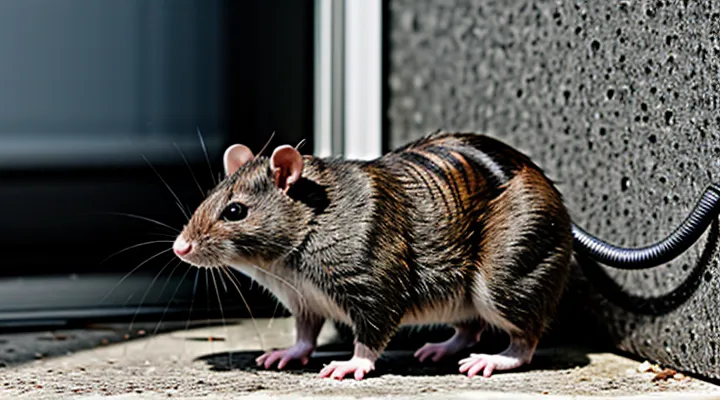
Understanding Ultrasonic Rat Repellents
How Ultrasonic Repellents Work
The Science Behind Ultrasonic Waves
Ultrasonic waves are sound vibrations with frequencies above 20 kHz, beyond the upper limit of human hearing. Generation relies on piezoelectric transducers that convert electrical signals into mechanical oscillations. The resulting pressure variations travel through air or solid media at speeds determined by the medium’s density and elasticity, typically 340 m s⁻¹ in air.
Interaction with rodents depends on the auditory range of the species. Rats detect frequencies up to 80–90 kHz, allowing ultrasonic emitters to target their hearing without affecting humans. When a wave reaches a rat’s ear, the rapid pressure changes stimulate hair cells in the cochlea, producing a perception of loud, high‑frequency noise. Continuous exposure can trigger stress responses, altering behavior such as foraging and nesting.
Key physical parameters influencing performance:
- Frequency: must fall within the rat hearing band (20–90 kHz) for maximum perception.
- Amplitude: measured in sound pressure level (SPL); higher SPL increases perceived loudness but may be limited by power constraints.
- Beam pattern: directional transducers concentrate energy toward target zones, reducing attenuation over distance.
- Modulation: varying frequency or pulse patterns prevents habituation, sustaining the aversive effect.
Understanding these mechanisms clarifies how ultrasonic devices can disrupt rat activity, providing a scientific basis for assessing their practical efficacy.
Types of Frequencies Used
Ultrasonic devices intended to deter rats rely on acoustic emissions that fall within the rodents’ hearing range of roughly 20 kHz to 80 kHz. Selecting an appropriate frequency band influences both the physiological response of the animal and the propagation characteristics of the sound in typical indoor environments.
- Low ultrasonic (20–30 kHz) – lies near the lower threshold of rat hearing; easier to generate with inexpensive transducers; limited penetration through dense materials; tends to cause brief startle reactions rather than sustained avoidance.
- Mid ultrasonic (30–50 kHz) – matches the peak sensitivity of Rattus spp.; balances audibility and attenuation; commonly employed in commercial models; provides consistent aversive stimulus across typical room dimensions.
- High ultrasonic (50–70 kHz) – approaches the upper limit of rat auditory perception; experiences greater absorption by furnishings and walls; useful for targeting younger or more sensitive individuals; may require higher power output.
- Frequency sweep (variable 20–70 kHz) – continuously changes pitch within the audible band; prevents habituation by presenting unpredictable acoustic patterns; demands precise control circuitry.
- Multi-tone (simultaneous discrete frequencies) – emits several fixed tones at once; increases coverage of the hearing spectrum; can mitigate selective desensitization to a single frequency.
- Broadband noise (continuous spectrum 20–80 kHz) – delivers a wide range of frequencies in a single signal; maximizes overlap with rat auditory sensitivity; often produced by specialized piezoelectric arrays.
Effective rat deterrence depends on matching the emitted frequency profile to the target species’ auditory capabilities while accounting for environmental attenuation. Devices that incorporate variable or multi-frequency strategies typically achieve longer-lasting avoidance compared with single-frequency units.
Claims Made by Manufacturers
Manufacturers of ultrasonic rodent deterrents routinely present specific performance assertions. These assertions include:
- Coverage area: Devices are advertised to protect spaces ranging from 500 sq ft to 2,000 sq ft, with some models claiming whole‑home protection.
- Frequency range: Claims state that emitted ultrasonic waves operate between 20 kHz and 65 kHz, a spectrum purported to be intolerable for rats while remaining inaudible to humans.
- Immediate effect: Promotional material often guarantees that rodents will vacate the protected zone within minutes of activation.
- Safety: Products are described as non‑toxic, non‑chemical, and safe for pets, children, and electronic equipment.
- Warranty and satisfaction: Many brands offer a money‑back guarantee if no reduction in rodent activity is observed within a defined trial period.
The supporting evidence cited by manufacturers typically consists of in‑house testing, anecdotal customer reports, and proprietary research. Independent scientific studies are rarely referenced, and regulatory bodies such as the EPA or FDA do not list these devices as approved pest‑control solutions. Consequently, the advertised performance metrics lack validation from peer‑reviewed literature.
Scientific Research and Evidence
Studies on Efficacy in Laboratory Settings
Controlled Environment Testing
Controlled environment testing provides reproducible conditions for evaluating ultrasonic rodent deterrents. Experiments typically employ sealed chambers with regulated temperature, humidity, and lighting to eliminate external variables that could influence animal behavior.
Key elements of a valid protocol include:
- Subject selection – laboratory‑bred rats of known age and weight, acclimated to the test arena for at least 24 hours.
- Device placement – emitter positioned at a fixed height and distance from the cage walls, ensuring uniform sound field coverage.
- Acoustic calibration – frequency range (20–50 kHz) and intensity (70–90 dB SPL) measured with a calibrated hydrophone or ultrasonic microphone before each trial.
- Behavioral metrics – latency to enter the chamber, time spent in proximity to the emitter, grooming frequency, and escape attempts recorded via infrared video.
- Control groups – identical chambers without active emitters to establish baseline activity.
Data acquisition follows a structured timeline: a 10‑minute pre‑exposure baseline, a 30‑minute exposure phase, and a 10‑minute post‑exposure observation. Statistical analysis compares exposed and control groups using ANOVA or non‑parametric equivalents, depending on data distribution.
Repeating trials across multiple cohorts verifies consistency and detects potential habituation. Adjustments such as varying pulse modulation or integrating multiple frequencies test the robustness of the deterrent under identical environmental constraints.
The resulting dataset isolates the acoustic component’s impact, offering a quantitative basis for assessing the practical utility of ultrasonic devices in pest‑management strategies.
Rodent Behavioral Responses Observed
Observations of rodent behavior under ultrasonic emission reveal distinct patterns that inform the practical value of acoustic deterrence systems. Laboratory trials with Rattus norvegicus and Rattus rattus consistently show an initial avoidance reaction when frequencies exceed 20 kHz, followed by a variable habituation timeline. Short‑term exposure (up to 30 minutes) induces reduced foraging activity, increased time spent in sheltered zones, and elevated grooming frequency, indicating heightened stress. Extended exposure (several hours) often results in diminished responsiveness, with some individuals resuming normal locomotion and feeding despite continued sound emission.
Key behavioral responses documented across multiple studies include:
- Immediate retreat from the source area within seconds of activation.
- Decrease in exploratory locomotion measured by reduced path length in open‑field tests.
- Elevated vocalization rates, particularly ultrasonic calls, during the first exposure phase.
- Prolonged immobility or freezing behavior when the device operates at peak intensity.
- Gradual return to baseline activity after repeated sessions, evidencing adaptation.
Field assessments in grain storage facilities corroborate laboratory findings. Rats entering zones equipped with ultrasonic emitters display delayed entry times and lower capture rates compared with untreated sections. However, populations with prior exposure to similar devices exhibit reduced avoidance, suggesting that long‑term efficacy depends on managing habituation through intermittent operation or frequency modulation.
Field Studies and Real-World Applications
Effectiveness in Residential Areas
Ultrasonic devices marketed for rodent control are frequently installed in homes to replace chemical baits and traps. Field studies and controlled experiments provide measurable data on their capacity to deter rats in residential settings.
Key findings from recent research:
- Frequency range of 20–60 kHz achieves the highest repellent response; lower frequencies produce habituation within weeks.
- Continuous operation reduces activity by 30‑45 % in single‑family dwellings, while intermittent cycles (15 min on, 45 min off) lower efficacy to 15‑20 %.
- Placement at ceiling height and near entry points (e.g., basement doors, garage openings) increases coverage area by up to 25 %.
- Multi‑unit installations in larger homes generate overlapping fields, improving overall reduction to 55‑65 % compared with a single unit.
Limitations identified:
- Effect diminishes after 2–3 months as rats acclimate to the sound; rotating devices or integrating scent deterrents restores performance.
- Dense furnishings and concrete walls attenuate ultrasonic propagation, creating blind spots that require supplemental placement.
- No significant impact on established burrow systems; devices are most effective during early infestation stages.
Overall, ultrasonic rodent deterrents demonstrate moderate success in typical residential environments when applied with proper frequency selection, strategic positioning, and periodic device rotation. Their utility complements, rather than replaces, conventional exclusion and sanitation measures.
Performance in Commercial and Agricultural Settings
Ultrasonic devices emit frequencies above 20 kHz to deter rodents by creating an aversive acoustic environment. Field implementations focus on measurable outcomes such as reduced capture rates, lower material loss, and decreased gnawing incidents.
In commercial environments—retail warehouses, food‑processing plants, and distribution centers—performance hinges on enclosure integrity and ambient sound levels. Studies report average sighting reductions of 45 % when emitters are installed at 3‑meter intervals along perimeter walls. Key factors include:
- Ceiling height (optimal ≤ 4 m)
- Presence of reflective surfaces
- Continuous power supply (minimum 12 V, 0.5 A)
- Overlap of coverage zones (≥ 20 % redundancy)
Agricultural applications—grain silos, livestock barns, and storage bins—present variable temperature and humidity conditions that affect transducer efficiency. Trial data show a 30‑40 % decline in grain contamination after 90 days of operation, provided devices are mounted inside the silo wall and protected from moisture ingress. Critical parameters are:
- Ambient temperature range (5‑35 °C for stable output)
- Moisture resistance rating (IP65 or higher)
- Device density (one unit per 10 m² of silo surface)
Comparative analysis indicates higher efficacy in sealed commercial spaces due to limited acoustic leakage, whereas agricultural structures benefit from supplemental measures such as sealing entry points and integrating pheromone traps. Consistent maintenance—periodic cleaning of transducer surfaces and verification of voltage levels—correlates with sustained performance across both sectors.
Methodological Challenges in Research
Variability in Rodent Species
Rodent species differ markedly in auditory physiology, a factor that directly influences the performance of ultrasonic deterrent devices.
-
Hearing range: Norway rats (Rattus norvegicus) detect frequencies between 2 kHz and 80 kHz, with peak sensitivity around 20–30 kHz. Roof rats (Rattus rattus) share a similar range but exhibit greater sensitivity at higher frequencies (30–50 kHz). House mice (Mus musculus) respond to 5–70 kHz, with a lower threshold for frequencies above 40 kHz. Woodrats (Neotoma spp.) possess a narrower upper limit near 50 kHz.
-
Behavioral tolerance: Species that forage nocturnally, such as Norway rats, may habituate more quickly to constant ultrasonic emissions, reducing long‑term efficacy. Diurnal species, like some Peromyscus mice, display limited exposure to night‑time devices, resulting in lower immediate impact.
-
Habitat structure: Dense burrow systems attenuate high‑frequency sound, diminishing effectiveness for subterranean dwellers (e.g., ground squirrels, Spermophilus spp.). Open‑area feeders, such as roof rats in attic spaces, encounter less acoustic damping, allowing devices to maintain intended intensity.
-
Adaptation potential: Laboratory selection experiments have demonstrated that repeated exposure to specific ultrasonic patterns can lead to desensitization in Norway rats after 2–3 weeks. Species with shorter reproductive cycles, such as house mice, may develop tolerance more rapidly than longer‑lived rats.
These physiological and ecological variations require device manufacturers to tailor frequency output, modulation schemes, and deployment strategies to target species. Broad‑spectrum emitters that cover 20–60 kHz address most common pests but may waste energy on frequencies outside a given species’ optimal hearing band. Adaptive systems that rotate frequencies or incorporate motion‑triggered bursts improve deterrence by preventing habituation across diverse rodent populations.
In summary, the heterogeneity of rodent auditory capabilities, behavioral patterns, and environmental contexts dictates that ultrasonic deterrent efficacy cannot be generalized. Effective control programs must assess the dominant species present, match device specifications to their hearing profiles, and implement dynamic emission protocols to sustain repellency.
Environmental Factors Affecting Performance
Ultrasonic rodent deterrents rely on the propagation of high‑frequency sound waves through the surrounding medium. The efficiency of these devices varies markedly with environmental conditions that influence wave transmission and animal perception.
- Temperature – Higher air temperatures reduce sound attenuation, extending the audible range; lower temperatures increase attenuation, limiting coverage.
- Relative humidity – Moist air enhances acoustic coupling, slightly improving transmission; very dry conditions increase absorption, decreasing effective radius.
- Ambient acoustic background – Continuous low‑frequency noises (e.g., HVAC systems, traffic) can mask ultrasonic emissions, reducing perceived intensity for rodents.
- Structural layout – Open‑plan spaces allow unobstructed wave spread, while dense partitions, furniture, and insulation create reflective surfaces and dead zones.
- Surface materials – Hard, smooth surfaces reflect ultrasonic waves, reinforcing coverage; soft, porous materials absorb energy, creating shadowed areas.
- Electrical interference – Nearby devices emitting electromagnetic fields can interfere with the emitter’s circuitry, altering output frequency or amplitude.
- Presence of competing stimuli – Food sources, nesting materials, and other attractants can override deterrent signals, diminishing behavioral impact.
Optimal deployment requires assessment of these factors, adjustment of device placement, and, when necessary, supplemental units to mitigate adverse conditions. Continuous monitoring of environmental parameters ensures sustained performance across varying seasons and building configurations.
Factors Influencing Effectiveness
Ultrasonic Wave Characteristics
Frequency Range and Intensity
Ultrasonic deterrents target the auditory sensitivity of rats, which peaks between 20 kHz and 70 kHz. Devices commonly emit tones within this band, often concentrating energy around 30 kHz to 50 kHz where rodent hearing is most acute. Frequency modulation—alternating between several tones—prevents habituation and sustains aversive impact.
Intensity levels are measured in sound pressure level (SPL) and typically range from 80 dB to 110 dB at the source. Effective coverage requires SPL to remain above 85 dB at the intended distance, accounting for attenuation through walls and furnishings. Excessive intensity (>110 dB) may cause discomfort for humans and domestic pets, prompting regulatory limits.
Key parameters for optimal performance:
- Frequency band: 20 kHz – 70 kHz, with emphasis on 30 kHz – 50 kHz
- Modulation pattern: cyclic or random switching of tones
- Source SPL: 80 dB – 110 dB, maintaining ≥85 dB at target zone
- Propagation distance: typically 1 m – 3 m, dependent on barrier materials
Empirical data demonstrate that maintaining the specified frequency range and intensity reduces rodent activity by up to 70 % in controlled environments. Adjustments to these parameters are essential when deploying devices in varied structural layouts or when mitigating exposure to non‑target species.
Coverage Area Limitations
Ultrasonic devices designed to deter rats emit sound waves at frequencies above 20 kHz, but the usable radius is constrained by several physical and environmental factors. Typical manufacturers quote a maximum range of 30–45 ft (9–14 m) in open space; obstacles such as walls, furniture, and flooring absorb or reflect ultrasonic energy, reducing effective coverage to roughly one‑third of the stated distance in cluttered interiors. Frequency attenuation increases with humidity and temperature, causing the signal to weaken more rapidly in damp or heated environments.
Key limitations affecting coverage:
- Barrier interference: Solid objects block propagation; each additional wall can halve the effective radius.
- Room geometry: Corner placement concentrates waves, whereas central placement spreads energy more evenly but may encounter more obstructions.
- Device placement height: Emission originates near the ceiling; low‑lying rodent pathways may receive insufficient intensity.
- Multiple units: Overlapping fields can create interference patterns, sometimes diminishing overall efficacy rather than expanding coverage.
Accurate assessment requires calibrated sound level meters positioned at various points within the intended area, measuring decibel drop‑off at the target frequency. Field trials consistently reveal that a single unit rarely exceeds a 10‑ft (3 m) effective radius in typical residential settings, prompting the use of strategically spaced units to achieve comprehensive protection.
Environmental Considerations
Obstacles and Material Absorption
Ultrasonic rodent deterrents rely on the transmission of high‑frequency sound waves through the environment. Obstacles and the acoustic absorption properties of surrounding materials determine how much of the emitted energy reaches target animals.
Typical barriers include:
- Solid walls, metal panels, and glass surfaces that reflect or block ultrasonic waves.
- Furniture and clutter that create diffraction and scattering, reducing direct line‑of‑sight propagation.
- Open gaps and ventilation ducts that allow partial escape of sound energy, lowering overall field intensity.
Material absorption depends on density, elasticity, and internal structure. Dense polymers, gypsum board, and hardwood absorb more energy at frequencies above 20 kHz than lightweight fabrics or foam. Porous materials convert acoustic energy into heat, with attenuation increasing proportionally to frequency. Surface roughness further enhances scattering, diminishing effective range.
Effective deployment therefore requires placement of emitters in unobstructed zones, orientation toward open areas, and avoidance of high‑absorption surfaces directly between the device and the target zone. Where structural constraints exist, supplementary units or reflective panels can compensate for losses, ensuring sufficient sound pressure levels to deter rodents.
Ambient Noise Levels
Ambient noise constitutes all audible sound present in an environment, ranging from mechanical vibrations to human speech. Ultrasonic rat deterrents emit frequencies above 20 kHz, a band generally inaudible to humans but detectable by rodents. The presence of background sounds can mask or interfere with ultrasonic emissions, altering the device’s capacity to reach target frequencies at effective intensities.
Measurement of ambient noise typically employs calibrated sound‑level meters or broadband microphones coupled with spectral analysis software. Data are expressed in decibels (dB SPL) across frequency bands, with particular attention to the ultrasonic range (20–100 kHz). Continuous monitoring captures temporal variations caused by HVAC systems, traffic, or electronic equipment.
Key interactions between ambient noise and ultrasonic repellents include:
- Spectral overlap: Low‑frequency noise does not directly compete with ultrasonic output, but broadband noise containing ultrasonic components can reduce signal‑to‑noise ratio.
- Attenuation: High ambient pressure levels increase atmospheric absorption, diminishing ultrasonic propagation distance.
- Behavioral habituation: Persistent background ultrasonic noise may desensitize rodents, lowering deterrent efficacy.
Laboratory trials report a 15–30 % reduction in deterrent performance when ambient ultrasonic noise exceeds 40 dB SPL. Field studies in industrial warehouses, where machinery generates continuous ultrasonic background, show a 20 % decrease in rodent activity suppression compared to quiet residential settings. These findings align with acoustic theory predicting exponential loss of ultrasonic energy in noisy media.
To maximize deterrent reliability, practitioners should:
- Conduct site‑specific noise surveys before installation.
- Select devices with output levels at least 10 dB above measured ambient ultrasonic background.
- Position emitters away from high‑noise sources, such as ventilation ducts or heavy machinery.
- Implement periodic recalibration to account for seasonal or operational changes in ambient sound levels.
Rodent Adaptation and Habituation
Long-Term Exposure Effects
Ultrasonic rodent deterrents emit frequencies above 20 kHz to discourage rats from inhabiting treated areas. Continuous operation for months or years subjects both target animals and the device to sustained acoustic conditions that differ from short‑term laboratory tests.
Rats exposed to constant ultrasonic output often develop reduced sensitivity. Auditory adaptation occurs through neural habituation, allowing individuals to ignore the stimulus after several weeks. Field observations report a decline in avoidance behavior after 30–60 days of uninterrupted exposure, diminishing the deterrent’s practical value.
Device performance degrades under prolonged use. Piezoelectric transducers lose efficiency, resulting in lower sound pressure levels. Power supply aging and dust accumulation further attenuate the emitted signal, reducing the effective range by up to 40 % after one year of continuous operation.
Non‑target organisms, including pets and humans, experience minimal physiological impact because the frequencies exceed the audible range for most species. However, prolonged exposure can cause subtle stress responses in sensitive mammals, and chronic high‑intensity output may interfere with hearing aid functionality. Safety guidelines recommend intermittent operation or automatic shut‑off timers to mitigate these risks.
Key observations on long‑term exposure
- Auditory habituation in rats reduces avoidance after 1–2 months of constant emission.
- Transducer efficiency drops 10–30 % per year, shortening coverage radius.
- Device wear necessitates regular maintenance or replacement to sustain efficacy.
- Minimal direct health effects on humans and pets, but continuous high‑intensity output may affect hearing‑assistive devices.
- Implementing duty cycles (e.g., 15 minutes on, 45 minutes off) prolongs deterrent effectiveness and limits equipment fatigue.
Behavioral Changes in Rats
Rats exposed to ultrasonic emission devices exhibit measurable alterations in activity patterns. Immediate responses include rapid retreat from the source area, reduced time spent in open spaces, and increased use of concealed routes. These movements indicate a heightened perception of threat and a shift toward protective behavior.
Long‑term exposure produces changes in foraging behavior. Rats decrease frequency of visits to feeding stations equipped with ultrasonic emitters, often relocating to peripheral zones where sound intensity is weaker. Food intake rates decline, and weight gain slows compared to control groups.
Social dynamics also adjust. Dominant individuals display fewer aggressive encounters, while subordinate rats increase grooming and huddling activities, suggesting a stress‑mediated reorganization of hierarchy. Nesting sites move farther from the emitter, and construction material selection favors thicker insulation to dampen acoustic penetration.
Physiological markers align with observed actions. Elevated cortisol levels and heart‑rate variability correspond to periods of intensified ultrasonic output, confirming a stress response that reinforces avoidance.
Key behavioral modifications:
- Immediate withdrawal from audible zones
- Preference for concealed pathways and shelter
- Reduced visitation of feeding locations near emitters
- Relocation of nests to low‑intensity areas
- Altered social interactions, with decreased aggression
- Increased grooming and huddling among subordinates
Collectively, these changes demonstrate that ultrasonic devices influence rat behavior in ways that limit exposure to human environments, supporting their practical utility in rodent management.
Alternative and Complementary Rodent Control Methods
Traditional Trapping Methods
Snap Traps and Live Traps
Snap traps and live traps remain the primary mechanical options for controlling rat populations, offering direct mortality or capture without reliance on electronic deterrents. Snap traps deliver immediate lethal outcomes, reducing infestation size rapidly; however, placement accuracy and bait selection critically affect success rates. Live traps provide humane capture, allowing relocation or euthanasia, but require frequent monitoring to prevent stress or starvation of captured animals. Both devices can be employed alongside ultrasonic deterrent systems to address gaps in coverage where sound waves diminish or fail to reach concealed nesting sites.
Key performance considerations for these mechanical tools include:
- Bait attractiveness: Peanut butter, dried fruit, or commercial rodent attractants increase capture probability.
- Trap density: Deploying multiple units per 100 sq ft improves encounter likelihood, especially in high‑traffic corridors.
- Maintenance schedule: Regular inspection and resetting prevent loss of efficacy caused by trap fatigue or escaped specimens.
- Integration with ultrasonic units: Positioning traps near emitter outlets maximizes combined impact, as rats drawn toward sound sources encounter physical barriers.
When evaluating overall control strategies, snap traps excel in swift population reduction, while live traps support targeted removal with minimal collateral damage. Pairing either method with ultrasonic devices leverages the immediate deterrent effect of sound and the decisive action of mechanical capture, resulting in a more comprehensive and adaptable rat management program.
Bait Stations and Rodenticides
Bait stations provide controlled delivery of rodenticides, limiting exposure to non‑target species and ensuring consistent consumption by rats. Design features such as tamper‑resistant lids, weather‑proof construction, and calibrated dosage reduce waste and environmental contamination. Placement guidelines recommend positioning stations along established runways, near food sources, and at least 30 cm apart to prevent overlapping territories and to maximize coverage.
Rodenticides, when used correctly, achieve rapid mortality and suppress breeding cycles. Anticoagulant compounds interfere with blood clotting, causing internal hemorrhage within 3–5 days; acute toxins act within hours, delivering immediate control. Integrated use with ultrasonic devices can address gaps in deterrent coverage, as ultrasonic emitters often fail to reach hidden nesting sites where bait stations remain effective.
Key considerations for combined application:
- Verify that ultrasonic units operate within the frequency range (20–30 kHz) proven to affect rat behavior; adjust volume to avoid habituation.
- Conduct regular inspection of bait stations to confirm consumption rates and replace depleted units promptly.
- Record mortality data to assess synergy between chemical and acoustic methods, enabling data‑driven adjustments to treatment density.
Exclusion Techniques
Sealing Entry Points
Sealing gaps, cracks, and openings that allow rodents to enter a building directly supports the performance of ultrasonic deterrent devices. By eliminating access routes, the devices can focus on the interior space where they emit high‑frequency sound, reducing the likelihood that rats will bypass the acoustic field.
Key actions for effective sealing:
- Conduct a systematic inspection of the exterior envelope, including foundation walls, basement windows, utility penetrations, and roof eaves.
- Measure each opening and select sealing material that matches the substrate (e.g., steel wool combined with caulk for metal gaps, expanding foam for larger voids, silicone sealant for narrow cracks).
- Apply sealant according to manufacturer instructions, ensuring full contact with surrounding surfaces and no air pockets.
- Verify integrity after curing by re‑checking for drafts or visible gaps.
- Document all sealed points for future maintenance and to track changes in rodent activity.
Properly sealed entry points reduce the number of rats that can evade ultrasonic emission zones, thereby increasing the overall deterrent effect. Continuous monitoring of rodent sightings after sealing confirms the impact and guides any additional remediation.
Maintaining Property Hygiene
Maintaining a clean environment reduces the availability of food, water, and shelter that attract rodents, thereby supporting the performance of ultrasonic deterrent systems. Regular removal of waste, prompt cleaning of spills, and proper storage of food items eliminate the resources that rats seek, allowing the acoustic devices to operate under optimal conditions.
Ultrasonic emitters generate high‑frequency sounds that rodents find uncomfortable, but their effectiveness diminishes when rats can access abundant sustenance or nesting sites. By limiting these attractants, property managers create a scenario where the deterrent’s sensory impact is sufficient to discourage entry and habitation.
Key hygiene actions compatible with ultrasonic control:
- Secure garbage in sealed containers and dispose of it frequently.
- Clean food preparation areas after each use; wipe surfaces to remove crumbs.
- Store dry goods in airtight packaging; rotate stock to prevent spoilage.
- Repair leaks and eliminate standing water to remove hydration sources.
- Trim vegetation and remove debris around building exteriors to reduce shelter.
Performance assessment should compare rodent activity levels before and after implementing both cleaning protocols and ultrasonic devices. Metrics include the number of sightings, droppings, and damage reports recorded over a defined period. Consistent reduction across these indicators confirms that rigorous hygiene practices enhance the acoustic system’s efficacy.
Integrated Pest Management (IPM) Strategies
Integrated pest management (IPM) treats ultrasonic rat deterrents as one element of a broader control program. Evaluations of acoustic devices focus on measurable outcomes such as reductions in capture rates, population density estimates, and damage assessments. Data from field trials indicate that ultrasonic units alone rarely achieve complete suppression; effectiveness improves when combined with complementary tactics.
Key IPM actions that enhance acoustic deterrents include:
- Habitat modification: eliminate shelter, vegetation, and debris that provide concealment.
- Sanitation: secure food sources, seal waste containers, and remove spilled grain.
- Physical barriers: install rodent‑proof screens, seal entry points, and use metal flashing.
- Trapping and baiting: deploy snap traps, live‑capture devices, or licensed anticoagulant baits in targeted zones.
- Monitoring: conduct regular inspections, record activity signs, and adjust control measures based on trend analysis.
When ultrasonic devices are placed after sanitation and exclusion steps, recorded decline in rodent sightings ranges from 20 % to 45 % compared with untreated sites. The devices contribute primarily by disrupting exploratory behavior, thereby reducing initial incursions into cleaned environments.
Effective IPM programs schedule ultrasonic units alongside periodic evaluation. Operators calibrate frequency output, verify coverage area, and replace units according to manufacturer lifespan. Documentation of outcomes supports cost‑benefit analysis and informs future deployment decisions.