
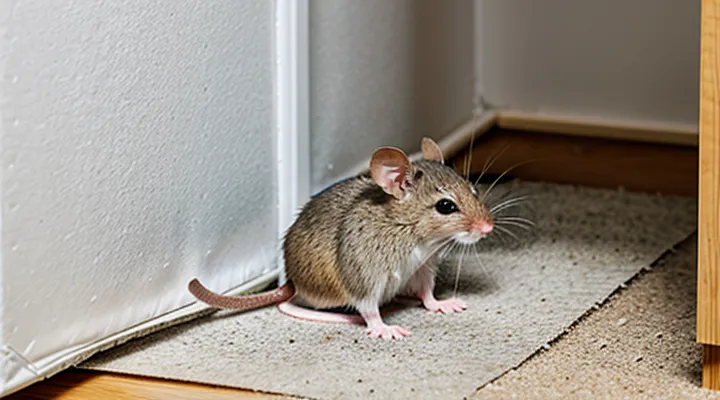
Understanding the Threat: Why Mice are a Problem for Homes
Health Risks Associated with Rodent Infestations
Rodent presence in residential structures creates direct pathways for disease transmission, food contamination, and allergic reactions. Excreta, urine, and saliva contain pathogens that survive for extended periods, increasing exposure risk for occupants. Structural gaps that allow entry also facilitate the spread of these hazards throughout the living environment.
Key health dangers include:
- Hantavirus pulmonary syndrome, transmitted via inhalation of dried droppings.
- Leptospirosis, acquired through contact with contaminated urine.
- Salmonella and other bacterial infections, resulting from food contamination.
- Allergic sensitization and asthma exacerbation caused by rodent hair and dander.
- Secondary fungal growth, promoted by moisture accumulation in damaged insulation.
Structural Damage Caused by Mice
Mice gnaw on a wide range of building materials, creating openings that compromise the envelope of a residence. Their incisors continuously grow, prompting relentless chewing on soft or fibrous substances such as insulation batts, drywall, and wooden framing members.
The most vulnerable structural elements include:
- Insulation fibers, which lose thermal efficiency when shredded;
- Electrical wiring, where exposed conductors increase fire hazard;
- Plastic and copper plumbing, whose perforations cause leaks and corrosion;
- Load‑bearing timber, whose integrity diminishes after extensive bite marks.
Bite damage reduces the load‑bearing capacity of joists and studs, potentially leading to sagging floors or roof deformation. Compromised wiring and plumbing elevate the risk of short circuits and water intrusion, both of which can accelerate decay of surrounding structural components.
Effective mitigation relies on sealing entry points, installing rodent‑resistant barrier materials, and maintaining a continuous insulation sheath that resists penetration. Regular inspection of vulnerable zones ensures early detection of gnaw marks before they propagate into significant structural failure.
How Mice Enter and Navigate Homes
Mice exploit structural weaknesses to gain access to residential interiors. Small openings as narrow as a quarter‑inch allow entry, and the insects’ flexible bodies enable passage through multiple pathways. Common intrusion sites include:
- Cracks in foundation walls and basement slabs
- Gaps around utility penetrations such as pipes, cables, and HVAC ducts
- Unsealed openings around windows, doors, and sliding glass tracks
- Unscreened vents, chimney flues, and attic access points
- Damaged or missing weather‑stripping and door sweeps
- Openings in roof sheathing, soffits, and eaves
Once inside, mice navigate using tactile and olfactory cues. Their movement patterns favor concealed routes that minimize exposure:
- Interior wall cavities and stud bays provide direct shortcuts between rooms
- Ceiling joist spaces and attic insulation allow vertical travel toward food sources
- Crawl spaces and basement voids serve as hidden highways linking exterior entry points to interior zones
- Electrical conduit and plumbing chases act as linear pathways that connect distant areas
- Floor joist gaps and under‑floor voids enable horizontal migration across the building envelope
Effective sealing and barrier installation target each identified opening, reducing the probability of penetration and limiting the internal network of routes that rodents can exploit. Regular inspection of the building envelope, combined with comprehensive sealing of gaps, forms the core of a prevention strategy.
The Role of Insulation in Rodent Control
Common Entry Points and Vulnerable Insulation Areas
Mice access homes through structural openings that are often overlooked during insulation installation. Typical entry points include gaps around utility pipes and cables, cracks in foundation walls, unsealed vent openings, eaves and soffit gaps, and spaces beneath door thresholds. Each opening provides a direct route from exterior environments to interior cavities where insulation resides.
Insulation areas most vulnerable to rodent intrusion are those that lack continuous coverage or contain voids. Loose‑fill cellulose or fiberglass placed near wall studs can be displaced when mice chew through adjacent framing. Spray‑foam applications that were not applied evenly leave gaps that rodents exploit. Attic insulation positioned close to eaves, especially when vent chutes are unprotected, offers easy access. Crawl‑space insulation directly exposed to soil moisture creates a conducive habitat for nesting and chewing.
Common entry points
- Gaps around plumbing, electrical, and HVAC penetrations
- Foundation cracks and joint seams
- Unscreened vent openings (dryer, exhaust, attic)
- Openings in eaves, soffits, and roof valleys
- Space beneath door thresholds and window sills
Vulnerable insulation zones
- Loose‑fill material adjacent to framing members
- Incomplete or uneven spray‑foam barriers
- Attic insulation near eaves and vent chutes
- Crawl‑space insulation exposed to ground moisture
- Insulation in wall cavities with missing or damaged fire‑stop sealants
Types of Insulation and Their Susceptibility to Rodent Damage
Fiberglass and Mineral Wool
Insulation that blocks rodent entry relies on dense, non‑permeable materials. Two widely available options are «fiberglass» and «mineral wool», each offering specific advantages for sealing gaps and eliminating nesting sites.
«Fiberglass» consists of fine glass fibers bonded with a resin matrix. Its typical density ranges from 2 to 4 lb/ft³, creating a solid barrier that mice cannot easily chew through. The material resists moisture absorption, limiting conditions that attract pests. Installation between studs or in attic cavities fills voids, reducing the number of accessible pathways.
«Mineral wool», produced from basalt or slag, provides higher density—often 4 to 6 lb/ft³—than standard «fiberglass». The increased mass enhances structural integrity, making it more difficult for rodents to gnaw. Thermal stability up to 1 200 °F further discourages nesting, as the material remains unpalatable under extreme temperatures. Like «fiberglass», it fits snugly within framing, sealing seams and joints.
Practical measures for effective deployment:
- Place insulation tightly against all framing members, avoiding gaps larger than ¼ inch.
- Seal penetrations (pipes, wiring) with rodent‑resistant caulk before installing the insulating layer.
- Use batts with a minimum R‑value of 13 in walls and R‑38 in attics to ensure sufficient thickness.
- Inspect installed material periodically for signs of compression or displacement, which could create new entry points.
When applied correctly, both «fiberglass» and «mineral wool» contribute to a continuous, hard‑to‑breach envelope, substantially lowering the risk of mouse infiltration. Selecting the denser «mineral wool» for high‑traffic areas and supplementing with «fiberglass» in less vulnerable zones balances cost and performance while maintaining robust protection.
Cellulose Insulation
Cellulose insulation consists of recycled paper treated with fire‑resistant chemicals. The material is blown into wall cavities, attic spaces, and floor joists, creating a dense barrier that blocks entry points commonly exploited by rodents. Its high packing density reduces gaps, limiting the pathways mice use to travel between exterior and interior environments.
Key attributes that contribute to rodent deterrence include:
- Density — compressed fibers fill voids, eliminating hollow channels that facilitate nesting.
- Moisture resistance — treated fibers absorb less water, preventing the softening that attracts gnawing activity.
- Chemical additives — borate‑based preservatives discourage chewing without posing health risks to occupants.
- Seamless coverage — continuous application across structural members removes the need for multiple separate panels that could be compromised.
Installation requires a blower machine that distributes the material to the desired depth, typically 12–16 inches for optimal thermal performance. Proper sealing of penetrations—such as utility openings and vent chases—ensures that the insulation remains intact and that mice cannot exploit residual gaps.
Environmental considerations favor cellulose insulation. The product recycles up to 85 % post‑consumer paper, reducing landfill waste and lowering embodied energy compared to synthetic alternatives. Life‑cycle assessments indicate a smaller carbon footprint while delivering comparable R‑values.
Cost analysis shows that cellulose insulation provides a favorable return on investment. Material expenses are modest, and the reduction in heating‑cooling loads, combined with decreased pest‑related repair costs, yields measurable savings over the building’s lifespan.
In summary, cellulose insulation offers a dense, treated, and environmentally responsible solution that directly impedes mouse intrusion while enhancing overall building performance.
Foam Board and Spray Foam Insulation
Foam board and spray foam are two common insulation materials that also serve as barriers against mouse intrusion. Their physical properties differ, influencing installation methods, cost, and effectiveness in sealing entry points.
Foam board consists of rigid panels made from polystyrene, polyisocyanurate, or extruded polystyrene. Panels are cut to fit walls, floors, and ceilings, then sealed with tape or sealant. The rigid surface creates a continuous barrier that prevents rodents from gnawing through gaps. Installation requires precise measurement and handling of large sheets, which can increase labor time but reduces the need for extensive caulking.
Spray foam is applied as a liquid that expands into a foam, filling cavities and sealing cracks. Closed‑cell spray foam provides a dense, moisture‑resistant layer that adheres to irregular surfaces, eliminating voids where mice could enter. Open‑cell spray foam offers lower density and greater flexibility, suitable for interior walls where acoustic dampening is also desired. The expanding nature of spray foam ensures comprehensive coverage, though proper ventilation and protective equipment are essential during application.
Key considerations for selecting between the two options:
- Barrier integrity – Foam board relies on seams and joints; spray foam creates a seamless seal.
- Installation complexity – Foam board demands cutting and fitting; spray foam requires specialized equipment and trained personnel.
- Thermal performance – Both provide high R‑values; closed‑cell spray foam typically offers the highest per inch.
- Cost – Foam board generally has lower material costs; spray foam incurs higher material and labor expenses.
- Moisture resistance – Closed‑cell spray foam and polyisocyanurate foam board resist water infiltration better than open‑cell variants.
When the primary goal is to deter mice, the choice hinges on the ability to eliminate gaps. Spray foam’s expanding property delivers an uninterrupted seal, making it especially effective in older structures with numerous cracks. Foam board, when installed with meticulous sealing of all joints, also provides a robust barrier, particularly in new construction where panels can be placed flush with framing. Selecting the appropriate material aligns insulation performance with rodent‑proofing objectives.
Choosing the Right Insulation for Rodent Protection
Rodent-Resistant Insulation Materials
Steel Wool and Copper Mesh
Steel wool provides a dense, compressible barrier that fits into irregular openings such as cracks around pipes, vents, and foundation seams. Its fibrous structure resists rodent entry by creating a physical obstruction that is difficult for mice to squeeze through.
Copper mesh adds a metallic component that rodents cannot gnaw effectively. When layered over steel wool, the mesh reinforces the seal and prevents the wool from being displaced by chewing or environmental movement. The combination of the two materials offers a long‑lasting, low‑maintenance solution for sealing potential entry points.
Practical application steps:
- Clean the target area to remove debris and moisture.
- Pack steel wool tightly into the gap, ensuring no voids remain.
- Overlay the packed wool with copper mesh, securing it with staples or a suitable sealant.
- Inspect the installation periodically for signs of wear or displacement, and replace as needed.
Using steel wool together with copper mesh enhances the integrity of a home’s defensive envelope against rodent intrusion, delivering a cost‑effective method that integrates seamlessly with existing insulation systems.
Boric Acid Treated Insulation
Boric‑acid‑treated insulation combines thermal performance with rodent deterrence. The material integrates fine particles of boric acid into cellulose or mineral fibers, creating a barrier that interferes with the nervous system of mice upon contact or ingestion.
The treatment provides three practical advantages.
- Immediate toxicity to rodents while remaining inert for humans and pets when applied according to manufacturer specifications.
- Preservation of R‑value comparable to standard insulation, ensuring energy efficiency is not compromised.
- Compatibility with standard installation methods, allowing retrofitting in existing walls, attics, and crawl spaces without specialized equipment.
Safety considerations require proper protective gear during handling, ventilation to disperse dust, and sealing of gaps after installation to prevent migration of particles. Compliance with local building codes and material safety data sheets guarantees that the insulation meets regulatory standards for indoor air quality.
Maintenance involves periodic visual inspection for signs of rodent activity and verification that the insulation remains intact. If damage is detected, replace the affected sections using the same boric‑acid‑treated product to maintain continuous protection.
Overall, the integration of boric acid into insulation delivers a dual function: thermal regulation and a chemical deterrent that reduces the likelihood of mouse intrusion in residential structures.
Exclusion Foams and Sealants
Exclusion foams and sealants provide a reliable barrier against rodent ingress by filling gaps and sealing openings that conventional insulation cannot cover. These materials expand on contact with air, conform to irregular surfaces, and harden into a durable, airtight membrane that resists chewing and gnawing.
Key characteristics include:
- Rapid expansion, reaching up to 30 times original volume, allowing penetration into narrow voids.
- Low toxicity, meeting safety standards for indoor use.
- Compatibility with common building substrates such as wood, concrete, and drywall.
- Long‑term stability, maintaining integrity for several years without degradation.
Application guidelines:
- Identify all potential entry points, including cracks around pipes, vents, and foundation seams.
- Clean surfaces to remove dust, debris, and loose material; moisture must be removed to ensure proper adhesion.
- Apply foam or sealant using a calibrated dispenser, directing the product into the cavity until it fills the space completely.
- Allow the material to cure according to manufacturer specifications, typically 10–15 minutes for foam and 24 hours for sealant.
- Inspect the treated area for gaps; repeat application where necessary to achieve a continuous seal.
Integrating exclusion foams and sealants with broader insulation strategies creates a comprehensive defense system that minimizes heat loss while denying mice access to interior spaces. Regular maintenance inspections confirm the barrier remains intact, preserving both energy efficiency and structural protection.
Factors to Consider When Selecting Insulation
R-Value and Thermal Performance
R‑value quantifies a material’s resistance to heat flow; higher values indicate greater thermal insulation. In residential construction, selecting insulation with an appropriate R‑value reduces temperature gradients across wall assemblies, limiting condensation that can compromise structural integrity and create pathways for rodents.
Key aspects of thermal performance relevant to rodent deterrence include:
- Material density: denser fibers impede heat transfer and resist gnawing.
- Installation continuity: uninterrupted layers eliminate gaps where temperature differentials encourage pest activity.
- Moisture management: low permeability prevents water accumulation, which otherwise softens insulation and attracts mice.
When a building envelope maintains a stable interior temperature, heat‑driven pressure differentials diminish, reducing the suction effect that draws small mammals into cavities. Consequently, insulation with a high R‑value and consistent installation serves both energy‑saving and pest‑prevention functions. Monitoring R‑value specifications during design and retrofit ensures that thermal barriers remain effective over the structure’s lifespan.
Durability and Longevity
Durable insulation forms a critical barrier against rodent intrusion, maintaining its structural integrity over years of exposure to moisture, temperature fluctuations, and mechanical stress. Materials such as closed‑cell spray foam, rigid polyisocyanurate panels, and high‑density mineral wool retain shape and sealing performance, preventing gaps that mice could exploit.
Key attributes influencing longevity include:
- Resistance to water absorption, which averts swelling and loss of adhesion.
- Dimensional stability under thermal cycling, ensuring consistent coverage without cracking.
- Chemical inertness, reducing degradation from household cleaning agents or pest‑control chemicals.
- Mechanical strength, allowing the material to withstand compression from building settlement or accidental impact.
Installation quality directly affects lifespan. Proper surface preparation, complete sealing of seams, and adherence to manufacturer specifications eliminate weak points that compromise durability. Regular inspections, focusing on areas around utilities, foundation cracks, and attic vents, identify early signs of wear such as delamination or surface erosion. Prompt repair or reinforcement restores the protective envelope before rodents gain access.
When selecting insulation for long‑term rodent defense, prioritize products with documented performance ratings, warranty periods of ten years or more, and certifications confirming resistance to moisture and compression. Combining durable material choice with meticulous installation and scheduled maintenance yields a resilient barrier that remains effective throughout the building’s service life.
Environmental Impact and Safety
Robust rodent‑proof insulation reduces the need for chemical rodenticides, thereby decreasing environmental contamination. Materials such as recycled cellulose, mineral wool, and closed‑cell foam have distinct ecological footprints. Recycled cellulose derives from post‑consumer paper, offering lower embodied energy and carbon emissions than virgin polymers. Mineral wool production consumes significant natural resources but can incorporate a high percentage of reclaimed glass, mitigating raw‑material extraction. Closed‑cell foam provides superior moisture resistance; however, its manufacturing involves petrochemical feedstocks and may release volatile organic compounds (VOCs) if not properly cured.
Key environmental considerations include:
- Source sustainability: preference for recycled or rapidly renewable feedstocks.
- End‑of‑life management: recyclability or safe landfill disposal to prevent soil and water pollution.
- Emission profile: low‑VOC formulations and minimal off‑gassing during installation.
Safety aspects focus on occupant health and building integrity. Insulation that seals gaps prevents mouse entry but must also maintain fire resistance and breathable indoor air. Non‑flammable mineral wool and fire‑retardant foam meet stringent fire safety standards, reducing the risk of rapid flame spread. Proper installation eliminates voids where dust or allergens could accumulate, supporting respiratory health. Sealed barriers also deter nesting, limiting exposure to rodent‑borne pathogens such as hantavirus and leptospirosis.
Critical safety measures comprise:
- Compliance with fire‑rating classifications (e.g., ASTM E84, NFPA 285).
- Verification of low‑VOC content and certification by indoor‑air‑quality programs.
- Use of protective equipment during installation to avoid inhalation of fibers or fumes.
Selecting insulation that balances ecological responsibility with rigorous safety standards ensures durable protection against rodent intrusion while preserving environmental quality and occupant well‑being.
Installation Best Practices for Preventing Mice
Sealing Gaps and Cracks
Exterior Walls and Foundations
Exterior walls provide the primary barrier against rodent entry; any gaps, cracks, or unsealed penetrations create direct pathways for mice. Sealing joints between siding, brick, and trim with durable, rodent‑resistant caulk eliminates these openings. When installing insulation, select materials that do not attract gnawing, such as closed‑cell spray foam, and ensure the foam adheres tightly to the wall cavity, leaving no voids.
Foundations require similar attention. Inspect the perimeter for settling cracks, especially around utility penetrations and drainage pipes. Apply a flexible, waterproof sealant that remains effective under temperature fluctuations. Install a continuous stainless‑steel or copper mesh barrier at the base of the foundation, extending at least six inches above ground level, to deter climbing and chewing.
Key actions to fortify exterior walls and foundations:
- Conduct a visual audit of all seams, joints, and openings; document each defect.
- Use rodent‑grade caulk or expanding foam to fill identified gaps.
- Install metal flashing or mesh around vent pipes, cable entries, and foundation cracks.
- Apply a perimeter sealant compatible with the building’s exterior finish.
- Verify that insulation contacts the interior side of the barrier without gaps.
Implementing these measures creates a sealed envelope that prevents mice from exploiting structural weaknesses, thereby preserving the integrity of the home’s thermal envelope and reducing the need for reactive pest control.
Around Pipes and Utility Lines
Proper sealing of gaps surrounding pipes and utility conduits is essential for preventing rodent ingress. Mice exploit even minimal openings to travel from exterior walls into interior spaces, where they can cause structural damage and contaminate food supplies.
Key actions for insulating these vulnerable areas include:
- Installing steel wool or copper mesh into gaps before applying sealant; the material resists chewing and maintains structural integrity.
- Applying a continuous bead of high‑grade silicone or polyurethane caulk over the mesh to create an airtight barrier.
- Wrapping exposed pipe sections with rigid foam insulation, then securing the foam with metal clamps to eliminate movement that could create new fissures.
- Covering utility entry points, such as electrical conduit sleeves and HVAC ducts, with metal flashing or heavy‑duty sheet metal, then sealing seams with fire‑rated sealant to meet safety codes.
- Conducting regular inspections after installation to verify that sealant remains intact and that no new gaps have formed due to thermal expansion or building settlement.
These measures, when executed systematically, reduce the likelihood of mouse penetration through plumbing and utility pathways, thereby enhancing overall home protection.
Attic and Basement Entry Points
Proper sealing of attic and basement openings is a prerequisite for preventing rodent intrusion in residential structures.
Typical attic entry points include:
- Gaps around eaves and soffit vents
- Unsealed roof penetrations such as chimney flues and skylights
- Cracks in insulation or roof sheathing
- Openings around light fixtures and wiring
Typical basement entry points include:
- Cracks in foundation walls and slab
- Uncapped utility lines, including water, gas, and electrical conduits
- Openings around sump pump and floor drain assemblies
- Gaps around crawl‑space vents and pipe sleeves
Effective barriers consist of steel wool or copper mesh combined with silicone caulk for small gaps, expanding foam for larger voids, and rigid metal flashing or hardware cloth for structural openings. Concrete patching and epoxy sealants provide long‑term protection for foundation cracks.
Routine inspection of these vulnerable zones, followed by immediate repair, sustains the integrity of the building envelope and eliminates pathways that mice exploit.
Proper Vent and Chimney Screening
Proper screening of vents and chimneys creates a physical barrier that prevents rodents from entering the building envelope. Metal mesh with openings no larger than ¼ inch blocks mice while allowing adequate airflow for ventilation systems and draft control in fireplaces.
Installation guidelines:
- Choose stainless‑steel or galvanized steel mesh to resist corrosion and retain structural integrity.
- Secure the mesh with heavy‑duty staples or corrosion‑resistant screws, overlapping seams by at least 2 inches.
- Fit the screen tightly around the vent or chimney flue, ensuring no gaps around the frame or ductwork.
- Inspect the screening annually for signs of wear, rust, or displacement, and replace compromised sections immediately.
Maintenance procedures:
- Clean accumulated debris from the mesh surface to preserve airflow and deter nesting material.
- Apply a rust‑inhibiting coating to metal components in humid climates, extending service life.
- Verify that the screen does not obstruct combustion air supply for fuel‑burning appliances, adjusting as needed to maintain safe operation.
By integrating robust vent and chimney screening, homeowners reinforce the overall defensive envelope, reducing the likelihood of mouse intrusion without compromising system performance.
Importance of Professional Installation
Professional installation ensures that insulation designed to deter rodents performs as intended. Certified installers possess the expertise to select appropriate materials, apply them at optimal thickness, and integrate them seamlessly with existing structures.
Correctly sealed gaps eliminate entry points that mice exploit. Technicians assess vulnerable locations—such as foundation seams, utility penetrations, and attic vents—and apply sealants or mesh barriers with precision. Compliance with local building codes further guarantees that installations meet safety and durability standards.
Improperly applied insulation leaves micro‑cracks and voids, allowing pests to bypass barriers and cause structural damage. Faulty installation also reduces thermal efficiency, leading to higher energy consumption and increased utility costs.
Long‑term benefits include extended material lifespan, warranty protection, and lower expenses for pest control and repairs. Investing in qualified installers maximizes return on insulation investment while maintaining a rodent‑free environment.
Integrated Pest Management Strategies
Regular Home Inspections
Regular inspections identify gaps, cracks, and openings that compromise barrier integrity and invite rodent entry. Detecting such vulnerabilities early prevents mice from exploiting insulation deficiencies and reduces the need for extensive remediation.
Key inspection focus areas include:
- Exterior foundation and crawl‑space walls for holes larger than a quarter‑inch.
- Utility penetrations, such as pipe sleeves and conduit entries, for missing sealants.
- Roof eaves, soffits, and vent covers for damaged flashing or loose panels.
- Interior wall cavities and attic spaces for displaced insulation or exposed wiring.
- Door thresholds and window frames for worn weatherstripping or misaligned casings.
Conducting inspections at least twice annually—once in spring before nesting season and once in autumn after potential infestation—ensures timely detection of structural changes. Documenting findings with photographs and written notes creates a reference for corrective actions and tracks the effectiveness of sealing measures over time.
Integrating inspection results with insulation upgrades maximizes protection. When a gap is sealed, replace displaced insulation to restore thermal performance, and verify that new materials do not create additional entry points. Consistent, systematic assessments thus maintain both energy efficiency and rodent resistance.
Maintaining a Clean Environment
A tidy interior eliminates food sources and nesting material, reducing the likelihood that rodents will exploit insulation gaps.
Key practices for a clean environment include:
- Store perishables in sealed containers; discard waste promptly.
- Sweep floors and vacuum carpets regularly to remove crumbs.
- Clean behind appliances and under furniture where debris accumulates.
- Maintain exterior cleanliness by removing leaf litter, compost piles, and standing water that attract pests.
Routine inspections verify that cleaning efforts remain effective. Inspect seams, vents, and utility openings for dust or droppings; address any signs of contamination immediately. Consistent upkeep reinforces barrier integrity and supports long‑term rodent deterrence.
Landscaping to Deter Rodents
Landscaping directly influences the likelihood of rodents entering a dwelling. Proper placement of vegetation, hardscape elements, and maintenance routines creates an environment that discourages mice from approaching the building envelope.
Key practices include:
- Trimming shrubs and trees to maintain a minimum clearance of 18 inches from the foundation, eliminating bridge points for climbing.
- Removing dense ground cover, such as ivy or low‑lying bushes, within a three‑foot radius of the house to reduce shelter opportunities.
- Installing gravel or stone mulch at the base of the foundation, providing a dry, abrasive surface that mice avoid.
- Ensuring proper grading away from the structure, directing water runoff and preventing moisture accumulation that attracts rodents.
- Keeping garden waste, compost piles, and debris sealed and distant from the home to eliminate food sources.
Regular inspection of the perimeter for signs of gnaw marks, burrows, or nesting material enables early intervention. Integrating these landscaping measures with a robust insulation strategy enhances overall protection, reducing the probability of mouse infiltration through gaps or openings.