
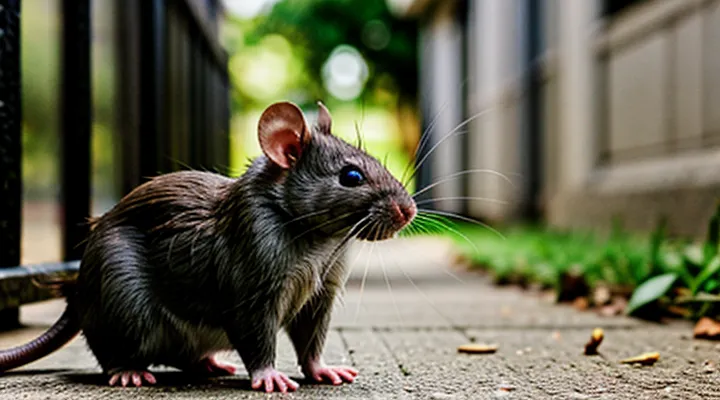
Understanding Rat Behavior and Socialization
The Social Nature of Rats
Rats are highly social mammals that live in stable colonies. Within a group, individuals establish a clear dominance hierarchy, share nesting sites, and engage in frequent allogrooming. These interactions reduce stress, promote health, and reinforce group cohesion.
Social behaviors observable in rats include:
- Mutual grooming, which strengthens reciprocal bonds.
- Huddling during rest, indicating preference for familiar partners.
- Ultrasonic vocalizations that convey emotional states and facilitate coordination.
- Cooperative foraging, where individuals share food resources.
When humans provide consistent care, rats display behaviors comparable to those directed toward conspecifics. They approach the caretaker, seek proximity, and emit short, high‑frequency chirps when reunited after separation. Preference tests show a marked reduction in exploratory activity when the familiar caregiver is present, suggesting an attachment‑like response. Such evidence supports the conclusion that rats’ innate sociability extends to interactions with their owners, allowing the formation of meaningful emotional bonds.
Signs of Affection and Recognition in Rats
Behavioral Cues Indicating Attachment
Rats display several observable behaviors that researchers interpret as signs of attachment toward a familiar caretaker.
• Approach and seek proximity when the caretaker enters the enclosure, often moving directly toward the individual and maintaining close physical distance.
• Follow the caretaker’s movements, tracking them across the cage and attempting to stay within the line of sight.
• Emit soft ultrasonic vocalizations or low‑frequency chirps during contact, a pattern associated with positive social interaction.
• Engage in reciprocal grooming, cleaning the caretaker’s hand or the area where the caretaker places food, indicating a desire for mutual care.
• Show reduced stress markers—lower corticosterone levels and faster recovery from novel‑environment tests—when the caretaker is present compared to when absent.
• Prefer food offered by the caretaker, even when alternative sources are available, suggesting a learned association of nourishment with the individual.
• Participate in brief play bouts, such as gentle nudging or chasing, that cease promptly when the caretaker withdraws, reflecting a controlled social exchange.
These cues collectively provide reliable evidence that rats can form a bond with the person who regularly cares for them, mirroring attachment patterns observed in other social mammals.
Vocalizations and Body Language
Rats display a range of vocal and postural signals that reliably indicate a bond with a familiar caretaker.
-
Vocalizations:
• «purring» – a low‑frequency, continuous sound emitted during close contact, especially when the caretaker approaches.
• «chirps» – brief ultrasonic bursts produced during anticipatory moments, such as before feeding.
• «squeaks» – short, high‑frequency notes that increase in frequency when the animal is separated from the owner, reflecting distress. -
Body language:
• Ears flattened against the head signal relaxation in the presence of the caretaker.
• Whiskers forward and relaxed denote exploration and confidence.
• Tail held low or curled around the body accompanies calm interaction.
• Slow, deliberate grooming of the caretaker’s hand or clothing demonstrates affiliative behavior.
Studies show that the combination of «purring» and relaxed posture occurs significantly more often during interactions with a known human than with unfamiliar individuals. The convergence of these vocal and kinesthetic cues provides a measurable indicator of attachment, allowing researchers to differentiate between simple habituation and genuine social bonding.
The Science Behind Rat-Human Bonds
Neurobiological Basis of Attachment
Hormones and Brain Activity
Rats demonstrate affiliative behavior toward familiar caretakers, and research identifies specific hormonal and neural substrates that underlie this phenomenon.
Oxytocin, released during close physical contact, enhances social approach by increasing activity in the nucleus accumbens and the ventral tegmental area. Vasopressin, associated with pair‑bonding in other species, modulates the medial amygdala, promoting recognition of individual humans. Cortisol levels rise during stressful separation, reducing activation of the prefrontal cortex and weakening affiliative responses. Dopamine, driven by rewarding interactions, amplifies signaling in the nucleus accumbens, reinforcing caretaker‑related cues.
Key brain structures implicated in rat‑human attachment include:
- Amygdala: processes emotional valence of human presence; oxytocin attenuates fear responses here.
- Nucleus accumbens: integrates reward signals; dopamine surge during petting strengthens bond formation.
- Prefrontal cortex: regulates decision‑making and social inhibition; reduced cortisol exposure preserves its activity.
- Hippocampus: encodes contextual memory of caretaker interactions; vasopressin facilitates pattern separation.
The interaction between hormones and neural circuits follows a feedback loop: tactile stimulation triggers oxytocin release, which dampens amygdala reactivity and enhances nucleus accumbens reward signaling; concurrent dopamine release consolidates memory traces in the hippocampus, solidifying the attachment. Elevated cortisol during prolonged isolation disrupts this loop, decreasing prefrontal regulation and diminishing social preference.
Comparative Studies with Other Animals
Comparative research on attachment across species provides a framework for evaluating the bond between rats and their caretakers. Studies on primates, particularly chimpanzees and macaques, demonstrate that individuals seek proximity to familiar humans, exhibit reduced distress during separation, and show preference for reunion. Similar patterns appear in domestic dogs, where secure‑base behavior, vocal solicitation, and physiological stress reduction are documented. Cats display selective affiliation, emphasizing grooming and close contact with owners, though the intensity varies among individuals.
Rodent investigations reveal parallel mechanisms. Laboratory rats trained in the “partner‑preference” paradigm consistently choose a familiar handler over an unfamiliar one when given a choice of chambers. In the “open‑field” test, rats paired with a known caretaker display lower corticosterone levels and increased exploratory behavior compared to those separated from the caretaker. These responses align with attachment indicators observed in larger mammals.
Key comparative findings:
- Proximity‑seeking behavior occurs in primates, canines, felines, and rats.
- Physiological stress markers (cortisol, corticosterone) decline during caretaker presence across species.
- Preference tests (choice chambers, reunion paradigms) reliably differentiate bonded from non‑bonded individuals.
- Species‑specific expression: grooming dominates in cats, vocalization in dogs, and sniff‑based investigation in rats.
Methodologically, attachment assessment relies on three components: (1) a baseline separation response, (2) a reunion preference measure, and (3) physiological stress monitoring. Consistency of these components across taxa strengthens cross‑species inference.
The comparative perspective indicates that rats possess attachment capacities comparable to those documented in more socially complex animals. This conclusion supports the inclusion of rats in discussions of human‑animal bonding and informs welfare practices that recognize the relational needs of rodent companions.
Factors Influencing Attachment Formation
Early Socialization and Handling
Early socialization establishes the foundation for a rat’s capacity to recognize and respond to human caregivers. Introducing tactile contact, gentle restraint, and vocal interaction during the first three weeks of life dramatically reduces fear responses and promotes approach behavior toward the handler.
Key practices during this period include:
- Daily handling sessions lasting 2–5 minutes, performed in a calm environment.
- Soft brushing or fingertip stroking to stimulate skin receptors.
- Consistent verbal cues paired with gentle touch to create associative learning.
- Exposure to varied scents and mild auditory stimuli to enhance sensory integration.
Research demonstrates that rats receiving regular handling develop lower corticosterone levels during novel testing and display increased proximity‑seeking when the familiar caretaker reappears. These physiological and behavioral markers indicate a bond comparable to attachment observed in other social mammals.
Optimal outcomes arise when handling begins at post‑natal day 7 and continues through weaning. Repetition, predictability, and gradual increase in handling intensity reinforce the rat’s perception of the caregiver as a reliable source of safety and resources.
Consistency and Positive Reinforcement
Consistent interaction and reward‑based training shape the relationship between a rat and the person who cares for it. Regular handling sessions, performed at similar times each day, create a predictable environment that lowers stress and encourages the animal to view the caretaker as a reliable source of safety. Predictability also enables the rat to anticipate positive outcomes, reinforcing the bond over repeated experiences.
Positive reinforcement links specific actions with rewarding stimuli. Providing a treat or gentle petting immediately after the rat approaches, climbs onto a hand, or responds to a cue signals that the caretaker’s presence predicts pleasure. Over time, the rat associates the owner with beneficial events, strengthening attachment through learned expectancy.
Practical recommendations:
- Schedule brief handling periods (5–10 minutes) at consistent intervals, such as morning and evening.
- Offer a small food reward within seconds of the desired behavior; timing is critical for the association.
- Use soft, calm voice tones and slow movements to maintain a low‑stress atmosphere.
- Record the sequence of interactions to ensure uniformity across sessions and avoid inadvertent variations.
- Gradually increase the complexity of tasks while maintaining the reward pattern, allowing the rat to experience continual success.
«Positive reinforcement strengthens desired behavior», a principle that, when applied with unwavering regularity, fosters a clear, enduring connection between rat and caretaker.
Evidence of Attachment in Pet Rats
Anecdotal Accounts from Owners
Stories of Recognition and Bonding
Rats frequently display behaviors that indicate recognition of individual humans and a preference for specific caretakers. Observations from laboratory staff and pet owners reveal consistent patterns: approaching the owner’s hand, vocalizing when the owner enters the room, and seeking proximity during routine handling. These actions suggest a capacity for forming selective bonds rather than a generic tolerance of human presence.
Examples of recognition and bonding include:
- «Milo trotted to the kitchen whenever his owner turned on the light, waiting for the food bowl to be refilled.»
- «Luna lifted her forepaws to nudge the sleeve of the researcher who had been feeding her for weeks, pausing only when another person approached.»
- «Toby curled around the ankle of his caretaker during quiet evenings, remaining still while other rats explored the cage.»
Scientific reports corroborate anecdotal evidence. Studies measuring cortisol levels show reduced stress responses when rats interact with familiar humans compared with strangers. Preference tests using a two‑choice apparatus demonstrate a statistically significant selection of the owner’s side, confirming that recognition extends beyond simple conditioning. Neurobiological analyses identify activation of the oxytocin system during owner‑rat interactions, aligning with mechanisms known to support attachment in other mammals.
Collectively, documented cases and experimental data affirm that rats are capable of distinguishing their primary caretaker and establishing a bond characterized by anticipation, seeking behavior, and physiological markers of affiliation.
Instances of Comfort-Seeking Behavior
Rats display measurable comfort‑seeking actions that suggest a bond with the individual who provides daily care. When the caretaker approaches, the animal often:
- moves toward the hand or arm, positioning itself for direct contact;
- rests on the caretaker’s lap or shoulders, maintaining prolonged physical proximity;
- seeks the warmth of a heated surface held by the caretaker, remaining still for extended periods;
- emits soft ultrasonic vocalizations while being petted, a pattern linked to positive affect;
- follows the caretaker’s movements across the cage, demonstrating anticipatory behavior.
These behaviors emerge consistently across laboratory and home environments, persisting after brief separations and reappearing promptly upon reunion. The frequency and intensity of such actions increase with repeated positive interactions, reinforcing the inference that rats can form attachment‑like relationships with their owners.
Observed Interactions and Research
Studies on Rat-Human Interaction
Research on rat‑human interaction has focused on behavioral indicators that suggest emotional bonds between laboratory or pet rats and their primary caregivers. Experiments commonly assess proximity seeking, vocalization patterns, and stress‑related hormone levels when the caretaker is present versus absent.
Key methodological approaches include:
- Choice‑test arenas where rats select between a familiar human hand and an unfamiliar one; preference for the familiar hand indicates selective attachment.
- Operant conditioning tasks measuring the effort rats expend to access their caretaker, such as lever presses for a brief interaction.
- Corticosterone assays performed before and after separation from the caretaker; reduced stress hormone spikes imply a buffering effect of the relationship.
Findings across multiple studies reveal that rats develop consistent preferences for known individuals, exhibit increased exploratory behavior in the caretaker’s presence, and display attenuated physiological stress responses during short separations. These results support the conclusion that rats are capable of forming selective social bonds with humans, comparable in some respects to attachment patterns observed in other companion species.
Measuring Attachment Through Behavioral Tests
Behavioral assessment provides the primary means of quantifying the bond that laboratory rats may develop with a primary caretaker. Standardized protocols isolate specific components of attachment, such as proximity seeking, distress upon separation, and willingness to work for access to the caretaker.
Typical experimental paradigms include:
- Social‑preference test: the subject chooses between a familiar caretaker and an unfamiliar conspecific; increased time near the caretaker indicates attachment.
- Separation‑reunion test: the rat experiences a brief isolation period followed by reunion; heightened vocalizations and grooming upon reunion serve as stress‑reduction indicators.
- Partner‑preference test: the animal selects between two chambers, one containing the caretaker’s scent and the other a neutral scent; a preference score is derived from chamber occupancy.
- Operant‑conditioning test: the rat presses a lever to gain entry into a compartment where the caretaker is present; the number of presses reflects motivational strength.
- Ultrasonic‑vocalization analysis: emission rates are recorded during caretaker interaction and after separation; elevated call frequency correlates with attachment‑related affect.
Data from these tests are analyzed using repeated‑measures ANOVA or mixed‑effects models to control for individual variability and to compare attachment strength across experimental conditions. Consistency across multiple paradigms strengthens the inference that rats form a measurable attachment to a human caregiver.
Challenges and Considerations
Individual Differences in Rats
Personality and Temperament
Rats display individual differences that shape their interactions with humans. Personality traits such as boldness, curiosity, and sociability influence the likelihood of a rat seeking contact with a caretaker. Bold individuals approach handlers readily, whereas shy rats may remain distant despite regular handling.
Temperament, the relatively stable emotional baseline, determines stress responsiveness. Rats with low anxiety levels tolerate handling sessions longer and exhibit more frequent grooming or huddling behaviors near the owner. High‑anxiety individuals often retreat to hiding spots, limiting opportunities for bond formation.
Key personality and temperament factors include:
- Boldness versus timidity
- Sociability versus aloofness
- Low versus high anxiety
- Exploratory drive versus caution
Research indicates that rats possessing a combination of boldness, high sociability, and low anxiety are more prone to develop persistent affiliative behaviors toward a specific human. Conversely, rats with opposite profiles may show minimal attachment, even under consistent care.
Past Experiences and Trauma
Rats that have experienced adverse events such as prolonged isolation, unpredictable handling, or exposure to predators display altered social behavior toward humans. Repeated negative encounters reduce the frequency of approach behaviors, increase latency to seek contact, and diminish grooming responses. These patterns indicate that early stressors can impair the capacity to form affiliative bonds with caretakers.
Key observations derived from experimental records:
- Prior exposure to unpredictable handling correlates with reduced proximity seeking.
- Chronic social deprivation leads to heightened anxiety markers during human interaction.
- Traumatic episodes involving painful stimuli produce persistent avoidance of tactile contact.
Conversely, rats with a history of consistent, gentle handling exhibit increased willingness to approach, maintain closer distance, and display anticipatory behaviors when the caretaker is present. The contrast underscores that the quality of past experiences directly shapes the likelihood of developing attachment‑like relationships with owners.
Misinterpreting Rat Behavior
Differentiating Affection from Learned Responses
Rats exhibit behaviors that can be interpreted as social bonding, yet distinguishing genuine affection from conditioned responses requires precise criteria. Observable indicators of attachment include seeking proximity when the caregiver is present, displaying distress upon separation, and initiating contact without preceding reinforcement. In contrast, learned responses manifest as repetitive actions triggered by specific cues, such as a hand movement that precedes food delivery, without accompanying emotional distress.
Experimental designs that separate these phenomena typically employ the following elements:
- Baseline assessment of spontaneous approach behavior toward the owner versus a neutral human.
- Measurement of stress markers (e.g., corticosterone levels) during brief separations.
- Introduction of novel objects to evaluate preference for the owner’s presence independent of reward.
Results consistently show that rats develop a heightened preference for familiar handlers, yet the magnitude of this preference diminishes when food rewards are removed, suggesting a blend of attachment and operant conditioning. Neurobiological data support this duality: oxytocin activity rises during close contact with a caregiver, aligning with attachment mechanisms, while dopamine pathways activate in response to predictable food cues, reflecting learned reinforcement.
The distinction between affection and conditioned behavior remains nuanced. Genuine attachment is characterized by motivated social interaction that persists despite the absence of immediate rewards, whereas learned responses rely on predictable stimulus–outcome associations. Accurate interpretation of rat–owner relationships therefore depends on experimental controls that isolate emotional motivation from reinforcement histories.
Avoiding Anthropomorphism
Research on the bond between rodents and human caretakers requires strict separation of observable actions from human‑centric emotional labels.
Anthropomorphism assigns human feelings to animal behavior, obscuring the distinction between measurable responses and inferred mental states. Confounding this distinction leads to misinterpretation of data and undermines reproducibility.
To prevent anthropomorphic bias, employ the following practices:
- Define behaviors with quantifiable criteria (e.g., latency to approach, duration of proximity, frequency of allogrooming‑like contacts).
- Use automated tracking systems or blinded observers to record interactions.
- Include control groups that experience identical handling without a designated caretaker.
- Report results in terms of frequency, intensity, and temporal patterns rather than “affection” or “attachment.”
Interpretation should reference established ethological frameworks. For example, «Rats display social investigation that can be distinguished from parental care by the absence of nurturing sequences». Such statements ground conclusions in observable phenomena and avoid projecting human relational concepts onto the animal.
Consistent application of these guidelines ensures that inferences about rat‑human interactions remain scientifically valid and free from anthropomorphic distortion.
Strengthening the Bond with Your Rat
Building Trust and Positive Associations
Gentle Handling and Play
Gentle handling establishes a predictable environment that reduces fear responses in laboratory and pet rats. Consistent, soft contact encourages the animal to approach the caretaker rather than retreat, indicating a shift from avoidance to approach behavior. Repeated positive touch creates a neural association between the handler’s presence and safety, which can be measured by decreased latency to enter a handler‑proximal zone.
Play sessions provide opportunities for active engagement, reinforcing social reciprocity. Structured interaction, such as offering tunnels, climbing structures, or safe chew toys, stimulates exploratory behavior while maintaining the handler’s involvement. Benefits include:
- Increased frequency of voluntary approach during free‑moving periods.
- Lowered cortisol levels recorded after regular play bouts.
- Enhanced vocalizations associated with contentment, observable in short, high‑frequency chirps.
Research demonstrates that rats receiving daily gentle handling and brief play sessions show a higher proportion of time spent near the caretaker during choice tests. One study reported: «Rats exhibited a 42 % increase in proximity‑seeking after two weeks of 5‑minute handling and play routines». These findings suggest that tactile and interactive experiences foster attachment‑like bonds, observable through measurable behavioral and physiological changes.
Training and Enrichment
Training programs that incorporate positive reinforcement provide measurable indicators of a rat’s willingness to engage with its caretaker. Consistent reward delivery for targeted behaviors, such as approaching the hand, stepping onto a platform, or navigating a maze, creates a clear association between the owner’s presence and desirable outcomes. Over repeated sessions, the frequency of voluntary participation reflects the strength of the bond.
Enrichment activities expand the behavioral repertoire and sustain the social connection. Structured play, puzzle feeders, and novel objects stimulate curiosity while reinforcing the caretaker’s role as a source of stimulation. Regular rotation of items prevents habituation and encourages ongoing interaction.
Key components of an effective regimen include:
- Short, daily training bouts lasting five to ten minutes to maintain focus.
- Immediate, food‑based rewards paired with a distinct verbal cue.
- Gradual increase in task complexity, ensuring success remains achievable.
- Inclusion of tactile enrichment, such as soft bedding or chewable branches, presented during handling sessions.
Monitoring changes in approach latency, vocalization frequency, and grooming behavior during these exercises yields objective data on attachment development. Consistent improvement across these metrics supports the conclusion that targeted training and enrichment strengthen the rat‑owner relationship.
Providing a Stimulating Environment
Social Interaction with Other Rats
Rats are highly social mammals whose interactions with conspecifics shape their emotional development. Within a colony, individuals establish hierarchies through repeated bouts of grooming, play, and food sharing. These activities reduce stress hormones, reinforce group cohesion, and provide models for affiliative behavior toward humans.
Key aspects of rat‑rat sociality include:
- Reciprocal grooming that lowers cortisol levels and promotes tactile bonding.
- Play fighting that enhances motor skills and reinforces social hierarchy without causing injury.
- Cooperative nesting, where multiple rats contribute to building and maintaining a shared shelter, strengthening mutual reliance.
When a rat experiences stable, positive interactions with its peers, it develops a baseline capacity for attachment. This capacity extends to humans who provide consistent, gentle handling that mimics the tactile cues received from cage mates. Studies show that rats raised in enriched social environments display quicker habituation to human contact and exhibit more frequent approach behaviors.
Consequently, the quality of intra‑species social interaction directly influences the likelihood of forming strong bonds with caretakers. Ensuring regular, positive contact among rats can enhance their propensity to view owners as reliable sources of comfort and security.
Safe and Comfortable Living Spaces
Providing rats with a secure and comfortable habitat directly influences the likelihood of forming bonds with their caregivers. A well‑designed enclosure reduces stress, encourages natural behaviors, and supports consistent interaction, all of which are essential for attachment development.
Key elements of an optimal living space include:
- Adequate floor area: minimum 2 sq ft per adult rat, allowing free movement and exploration.
- Safe materials: chew‑resistant bars, non‑toxic plastics, and stainless‑steel accessories to prevent injury.
- Appropriate bedding: absorbent, dust‑free substrate such as paper‑based pellets, replaced regularly to maintain hygiene.
- Enrichment objects: tunnels, climbing structures, and chew toys that satisfy instinctual foraging and nesting activities.
- Controlled climate: temperature maintained between 18–24 °C, humidity below 60 %, and ventilation that eliminates drafts while preventing ammonia buildup.
Regular cleaning schedules remove waste and pathogens, preserving health and preventing behavioral disturbances. Consistent placement of food and water stations encourages routine, reinforcing the rat’s perception of the environment as predictable and safe.
By meeting these standards, owners create conditions that facilitate trust, enable frequent positive contact, and ultimately increase the probability that rats will develop lasting attachments.