
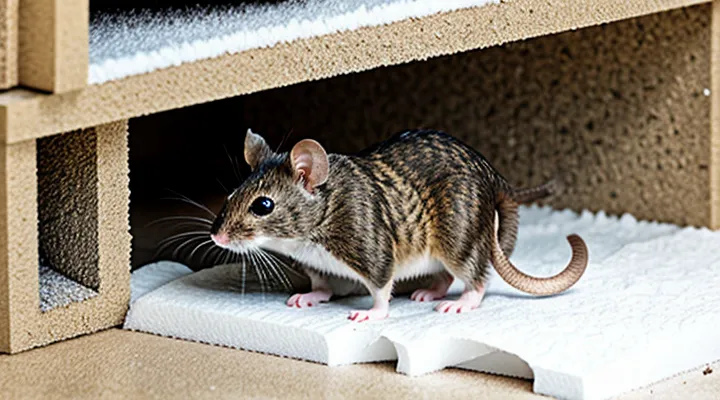
Understanding Mouse Behavior and Habitats
Natural Habitats of Mice
Preferred Environments
Mice select habitats that provide shelter, consistent temperature, and access to food and water. When evaluating foam-based construction components, several environmental factors determine suitability.
- Thermal stability – Foam retains heat, creating a microclimate that prevents rapid temperature fluctuations. This condition aligns with the thermal comfort range preferred by rodents.
- Structural integrity – Soft, pliable foam can be easily gnawed, allowing mice to create tunnels and nests without excessive effort. Materials that maintain shape under pressure support long‑term occupancy.
- Moisture level – Low humidity prevents fungal growth and preserves the integrity of the foam. Dry environments reduce the risk of mold, which can deter rodents.
- Predator concealment – Dense foam layers conceal movement and hide scent trails, decreasing detection by predators and extermination devices.
- Proximity to food sources – Installation of foam near pantry walls, utility shafts, or waste chutes supplies readily available nutrition, encouraging settlement.
In practice, foam positioned within wall cavities, ceiling voids, or insulation panels meets these criteria when it remains undisturbed and is not treated with rodent‑deterrent chemicals. Conversely, foam that is exposed to direct sunlight, high humidity, or frequent human activity fails to attract mouse populations.
Overall, the convergence of thermal comfort, structural accessibility, moisture control, concealment, and food proximity defines the preferred environments for mice within building materials.
Nesting Habits
Mice select nesting sites based on protection, temperature regulation, and access to food. Foam insulation offers a sealed environment that can retain heat and block drafts, characteristics that align with the species’ preference for stable microclimates. The porous structure of expanded polystyrene or polyurethane also creates small voids where a mouse can construct a compact nest, though the material’s low texture limits the ability to anchor nesting material securely.
Key factors influencing the suitability of foam for rodent habitation include:
- Moisture resistance – dry foam prevents fungal growth, preserving nest integrity.
- Thermal inertia – high R‑value maintains warmth during cold periods.
- Structural gaps – seams, cut edges, and penetrations provide entry points and hidden chambers.
- Availability of surrounding debris – shredded paper, insulation fibers, or building waste can be incorporated into the nest.
When foam is incorporated into walls, ceilings, or floor cavities, mice often exploit adjacent cavities made of wood, drywall, or mineral wool. These surrounding materials supply the fibrous content required for nest construction, while foam supplies the protective enclosure. Consequently, infestations are most common where foam contacts other building components without a continuous barrier.
Effective mitigation relies on sealing all openings larger than ¼ inch, installing metal mesh or rigid barriers at junctions between foam and structural elements, and removing any loose debris that could serve as nesting material. Regular inspections of concealed spaces detect early signs of occupancy, such as gnaw marks, urine stains, or accumulated nesting fragments. Prompt remediation reduces the likelihood that foam will become a long‑term habitat for mice.
Why Building Materials Attract Pests
Food Sources and Shelter
Mice can exploit foam insulation when it offers both nutrition and protection. The porous structure retains dust, insect fragments, and fungal spores, which constitute opportunistic food items. In addition, foam often contacts concealed wiring and pipework where grease, food drips, or rodent droppings accumulate, creating localized nutrient pools.
The material itself does not provide calories, but its ability to trap organic debris makes it a viable foraging substrate. Mice readily gnaw through softened foam to reach underlying insulation layers, exposing further detritus and increasing access to concealed food sources such as stored grains or pantry spills that have seeped into wall cavities.
Shelter benefits derive from foam’s thermal stability and acoustic dampening. The closed‑cell matrix creates a semi‑rigid cavity that resists compression, allowing mice to build nests without collapse. The material’s low density reduces heat loss, maintaining a relatively constant microclimate that supports breeding cycles. Moreover, foam’s resistance to moisture limits fungal growth, preserving nest integrity over extended periods.
Key factors that enhance foam’s suitability as a dual resource:
- Presence of adjacent food residues (e.g., grease, crumbs, insects) that accumulate in voids.
- Accessibility through gaps in framing, electrical conduits, or plumbing penetrations.
- Thermal insulation that moderates temperature fluctuations.
- Structural rigidity that supports nest construction while resisting predator intrusion.
When these conditions converge, foam insulation becomes a strategic habitat element, offering mice both sustenance and a secure refuge.
Vulnerability of Structures
Mice can infiltrate foam-based insulation and other porous building components, creating pathways for damage that compromise structural integrity. Their constant gnawing weakens support beams, penetrates fire barriers, and opens concealed cavities where moisture accumulates, accelerating rot and corrosion. The resulting loss of load‑bearing capacity may require extensive repairs or premature replacement of affected elements.
Infestation also amplifies risk of secondary hazards. Rodent excreta introduce pathogens that degrade indoor air quality, while nesting material can obstruct ventilation ducts, reducing system efficiency and increasing energy consumption. Fire safety deteriorates as chewed insulation loses its fire‑retardant properties, allowing flames to spread more rapidly through concealed spaces.
Preventive measures focus on material selection, sealing of entry points, and regular inspection. Non‑cellular insulation alternatives, such as mineral wool, resist gnawing and limit moisture retention. Integrated monitoring systems that detect acoustic signatures of rodent activity enable early intervention, reducing the probability of extensive structural compromise.
Foam Insulation as a Potential Habitat
Types of Foam Insulation
Expanded Polystyrene (EPS)
Expanded Polystyrene (EPS) is a lightweight, closed‑cell polymer with a typical density of 15–30 kg m‑³. Its cellular structure consists of sealed bubbles that trap air, providing thermal insulation and buoyancy. Because the cells are sealed, EPS does not retain moisture, which limits fungal growth but does not prevent small mammals from exploiting the material as shelter.
Mice are attracted to EPS for several reasons:
- Thermal stability – the foam retains heat, creating a relatively warm micro‑environment during colder periods.
- Physical protection – the rigid yet compressible matrix can be gnawed into, forming cavities that conceal nests.
- Accessibility – EPS is often installed in wall cavities, roof spaces, or under floorboards, locations that already serve as ingress points for rodents.
The material itself offers no nutritional value, so mice do not consume EPS. Instead, they use it as a structural substrate. Observations in residential and commercial buildings have recorded mouse activity within EPS panels, particularly where gaps exist around seams or where the foam contacts structural timber. Evidence includes gnaw marks on the polymer surface and the presence of droppings within drilled cavities.
Risk factors increase when EPS is:
- Installed without vapor barriers – condensation on adjacent surfaces may create localized humidity, attracting insects that serve as secondary food sources for mice.
- Placed in unsealed cavities – gaps of 1 mm or larger permit entry; rodents can enlarge these openings with incisors.
- Combined with other soft insulation – layered installations (e.g., EPS over fiberglass) provide additional nesting material.
Mitigation strategies focus on exclusion and monitoring:
- Seal all joints with compatible adhesive or tape to restore the closed‑cell integrity.
- Install metal or rigid PVC sheathing over EPS in crawl spaces to prevent gnawing.
- Conduct regular visual inspections, looking for bite marks, displaced panels, or fecal deposits.
- Use bait stations or traps at known ingress points before installing EPS to reduce existing populations.
In summary, EPS does not inherently repel mice; its physical characteristics can create favorable conditions for rodent habitation when installation practices allow access. Proper sealing, barrier installation, and routine inspections are essential to prevent foam panels from becoming part of a mouse habitat.
Extruded Polystyrene (XPS)
Extruded Polystyrene (XPS) is a closed‑cell, rigid foam widely used for thermal insulation, waterproofing, and structural support in construction. Its cellular structure consists of uniform, sealed cells that resist water penetration and provide high compressive strength. Typical density ranges from 30 to 45 kg m⁻³, giving the material a smooth, non‑porous surface.
Mice encounter XPS primarily when it is installed in walls, floors, or roof assemblies. The material’s low moisture content and lack of air gaps limit the availability of food and nesting resources. Nevertheless, several factors can make XPS a viable micro‑habitat:
- Temperature stability: XPS retains heat, creating a relatively warm micro‑environment in colder seasons.
- Physical protection: The foam’s rigidity shields occupants from predators and mechanical disturbance.
- Access points: Gaps at joints, cutouts for wiring, or damaged seams provide entry routes.
- Adjacent materials: Proximity to wood framing, insulation batts, or stored debris supplies nesting material and food sources.
Observations from building inspections indicate that mouse activity within XPS is uncommon in intact installations but increases when the foam is compromised. Penetrations caused by cutting, drilling, or improper sealing introduce voids that mice can exploit. Once inside, rodents may chew through the foam, creating tunnels that compromise the insulation’s integrity and reduce its thermal performance.
Mitigation strategies focus on maintaining the continuity of the foam barrier:
- Seal all seams with compatible tape or adhesive.
- Use metal or rigid foam strips to protect cut edges.
- Install physical barriers (e.g., steel mesh) at openings for utilities.
- Conduct regular visual inspections in attics and crawl spaces for signs of gnawing or droppings.
In summary, while the closed‑cell nature of XPS discourages rodent habitation, any breach in the material’s envelope creates conditions that can support mouse presence. Proper installation and routine maintenance are essential to preserve the foam’s insulating function and prevent rodent colonization.
Spray Foam (Polyurethane)
Spray foam, typically polyurethane, expands to fill cavities and seal joints in walls, roofs, and foundations. Its closed‑cell variant creates a rigid barrier with a density of 1.8–2.0 lb/ft³, while open‑cell foam remains softer and more permeable. Both types adhere strongly to wood, metal, and concrete, preventing air infiltration and reducing thermal losses.
Rodent intrusion depends on three primary conditions: access, food, and shelter. Spray foam influences each factor as follows:
- Access – Once cured, foam hardens into a continuous membrane. Gaps narrower than ¼ inch become impassable, eliminating typical entry points such as cracks around pipe sleeves or window frames. However, foam does not seal pre‑existing holes; rodents can exploit any unfilled opening before application.
- Food – Foam contains no organic material. Mice cannot derive nutrition from the polymer, and the sealed environment limits exposure to crumbs or insulation fibers that might serve as incidental food sources.
- Shelter – Closed‑cell foam provides a stable temperature range and resists moisture, conditions that discourage nesting. Open‑cell foam retains some airflow and may absorb humidity, creating a less favorable microclimate for burrowing but still offering limited concealment if the material is exposed.
Evidence from field studies shows that mouse activity declines in structures where spray foam replaces traditional fibrous insulation. Observations indicate fewer gnaw marks and lower droppings density in sealed wall cavities. Nonetheless, infestations persist when:
- Installation omits thorough inspection of existing voids.
- Foam is applied over damaged sheathing, leaving internal cracks accessible.
- Exterior penetrations (e.g., vent pipes) remain unsealed after foam application.
Maintenance recommendations focus on comprehensive pre‑application assessment, sealing all identified openings, and verifying foam coverage with visual inspection or infrared scanning. Regular monitoring of building exteriors for new entry points ensures that the protective barrier remains effective over time.
Characteristics of Foam Attractive to Mice
Thermal Insulation
Thermal insulation in buildings consists primarily of mineral wool, cellulose, fiberglass, and polymer foams. Each material provides resistance to heat flow measured by its R‑value, while also presenting a distinct physical structure that influences potential wildlife intrusion.
Key attributes that affect rodent occupancy include:
- Density: Low‑density foams contain larger cell cavities that can be accessed by small mammals.
- Moisture content: Damp insulation softens, creating tunnels and reducing structural integrity.
- Temperature stability: Materials that retain warmth may attract rodents seeking shelter from external extremes.
- Surface texture: Rough or fibrous surfaces offer better grip for climbing and nesting.
Polyurethane and expanded polystyrene foams exhibit high R‑values with a closed‑cell matrix. Their rigidity limits the formation of extensive internal voids, yet seams, cut edges, and installation gaps generate openings large enough for mice to enter. Once inside, the insulation retains a stable microclimate, providing protection from temperature fluctuations and predators.
Design strategies to reduce rodent colonization of foam insulation involve:
- Sealing all joints and penetrations with metal or mesh barriers before foam application.
- Installing a rigid sheathing layer (e.g., metal lath) over foam in vulnerable zones.
- Conducting regular inspections for signs of gnawing or compression, especially near utility penetrations.
- Selecting foam products with higher density ratings where structural integrity is critical.
By addressing these factors, builders can maintain thermal performance while minimizing the likelihood that foam insulation becomes a viable habitat for mice.
Ease of Gnawing
Mice must be able to gnaw through a substrate to gain access to a nesting site, create entry holes, and expand burrows. The effort required to bite through a material determines its suitability as a shelter within structures.
Foam insulation exhibits a low resistance to incision because its cell walls are thin and its matrix is often composed of soft polymers. The material’s compressibility allows incisors to displace fibers with minimal force. Consequently, a mouse can produce an opening of several millimeters with a few bites, and the resulting cavity remains structurally stable.
Key comparative points:
- Expanded polystyrene (EPS): Very low hardness; chewing produces clean, smooth edges.
- Polyurethane spray foam: Semi‑rigid after cure; still yields to incisors after initial softening.
- Rigid wood panels: Higher modulus; requires repeated gnawing to achieve comparable aperture size.
- Gypsum board: Brittle fracture; mice can break it, but edges are sharp and may impede nest formation.
The ease of gnawing directly influences the likelihood that mice will occupy foam-filled cavities. When foam is installed without physical barriers, rodents can quickly establish routes from exterior openings to interior voids, using the material as both a passage and a nesting substrate. Incorporating metal mesh or dense barrier layers within foam assemblies reduces the opportunity for incisors to penetrate, thereby limiting habitat formation.
Understanding the relationship between material softness and rodent gnawing capacity informs construction practices aimed at minimizing infestation risk. Selecting insulation products with integrated deterrent layers or applying protective coverings to exposed foam surfaces can significantly decrease the probability of mouse colonization.
Hidden Spaces
Mice exploit concealed cavities that arise during construction, renovation, or material degradation. These micro‑environments provide shelter, access to food sources, and routes for movement while remaining undetected by occupants.
Typical hidden spaces include:
- Gaps between insulation panels and structural framing, especially when foam boards are cut imperfectly.
- Voids behind dropped ceilings where acoustic tiles are suspended above a plenum.
- Unfilled cavities within wall cavities left after wiring or plumbing installation.
- Cracks in concrete or brickwork that enlarge over time due to thermal cycling.
- Spaces created by deteriorating sealants around window frames, door thresholds, or utility penetrations.
Each location shares common characteristics: limited exposure to light, stable temperature, and protection from predators. When foam or other lightweight composites are used, the material’s compressibility can generate additional pockets as it settles or contracts, increasing the likelihood of colonization.
Effective mitigation requires sealing entry points, inspecting concealed layers during construction, and employing monitoring devices in suspected voids. Regular maintenance of building envelopes reduces the formation of new hidden spaces and limits the potential for rodent habitation.
Evidence of Mouse Infestation in Foam
Visual Signs
Visual signs provide the most reliable evidence when evaluating whether rodents have colonized foam insulation or other building composites. Direct observation of droppings, gnaw marks, and nesting material reveals activity without the need for invasive sampling.
Typical indicators include:
- Dark, cylindrical droppings roughly 4–5 mm in length, often found near seams, joints, or ventilation openings.
- Chewed edges on foam panels, characterized by irregular, ragged surfaces and exposed core material.
- Silky or shredded fibers, sometimes interwoven with foam particles, forming compact nests in cavities.
- Grease or urine stains on nearby structural elements, appearing as amber‑colored smears that resist cleaning.
- Audible scratching or scurrying sounds emanating from concealed foam layers, especially during nocturnal hours.
Additional clues arise from environmental changes. An increase in dust accumulation around foam joints may signal mouse movement, as the animals displace insulation fibers while traversing the material. Likewise, the presence of small, partially eaten food fragments near foam installations often correlates with foraging behavior within the cavity.
When visual evidence accumulates, it confirms that foam can serve as a viable habitat for rodents. The combination of droppings, gnaw marks, nesting debris, and associated stains constitutes a comprehensive diagnostic framework for assessing infestation risk in building materials.
Auditory Cues
Auditory cues provide a reliable method for confirming rodent activity within foam-based insulation and other porous building components. Mice generate high‑frequency vocalizations and footfall sounds that travel through solid matrices but are attenuated by air‑filled cells. When foam density exceeds a threshold (typically above 30 kg m‑³), sound transmission drops by 10–15 dB, limiting the distance at which external observers can detect activity. Conversely, low‑density or open‑cell foams allow clearer propagation, making acoustic monitoring feasible.
Key considerations for interpreting auditory data:
- Frequency range: mouse ultrasonic calls (20–80 kHz) are most affected by foam’s viscoelastic properties; lower‑frequency noises (100–500 Hz) penetrate more readily.
- Signal attenuation: each centimeter of closed‑cell foam adds approximately 0.3 dB of loss; cumulative effects become significant in walls thicker than 10 cm.
- Ambient noise: building HVAC systems produce broadband noise that can mask rodent sounds; spectral filtering isolates characteristic mouse signatures.
- Sensor placement: embedding contact microphones within the foam matrix captures vibrations directly, reducing reliance on airborne transmission.
By calibrating equipment to the acoustic profile of the specific insulation material, investigators can differentiate between active colonies and passive occupancy, supporting accurate assessment of rodent suitability in foam environments.
Damage Patterns
Mice that colonize polymeric foams, such as spray‑applied insulation or rigid board, leave distinct physical evidence. Gnaw marks appear on the outer skin of the material, often forming circular or crescent patterns that reveal the animal’s incisors. These cuts expose the internal cellular structure, reducing thermal resistance and creating pathways for air infiltration.
Droppings accumulate on surfaces adjacent to foam nests. The pellets are typically dark, 3–5 mm in length, and may be embedded in softened foam, indicating prolonged occupancy. Nesting material—shredded paper, fabric fibers, or insulation scraps—mixes with the foam matrix, causing visible clumps and discoloration.
Typical damage patterns include:
- Surface perforations with smooth, uniform edges
- Displaced or compressed foam blocks near entry points
- Localized moisture pockets where foam has been chewed open, allowing condensation
- Structural weakening of load‑bearing panels due to repeated gnawing
- Increased fire risk from accumulated nesting debris and exposed foam cores
Inspection of these signs enables rapid assessment of mouse activity within building materials and informs targeted remediation.
Risks Associated with Mice in Foam
Structural Damage
Compromised Insulation Value
Mice that infiltrate foam insulation create pathways that reduce the material’s thermal resistance. Their gnawing creates holes and compresses cells, allowing air exchange that lowers the R‑value. Moisture drawn into the foam from nesting material or urine further degrades performance, as wet foam conducts heat more readily than dry.
The loss of insulation efficiency manifests in several measurable outcomes:
- Increased heat transfer through walls and ceilings, raising energy consumption.
- Localized cold spots that can trigger condensation on interior surfaces.
- Accelerated deterioration of adjacent structural components due to temperature fluctuations.
Repairing compromised foam often requires removal of the affected sections, replacement with intact insulation, and sealing of entry points. Preventive measures—such as installing rodent barriers, maintaining proper building ventilation, and conducting regular inspections—preserve the intended thermal properties of the insulation system.
Gnawing on Wires
Mice frequently target electrical cables because gnawed insulation exposes conductive cores, creating fire hazards and system failures. The behavior stems from the need to wear down continuously growing incisors and from the attraction to the polymer compounds in cable jackets, which resemble the cellulose fibers found in natural nesting material.
In structures where foam insulation is present, the combination of soft, porous substrate and concealed wiring increases the likelihood of rodent intrusion. Foam provides thermal comfort and concealment, while the proximity of concealed cables offers a readily available source of chewable material. This synergy creates a microhabitat where mice can establish long‑term occupancy.
Key consequences of wire gnawing include:
- Short‑circuit formation leading to power loss.
- Generation of sparks that can ignite surrounding foam or other combustible materials.
- Disruption of communication and data transmission lines, resulting in system downtime.
- Increased maintenance costs due to repeated repairs and replacement of damaged components.
Mitigation strategies focus on material selection and physical barriers. Using steel‑braided or metal‑clad cables resists gnawing, while installing rodent‑proof conduit around wiring limits direct access. Applying foam‑compatible repellents or integrating metallic mesh within foam panels further reduces the attractiveness of the environment to rodents.
Health Concerns
Droppings and Urine
Mice that colonize foam insulation or other porous building components leave distinctive biological traces. Their fecal pellets measure 3–5 mm, are dark brown to black, and retain a solid, cylindrical shape. Urine appears as a faint, oily film that may discolor surrounding material and emit a strong ammonia odor when it evaporates. Both substances degrade foam, reducing its thermal efficiency and structural integrity.
Key indicators of rodent activity in foam-based habitats include:
- Concentrations of droppings on exposed surfaces or within voids.
- Visible urine stains, often accompanied by a lingering scent.
- Chewed or gnawed edges of insulation, exposing underlying layers.
- Presence of nests constructed from shredded fibers, paper, or fabric.
Laboratory analysis of collected droppings confirms species identification through DNA profiling, while urine samples reveal elevated protein and mineral content that accelerates foam breakdown. Regular inspection and prompt removal of these contaminants are essential for maintaining material performance and preventing health hazards associated with rodent-borne pathogens.
Disease Transmission
Mice that colonize foam insulation can act as reservoirs for a range of pathogens, creating direct pathways for disease transmission within occupied structures. Their close proximity to human living spaces increases the likelihood of contaminating dust, air ducts, and food supplies with bacterial, viral, and parasitic agents.
Key health risks associated with rodent presence in foam include:
- Salmonella spp. – transmitted through fecal contamination of surfaces and food items.
- Hantavirus – released in aerosolized particles from mouse urine, droppings, or saliva, leading to severe respiratory illness.
- Leptospira interrogans – spreads via urine, contaminating moisture‑rich areas and potentially entering water supplies.
- Bartonella spp. – carried by ectoparasites such as fleas, which may transfer to humans through bites.
- Streptobacillus moniliformis – responsible for rat‑bite fever, also possible through scratches or bites from mice.
The structural characteristics of foam—its porous nature and capacity to retain moisture—facilitate microbial survival and amplify exposure risks. Airflow through insulation cavities can disperse contaminated particles throughout a building, bypassing conventional ventilation filters.
Mitigation strategies focus on exclusion, sanitation, and monitoring. Sealing entry points prevents colonization; regular inspection of insulation layers identifies infestation early; and integrated pest‑management programs reduce rodent populations while minimizing chemical residues. Implementing these measures limits pathogen load and protects occupant health.
Odor and Contamination
Unpleasant Smells
Unpleasant odors in construction interiors influence rodent occupancy of foam insulation and other porous building components. Volatile compounds emitted by mold, chemical sealants, or decomposing organic matter create an environment that rodents typically avoid, reducing the likelihood of colonization within foam cavities.
Key odor sources and their effects on mouse behavior:
- Mold metabolites – strong musty scent deters foraging and nesting activities.
- Solvent vapors – acrid fumes from adhesives and paints act as repellents, limiting movement through affected layers.
- Decomposing waste – putrid aromas attract scavengers but also signal unsanitary conditions, prompting mice to seek cleaner zones.
- Industrial chemicals – pungent emissions from fire retardants or insulation additives can cause respiratory irritation, discouraging prolonged exposure.
When these smells persist, they alter the micro‑habitat suitability of foam panels, making them less attractive as shelter or travel pathways. Conversely, odor‑free or mildly scented foam may provide a neutral substrate that does not repel rodents, allowing them to exploit the material’s thermal and structural advantages. Monitoring and controlling foul odors therefore constitutes a practical strategy for managing rodent presence in foam‑based building assemblies.
Allergen Presence
Mice attracted to insulated foam can introduce a range of allergens into indoor environments. Their urine, droppings, and shed hair contain proteins that trigger allergic reactions in sensitive individuals. When these particles become embedded in porous foam, they are difficult to remove and may persist for months.
Key allergen pathways in foam installations include:
- Direct contact with contaminated foam during renovation or maintenance.
- Airborne dispersion of dust particles that carry mouse-derived proteins.
- Secondary growth of mold on moist foam, which can compound allergenic load.
Scientific analyses show that allergen concentrations are highest in areas where foam is left exposed or where gaps allow rodent entry. Sealed installations reduce the risk but do not eliminate it, as mice can gnaw through thin layers and deposit waste within the material.
Health implications of chronic exposure to mouse allergens encompass:
- Respiratory symptoms such as wheezing, coughing, and shortness of breath.
- Exacerbation of asthma in predisposed occupants.
- Development of allergic rhinitis and conjunctivitis.
Mitigation strategies focus on both exclusion and remediation:
- Install physical barriers—metal mesh or dense sheathing—behind foam to prevent rodent ingress.
- Seal all penetrations and joints with rodent‑resistant sealants.
- Conduct regular inspections for signs of infestation and replace compromised foam sections.
- Employ HEPA filtration during cleaning to capture allergen‑laden dust.
- Apply antimicrobial treatments to foam surfaces to inhibit mold growth that may interact with rodent allergens.
By integrating these measures, builders and property managers can limit allergen presence in foam‑based building components, protecting occupant health while preserving the material’s insulating performance.
Prevention and Mitigation Strategies
Sealing Entry Points
Exterior Cracks and Gaps
Exterior cracks and gaps constitute the most direct pathways for rodents to infiltrate building envelopes. Their presence bypasses the protective function of foam insulation, allowing mice to move from the outside environment to interior voids where foam provides shelter and warmth. Even minute openings, as small as 6 mm, accommodate adult mice, making thorough sealing essential for effective pest exclusion.
Key characteristics of exterior discontinuities include:
- Structural joints where siding meets foundation or window frames.
- Penetrations for utilities, such as pipes, cables, and vent ducts.
- Weather‑exposed seams around doors, garage doors, and loading bays.
- Deteriorated sealants and caulking that have cracked or receded.
Each of these locations can be inspected visually or with infrared imaging to detect gaps that compromise the integrity of the building envelope. Remediation typically involves applying high‑quality sealants, expanding foam fillers, or installing metal flashing to close openings. Reinforcing these areas not only blocks rodent ingress but also preserves the thermal performance of the foam, preventing heat loss and moisture accumulation.
Failure to address exterior fissures creates a dual risk: rodents gain access to the insulated cavity, and the compromised enclosure accelerates energy waste. Systematic identification and sealing of all exterior discontinuities therefore represent a decisive measure in managing rodent habitation possibilities within construction materials.
Utility Penetrations
Utility penetrations—openings for electrical conduits, plumbing, HVAC ducts, and fire‑stop assemblies—create continuous pathways through walls, floors, and ceilings. When these penetrations intersect foam insulation, the material can become a refuge for rodents if gaps remain unsealed. Foam expands to fill cavities, but the insertion of conduits often leaves voids that are difficult to detect without specialized inspection tools.
Key conditions that enable mice to exploit foam around penetrations include:
- Unfilled annular spaces between the conduit and surrounding foam.
- Insufficiently compressed foam that fails to compress around the pipe, leaving a tunnel‑like cavity.
- Lack of metal or polymer sleeves that provide a barrier at the point where the conduit breaches the foam layer.
- Absence of secondary sealing measures such as caulking, expanding sealants, or fire‑stop pillows applied after installation.
Effective mitigation requires a systematic approach: verify that each penetration is wrapped with a sealed collar, apply a compatible low‑expansion sealant to fill residual gaps, and inspect the completed assembly with a borescope or infrared camera. Regular maintenance checks should focus on the integrity of these seals, as settlement of the building envelope can reopen pathways over time.
Rodent-Proofing Foam During Installation
Mesh and Barriers
Mesh and barriers constitute the primary defense against rodent intrusion in porous building components such as expanded insulation. Rigid metal screens, typically 1/4‑inch galvanized steel, resist gnawing and maintain structural integrity when embedded in foam panels. Fiberglass or polypropylene woven fabrics, when laminated to the foam surface, create a continuous obstacle that discourages passage but require sealing at seams to prevent gaps.
Key considerations for effective implementation include:
- Material hardness: steel and stainless steel outperform aluminum or plastic in resisting bite forces.
- Mesh aperture: openings smaller than 4 mm block adult mouse heads while allowing airflow.
- Installation continuity: overlapping sections by at least 2 inches and securing with corrosion‑resistant fasteners eliminates bypass routes.
- Compatibility with fire codes: non‑combustible meshes satisfy most safety regulations; synthetic barriers may need fire‑retardant treatment.
Barrier performance degrades when exposed to moisture, which softens foam and can loosen fasteners. Regular inspection of joint seals and replacement of corroded components sustain protection. In environments where foam is used for acoustic or thermal insulation, integrating mesh during the manufacturing stage ensures full coverage without post‑install modifications.
When selecting a barrier system, prioritize durability, aperture size, and seamless integration with existing construction. Properly applied, these measures substantially reduce the likelihood of mice establishing nests within foam‑based building materials.
Protective Coatings
Protective coatings form a barrier that limits moisture absorption, surface degradation, and the creation of micro‑cracks in polymeric insulation. By sealing pores and stabilizing the material’s structure, these finishes reduce the likelihood that rodents can gnaw through or nest within the foam.
Typical formulations include:
- Epoxy‑based sealants: high tensile strength, resistance to abrasion, low permeability.
- Polyurethane paints: flexible film, good adhesion to expanded polystyrene, chemical resistance.
- Acrylic coatings: rapid cure, easy application, moderate barrier properties.
When applied according to manufacturer specifications—adequate surface preparation, appropriate thickness, and complete curing—the coating creates a smooth, non‑porous exterior that discourages chewing activity and prevents the accumulation of debris that could attract small mammals. Regular inspection ensures integrity, allowing early repair before damage compromises the protective layer.
Effective Exclusion Methods
Trapping Techniques
Effective mouse control in foam-based building components requires methods that address both the concealed nature of the habitat and the durability of the material. Traps must be positioned where rodents can access them without compromising the integrity of insulation or structural elements.
- Snap traps equipped with steel plates provide rapid lethality and can be placed against foam panels where chew marks indicate activity. Secure the trap with adhesive strips to prevent displacement.
- Multi-catch live traps constructed from heavy-duty plastic allow repeated capture without repeated baiting. Position the entrance at the junction of foam and framing, using a small amount of high-fat bait to attract mice.
- Electronic traps that deliver a quick voltage pulse are suitable for sealed cavities. Insert the device through drilled access holes; the built‑in sensor activates upon contact, eliminating the need for manual checking.
- Glue boards, when used sparingly, can monitor low‑level infestations. Attach them to the interior surface of foam cavities, ensuring they do not contact fire‑rated barriers.
Placement strategy focuses on identified pathways: entry points near utility penetrations, gaps around ductwork, and seams between foam sheets. Seal all non‑target openings after trapping to prevent re‑entry. Regular inspection of trap locations, combined with immediate disposal of captured rodents, reduces population pressure and limits damage to foam insulation.
Professional Pest Control
Mice frequently exploit foam insulation because the material offers warmth, concealment, and a pathway through wall cavities. The porous structure can retain moisture and provide a stable micro‑climate, making it attractive for nesting and foraging.
Foam’s flexibility allows it to be cut and shaped around structural elements, creating gaps that rodents can enlarge with their incisors. Once inside, mice can travel along the foam to reach concealed spaces, electrical conduits, and plumbing, where they may cause damage and increase health risks.
Professional pest‑control technicians begin with a systematic inspection. Visual surveys identify disturbed foam, gnaw marks, and droppings. Infrared cameras detect heat signatures of active nests. Moisture meters reveal damp areas that support rodent activity. Trained dogs may be employed for scent detection in large structures.
Preventive actions focus on exclusion and material management:
- Seal all gaps larger than ¼ inches with steel‑wool, caulk, or expanding foam formulated to resist chewing.
- Install metal flashing or mesh around utility penetrations.
- Use closed‑cell spray foam that hardens quickly, reducing chewable surfaces.
- Maintain low humidity levels in insulated spaces through proper ventilation.
- Conduct routine inspections after construction or major renovations.
When infestation is confirmed, intervention follows a tiered approach:
- Deploy snap or electronic traps in identified travel routes; position bait to maximize capture rates.
- Apply rodenticide baits in tamper‑resistant stations, adhering to local regulations.
- Implement exclusion by repairing entry points after removal, then re‑inspect to verify closure.
- Consider ultrasonic deterrents only as supplemental measures, not primary control.
Long‑term management integrates design choices with ongoing monitoring. Selecting insulation products that resist rodent damage, combined with regular site audits, minimizes the likelihood of mice establishing colonies within foam components. Professional pest‑control services provide the expertise to evaluate risk, execute targeted removal, and enforce structural safeguards that protect both building integrity and occupant health.
Maintaining a Rodent-Free Environment
Food Storage Practices
Food storage practices directly affect the likelihood of rodents occupying foam insulation and other building components. Properly sealed containers eliminate access points that mice exploit when searching for sustenance. Metal tins with tight-fitting lids, heavy‑wall plastic bins equipped with snap closures, and glass jars with rubber gaskets provide reliable barriers.
Maintaining a clean storage area reduces attractants. Regularly sweep floors, vacuum crumbs, and discard expired products to prevent odor buildup. Spillages should be wiped immediately, and waste bins must be fitted with lids and emptied frequently.
Implementing a rotation system minimizes the time food remains on shelves. Older items are used first, decreasing the chance of spoilage that draws pests. Labeling packages with receipt dates supports this process.
When storage occurs in basements or crawl spaces, elevate containers off the concrete floor using shelving or pallets. Elevation creates a gap that hinders mouse movement and simplifies inspection.
A concise checklist for effective food storage:
- Choose airtight, rodent‑proof containers.
- Seal all openings, including gaps around pipes and wiring.
- Keep storage surfaces clean and free of debris.
- Rotate stock to use older items before newer ones.
- Elevate containers in low‑lying areas.
- Inspect containers regularly for damage or signs of gnawing.
Adhering to these practices limits food availability, thereby reducing the incentive for mice to establish nests within foam or other building materials.
Yard Maintenance
Mice can exploit foam insulation that is exposed in garden structures, decks, or raised planters. Yard maintenance therefore becomes a critical line of defense against unwanted rodent colonization.
Regular inspection of all foam components reveals gaps, cracks, or loose sections that provide entry points. Remove damaged pieces promptly and replace them with sealed, rod‑grade alternatives. Verify that foam used for garden edging or raised beds is fully covered by soil, mulch, or a protective barrier.
Control of vegetation limits shelter and food sources. Trim low‑lying shrubs, keep grass at a moderate height, and eliminate weeds that create dense cover near foam installations. Remove debris, fallen fruit, and compost piles that attract mice.
Implement physical barriers to deter movement. Install metal flashing or rigid trim around foam edges, and seal joints with silicone or expanding foam designed for pest resistance. Ensure that any drainage channels are equipped with mesh screens to prevent rodents from traveling beneath foam layers.
A systematic maintenance schedule supports long‑term protection:
- Quarterly visual survey of foam‑related structures.
- Immediate repair of identified damage.
- Seasonal trimming of bordering vegetation.
- Annual cleaning of garden waste and compost sites.
By integrating these practices, property owners reduce the likelihood that foam insulation becomes a viable habitat for mice, preserving both structural integrity and garden health.