
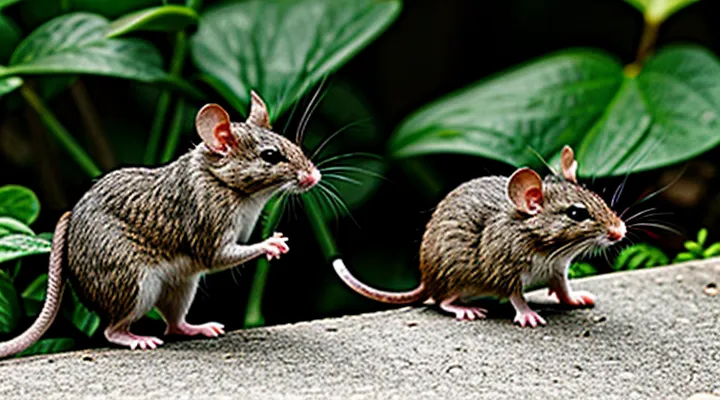
Introduction to Mouse Social Behavior
General Overview of Rodent Social Structures
Rodents display a wide range of social organizations that reflect ecological pressures, reproductive strategies, and species‑specific communication systems. Some species form stable family units, while others adopt solitary or loosely associated lifestyles. The spectrum of social structures includes monogamous pairs, communal nests, and transient aggregations that dissolve after breeding seasons.
Family groups commonly consist of a breeding pair and their offspring, with juveniles remaining in the natal nest for several weeks. Cooperative behaviors such as shared nest construction, communal grooming, and coordinated foraging enhance offspring survival. In these groups, dominance hierarchies regulate access to resources and mating opportunities, reducing conflict through established social signals.
Solitary rodents maintain exclusive territories that they defend through scent marking, vocalizations, and aggressive encounters. Territorial boundaries limit overlap with conspecifics, minimizing competition for food and nesting sites. Solitary individuals typically breed once a year, with limited parental care beyond gestation and early neonatal stages.
Key factors influencing social organization:
- Resource distribution: Abundant, clumped food sources favor group living; dispersed resources encourage solitary foraging.
- Predation pressure: Group vigilance and alarm calling improve predator detection, promoting communal nesting in high‑risk habitats.
- Reproductive strategy: Species with multiple litters per year often exhibit flexible social bonds, whereas those with a single annual litter tend toward monogamy or solitary breeding.
- Communication modalities: Pheromonal cues, ultrasonic vocalizations, and tactile signals facilitate coordination within groups and territorial defense when alone.
Understanding rodent social structures provides a framework for evaluating specific behaviors, such as whether a particular mouse species typically forms family groups or remains solitary. Comparative studies across taxa reveal that social organization is not fixed but adapts to environmental conditions and life‑history demands.
Factors Influencing Social Organization
Mice exhibit a range of social arrangements, from solitary individuals to cohesive family groups. The organization of these groups depends on multiple interacting factors that shape behavioral patterns.
- Resource distribution – Abundant, clumped food sources enable individuals to share territories and maintain stable groups; scarce or dispersed resources promote solitary foraging.
- Predation risk – High predator density encourages aggregation for collective vigilance, whereas low risk allows individuals to occupy isolated niches.
- Population density – Elevated densities increase encounter rates, fostering social tolerance and group formation; low densities reduce social contact, leading to solitary habits.
- Reproductive strategy – Species that produce multiple litters per year often develop communal nesting to enhance offspring survival; those with single, well‑protected litters tend toward solitary breeding.
- Seasonal variation – Winter conditions may force mice into communal burrows for thermoregulation, while warmer months see dispersion.
- Habitat complexity – Structured environments with abundant refuges support family groups by providing space for nesting and hierarchy; open habitats limit such opportunities.
- Genetic predisposition – Certain mouse strains possess innate tendencies toward sociality or independence, influencing group dynamics across generations.
- Disease pressure – High pathogen prevalence can discourage close contact, prompting individuals to isolate to reduce transmission.
These variables interact continuously, producing fluid social structures that shift between family cohesion and solitary existence depending on environmental and biological context.
Solitary vs. Family Living in Mice
Characteristics of Solitary Mice
Reasons for Solitary Behavior
Mice often adopt a solitary lifestyle despite the occasional formation of small groups. This pattern reflects adaptive responses to ecological and physiological pressures.
- Competition for limited food and nesting sites
- High risk of predation when moving in groups
- Need to minimize disease transmission
- Dominance hierarchies that restrict access to resources
- Seasonal fluctuations that reduce habitat suitability
- Genetic predisposition toward individual foraging
Intense competition drives individuals to defend exclusive territories, ensuring sufficient intake for survival. Predators more easily detect clustered movement, so solitary activity lowers detection probability. Pathogen spread accelerates in dense populations; isolation curtails infection rates. Social hierarchies establish dominant individuals who monopolize prime resources, forcing subordinates to occupy peripheral zones. Seasonal scarcity forces mice to disperse and occupy separate microhabitats, reducing overlap. Genetic studies indicate that solitary tendencies are inherited traits that enhance fitness under specific environmental conditions.
Survival Advantages and Disadvantages of Solitary Living
Mice that adopt a solitary lifestyle experience a distinct set of ecological pressures. By occupying individual territories, they minimize direct competition for limited food resources, allowing each animal to exploit patchy or scattered supplies without sharing. Solo nesting reduces the probability of parasite and pathogen transmission, because fewer hosts are present in a single burrow. Additionally, solitary individuals can adjust nest construction and location to suit personal thermoregulatory needs, avoiding the constraints imposed by group cohesion.
Conversely, isolation removes the protective benefits of group living. Juvenile mice lack the assistance of conspecifics in grooming, feeding, and predator vigilance, which can increase mortality rates. Single occupants must allocate energy to both foraging and nest defense, a dual demand that can diminish overall stamina. The absence of communal warmth raises the metabolic cost of maintaining body temperature, especially in colder environments. Social learning opportunities disappear, limiting the transmission of foraging techniques and predator avoidance strategies across generations.
Key trade‑offs of solitary existence include:
- Resource access: exclusive use of local food versus shared depletion.
- Disease risk: lower infection rates versus higher exposure due to solitary foraging in contaminated areas.
- Predation: reduced group conspicuousness versus lack of collective alarm signals.
- Reproductive support: autonomy in mate selection versus absence of cooperative offspring care.
- Thermoregulation: individualized nest placement versus loss of communal heat retention.
Characteristics of Family-Oriented Mice
Structure of Mouse Families and Colonies
Mice organize into dynamic groups that fluctuate with seasonal resources and predation pressure. Breeding pairs establish a central nest, often constructed from shredded material, where the female rears offspring. The male typically remains nearby, defending the immediate area against intruders and providing occasional food deliveries.
Offspring remain with the natal nest for several weeks, receiving warmth and protection while developing foraging skills. After weaning, juveniles may disperse to form new breeding units or temporarily join adjacent nests, creating a loose network of related colonies. This network facilitates gene flow and enhances collective vigilance against predators.
Key elements of mouse colony structure include:
- Core nest: central shelter for breeding pair and early offspring.
- Satellite nests: auxiliary chambers used by juveniles or peripheral members.
- Territory boundaries: defined by scent marks and vocalizations, limiting overlap with neighboring groups.
- Hierarchical interactions: dominance displays regulate access to resources and mating opportunities.
Colony composition adjusts to environmental conditions. Abundant food supports larger, multi-nest aggregations, while scarcity prompts solitary foraging and reduced group size. These adaptive arrangements enable mice to balance reproductive success with survival demands.
Roles Within a Family Unit
Mice that form stable groups exhibit a clear division of labor that maximizes reproductive success and offspring survival. The adult female assumes the central caregiving function: she constructs the nest, regulates temperature, and provides continuous nursing until pups reach the weaning stage. During this period she also maintains vigilance against predators and competitors.
The adult male, when present, typically contributes to nest defense and territorial patrols, reducing the likelihood of intrusions that could jeopardize the litter. Male involvement in direct pup care is limited, but occasional grooming and food provisioning have been documented in laboratory colonies.
Weaned juveniles rapidly transition to subordinate roles within the unit. Older offspring often assist the mother by retrieving food, cleaning the nest, and alerting the group to threats. This cooperative behavior, sometimes labeled “alloparental care,” improves overall brood fitness and accelerates the development of younger siblings.
A concise enumeration of typical roles:
- Breeding female: nest construction, thermoregulation, lactation, predator detection.
- Breeding male: territory defense, occasional food delivery, deterrence of rival males.
- Older juveniles: nest maintenance, food transport, sentinel duties, limited grooming of younger pups.
- Newborn pups: passive recipients of nourishment and protection until independence.
The hierarchy remains fluid; environmental pressures such as resource scarcity or high predation risk can shift responsibilities, prompting juveniles to assume greater defensive tasks or prompting males to increase provisioning. This adaptability underlies the persistence of family-based organization in many mouse populations.
Communication and Interaction within Groups
Mice maintain group cohesion through a multimodal communication system that operates continuously in the nest and during foraging excursions. Ultrasonic vocalizations (USVs) convey emotional state, individual identity, and territorial claims; frequency, duration, and temporal pattern distinguish alarm calls from affiliative chirps. Scent marking with urine and glandular secretions provides a persistent spatial record of occupancy, reproductive status, and hierarchical rank, allowing conspecifics to assess group composition without direct contact.
Tactile interaction supplements acoustic and chemical signals. Whisker-to-whisker contact during close approach transmits fine‑grained information about body posture and movement intent, facilitating synchronized activities such as collective nest building. Grooming exchanges reinforce social bonds, reduce stress hormones, and serve as a mechanism for establishing and confirming dominance relationships.
Typical communication repertoire within a mouse group includes:
- USVs for immediate, context‑specific alerts and affiliative signaling.
- Scent deposits for long‑term territorial and reproductive cues.
- Whisker and body contact for precise, moment‑to‑moment coordination.
- Allogrooming for reinforcement of social hierarchy and stress mitigation.
Dominance hierarchies emerge from repeated interactions, with higher‑ranking individuals receiving more grooming and occupying central nest positions. Subordinate mice respond to dominant USVs and scent cues by limiting exploratory behavior and avoiding direct confrontations, which reduces intra‑group aggression.
Overall, mouse groups rely on integrated acoustic, chemical, and tactile channels to negotiate space, allocate resources, and sustain cooperative behaviors, demonstrating that social living in these rodents is underpinned by sophisticated, layered communication.
Environmental and Genetic Influences
Impact of Habitat on Social Behavior
Mice adjust their social organization according to the characteristics of the environment they occupy. In dense, resource‑rich habitats such as grain stores, burrow systems, or vegetated fields, individuals frequently form stable groups that share nesting sites and cooperate in foraging. The proximity of food and shelter reduces competition, encourages cooperative brood care, and facilitates information exchange about predator presence.
Conversely, in sparse or highly variable habitats—deserts, arid scrub, or isolated agricultural plots—mice tend to adopt solitary or loosely associated lifestyles. Limited resources increase territorial aggression, and the risk of predation rises when individuals congregate. Under these conditions, solitary foraging minimizes detection and conserves energy.
Key habitat factors influencing social behavior:
- Resource density: abundant, clumped food supports group cohesion; scarce, dispersed food promotes independence.
- Shelter availability: extensive burrow networks enable communal nesting; minimal cover forces individuals to occupy separate refuges.
- Predation pressure: environments with high predator activity favor solitary vigilance; low‑risk areas allow safe aggregation.
The interplay between habitat structure and social strategy determines whether mice operate as family units or as solitary foragers, shaping their overall behavioral profile.
Food Availability and Population Density
Mice adjust their social organization according to the balance between food resources and the number of conspecifics in a habitat. When food is abundant, individuals can maintain separate foraging territories, reducing the need for cooperative nesting. Under such conditions, solitary living becomes energetically favorable and aggression levels decline because competition for limited resources is minimal.
Conversely, scarcity of edible material forces mice to concentrate activity around reliable sources. This aggregation raises local population density, intensifies encounters, and promotes the formation of temporary groups. Group living facilitates shared vigilance, collective defense against predators, and cooperative thermoregulation, which offset the costs of limited nutrition.
Population density itself exerts a direct influence on social patterns. High densities increase the probability of nest sharing, even when food remains plentiful, because space constraints limit the number of viable nesting sites. In dense colonies, hierarchical structures emerge, with dominant individuals monopolizing prime feeding spots while subordinates accept peripheral positions.
Key relationships:
- Food abundance + low density → predominance of solitary foraging, minimal group cohesion.
- Food scarcity + high density → formation of mixed‑sex or same‑sex groups, elevated social interaction.
- High density + ample food → increased nest sharing, development of dominance hierarchies.
- Low density + scarce food → occasional aggregation at food patches, but limited long‑term group stability.
Empirical studies demonstrate that manipulations of resource distribution produce rapid shifts in mouse social behavior. Provision of supplemental feed in laboratory cages reduces aggression and encourages cohabitation, while removal of food sources triggers territorial marking and solitary retreats.
Overall, the interplay between nutritional availability and the number of individuals determines whether mice adopt a solitary or family‑like lifestyle. Resource‑driven pressures shape grouping dynamics, nesting decisions, and hierarchical organization, providing a clear mechanistic link between ecological conditions and mouse social structure.
Genetic Predisposition to Sociality
Breed-Specific Tendencies
Different mouse breeds exhibit distinct social patterns that influence whether they form groups or remain solitary. Laboratory strains such as C57BL/6 tend to aggregate in small colonies, displaying frequent grooming and nest sharing. In contrast, wild-derived strains like Mus musculus domesticus often establish individual territories and limit contact to brief mating encounters.
Key breed-specific tendencies include:
- C57BL/6 and BALB/c: high propensity for communal nesting, reduced aggression toward conspecifics, increased pheromone‐mediated cohesion.
- Swiss (outbred) mice: moderate group formation, flexible hierarchy, occasional solitary foraging.
- Wild-derived (e.g., PWK/PhJ): strong territoriality, minimal nest cohabitation, heightened scent marking to deter intruders.
- Transgenic lines with altered oxytocin receptors: variable sociality, some show enhanced pair bonding, others display increased isolation.
Environmental factors such as cage size, enrichment, and population density modulate these innate tendencies, but the genetic background remains the primary determinant of a breed’s inclination toward family‑like structures or solitary existence.
Behavioral Adaptations and Survival Strategies
Foraging Behavior in Different Social Structures
Mice exhibit distinct foraging strategies that correspond closely to their social organization. Solitary individuals maintain exclusive home ranges, patrol boundaries frequently, and allocate most active time to locating food while monitoring for predators. Their diets tend to be opportunistic, reflecting immediate availability within a limited area.
Group‑living mice exploit collective detection of food sources. Individuals share scent cues, coordinate movement to exploit patchy resources, and distribute vigilance duties, which lowers individual exposure to threats. Cohesive foraging also permits division of labor, where dominant members monopolize high‑quality items while subordinates access peripheral supplies.
Key behavioral contrasts:
- Territory use: solitary mice defend compact zones; groups occupy larger, overlapping areas.
- Risk management: solitary foragers rely on personal vigilance; groups employ shared sentinel behavior.
- Resource acquisition: solitary individuals depend on random encounters; groups use social information to target abundant patches.
- Diet breadth: solitary diets vary with local scarcity; group diets show higher consistency due to collective selection.
These patterns demonstrate that social structure directly shapes how mice locate, evaluate, and consume food, influencing survival and reproductive success across different ecological contexts.
Reproduction and Parental Care
Nesting Habits
Mice construct nests to maintain body temperature, protect offspring and conceal themselves from predators. The architecture varies among species, but all nests serve these core functions.
Typical nest components include:
- shredded paper or tissue
- dry grass, leaves or moss
- soft fibers such as cotton or wool
- chewed wood shavings or bark
Mice select sites that provide shelter from environmental extremes and easy access to food. Common locations are:
- concealed corners of burrows or underground tunnels
- crevices behind walls, under furniture or inside storage boxes
- dense vegetation near ground level in field habitats
Nesting arrangements reflect social organization. House mice (Mus musculus) often occupy a single nest shared by a breeding pair and their young, with occasional participation of subordinate adults. Field mice (Apodemus spp.) typically establish solitary nests, each adult defending its own structure. Parental care concentrates on the mother, who remains in the nest to nurse and guard pups until they achieve independence.
Seasonal changes trigger modifications in nest composition and insulation. In colder months, mice increase the thickness of lining material and incorporate additional insulating layers. During warm periods, nests become more open, using fewer materials to facilitate ventilation.
Overall, nesting habits illustrate the balance between thermoregulation, predator avoidance and reproductive strategy, revealing distinct patterns of solitary or family-based living among mouse species.
Rearing of Young
Mice exhibit two contrasting reproductive strategies that reflect their social organization. In species where individuals form small groups, a dominant female typically assumes the primary caregiving role, while subordinate adults may assist with nest maintenance, food provisioning, or pup grooming. This cooperative breeding reduces the energetic burden on the mother and increases offspring survival under stable, resource‑rich conditions.
Conversely, solitary‑living mice rely almost exclusively on the mother for all aspects of pup development. The dam constructs a nest, provides constant thermoregulation, and delivers milk until weaning. After birth, she limits contact with conspecifics, defending the nest aggressively to prevent intrusion. The young remain dependent for approximately three weeks, during which time the mother’s vigilance against predators and competitors is critical.
Key behavioral traits associated with juvenile rearing:
- Nest construction – both social and solitary females build insulated chambers using shredded material; group nests may be larger and shared.
- Maternal investment – milk production peaks during the first ten days; solitary dams allocate a higher proportion of daily intake to each pup.
- Pup grooming – communal groups increase grooming frequency, promoting hygienic conditions and social bonding; solitary mothers perform grooming exclusively for their litter.
- Weaning schedule – weaning typically occurs at 21 days; group‑reared juveniles may be introduced to solid food slightly earlier due to shared foraging opportunities.
- Defense behavior – solitary females exhibit heightened aggression toward intruders; group females distribute defensive duties among adult members.
These patterns demonstrate that the presence or absence of a family unit directly shapes the allocation of parental effort, the division of labor, and the developmental timeline of mouse offspring.
Predation Avoidance
Mice exhibit a range of behaviors that reduce exposure to predators, and these tactics differ noticeably between individuals that form groups and those that remain alone. Group living provides collective vigilance; multiple ears detect sounds of approaching raptors or snakes, allowing early escape. Solitary mice compensate with heightened sensory acuity and more extensive use of cover, relying on rapid, unpredictable movements to evade detection.
Key predation‑avoidance strategies include:
- Nest placement: nests are built in concealed locations such as deep burrows, dense vegetation, or under objects, limiting visual access for predators.
- Nocturnal activity: peak foraging occurs during low‑light periods, reducing encounters with diurnal hunters.
- Scent masking: individuals apply urine or feces around entry points, creating chemical barriers that obscure their presence.
- Alarm communication: when threatened, a mouse emits high‑frequency vocalizations that alert nearby conspecifics, prompting immediate retreat.
- Escape routes: burrow systems are structured with multiple exits, enabling swift dispersal when a predator breaches the entrance.
Social groups enhance the effectiveness of alarm calls and shared vigilance, while solitary mice rely on superior individual alertness and more extensive use of refuges. Both approaches converge on the same objective: minimizing the probability of predation through spatial, temporal, and communicative adaptations.
Territoriality and Dominance Hierarchies
Mice establish and defend exclusive areas that provide access to food, nesting material, and shelter. Individual territories vary in size according to population density, resource abundance, and season; in crowded conditions, overlap increases and boundaries become fluid. Aggressive encounters typically involve vocalizations, scent marking, and brief chases, after which the dominant individual retains priority use of the contested space.
Within a colony, a clear dominance hierarchy emerges. Rank determines access to prime nesting sites, preferred food sources, and mating opportunities. The hierarchy can be described as:
- Alpha male: controls central territory, monopolizes breeding females, initiates most aggressive displays.
- Beta males: occupy peripheral zones, defer to the alpha but may challenge during male turnover.
- Subordinate males: maintain peripheral or satellite territories, exhibit reduced aggression, and often assist in nest building.
- Females: hierarchy mirrors that of males, with a dominant female overseeing nesting sites and offspring care; subordinate females may share nests but receive limited resources.
Dominance status is reinforced through repeated scent marking, ultrasonic vocalizations, and physical contests. Stable hierarchies reduce the frequency of overt aggression, allowing the group to allocate more energy to foraging and reproduction. When hierarchy destabilizes—due to the removal of an alpha or sudden influx of newcomers—territorial disputes intensify, leading to rapid re‑establishment of the social order.
Research and Observational Studies
Methodologies for Studying Mouse Behavior
Research on mouse social organization relies on precise methodological frameworks that capture both individual actions and group dynamics. Controlled laboratory environments enable replication of specific variables; researchers place subjects in standardized cages equipped with high‑resolution cameras and automated tracking software. Video analysis generates ethograms that quantify grooming, aggression, nesting, and proximity events, providing metrics such as bout duration, frequency, and inter‑animal distance.
Field investigations complement laboratory data by exposing populations to natural habitats. Techniques include:
- Passive infrared or motion‑activated cameras positioned at burrow entrances to record entry‑exit patterns.
- Radio‑frequency identification (RFID) tags implanted subcutaneously, paired with antenna arrays that log movement across defined zones.
- Miniature GPS or radio transmitters attached to adult individuals, delivering real‑time location data for home‑range estimation.
- Acoustic monitors that capture ultrasonic vocalizations, which correlate with social interaction and stress levels.
Physiological correlates are assessed through non‑invasive sampling. Fecal corticosterone measurements reflect stress associated with social hierarchy, while breath analysis of volatile compounds can indicate pheromonal communication. In addition, neuroscientific approaches—such as in vivo calcium imaging via miniature microscopes—track neuronal activity during social encounters, linking behavior to underlying circuitry.
Genetic tools provide population‑level insight. Whole‑genome sequencing of captured individuals identifies kinship structures, revealing familial clusters versus solitary dispersal. CRISPR‑mediated reporter lines express fluorescent markers in neurons responsive to social cues, allowing targeted observation of behavior‑related pathways.
Integrating these methods yields comprehensive datasets that differentiate communal living patterns from solitary habits, supporting robust conclusions about mouse social organization.
Key Findings from Laboratory Studies
Laboratory research consistently shows that mice display both group and solitary tendencies, depending on genetic background, age, and environmental conditions. Inbred strains such as C57BL/6 tend to form stable hierarchies within cages, while outbred stocks often prefer isolation after reaching sexual maturity. Housing density influences aggression levels; increased crowding raises the frequency of dominant‑subordinate interactions and reduces overall grooming behavior.
Key observations from controlled experiments include:
- Dominant individuals maintain exclusive access to nesting material and food resources, limiting subordinate proximity.
- Subordinate mice increase self‑grooming and exhibit heightened corticosterone concentrations, indicating stress from limited social contact.
- Pair‑housing of male mice accelerates territorial marking and ultrasonic vocalizations compared with solitary housing.
- Female mice display cooperative nesting, with shared construction of complex burrows that improve pup survival rates.
- Removal of olfactory cues from conspecifics diminishes group cohesion, prompting solitary foraging patterns.
These findings clarify that mouse social organization is not static; it adapts to genetic predisposition, sex, and external pressures. Experimental designs must account for these variables to avoid confounding results in behavioral studies.
Field Observations and Natural Habitats
Field researchers studying wild murine populations record consistent patterns across diverse ecosystems. In temperate grasslands, mice occupy burrow complexes that contain multiple chambers; these nests frequently host more than one adult, indicating a degree of familial association. In arid scrublands, individuals are observed defending solitary tunnels, retreating to isolated chambers during foraging excursions. Coastal marshes reveal mixed arrangements: breeding pairs share a nest while offspring disperse shortly after weaning.
Key observations from longitudinal surveys include:
- Multi‑adult occupancy in underground networks correlates with abundant ground cover and stable food sources.
- Solitary burrows appear where predator pressure is high and resources are scattered.
- Seasonal shifts cause temporary group formation during breeding peaks, followed by dispersal of juveniles.
- Nest material composition (e.g., dry grasses versus leaf litter) reflects microhabitat moisture levels, influencing nest stability and social tolerance.
Behavioral recordings emphasize that mouse social structure responds directly to habitat characteristics rather than adhering to a fixed species‑wide rule. Dense vegetation and reliable foraging zones promote cooperative nesting, whereas open, resource‑poor terrains favor independent living. These field data clarify that the dichotomy between family groups and solitary existence is fluid, contingent on environmental context and seasonal dynamics.
Implications for Pest Control and Conservation
Understanding Behavior for Effective Management
Mice exhibit flexible social organization that ranges from short‑term family units to solitary living, depending on species, population density, and resource availability. In wild environments, a dominant male typically shares a nest with several females and their offspring, forming a transient family structure. When food or shelter becomes limited, individuals disperse and adopt solitary foraging patterns to minimize competition.
Key behavioral traits influencing management:
- Nest sharing – multiple mice cohabit a single nest; proximity increases grooming and scent exchange.
- Territorial marking – urine and glandular secretions delineate occupied space; heightened marking signals dominance.
- Aggression cycles – dominance disputes peak during breeding season; subordinate mice retreat or avoid confrontations.
- Exploratory activity – high locomotion rates facilitate rapid colonization of new habitats, especially when resources are abundant.
Effective management leverages these behaviors. Pest‑control programs position bait stations along established runways and near nesting sites, exploiting the species’ tendency to travel within familiar territories. Trap placement benefits from targeting high‑traffic zones identified through scent marking patterns. In laboratory settings, cage density is calibrated to reflect natural group sizes, reducing stress‑induced aggression while preserving reproductive efficiency. For pet owners, providing nesting material and limited group housing supports natural social interactions without triggering excessive competition.
Understanding the balance between communal and solitary tendencies enables precise interventions, improves welfare outcomes, and enhances control efficacy across diverse mouse management contexts.
Ethical Considerations in Mouse Research
Ethical review of mouse experiments begins with compliance to the three‑Rs framework: replace animal use where possible, reduce numbers to the minimum required for statistical power, and refine procedures to alleviate suffering. Institutional oversight committees evaluate protocols against these criteria before granting approval.
Social housing directly influences stress levels and experimental outcomes. When mice exhibit natural group behavior, isolation can cause heightened corticosterone, altered immune function, and impaired cognition. Consequently, group housing is the default, with exceptions justified only by specific scientific objectives that require solitary confinement. Enrichment items such as nesting material, tunnels, and chewable objects must accompany any social arrangement to satisfy species‑specific behavioral needs.
Pain mitigation follows established analgesic regimens. Pre‑emptive administration of appropriate agents, continuous monitoring of physiological indicators, and clear humane‑endpoint criteria prevent unnecessary distress. Documentation of analgesic choice, dosage, and timing is mandatory for reproducibility.
Genetic background and strain affect social dynamics and susceptibility to stress. Researchers must select strains that align with the study’s goals and report strain information in publications. Cross‑strain comparisons require identical housing conditions to avoid confounding variables.
Data transparency supports ethical accountability. Detailed reporting of animal numbers, housing conditions, enrichment provisions, and welfare interventions enables peer evaluation and reduces redundant studies. Adoption of reporting standards such as ARRIVE ensures that ethical considerations are embedded in the scientific record.
Key ethical checkpoints:
- Institutional approval and periodic review of protocols.
- Justification for any deviation from group housing.
- Provision of environmental enrichment tailored to natural behaviors.
- Implementation of validated analgesic and anesthetic protocols.
- Specification of humane‑endpoint criteria and monitoring procedures.
- Comprehensive disclosure of animal welfare measures in publications.
Adherence to these practices safeguards animal welfare, enhances data reliability, and fulfills the moral responsibility of the research community.