
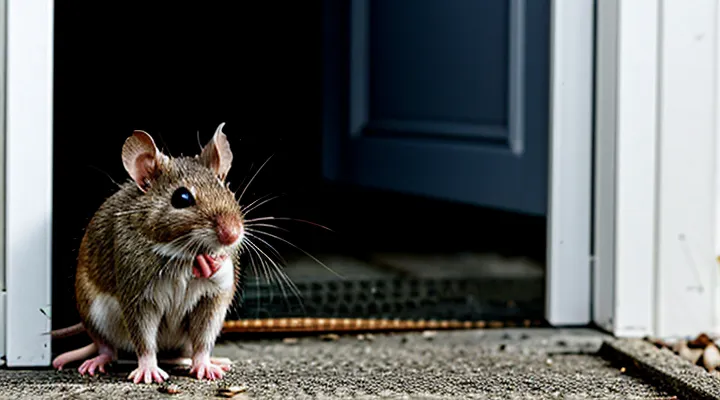
Introduction to Murine Behavior
Understanding Mouse Instincts
Predator-Prey Dynamics
Mice exhibit heightened vigilance when humans are present, reflecting a predator‑prey relationship that has evolved over millennia. Their sensory systems prioritize detection of large, moving organisms, triggering escape responses that reduce exposure to potential threats. Laboratory observations show that rodents increase freezing duration and retreat distance in response to human silhouettes, vocalizations, or abrupt motions.
Key factors influencing this behavior include:
- Size disparity: Human stature exceeds that of typical mouse predators, prompting innate avoidance mechanisms.
- Odor cues: Human scent contains compounds associated with carnivores, activating olfactory pathways linked to danger perception.
- Motion patterns: Erratic or rapid human movements mimic the attack strategies of natural predators, intensifying stress responses.
Field studies confirm that mice in urban environments develop habituation thresholds. Repeated, non‑threatening encounters lower baseline anxiety, allowing for foraging near human activity zones. However, sudden changes in behavior, such as aggressive handling, reset the threat assessment, resulting in immediate flight.
Neurobiological research identifies the amygdala and hypothalamic circuits as central to processing human‑related danger signals. Activation of these regions produces corticosterone release, which modulates risk‑averse actions and memory consolidation of threatening experiences.
Overall, mouse reactions to humans align with established predator‑prey dynamics: detection, assessment, and escape. The degree of fear is contingent on sensory input, prior exposure, and the perceived immediacy of harm.
Innate Avoidance Mechanisms
Mice possess hard‑wired avoidance systems that trigger when they detect potential predators, including humans. These mechanisms operate without prior experience, relying on innate neural circuits that prioritize safety over exploration.
- Olfactory cues: scent of large mammals activates the vomeronasal organ, producing rapid aversive behavior.
- Visual cues: sudden movement or looming objects stimulate the superior colliculus, prompting escape.
- Auditory cues: high‑frequency sounds associated with footfalls engage the auditory pathway, leading to freezing or flight.
Physiologically, the detection of threat elevates circulating corticosterone, accelerates heart rate, and engages the sympathetic nervous system. The resulting motor output includes rapid retreat, burrowing, or immobility, each minimizing exposure to danger.
Understanding these innate responses informs humane pest control and laboratory handling. Minimizing sudden motions, reducing strong odors, and providing shelter options can diminish stress and improve coexistence between rodents and people.
The Nature of Mouse Fear
Distinguishing Fear from Caution
Behavioral Indicators of Fear
Mice exhibit a distinct set of behaviors when they perceive a human as a threat. These reactions provide reliable evidence of fear and can be observed in laboratory settings, field studies, and household encounters.
- Freezing – abrupt cessation of movement, often accompanied by lowered body posture.
- Tail positioning – tail tucked against the body or rapidly flicked, indicating tension.
- Vocalizations – high‑frequency squeaks or ultrasonic calls that increase in amplitude during distress.
- Escape attempts – rapid scurrying toward hiding places, repeated darting, or climbing on objects.
- Grooming bursts – excessive self‑cleaning performed shortly after a startling encounter, reflecting stress coping.
- Pupil dilation – enlargement of the eyes detectable with infrared imaging, correlating with heightened arousal.
- Reduced foraging – abandonment of food sources near the observer, signifying avoidance.
Each indicator arises from activation of the mouse’s amygdala and associated neural pathways that mediate defensive responses. Freezing conserves energy while the animal assesses danger; tail and vocal cues signal internal tension to conspecifics; escape behaviors prioritize immediate safety; grooming serves as a self‑soothing mechanism; pupil changes reflect sympathetic nervous system activity; and foraging suppression reduces exposure to potential threats. Collectively, these signs form a diagnostic framework for evaluating fear in rodents confronted by people.
Learned Responses to Threats
Mice develop threat responses through experience rather than innate fear of people. When a mouse encounters a human who moves suddenly, makes loud noises, or displays predatory gestures, it learns to associate those cues with potential danger. Repeated exposure to harmless handling reduces avoidance, whereas occasional startling events reinforce escape behaviors.
Key learned threat responses include:
- Rapid retreat to concealed areas such as burrows or hidden corners.
- Freezing motion when the human remains motionless, minimizing detection.
- Elevated grooming or self‑cleaning after a stressful encounter, indicating physiological stress.
- Increased vigilance, characterized by frequent scanning of the environment and reduced foraging activity.
Experimental observations show that mice conditioned with mild electric shocks or predator scent acquire heightened sensitivity to human presence. Conversely, consistent gentle handling lowers cortisol levels and diminishes avoidance, demonstrating that the mouse’s assessment of risk is adaptable and dependent on prior interactions.
Human Presence and Mouse Reactions
Direct Encounters
Flight or Freeze Responses
Mice exposed to human presence exhibit two primary defensive strategies: rapid escape and immobility. Escape involves immediate locomotion away from the perceived threat, often through the nearest opening or burrow. Immobility, or freezing, consists of the animal remaining motionless, reducing visual cues that could attract a predator’s attention.
Escape is triggered when sensory cues indicate an imminent danger that can be avoided by distance. High‑intensity visual or auditory signals, sudden movements, and close proximity increase the probability of flight. Muscular activation of the sympathetic nervous system produces acceleration, heightened heart rate, and directed movement toward shelter.
Freezing occurs when escape routes are limited or when the mouse assesses that motion would increase detection risk. Low‑intensity or ambiguous cues, such as distant shadows or distant footsteps, favor immobility. The parasympathetic response dominates, lowering heart rate and suppressing overt movement while the animal remains alert.
Factors influencing the choice between flight and freeze include:
- Proximity of the stimulus – the closer the human, the higher the likelihood of escape.
- Availability of shelter – accessible burrows or gaps promote flight; their absence biases toward freezing.
- Previous experience – individuals that have survived encounters by fleeing tend to repeat that behavior; those that have been captured may adopt freeze as a protective fallback.
- Stress hormone levels – elevated corticosterone correlates with increased flight propensity, whereas moderate levels support freezing.
- Group dynamics – solitary mice are more prone to flee, while those in a colony may freeze to avoid drawing attention to the group.
Neurobiologically, the amygdala processes threat signals and coordinates the selection of either response through downstream pathways. The periaqueductal gray mediates freezing, whereas the hypothalamic–midbrain circuit drives locomotor activity. Experimental lesions in these regions disrupt the corresponding defensive behavior, confirming their specialized roles.
Understanding the conditions that elicit flight versus freeze clarifies how mice navigate human environments, informs humane handling protocols, and guides the design of laboratory housing that minimizes stress‑induced behaviors.
Aggression as a Last Resort
Mice typically avoid direct confrontation with people, relying on speed and stealth to escape perceived threats. Physical attacks appear only when escape routes are blocked, resources are scarce, or the animal is defending nest material. In such situations, aggression manifests as a brief, high‑intensity bite followed by immediate retreat, minimizing exposure to danger.
Key conditions that precipitate aggressive responses include:
- Confinement that prevents rapid flight
- Sudden, repeated disturbances near the nest
- Competition for food when supplies are limited
The bite force of a house mouse averages 0.5 N, sufficient to cause minor puncture wounds but not to inflict serious injury. Saliva contains mild anticoagulants, yet the physiological impact on humans remains negligible. After delivering a bite, the mouse typically seeks cover, indicating that aggression serves as an emergency strategy rather than a preferred behavior.
Observational studies using infrared video confirm that aggressive episodes last less than two seconds and are followed by a prolonged period of hiding. Hormonal analysis shows a spike in circulating adrenaline during these events, supporting the classification of aggression as a stress‑driven, last‑ditch response.
Factors Influencing Mouse Behavior Towards Humans
Habituation and Desensitization
Urban vs. Wild Mice
Mice that live in cities encounter humans far more often than their counterparts in natural settings. Frequent exposure reduces the intensity of flight responses, allowing urban individuals to approach human structures with relative calm. In contrast, wild mice experience sporadic contact, preserving a heightened vigilance that triggers rapid retreat at the sight or sound of people.
-
Urban mice:
• Regular access to food waste and shelter in buildings.
• Reduced cortisol spikes during brief human interactions.
• Ability to navigate narrow human‑made passages without panic. -
Wild mice:
• Reliance on natural foraging grounds, limited human-derived resources.
• Elevated stress hormones when humans appear unexpectedly.
• Preference for dense vegetation or burrows as primary escape routes.
Studies using motion‑activated cameras and hormonal assays show that urban populations adapt their risk assessment, treating humans as background noise rather than predators. Wild populations maintain a predator‑avoidance schema, interpreting human movement as a direct threat. This divergence influences control strategies: bait stations and traps perform better in city environments where mice are less likely to flee, whereas in rural areas, deterrents that exploit innate fear—such as predator scent cues—prove more effective.
Understanding the behavioral split clarifies why some mice appear indifferent to human presence while others exhibit acute avoidance. The pattern reflects the degree of habituation shaped by habitat, not an inherent species‑wide disposition toward fear.
Previous Experiences with Humans
Mice that have encountered humans repeatedly tend to develop predictable patterns of response. Animals that associate people with food, shelter, or handling exhibit reduced flight distance, quicker habituation to movement, and increased tolerance of close proximity. Conversely, individuals that have experienced sudden capture, traps, or predator‑like stimuli retain heightened vigilance, longer escape latency, and avoidance of human‑occupied zones.
Key factors shaping these outcomes include:
- Nature of interaction – gentle handling or feeding promotes trust; aggressive or painful contact reinforces fear.
- Frequency of exposure – daily contact accelerates habituation; sporadic encounters maintain uncertainty.
- Age at first contact – juveniles exposed early adapt more readily than adults encountering humans for the first time.
Laboratory studies demonstrate that mice conditioned with regular, low‑stress human presence display lower corticosterone levels and fewer stress‑related behaviors during experimental procedures. Field observations reveal that urban mouse populations, accustomed to regular waste collection and human traffic, occupy spaces nearer to human activity than rural counterparts that rarely encounter people.
Overall, a mouse’s history with humans determines whether it perceives people as neutral elements of its environment or as persistent threats. This relationship governs escape strategies, foraging choices, and the likelihood of coexisting in shared spaces.
Sensory Perception of Mice Towards Humans
Olfactory Cues
Detecting Human Scent
Mice possess an exceptionally sensitive olfactory system that registers volatile compounds emitted by humans. The nasal epithelium contains millions of receptor neurons capable of binding molecules such as sweat acids, skin oils, and respiratory aerosols. Detection thresholds for these substances are measured in parts per billion, allowing a mouse to recognize a person’s presence from a distance of several meters.
The primary pathways for human‑scent perception involve the main olfactory bulb and the accessory vomeronasal organ. Receptor activation triggers a cascade of neural signals that converge on limbic structures, producing rapid behavioral responses. Laboratory experiments have demonstrated that mice exposed to cloth swatches worn by humans exhibit increased freezing and retreat compared with control fabrics, confirming discrimination of human odor from neutral substrates.
Several variables modulate scent detection:
- Clothing material: Synthetic fibers retain fewer volatile compounds than natural fibers, reducing signal strength.
- Human activity level: Elevated perspiration and exhaled carbon dioxide during exertion amplify odor cues.
- Environmental conditions: Low humidity and wind speed diminish the concentration of airborne human volatiles, extending detection range.
- Mice’s physiological state: Stress hormones heighten olfactory sensitivity, while prior habituation to human contact can blunt response intensity.
Understanding how mice perceive human odor informs handling protocols in research facilities and guides the design of pest‑management strategies. Minimizing strong human scents—through clean clothing, reduced physical activity, and controlled ventilation—lowers the likelihood of eliciting avoidance or stress behaviors in rodent populations.
Chemical Signals of Danger
Mice detect threats through volatile compounds released by stressed conspecifics, predators, and humans. When a mouse perceives danger, it emits alarm pheromones primarily composed of methylated fatty acids and sulfur‑containing molecules. These substances disperse quickly, triggering heightened vigilance and escape behavior in nearby individuals.
Humans generate chemical cues that mice interpret as danger. Sweat contains cortisol metabolites and catecholamines that can be sensed by the rodent’s vomeronasal organ. Additionally, skin bacteria produce short‑chain fatty acids, which mice associate with large, unpredictable mammals. Exposure to these human‑derived signals reduces exploratory activity and increases thigmotaxis (preference for walls).
Key chemical signals influencing mouse responses include:
- Alarm pheromones: 2‑hexenal, 4‑ethyl‑2‑methoxyphenol, and other aldehydes released after injury.
- Predator odors: 2‑phenylethylamine from carnivore urine, fox fecal extracts rich in sulfur compounds.
- Human stress markers: cortisol breakdown products (e.g., tetrahydrocortisone) and adrenaline derivatives present in sweat.
- Social stress cues: urine containing major urinary proteins (MUPs) altered by fear conditioning.
The integration of these signals occurs in the accessory olfactory bulb, where neural pathways converge on the amygdala and hypothalamus. Activation of this circuit initiates rapid motor responses, such as freezing, sprinting toward shelter, or increased ultrasonic vocalizations. Consequently, the presence of specific chemical cues reliably predicts mouse avoidance of humans and other potential threats.
Auditory Cues
Human Voices and Footsteps
Human vocalizations and footfalls constitute primary auditory cues for mice in environments shared with people. Laboratory studies demonstrate that mice react to a broad frequency range of human speech, with heightened vigilance when sounds contain abrupt amplitude changes. Continuous low‑level chatter often leads to habituation, whereas sudden shouts or high‑pitched squeaks trigger immediate freezing or rapid retreat to burrows.
Footstep patterns affect spatial positioning and escape routes. Soft, padded steps produce minimal acoustic disturbance, allowing mice to maintain foraging activity near human presence. In contrast, heavy or resonant steps generate ground‑borne vibrations that travel through substrates, prompting mice to seek cover within seconds. The intensity of vibration correlates with the mouse’s assessment of predatory risk, influencing whether it remains in the vicinity or relocates to a deeper shelter.
Key observations:
- Mice distinguish between familiar human voices (e.g., caretakers) and unfamiliar, louder tones, adjusting their alertness accordingly.
- Repetitive, predictable footsteps reduce stress responses after several exposures, whereas irregular or rapid footfalls sustain heightened arousal.
- Combined auditory and vibrational cues produce synergistic effects, amplifying avoidance behavior more than either stimulus alone.
Startle Responses
Mice exhibit rapid, involuntary movements when unexpectedly disturbed. The response begins with a sudden activation of the auditory, visual, or tactile pathways, triggering the brainstem’s reticular formation. This neural burst releases catecholamines, producing a brief surge of muscle tension and a forward or upward thrust of the body.
Typical components of the startle reaction include:
- A quick contraction of the neck and forelimb muscles, often resulting in a brief freeze or a rapid dash.
- Elevation of the tail and flattening of the ears to reduce the silhouette.
- Immediate release of stress hormones (adrenaline, cortisol) that heighten alertness for a few seconds.
Field observations show that wild mice react more intensely than laboratory strains, suggesting that prior exposure to humans moderates the magnitude of the response. Laboratory mice, accustomed to handling, may display reduced latency and lower peak acceleration, yet still retain the core motor pattern.
Experimental data reveal a dose‑response relationship between stimulus intensity and startle magnitude. Acoustic bursts above 100 dB elicit the strongest reactions, while low‑frequency vibrations produce subtler movements. Visual threats, such as sudden shadows, generate comparable responses but with longer latencies, reflecting slower processing through the optic system.
Understanding these reflexes informs humane pest management. Rapid, predictable motions enable the design of traps that exploit the reflex without causing unnecessary harm, while minimizing distress for both animals and handlers.
Visual Cues
Human Size and Movement
Mice respond to the sheer scale of a person. Their visual system detects objects larger than a few centimeters as potential threats, triggering avoidance behaviors. The rapid, unpredictable motion of human limbs amplifies this perception, causing mice to increase distance or seek shelter.
Movement patterns further shape reactions. Sudden accelerations and irregular trajectories raise the likelihood of a startle response, while slow, linear motion may be interpreted as less dangerous. Laboratory observations show that:
- Fast, erratic steps elicit immediate freezing or rapid retreat.
- Gentle, steady walking reduces the frequency of escape attempts.
- Direct eye contact combined with looming body posture intensifies avoidance.
These findings indicate that both the physical dimensions of a person and the dynamics of their locomotion critically influence mouse behavior in shared environments.
Shadows and Silhouettes
Mice rely heavily on visual information when assessing potential threats, and the contrast between light and dark shapes provides immediate cues about the presence of larger organisms. Shadows cast by humans create silhouettes that differ markedly from the natural environment, triggering the rodent’s innate wariness.
Silhouettes convey size, movement speed, and outline clarity. A broad, dark shape moving across a familiar surface is interpreted as a predator silhouette, prompting escape behaviors such as rapid scurrying, freezing, or seeking cover. The more defined the edge of the silhouette, the stronger the avoidance response.
Laboratory studies have recorded the following patterns:
- Mice exposed to a moving shadow without accompanying auditory or olfactory signals still exhibit heightened vigilance.
- Gradual introduction of light sources that soften silhouettes reduces startle responses.
- High‑contrast silhouettes presented from a low angle generate the most pronounced flight reactions.
Understanding these visual dynamics informs humane handling practices. Operators can minimize stress by:
- Approaching mice under diffused lighting that softens personal outlines.
- Maintaining a low, lateral stance to reduce the apparent height of the silhouette.
- Using gradual movements rather than abrupt gestures that produce sharp shadows.
By managing shadow and silhouette presentation, caretakers can decrease fear‑induced behaviors and promote smoother interactions with laboratory and domestic rodents.
Debunking Common Myths About Mice and Humans
The «Brave Mouse» Fallacy
The “Brave Mouse” fallacy assumes that occasional bold actions by a mouse prove an absence of fear toward people. The inference treats a single observed escape‑avoidance failure as evidence that mice are generally indifferent to human presence.
Research on rodent ethology demonstrates that the default response to sudden stimuli, including human movement, is rapid withdrawal. Baseline stress indicators—elevated corticosterone, increased thigmotaxis, and heightened vigilance—appear consistently in laboratory and field observations. These physiological and behavioral markers confirm a pervasive wariness that contradicts the notion of inherent bravery.
Apparent boldness emerges under specific conditions:
- Repeated exposure that reduces novelty, leading to habituation.
- Strong food incentive that outweighs perceived threat.
- Confinement that limits escape routes, forcing confrontation.
- Experimental protocols that unintentionally reward risk‑taking behavior.
Each factor modifies the cost–benefit calculation a mouse makes, temporarily suppressing the innate flight response without eliminating it.
Misapplying the “Brave Mouse” narrative yields practical errors. Pest‑control strategies that underestimate mouse fear may overestimate the effectiveness of direct human deterrence, neglecting environmental modifications that exploit natural avoidance. Conservation programs that interpret boldness as reduced stress risk misrepresent animal welfare status.
In sum, the fallacy conflates context‑dependent risk assessment with a blanket dismissal of fear. Accurate interpretation of mouse behavior requires distinguishing transient, motivation‑driven actions from the species‑wide propensity to avoid humans.
Do Mice Actively Seek Human Contact?
Mice generally avoid direct interaction with people, but certain conditions can prompt them to approach humans. Laboratory strains, accustomed to handling, display reduced wariness and may climb onto a handler’s hand to explore food or warmth. Wild mice retain strong flight responses, yet scarcity of shelter or food near human activity can diminish avoidance temporarily.
Key factors that increase the likelihood of mice seeking human contact include:
- Habituation – repeated, non‑threatening exposure to humans lowers stress responses.
- Food availability – crumbs, open containers, or bait placed by a person attract mice.
- Environmental temperature – warm indoor spaces provide refuge, encouraging proximity.
- Social isolation – solitary individuals may explore novel stimuli, including humans, more readily.
Physiological studies show that mouse stress hormones (corticosterone) rise sharply during sudden human presence but decline after predictable, gentle handling. This pattern suggests that active seeking of human contact is not innate; it emerges only when the perceived risk is minimal and the potential reward—food, warmth, or safety—is evident.
Implications for Pest Control and Coexistence
Ethical Considerations in Mouse Management
The ethical dimension of mouse management demands actions that protect animal welfare while addressing human health and property concerns. Practices that cause unnecessary pain or distress violate established animal‑care standards and erode public trust in pest‑control operations.
- Use live‑capture devices that allow immediate release in appropriate habitats.
- Select traps constructed from non‑sharp, non‑abrasive materials to reduce injury risk.
- Apply chemical agents only when non‑lethal alternatives are ineffective, and follow label instructions to avoid accidental exposure.
- Implement humane euthanasia methods approved by veterinary authorities when release is impractical.
- Document each intervention, retain records of capture numbers, and review outcomes for continuous improvement.
Operators must receive training on species‑specific behavior, handling techniques, and legal obligations. Property owners share responsibility for maintaining sanitation, sealing entry points, and limiting attractants that provoke infestation.
Compliance with regulations such as the Animal Welfare Act, state pest‑control statutes, and professional guidelines from organizations like the American Veterinary Medical Association ensures that interventions align with recognized humane principles. Regular audits and third‑party certification reinforce accountability and promote consistent ethical standards across all mouse‑management activities.
Creating a Less Threatening Environment
Mice respond to perceived danger through rapid flight, heightened alertness, and avoidance of direct contact. To lower the perceived threat, humans should minimize abrupt motions, keep a steady presence, and avoid direct eye contact that can be interpreted as predatory.
- Move slowly when entering an area where mice are active.
- Speak in a low, even tone; loud or sudden sounds increase stress.
- Keep hands and objects still; rapid gestures trigger escape behavior.
Environmental modifications further reduce anxiety for the rodents. Providing concealed pathways, such as gaps behind appliances or under furniture, gives mice safe routes away from human activity. Maintaining consistent lighting levels prevents sudden shadows that can be misread as looming predators.
- Place food sources in quiet corners, away from high‑traffic zones.
- Use bedding or nesting material that offers cover and concealment.
- Avoid direct illumination of entry points; diffuse light lessens the impression of surveillance.
By combining calm behavior with structural adjustments, people create an atmosphere that mice interpret as non‑threatening, encouraging natural foraging and movement patterns without unnecessary stress.
Final Considerations on Mouse-Human Interactions
Research on mouse responses to human presence consistently shows avoidance rather than overt fear. Mice detect people through visual, auditory, and olfactory cues; these signals trigger escape behaviors that minimize contact. Laboratory and field observations indicate that prolonged exposure to non‑threatening humans can reduce avoidance, suggesting habituation rather than a permanent fear state.
Key implications for managing mouse‑human encounters include:
- Habituation potential – Repeated, calm interactions lower flight responses, allowing for more predictable handling in research or pest‑control settings.
- Stress indicators – Elevated cortisol, increased grooming, and rapid retreat are reliable markers of perceived threat; monitoring these metrics helps assess welfare.
- Environmental design – Reducing sudden movements, bright lights, and strong odors diminishes perceived danger, facilitating coexistence in shared spaces.
- Risk assessment – Even habituated mice retain a baseline wariness; sudden disturbances can provoke escape, reinforcing the need for consistent handling protocols.
Final considerations emphasize that mouse behavior toward people is adaptive, rooted in survival instincts. Effective management relies on predictable, low‑stress environments that allow mice to adjust their avoidance strategies without compromising their physiological well‑being.