
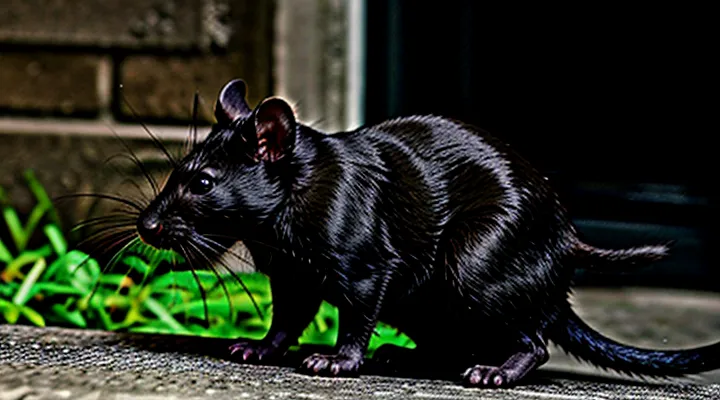
The Enigma of the «Black Rat»
Historical Perception and Common Misconceptions
The Name «Black Rat» in Popular Culture
The term “black rat” appears repeatedly across artistic and entertainment media, often detached from biological accuracy and employed as a symbol, nickname, or atmospheric element. In literature, the name surfaces in gothic and horror narratives to evoke menace or urban decay, while in detective stories it may designate a cunning antagonist. Film and television frequently use the phrase in titles or dialogue to suggest a stealthy, morally ambiguous character, capitalizing on the animal’s nocturnal reputation. Music lyrics adopt “black rat” as a metaphor for betrayal or darkness, reinforcing the image through rhythmic repetition.
Common contexts where the name functions symbolically include:
- Crime novels: a criminal mastermind dubbed “the Black Rat” for his elusive tactics.
- Horror movies: a creature or entity referred to as the Black Rat, enhancing fear through animalistic connotations.
- Video games: enemy units or boss characters labeled “Black Rat,” often possessing swift movement and stealth abilities.
- Urban folklore: street art and graffiti portraying the Black Rat as a mascot of resistance or survival.
In branding, the designation serves commercial purposes. Restaurants and breweries employ the moniker to suggest edginess or authenticity, while sports teams adopt it as a mascot to convey tenacity. The repeated cultural deployment of “black rat” reinforces an archetype that transcends the species’ ecological role, embedding the name in collective imagination as a versatile emblem of secrecy, adaptability, and subversion.
Association with Disease and Plague
Black rats (Rattus rattus) are a documented rodent species found worldwide in urban and rural settings. Their presence has been repeatedly linked to the transmission of serious human pathogens.
Key diseases associated with black rats include:
- Plague, caused by Yersinia pestis and transmitted by the rat flea (Xenopsylla cheopis). Historical pandemics, such as the 14th‑century Black Death, were driven by rat‑flea‑human cycles.
- Hantavirus pulmonary syndrome, where infected rodents shed virus particles in urine and droppings.
- Leptospirosis, a bacterial infection acquired through contact with contaminated water or soil.
- Salmonellosis, resulting from ingestion of food contaminated by rat feces.
- Lymphocytic choriomeningitis, transmitted via rat excreta.
Epidemiological records confirm that outbreaks of plague correlate with increases in black rat populations and flea infestations. Modern surveillance links rodent density to higher risk of zoonotic spillover, especially in densely populated cities lacking effective waste management.
Control strategies focus on:
- Reducing food and shelter sources to limit rat reproduction.
- Implementing integrated pest management, combining traps, bait stations, and environmental sanitation.
- Monitoring flea populations and applying insecticides where necessary.
- Conducting public health education on hygiene and disease prevention.
Scientific consensus affirms that black rats serve as reservoirs and vectors for multiple pathogens, reinforcing the need for ongoing rodent control and disease surveillance.
Unveiling the True «Black Rat»
Scientific Classification and Nomenclature
Rattus rattus: The Actual Species
Rattus rattus, commonly called the black rat, is a distinct species within the genus Rattus. It originated in the Indian subcontinent and spread worldwide through human commerce, establishing populations on every continent except Antarctica. Genetic studies confirm its separation from the brown rat (Rattus norvegicus) and other murids, validating its taxonomic status.
Key biological traits include:
- Size: body length 16–20 cm, tail 18–25 cm, weight 75–250 g.
- Coat: typically dark brown to black, with a lighter belly.
- Reproduction: gestation 21–23 days, up to 12 offspring per litter, multiple litters annually.
- Diet: omnivorous, capable of exploiting stored grains, fruits, and insects.
- Disease vectors: carriers of pathogens such as Yersinia pestis and Leptospira spp.
Habitat preference centers on human dwellings, ships, and agricultural stores, where shelter and food are abundant. The species demonstrates high adaptability, tolerating varied climates from temperate to tropical regions. Control measures rely on integrated pest management, combining sanitation, exclusion, and targeted rodenticides.
Consequently, the organism referred to as the black rat exists as a well‑documented species, with a global distribution supported by extensive morphological and molecular evidence.
Physical Characteristics and Distinguishing Features
Black rats, scientifically identified as Rattus rattus, typically measure 16–25 cm from nose to base of tail, with a tail length of 18–25 cm. Their fur ranges from deep brown to almost black, often appearing glossy when wet. The dorsal pelage is densely packed, while the ventral side is lighter, usually gray‑white. Ears are proportionally large, rounded, and lack the prominent hair tufts found in some murid species. Eyes are relatively small, with a dark iris and a prominent black pupil. The skull exhibits a narrow, triangular shape, and the incisors are orange‑yellow, continuously growing and self‑sharpening.
Key traits that separate black rats from other common rodents:
- Tail: longer than the head‑body length, slender, hairless, with a uniformly dark coloration.
- Fur: dark, glossy dorsal coat; lighter ventral area; absence of the brown‑rufous hue typical of brown rats (R. norvegicus).
- Ear size: larger relative to skull dimensions; lack of noticeable hair.
- Body build: more slender, with a tapered hindquarters compared to the robust form of brown rats.
- Foot pads: black, contrasted with the lighter pads of many house mice (Mus musculus).
- Dental coloration: orange‑yellow incisors, distinct from the reddish tint seen in some other rodent species.
These characteristics provide reliable criteria for field identification and laboratory classification, ensuring accurate differentiation from sympatric murine species.
Geographic Distribution and Habitat
Native Range and Global Spread
The black rat (Rattus rattus) originated in the Indian subcontinent, extending into Southeast Asia, the Horn of Africa, and the Mediterranean basin. Fossil records and genetic studies indicate long‑term habitation of these regions before human‑mediated dispersal.
Human activity accelerated the species’ expansion. Maritime trade routes introduced the rodent to ports throughout Europe during the medieval period, after which it spread inland via railways and road networks. Subsequent colonization carried it to the Americas, Oceania, and sub‑Saharan Africa.
Current distribution includes:
- Western and Southern Europe, including the British Isles and the Iberian Peninsula.
- North America: coastal cities of the United States, Canada, and Mexico, with inland populations in major urban centers.
- South America: Brazil, Argentina, Chile, and coastal Peru.
- Oceania: Australia, New Zealand, and numerous Pacific islands.
- Africa: coastal regions of West, Central, and East Africa, as well as inland settlements associated with agriculture.
The species thrives in human‑altered habitats, exploiting stored food, waste, and shelter in buildings. Its global presence reflects the historical pattern of trade, colonization, and modern transport infrastructure.
Preferred Environments and Adaptations
Black rats (Rattus rattus) thrive in habitats that provide shelter, food, and proximity to human activity. Urban structures such as attics, wall voids, and basements offer the darkness and warmth required for nesting. Rural settings with grain stores, barns, and orchards support populations that can exploit stored crops and fruit. Coastal ports and shipping containers serve as entry points, allowing the species to establish colonies in new regions.
Key adaptations enable survival across these environments:
- Arboreal locomotion – elongated hind limbs and a flexible spine facilitate climbing and movement through narrow passages.
- Nocturnal vision – large eyes and a high density of rod cells enhance low‑light perception, reducing exposure to predators.
- Omnivorous diet – enzymatic versatility permits digestion of grains, fruits, insects, and waste, allowing exploitation of diverse food sources.
- Reproductive efficiency – short gestation (≈ 21 days) and large litter sizes (5–12 offspring) sustain rapid population growth under favorable conditions.
- Resilience to toxins – hepatic enzymes metabolize many rodenticides, granting partial resistance to chemical control measures.
These environmental preferences and physiological traits combine to make black rats a highly adaptable commensal species, capable of colonizing both built and natural ecosystems worldwide.
Debunking the Myth
Other Rat Species Often Mistaken for «Black Rats»
The Brown Rat (Rattus norvegicus)
The brown rat (Rattus norvegicus) belongs to the family Muridae and the order Rodentia. It is the most widely distributed rodent species, found on every continent except Antarctica.
Typical adult size ranges from 20 cm to 25 cm in body length, with a tail of similar length. Fur is dense, brown to dark brown, and the ventral side is lighter. Distinguishing features include a blunt muzzle, large ears, and a robust skull.
Geographic presence:
- Originated in Central Asia; spread worldwide through human commerce.
- Dominates urban environments, sewers, and agricultural settings.
- Frequently coexists with other commensal rodents.
Ecology and impact:
- Omnivorous diet includes grains, waste, insects, and small vertebrates.
- Breeding cycle allows up to five litters per year, each with 6–12 offspring.
- Serves as a reservoir for pathogens such as hantavirus, leptospirosis, and plague.
Comparison with the black rat (Rattus rattus):
- The black rat is a separate species, smaller, with a slender body and a longer tail.
- Both species occupy overlapping habitats, but R. norvegicus is more prevalent in temperate regions, whereas R. rattus favors warmer climates.
- Misidentification arises from superficial color similarities; accurate identification relies on body proportions and tail length.
Variations in Fur Color within Rat Species
Fur coloration among rats displays considerable genetic variability, ranging from light albino coats to deep black pelage. The presence of melanin‑producing alleles determines the darkness of the coat, while modifier genes influence pattern and intensity. Consequently, individual specimens within a single species can exhibit markedly different hues.
In the species commonly referred to as the black rat (Rattus rattus), the predominant phenotype features a uniformly dark coat, often described as glossy black or very dark brown. Genetic analyses attribute this coloration to high concentrations of eumelanin, reinforced by a lack of dilution alleles. Although the species is named for its typical color, documented populations also include individuals with mixed or lighter shades, reflecting natural allelic diversity.
The brown rat (Rattus norvegicus) demonstrates an even broader spectrum of fur colors. Representative morphs include:
- Standard agouti (brown‑gray) coat
- Hooded pattern (dark dorsal stripe with lighter ventral fur)
- Albino (absence of pigment)
- Fully black individuals (rare, resulting from homozygous eumelanin‑dominant alleles)
Geographic studies show that darker morphs are more frequent in urban environments where camouflage against soot and shadowed structures offers a selective advantage. Conversely, lighter or patterned coats prevail in rural habitats where varied backgrounds reduce predation risk.
These observations confirm that rats with entirely black fur exist as a documented phenotypic variant within established species. The documented occurrence of such individuals resolves the question of black‑coated rat presence through empirical evidence rather than speculation.
The Importance of Accurate Identification
Ecological Implications
Black rats (Rattus rattus) are documented across temperate and tropical regions, confirming their presence in natural and urban environments.
Their ecological impact includes:
- Predation on ground‑dwelling birds, insects, and small vertebrates, reducing native population numbers.
- Competition with indigenous rodents for food and shelter, leading to displacement of less aggressive species.
- Transmission of pathogens such as Leptospira, hantavirus, and Yersinia pestis, influencing disease dynamics in wildlife and human communities.
- Modification of habitat structure through nest building and burrowing, which alters soil composition and microhabitat availability.
- Integration into urban food webs, providing a food source for predators like owls, feral cats, and raptors, thereby affecting predator abundance and distribution.
Understanding these effects informs pest control strategies, biodiversity conservation plans, and public‑health policies, emphasizing the need for targeted research on population dynamics and ecosystem interactions.
Pest Management Strategies
Black rats (Rattus rattus) are a well‑documented species that inhabits cities, ports, and rural structures worldwide. Their adaptability creates significant challenges for property owners, public health officials, and agricultural producers. Effective control requires a systematic approach that combines preventive measures, direct removal, and ongoing surveillance.
Integrated pest management (IPM) provides the framework for sustainable rat control. The core principle is to reduce populations to acceptable levels while minimizing risks to non‑target organisms and the environment. Implementation begins with thorough site assessment to identify food sources, shelter, and entry points.
Key tactics include:
- Sanitation – Eliminate accessible food, water, and debris; store waste in sealed containers; maintain clean processing areas.
- Exclusion – Seal cracks, gaps, and openings larger than ¼ inch; install metal flashing on vents and utility penetrations.
- Trapping – Deploy snap or electronic traps along runways, near walls, and in concealed locations; check and reset daily.
- Baiting – Use anticoagulant or non‑anticoagulant rodenticides in tamper‑resistant stations; rotate active ingredients to prevent resistance.
- Biological control – Encourage natural predators such as barn owls, feral cats, or trained ferrets where appropriate and legal.
- Monitoring – Place tracking boards or motion‑activated cameras to verify activity; adjust tactics based on data trends.
Successful programs coordinate these actions, document outcomes, and revise strategies as rat behavior or environmental conditions change. Consistent application of IPM reduces infestation severity, protects public health, and limits economic losses.