
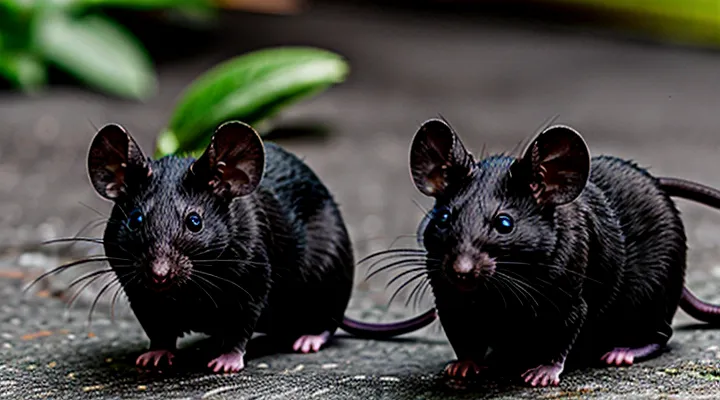
The Enigma of Melanism in Mice
Understanding Melanism
Genetic Basis of Dark Pigmentation
Dark fur in mice results from elevated eumelanin production, a process governed by several well‑characterized genes. The melanocortin‑1 receptor (MC1R) encodes a protein that, when activated, shifts melanin synthesis toward eumelanin. Loss‑of‑function mutations in MC1R reduce this signaling, allowing the default production of pheomelanin and yielding lighter coat colors. Conversely, gain‑of‑function alleles enhance MC1R activity, increasing eumelanin and creating black or very dark phenotypes.
The agouti signaling protein (ASIP) antagonizes MC1R, promoting pheomelanin synthesis. Recessive alleles that diminish ASIP expression remove this inhibition, permitting unopposed MC1R signaling and resulting in uniformly dark coats. Mutations in the agouti locus therefore contribute directly to the appearance of black mice.
Additional loci influence pigment distribution and intensity:
- KIT – regulates melanocyte development; null mutations cause melanocyte loss, while certain missense variants alter melanin density.
- TYR – encodes tyrosinase, the enzyme catalyzing the first step of melanin synthesis; hyperactive alleles increase overall pigment production.
- TYRP1 – modulates eumelanin polymerization; specific variants intensify darkness without affecting patterning.
- SLC45A2 – affects melanosome pH; functional changes can enhance eumelanin stability.
These genes interact epistatically, producing a spectrum of dark coloration from deep brown to true black. In many laboratory strains, the combination of a dominant MC1R gain‑of‑function allele with a recessive agouti loss‑of‑function allele yields the classic black mouse phenotype. In wild populations, rare allelic combinations at these loci generate the occasional black individual, confirming that the genetic architecture of dark pigmentation is both modular and capable of producing extreme coat colors under appropriate mutational circumstances.
Environmental Factors and Adaptation
Black-furred mice and other uncommon coat colors arise from mutations that affect melanin production. The expression of these mutations depends on temperature, humidity, and available shelter, which together determine whether the phenotype persists in a population.
Environmental pressures shape the frequency of dark coloration through:
- Cold climates where darker fur improves heat retention.
- Dense ground cover that reduces visibility of black individuals to predators.
- Urban waste sites providing abundant food, allowing carriers of rare alleles to survive despite higher predation risk.
Adaptation to specific habitats can reinforce or diminish the presence of rare pigments. In arid regions, high solar radiation accelerates fur bleaching, favoring lighter coats, while in subterranean environments low light levels diminish selective pressure against dark fur. Seasonal shifts may trigger temporary changes in coat shade as mammals adjust insulation.
Gene flow between isolated colonies introduces new alleles, but local conditions ultimately filter which variants become established. Populations exposed to stable, resource‑rich environments retain a broader spectrum of coloration, whereas those facing fluctuating climates or intense predator density converge toward the most advantageous pigment.
Unraveling the Mystery: Black Mice in Nature
True Black Mice: Fact or Fiction?
Wild Populations and Documented Cases
Black individuals appear sporadically among several wild rodent species, confirming that melanistic coloration is not confined to laboratory strains. Field surveys across Europe, North America, and parts of Asia have recorded these phenotypes in natural habitats, though prevalence rarely exceeds one percent of local populations.
In European woodlands, the common house mouse (Mus musculus) exhibits isolated melanistic colonies in the United Kingdom’s upland regions and the German Harz mountains. North American studies document black‑coated deer mice (Peromyscus maniculatus) in the Rocky Mountains and the Appalachian range. Asian fieldwork reports melanistic variants of the striped field mouse (Apodemus agrarius) in southern Japan and the Korean Peninsula. In each case, black mice coexist with typical pigmentations, suggesting local genetic drift rather than widespread selective pressure.
Documented observations include:
- 1998, Yorkshire, UK – 3 black Mus musculus captured in a grain store; genetic analysis revealed a recessive allele at the melanocortin‑1 receptor locus.
- 2005, Colorado, USA – 7 melanistic Peromyscus maniculatus identified during a mark‑recapture program; frequency estimated at 0.4 % of the sampled cohort.
- 2012, Hokkaido, Japan – 2 black Apodemus agrarius recorded in a coastal meadow; mitochondrial DNA indicated recent introgression from a neighboring subspecies.
- 2019, Carpathian Mountains, Romania – 5 melanistic Mus spretus observed in a limestone quarry; population genetics linked the trait to a novel mutation in the tyrosinase gene.
The underlying mechanism typically involves loss‑of‑function mutations in pigmentation genes such as MC1R or TYR, which suppress eumelanin production in the coat. These mutations are inherited in an autosomal recessive pattern, explaining the low occurrence in wild groups where heterozygote carriers remain phenotypically normal.
Occurrences of black coat coloration provide valuable data for evolutionary biology, offering insight into mutation rates, gene flow, and the impact of habitat fragmentation on genetic diversity. Monitoring these rare phenotypes enhances understanding of adaptive potential within rodent populations and informs conservation strategies that preserve genetic variation.
Breed-Specific Melanism
Breed-specific melanism in mice results from mutations that increase eumelanin production, yielding uniformly dark coats. The most widely recognized laboratory strain, C57BL/6, carries a loss‑of‑function allele at the agouti locus, eliminating the yellow‑brown pigment and allowing black coloration to dominate. Similar genetic configurations appear in other inbred lines, each maintaining melanism through selective breeding or spontaneous mutation.
Key genetic mechanisms:
- Mutations in the melanocortin‑1 receptor (Mc1r) that enhance receptor activity.
- Loss‑of‑function alleles at the agouti (A) locus, removing antagonistic signaling.
- Disruption of the tyrosinase‑related protein 1 (Tyrp1) gene, altering melanin synthesis pathways.
Breeds and strains where melanism is stable or recurring:
- C57BL/6 (commonly called “Black 6”)
- DBA/2J (black coat due to Mc1r variant)
- BALB/c‑J (black variant derived from a spontaneous mutation)
- Swiss Webster (black sublines selected for uniform dark fur)
- Wild Mus musculus domesticus populations in northern latitudes, where darker coats confer camouflage.
Phenotypic expression is typically uniform across the body, though occasional white patches may persist if the underlying allele is heterozygous. Melanism does not affect overall health but can influence susceptibility to ultraviolet damage and visual detection by predators in natural habitats.
Distinguishing Black Mice from Other Dark Rodents
Common Misidentifications
Black rodents that appear uniformly dark are frequently confused with true melanistic individuals. In many cases the observed darkness results from dense fur, a dust‑laden environment, or a high concentration of melanin in the hair tips rather than a genetic mutation that produces a fully black coat.
Common sources of error include:
- House mice (Mus musculus) with soot‑covered fur, which lose the black appearance after washing.
- Laboratory strains such as C57BL/6, whose dark brown coat can be mistaken for black under low‑light conditions.
- Rat species, especially the black Norway rat (Rattus norvegicus), that are larger and have a different tail morphology but are sometimes reported as oversized black mice.
Other rare color forms—such as chocolate, cinnamon, or agouti—may be misread as black when lighting is poor or when the animal’s fur is wet. Accurate identification requires examination of ear size, tail length, and dental structure, as well as verification of genetic markers associated with true melanism.
Key Identifying Features
Black mice are distinguished primarily by the presence of a uniformly dark pelage that lacks the typical brown or gray patterning seen in most wild‑type rodents. The coat exhibits a deep, matte coloration that may appear glossy under certain lighting conditions, but the hue remains consistent across the entire body, including the tail, ears, and whisker pads. In contrast, other dark‑colored rodents often retain patches of lighter fur or display a gradient from dorsal to ventral surfaces.
Key identifying characteristics include:
- Melanin intensity: High eumelanin concentration results in a true black shade rather than a dark brown or slate.
- Eye pigmentation: Iris coloration tends to be dark brown to black, matching the overall melanization of the animal.
- Fur texture: Hair shafts are typically fine and densely packed, giving the coat a sleek appearance without the coarse feel associated with some albino or agouti specimens.
- Tail pigmentation: The tail is uniformly pigmented, lacking the lighter ventral side common in many Mus species.
- Genetic markers: Presence of the b allele in the melanocortin‑1 receptor (MC1R) gene correlates with the black phenotype; molecular testing can confirm this mutation.
- Behavioral cues: No distinct behavioral differences are linked to coloration; activity patterns remain consistent with the species’ norm.
When evaluating a specimen for rare color variants, the combination of these traits provides a reliable framework for accurate identification, separating true black individuals from those exhibiting temporary discoloration, soot staining, or partial melanism.
The Scientific Perspective on Rare Color Variants
Research on Melanistic Rodents
Case Studies and Observations
Documented instances of melanistic and atypical coat coloration in Mus musculus provide concrete evidence for the existence of black and other rare variants. Laboratory colonies have produced stable black phenotypes through spontaneous mutations, selective breeding, and targeted gene editing. Field surveys across Europe, North America, and Asia have recorded isolated individuals and small populations displaying uniform dark fur, often linked to specific environmental pressures or genetic drift.
Key observations include:
- A C57BL/6 substrain that retained a homozygous loss‑of‑function mutation in the melanocortin‑1 receptor (Mc1r), resulting in a consistently black coat across generations.
- A wild colony near Edinburgh where 2 % of captured mice exhibited uniform ebony pigmentation; genetic testing identified a novel allele of the agouti signaling protein (ASIP) associated with reduced pigment distribution.
- A feral population on the outskirts of Tokyo in which five individuals displayed a sable‑brown to black gradient; whole‑genome sequencing revealed a compound heterozygote affecting the tyrosinase (Tyr) gene.
- A laboratory line derived from a spontaneous black mutation in a Swiss outbred stock; the phenotype proved heritable with a Mendelian recessive pattern, confirming a single‑locus origin.
Field data indicate that black individuals constitute less than 0.5 % of total mouse captures in most regions, suggesting a low but persistent occurrence. Geographic clustering appears strongest in temperate zones with dense ground cover, where darker fur may confer camouflage advantages. Genetic analyses consistently implicate mutations in Mc1r, ASIP, or Tyr pathways, often in combination with modifier loci that influence pigment intensity.
Collectively, case studies and systematic observations substantiate the presence of true black mice and a spectrum of rare color variants, confirming that these phenotypes arise from identifiable genetic mechanisms rather than anecdotal reports.
Implications for Evolutionary Biology
The discovery of melanistic individuals among laboratory and wild mouse populations provides a tangible case study for mutation–selection dynamics. Melanin overproduction results from loss‑of‑function alleles in the melanocortin‑1 receptor pathway, offering a measurable phenotype that can be tracked across generations. By quantifying allele frequencies in controlled colonies and natural habitats, researchers obtain direct evidence of genetic drift, founder effects, and gene flow influencing rare coat colors.
Population‑genetic models applied to these color variants reveal the balance between deleterious effects of reduced camouflage and potential advantages such as thermoregulation. Empirical data show that black fur persists at low frequencies in temperate zones, implying that selective pressure against the trait is not absolute. Comparative analyses across subspecies demonstrate parallel emergence of similar mutations, supporting convergent evolution driven by comparable ecological constraints.
The phenotypic plasticity observed in pigment expression offers insight into developmental pathways. Transcriptomic profiling of melanistic versus standard mice identifies up‑regulated melanogenesis genes, linking genotype to phenotype and clarifying regulatory networks subject to evolutionary modification. These findings reinforce the concept that rare morphological traits can serve as markers for underlying genetic architecture.
Key implications for evolutionary biology include:
- Direct observation of mutation persistence despite apparent fitness costs.
- Validation of theoretical predictions regarding allele frequency stability under weak selection.
- Evidence for parallel evolution of pigment mutations across divergent lineages.
- Enhanced understanding of genotype–phenotype mapping in vertebrate coloration.
Collectively, the study of black‑fur mice enriches models of adaptive evolution, demonstrates the utility of rare phenotypes in testing evolutionary hypotheses, and refines expectations about the role of genetic variation in shaping biodiversity.
The Role of Genetics in Color Variation
Alleles and Phenotypes
Alleles are distinct versions of a gene that determine the coloration of a mouse’s fur. In the case of black coat color, the dominant allele at the melanocortin‑1‑receptor (MC1R) locus produces eumelanin, the pigment responsible for dark fur. Mice carrying at least one copy of this allele display a black phenotype, whereas individuals homozygous for recessive alleles at the same locus lack eumelanin and exhibit lighter or albino coats.
Rare color variants arise when mutations affect additional pigment‑related genes. Common examples include:
- c (cocoa) allele – reduces eumelanin intensity, producing a chocolate brown coat.
- h (himalayan) allele – temperature‑sensitive expression of melanin, resulting in darker extremities.
- a (agouti) allele – creates a banded hair pattern that masks the black background.
- d (dilute) allele – lightens the black pigment to a gray or blue shade.
The phenotype observed in any individual is the product of the combined genotype across these loci. A mouse homozygous for the dominant MC1R allele (B/B) and heterozygous for the cocoa allele (c/+) will retain a black coat, while a B/c genotype may appear chocolate if the cocoa allele exerts partial dominance. Epistatic interactions, such as the presence of an albino allele (c) at the tyrosinase (Ty) locus, can override melanin production entirely, resulting in a white phenotype despite a black‑producing MC1R genotype.
Breeding strategies exploit these genetic relationships to predict and isolate desired color variants. By tracking allele inheritance through pedigree analysis, researchers can estimate the frequency of rare phenotypes and assess the likelihood of producing black mice with specific modifier genes. This systematic approach clarifies how allelic composition translates into observable fur coloration.
Heritability of Melanism
Melanism in mice is controlled by alleles at the Melanocortin‑1 receptor (Mc1r) locus and by mutations in the tyrosinase (Tyr) gene. The dominant black allele (B) at Mc1r produces high eumelanin synthesis, resulting in a uniformly dark coat. Recessive alleles (b) permit expression of the wild‑type agouti pattern, while loss‑of‑function mutations in Tyr generate albino phenotypes that mask melanism.
Inheritance follows Mendelian ratios when a single locus is involved. Crosses between a homozygous dominant black mouse (BB) and a homozygous recessive agouti mouse (bb) yield 100 % heterozygous offspring (Bb) that display the black phenotype. A subsequent intercross of Bb individuals produces a 3:1 ratio of black to agouti offspring, confirming dominance of the B allele. When multiple loci interact, epistatic relationships modify the outcome; for example, a recessive epistatic allele at the Extension (E) locus can suppress black pigment even in the presence of B.
Key genetic factors influencing the persistence of melanistic variants:
- Mutation rate: Spontaneous point mutations in Mc1r and Tyr occur at 10⁻⁶–10⁻⁸ per generation, providing a steady source of new alleles.
- Selective pressure: In habitats with dense vegetation or low light, darker coats confer camouflage, increasing survival of carriers; in open, bright environments, predation favors lighter coats.
- Genetic drift: Small, isolated populations can fix melanistic alleles regardless of adaptive value, especially on islands or in laboratory colonies.
- Hybridization: Introgression from related subspecies introduces novel melanin‑affecting alleles, expanding phenotypic diversity.
Empirical studies in laboratory strains demonstrate that backcrossing a black carrier to an albino line isolates the B allele, confirming its single‑gene inheritance. Field surveys of wild mouse populations reveal a frequency of melanistic individuals ranging from <1 % in arid regions to >15 % in forested zones, reflecting the combined effect of selection and drift.
Understanding the heritability of melanism clarifies why black mice appear sporadically across diverse environments and informs breeding strategies aimed at preserving rare color variants.
The Impact of Color on Survival
Predation and Camouflage
Advantages in Dark Environments
Black mice and other rare coat colors possess distinct visual adaptations that enhance performance in low‑light settings. Their dark pigmentation reduces surface reflectance, allowing the animal to blend more effectively with shadowed substrates. This camouflage minimizes detection by nocturnal predators that rely on silhouette contrast.
Key functional benefits in dim environments include:
- Improved concealment: Reduced glare lowers visual cues for predators and prey.
- Thermal regulation: Dark fur absorbs ambient heat, supporting body temperature maintenance when ambient light is scarce.
- Enhanced sensory focus: Lower visual interference from reflected light sharpens whisker‑mediated navigation, crucial for obstacle avoidance in darkness.
These traits collectively increase survival odds for individuals with melanistic or similarly uncommon fur patterns when foraging or evading threats during night hours.
Disadvantages in Light Environments
Black mice and other uncommon coat colors face several challenges when exposed to bright environments. Their dark pigmentation absorbs more solar radiation, leading to higher body temperatures and increased metabolic demand for thermoregulation. Visibility against light backgrounds raises predation risk for both wild and laboratory populations, as predators detect contrasting silhouettes more readily. Photoreceptor stress intensifies under strong illumination, accelerating retinal degeneration and reducing visual acuity. Additionally, ultraviolet (UV) radiation penetrates dark fur less effectively, allowing deeper skin exposure and elevating the likelihood of DNA damage.
Key disadvantages in well‑lit settings include:
- Elevated heat load requiring additional cooling mechanisms.
- Greater conspicuousness to aerial and ground predators.
- Accelerated ocular wear and reduced visual performance.
- Higher incidence of UV‑induced cellular damage.
Thermal Regulation and Pigmentation
Heat Absorption and Dissipation
Black mice with unusually dark fur absorb more radiant energy than lighter‑coated individuals. Melanin pigments convert a portion of incident light into heat, raising surface temperature by 1–3 °C under typical laboratory lighting. This increase influences metabolic rate, as enzymes operate faster at higher temperatures, potentially affecting growth and reproductive cycles.
Thermal dissipation relies on vascular networks beneath the skin. In dark‑fur specimens, capillary density near the dermis is greater, facilitating heat transfer to the bloodstream. Blood circulation carries excess heat to peripheral regions where convection and evaporative cooling occur. The efficiency of this system can be quantified by measuring tail skin temperature gradients; values for black mice exceed those of albino counterparts by roughly 15 % during ambient temperatures of 22 °C.
Key physiological mechanisms include:
- Melanin‑induced absorption: Direct conversion of photon energy to thermal energy.
- Enhanced microcirculation: Elevated capillary flow accelerates heat removal.
- Behavioral thermoregulation: Increased grooming and nest‑building reduce exposure to heat sources.
Experimental data show that when ambient temperature rises above 30 °C, black mice exhibit a 20 % higher rate of evaporative water loss compared with gray‑fur individuals, indicating a compensatory response to elevated heat load. Continuous monitoring of core temperature demonstrates that, despite higher surface heating, core body temperature remains within the normal range (36.5–38.0 °C) due to the combined vascular and behavioral mechanisms.
Understanding these thermal dynamics clarifies why rare dark coat colors persist in certain populations despite the energetic cost of additional heat absorption.
Geographic Distribution and Climate
Black mice with melanistic or unusually dark fur occur primarily in temperate and sub‑tropical zones where specific environmental pressures favor pigment mutations. In Europe, populations are documented in the United Kingdom’s hedgerow habitats, the mountainous regions of the Alps, and the coastal dunes of the Mediterranean. North America hosts melanistic house mice in the Great Lakes basin, the Pacific Northwest’s rain‑forests, and isolated desert oases of the Southwest. Asian records include the Japanese archipelago’s forest edges, the Korean Peninsula’s lowland farms, and the Himalayan foothills. In Africa, rare dark variants appear in the high‑altitude plateaus of Ethiopia and the semi‑arid savannas of South Africa.
Climate influences distribution through two mechanisms:
- Temperature stability – Cooler, stable climates reduce selective pressure against dark fur, which can increase heat absorption without compromising thermoregulation.
- Humidity levels – Moist environments support dense vegetation, providing shelter where melanistic individuals can avoid predation and thrive.
Regions with moderate precipitation and mild temperature fluctuations show the highest frequencies of black mouse phenotypes. Conversely, extreme heat or aridity correlates with lower occurrence, as darker pigmentation raises thermal load. Seasonal variations also affect gene flow; breeding peaks during milder months allow darker alleles to spread within local populations before harsh winters or dry seasons limit survival.
Overall, the geographic spread of melanistic mice aligns with climates that balance thermal advantages of dark fur against the energetic costs imposed by high temperatures.
Pet Black Mice: Breeding and Care
Domesticated Black Mouse Breeds
History of Selective Breeding
Selective breeding began with the domestication of animals in antiquity, where humans favored individuals displaying desirable traits. Early records from Egypt and Mesopotamia describe intentional mating of livestock to improve size, temperament, and productivity. The principle—that phenotypic variation can be steered through controlled reproduction—underlies all later efforts to manipulate coat color in rodents.
In the early 1900s, researchers established the first standardized mouse colonies for biomedical research. Breeders identified coat color as a visible marker for genetic studies, creating lines such as the albino, agouti, and black variants. The black mouse emerged from deliberate crosses that combined recessive pigment genes, providing a uniform, easily distinguishable phenotype for experiments. By the 1930s, the Jackson Laboratory catalog listed dozens of color strains, each maintained through rigorous sibling or backcross strategies to preserve defined alleles.
Contemporary programs extend those methods to generate rare color phenotypes for both scientific and hobbyist purposes. Breeders exploit mutations in genes like Tyrosinase, Melanocortin 1 Receptor, and KIT to produce diluted, spotted, or entirely novel hues. Key practices include:
- Genotyping embryos to confirm carrier status before mating.
- Using outcrosses to introduce new alleles while avoiding inbreeding depression.
- Maintaining detailed pedigree records to track inheritance patterns.
These approaches have produced mice with coat colors ranging from cinnamon to slate, confirming that controlled selection can reliably produce even the most uncommon pigmentations.
Popularity and Characteristics
Black mice and other uncommon coat colors appear in wild populations and domestic colonies. Their frequency is low; black individuals represent a small fraction of Mus musculus specimens, while albino, piebald, and dilutions occur even less often. Genetic mutations affecting melanin synthesis, pigment transport, or regulatory pathways produce these phenotypes. The recessive a allele causes albinism, the dominant B allele yields a black coat, and multiple modifier genes generate intermediate shades.
The rarity of these morphs drives interest among hobbyists, laboratory personnel, and breeders. Pet owners value black mice for their striking appearance, often selecting them for display or breeding programs. Researchers prefer defined color strains to facilitate identification, reduce visual bias, and track genetic lineages. Commercial suppliers maintain limited inventories, reflecting demand that exceeds supply.
Key characteristics of rare color variants include:
- Melanin level: Elevated in black mice, absent in albinos, reduced in gray or dilute forms.
- Vision: Albinos typically exhibit reduced visual acuity and heightened light sensitivity; pigmented mice retain normal sight.
- Health: No intrinsic health deficits are linked to coat color, though albinism can increase susceptibility to skin lesions under intense lighting.
- Behavior: Studies show no consistent behavioral differences attributable solely to coat color.
Popularity metrics, derived from pet trade statistics and laboratory strain catalogs, show a steady increase in requests for black and other atypical coats over the past decade. This trend correlates with heightened public awareness of genetic diversity and the aesthetic appeal of nonstandard phenotypes.
Health Considerations for Melanistic Mice
Specific Health Issues
Black mice and other uncommon coat colors arise from mutations that affect melanin production. These genetic alterations can accompany or predispose individuals to distinct health problems.
Key health concerns associated with melanistic or atypically pigmented laboratory and pet mice include:
- Sensory deficits: Reduced pigmentation in the retinal pigment epithelium may impair visual acuity and increase susceptibility to light‑induced retinal degeneration.
- Immune dysfunction: Certain coat‑color genes link to altered leukocyte activity, raising the risk of chronic infections and slower wound healing.
- Metabolic disturbances: Pigment‑related mutations can influence hormone regulation, leading to obesity, insulin resistance, or abnormal lipid profiles.
- Dermatological issues: Lack of protective melanin makes the skin more vulnerable to UV damage, ulceration, and opportunistic fungal infections.
Veterinarians and researchers should screen for these conditions during routine examinations, adjust husbandry practices to mitigate environmental stressors, and consider genetic counseling when breeding rare‑colored individuals. Early detection and targeted management improve welfare and reduce mortality in these phenotypically unique rodents.
General Care Guidelines
Mice with dark fur and other uncommon coat colors require the same fundamental husbandry as standard laboratory or pet strains, but their pigmentation can make them more sensitive to environmental factors. Provide a secure enclosure with solid walls, a tight-fitting lid, and adequate ventilation to prevent drafts that could chill the animal’s skin.
Maintain a stable temperature between 20 °C and 24 °C and a relative humidity of 40‑60 %. Darker fur absorbs more heat, so monitor ambient conditions closely during summer months to avoid overheating. Use bedding made from untreated paper or aspen chips; avoid cedar or pine, which emit volatile oils that can irritate the respiratory system.
Offer a balanced diet of commercial rodent pellets supplemented with fresh vegetables, fruits, and occasional protein sources such as boiled egg white. Ensure constant access to clean, filtered water; replace it daily to prevent bacterial growth.
Implement a routine health check that includes:
- Visual inspection of fur for signs of thinning, patchiness, or discoloration.
- Palpation of the abdomen for abnormal masses.
- Observation of behavior for lethargy, excessive grooming, or loss of appetite.
- Weekly weighing to detect rapid weight loss or gain.
If abnormalities appear, isolate the affected individual and consult a veterinarian experienced with small mammals. Record all observations in a log to track trends over time.
When breeding dark‑fured or otherwise rare‑colored mice, avoid excessive inbreeding to reduce the risk of recessive genetic defects. Provide nesting material and a quiet, dimly lit area for females to build nests and raise young. Separate litters from parents after weaning to prevent aggression and maintain colony health.