
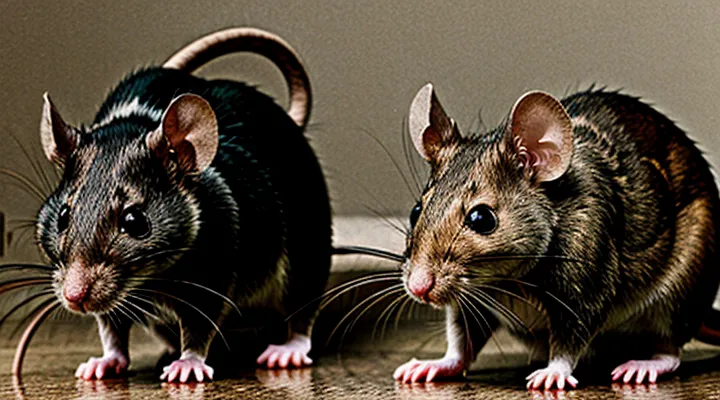
Introduction
General Overview
Mice and rats are both members of the Muridae family, yet they differ markedly in size, morphology, and life history traits. Adult mice typically weigh 15–30 g and measure 6–10 cm in body length, whereas rats range from 200 g to over 500 g and reach 20–30 cm. These physical disparities influence locomotion, predator avoidance, and habitat selection.
Reproductive strategies also diverge. Mice reach sexual maturity at 6–8 weeks, produce litters of 5–12 pups, and may breed throughout the year under favorable conditions. Rats mature slightly later, around 10–12 weeks, generate smaller litters of 6–10 offspring, and exhibit longer gestation periods. Both species have short generation times, but mice display a higher turnover rate.
Behavioral patterns reflect ecological adaptations. Mice are primarily nocturnal, display strong exploratory tendencies, and thrive in confined spaces such as seed stores or laboratory cages. Rats show greater boldness, are capable of complex problem solving, and frequently occupy burrows, sewers, and open fields. Social structures differ: mice form loose colonies with limited hierarchy, while rats develop stable dominance hierarchies within larger groups.
Key distinctions can be summarized:
- Size: mice ≈ 15–30 g; rats ≈ 200–500 g
- Maturity: mice ≈ 6–8 weeks; rats ≈ 10–12 weeks
- Litter size: mice ≈ 5–12; rats ≈ 6–10
- Activity: mice = strictly nocturnal; rats = crepuscular to nocturnal, more adaptable
- Social organization: mice = fluid colonies; rats = stable hierarchies
Understanding these fundamental differences informs research design, pest management, and ecological assessments.
Importance of Distinction
Distinguishing between mice and rats directly influences experimental design, data interpretation, and translational relevance. Mice possess a shorter gestation period, smaller body size, and a higher reproductive rate, which makes them suitable for high‑throughput genetic screens. Rats, with larger brains and more complex social structures, provide a closer approximation of human physiological and behavioral responses in neuropharmacology and cognition studies. Confusing the two species can introduce systematic bias, compromise reproducibility, and inflate costs due to inappropriate model selection.
Accurate identification also affects public‑health interventions. Vector‑borne disease surveillance relies on species‑specific pathogen reservoirs; for example, certain hantavirus strains are associated exclusively with rodents of one genus. Pest‑management strategies differ because rats exhibit greater burrowing depth, stronger gnawing ability, and distinct foraging patterns, requiring tailored bait formulations and trap designs. Misclassification may reduce control efficacy and increase exposure risk.
Regulatory compliance depends on precise species reporting. Ethical review boards, funding agencies, and journal editors mandate clear specification of the animal model. Failure to differentiate can result in protocol violations, delayed approvals, and retraction of published work.
Key outcomes of proper distinction:
- Selection of appropriate statistical power calculations based on species‑specific variability.
- Alignment of dosing regimens with metabolic rates unique to each rodent.
- Optimization of housing conditions that reflect differing social and environmental needs.
Biological Differences
Physical Characteristics
Size and Weight
Mice and rats differ markedly in overall dimensions. An adult house mouse typically measures 7–10 cm in head‑body length, with a tail of comparable length, and weighs 15–30 g. A common Norway rat reaches 20–25 cm in head‑body length, a tail of 18–20 cm, and a body mass of 250–350 g; large individuals may exceed 500 g.
- House mouse (Mus musculus)
- Head‑body length: 7–10 cm
- Tail length: 6–10 cm
- Weight: 15–30 g
- Norway rat (Rattus norvegicus)
- Head‑body length: 20–25 cm
- Tail length: 18–20 cm
- Weight: 250–350 g (up to >500 g)
The size disparity influences locomotor capacity, metabolic rate, and habitat utilization. Larger mass in rats allows greater energy reserves, supporting longer foraging trips and increased burrowing depth. Smaller stature in mice favors rapid maneuverability in confined spaces and higher surface‑area‑to‑volume ratios, affecting thermoregulation.
Tail Length and Appearance
Mice possess tails that are proportionally longer relative to body size, often reaching 70–85 % of their head‑body length. The tail surface is covered with fine, sparse hair, giving it a smooth, almost hairless appearance. Scales are present but are small and closely spaced, contributing to flexibility and a sleek profile.
Rats display shorter tails, typically 50–60 % of their head‑body length. The tail is densely covered with coarse, short hair, especially near the tip, creating a more rugged texture. Scales are larger and more pronounced, providing a sturdier structure that aids in balance and thermoregulation.
Key distinctions:
- Length ratio: mice ≈ 0.7–0.85 × body length; rats ≈ 0.5–0.6 × body length
- Hair coverage: mice = sparse, fine; rats = dense, coarse
- Scale size: mice = small, tightly packed; rats = larger, more spaced
- Functional emphasis: mice tails favor agility; rat tails favor stability and heat dissipation.
Ear and Eye Size
Mice and rats exhibit distinct ear and eye dimensions that reflect divergent ecological adaptations. The ear of a common house mouse (Mus musculus) measures approximately 10–12 mm in length, while a typical brown rat (Rattus norvegicus) possesses an ear 20–30 mm long, nearly double the mouse’s size in absolute terms. Despite the rat’s larger ear, the mouse’s ear represents a greater proportion of its skull, enhancing sensitivity to high‑frequency sounds crucial for predator detection in confined habitats.
Eye size follows a similar pattern of proportional versus absolute differences. A mouse’s eye diameter averages 3 mm, whereas a rat’s eye reaches 4–5 mm. The rat’s larger ocular apparatus provides a broader visual field and improved low‑light performance, supporting nocturnal foraging over wider territories. The mouse’s smaller eye, coupled with a higher visual acuity in the central field, suits close‑range navigation within burrows.
Key comparative points:
- Ear length: mouse ≈ 10–12 mm; rat ≈ 20–30 mm
- Ear proportion to skull: mouse > rat (relative size)
- Eye diameter: mouse ≈ 3 mm; rat ≈ 4–5 mm
- Functional impact: mouse ears favor high‑frequency detection; rat ears enhance sound capture over larger distances; rat eyes improve low‑light vision; mouse eyes concentrate on detailed, short‑range sight.
Fur and Coat Coloration
Mice possess a fine, soft pelage that typically exhibits a limited palette of colors. Common laboratory strains display a uniform white coat, while wild‑type Mus species often show shades of gray, brown, or agouti patterns. The hair shafts are shorter, and the overall density is lower than that of rats, contributing to a more delicate appearance.
Rats feature a coarser, thicker coat with greater variation in pigmentation. Domestic strains range from albino white to black, brown, or mixed coloration, whereas wild Rattus species display dorsal fur that is darker than ventral fur, creating a distinct contrast. The hair length exceeds that of mice, and the fur is denser, providing enhanced insulation.
Key distinctions in fur and coat coloration:
- Hair length: mouse ≤ rat
- Density: mouse < rat
- Texture: mouse soft, rat coarse
- Color range: mouse limited, rat broader
- Patterning: mouse often uniform, rat frequently dichromatic
These attributes reflect adaptations to differing ecological niches and influence handling, thermoregulation, and visual identification in research and field settings.
Skeletal and Dental Features
Skull Structure
The skull provides a reliable morphological marker for separating the two rodent species commonly examined in comparative biology and behavior studies.
Mice possess a compact cranium with a high, rounded dome and a relatively short rostrum. Rats display a larger, flatter cranium, an expanded rostral region, and a more pronounced occipital plate.
Key skeletal distinctions include:
- Nasal bone: shorter and more tapered in mice; elongated and robust in rats.
- Frontal bone: proportionally smaller in mice, contributing to the rounded skull shape; enlarged in rats, supporting a broader forehead.
- Zygomatic arches: slender and delicate in mice, providing limited attachment for mastication muscles; massive and thick in rats, accommodating stronger masseter development.
- Occipital region: less developed in mice, reflecting reduced neck muscle leverage; expanded in rats, enhancing head‑neck coordination.
Dental alveoli mirror these cranial differences. Mice exhibit narrower incisor sockets with a steeper angulation, while rats have wider sockets and a shallower incisor trajectory, allowing greater gnawing force.
The structural variations influence functional outcomes: rats generate higher bite forces and possess enhanced sensory input through larger infraorbital foramen, whereas mice rely on agility and rapid head movements facilitated by a lighter skull.
Tooth Morphology
Mice and rats share continuously growing incisors, yet their dental architecture diverges in several measurable ways.
The incisors of mice display a slender profile with a higher enamel-to-dentin ratio on the labial surface, producing a sharp, chisel‑like edge. Rat incisors are broader, featuring a thicker enamel layer that yields a more robust cutting surface. Both species exhibit open roots, but the rate of dentin deposition differs: mice add dentin more rapidly, resulting in a slightly faster overall tooth elongation.
Molar patterns also contrast markedly. Mice possess three rows of cusps on the upper molars and four on the lower, arranged in a compact, triangular configuration. Rats exhibit larger molars with five rows of cusps on the upper and six on the lower, forming a broader, more complex occlusal surface that accommodates a varied diet.
Key morphological distinctions can be summarized:
- Incisor cross‑section: mouse – oval; rat – circular.
- Enamel thickness (labial side): mouse – thinner; rat – thicker.
- Dentin deposition rate: mouse – higher; rat – lower.
- Molar cusp count: mouse – fewer, tightly packed; rat – greater, more spaced.
- Occlusal surface area: mouse – smaller; rat – larger.
These dental traits reflect adaptations to different feeding behaviors and ecological niches, providing a clear anatomical basis for distinguishing the two rodent groups.
Genetic and Physiological Aspects
Chromosome Count
Mice (Mus musculus) possess a diploid chromosome number of 40, arranged in 20 homologous pairs. Rats (Rattus norvegicus) have a diploid count of 42, organized into 21 pairs. The difference in chromosome number reflects distinct karyotypic structures that contribute to species-specific genetic organization.
- Mouse karyotype: 40 chromosomes; includes 19 autosomal pairs and a pair of sex chromosomes (XX or XY).
- Rat karyotype: 42 chromosomes; includes 20 autosomal pairs and a pair of sex chromosomes (XX or XY).
Chromosome size and morphology also vary. Mouse chromosomes are generally smaller, with the largest metacentric chromosome measuring approximately 110 Mb. Rat chromosomes are larger on average, the largest metacentric chromosome reaching about 210 Mb. Genome assemblies correspond to these differences: the mouse genome totals roughly 2.7 Gb, while the rat genome spans approximately 2.9 Gb. These numeric and structural distinctions are fundamental to genetic and phenotypic divergence between the two rodent models.
Metabolic Rate
Mice and rats differ markedly in basal metabolic rate (BMR), a primary indicator of energy expenditure required for maintenance of physiological functions. Relative to body mass, mice display a higher BMR; typical values range from 0.15 to 0.20 ml O₂·g⁻¹·h⁻¹, whereas rats average 0.10 to 0.13 ml O₂·g⁻¹·h⁻¹. This disparity reflects allometric scaling, where smaller mammals expend proportionally more energy per gram of tissue.
Key physiological consequences of the elevated mouse BMR include:
- Faster turnover of nutrients, leading to higher food intake per unit body weight.
- Shorter gestation and weaning periods, supporting rapid population growth.
- Increased heart and respiratory rates, sustaining higher oxygen demand.
Conversely, the lower rat BMR results in:
- Greater efficiency of energy storage, facilitating larger fat reserves.
- Extended lifespan relative to size, associated with slower cellular metabolism.
- Reduced frequency of feeding cycles, permitting longer intervals between meals.
Experimental measurements confirm that ambient temperature, activity level, and diet composition modulate BMR in both species, yet the intrinsic species-specific baseline remains consistent across laboratory strains. Understanding these metabolic distinctions is essential for selecting appropriate rodent models in pharmacological and nutritional research.
Life Span
Mice and rats differ markedly in longevity, a fundamental biological parameter that influences population dynamics and experimental design.
- Laboratory mouse (Mus musculus): average 1.5–2.5 years; maximum reported 3–4 years under optimal conditions.
- Wild mouse: typical 0.5–1 year, rarely exceeding 1.5 years due to environmental pressures.
- Laboratory rat (Rattus norvegicus): average 2–3 years; maximum reported 4 years.
- Wild rat: average 1–2 years, with occasional individuals reaching 3 years.
Longer lifespan in rats correlates with larger body mass, slower basal metabolic rate, and reduced predation risk relative to mice. Reproductive strategy also contributes: mice mature sexually at 5–6 weeks and produce multiple litters annually, expending energy that shortens life expectancy. Rats mature later (5–8 weeks) and have fewer, larger litters, allowing more resources for maintenance and repair. Disease susceptibility varies; mice exhibit higher incidence of spontaneous neoplasms, while rats show greater resistance to certain infections, extending survival under comparable conditions.
Overall, rats outlive mice by roughly 30–50 percent across both laboratory and wild settings, a difference that reflects distinct physiological scaling and ecological adaptations.
Behavioral Differences
Social Structure and Interaction
Group Dynamics
Mice and rats exhibit distinct patterns of social organization that influence how individuals interact within groups. In laboratory colonies, mice typically form small, loosely structured clusters with limited dominance hierarchies, whereas rats develop stable, linear hierarchies that regulate access to resources and mating opportunities.
- Mice rely on scent marking and ultrasonic vocalizations to signal territory and reproductive status; these cues are short‑range and transient.
- Rats employ extensive grooming, aggressive bouts, and persistent vocalizations to reinforce rank and maintain group cohesion; these behaviors are observable across larger enclosures.
- Group size in mice fluctuates with environmental stressors, leading to frequent fission‑fusion dynamics; rats maintain relatively constant group sizes, supporting long‑term social bonds.
Neurobiological mechanisms underpin these differences. Mice display heightened activity in the ventral tegmental area during brief social encounters, favoring rapid assessment of novel conspecifics. Rats show increased activation of the medial prefrontal cortex during prolonged interactions, supporting complex hierarchy maintenance and decision‑making.
Both species adjust group behavior in response to predator cues, but the magnitude of change varies. Mice reduce exploratory movement and increase isolation, while rats coordinate collective escape routes and synchronize freezing responses, reflecting a more integrated social response system.
Aggression Levels
Mice exhibit relatively low baseline aggression, particularly in laboratory strains selected for docility. Social hierarchies among mice are often fluid, with dominant individuals asserting control through brief bouts of chases or mounting that rarely result in severe injury. Aggressive encounters are typically limited to the introduction of unfamiliar conspecifics or competition for limited resources such as nesting material.
Rats display markedly higher aggression, especially in male populations. Established hierarchies are reinforced through persistent territorial defense, frequent chasing, and biting. Aggressive episodes can last several minutes and often involve physical wounding. In laboratory settings, outbred rat strains demonstrate more pronounced inter‑male aggression than inbred strains, reflecting genetic influences on temperament.
Key factors influencing aggression differences:
- Species‑specific social organization: Rats form stable dominance hierarchies; mice maintain more egalitarian group structures.
- Neurochemical regulation: Elevated vasopressin and testosterone levels correlate with heightened aggression in rats, whereas mice show lower concentrations of these modulators.
- Environmental stressors: Overcrowding, limited food, and novel environments amplify aggressive responses in both species, but the magnitude of escalation is greater in rats.
- Genetic background: Selective breeding for aggression or tameness produces predictable shifts in behavior within each species, confirming heritable components.
Understanding these disparities assists researchers in selecting appropriate rodent models for studies of social behavior, stress physiology, and neuropharmacology.
Foraging and Dietary Habits
Food Preferences
Mice and rats share an omnivorous diet, yet their food selections diverge markedly. Mice concentrate on high‑carbohydrate resources, whereas rats display a broader appetite that includes greater protein and fat intake.
Mice preferentially consume:
- Grains and seeds
- Dried fruits and nuts
- Small insects or larvae when available
- Commercial rodent chow formulated with high starch content
Rats exhibit a more varied palate:
- Fresh vegetables and fruits
- Animal protein such as meat scraps, eggs, and dairy
- High‑fat items like nuts, seeds, and processed foods
- Waste material and carrion in urban settings
Foraging behavior reinforces these differences. Mice typically explore confined, sheltered areas, showing limited neophobia toward novel foods that resemble their staple items. Rats, possessing stronger olfactory acuity, travel greater distances, exploit diverse habitats, and readily accept unfamiliar food sources, especially those offering higher caloric density.
These dietary distinctions influence laboratory feeding protocols, pest control strategies, and ecological impact assessments, underscoring the necessity of species‑specific nutritional considerations.
Hoarding Behavior
Hoarding behavior in small rodents refers to the collection and storage of food items for future consumption. This strategy mitigates periods of scarcity and reduces exposure to predators while foraging.
Mice exhibit rapid, localized hoarding. Food caches are typically confined to the nest or immediate burrow chambers. Items are often stored in small quantities, reflecting the mouse’s high metabolic rate and frequent feeding cycles. The limited cache size aligns with the mouse’s preference for short‑term resource security.
Rats demonstrate extensive, dispersed hoarding. Caches can span multiple chambers, including hidden compartments within complex burrow networks or external shelters. Larger food stores correspond with the rat’s lower metabolic turnover and capacity for longer fasting intervals. Rats also display selective caching, prioritizing high‑energy items for later retrieval.
Key distinctions:
- Cache location: mice – nest‑centric; rats – multi‑site.
- Quantity: mice – small, frequent; rats – large, infrequent.
- Selection: mice – indiscriminate; rats – preferential for caloric density.
- Temporal use: mice – immediate consumption; rats – delayed consumption.
These differences reflect divergent ecological adaptations and social structures, influencing each species’ approach to resource management.
Reproduction and Development
Gestation Period
Mice reach full term after approximately 19–21 days of pregnancy, whereas rats require about 21–23 days. The slightly longer gestation in rats corresponds with their larger body size and the greater mass of each newborn. Both species exhibit rapid embryonic development; however, rat embryos progress through organogenesis at a marginally slower rate, allowing for the additional days.
Key comparative points:
- Duration: mouse ≈ 19–21 days; rat ≈ 21–23 days.
- Litter size: mice produce 5–12 pups per litter; rats produce 6–12, reflecting the extended gestation and larger uterine capacity.
- Developmental milestones: rat pups are born with more mature sensory systems, a consequence of the extra gestational period.
These differences influence reproductive strategies, population dynamics, and experimental design when selecting a rodent model for developmental studies.
Litter Size
Mice and rats differ markedly in reproductive output, a factor that influences population dynamics and experimental design. Female mice typically produce litters of 4–8 pups, with an average of 6, whereas female rats generate larger broods of 6–12 offspring, averaging around 9. These values reflect species‑specific physiological constraints and evolutionary strategies.
Key quantitative contrasts:
- Gestation length: mice 19–21 days; rats 21–23 days.
- Litter size range: mice 4–8; rats 6–12.
- Neonatal weight: mice 1–2 g; rats 5–6 g.
- Inter‑litter interval: mice 21–23 days; rats 23–27 days.
The higher pup count in rats compensates for their longer gestation and larger newborn size, supporting rapid colony expansion under favorable conditions. In mice, smaller litters coupled with shorter gestation enable more frequent breeding cycles, which can produce comparable annual offspring numbers despite the lower per‑litter count.
Understanding these reproductive metrics is essential for selecting an appropriate model organism, predicting growth rates, and managing colony health.
Maturation Rate
Mice reach sexual maturity considerably faster than rats. Female mice typically become fertile at 5–6 weeks of age, and males at 6–7 weeks. In contrast, female rats usually attain reproductive competence at 8–10 weeks, while males mature around 9–11 weeks. This acceleration aligns with the shorter gestation period of mice (≈19–21 days) compared with rats (≈21–23 days), and with the overall faster post‑natal growth curve observed in mice.
Post‑natal development proceeds more rapidly in mice. By the end of the first month, mice achieve approximately 80 % of adult body mass, whereas rats attain a similar proportion only after 6–7 weeks. Consequently, mice exhibit earlier weaning (≈3 weeks) and earlier independence from maternal care than rats (weaning at ≈4 weeks).
Key comparative metrics:
- Sexual maturity: mice ≈ 5–7 weeks; rats ≈ 8–11 weeks.
- Gestation length: mice ≈ 20 days; rats ≈ 22 days.
- Weaning age: mice ≈ 3 weeks; rats ≈ 4 weeks.
- Growth to 80 % adult mass: mice ≈ 4 weeks; rats ≈ 6–7 weeks.
These differences reflect species‑specific life‑history strategies, with mice adopting a rapid maturation schedule that supports a shorter generation time, while rats invest more time in growth before reaching reproductive capability.
Habitat and Nesting Preferences
Preferred Environments
Mice and rats occupy distinct habitats that reflect their physiological tolerances and social structures.
Mice favor confined, cluttered spaces where they can hide from predators and maintain temperature stability. Typical settings include:
- Wall voids, ceiling cavities, and crawl spaces
- Dense vegetation or ground litter in fields and orchards
- Laboratory cages with bedding material that allows nesting
These environments provide ample hiding places and support the construction of small, insulated nests.
Rats prefer larger, open areas that accommodate their size and more complex social groups. Common locations are:
- Sewer systems, basements, and utility tunnels
- Outdoor burrows with extensive tunnel networks
- Agricultural storage facilities and grain silos
Such habitats offer access to abundant food sources, water, and the ability to establish hierarchical colonies.
The divergence in habitat choice arises from differences in body size, sensory capabilities, and reproductive strategies, leading mice to exploit micro‑habitats while rats dominate broader, resource‑rich environments.
Nest Construction
Mice construct nests primarily from soft, fibrous materials such as shredded paper, cotton, or plant fibers. Their nests are compact, spherical, and often positioned near food sources. Mice use their incisors and forepaws to tear and shape material, creating a dense interior that conserves heat and provides protection from predators.
Rats build larger, more complex nests that incorporate a broader range of substrates, including wood shavings, cardboard, and discarded plastics. Rat nests usually feature multiple chambers, a central sleeping area, and peripheral storage zones for food. Construction relies on stronger jaw muscles and coordinated use of both forelimbs and hindlimbs, allowing manipulation of heavier debris.
Key distinctions in nest architecture:
- Size: mouse nests are ≤10 cm in diameter; rat nests can exceed 30 cm.
- Structure: mouse nests are single‑chambered; rat nests often contain several interconnected chambers.
- Material selection: mice prefer lightweight, insulating fibers; rats exploit sturdier, bulkier items.
- Placement: mice locate nests close to feeding sites; rats favor concealed locations such as burrows, sewers, or building voids.
These differences reflect each species’ ecological niche, body size, and social organization, influencing survival strategies and reproductive success.
Problem Solving and Learning
Maze Navigation
Mice and rats exhibit distinct strategies when solving mazes, reflecting variations in sensory processing, motor control, and learning speed. Mice rely heavily on whisker-mediated tactile cues, while rats integrate olfactory and visual information more extensively. These sensory preferences shape the routes each species selects and the time required to reach a goal.
- Learning rate: Rats acquire maze solutions after fewer trials than mice, demonstrating quicker associative learning.
- Error patterns: Mice display higher frequency of backtracking and repeated entry into dead ends, indicating a trial‑and‑error approach.
- Exploratory behavior: Rats maintain longer exploratory phases before committing to a path, whereas mice tend to commit early and adjust later.
- Physical navigation: Rats navigate larger openings and can climb higher obstacles; mice prefer narrow passages and display greater agility in tight spaces.
The observed differences arise from divergent neuroanatomical structures, such as a larger hippocampal volume in rats supporting spatial memory, and a more compact cortical layout in mice favoring rapid sensorimotor responses. Understanding these species‑specific navigation patterns informs experimental design and interpretation of behavioral assays.
Associative Learning
Associative learning, the process by which an organism links a stimulus with a consequence, serves as a primary tool for evaluating cognitive function in laboratory rodents. Both mice and rats are routinely employed in conditioning paradigms, yet their neurobiological architecture and behavioral repertoires generate distinct learning profiles.
Mice possess a proportionally smaller hippocampus and prefrontal cortex, regions critical for forming stimulus‑outcome associations. Their dopamine system exhibits higher basal turnover, influencing reinforcement sensitivity. Rats display a more expansive dorsal striatum, facilitating habit formation and procedural learning. These anatomical divergences translate into measurable differences in acquisition speed, extinction rates, and memory consolidation.
In classical conditioning, mice typically reach criterion after fewer trials when the conditioned stimulus is a tone, but they show reduced retention after 24 hours compared with rats. Rats excel in complex odor‑based conditioning, maintaining robust responses across longer intervals. Operant tasks reveal that rats achieve higher response rates under variable‑ratio schedules, whereas mice demonstrate greater precision in fixed‑interval schedules, reflecting distinct motivational thresholds.
Key contrasts in associative learning:
- Neural substrates: mouse hippocampal plasticity > rat; rat dorsal striatal plasticity > mouse.
- Acquisition: mice faster with simple auditory cues; rats faster with multimodal cues.
- Extinction: rats retain conditioned responses longer; mice exhibit rapid extinction.
- Retention: rats maintain long‑term memory better; mice show quicker decay.
- Motivation: rats respond strongly to food reinforcement; mice display higher sensitivity to water restriction.
Understanding these species‑specific patterns refines experimental design, improves data interpretation, and enhances translational relevance for neurobehavioral research.
Ecological and Human Impact
Pest Control Strategies
Effectiveness of Traps
Rodent control programs must differentiate capture methods for mice and rats because each species responds uniquely to trapping devices.
Mice are lighter (10–25 g) and possess acute whisker sensing, which makes them vulnerable to low‑mass triggers. Rats, weighing 150–300 g, rely on stronger forelimb strength and exhibit reduced tactile sensitivity, requiring higher‑force mechanisms.
Mice display higher neophobia; they avoid novel objects longer than rats, which are more exploratory and often investigate traps after brief exposure. Social foraging patterns differ: mice tend to forage individually, while rats commonly operate in groups, increasing the probability of multiple captures when a trap is placed in a communal pathway.
Effectiveness of common trap designs varies markedly between the two species:
- Snap traps – high kill rate for mice (≈85 % success) due to low trigger force; moderate success for rats (≈55 %) unless equipped with reinforced springs.
- Live‑catch traps – reliable for rats (≈70 % success) when baited with protein; lower capture of mice (≈40 %) because of rapid escape responses.
- Glue boards – effective for mice (≈60 %); ineffective for rats, which often break free due to stronger claws.
- Electronic traps – consistent mortality for both species (≈80 % for mice, ≈75 % for rats) when voltage settings match target size.
Optimizing trap deployment requires aligning device characteristics with species‑specific traits. Use low‑threshold snap mechanisms in mouse‑infested areas, reinforce trigger sensitivity for rat zones, and apply bait that exploits each rodent’s dietary preferences. Regular monitoring and prompt removal of captured individuals sustain high efficacy and prevent trap avoidance behavior.
Bait Preferences
Bait preference distinguishes mice from rats and directly influences trapping efficiency. Mice rely heavily on sweet and grain aromas, while rats respond more strongly to protein and fatty odors. These preferences reflect sensory specialization: mice possess a higher density of sweet‑taste receptors, whereas rats have an expanded olfactory repertoire for animal‑derived scents.
Typical attractants differ markedly:
- Mice: peanut butter, sunflower seeds, dried fruit, grain‑based mixes, sugary gels.
- Rats: canned fish, meat jerky, bacon grease, cheese with added animal fat, commercial rodent bait containing protein hydrolysates.
Seasonal shifts modify choices. In colder months, both species increase consumption of high‑energy foods, but rats intensify attraction to stored meat products, whereas mice maintain a strong preference for carbohydrate‑rich seeds. Urban environments amplify these trends, providing abundant waste protein that rats exploit more readily than mice.
Understanding these dietary distinctions enables targeted pest‑management protocols. Selecting bait aligned with each species’ innate preferences reduces non‑target captures and improves control outcomes.
Disease Transmission
Common Pathogens
Mice and rats share many infectious agents, yet prevalence and clinical outcomes differ between the two rodents. Both species serve as reservoirs for bacterial, viral, and parasitic pathogens that can affect laboratory colonies, pet populations, and wild communities.
Common bacterial agents include:
- Salmonella spp. – frequently isolated from rats; mice show lower carriage rates but can develop systemic infection under stress.
- Listeria monocytogenes – causes encephalitis in rats; mice often exhibit subclinical colonization.
- Streptobacillus moniliformis – primary cause of rat‑bite fever; rarely transmitted by mice.
- Mycoplasma pulmonis – respiratory pathogen with higher morbidity in mice; rats display milder respiratory signs.
Viral agents of note:
- Hantavirus – rat‑borne strains (e.g., Seoul virus) cause hemorrhagic fever with renal syndrome; mouse‑associated hantaviruses (e.g., Sin Nombre) lead to pulmonary syndrome.
- Sendai virus – highly pathogenic in mice, producing severe pneumonia; rats typically experience asymptomatic infection.
- Mouse norovirus – limited to mice, causing enteric disease; rat noroviruses are distinct and less studied.
Parasitic infestations:
- Protozoa (e.g., Giardia spp.) – infect both hosts, with rats showing higher shedding rates.
- Ectoparasites (mites, fleas) – rats carry larger populations of Ornithonyssus bacoti and Xenopsylla cheopis; mice are more commonly infested with Myobia musculi.
Differences in immune response and housing conditions contribute to the observed variation in pathogen dynamics. Rats often tolerate higher bacterial loads without overt disease, whereas mice exhibit pronounced clinical signs at lower pathogen burdens. Effective colony management requires species‑specific surveillance, targeted biosecurity measures, and appropriate treatment protocols.
Vector Capacity
Vector capacity describes a host’s ability to acquire, sustain, and transmit infectious agents. In rodents, this capacity depends on physiological traits, immune responsiveness, and interactions with the environment.
Key biological factors that differentiate mice and rats:
- Body mass: rats possess larger organs and blood volume, allowing higher pathogen loads before clinical signs appear.
- Longevity: rats live longer, providing extended periods for pathogen replication and dissemination.
- Reproductive turnover: mice breed more rapidly, generating more susceptible individuals within a population.
- Innate immunity: rats exhibit stronger neutrophil activity, while mice display a more pronounced Th2 bias, influencing susceptibility to specific parasites.
Behavioral characteristics further modify vector capacity:
- Habitat use: rats frequent sewers and basements, increasing contact with sewage‑borne bacteria; mice occupy grain stores and indoor cavities, exposing them to rodent‑borne viruses.
- Social structure: rats form larger, hierarchical colonies, facilitating direct transmission through grooming and aggressive encounters; mice maintain smaller, less stable groups, limiting contact rates.
- Foraging range: rats travel farther from nesting sites, potentially bridging pathogen reservoirs across urban districts; mice tend to remain within limited home ranges, concentrating transmission locally.
These distinctions affect disease ecology. Rat‑dominated ecosystems show higher prevalence of leptospira and plague bacilli, whereas mouse‑dominated settings report greater incidence of hantavirus and lymphocytic choriomeningitis virus. Control strategies must account for the differing vector capacities: targeting rat populations reduces long‑term environmental contamination, while rapid mouse suppression curtails acute viral outbreaks.
Research Applications
Genetic Models
Genetic models provide a framework for dissecting the biological and behavioral distinctions between murine and rodent species. Mice dominate the transgenic arena because embryonic stem cell technology enables precise gene insertion, large repository of inbred strains, and rapid generation of homozygous lines. Rats, historically limited by lower embryonic stem cell efficiency, now benefit from CRISPR‑Cas9, which produces targeted knockouts and knock‑ins within a single generation.
Key comparative points for genetic manipulation:
- Genome editing efficiency – CRISPR works equally well in both species, yet rat embryos tolerate larger insertions, allowing more complex alleles.
- Phenotypic relevance – Rats exhibit larger brain structures and more robust social behaviors, making them preferable for studies of cognition and neuropsychiatric disorders.
- Resource availability – Mouse repositories (e.g., Jackson Laboratory) offer thousands of predefined mutants; rat collections are expanding but remain smaller.
- Breeding speed – Mice reach sexual maturity in 6–8 weeks, rats in 10–12 weeks, influencing experimental timelines.
Model selection hinges on experimental goals. For high‑throughput screens and well‑characterized alleles, mouse lines provide speed and breadth. When physiological scaling, complex motor tasks, or drug metabolism more closely resemble human conditions, rat models deliver increased translational fidelity. Both species now share genome‑editing platforms, reducing historical gaps and enabling parallel investigations of gene function across rodent taxa.
Behavioral Studies
Behavioral research on rodents distinguishes mice and rats through consistent patterns in learning, anxiety, social interaction, and locomotion. Mice typically acquire operant tasks faster when the reinforcement schedule is simple, whereas rats demonstrate superior performance in complex mazes and delayed‑reward paradigms. In anxiety assessments, mice exhibit heightened thigmotaxis in open‑field tests, while rats show greater avoidance of elevated platforms, reflecting species‑specific risk assessment strategies.
Social behavior assays reveal divergent hierarchies: mice form stable, low‑intensity groups with limited aggression, whereas rats establish pronounced dominance structures, evident in resident‑intruder encounters. Activity monitoring indicates that mice maintain higher nocturnal wheel‑running rates, while rats produce longer bouts of exploratory locomotion in novel environments.
Key methodological distinctions:
- Operant conditioning: Fixed‑ratio schedules favor mice; variable‑interval schedules reveal rat flexibility.
- Maze navigation: T‑maze and radial arm tasks produce robust spatial memory data for rats; Y‑maze alternation yields reliable short‑term memory metrics for mice.
- Anxiety measurement: Elevated plus‑maze and light/dark box differentiate species-specific avoidance thresholds.
- Social hierarchy: Tube test and dominance‑tube assays quantify rat aggression; mouse social interaction test captures subtle affiliative behaviors.
Interpretation of these findings requires species‑appropriate protocol adjustment to avoid confounding variables such as size, sensory acuity, and metabolic rate. Accurate behavioral profiling enhances translational relevance when selecting a rodent model for neurological, pharmacological, or genetic investigations.
Conclusion
Summary of Key Distinctions
Mice are generally smaller, weighing 15–30 g, while rats range from 250–500 g. The size gap influences metabolic rate, with mice exhibiting higher relative metabolism and faster heartbeats.
Physiological contrasts include reproductive cycles: mice breed every 4–5 weeks, producing litters of 5–12 pups; rats breed every 5–6 weeks, with 6–14 offspring per litter. Lifespan differs markedly; laboratory mice survive 1.5–2 years, whereas rats reach 2.5–3 years under similar conditions.
Sensory capacities vary. Mice rely heavily on olfaction for foraging and territorial marking; rats possess more developed whisker (vibrissae) systems, enabling superior tactile discrimination. Visual acuity is modest in both, but rats display better low‑light vision and can discriminate finer spatial patterns.
Social organization diverges. Mice form loose, transient groups, displaying limited hierarchical structure. Rats establish stable colonies with clear dominance hierarchies, extensive grooming networks, and cooperative burrow maintenance.
Habitat and diet preferences reflect ecological niches. Mice favor open fields, grain stores, and indoor corners, consuming primarily seeds and insects. Rats occupy sewers, basements, and outdoor burrows, exhibiting omnivorous diets that include plant material, carrion, and human waste.
Key distinctions
- Body mass: mouse ≈ 20 g; rat ≈ 350 g
- Reproductive interval: mouse ≈ 4 weeks; rat ≈ 5 weeks
- Litter size: mouse 5–12; rat 6–14
- Lifespan: mouse ≈ 2 years; rat ≈ 3 years
- Sensory emphasis: mouse olfaction; rat vibrissal tactile sense
- Social structure: mouse fluid groups; rat stable hierarchies
- Typical habitats: mouse field/indoor niches; rat sewer/burrow systems
- Dietary breadth: mouse seeds/insects; rat omnivorous, including waste.
Practical Implications
The distinct physiological and behavioral traits of mice and rats shape their suitability for specific scientific, agricultural, and public‑health applications.
In biomedical research, mice provide a compact genome, rapid breeding cycle, and extensive genetic tools, making them ideal for high‑throughput genetic screens, transgenic studies, and immunological assays. Rats, with larger body size and more complex neurobehavioral repertoire, are preferred for studies requiring sophisticated surgical procedures, detailed pharmacokinetic measurements, and advanced cognitive testing. Selecting the appropriate species therefore optimizes experimental validity, reduces unnecessary animal use, and accelerates translational outcomes.
Pest management strategies must account for species‑specific foraging habits, nesting preferences, and social structures. Mice, attracted to granular food sources and capable of exploiting minute entry points, respond best to bait stations and sealed exclusion methods. Rats, favoring burrows and water sources, require larger traps, robust bait formulations, and habitat modification to disrupt colony dynamics. Tailoring control measures to these differences improves efficacy and minimizes non‑target impacts.
Veterinary practice and pet ownership also benefit from recognizing divergent health risks. Mice exhibit higher susceptibility to respiratory infections and skin lesions, demanding routine environmental sanitation and precise temperature control. Rats are prone to metabolic disorders and dental overgrowth, necessitating dietary monitoring and regular oral examinations. Awareness of these species‑specific concerns informs preventive care protocols and owner education.