
The Enigmatic Slumber of Rodents
The Mechanics of Rat Sleep
Brain Activity During Rat Sleep
Rats exhibit distinct electrophysiological signatures during sleep that reveal the organization of their brain states. Electroencephalographic (EEG) recordings show alternating periods of slow‑wave activity and rapid eye movement (REM) sleep, each associated with characteristic neural dynamics.
During non‑REM (NREM) sleep, the cortex generates high‑amplitude, low‑frequency oscillations (0.5–4 Hz) that synchronize neuronal firing across widespread regions. These slow waves reflect alternating depolarized (up) and hyperpolarized (down) states of cortical neurons, facilitating synaptic down‑scaling and memory consolidation. Subcortical structures, such as the thalamus, produce spindle bursts (10–15 Hz) that nest within the slow oscillation, supporting thalamocortical communication.
REM sleep in rats is marked by low‑amplitude, high‑frequency EEG activity (30–80 Hz) resembling wakefulness, despite the animal’s immobility. Simultaneously, the hippocampus displays theta rhythms (6–10 Hz) that correlate with ocular movements. Rats often keep their eyelids partially open during REM, allowing visual monitoring while the brain processes internal information.
Key EEG features of rat sleep:
- NREM slow waves: 0.5–4 Hz, high amplitude, global cortical synchrony.
- Sleep spindles: 10–15 Hz bursts, thalamic origin, interleaved with slow waves.
- REM low‑voltage activity: 30–80 Hz, desynchronized cortical pattern.
- Hippocampal theta: 6–10 Hz, linked to eye movements and memory replay.
These patterns demonstrate that rat sleep involves coordinated transitions between synchronized and desynchronized brain states, providing a reliable model for studying the neural mechanisms underlying sleep architecture.
Types of Rat Sleep Cycles
Rats exhibit a polyphasic sleep pattern, alternating rapidly between distinct stages throughout a 24‑hour period. Their sleep architecture comprises several recognizable cycles that differ in brain activity, muscle tone, and eye behavior.
- Non‑rapid eye movement (NREM) sleep – Dominated by slow‑wave activity, this stage occupies the majority of a rat’s sleep time. During NREM, the eyelids remain partially closed, and muscular tension is high, allowing quick arousal if needed.
- Rapid eye movement (REM) sleep – Characterized by low‑amplitude, high‑frequency brain waves and muscle atonia. Rats display fully open eyes in REM, despite the loss of muscle tone, indicating that eye opening does not equate to wakefulness.
- Micro‑arousals – Brief interruptions lasting a few seconds, during which cortical activity spikes and the animal may open its eyes momentarily before returning to sleep.
- Ultradian cycles – Repeating sequences of NREM and REM that last approximately 10–15 minutes in laboratory rats, producing 8–10 cycles per hour of total sleep.
These cycles interweave to create a highly fragmented sleep schedule, enabling rats to remain vigilant while still obtaining necessary restorative phases. The alternation of eye states across stages demonstrates that open eyes are not exclusive to wakefulness in rodents.
Unraveling the «Eyes Open» Phenomenon
Explaining Open-Eyed Sleep in Rats
Physiological Reasons for Open Eyes
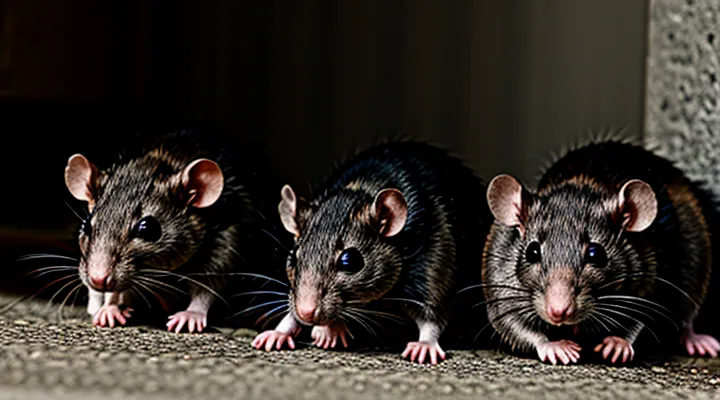
Rats frequently display partially open eyes during sleep because their anatomy and nervous system support continuous environmental monitoring. Their eyelids lack the strong orbicularis oculi muscle found in many mammals, so complete closure is mechanically limited. The resulting palpebral fissure remains partially open even when cortical activity shifts to non‑REM states.
The open‑eye posture serves several physiological functions:
- Retinal light exposure: Constant, low‑intensity illumination helps maintain circadian photoreceptor activity, stabilizing melatonin release.
- Predator vigilance: Partial eye opening allows rapid detection of movement, reducing the latency of escape responses.
- Ocular surface protection: A thin tear film spreads across the exposed cornea, preventing desiccation without requiring full lid closure.
- Neural coupling: Brainstem nuclei that control eyelid movement are synchronized with sleep‑related brain rhythms, producing a characteristic “half‑blink” pattern.
These mechanisms collectively enable rats to rest while preserving essential sensory input and ocular health.
Behavioral Contexts of Open-Eyed Sleep
Rats frequently enter a state of sleep while keeping their eyelids partially or fully open, a behavior linked to specific environmental and social circumstances. In laboratory observations, open‑eyed sleep occurs most often when animals are situated in groups, allowing individuals to monitor conspecific movements without fully awakening. This vigilance reduces the risk of missing sudden disturbances that could signal predator presence or aggressive encounters.
Open‑eyed sleep also appears during periods of heightened ambient light. When illumination levels rise, rats maintain a degree of visual input, enabling rapid assessment of changes in the surroundings. Experiments measuring electroencephalographic patterns show that this condition is associated with lighter stages of non‑REM sleep, characterized by higher theta activity and shorter latency to arousal.
Thermoregulatory demands influence the phenomenon as well. In colder cages, rats display prolonged open‑eyed bouts, presumably to conserve heat while still detecting thermal gradients. Conversely, in warm environments, the behavior diminishes, suggesting a trade‑off between temperature regulation and sensory monitoring.
Key contexts identified in peer‑reviewed studies include:
- Social grouping: enhances collective awareness while individuals rest.
- Elevated light intensity: sustains visual monitoring during lighter sleep phases.
- Temperature fluctuations: modulates the balance between energy conservation and environmental scanning.
- Anticipated threats: prior exposure to predator cues increases the frequency of open‑eyed sleep episodes.
These findings indicate that open‑eyed sleep in rats serves adaptive functions, integrating sensory vigilance with the physiological demands of rest.
Distinguishing Sleep from Rest
Indicators of True Sleep in Rats
Rats exhibit several physiological and behavioral markers that distinguish genuine sleep from quiet wakefulness. Researchers rely on these markers to determine whether a rat is truly asleep, regardless of eye position.
Electroencephalographic (EEG) activity provides the most reliable indication. During non‑rapid eye movement (NREM) sleep, EEG displays high‑amplitude, low‑frequency waves (0.5–4 Hz). In rapid eye movement (REM) sleep, EEG shifts to low‑amplitude, mixed‑frequency activity (4–8 Hz) accompanied by characteristic theta rhythms. Continuous EEG monitoring allows precise identification of sleep stages.
Muscle tone offers additional confirmation. Electromyographic (EMG) recordings show marked reduction in skeletal muscle activity during NREM sleep and near‑complete atonia during REM sleep. The loss of tone differentiates sleep from states of relaxed wakefulness, where muscle activity remains detectable.
Body posture contributes observable evidence. Sleeping rats typically assume a relaxed, curled posture with minimal movement. In contrast, awake rats maintain alert postures, such as standing on hind legs or grooming. Video analysis of posture, combined with EEG/EMG data, strengthens sleep detection.
Eye behavior varies across sleep stages. In NREM sleep, the eyelids are usually closed, though some rats may keep them partially open. REM sleep is characterized by rapid, irregular eye movements beneath closed lids, observable with infrared cameras. The presence of these movements, rather than the mere state of the eyelids, indicates REM sleep.
Key indicators of true sleep in rats can be summarized:
- High‑amplitude, low‑frequency EEG (NREM) or low‑amplitude, mixed‑frequency EEG with theta activity (REM)
- Suppressed EMG signal indicating reduced muscle tone (NREM) or atonia (REM)
- Relaxed, curled body posture with minimal locomotion
- Closed eyelids accompanied by rapid eye movements during REM
Combining electrophysiological recordings with behavioral observations yields a robust framework for assessing authentic sleep in rats, clarifying the relationship between eye openness and sleep states.
The Role of Muscle Tone
Rats maintain a low level of skeletal muscle tone while sleeping, which allows rapid transitions between sleep stages and supports body posture without full paralysis. During non‑rapid eye movement (NREM) sleep, muscle tone remains reduced but sufficient to keep the animal’s limbs and torso stable on a surface. This baseline tension prevents collapse and ensures that the body does not drift into an uncontrolled position.
In rapid eye movement (REM) sleep, rats experience a marked decrease in muscle tone, known as REM atonia. The suppression of motor neuron activity extends to the orbicularis oculi muscle that controls eyelid closure. Because the rat’s eyelids are thin and loosely attached, the loss of tone results in the eyes remaining partially open, giving the appearance of “open‑eyed” sleep. The degree of atonia directly influences how much the eyelids can close; the lower the tone, the more the eyes stay visible.
Key effects of muscle tone on rat sleep and eye state:
- Stability: Baseline tone maintains a secure sleeping posture during NREM.
- Transition: Rapid reduction of tone enables swift entry into REM.
- Eyelid position: Diminished tone in REM reduces eyelid closure, producing the characteristic partially open eyes.
- Physiological monitoring: Researchers use eye openness as an external indicator of REM atonia levels.
Understanding the modulation of muscle tone clarifies why rats often appear to sleep with eyes partially open and distinguishes the physiological mechanisms underlying each sleep stage.
Comparing Rat Sleep to Other Mammals
Similarities in Sleep Architecture
REM and NREM Stages
Rats experience two distinct sleep phases that mirror those of other mammals: rapid eye movement (REM) sleep and non‑rapid eye movement (NREM) sleep. During NREM, the brain exhibits high‑voltage, low‑frequency electroencephalographic activity, muscle tone remains relatively high, and the animal’s eyes are typically closed. In contrast, REM sleep is characterized by low‑voltage, high‑frequency brain waves, pronounced muscle atonia, and frequent bursts of eye movements detectable through electrooculography.
Key features of the two stages:
-
NREM sleep
- Dominated by slow‑wave activity.
- Muscular tone sufficient to keep the eyelids shut.
- Restorative processes such as protein synthesis and glycogen replenishment occur.
-
REM sleep
In laboratory observations, rats display closed eyelids throughout both NREM and REM periods. The internal eye movements of REM are not visible externally because the eyelids remain sealed. Consequently, the answer to whether rats’ eyes are open while they sleep is negative; the eyes stay shut during all sleep stages, even when rapid eye movements occur internally.
Sleep Duration and Patterns
Rats exhibit polyphasic sleep, dividing rest into multiple short bouts throughout a 24‑hour period. Total daily sleep time ranges from 12 to 15 hours, with individual episodes lasting 5 to 30 minutes. During each bout, non‑rapid eye movement (NREM) sleep dominates, while rapid eye movement (REM) phases occupy roughly 10 % of the total sleep time.
Key characteristics of rat sleep patterns include:
- Fragmented cycles – several dozen episodes per day, preventing prolonged uninterrupted sleep.
- Circadian influence – increased sleep propensity during the light phase, reflecting nocturnal activity patterns.
- Eye behavior – eyelids close briefly during NREM periods; rapid eye movements accompany REM episodes, during which the eyes may appear partially open.
- Physiological markers – reduced muscle tone, lower body temperature, and characteristic EEG waveforms differentiate sleep stages.
These attributes enable rats to balance energy conservation with the demands of foraging and predator avoidance, resulting in a highly adaptable sleep architecture.
Unique Aspects of Rodent Sleep
Adaptation for Survival
Rats exhibit polyphasic sleep, dividing rest into several short bouts throughout the day and night. During these periods they frequently maintain a partially open eyelid, a condition known as “semi‑closure.” The eyelid remains partially lifted while the cornea stays moist, allowing limited visual input without fully waking the animal.
Semi‑closed eyes serve several survival functions:
- Continuous monitoring of movement cues reduces response latency to predators.
- Partial visual awareness conserves energy that would be spent on full arousal.
- Maintaining ocular moisture prevents corneal damage during frequent, brief sleep episodes.
The adaptation aligns with rats’ nocturnal and crepuscular activity patterns. By keeping the eyes partially open, they can detect low‑light disturbances while remaining in a low‑metabolic state. This compromise enhances situational awareness without compromising the restorative benefits of sleep.
Evolutionarily, the trait appears across multiple rodent species, indicating selective pressure favoring individuals capable of brief, alert sleep. The balance between rest and vigilance reflects a refined strategy for predator avoidance, foraging efficiency, and thermoregulation in variable environments.
Predation and Sleep Strategies
Rats face constant predation risk, which shapes their sleep architecture. During rest, they alternate between short, shallow bouts and deeper phases, allowing rapid response to threats. Eye lids remain partially open, providing limited visual input while reducing exposure time. Muscle tone in the neck and limbs stays elevated, preventing full collapse and facilitating immediate escape.
Key adaptations include:
- Fragmented sleep cycles: multiple 5‑15‑minute episodes replace prolonged uninterrupted sleep, minimizing vulnerability.
- Micro‑arousals: brief awakenings occur every few minutes, triggered by subtle environmental cues.
- Partial eyelid closure: nictitating membrane shields the cornea without eliminating peripheral vision.
- Elevated vigilance: auditory and olfactory sensors remain highly sensitized throughout rest periods.
These strategies balance the physiological need for recovery with the imperative of predator avoidance, ensuring survival in environments where threats are omnipresent.
The Importance of Research on Rat Sleep
Contributions to Neuroscience
Understanding Sleep Disorders
Research on rodent sleep behavior provides direct insight into mechanisms underlying human sleep disorders. Experiments that monitor whether rats keep their eyelids partially open during rapid eye movement (REM) sleep reveal the neurophysiological link between ocular muscle tone and sleep stage regulation. By recording eye activity alongside brain wave patterns, scientists identify abnormal transitions that correspond to insomnia, narcolepsy, and REM behavior disorder.
Key observations from rodent models include:
- Persistent eye opening during REM sleep correlates with dysregulated cholinergic signaling.
- Reduced eyelid closure duration precedes fragmented sleep cycles.
- Pharmacological agents that restore normal eyelid tone also normalize sleep architecture.
These findings support a translational framework: abnormalities in ocular muscle control serve as measurable biomarkers for diagnosing and treating sleep disorders. Continuous video‑EEG monitoring in rats allows precise quantification of eye state, facilitating early detection of pathological sleep patterns before they manifest clinically in humans.
Integrating ocular metrics with conventional polysomnography enhances diagnostic accuracy. Clinicians can apply rodent‑derived thresholds for eye closure duration to refine criteria for REM sleep behavior disorder and to assess therapeutic efficacy of novel compounds targeting muscle tone pathways.
Animal Models in Sleep Studies
Animal research provides the only practical means to record neural activity, muscle tone, and ocular behavior simultaneously, a requirement for rigorous sleep investigations. Rodent subjects, especially rats, offer a balance of physiological similarity to humans and experimental tractability, allowing precise manipulation of genetic, pharmacological, and environmental variables.
Key features that make rats valuable in sleep research include:
- Well‑characterized sleep architecture with distinct REM and non‑REM stages.
- Ability to implant chronic electrodes for long‑term electrophysiological monitoring.
- Large, easily visualized eyes that permit direct observation of eyelid position and pupil dynamics.
- Rapid breeding cycles that support large sample sizes and replication.
When addressing whether rats keep their eyes open during sleep, observations confirm full eyelid closure during both non‑REM and REM phases, with occasional brief micro‑openings during transitional states. Video‑based tracking combined with electroencephalography quantifies these events, establishing a reliable baseline for comparative studies on sleep disorders, circadian disruption, and the effects of novel therapeutics.
Implications for Pet Rat Owners
Observing Sleep Behaviors
Rats exhibit polyphasic sleep, alternating short bouts of rapid eye movement (REM) and non‑REM stages throughout the day. Direct observation under low‑intensity infrared illumination reveals that the animals’ eyelids remain partially open during non‑REM sleep, while full closure occurs primarily in REM episodes. This pattern contrasts with the complete eyelid closure typical of many mammals and reflects the species’ adaptation to a nocturnal, predator‑vigilant lifestyle.
Key behavioral markers identifiable during observation include:
- Reduced locomotion and a curled posture indicating entry into non‑REM sleep.
- Partial eyelid opening, allowing limited visual monitoring of the environment.
- Sudden muscle twitches and complete eyelid closure signaling REM phases.
- Increased whisker movement and rapid breathing accompanying transitions between sleep stages.
Accurate documentation requires synchronized video recording and electroencephalographic (EEG) monitoring to correlate ocular behavior with cortical activity. Combining these techniques yields a comprehensive profile of rat sleep architecture, confirming that eye openness varies systematically with sleep stage rather than remaining constant.
Ensuring Optimal Sleep Environments
Rats exhibit brief, polyphasic sleep cycles, often entering rapid eye movement phases while the eyelids remain partially open. Maintaining a stable environment supports these cycles and reduces stress‑induced disruptions.
Key elements of an optimal rat sleep environment include:
- Ambient temperature between 20 °C and 24 °C; deviations cause metabolic strain.
- Relative humidity of 45 %–55 %; excess moisture promotes respiratory issues.
- Low‑intensity, consistent lighting; sudden illumination triggers arousal responses.
- Soft, absorbent bedding such as shredded paper or aspen; provides insulation and nest‑building material.
- Minimal background noise; vibrations above 40 dB interfere with the onset of deep sleep.
Secure the enclosure against drafts and direct sunlight. Position the cage away from high‑traffic areas and mechanical equipment to limit disturbances. Regularly inspect bedding for condensation and replace it before moisture accumulation occurs.
Implement a monitoring routine: record temperature, humidity, and light cycles daily; observe nocturnal activity patterns for signs of fragmented sleep. Adjust environmental controls promptly when measurements fall outside the recommended ranges. Consistent conditions foster the natural sleep architecture of rats, allowing accurate observation of eye‑opening behavior during rest.