
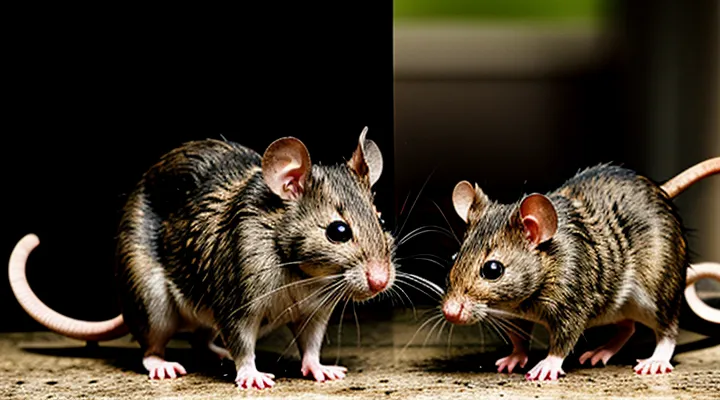
Physical Distinctions
Size and Weight
Body Length
Mice and rats exhibit distinct ranges of body length, a primary metric for species identification and comparative biology. Adult house mice (Mus musculus) typically measure 7–10 cm from nose to the base of the tail, with the tail adding an additional 5–10 cm. In contrast, adult brown rats (Rattus norvegicus) possess a body length of 20–25 cm, complemented by a tail of similar length, often 18–25 cm. These measurements reflect species‑specific growth patterns, genetic determinants, and ecological adaptations.
Key points:
- Size spectrum: Mice occupy the lower end of the rodent size continuum; rats occupy the mid‑range.
- Sexual dimorphism: Both species show modest male‑female length differences, with males averaging 5–10 % longer bodies.
- Developmental trajectory: Mice reach adult body length within 6–8 weeks, while rats require 10–12 weeks, correlating with longer gestation periods and larger litter sizes.
Understanding these dimensional distinctions supports accurate field identification, laboratory handling protocols, and comparative physiological research.
Tail Length
Mice possess relatively short tails, typically measuring 6–10 cm, which often equal or slightly exceed head‑body length. The tail is slender, sparsely furred, and exhibits a high degree of flexibility, aiding balance during rapid, erratic movements. In contrast, rats display longer tails, ranging from 15–20 cm in common species, frequently surpassing total body length. Their tails are thicker, densely covered with hair, and contain a well‑developed vascular network that assists in thermoregulation.
Key morphological contrasts:
- Length proportion: mouse tail ≈ 80–100 % of body length; rat tail ≈ 120–150 % of body length.
- Fur density: sparse on mouse tail; dense on rat tail.
- Structural robustness: mouse tail is delicate; rat tail is sturdy, supporting weight during climbing.
These differences reflect divergent ecological niches: the mouse tail optimizes agility in confined spaces, while the rat tail provides stability and heat dissipation for larger, more terrestrial activities.
Weight Range
Weight provides a clear quantitative distinction between the two rodent groups.
-
Mice (Mus spp.)
- Adult house mouse: 15–30 g
- Larger species (e.g., deer mouse): 20–40 g
- Juvenile individuals: under 10 g
-
Rats (Rattus spp.)
Weight ranges reflect species‑specific growth patterns, sexual dimorphism, and environmental conditions. Laboratory strains often fall at the lower end of the spectrum, while wild populations can exceed typical values due to abundant food resources. Accurate weight assessment aids in species identification, health monitoring, and experimental design.
Cranial and Facial Features
Snout Shape
Mice possess a short, triangular snout that tapers sharply toward the tip, giving the face a compact appearance. The rostrum is proportionally narrower relative to skull width, facilitating precise gnawing of small seeds and insects. In contrast, rats exhibit a longer, more cylindrical snout with a broader base. This elongation increases the oral cavity’s volume, supporting the consumption of larger food items and enhancing olfactory surface area.
Key morphological distinctions:
- Length: mouse snout ≈ 5–7 mm; rat snout ≈ 10–12 mm.
- Width-to-length ratio: mice display a higher ratio, producing a stout profile; rats have a lower ratio, resulting in a slender silhouette.
- Nasal bone curvature: mice show a pronounced dorsal arch; rats present a gentler curve.
These variations reflect divergent ecological niches: the mouse’s compact snout optimizes maneuverability in tight burrows, while the rat’s extended snout enhances detection of distant odor cues and accommodates a broader diet.
Ear Size and Shape
Mice possess relatively small, rounded ears that lie close to the skull, measuring approximately 10–12 mm in length for adult specimens. The pinnae are thin, with a modest amount of fur covering the outer surface, and the auditory canal is short, reflecting the species’ reliance on high‑frequency sound detection.
Rats exhibit larger, more elongated ears, typically 15–20 mm long in adults, with a broader surface area and a pronounced, fleshy rim. The pinnae are densely furred, and the auditory canal extends further into the skull, supporting enhanced low‑frequency hearing.
Key distinctions:
- Size: mouse ears ≈ 10–12 mm; rat ears ≈ 15–20 mm.
- Shape: mouse pinnae are rounded and compact; rat pinnae are elongated and broader.
- Fur coverage: mouse ears have sparse fur; rat ears display dense fur on the outer surface.
- Auditory canal length: shorter in mice, longer in rats, correlating with frequency sensitivity.
Eye Prominence
Eye prominence provides a clear morphological marker for separating the two rodent genera. In mice, the ocular globe occupies a modest portion of the skull, with shallow orbital sockets that keep the eyes close to the cranial surface. The lateral placement yields a wide panoramic visual field but limited binocular overlap.
Rats exhibit a more pronounced ocular bulge. Deeper orbits allow the eye to project farther anteriorly, resulting in a larger apparent eye size. The ventral orientation expands the forward visual field and enhances depth perception, supporting nocturnal foraging behaviors.
Key measurable distinctions:
- Orbital depth: mice ≈ 2 mm; rats ≈ 3 mm.
- Corneal diameter: mice ≈ 2.5 mm; rats ≈ 4 mm.
- Visual field overlap: mice ≈ 30 %; rats ≈ 45 %.
These parameters illustrate how eye prominence contributes to functional differences between the species.
Fur and Coat Characteristics
Texture
Mice and rats exhibit distinct tactile characteristics that aid identification and influence ecological interactions. Their pelage differs in density, length, and stiffness. Mice possess fine, soft fur with a higher hair‑to‑skin ratio, providing a smooth surface that reduces heat loss in confined habitats. Rat fur is coarser, longer, and more spaced, creating a rougher texture suited to burrowing in larger tunnels and offering greater protection against abrasion.
Footpads illustrate another contrast. Mouse plantar surfaces are thin, with a smooth, moist epidermis that enhances grip on delicate structures such as seed heads. Rat footpads are thicker, with a rougher keratinized layer that supports locomotion across varied substrates, including hard ground and debris. Whisker (vibrissae) texture also varies: mouse whiskers are slender and pliable, allowing precise detection of minute airflow changes; rat whiskers are thicker and more rigid, facilitating detection of broader environmental cues.
Key textural differences can be summarized:
- Fur: mouse – fine, soft, dense; rat – coarse, longer, less dense.
- Tail surface: mouse – thin, hairless, smooth; rat – thicker, partially furred, slightly ridged.
- Footpads: mouse – thin, smooth; rat – thick, keratinized, rough.
- Whiskers: mouse – slender, flexible; rat – thicker, stiffer.
These tactile distinctions reflect adaptations to size, habitat preference, and foraging behavior, providing reliable criteria for species discrimination in field and laboratory settings.
Coloration
Mice and rats exhibit distinct coloration patterns that reflect species‑specific genetics and ecological pressures. Laboratory mice commonly display a limited palette of coat colors—albino, agouti, black, and various piebald forms—resulting from mutations in melanin‑synthesizing genes such as Tyrosinase and Agouti. Wild mice retain cryptic hues of brown, gray, or reddish‑brown, matching ground cover and reducing predator detection.
Rats possess a broader range of natural coloration. The Norway rat (Rattus norvegicus) typically shows dark brown to black dorsal fur with a lighter ventral side, while the black rat (Rattus rattus) often presents a more uniform dark coat. Some populations develop speckled or striped markings that enhance camouflage in diverse habitats, from urban sewers to grain stores.
Key comparative points:
- Mice: limited domestic color variants; wild forms favor earthy tones.
- Rats: darker, more uniform dorsal coloration; ventral lightness consistent across species.
- Pigment genes: both groups share melanin pathways, but selective breeding in mice expands color diversity.
- Adaptive function: coloration in both taxa primarily serves concealment, but rat coats also provide thermoregulatory benefits in colder environments.
These differences underscore how coat coloration serves as a reliable morphological marker for distinguishing between the two rodent groups.
Behavioral and Biological Variances
Habitat and Social Structure
Natural Habitats
Mice and rats occupy distinct but occasionally overlapping environments, reflecting adaptations to food availability, predation pressure, and climate. Wild mice (Mus spp.) favor open fields, grasslands, and agricultural margins where dense ground cover offers shelter. Their nests are typically constructed in shallow burrows, under rocks, or within dense vegetation, providing protection from predators and temperature fluctuations. In contrast, rats (Rattus spp.) demonstrate a broader ecological tolerance, inhabiting forest edges, riparian zones, and urban infrastructures. Their burrowing behavior includes deeper tunnels and utilization of abandoned burrows created by other mammals, allowing access to stable microclimates and larger food caches.
Key habitat distinctions include:
- Moisture preference: Rats frequently occupy wetter areas such as riverbanks and marshes; mice prefer drier, well‑drained soils.
- Structural complexity: Mice rely on low vegetation and ground litter; rats exploit vertical structures, including fallen logs, walls, and building interiors.
- Human proximity: Rats are more synanthropic, establishing colonies in sewers, basements, and warehouses; mice are less common in such settings but may enter homes during seasonal shortages.
Both species exhibit flexibility, yet their primary habitats influence foraging strategies, reproductive cycles, and population dynamics. Understanding these ecological niches clarifies why control measures must target specific environments rather than applying uniform approaches.
Social Groupings
Mice and rats exhibit distinct patterns of social organization that reflect their ecological adaptations.
Laboratory and field observations show that mice typically form small, loosely structured groups consisting of a few individuals that share a nest. Social hierarchy is minimal; dominance is expressed through brief aggressive encounters rather than a stable pecking order. Chemical cues, especially urine-borne pheromones, mediate territory recognition and breeding coordination.
Rats develop larger colonies, often comprising dozens of individuals that occupy complex burrow systems. A clear dominance hierarchy governs access to resources, with the highest-ranking male and female controlling breeding opportunities. Frequent allogrooming and coordinated vocalizations reinforce social bonds and reduce tension within the group.
Key distinctions in social grouping:
- Group size: mice ≈ 2‑5 individuals; rats ≈ 10‑30 individuals.
- Hierarchy: mice ≈ fluid, transient; rats ≈ stable, rank‑based.
- Communication: mice rely mainly on olfactory signals; rats employ extensive ultrasonic vocalizations alongside scent marking.
- Cohesion mechanisms: mice depend on shared nesting; rats use grooming and coordinated foraging.
These differences influence reproductive strategies, disease transmission dynamics, and responses to environmental stressors, underscoring the importance of species‑specific social frameworks in rodent biology.
Burrowing Habits
Mice construct shallow, temporary tunnels in loose soils, leaf litter, and stored grain. Burrows typically extend 10–30 cm below the surface, contain a single entrance, and are lined with shredded material to maintain humidity. These structures serve primarily for nesting and short‑term refuge from predators.
Rats develop deeper, more permanent burrow systems. In soft substrates, tunnels may reach 60 cm depth and include multiple chambers for nesting, food storage, and waste. Entrances are often concealed with debris, and burrows connect to above‑ground pathways such as sewer pipes or wall voids.
Key distinctions in burrowing habits:
- Depth: mice ≤ 30 cm; rats up to 60 cm or more.
- Complexity: mice single‑entrance, simple layout; rats multi‑entrance, interconnected chambers.
- Materials: mice use readily available soft fibers; rats incorporate sturdier elements, including wood fragments and plastic.
- Purpose: mice focus on immediate shelter; rats allocate space for long‑term storage and social interaction.
These differences reflect species‑specific ecological strategies and influence the management of infestations in residential and agricultural settings.
Diet and Feeding Habits
Omnivorous Nature
Mice and rats share an omnivorous feeding strategy, yet their dietary preferences and foraging behaviors differ markedly. Both species ingest plant material, insects, and anthropogenic waste, allowing them to thrive in varied habitats. Their dentition—continuously growing incisors and molars adapted for grinding—supports consumption of diverse textures, from seeds to carrion.
Typical food items include:
- Grains, cereals, and stored seeds
- Fresh fruits and vegetables
- Invertebrates such as insects and larvae
- Animal carcasses and protein-rich scraps
- Human-derived refuse, including processed foods
Mice generally favor high‑carbohydrate sources, especially grains and seeds, and display selective feeding on softer plant parts. Rats exhibit a broader intake of protein, readily exploiting animal matter and refuse with higher fat content. Consequently, rats often achieve greater body mass and reproductive output when protein‑rich resources are abundant, whereas mice maintain smaller size and faster turnover under carbohydrate‑dominant diets.
Specific Food Preferences
Mice and rats exhibit distinct dietary selections that reflect their ecological niches and physiological adaptations.
Mice preferentially consume:
- Small grains such as wheat, barley, and oats
- Seed kernels from grasses and legumes
- Soft fruits and berries when available
- Invertebrates, especially larvae and aphids, providing supplemental protein
- Commercial rodent chow formulated with high carbohydrate content
Rats display a broader palate, favoring:
- Larger grain kernels and cereal fragments
- Protein‑rich sources including meat scraps, fish, and eggs
- Dairy products such as cheese and yogurt
- Human food waste, encompassing processed foods, fats, and sugars
- Commercial rat feed that balances carbohydrates, proteins, and fats
These preferences align with body size, digestive capacity, and foraging behavior: mice target easily accessed, low‑mass items, while rats exploit higher‑energy resources and exhibit opportunistic scavenging.
Foraging Strategies
Mice and rats exhibit distinct foraging strategies that reflect their differing ecological niches and physiological capacities.
Mice prioritize opportunistic exploitation of scattered, high‑energy seeds and insects. Their small body size permits rapid movement through narrow spaces, allowing them to locate and harvest food items concealed in dense vegetation or ground litter. Olfactory receptors tuned to volatile compounds guide mice toward recently deposited seeds, while tactile whisker input aids in detecting hidden arthropods. Spatial memory in mice is highly localized; they form short‑term maps of micro‑habitats and frequently revisit productive patches within a limited radius.
Rats adopt a more systematic approach, targeting larger, spatially dispersed resources such as grain stores, fruit, and carrion. Enhanced auditory and visual acuity supports detection of distant food sources, and robust hippocampal development underpins extensive spatial navigation across complex terrains. Rats often establish foraging routes that connect multiple sites, reducing travel time through repeated use of established pathways. Social learning further refines rat foraging: individuals observe conspecifics and incorporate successful techniques, leading to coordinated exploitation of abundant resources.
Key contrasts in foraging behavior include:
- Resource size: Mice focus on minute items; rats handle bulkier food.
- Sensory emphasis: Mice rely heavily on smell and touch; rats integrate vision and hearing.
- Memory scale: Mice maintain short‑range, transient maps; rats develop long‑range, persistent spatial representations.
- Social influence: Mice forage largely solitarily; rats frequently employ group dynamics and information transfer.
These differences arise from divergent metabolic demands, predator avoidance strategies, and habitat use, shaping each species’ adaptive foraging repertoire.
Reproduction and Lifespan
Gestation Period
Mice and rats differ markedly in reproductive timing. Female house mice (Mus musculus) carry embryos for approximately 19–21 days, whereas female Norway rats (Rattus norvegicus) gestate for about 21–23 days. The slightly longer gestation in rats results in larger newborns, typically weighing 5–6 g compared to 1–2 g for mice.
Both species reach parturition after a single estrous cycle, but the interval between mating and delivery varies with environmental temperature, nutrition, and strain genetics. Warmer conditions can shorten gestation by up to one day, while caloric restriction may extend it by a similar margin.
Key comparative points:
- Duration: mice ≈ 19–21 days; rats ≈ 21–23 days.
- Neonatal weight: mice ≈ 1–2 g; rats ≈ 5–6 g.
- Litter size: mice often produce 5–8 pups; rats commonly yield 6–12 pups, reflecting the longer gestational period and larger uterine capacity.
- Developmental maturity at birth: rat pups display more advanced sensory and motor functions than mouse pups, correlating with the extended prenatal development.
Understanding these gestational distinctions informs laboratory breeding schedules, experimental timing, and comparative physiology research.
Litter Size
Mice typically produce litters ranging from five to twelve offspring, with an average of eight pups per birth. The gestation period lasts approximately nineteen to twenty‑one days, allowing females to generate several litters each year. In contrast, rats give birth to six to fourteen young, averaging ten per litter, after a gestation of twenty‑two to twenty‑four days. The longer gestation and slightly larger litter size enable rats to achieve a comparable reproductive output despite a lower number of breeding cycles per year. Both species exhibit rapid post‑natal growth; mouse pups reach weaning weight within three weeks, whereas rat offspring require four weeks. This disparity in litter size, gestation length, and weaning schedule contributes to distinct population dynamics and ecological strategies between the two rodent groups.
Sexual Maturity
Sexual maturity marks the transition from juvenile growth to reproductive capability, a critical parameter when comparing laboratory rodents. In mice, females typically exhibit vaginal opening and first estrus between five and six weeks of age, while males achieve testicular descent and detectable spermatozoa around six to eight weeks. Rats mature later; females display vaginal opening and initial estrus at eight to ten weeks, and males reach full spermatogenesis between ten and twelve weeks.
Key physiological indicators differentiate the two species. Female mice enter estrus shortly after vaginal opening, with a cycle lasting four to five days and a pronounced luteal phase. Female rats also follow a four‑to‑five‑day cycle, but the proestrus phase is longer, and hormonal peaks occur at slightly different intervals. Male rodents show species‑specific patterns in testicular enlargement and plasma testosterone rise, with rats attaining peak levels later than mice.
The timing of sexual maturity influences breeding programs and experimental timelines. Researchers must align colony management with the earliest fertile age to avoid premature pairing, which can reduce litter size or increase neonatal mortality. Likewise, studies involving hormone‑dependent endpoints should schedule interventions after the species‑specific maturation window to ensure consistent physiological responses.
Maturation ages (average):
- Mice: females ≈ 5–6 weeks, males ≈ 6–8 weeks
- Rats: females ≈ 8–10 weeks, males ≈ 10–12 weeks
Accurate awareness of these intervals supports reproducible results in comparative rodent research and optimizes resource allocation within laboratory settings.
Average Lifespan
The average lifespan of each species provides a clear metric for distinguishing small rodent biology.
Laboratory mouse strains typically live 1.5–3 years, with the longest‑lived individuals reaching approximately 4 years under optimal husbandry. Wild mice experience higher mortality, averaging 6–12 months due to predation, disease, and environmental stress.
Laboratory rats, especially the common Rattus norvegicus, regularly attain 2–3 years, and some individuals survive up to 4 years when provided with enriched environments and veterinary care. In natural settings, brown rats generally survive 1–2 years, reflecting exposure to hazards similar to those affecting wild mice.
Key factors influencing these intervals include:
- Genetic background (inbred vs. outbred lines)
- Nutrition quality and caloric intake
- Housing conditions (temperature, humidity, social density)
- Disease burden and parasite load
Overall, rats exhibit a modestly longer median lifespan than mice, a difference that persists across both controlled and wild populations.
Communication
Vocalizations
Mice and rats produce distinct acoustic signals that reflect species‑specific social structures and ecological niches. Mouse vocalizations are predominantly ultrasonic, ranging from 30 to 110 kHz, and consist of short, frequency‑modulated calls emitted during mating, pup‑mother interactions, and territorial encounters. Rat vocalizations span a broader frequency spectrum (20 kHz to 80 kHz) and include both ultrasonic and audible components; they are employed in a wider array of contexts such as aggression, distress, and social bonding.
Key differences in vocal behavior:
- Frequency range: Mice concentrate calls above 30 kHz; rats frequently use lower ultrasonic bands and audible tones.
- Call duration: Mouse syllables last 10–30 ms; rat syllables extend to 50–100 ms.
- Contextual repertoire: Rats produce distinct “alarm” calls (~22 kHz) linked to predator threats, a signal absent in mice.
- Sexual dimorphism: Male mice emit more complex ultrasonic sequences during courtship, whereas rat males rely on simpler calls combined with ultrasonic chirps.
Neurophysiological studies show that mouse ultrasonic vocalizations are generated by brainstem circuits modulated by the periaqueductal gray, while rat vocal output involves additional cortical inputs, supporting the greater behavioral flexibility observed in rats. These acoustic divergences underscore the evolutionary adaptation of each species to its social and environmental demands.
Scent Marking
Scent marking functions as a primary chemical communication system for both mice and rats, allowing individuals to convey territorial boundaries, reproductive status, and individual identity without visual cues.
Mice rely on urine deposits from the bladder and secretions from the flank and preputial glands. Marks are typically placed along narrow pathways such as walls, corners, and the perimeters of nesting sites. Deposition frequency is high; a single mouse may leave dozens of marks within a 24‑hour period, creating a dense chemical map that updates rapidly with changes in group composition.
Rats employ a broader array of sources, including urine, anal gland secretions, and specialized dorsal scent glands. Marks are positioned on larger surfaces, often covering open floor areas, elevated platforms, and the interiors of burrow chambers. The marking rate is lower than in mice, but each deposit contains a more complex mixture of volatile and non‑volatile compounds, providing richer information about age, dominance, and health.
Key distinctions in scent marking:
- Glandular contribution: mice – primarily urinary and flank glands; rats – urinary, anal, and dorsal glands.
- Spatial pattern: mice – confined to narrow routes; rats – dispersed across extensive surfaces.
- Marking intensity: mice – high frequency, low chemical complexity; rats – lower frequency, high chemical complexity.
- Territorial scale: mice – small, overlapping home ranges; rats – larger, more exclusive territories.
Body Language
Mice and rats convey information through distinct postural and movement cues that reflect their differing ecological strategies. Mice typically adopt a low, crouched stance when alert, with rapid, short bursts of locomotion that emphasize agility and quick escape. Rats, by contrast, display a more expansive posture, lifting the tail slightly and extending the forelimbs during exploratory runs, which supports stronger, sustained movement across larger areas.
Key elements of their body language include:
- Tail position: Mice keep the tail close to the body, often wrapped or flicked rapidly; rats hold the tail upright or slightly arched, using it for balance during climbs.
- Ear orientation: Mice swivel ears forward to detect high‑frequency sounds; rats rotate ears laterally to monitor a broader acoustic field.
- Whisker movement: Mice exhibit rapid, rhythmic whisking during foraging; rats perform slower, deliberate whisker sweeps while assessing objects.
- Grooming patterns: Mice engage in brief, frequent grooming bouts; rats perform longer, more methodical grooming sessions that often involve the hindquarters.
These behavioral signatures enable researchers to differentiate the two species in laboratory observations and field studies without relying on genetic or morphological markers.
Ecological and Human Interaction
Disease Transmission
Pathogens Carried by Mice
Mice serve as natural reservoirs for a variety of microorganisms that can infect humans, livestock, and other wildlife. Their close association with human habitats and frequent contact with food supplies make them important vectors in disease transmission.
Common bacterial agents carried by mice include:
- Salmonella enterica – causes gastroenteritis and can spread through contaminated food.
- Leptospira interrogans – responsible for leptospirosis, transmitted via urine and water.
- Yersinia pestis – the causative agent of plague, maintained in rodent populations and transmitted by fleas.
Viral pathogens frequently associated with mice are:
- Lymphocytic choriomeningitis virus (LCMV) – asymptomatic in rodents but can cause meningitis in humans.
- Hantavirus species (e.g., Sin Nombre virus) – lead to hantavirus pulmonary syndrome after inhalation of aerosolized rodent excreta.
- Mousepox virus (ectromelia) – primarily a laboratory concern, illustrates the capacity of mice to harbor orthopoxviruses.
Parasitic and fungal organisms also occur:
- Trichinella spiralis – muscle-dwelling nematode, transmitted when infected mouse meat is consumed.
- Giardia duodenalis – protozoan causing diarrheal disease, spread through contaminated water.
- Candida albicans – opportunistic yeast that colonizes mouse gastrointestinal tracts and can be transferred to humans in clinical settings.
Understanding the spectrum of pathogens carried by mice clarifies their role in zoonotic cycles and highlights differences in disease reservoirs compared with other rodent species.
Pathogens Carried by Rats
Rats serve as reservoirs for a wide range of zoonotic agents that pose health risks to humans and domestic animals. Their close association with human habitats, extensive foraging behavior, and high reproductive rates facilitate the maintenance and dissemination of pathogens.
Key bacterial agents transmitted by rats include:
- Leptospira interrogans – the causative agent of leptospirosis, spread through contaminated urine.
- Salmonella enterica serovars – responsible for salmonellosis, transmitted via fecal contamination of food and water.
- Yersinia pestis – the bacterium behind plague, historically vectored by rat fleas but still present in rodent populations.
- Streptobacillus moniliformis – the source of rat‑bite fever, introduced through bites or scratches.
Viral infections associated with rats encompass:
- Hantavirus (primarily Seoul virus) – causes hemorrhagic fever with renal syndrome, transmitted by inhalation of aerosolized rodent excreta.
- Lymphocytic choriomeningitis virus (LCMV) – spread through direct contact with rodent secretions, leading to meningitis and encephalitis.
- Rat coronavirus – identified in laboratory colonies, with potential for cross‑species transmission.
Parasitic threats carried by rats include:
- Angiostrongylus cantonensis (rat lungworm) – causes eosinophilic meningitis in humans after ingestion of contaminated intermediate hosts.
- Toxoplasma gondii – rats act as intermediate hosts, contributing to the environmental cycle of toxoplasmosis.
- Various ectoparasites such as Xenopsylla cheopis (oriental rat flea) and Polyplax spp. (lice) that serve as vectors for bacterial and viral agents.
Effective control of rat populations, coupled with sanitation measures and public education, reduces exposure to these pathogens and limits the incidence of associated diseases.
Modes of Transmission
Mice and rats serve as reservoirs for distinct sets of pathogens, and their transmission pathways reflect differences in behavior, ecology, and physiology. Understanding these pathways is essential for disease control and laboratory safety.
Mice primarily spread agents through:
- Direct contact with contaminated fur or saliva during aggressive encounters or maternal care.
- Excretion of urine and feces that contain viral, bacterial, or parasitic particles; these deposits readily contaminate food, bedding, and surfaces.
- Aerosolization of dried droppings, which can release hantavirus and other agents into the air.
- Vertical transmission from mother to offspring via placenta or nursing.
Rats exhibit additional and sometimes more efficient routes:
- Aggressive biting that transfers bloodborne pathogens such as Leptospira spp. and certain hemorrhagic viruses.
- Larger fecal pellets that persist longer in the environment, increasing the risk of indirect ingestion by humans or other animals.
- Greater propensity for gnawing on infrastructure, leading to mechanical spread of pathogens on surfaces and equipment.
- Higher likelihood of scavenging in waste sites, facilitating crossover of bacterial agents from diverse sources.
Both species can act as mechanical vectors for ectoparasites (fleas, mites, ticks), which in turn transmit diseases like plague and rickettsioses. However, rats often host larger ectoparasite populations due to their size and habitat preferences, enhancing the overall transmission potential.
In summary, mice rely heavily on direct contact and aerosolized droppings, while rats combine these mechanisms with more robust mechanical and bloodborne routes, reflecting their broader ecological niches and social structures.
Pest Control Challenges
Efficacy of Trapping Methods
Trapping efficiency varies markedly between house mice (Mus musculus) and Norway rats (Rattus norvegicus) because of differences in size, nocturnal activity, and sensory acuity. Mice, weighing 10–25 g, can navigate smaller openings and exhibit higher exploratory behavior, making them more susceptible to lightweight snap traps and glue boards placed near walls. Rats, ranging from 150–300 g, possess stronger jaws and superior problem‑solving abilities; they often avoid simple mechanical devices and require larger, multi‑capture cages or baited live‑catch traps.
Key factors influencing trap performance include:
- Bait attractiveness: High‑protein or grain‑based baits capture mice at rates of 70–85 % within 24 h, whereas rats respond better to fatty or oily baits, achieving 55–70 % capture under identical conditions.
- Trap type: Snap traps yield 80–90 % success for mice but only 40–55 % for rats; cage traps reach 60–75 % for rats when equipped with sufficient bait and proper placement.
- Placement density: Deploying traps at 1 per 10 m² results in rapid mouse population decline, while rat control often requires 1 per 5 m² to overcome territorial avoidance.
- Environmental variables: Moisture and clutter reduce glue board effectiveness for both species; rats especially circumvent cluttered areas by using established runways.
Effective control programs integrate species‑specific trap selection with strategic positioning. For mixed infestations, a combined approach—snap traps for mice and baited cage traps for rats—produces the most consistent reduction in rodent activity across comparable habitats. Continuous monitoring and trap rotation prevent habituation, maintaining high capture rates over extended periods.
Response to Baits
Mice and rats exhibit distinct physiological and behavioral reactions to rodenticidal baits, influencing the effectiveness of control measures.
Physiological factors that differentiate their bait response include:
- Taste receptor composition: mice possess a higher density of sweet-sensitive receptors, making sugary baits more attractive, whereas rats respond more strongly to protein‑rich formulations.
- Metabolic rate: mice metabolize toxins faster, requiring lower concentrations for lethal effect; rats tolerate higher doses before exhibiting toxicity.
- Gastrointestinal transit time: mice process food more rapidly, leading to quicker absorption of active ingredients, while rats retain bait longer, affecting toxin exposure duration.
Behavioral characteristics further separate their interactions with bait:
- Neophobia: mice display heightened wariness toward novel objects, often rejecting unfamiliar bait matrices; rats show lower neophobic response, approaching new food sources more readily.
- Social learning: rats transmit bait acceptance or avoidance within colonies through grooming and shared foraging sites, whereas mice rely on individual trial‑and‑error.
- Foraging patterns: mice prefer scattered, small‑quantity placements, while rats favor larger, clustered deposits that align with their territorial pathways.
Practical implications for pest management stem from these differences:
- Formulate baits with sweeteners for mouse‑targeted programs; incorporate protein or grain bases for rat‑focused applications.
- Adjust toxin concentration: lower dose for mice to prevent sublethal exposure, higher dose for rats to overcome metabolic resistance.
- Deploy bait stations: use multiple small stations for mice to reduce neophobic avoidance; place fewer, larger stations along rat runways for efficient uptake.
- Monitor bait acceptance: conduct preliminary preference tests to identify species‑specific palatability before full‑scale deployment.
Understanding the divergent bait responses of mice and rats enables precise selection of attractants, dosage, and placement strategies, thereby maximizing control efficacy while minimizing non‑target impacts.
Behavioral Adaptations to Control Measures
Mice and rats modify their behavior when exposed to control tactics, directly influencing the success of eradication programs. Both species display rapid learning, but the mechanisms differ in scale and complexity.
-
Mice
- Avoid novel objects, reducing trap encounters after initial exposure.
- Develop bait aversion when sub‑lethal doses are encountered, shifting to alternative food sources.
- Intensify nocturnal foraging to exploit periods of reduced human activity.
- Exploit small gaps and hidden routes, bypassing physical barriers designed for larger rodents.
-
Rats
- Observe conspecifics, adopting successful avoidance strategies observed in peers.
- Adjust home‑range boundaries to include safer zones after trap placement.
- Exhibit decreased attraction to poisoned baits after detecting low‑dose exposure, favoring fresh, untampered food.
- Utilize subterranean networks, such as sewer systems, to circumvent surface‑level control devices.
These adaptations stem from innate curiosity, social learning, and physiological tolerance thresholds. Effective management requires rotating trap designs, varying bait formulations, and sealing entry points at dimensions below mouse whisker width while addressing larger rat conduits. Continuous monitoring of behavioral shifts ensures that control measures remain ahead of the rodents’ adaptive responses.
Research and Laboratory Applications
Mouse Models in Research
Mouse models dominate biomedical investigation because their genome closely mirrors that of humans, enabling precise replication of genetic disorders. Inbred strains provide uniform genetic backgrounds, reducing variability in experimental outcomes and allowing reproducible phenotypic assessment.
Genetic engineering techniques—such as CRISPR‑Cas9, Cre‑loxP recombination, and transgenic insertion—are routinely applied to mice. These methods generate knock‑out, knock‑in, and conditional alleles that mimic disease‑associated mutations. Resulting phenotypes can be examined across developmental stages, facilitating studies of gene function, pathophysiology, and therapeutic response.
Key attributes of mouse models include:
- Rapid reproductive cycle and large litter sizes, supporting high‑throughput experiments.
- Comprehensive physiological and behavioral assays, ranging from metabolic profiling to cognitive testing.
- Extensive repositories of well‑characterized strains, providing ready access to models of cancer, neurodegeneration, immunological disorders, and metabolic syndromes.
- Compatibility with advanced imaging and omics platforms, allowing multi‑scale data integration.
Rats, while valuable for certain physiological studies, differ in size, gestation period, and genetic tractability. These distinctions influence model selection, especially when precise genetic manipulation and large cohort generation are required. Mouse models therefore remain the primary choice for dissecting molecular mechanisms and evaluating preclinical interventions.
Rat Models in Research
Rat models provide a robust platform for investigating physiological and pathological processes that differ markedly from those observed in mice. Their larger body size facilitates surgical manipulation, precise dosing, and longitudinal sampling, which enhances the reliability of data in cardiovascular, metabolic, and neurological studies. The extended lifespan relative to mice permits observation of disease progression over a longer interval, improving the translational relevance of chronic‑disease models.
Genetically engineered rats expand the scope of experimental inquiry. Techniques such as CRISPR/Cas9, zinc‑finger nucleases, and transposon‑mediated insertion produce knockout, knock‑in, and reporter lines that mirror human genetic conditions with high fidelity. These models support investigations into monogenic disorders (e.g., cystic fibrosis, Huntington’s disease) and complex traits (e.g., hypertension, obesity).
Key applications of rat models include:
- Pharmacokinetic and toxicology testing: larger blood volume enables repeated plasma sampling, yielding detailed drug‑metabolism profiles.
- Behavioral neuroscience: sophisticated maze and operant‑conditioning paradigms exploit rats’ advanced learning capacity, providing insight into cognition, addiction, and stress responses.
- Cardiovascular research: invasive procedures such as coronary artery ligation and telemetry implantation generate reliable models of myocardial infarction and heart failure.
- Metabolic disease modeling: diet‑induced obesity and insulin‑resistance protocols replicate human metabolic syndrome with measurable physiological endpoints.
The cumulative advantages of rat models—enhanced surgical accessibility, genetic tractability, and physiological similarity to humans—make them indispensable for bridging the gap between basic murine research and clinical application.
Specific Research Areas
Mice and rats serve as distinct model organisms in several focused research domains, each exploiting species‑specific traits to address particular scientific questions.
-
Genetic studies leverage the compact genome of mice, extensive knockout libraries, and rapid breeding cycles to dissect gene function and inheritance patterns. Rat genetics, though historically less tractable, now benefit from CRCR‑mediated editing, enabling investigation of complex loci and polygenic traits less accessible in murine systems.
-
Neurobiological investigations employ mice for detailed circuit mapping using optogenetics and transgenic reporters, while rats provide superior behavioral resolution in tasks requiring fine motor control, spatial navigation, and auditory discrimination, facilitating translational studies of cognition and psychiatric disorders.
-
Toxicology and pharmacokinetic research compares metabolic pathways; rats display drug clearance rates more comparable to humans for certain compounds, whereas mice offer high‑throughput screening capacity and sensitivity to low‑dose exposures, informing risk assessment across chemical classes.
-
Immunological research distinguishes species‑specific immune cell populations and cytokine profiles. Mice, with well‑characterized immune repertoires and numerous disease‑specific strains, enable precise manipulation of adaptive responses. Rats, possessing a larger blood volume and more human‑like immune cell distributions, support studies of vaccine efficacy and immune‑modulating therapeutics.
-
Developmental biology utilizes mouse embryogenesis to elucidate early gene expression dynamics, while rat gestation periods and placental architecture provide a closer approximation to human fetal development, aiding investigations of teratogenic effects and maternal‑fetal interactions.
-
Microbiome research exploits differences in gut microbial composition; rats harbor a more diverse microbial community resembling human populations, allowing detailed analysis of host‑microbe interactions, whereas mice facilitate controlled colonization experiments due to their germ‑free breeding lines.
Each area capitalizes on the inherent biological distinctions between the two rodents, ensuring that experimental design aligns with the species that best reflects the phenomenon under study.