
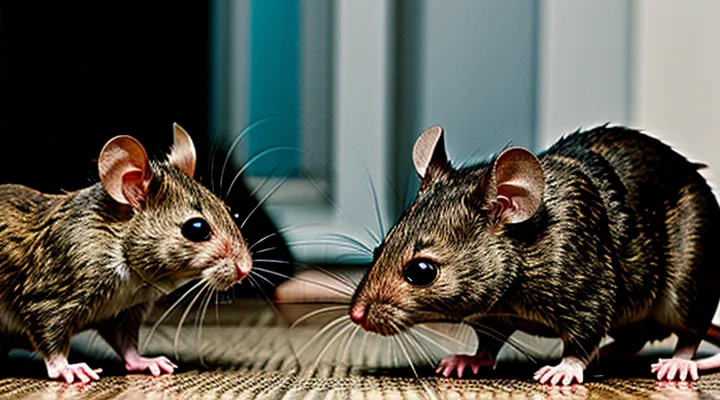
Morphological and Physiological Differences
Size and Physical Proportions
Adult Body Length and Weight
Adult body size is a primary metric distinguishing laboratory mice from rats.
A typical adult mouse (Mus musculus) has a head‑to‑body length of 7–10 cm, tail length of 6–9 cm, and a body mass ranging from 18 to 30 g.
An adult rat (Rattus norvegicus) measures 20–25 cm in head‑to‑body length, tail length of 18–25 cm, and weighs 250 to 350 g.
These dimensions create a clear size gap:
- Length: mice ≈ 7–10 cm; rats ≈ 20–25 cm.
- Tail: mice ≈ 6–9 cm; rats ≈ 18–25 cm.
- Weight: mice ≈ 18–30 g; rats ≈ 250–350 g.
The disparity in length and mass influences handling, cage design, and experimental dosing.
Relative Tail Length
Relative tail length serves as a primary distinguishing trait when comparing mice and rats.
Mice possess tails that approach or exceed the length of their head‑body measurement, typically ranging from 75 % to 100 % of that dimension. Rats, by contrast, exhibit tails that fall short of the head‑body length, commonly measured at 50 % to 70 % of the same metric.
- Mouse tail: 75 %–100 % of head‑body length
- Rat tail: 50 %–70 % of head‑body length
The proportional difference influences locomotion and thermoregulation. A longer tail enhances balance during rapid, agile movements characteristic of mice. In rats, a relatively shorter tail still provides stability but supports a heavier body mass and different habitat use.
Understanding the variance in tail proportion clarifies species identification and informs ecological and laboratory practices that rely on accurate rodent classification.
Cranial and Sensory Characteristics
Ear and Eye Size Comparison
Mice possess proportionally larger ears relative to head size than rats. An adult house mouse ear measures approximately 10–12 mm in length, while a typical Norway rat ear ranges from 15–18 mm. The increased ear surface in mice enhances auditory sensitivity to high‑frequency sounds, a trait linked to their nocturnal foraging behavior. Rats, with slightly longer pinnae, exhibit broader frequency detection but lower overall sensitivity.
Eye dimensions follow a similar pattern of proportional scaling. Mouse eye diameter averages 3–4 mm, constituting roughly 30 % of skull width. Rat eye diameter measures 5–6 mm, about 20 % of skull width. The larger absolute eye size in rats supports improved low‑light vision, whereas mice rely more on auditory cues.
Key comparative metrics:
- Ear length: mouse ≈ 10–12 mm; rat ≈ 15–18 mm
- Ear-to‑head ratio: mouse > rat
- Eye diameter: mouse ≈ 3–4 mm; rat ≈ 5–6 mm
- Eye‑to‑skull ratio: mouse > rat
These dimensional differences reflect divergent ecological adaptations, with mice favoring acute high‑frequency hearing and rats emphasizing broader auditory range and enhanced visual capacity.
Snout Shape and Vibrissae Density
Mice possess a tapered, triangular snout that ends in a sharp tip. The short length and narrow profile facilitate maneuvering through narrow openings and enable precise gnawing on small seeds.
Rats exhibit a broader, blunter snout with a rounded tip. The extended length and wider shape support stronger bite forces and accommodate larger food items.
Facial vibrissae differ markedly. Mice display a high density of fine whiskers that cover the entire rostral region, providing detailed tactile feedback for navigating confined spaces. Rats have fewer, thicker vibrissae concentrated around the nasal area, delivering robust but less detailed sensory input suitable for larger‑scale exploration.
Key distinctions
- Snout shape: pointed and narrow (mice) vs. blunt and wide (rats)
- Snout length: short (mice) vs. longer (rats)
- Vibrissae density: dense, fine (mice) vs. sparse, coarse (rats)
- Whisker distribution: extensive facial coverage (mice) vs. concentrated nasal band (rats)
Lifespan and Growth Rate
Mice typically live 1.5–3 years, whereas rats reach 2–4 years under laboratory conditions and up to 5 years in optimal captive environments. The shorter lifespan of mice reflects a faster metabolic turnover and earlier onset of senescence.
Growth rate differs markedly. Newborn mice attain adult size within 6–8 weeks; body mass increases from 1–2 g at birth to 20–30 g as adults. Rats require 10–12 weeks to reach mature weight, expanding from 1.5–2 g at birth to 300–500 g. The extended growth period aligns with the rat’s larger ultimate size and longer developmental phases.
Key comparative points:
- Maximum lifespan: mice ≈ 2 years; rats ≈ 3–4 years (up to 5 years in ideal care).
- Time to sexual maturity: mice ≈ 6 weeks; rats ≈ 10 weeks.
- Growth velocity: mice gain ~3–4 g per week during the first month; rats gain ~15–20 g per week in the same period.
- Age‑related decline: mice exhibit earlier functional deterioration, including reduced locomotor activity and cognitive performance, relative to rats.
The disparity in lifespan and growth dynamics influences experimental design, housing requirements, and interpretation of age‑dependent data in biomedical research.
Distinct Reproductive Strategies
Gestation and Development
Length of Pregnancy
Mice and rats exhibit distinct gestation periods, a critical factor in reproductive biology and laboratory management. The average gestation length for the common house mouse (Mus musculus) is 19–21 days, with most litters delivered at day 20. In contrast, the brown rat (Rattus norvegicus) carries embryos for 21–23 days, typically delivering on day 22.
Key comparative data:
- Mouse gestation: 19–21 days (median ≈ 20 days)
- Rat gestation: 21–23 days (median ≈ 22 days)
These differences influence colony turnover rates, breeding schedules, and experimental timelines. Shorter mouse pregnancies enable more rapid generation cycles, while the slightly longer rat gestation contributes to larger offspring size and increased developmental maturity at birth.
Average Litter Size
Mice and rats exhibit distinct reproductive capacities, evident in the number of offspring produced per gestation.
The average litter size for the common house mouse (Mus musculus) ranges from five to eight pups, with occasional litters reaching ten under optimal conditions. Gestation lasts approximately 19–21 days, allowing multiple litters each year.
Rats, represented by the brown rat (Rattus norvegicus), typically produce six to twelve pups per litter. Some populations record up to fourteen offspring when food is abundant. Gestation extends to 21–23 days, supporting two to three litters annually.
Key contrasts:
- Mice: 5–8 pups (rarely up to 10); gestation ≈ 20 days; up to 7–9 litters/yr.
- Rats: 6–12 pups (occasionally 14); gestation ≈ 22 days; 2–3 litters/yr.
These figures illustrate that rats generally generate larger litters, while mice compensate with a higher frequency of breeding cycles.
Sexual Maturity Timing
Sexual maturity timing distinguishes the two rodent species and influences experimental design, colony management, and reproductive studies.
Laboratory mice attain puberty between five and eight weeks of age. Female mice typically exhibit their first estrus cycle at five to six weeks, indicated by vaginal opening and the presence of cornified epithelial cells. Male mice show increased testicular weight and sperm production around six weeks, with full fertility established by seven to eight weeks.
Laboratory rats reach sexual maturity later, generally between eight and twelve weeks. Female rats experience their first estrus cycle at eight to ten weeks, detectable through vaginal cytology and behavioral receptivity. Male rats exhibit testicular enlargement and detectable spermatozoa between ten and twelve weeks, achieving full reproductive capacity by twelve weeks.
Key comparative points:
- Onset of puberty: mice 5‑8 weeks; rats 8‑12 weeks.
- Female first estrus: mice ~5 weeks; rats ~8‑10 weeks.
- Male sperm production: mice ~6‑7 weeks; rats ~10‑12 weeks.
- Full fertility: mice by 7‑8 weeks; rats by 12 weeks.
These temporal differences require species‑specific scheduling for breeding programs, hormonal interventions, and developmental assessments.
Behavioral and Social Traits
Social Organization and Colony Size
Territorial Marking
Mice and rats employ distinct strategies for marking territory, reflecting differences in social organization and habitat use. Mice rely primarily on urine and flank gland secretions deposited along narrow travel routes, such as edges of burrows and perimeters of nesting chambers. Their markings are faint, evaporate quickly, and serve to signal recent presence to conspecifics. Rats, in contrast, produce copious urine and scent from anal and preputial glands, spreading deposits across larger surface areas, including walls, ceilings, and open corridors. Their marks persist longer, creating a durable olfactory map that delineates dominance zones and resource boundaries.
Key contrasting features include:
- Frequency: Mice mark intermittently; rats mark continuously throughout active periods.
- Composition: Mouse urine contains low concentrations of pheromones; rat urine is rich in proteinaceous compounds and volatile acids.
- Spatial extent: Mouse markings are confined to immediate nest vicinity; rat markings cover extensive sections of the environment, often overlapping multiple nesting sites.
- Behavioral response: Mice investigate fresh marks briefly before retreating; rats display prolonged investigation, overmarking, and aggressive posturing.
These variations influence population density, competition dynamics, and control measures. Understanding the specific marking patterns enables targeted management, such as deploying scent‑based traps calibrated to the chemical profiles of each species.
Feeding Habits and Neophobia
Diet Specificity
Mice and rats exhibit distinct dietary preferences that reflect their ecological niches and physiological demands.
Mice favor small seeds, grains, and soft plant material, supplementing with occasional insects. Their foraging behavior targets high‑energy, easily digestible foods, and they readily consume laboratory chow formulated with elevated protein levels relative to body mass.
Rats accept a broader range of items, including larger grains, nuts, fruits, carrion, and human waste. Commercial rodent diets for rats contain higher fiber content and lower protein density, matching the species’ greater gastrointestinal capacity and ability to process coarse material.
Nutrient requirements differ subtly. Mice need greater per‑gram intake of essential amino acids such as lysine and methionine, while rats exhibit higher tolerance for dietary fat and can maintain calcium balance with lower dietary calcium. Both species require vitamin C from external sources, but rats demonstrate a more efficient renal conservation mechanism, allowing them to thrive on diets with modest vitamin C levels.
These dietary distinctions affect experimental design and pest management. Selecting appropriate feed ensures accurate physiological measurements, and bait formulations must align with species‑specific palates to achieve effective control.
Key distinctions
- Primary food types: mice – seeds, grains, insects; rats – grains, nuts, carrion, waste.
- Laboratory diet composition: mice – high protein, low fiber; rats – moderate protein, high fiber.
- Amino acid needs: mice require higher lysine and methionine ratios.
- Fat tolerance: rats accept higher dietary fat percentages.
- Calcium handling: rats maintain balance with lower calcium intake.
- Vitamin C reliance: both need supplementation; rats conserve more efficiently.
Response to Novel Objects «Neophobia»
Neophobia, the hesitation to interact with unfamiliar objects, serves as a reliable indicator of exploratory drive and risk assessment in laboratory rodents. Comparative investigations exploit this behavior to differentiate species‑specific strategies for coping with novelty.
Mice typically exhibit pronounced neophobic responses. Initial contact with a novel item is delayed, often exceeding several minutes, and the total time spent investigating the object remains limited. Repeated exposures gradually reduce latency, but the overall exploration index stays lower than that of rats. The heightened caution aligns with a greater reliance on olfactory cues to evaluate safety before tactile engagement.
Rats demonstrate a comparatively modest neophobic reaction. Approach latency frequently falls below one minute, and the duration of object manipulation surpasses that of mice. Rats maintain sustained interaction across successive trials, indicating a faster habituation process. Visual and whisker‑mediated tactile inputs dominate the assessment, facilitating quicker acceptance of novelty.
Underlying mechanisms reflect divergent sensory weighting and neurochemical modulation. Mice possess a denser population of olfactory receptor neurons, promoting odor‑driven avoidance. In contrast, rats exhibit enhanced somatosensory cortical representation, supporting rapid tactile exploration. Dopaminergic activity in the nucleus accumbens rises more sharply in rats during novel object exposure, correlating with reduced hesitation.
Key contrasting features:
- Latency to first contact: mice > rats
- Total investigation time: mice < rats
- Rate of habituation across trials: slower in mice, faster in rats
- Dominant sensory modality: olfactory (mice) vs. tactile/visual (rats)
- Dopaminergic response magnitude: lower in mice, higher in rats
These distinctions inform experimental design, especially when selecting a species for studies of anxiety, cognition, or pharmacological modulation of exploratory behavior.
Activity Patterns and Locomotion
Mice and rats, despite sharing a rodent lineage, exhibit markedly different temporal activity and movement characteristics.
Mice display a sharply defined nocturnal rhythm, with peak locomotor bouts occurring within the first three hours of darkness. Their activity declines rapidly after this window, resulting in a concise, high‑intensity period each night. Rats also operate primarily at night, but their activity profile extends over a broader portion of the dark phase, often beginning later and persisting until dawn. This extended window reflects greater flexibility in response to environmental cues such as food availability.
Locomotor performance diverges in several dimensions. Mice, weighing 20–30 g, generate rapid bursts of speed (up to 8 km h⁻¹) but sustain them for only short intervals. Their small stature favors vertical climbing and exploration of narrow openings, with a gait characterized by frequent, short strides. Rats, weighing 250–350 g, achieve slower peak speeds (approximately 5 km h⁻¹) yet maintain movement for longer periods. Their longer limbs produce extended strides, supporting efficient horizontal travel and robust burrowing activity. Additionally, rats exhibit stronger grip strength, enabling them to manipulate larger objects and negotiate heavier loads.
Key contrasts:
- Activity timing: mice – early‑night peak; rats – prolonged nocturnal activity.
- Burst speed: mice – higher instantaneous velocity; rats – lower but more sustained.
- Stride length: mice – short, rapid steps; rats – longer, economical strides.
- Preferred locomotion: mice – vertical climbing and narrow passages; rats – horizontal travel, extensive burrowing, object handling.
These distinctions influence experimental design, housing conditions, and behavioral interpretation for each species.
Contexts of Human Interaction
Pest Management Challenges
Trap Effectiveness Variations
Trap performance diverges markedly when applied to mice versus rats because of size, foraging habits, and sensory thresholds. Mice, typically 2–4 g, respond to low‑profile snap devices and lightweight glue boards, while rats, exceeding 200 g, require robust mechanisms capable of delivering sufficient force to incapacitate a larger body.
Key variables influencing capture rates:
- Bait selection: Mice favor high‑carbohydrate seeds and soft foods; rats show a preference for protein‑rich scraps and greasy items. Matching bait to species maximizes attraction.
- Trigger sensitivity: Mice trigger mechanisms with minimal pressure; excessive resistance can deter entry. Rats tolerate higher trigger thresholds, allowing for sturdier designs.
- Placement height: Mice travel close to floor level; traps positioned 2–4 inches above ground capture most activity. Rats often navigate along walls and higher pathways; placement 6–12 inches off the floor improves contact.
- Escape prevention: Mice can squeeze through gaps as small as 0.25 inches; sealed chambers are essential. Rats require reinforced doors to resist strong bites and attempts to pry open the trap.
- Environmental exposure: Moisture and dust impair snap traps more quickly for mice due to lighter components; corrosion‑resistant models extend functional life for rat traps.
Design considerations reflect these distinctions. Snap traps with thin, calibrated springs excel for mouse control, whereas heavy‑duty cage traps with spring‑loaded doors or electric shock grids deliver reliable rat capture. Glue boards remain effective for both species when paired with appropriate bait, but their utility diminishes in high‑traffic areas where mammals may dislodge the adhesive.
Optimizing trap deployment demands alignment of device type, trigger mechanics, bait, and positioning with the target rodent’s physiological and behavioral traits. Failure to adjust any of these factors reduces overall efficacy and may increase non‑target interference.
Poison Bait Acceptance
Mice and rats display distinct patterns of poison bait acceptance, driven by species‑specific feeding behavior, sensory perception, and prior exposure to toxicants.
Mice tend to approach bait with higher curiosity but exhibit rapid aversion after a single sublethal exposure. Their small body mass increases the relative dose of anticoagulant or neurotoxic agents, causing quicker onset of symptoms and higher mortality at lower concentrations. Consequently, bait formulations for mice often incorporate strong attractants and low‑dose active ingredients to ensure ingestion before avoidance develops.
Rats, in contrast, show greater neophobia toward novel food sources. Initial acceptance rates are lower, especially in environments with abundant alternative nutrition. Once a rat overcomes hesitation, it may consume larger quantities before experiencing adverse effects, owing to higher tolerance thresholds. Effective rat baits therefore combine potent attractants with delayed‑action toxicants, allowing the animal to leave the bait site before symptoms appear, reducing the chance of bait shunning.
Key factors influencing acceptance:
- Palatability: Mice respond to sweet and grain‑based scents; rats prefer protein‑rich or fatty odors.
- Dose sensitivity: Mice require lower active ingredient concentrations; rats need higher levels for lethal effect.
- Learning behavior: Mice develop bait aversion after a single negative experience; rats require multiple exposures.
- Environmental context: Dense mouse populations increase competition, raising bait uptake; solitary rats may ignore isolated bait stations.
Optimizing control programs demands separate bait strategies that reflect these behavioral and physiological disparities, thereby improving efficacy while minimizing non‑target risks.
Role in Scientific Research
Genetic Modeling Suitability
Mice and rats differ markedly in genetic tractability, affecting their suitability for disease modeling, functional genomics, and therapeutic testing. Mouse genomes are extensively annotated, with a dense repository of engineered lines, including conditional knockouts, reporter alleles, and CRISPR‑edited strains. Rat genomes, while fully sequenced, contain fewer publicly available modifications, though recent advances have expanded CRISPR applications and transgenic pipelines.
Key factors influencing model selection:
- Genome editing efficiency – mice exhibit higher germline transmission rates for targeted edits; rats show comparable somatic editing but lower germline success.
- Phenotypic relevance – rats possess physiological traits (e.g., larger brain, cardiovascular system) that better mimic human organ size and function for certain studies.
- Resource availability – mouse colonies benefit from established cryopreservation, phenotyping platforms, and standardized background strains; rat resources are growing but remain less comprehensive.
- Cost and husbandry – mice require less space and lower maintenance costs, facilitating large‑scale screens; rats demand more space and higher upkeep, limiting high‑throughput applications.
Handling and Temperament Differences
Mice and rats exhibit distinct handling characteristics that affect how researchers and caretakers interact with them. Mice are small, lightweight, and prone to stress when grasped directly; they respond best to gentle scooping with cupped hands or using a soft brush. Their delicate skeletal structure requires minimal restraint time to prevent injury. Rats, by contrast, possess a sturdier frame and can tolerate brief manual restraint. They are comfortable with tail grabs when performed correctly, and many individuals can be trained to accept handling cages or tunnels without excessive agitation.
Temperament differences further influence handling protocols. Mice display heightened flight responses, often retreating to corners or burrowing when startled. Their social hierarchy is less pronounced, leading to individual variability in boldness. Rats demonstrate higher exploratory drive and curiosity; they readily investigate new objects and may follow handlers, reducing the need for physical restraint. Their social structures are more complex, producing consistent patterns of dominance and submission that can be observed during group handling.
Practical implications:
- Use cupped‑hand or brush techniques for mice; limit restraint duration.
- Apply brief tail grabs or tunnel handling for rats; incorporate environmental enrichment to encourage voluntary interaction.
- Monitor stress indicators (e.g., rapid breathing, vocalization) and adjust methods accordingly.
- Consider individual temperament; some mice may become habituated to handling, while certain rats may exhibit aggression if dominance hierarchies are disrupted.