
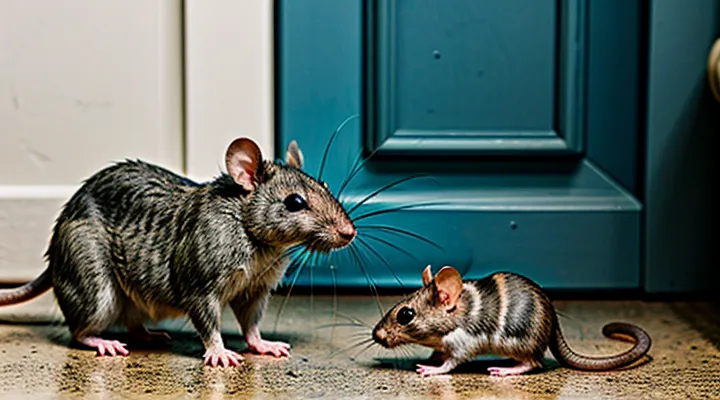
Understanding the «Myth» of Coexistence
The Common Belief: Rats and Mice Cannot Coexist
Predation as a Primary Factor
Predation shapes the dynamics between rats and mice sharing a confined area. Rats, larger and more aggressive, frequently target juvenile mice, reducing mouse recruitment and altering population structure. Evidence from laboratory cages and field traps shows a consistent pattern: mouse mortality spikes when rat density exceeds a threshold of approximately 1.5 individuals per square meter. This pressure limits mouse expansion, even when food resources are abundant.
Key observations include:
- Direct attacks on mouse pups by adult rats, resulting in immediate loss of offspring.
- Opportunistic scavenging of dead mice by rats, converting predation into a supplemental nutrient source.
- Behavioral avoidance by mice, manifested as increased nocturnal activity and heightened use of elevated refuges.
These interactions create a top‑down control mechanism that outweighs competition for food in many scenarios. When predation intensity declines—through rat removal or habitat modification—mouse populations often rebound rapidly, demonstrating the centrality of predator‑prey relations in determining coexistence outcomes.
Competition for Resources
Rats and mice frequently occupy the same structural environment, forcing direct interaction over limited supplies. Their overlapping diets and shelter preferences generate measurable competition that shapes population dynamics.
Food resources represent the most immediate point of conflict. Both species exploit grain, seeds, insects, and human waste. When supplies dwindle, rats typically assert dominance through larger size and superior bite force, displacing mice from high‑calorie items. Mice compensate by targeting smaller particles and exploiting micro‑niches such as crevices inaccessible to larger rodents.
Nesting sites also generate rivalry. Shared structures—walls, attics, storage bins—offer comparable protection and temperature regulation. Rats often claim spacious cavities, while mice seek tighter openings. The resulting spatial segregation reduces direct encounters but does not eliminate competition for the limited number of viable chambers.
Water availability follows the same pattern. In dry conditions, both species converge on the few remaining sources, increasing aggression and contact rates. Rats’ ability to travel longer distances gives them an advantage in locating distant reservoirs, whereas mice rely on proximity to existing plumbing leaks.
Mechanisms that mitigate conflict include:
- Temporal partitioning: mice exhibit higher activity during early night hours, rats peak later.
- Dietary specialization: mice consume finer particles, rats focus on larger food masses.
- Behavioral avoidance: subordinate individuals retreat to peripheral zones when dominant individuals are present.
Overall, competition for resources among cohabiting rats and mice is a quantifiable driver of their ecological relationship, influencing survival rates, reproductive success, and spatial distribution within shared habitats.
Territorial Behavior and Aggression
Rats and mice rarely share a confined area without establishing distinct zones. Territorial behavior emerges quickly when individuals encounter unfamiliar scent marks, nesting material, or food sources. Aggression manifests as chasing, biting, and vocalizations that reinforce boundaries.
Key factors influencing aggression:
- Species‑specific scent communication: pheromones signal occupancy and rank.
- Resource concentration: limited food or nesting sites increase confrontations.
- Population density: higher numbers amplify overlap of home ranges.
- Prior experience: individuals with a history of dominance display heightened assertiveness.
Consequences for mixed populations include:
- Displacement of the subordinate species to peripheral zones.
- Elevated stress hormones, leading to reduced reproductive output.
- Increased mortality from wounds or starvation when access to resources is restricted.
Mitigation strategies focus on environmental modification:
- Provide multiple, evenly spaced feeding stations to dilute competition.
- Install separate nesting compartments with independent entrances.
- Use scent‑neutral materials for cage flooring to reduce territorial marking cues.
- Maintain low population densities by regular health monitoring and controlled breeding.
By addressing the drivers of territorial aggression, cohabitation of rats and mice becomes manageable, minimizing conflict and supporting stable, multi‑species environments.
The «Reality» of Overlapping Habitats
Environmental Factors Influencing Coexistence
Resource Abundance
Rats and mice can occupy the same area when the environment supplies enough food, water, and shelter to meet the needs of both species. High resource levels diminish direct competition, allowing each rodent to exploit overlapping diets without triggering lethal encounters.
Key components of resource abundance include:
- Diverse food sources (seeds, grains, insects, waste)
- Continuous water access
- Multiple nesting sites (burrows, crevices, insulated structures)
- Stable temperature and humidity
When these elements are plentiful, territorial aggression declines. Both species adopt flexible foraging patterns, and spatial overlap increases because each can secure a personal niche within the shared space. Observations in urban warehouses and agricultural storage facilities confirm stable co‑presence under such conditions.
Conversely, scarcity forces individuals to defend limited assets. Reduced food availability intensifies rivalry, often resulting in one species outcompeting the other through superior aggressiveness or faster reproduction. Limited shelter amplifies confrontations, leading to displacement or mortality of the less dominant rodent.
Understanding the link between resource abundance and coexistence informs pest‑control strategies. Enhancing sanitation, eliminating excess food waste, and sealing entry points lower the overall carrying capacity, thereby discouraging simultaneous infestations. Conversely, environments that unintentionally provide abundant resources—such as poorly managed grain bins—create conditions where rats and mice can thrive together, challenging assumptions that one species will inevitably exclude the other.
Shelter Availability
Rats and mice require separate shelter structures to reduce direct competition and limit disease transmission. When both species occupy the same area, the quantity, location, and design of available hideouts determine whether coexistence is feasible.
Adequate shelter provision includes:
- Multiple nesting sites spaced at least 30 cm apart, preventing one species from monopolizing a single cavity.
- Materials resistant to chewing, such as metal or thick plastic, to discourage damage that could expose occupants.
- Access points sized for mice but too small for rats, allowing mice to retreat while limiting rat intrusion.
- Elevated platforms or lofts for rats, whose larger size and climbing ability give them advantage in vertical space, while ground‑level burrows favor mice.
Failure to meet these criteria often results in aggressive displacement, where rats dominate larger, more secure shelters and force mice into suboptimal, exposed locations. Suboptimal shelter leads to increased stress, reduced reproductive success, and heightened susceptibility to pathogens for both species.
Effective management of shared environments therefore hinges on strategic placement of diverse, species‑appropriate refuges, ensuring each rodent population can maintain its own territory without direct interference.
Human Impact and Urban Environments
Human activities shape the conditions under which rats and mice share urban habitats. Waste generation provides abundant, year‑round food sources, reducing competition for scarce resources. Improper disposal creates overlapping foraging zones, allowing both species to exploit the same sites without direct exclusion.
Structural characteristics of buildings influence coexistence. Cracks, utility tunnels, and poorly sealed openings serve as entry points for both rodents. When construction standards neglect rodent‑proofing, rats and mice occupy identical interior spaces, blurring the distinction between their typical niches.
Pest‑management practices affect population dynamics. Broad‑spectrum rodenticides often suppress larger rats while leaving smaller mice relatively untouched, unintentionally fostering a balanced presence of both. Targeted control that differentiates species can alter the equilibrium, leading to dominance by one group.
Urban planning decisions determine habitat connectivity. Green corridors, vacant lots, and sewer networks link isolated pockets, facilitating movement and intermixing. When planners integrate barriers or habitat fragmentation, they limit the range overlap and reduce joint occupancy.
Key human‑driven factors:
- Consistent food availability from garbage and food‑service waste.
- Building integrity that permits simultaneous entry.
- Control measures that lack species specificity.
- Landscape design that either connects or isolates habitats.
These elements collectively explain why myths about mutual exclusion between rats and mice often conflict with observed urban reality. Human influence creates environments where both species can thrive side by side, challenging traditional assumptions about their ecological separation.
Behavioral Adaptations and Niche Partitioning
Different Feeding Habits
Rats and mice that share a confined environment exhibit distinct dietary preferences that shape their coexistence. Rats favor high‑calorie, protein‑rich foods such as meat scraps, grains, and oily pet food. Their larger stomach capacity allows them to consume bulky portions and store excess energy as fat. Mice, by contrast, select smaller, carbohydrate‑dense items, including seeds, nuts, and processed sugars. Their rapid metabolism drives frequent, modest meals rather than large intakes.
Both species display opportunistic foraging, yet competition is mitigated by niche differentiation:
- Rats dominate coarse, moist substrates (e.g., spilled liquids, greasy residues).
- Mice exploit dry, granular sources (e.g., cereal crumbs, dried pet treats).
- Temporal separation occurs: rats are primarily nocturnal, while mice often extend activity into early twilight, reducing direct encounters at feeding sites.
Seasonal shifts further influence consumption patterns. In colder periods, rats increase intake of high‑fat foods to maintain body temperature, whereas mice elevate their seed intake to support reproductive cycles. Access to human‑provided waste can temporarily blur these distinctions, but intrinsic dietary specializations persist, sustaining a functional balance within the shared space.
Varying Activity Patterns
Rats and mice sharing a confined area display distinct temporal activity profiles that reduce direct competition. Laboratory observations reveal that rats concentrate most of their foraging and social interactions during the early night hours, while mice peak later in the night and maintain a secondary surge at dawn. This staggered schedule minimizes overlap in resource exploitation.
Key differences in activity cycles include:
- Peak foraging times: rats 20:00–02:00; mice 02:00–06:00 and 06:00–08:00.
- Exploratory bouts: rats perform longer, less frequent excursions; mice execute brief, frequent sweeps of the periphery.
- Resting locations: rats occupy central burrows; mice prefer peripheral nests, allowing simultaneous rest without interference.
Environmental cues such as light intensity and temperature modulate these patterns. Reduced illumination intensifies nocturnal activity for both species, but rats retain a broader tolerance to low‑light conditions, whereas mice show heightened sensitivity to even minimal light, shifting activity toward darker phases.
Physiological measurements support behavioral data. Corticosterone levels in rats rise during their early‑night foraging window, while mice exhibit peak levels in the pre‑dawn period. These hormonal rhythms align with the observed activity peaks, indicating intrinsic circadian regulation rather than opportunistic timing.
When resource scarcity forces overlap, aggression increases, and hierarchical dominance emerges, with rats typically asserting control over high‑value food items. Nevertheless, the default temporal segregation remains the primary mechanism that enables coexistence in a shared space.
Spatial Separation within a Shared Space
Rats and mice that occupy the same building or laboratory must establish distinct zones to reduce direct competition. Physical barriers, such as walls, partitions, or equipment, create exclusive territories that limit encounters. When structural separation is absent, individuals rely on behavioral cues to maintain distance.
Key mechanisms of spatial segregation include:
- Vertical stratification – rats typically dominate lower levels and ground‑floor passages, while mice favor higher shelves, ceiling ducts, and elevated storage areas.
- Micro‑habitat preference – rats prefer larger burrows, waste piles, and moist zones; mice select narrow crevices, dry corners, and food‑storage compartments.
- Temporal avoidance – activity peaks differ; rats are most active during early night hours, whereas mice increase movement later in the night, reducing simultaneous presence in shared corridors.
- Resource partitioning – diet specialization leads rats to consume larger food particles and waste, while mice exploit finer grains and seed stores, decreasing direct feeding competition.
Effective management of a shared environment relies on reinforcing these natural separations. Installing additional shelving, sealing gaps above floor level, and providing separate nesting materials encourage each species to occupy its preferred niche. Monitoring movement patterns with motion sensors or camera traps can confirm that spatial partitioning remains functional and that overlap does not intensify aggressive encounters.
Implications for Pest Management
Challenges in Eradication
Different Control Methods for Each Species
Rats and mice often share the same structures, yet their biology and behavior demand distinct management strategies. Effective control hinges on recognizing species‑specific traits and applying targeted measures.
Rats are larger, more cautious, and tend to avoid open traps. Preferred tactics include:
- Heavy‑duty snap traps positioned along walls, set with bait that rats readily gnaw.
- Multi‑catch live traps designed for the size and strength of rats, allowing relocation.
- Rodenticides formulated for rats, using anticoagulant or bromethalin compounds at doses calibrated for their higher body mass.
- Exclusion methods such as steel mesh (minimum ¼‑inch) on vents, foundation cracks, and utility openings; rats can negotiate gaps larger than those tolerated by mice.
Mice are smaller, more agile, and exhibit rapid breeding cycles. Control methods focus on speed and coverage:
- Lightweight snap traps with sensitive triggers, placed perpendicular to walls where mice travel.
- Snap‑free, adhesive boards for short‑term monitoring, useful in concealed spaces.
- Bait stations containing low‑dose anticoagulants, calibrated for mouse physiology.
- Sealant applications using silicone or steel wool to block openings as small as ¼‑inch, preventing entry through minute gaps.
Both species benefit from integrated sanitation practices:
- Eliminate food residues by storing grain, pet food, and waste in sealed containers.
- Reduce clutter and remove nesting materials such as shredded paper or insulation.
- Conduct regular inspections to identify fresh droppings, gnaw marks, or burrows, enabling prompt intervention.
Combining mechanical, chemical, and exclusion techniques, while tailoring each component to the target rodent, yields the most reliable reduction of populations in shared environments.
Integrated Pest Management Strategies
Rats and mice often occupy the same structures, creating overlapping damage patterns and disease risks. Effective control requires a coordinated approach that addresses both species simultaneously while minimizing chemical reliance.
Integrated pest management (IPM) for these rodents combines several core actions:
- Monitoring – Deploy snap traps, live‑catch traps, or motion‑activated cameras at strategic points; record capture rates weekly to detect population trends.
- Exclusion – Seal entry gaps larger than ¼ inch, install metal flashing on utility penetrations, and maintain intact foundation walls; regular inspections prevent re‑infestation.
- Sanitation – Remove food sources by storing grain, waste, and pet feed in sealed containers; eliminate standing water and debris that provide shelter.
- Population reduction – Apply mechanical traps and, where legally permissible, low‑toxicity rodenticides in tamper‑resistant bait stations; rotate active agents to avoid resistance.
- Evaluation – Compare pre‑ and post‑intervention capture data; adjust tactics if reductions fall below predefined thresholds.
Successful programs rely on accurate species identification, because rats and mice differ in foraging behavior and habitat preference. For example, Norway rats favor ground‑level burrows, while house mice exploit upper‑level voids; exclusion measures must target both zones.
Continuous documentation of actions and outcomes supports regulatory compliance and informs future strategies. By integrating monitoring, exclusion, sanitation, targeted reduction, and systematic review, property managers can dispel misconceptions about unavoidable coexistence and achieve sustainable rodent control.
Monitoring and Identification
Distinguishing Rat and Mouse Infestations
Rats and mice often share the same premises, yet their infestations require distinct identification and management. Recognizing species-specific evidence prevents misdirected treatment and reduces the risk of recurrence.
Physical signs differ markedly. Rat activity leaves larger droppings—approximately ¼‑inch long, dark, and cylindrical—while mouse droppings measure ¼‑inch in length, slender, and pointed. Gnaw marks from rats display teeth‑spacing of ¼‑inch, producing deep, rough holes in wood or plastic; mouse gnawing shows finer, ⅛‑inch spacing with cleaner edges. Tracks also separate the two: rat footprints exhibit a broader heel pad and longer stride, whereas mouse prints are compact with a distinct toe‑to‑heel ratio.
Damage patterns reflect size and foraging habits. Rats can breach structural components, sever cables, and contaminate large food stores. Mice concentrate on pantry items, contaminating packaging and leaving greasy smears near entry points. Nesting materials further differentiate species: rats favor shredded insulation, cardboard, and debris in hidden cavities; mice prefer soft fabrics, paper, and dry vegetation in wall voids or ceiling spaces.
Control measures must align with these characteristics. Traps sized for rats require larger trigger mechanisms and stronger springs; mouse traps are smaller, with sensitive triggers to capture lightweight prey. Bait stations should contain anticoagulant rodenticides calibrated for the target’s body mass—higher concentrations for rats, lower for mice—to ensure efficacy while limiting secondary exposure. Exclusion techniques also vary: rat-proofing demands ¼‑inch steel mesh and reinforced seals around utility penetrations; mouse-proofing can rely on ½‑inch mesh and sealing of minute gaps around pipe sleeves and vent openings.
Monitoring protocols benefit from species‑specific placement. Deploy snap traps or live‑capture devices along established runways—near walls, behind appliances, and in concealed corners—to collect diagnostic evidence. Regular inspection of droppings, gnaw marks, and nesting sites provides feedback on treatment progress and informs adjustments to bait density or trap positioning.
Effective distinction between rat and mouse infestations hinges on accurate observation, tailored control tools, and diligent monitoring. Applying these principles eliminates ambiguity, optimizes resource allocation, and secures the environment against both rodents.
Signs of Coexistence
Observations of mixed rodent populations reveal distinct indicators that rats and mice are sharing a confined environment. Overlapping droppings of differing size and shape, found in the same feeding area, signal simultaneous use. Co‑located gnaw marks on structural elements, such as beams or walls, demonstrate that both species access identical pathways. Shared nesting material—comprising shredded paper, fabric, or insulation—accumulated in a single cavity points to concurrent sheltering. Mixed food remnants, including partially consumed seeds, grains, and meat scraps, intermixed without segregation, reflect a common foraging zone. Presence of both species’ scent marks, identified through chemical analysis of urine and glandular secretions on the same surfaces, confirms mutual territorial acknowledgment. Finally, video surveillance or motion‑activated recordings capturing simultaneous movement of rats and mice within the same sector provide unequivocal visual proof of coexistence.