
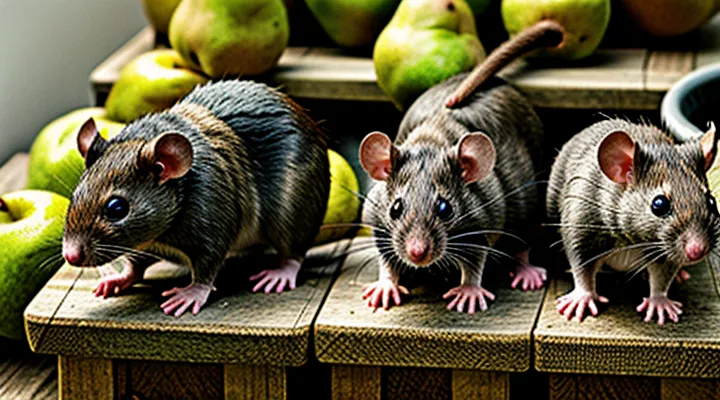
Nutritional Profile of Fresh Pears for Rats
Key Nutrients in Pears
Vitamins and Minerals
Fresh pears supply a range of micronutrients relevant to rodent health. The fruit contains vitamin C, vitamin K, small amounts of vitamin A and several B‑vitamins (thiamine, riboflavin, niacin, folate). Minerals include potassium, copper, magnesium and trace iron. Dietary fiber, primarily pectin, contributes to gastrointestinal motility.
Rats require vitamin C only in minimal amounts because they synthesize it endogenously; supplemental intake does not provide additional benefit. Vitamin K supports blood coagulation, and the modest levels found in pears can complement dietary sources without risk of toxicity. B‑vitamins participate in energy metabolism; the quantities in a typical serving are well within safe limits for laboratory or pet rats. Potassium aids cellular function, and the amount present in a few slices aligns with the species’ electrolyte balance.
Potential concerns arise from the high natural sugar content and the fruit’s acidity. Excessive fructose may lead to weight gain or dental issues if offered repeatedly. The fiber load can cause soft stools or diarrhea when introduced abruptly. Unwashed skins may carry pesticide residues or microbial contaminants, which pose health hazards.
Guidelines for offering fresh pears to rats:
- Wash thoroughly; remove any blemished areas.
- Provide a bite‑sized piece (approximately 0.5 cm³) no more than twice per week.
- Observe stool consistency after the first exposure; discontinue if diarrhea occurs.
- Combine with a balanced pellet diet that meets all macro‑ and micronutrient requirements.
When administered sparingly and prepared safely, fresh pears can serve as an occasional source of vitamins and minerals without compromising rat health.
Fiber Content
Fresh pears contain a notable amount of dietary fiber, primarily soluble pectin and insoluble cellulose. A medium-sized pear (≈178 g) provides roughly 5.5 g of total fiber, of which about 3 g is soluble and 2.5 g is insoluble. This fiber contributes to bulk formation in the gastrointestinal tract and can moderate glucose absorption.
For laboratory or pet rats, the recommended daily fiber intake ranges from 5 % to 10 % of total diet mass. Incorporating a small slice of pear—approximately 10 % of the animal’s daily food weight—delivers 0.3 g of fiber, fitting comfortably within the target range without risking gastrointestinal upset.
Key considerations when offering fresh pears to rats:
- Quantity: limit to 5–10 % of total daily feed to avoid excess sugar and moisture.
- Preparation: remove seeds and core; seeds contain trace cyanogenic compounds that are toxic even in small amounts.
- Frequency: provide as an occasional supplement, not a staple, to maintain balanced nutrient ratios.
Overall, the fiber in fresh pears can support healthy bowel function in rats when administered in modest, controlled portions.
Water Content
Pears consist of approximately 84 % water by weight, a proportion that varies slightly with cultivar and ripeness. This high moisture level supplies readily absorbable fluid, with one medium fruit (≈178 g) delivering about 150 ml of water.
Rats require 5–10 ml of water per 100 g of body mass daily. A single fresh pear can satisfy the entire daily fluid requirement for a typical laboratory rat (≈250 g) and exceed it for larger individuals.
Implications for offering fresh pears to rats:
- Hydration: the fruit’s water content provides immediate fluid intake, reducing the need for separate water sources.
- Electrolyte balance: pears contain modest amounts of potassium and sodium, contributing to electrolyte homeostasis when consumed in moderation.
- Caloric load: the same fruit supplies roughly 100 kcal, representing a significant portion of a rat’s daily energy budget; overfeeding may lead to weight gain.
- Digestibility: the water-rich pulp facilitates gastrointestinal transit, lowering the risk of constipation.
Providing fresh pears as an occasional supplement can meet hydration needs, but portion control is essential to avoid excessive caloric intake. Regular monitoring of body weight and water consumption ensures that the fruit contributes positively to overall health.
Potential Benefits of Pears for Rats
Hydration and Digestion Support
Fresh pears provide a notable source of moisture, with roughly 84 % water by weight. This high water content can contribute to a rat’s daily fluid intake, especially when clean drinking water is scarce. The natural juices are readily absorbed, helping to maintain adequate hydration without overwhelming the kidneys.
The fruit’s soluble and insoluble fiber promotes gastrointestinal motility. Soluble fiber forms a gel that moderates nutrient absorption, while insoluble fibers add bulk, encouraging regular peristalsis. Together, they support a balanced gut environment and can reduce the risk of constipation in small rodents.
Rats tolerate the sugar present in pears, but excessive fructose may trigger osmotic diarrhea. The fruit’s acidity is low, minimizing irritation of the oral mucosa and stomach lining. Nevertheless, the skin contains pesticide residues; thorough washing or peeling eliminates this risk. Overfeeding can lead to caloric surplus and weight gain, counteracting the digestive benefits.
Guidelines for offering fresh pears to rats
- Wash thoroughly; peel if pesticide exposure is a concern.
- Cut into bite‑size cubes (no larger than 0.5 cm).
- Introduce gradually: start with one small piece per day, observe stool consistency.
- Limit total fruit intake to 5 % of the diet’s caloric content.
- Remove uneaten pieces after two hours to prevent spoilage.
When these precautions are observed, fresh pears serve as a hydrating, fiber‑rich supplement that can enhance a rat’s digestive health without compromising overall nutrition.
Antioxidant Properties
Fresh pears contain several bioactive compounds that act as antioxidants, including vitamin C, copper‑dependent enzymes, and phenolic substances such as flavonoids and phenolic acids. These agents neutralize reactive oxygen species, reduce oxidative stress, and protect cellular membranes from lipid peroxidation.
When rats ingest fresh pears, the antioxidant load can influence their physiological status. Studies on rodent diets show that:
- Vitamin C supplementation improves immune function and accelerates wound healing.
- Flavonoids modulate signaling pathways linked to inflammation and metabolic regulation.
- Phenolic acids contribute to hepatic detoxification processes.
Consequently, the antioxidant profile of pears offers measurable benefits for laboratory rats, supporting metabolic health and potentially extending the validity of experimental outcomes that rely on stable oxidative parameters.
Potential Risks and Considerations
Sugar Content and Diabetes Risk
Fresh pears contain approximately 10 g of total sugars per 100 g of edible flesh, composed mainly of fructose (≈5 g), glucose (≈2.5 g), and a small amount of sucrose. The sugar density is higher than that of standard laboratory rodent chow, which typically provides 3–4 g of carbohydrates per 100 g, most of which are complex starches rather than simple monosaccharides.
Rats metabolize simple sugars rapidly. After ingestion, fructose and glucose enter the portal circulation, prompting a prompt rise in blood glucose. The glycemic response of rats mirrors that of other mammals: a spike in plasma glucose followed by insulin secretion. Repeated exposure to high‑glycemic foods can blunt insulin sensitivity, especially in strains genetically predisposed to metabolic disorders.
Elevated sugar intake is a recognized factor in the development of diet‑induced diabetes in rodents. Chronic consumption of fructose‑rich foods accelerates hepatic lipogenesis, increases visceral adiposity, and impairs pancreatic beta‑cell function. Experimental models demonstrate that a diet containing more than 15 % simple sugars by weight can induce hyperglycemia and insulin resistance within weeks.
Practical guidance for offering fresh pears to rats:
- Limit portions to no more than 5 g per animal per day (≈0.5 % of daily caloric intake).
- Provide pears as an occasional supplement, not a staple.
- Monitor fasting blood glucose weekly when pears are included in the diet.
- Prefer low‑sugar varieties (e.g., Bosc) if frequent supplementation is desired.
Controlled inclusion of fresh pears is feasible, but the high simple‑sugar content warrants careful portion control and regular metabolic monitoring to prevent diabetes‑related complications.
Choking Hazards
Rats can consume fresh pears, but the fruit presents specific choking risks that require careful preparation. Pear flesh contains a soft texture but also includes skin, core, and seeds that can become obstructive if ingested whole.
- Cut the pear into cubes no larger than 0.5 cm (approximately the size of a typical rat’s bite).
- Remove the skin if it is thick or waxed, as it may be difficult for a rat to chew thoroughly.
- Discard the core and seeds; seeds contain hard pits that can block the trachea or esophagus.
- Offer only a few pieces at a time and observe the rat’s chewing behavior.
If a rat struggles to swallow or exhibits silent coughing, gagging, or rapid breathing, intervene immediately. Prompt removal of the offending piece and, if necessary, veterinary assistance can prevent fatal airway blockage. Regularly limiting pear portions to a modest supplement—no more than 5 % of the daily diet—reduces the likelihood of accidental ingestion of hazardous fragments.
Pesticide Residues
Rats may eat fresh pears only if the fruit is free of pesticide residues that can cause toxicity. Residues persist on the skin and can be absorbed through the gastrointestinal tract, leading to organ damage, neurotoxicity, or reproductive disturbances in rodents.
Key factors influencing risk:
- Type of pesticide – organophosphates, carbamates, and neonicotinoids have low LD₅₀ values for rats; pyrethroids are less acutely toxic but can accumulate.
- Residue level – concentrations above the maximum residue limit (MRL) set for human consumption are usually hazardous for small mammals.
- Exposure frequency – repeated ingestion of contaminated pears increases cumulative dose, even when each serving contains sub‑lethal amounts.
- Fruit handling – washing with water removes only a portion of surface residues; peeling eliminates most, but also discards valuable nutrients.
Laboratory analyses show that untreated pears contain negligible pesticide traces, whereas conventionally grown fruit often exceeds MRLs for at least one active ingredient. To ensure safety for rats, provide only organically produced or thoroughly washed/peeled pears, and verify residue data when available.
How to Safely Offer Pears to Your Rat
Portion Control
Rats may enjoy fresh pear as an occasional treat, but the quantity must be limited to prevent digestive upset and excess sugar intake. A single bite‑size piece—approximately one to two centimeters of flesh—provides flavor without overwhelming the animal’s small stomach.
- Offer no more than one small piece per rat per week.
- Remove the core and seeds; they contain trace amounts of cyanogenic compounds.
- Wash the fruit thoroughly to eliminate pesticide residues.
- Observe the rat for signs of diarrhea or reduced appetite after the first feeding.
Portion control ensures that the pear’s natural sugars do not displace essential nutrients found in a balanced rodent diet. By adhering to a strict serving size, caretakers can safely incorporate fresh pear into enrichment routines while maintaining overall health.
Preparation Guidelines
Washing and Peeling
Feeding rats fresh pears requires proper preparation to remove contaminants and reduce choking hazards.
Washing the fruit eliminates pesticide residues, soil particles, and microbial load. Use running water and a soft brush; avoid soaking for extended periods, which can promote bacterial growth. Rinse each pear thoroughly until water runs clear.
Peeling removes the skin, which is tougher for rodents to chew and may contain higher concentrations of pesticide residues. If the skin is thin and the pear is organic, leaving it on is acceptable, but monitor the rat’s ability to ingest it without difficulty.
Preparation steps:
- Rinse under cool running water.
- Scrub surface gently with a vegetable brush.
- Pat dry with a clean cloth.
- Peel with a small paring knife or vegetable peeler, removing only the outer layer.
- Cut into bite‑size pieces, no larger than a quarter inch.
Offer the pieces in a clean dish, remove any uneaten portions after a few hours to prevent spoilage.
Removing Seeds and Core
Rats may consume fresh pear flesh, but the seed and core present specific hazards. Pear seeds contain amygdalin, a compound that can release cyanide when metabolized. The hard core can cause choking or intestinal blockage. Removing both elements eliminates these risks and makes the fruit safe for rodent consumption.
Effective preparation includes:
- Slice the pear lengthwise and discard the central column.
- Use a small knife or peeler to extract all seeds.
- Cut the remaining flesh into bite‑size pieces appropriate for the animal’s size.
- Rinse the pieces briefly to remove any residual pulp that might contain trace seed fragments.
After processing, offer the fruit in moderation; excessive sugar can disrupt a rat’s digestive balance. Store unused portions in a sealed container in the refrigerator for no more than 24 hours to prevent spoilage.
Alternatives to Pears for Rat Treats
Other Safe Fruits
Rats tolerate a range of fresh fruits; pears are acceptable when washed, cored, and offered in small pieces. Additional fruit options provide similar nutritional benefits without compromising health.
- Apples: core and remove seeds; serve a few bite‑size cubes.
- Blueberries: rinse thoroughly; a handful per week suffices.
- Strawberries: hull and slice; limit to two small pieces daily.
- Bananas: peel and cut thinly; restrict to one slice every other day.
- Kiwi: peel and dice; offer no more than two small cubes per serving.
- Mango: remove skin and pit; provide a single cube a few times weekly.
- Melon (cantaloupe, honeydew): deseed and cube; a few pieces twice a week are safe.
All fruits should be introduced gradually, monitored for digestive upset, and presented without added sugars or preservatives. Seeds, pits, and large quantities can cause gastrointestinal blockage or excessive sugar intake, so they must be excluded. Regular feeding of these fruits complements a balanced rodent diet that primarily consists of high‑quality pellets, fresh vegetables, and limited protein sources.
Vegetables
Rats can safely eat fresh pears when the fruit is presented alongside a balanced diet that includes vegetables. Pears provide sugar, fiber, and vitamin C, but they lack the essential nutrients found in leafy greens, root crops, and cruciferous vegetables that support rodent health.
Key considerations for incorporating pears and vegetables into a rat’s diet:
- Offer pears in small, bite‑size pieces to prevent choking.
- Remove seeds and core, as they contain trace cyanogenic compounds.
- Pair pears with vegetables such as kale, carrots, or broccoli to supply calcium, vitamin A, and B‑complex vitamins.
- Limit fruit to no more than 10 % of total intake; the majority should be high‑fiber, low‑sugar vegetables.
Regular monitoring of weight and stool consistency will indicate whether the combination of fresh fruit and vegetables is well tolerated. Adjust portions if rats show signs of digestive upset or excessive weight gain.
Commercial Rat Treats
Rats can safely consume fresh pears, but their regular diet often relies on commercially produced treats designed for nutrition, palatability, and convenience.
Commercial rat treats typically contain a blend of grains, seeds, dried fruits, and protein sources such as soy or insect meal. Formulations are balanced to provide essential amino acids, calcium‑phosphorus ratios, and moderate fat levels. Many products incorporate vitamins A, D, and E, as well as trace minerals that support bone health and immune function.
Fresh pears contribute natural sugars, dietary fiber, and vitamin C, yet they lack the comprehensive nutrient profile of a formulated treat. Pear flesh supplies soluble fiber that aids digestion, while the skin offers additional antioxidants. The sugar content of a single pear slice can exceed that of a standard treat portion, which may affect weight management if offered excessively.
Safety considerations differ between the two options. Commercial treats are processed to eliminate pathogens and often contain preservatives that extend shelf life; however, some additives (e.g., artificial colors, high levels of sodium) may be unsuitable for sensitive individuals. Fresh pears must be washed thoroughly to remove pesticide residues and sliced to prevent choking on larger pieces.
Guidelines for integrating fresh pears with commercial treats:
- Offer pear slices no larger than ½ cm thick.
- Limit fresh fruit to 1–2 small pieces per week.
- Use treats as the primary source of daily calories; treat fruit as supplemental enrichment.
- Monitor weight and coat condition to adjust portions accordingly.
Balancing a diet of high‑quality commercial treats with occasional fresh pear slices provides nutritional completeness while satisfying the animal’s natural foraging instincts.