
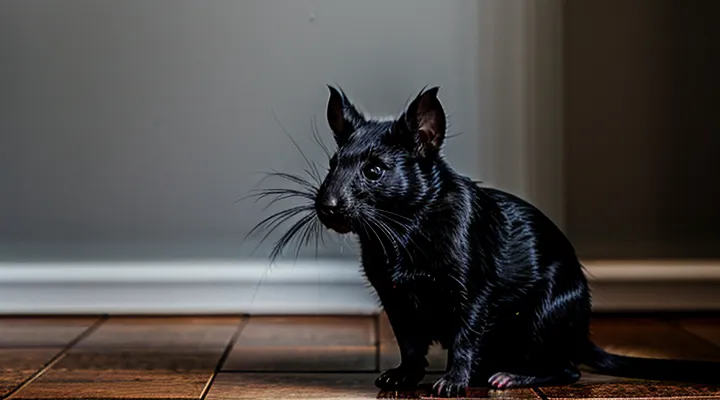
Physical Characteristics
Coat and Coloration
Hair Type and Texture
The black domestic rat possesses a short, dense coat that covers the entire body. Hair strands are fine to medium in diameter, providing a sleek appearance while maintaining structural integrity. The coat’s texture is uniformly smooth, lacking the wiry or coarse qualities observed in some other rodent breeds.
- Length: approximately 5–7 mm on the back, slightly shorter on the belly and extremities.
- Density: high follicle count per square centimeter, resulting in a compact layer that resists matting.
- Coloration: melanin-rich pigment produces a uniform black hue; occasional lighter patches may appear on the ventral side due to reduced pigment expression.
- Shedding: moderate; the dense coat sheds in small, regular increments rather than large seasonal molts.
- Grooming: self‑grooming behavior efficiently maintains coat condition; supplemental brushing reduces loose hair accumulation.
The texture contributes to thermoregulation by retaining heat while allowing adequate airflow. The fine hair structure minimizes drag in confined environments, supporting the species’ agility and social interactions.
Common Markings
Black domestic rats display a distinct set of markings that aid identification and breed selection. The most frequently observed patterns include:
- Uniformly dark pelage covering the entire body, with a glossy sheen.
- A lighter, often pinkish, nose and inner ear pinnae contrasting the dark fur.
- Dark, rounded eyes surrounded by a thin ring of lighter skin.
- A short, hairless tail that appears black or deep brown throughout its length.
- Small, pointed whiskers of a pale color, typically white or light gray.
These markings are consistent across healthy individuals and serve as reliable visual cues for distinguishing the species from other rodent varieties.
Size and Weight
Average Dimensions
The black domestic rat typically measures between 20 and 25 cm (8–10 in) in body length, not including the tail. Tail length ranges from 15 to 20 cm (6–8 in), often proportionally shorter than the body. Adult weight averages 300–500 g (10.5–17.5 oz), with males generally heavier than females. Body mass and length can vary according to age, diet, and genetic line, but most mature individuals fall within these parameters.
Sexual Dimorphism
The black domestic rat exhibits pronounced sexual dimorphism, evident in size, cranial structure, and coat characteristics. Males typically surpass females in body mass, averaging 300–350 g compared to 250–300 g for females. This mass difference correlates with a broader skull and more robust mandibular musculature in males, facilitating stronger bite forces.
Females display a slightly lighter, more streamlined build, which enhances agility during nesting activities. Coat coloration remains uniformly black across sexes, yet females often present a finer, less glossy pelage, whereas males possess a coarser, shinier coat that reflects hormonal influences on hair shaft development.
Reproductive anatomy further distinguishes the sexes. Males possess a prominent scrotal sac and enlarged testes, detectable through palpation, while females exhibit a distinct vulvar opening and develop mammary glands during gestation. These anatomical variations support divergent roles in breeding colonies and influence behavior patterns such as territorial marking and parental care.
Anatomy
Tail Peculiarities
The tail of a black domestic rat exhibits distinct structural and functional traits that set it apart from other coat colors. Typically measuring 15–20 cm, the tail length corresponds to the body length, providing balance during rapid locomotion and climbing. The vertebral column within the tail contains 30–38 caudal vertebrae, each fused with a small bony plate that enhances flexibility while maintaining sufficient rigidity for support.
Fur on the tail is sparse and short, allowing the underlying skin to remain visible. In black-coated individuals, the tail skin often displays a dark pigmentation that matches the overall coat, though occasional lighter patches may appear near the base. The tail’s surface is equipped with a dense network of sensory whisker follicles, enabling precise detection of environmental changes and aiding navigation in confined spaces.
Vascularization is pronounced, with a well-developed network of capillaries that assist in thermoregulation. Heat exchange occurs through the tail’s thin skin, allowing the animal to dissipate excess body heat efficiently. Conversely, the tail can conserve warmth by constricting peripheral blood flow during colder conditions.
Health indicators are readily observable on the tail. Smooth, supple skin with a uniform color suggests good circulation and hydration, while lesions, crusting, or discoloration may signal infections, parasites, or circulatory issues. Regular inspection of the tail’s condition is essential for early detection of potential health problems.
The tail also serves as a storage site for fat reserves in some cases, though this is less pronounced in black domestic rats compared to larger rodent species. Fat deposits appear as subtle bulges along the dorsal aspect, providing an energy buffer during periods of limited food availability.
Ear and Eye Features
The black domestic rat possesses compact, rounded ears that lie close to the skull. The pinna measures approximately 1.5–2 cm in length, covered by dense, glossy fur matching the body’s dark coat. Cartilaginous support provides flexibility while protecting the inner ear canal from debris. Auditory sensitivity is high; frequencies between 8 kHz and 30 kHz are detected with peak acuity around 15 kHz, facilitating communication and predator awareness.
Eye morphology features large, forward‑facing globes with a dark, reflective tapetum that enhances low‑light vision. The cornea is relatively flat, contributing to a wide field of view exceeding 200°. Pupil diameter adjusts rapidly, ranging from 0.5 mm in bright conditions to 3 mm in dim environments. Retinal composition includes a high density of rod cells, optimizing sensitivity to motion and contrast. The iris displays a dark brown to black pigmentation, reducing glare and supporting nocturnal activity.
Dental Structure
The black domestic rat possesses a highly specialized dentition adapted for gnawing and processing a varied diet. Its incisors are ever‑growing, covered with enamel only on the anterior surface, creating a self‑sharpening edge as the softer dentin wears away on the posterior side. Continuous eruption is maintained by the periodontal ligament, which applies constant tension to keep the teeth protruding.
Molars and premolars are brachydont, with multiple cusps arranged in a triangular pattern that facilitates grinding of seeds, fruits, and protein‑rich foods. The enamel on these cheek teeth is uniform, providing durability against wear. Occlusion is precise: the upper and lower molar rows interlock, creating a shearing action that maximizes efficiency during mastication.
Key aspects of the rat’s dental anatomy include:
- Incisor growth rate: approximately 0.1 mm per day, requiring regular wear.
- Root structure: open apices allow for perpetual elongation.
- Dental formula: 1/1 incisors, 0/0 canines, 0/0 premolars, 3/3 molars (total 16 teeth).
- Enamel distribution: enamel restricted to the front of incisors, full coverage on molars.
- Periodontal adaptation: robust ligamentous support to sustain constant eruption.
These features collectively enable the black pet rat to maintain dental health through natural gnawing behavior, while also influencing dietary requirements and environmental enrichment.
Behavioral Traits
Social Dynamics
Group Structure
The black domestic rat forms stable colonies that revolve around a clear social hierarchy. Within each group, individuals occupy positions that determine access to resources, mating opportunities, and shelter.
Colonies typically consist of 5–20 rats. A dominant male and one or more dominant females lead the group, while subordinate adults and juveniles fill lower ranks. The composition reflects a balance between breeding individuals and helpers that assist in nest maintenance and pup care.
Hierarchy is established through a series of aggressive and affiliative interactions. Dominant rats display higher frequency of scent marking, louder vocalizations, and more frequent grooming of subordinates. Subordinate members exhibit reduced aggression and defer to dominant cues during feeding and nesting.
Reproductive structure follows a polygynous pattern. Dominant females produce the majority of offspring, while subordinate females may experience delayed or suppressed estrus. Males compete for access to dominant females, with the strongest securing the most copulations.
Territorial organization divides the colony’s range into overlapping zones. Core areas contain nests and food stores, guarded by dominant individuals. Peripheral zones serve as foraging pathways for all members, allowing subordinate rats to exploit resources without direct confrontation.
Key characteristics of the group structure:
- Colony size: 5–20 individuals
- Dominance hierarchy: one or two dominant males, multiple dominant females
- Reproductive pattern: polygynous, with dominant females producing most litters
- Territorial zones: core (nest) and peripheral (foraging) areas
- Social behaviors: scent marking, vocalizations, grooming to reinforce rank
These elements combine to create a cohesive social unit that maximizes survival and reproductive success in the black domestic rat.
Communication Methods
The black‑fur domestic rat communicates through a combination of acoustic signals, tactile cues, and chemical messages that convey social status, territorial boundaries, and emotional states.
- Vocalizations – Short squeaks and chirps occur at audible frequencies and signal excitement or alarm; longer, low‑frequency sounds accompany grooming or mating rituals.
- Ultrasonic calls – Frequencies above 20 kHz are emitted during close‑range interactions, providing discreet information about hierarchy and reproductive readiness.
- Body posture – Tail elevation, ear position, and body tension indicate aggression, submission, or curiosity; a flattened posture typically reflects fear.
- Whisker movements – Rapid whisker sweeps detect nearby obstacles and serve as a visual cue for conspecifics during exploration.
- Scent marking – Glandular secretions deposited on objects create a chemical trail that identifies individuals and delineates territory.
- Contact grooming – Mutual grooming reinforces social bonds and transmits pheromonal signals that reduce stress among group members.
These communication channels operate simultaneously, allowing the species to maintain complex social structures within household environments.
Activity Patterns
Nocturnal Habits
The black domestic rat is primarily active after dusk, aligning its physiological rhythms with low‑light conditions.
During nighttime, the animal exhibits heightened locomotor activity, with movement peaks occurring roughly one hour after sunset and again before sunrise. Vision relies on rod‑dominated retinas, enabling efficient navigation in dim environments, while the olfactory system compensates for reduced visual cues.
Feeding behavior shifts to the dark period. Rats consume the majority of their daily caloric intake between 20:00 and 02:00, selecting protein‑rich pellets, fresh vegetables, and occasional insects. Water consumption increases concurrently, supporting metabolic demands of nocturnal foraging.
Social interactions intensify after dark. Individuals engage in grooming, vocalizations, and brief territorial displays, establishing hierarchies without disrupting rest cycles of less dominant group members. These activities reinforce colony cohesion and reduce stress.
Caretakers should structure husbandry to accommodate nocturnal patterns:
- Provide enrichment objects that are safe for use in low‑light conditions.
- Schedule feeding and cleaning tasks during early evening to avoid interrupting peak activity.
- Maintain a consistent light‑dark schedule (approximately 12 h light/12 h dark) to preserve circadian stability.
Understanding these nocturnal habits enhances welfare management and promotes natural behavior expression in black pet rats.
Play Behavior
Black domestic rats exhibit a distinct repertoire of play that reflects their social nature and cognitive capacity. Play serves as a mechanism for skill acquisition, social hierarchy negotiation, and stress mitigation.
Typical play activities include:
- Pursuit of conspecifics or moving objects
- Gentle wrestling with peers, characterized by rolling and biting without intent to harm
- Object manipulation such as climbing, tunneling, and chewing of safe materials
- Vocalizations like chirps and short squeaks that accompany interactive bouts
Play emerges shortly after weaning, intensifies during the juvenile period, and gradually diminishes as individuals reach adulthood. Peak frequency occurs between three and six weeks of age, after which the behavior stabilizes at a lower baseline.
Environmental conditions strongly influence play expression. Adequate space, complex cage architecture, and regular introduction of novel objects increase engagement. Group housing promotes reciprocal interactions, while isolation suppresses play frequency and may lead to stereotypic behaviors.
Caretakers should monitor play for indicators of welfare: sustained, varied activity, balanced participation among cage mates, and absence of aggression. Reduced play, excessive solitary behavior, or persistent one‑sided dominance may signal health issues or inadequate enrichment. Providing tunnels, chewable items, and opportunities for controlled social interaction supports natural play patterns and overall well‑being.
Intelligence and Trainability
Problem-Solving Abilities
The black domestic rat exhibits sophisticated problem‑solving capacity that rivals many laboratory species. When confronted with a novel obstacle, individuals rapidly assess the situation, identify relevant cues, and experiment with multiple strategies. Success rates increase after a few attempts, indicating short‑term learning and adaptive flexibility.
Key aspects of this cognitive competence include:
- Tool use – rats manipulate objects such as levers or sticks to retrieve hidden food, demonstrating foresight and manipulation skills.
- Maze navigation – they memorize complex pathways, adjust routes after blockages, and exploit shortcuts without external prompting.
- Social learning – observers acquire solutions by watching conspecifics, reducing trial numbers and accelerating task acquisition.
Neurobiological studies link these behaviors to heightened activity in the prefrontal cortex and hippocampus, regions associated with executive function and spatial memory. The combination of exploratory drive, tactile acuity, and rapid associative learning underpins the species’ effective problem‑solving performance.
Response to Training
Black domestic rats with dark coats demonstrate rapid acquisition of conditioned responses when training protocols are applied consistently. Their sensory acuity allows them to detect subtle cues from handlers, resulting in precise execution of tasks after brief exposure.
Key aspects of their training response include:
- Operant conditioning – Rats quickly associate a lever press or nose poke with food rewards, achieving stable performance within 5‑10 sessions.
- Habituation – Repeated exposure to handling and equipment reduces stress indicators, such as elevated heart rate and vocalizations, within 2‑3 days.
- Discrimination learning – When presented with multiple stimuli, they differentiate between rewarded and non‑rewarded cues with accuracy rates exceeding 80 % after 15 trials.
Effective training strategies rely on:
- Short, frequent sessions – 5‑10 minute intervals maintain attention without inducing fatigue.
- Positive reinforcement – Immediate delivery of a palatable treat solidifies the association between behavior and outcome.
- Consistent cue presentation – Uniform auditory or visual signals prevent ambiguity and accelerate learning curves.
Observational data indicate that well‑trained black rats exhibit reduced latency to respond, lower cortisol levels during tasks, and increased willingness to engage in novel problem‑solving challenges. These metrics confirm that the species’ cognitive flexibility translates into reliable performance when training regimens are structured around reinforcement, consistency, and minimal stress.
Health and Care Considerations
Common Health Issues
Respiratory Conditions
The black domestic rat, a melanistic variety of the common pet rat, is prone to several respiratory ailments that can compromise health and welfare.
Common respiratory conditions include:
- Mycoplasma pulmonis infection – chronic upper airway disease characterized by nasal discharge, sneezing, and labored breathing.
- Bacterial pneumonia – acute inflammation caused by pathogens such as Streptococcus spp. or Klebsiella, presenting with rapid breathing, fever, and lethargy.
- Aspiration of foreign material – accidental inhalation of bedding or food particles leading to coughing and localized inflammation.
- Allergic rhinitis – hypersensitivity to environmental allergens resulting in persistent nasal congestion and sneezing.
Diagnostic approach:
- Physical examination focusing on respiratory rate, effort, and audible sounds.
- Radiographic imaging to identify lung infiltrates or sinus involvement.
- Nasal swab or bronchoalveolar lavage for microbiological culture and polymerase chain reaction testing.
Therapeutic measures:
- Targeted antibiotics for bacterial infections, selected based on culture sensitivity.
- Macrolide antibiotics (e.g., azithromycin) for Mycoplasma control.
- Anti-inflammatory agents such as corticosteroids for severe airway swelling, administered under veterinary supervision.
- Supportive care including humidified environments, forced-air warming, and nutritional supplementation.
Preventive strategies:
- Maintain low-dust bedding and clean cage conditions to reduce irritant exposure.
- Implement routine health monitoring to detect early signs of respiratory distress.
- Provide balanced nutrition to support immune function.
- Limit contact with other rodents exhibiting respiratory symptoms to prevent transmission.
Tumors and Cancers
The black domestic rat frequently develops neoplastic diseases that serve as valuable models for human oncology. Tumor incidence in this strain exceeds that of lighter‑coated counterparts, reflecting both genetic background and susceptibility to environmental carcinogens.
Key tumor types observed include:
- Mammary adenocarcinomas, often hormone‑responsive and prone to metastasis.
- Hepatocellular carcinomas, linked to dietary aflatoxin exposure.
- Pulmonary adenomas and carcinomas, arising spontaneously or after inhalation of toxic aerosols.
- Lymphomas, predominantly of B‑cell origin, with high prevalence in aged individuals.
- Soft‑tissue sarcomas, especially fibrosarcomas at injection sites.
Diagnostic protocols combine palpation, imaging (ultrasound, MRI), and histopathological examination. Immunohistochemistry distinguishes tumor subtypes by marker expression such as cytokeratin for epithelial cancers or CD45 for lymphoid malignancies. Molecular analyses reveal mutations in oncogenes (e.g., KRAS, MYC) and tumor‑suppressor genes (e.g., TP53) that parallel human disease pathways.
Environmental factors influencing tumor development encompass:
- Chronic exposure to nitrosamines in feed.
- Housing conditions that promote stress‑induced immunosuppression.
- Chemical mutagens applied in experimental protocols.
Research applications rely on the reproducibility of tumor onset, the similarity of tumor biology to human cancers, and the availability of genetic tools for manipulation. Studies using black domestic rats have advanced understanding of tumor angiogenesis, metastatic mechanisms, and therapeutic response, informing translational strategies for clinical oncology.
Dietary Requirements
Nutritional Needs
The black domestic rat requires a diet that supplies sufficient energy, protein, fats, vitamins, and minerals to support rapid growth, high activity levels, and reproductive health.
- Energy: 300–350 kcal per 100 g of body weight daily; primarily from carbohydrates such as grains, cereals, and cooked vegetables.
- Protein: 18–20 % of total caloric intake; sources include soy, whey, and lean animal meat to maintain lean tissue and fur quality.
- Fats: 5–8 % of calories; essential fatty acids from fish oil or flaxseed improve skin condition and immune function.
- Vitamins: Adequate levels of A, D, E, K, and B-complex vitamins are critical; supplementation may be necessary when commercial feeds lack specific nutrients.
- Minerals: Calcium and phosphorus should be balanced at a 1.2:1 ratio; trace elements such as zinc, copper, and selenium support enzymatic processes and reproduction.
Water must be continuously available, clean, and free of contaminants. Food should be offered in small, frequent portions to match the rat’s natural foraging behavior and to prevent obesity. Dietary adjustments are required during gestation, lactation, and aging, with increased protein and calcium for pregnant or nursing females and reduced caloric density for senior individuals. Regular monitoring of body condition and feed intake ensures nutritional adequacy and early detection of deficiencies.
Feeding Guidelines
The black pet rat requires a balanced diet that supports rapid growth, high activity levels, and robust immune function. Commercially formulated rodent pellets should form the foundation of daily intake; select a product with at least 18 % protein and 4–5 % fat. Offer a measured portion—approximately 1 % of the animal’s body weight in grams—divided into two feedings to maintain steady energy levels.
Supplement the pellet base with fresh foods that provide vitamins, minerals, and fiber. Acceptable items include:
- Cooked lean chicken or boiled egg, 5–10 g per serving, no more than twice weekly.
- Fresh vegetables such as broccoli, carrot, spinach, and kale, chopped into bite‑size pieces; limit total vegetable weight to 2–3 g per gram of body weight.
- Small quantities of fruit (apple, banana, berries) as occasional treats; keep portions under 5 % of total daily calories.
Water must be available at all times in a clean, stainless‑steel bottle. Replace the supply daily and sanitize the bottle weekly to prevent bacterial growth.
Avoid foods that can cause digestive distress or toxicity. Exclude raw potatoes, onions, citrus peels, chocolate, caffeine, and high‑fat snacks. Do not provide large seeds or nuts, which pose choking hazards and excess fat.
Monitor body condition weekly. Adjust portion sizes if the rat shows signs of weight gain or loss, ensuring that the diet remains nutritionally complete and appropriate for its age, activity level, and health status.
Environmental Enrichment
Cage Setup
A suitable cage for black domestic rats must provide ample space, secure construction, and environmental enrichment. The enclosure should be at least 24 inches wide, 18 inches deep, and 18 inches tall for a pair; larger dimensions are required for groups. Wire cages need a stainless‑steel mesh of ¼‑inch spacing to prevent escape while allowing ventilation. Acrylic or glass tanks are acceptable if they incorporate a solid top and a sturdy lock.
Key components of an effective setup include:
- Bedding: Absorbent, dust‑free material such as paper‑based or aspen shavings; replace weekly to maintain hygiene.
- Hideouts: Closed structures made from untreated wood or plastic, providing darkness for rest and stress reduction.
- Climbing elements: Solid wood branches, ladders, or PVC tubes to encourage natural arboreal behavior.
- Exercise wheel: Solid‑surface wheel of at least 11 cm diameter; avoid wire wheels that can cause foot injuries.
- Feeding stations: Heavy ceramic or stainless‑steel bowls to prevent tipping; position away from water sources to keep food dry.
- Water dispenser: Sipper bottle with a stainless‑steel nozzle; check daily for leaks and clean regularly.
Temperature should remain between 18 °C and 24 °C, with no direct drafts. Lighting cycles of 12 hours light and 12 hours dark mimic natural rhythms. Clean the cage thoroughly once a month, removing all bedding, sanitizing surfaces with a mild, rodent‑safe disinfectant, and replacing with fresh material.
Overall, a well‑designed enclosure combines sufficient space, robust barriers, and enrichment items that support the physical and psychological health of black domestic rats.
Toy and Interaction Ideas
The dark‑furred pet rat exhibits strong curiosity, agile climbing ability, and a preference for tactile stimulation. These traits dictate the selection of enrichment objects that encourage natural behaviors while supporting dental health.
- Chew blocks made from untreated wood or hemp provide durable gnawing surfaces and reduce overgrowth of incisors.
- Rope ladders and woven tunnels replicate vertical pathways, allowing the animal to practice climbing and navigation.
- Puzzle feeders with removable compartments challenge problem‑solving skills and prolong feeding sessions.
- Small plastic balls with textured interiors offer safe rolling play without risk of ingestion.
- Natural materials such as crinkled paper, dried grasses, and untreated bark supply versatile textures for exploration.
Interaction strategies should complement the chosen toys and reinforce bonding. Hand‑taming sessions of five to ten minutes, performed daily, enhance trust and facilitate gentle handling. Structured play periods that alternate between active climbing and quiet foraging encourage balanced activity levels. Introducing novel objects on a rotating schedule prevents habituation and sustains engagement. Monitoring the rat’s response to each enrichment item allows timely adjustments, ensuring optimal welfare and mental stimulation.