
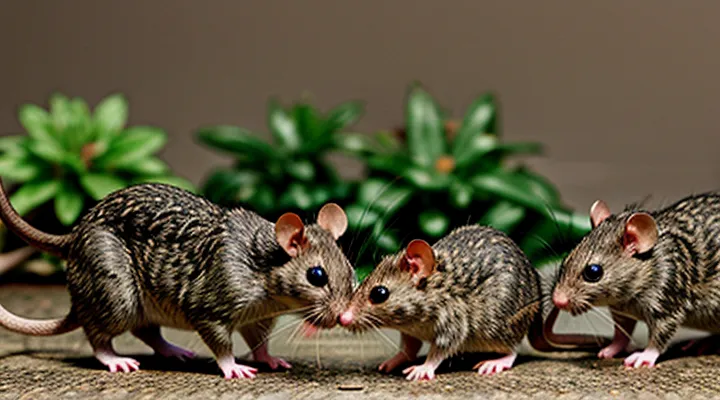
Understanding Small Rodents
The Distinction Between Rats and Mice
General Characteristics
Small rodents classified as rats and mice display measurable morphological traits that enable precise size comparison.
Rats typically possess a head‑body length of 15–20 cm, a tail nearly equal to or slightly shorter than the body, and a body mass ranging from 150 g to 300 g. Fur coloration varies among species, commonly brown to black on the dorsal side and lighter ventrally. Ears are proportionally small relative to head size, and whisker length exceeds 5 cm.
Mice exhibit a head‑body length of 6–10 cm, a tail often longer than the body, and a body mass of 10 g to 30 g. Dorsal fur appears gray, brown, or white, with a pale belly. Ears are relatively large compared with head dimensions, and whiskers measure 2–3 cm.
Key comparative points:
- Body length: rats exceed mice by roughly double.
- Tail proportion: rat tail ≈ body length; mouse tail > body length.
- Weight: rat mass is 5–10 times greater.
- Ear size: mouse ears larger relative to head; rat ears smaller.
- Whisker length: rat whiskers longer than mouse whiskers.
These measurements provide a clear framework for distinguishing the two groups based on physical dimensions.
Behavioral Differences
Small rats and house mice differ markedly in activity patterns. Rats tend to explore larger territories during the night, employing deliberate movements and frequent pauses to assess surroundings. Mice exhibit rapid, erratic bursts of motion, covering shorter distances but revisiting the same area repeatedly within minutes. These contrasting locomotor strategies reflect distinct predator avoidance tactics: rats rely on spatial awareness, while mice depend on speed and unpredictability.
Social interaction also varies with size. Rats establish hierarchical groups, using grooming and sustained physical contact to reinforce rank. Mice form loose aggregations, communicating primarily through ultrasonic vocalizations and brief tactile contacts. Dominance in rat colonies is expressed through clear postural displays, whereas mouse dominance is inferred from frequent brief chases and scent marking.
Key behavioral distinctions:
- Foraging: rats forage over larger zones, selecting food items based on size and nutritional content; mice concentrate on abundant, small seeds and insects.
- Reproductive behavior: rat pairs maintain longer copulatory bouts and engage in mutual grooming; mice display brief mating encounters followed by immediate separation.
- Nest construction: rats build extensive burrows with multiple chambers; mice create compact nests using shredded material, often within existing structures.
Size as a Key Identifier
Adult Size Comparison
Body Length
Body length is the primary metric for comparing the size of small rodents such as rats and mice. Measurements are taken from the tip of the nose to the base of the tail, excluding the tail itself, which varies independently.
Typical body lengths for common species are:
- House mouse (Mus musculus): 6–10 cm
- Deer mouse (Peromyscus maniculatus): 7–11 cm
- Norway rat (Rattus norvegicus): 15–25 cm
- Roof rat (Rattus rattus): 12–20 cm
These ranges reflect genetic variation, age, and sex. Juvenile individuals fall below the lower limits, while fully mature adults approach the upper bounds. Body length correlates with overall mass; a larger body length generally indicates greater body weight, which influences habitat use and predator avoidance.
Standard measurement procedures involve:
- Capturing the animal with minimal stress.
- Placing it on a flat surface.
- Aligning the head and body in a straight line.
- Using a calibrated ruler or digital caliper to record the distance from nose tip to the cloacal vent.
Consistent methodology ensures reliable data for comparative studies. Differences in body length between species provide a clear indicator of relative size, supporting ecological and physiological analyses.
Tail Length
Tail length distinguishes small rodents and serves as a reliable metric for species identification. In most mouse species, the tail equals or exceeds head‑body length, often ranging from 6 cm to 10 cm in adults. In contrast, small rat species display proportionally shorter tails, typically 7 cm to 12 cm, representing 70‑90 % of the combined head‑body measurement.
- House mouse (Mus musculus): tail 7–9 cm; proportion ≈100 % of body length.
- Deer mouse (Peromyscus maniculatus): tail 8–10 cm; proportion 95‑105 %.
- Brown rat (Rattus norvegicus): tail 9–12 cm; proportion 70‑85 %.
- Black rat (Rattus rattus): tail 10–13 cm; proportion 80‑90 %.
Tail measurements correlate with habitat adaptation: longer tails enhance balance for arboreal movement, while relatively shorter tails suit terrestrial locomotion. Accurate tail length data support precise morphological comparisons across small rodent taxa.
Weight
Weight provides a precise metric for evaluating the size contrast between common laboratory and pet rodents. Measured in grams, it reflects both skeletal dimensions and body composition, allowing direct comparison across species.
Typical adult weights are:
- House mouse (Mus musculus): 18–25 g
- Deer mouse (Peromyscus maniculatus): 12–20 g
- Fancy mouse (various pet strains): 20–30 g
- Brown rat (Rattus norvegicus): 250–350 g
- Fancy rat (Rattus norvegicus, pet varieties): 300–500 g
- Dwarf rat (Rattus norvegicus, selectively bred): 150–250 g
Weight ranges overlap only at the extremes: the smallest dwarf rats approach the upper limit of large mice, while the heaviest mice remain well below the lightest rats.
Sexual dimorphism, age, and nutritional status shift individual values within these bands. Males generally exceed females by 10–20 %, and juveniles weigh 30–50 % less than mature adults. Laboratory strains exhibit tighter distributions due to controlled breeding, whereas pet populations show broader variability.
Overall, weight data confirm that mice occupy the lower end of the size spectrum, while rats dominate the higher end, with selective breeding producing intermediate forms that narrow the gap but do not eliminate it.
Neonatal and Juvenile Stages
Appearance of Young Mice
Young mice display a soft, downy pelage that gradually transitions to the coarser fur of adults. At birth, the coat is usually a pale gray or pinkish hue, lacking the defined coloration seen in mature individuals. The hair density is high, providing insulation for the neonatal body temperature regulation.
The body length of a newborn mouse ranges from 1.5 cm to 2 cm, with a proportionally long tail that measures approximately 1 cm at this stage. Eyes remain sealed, and ear pinnae are folded against the head, rendering them indistinguishable from the surrounding fur. Reflexive movements are limited to twitching of the forelimbs and spontaneous wriggling.
Key developmental milestones related to appearance include:
- Day 3–4: Eyes begin to open; fur coloration becomes more pronounced, often showing the adult’s dorsal stripe or spotting pattern.
- Day 7–10: Ear pinnae start to unfold, exposing the external auditory canal; tail length increases to about 1.5 cm.
- Day 14: Juvenile coat resembles adult fur in texture and pigmentation; body length reaches 3 cm to 3.5 cm, and tail length approaches 2 cm.
Compared with young rats of similar age, mice retain a smaller overall size, a proportionally longer tail relative to body length, and a finer, less pigmented coat. These distinctions are essential for accurate visual identification when assessing size variations among small rodent species.
Appearance of Young Rats
Young rats, often referred to as pups, display distinct physical characteristics that differentiate them from adult specimens and from similarly sized mice. Their bodies measure approximately 5–7 cm in length, excluding the tail, and weigh between 10 and 20 g at birth. The proportion of head to body is larger than in mature individuals, resulting in a rounded appearance and a relatively short, stubby tail that is proportionally shorter than that of adult rats.
Key aspects of their appearance include:
- Fur: Soft, sparse hair covering the dorsal surface, typically pink‑white or light gray; ventral fur is finer and lighter.
- Eyes: Closed or partially open at birth; eyelids open within 10–14 days, revealing dark, fully developed eyes.
- Ears: Small, flat, and covered with fine hair; ear cartilage hardens as the animal matures.
- Limbs: Short, with undeveloped pads; toes are webbed at birth and separate as growth proceeds.
- Tail: Shorter relative to body length, covered with sparse, fine hairs; later elongates and gains the characteristic rat texture.
These traits provide a reliable basis for distinguishing juvenile rats from adult rats and from juvenile mice, supporting precise size comparisons across small rodent species.
Common Misconceptions and Overlaps
When a Small Rat Resembles a Large Mouse
Growth Stages
Small rodents such as rats and mice undergo distinct growth phases that determine their observable size at each point of development. Measurements recorded under controlled laboratory conditions provide reliable benchmarks for comparative analysis.
- Neonatal stage (0–7 days) – Body length 2–3 cm; weight 0.5–1 g. Eyes remain closed; fur appears sparse.
- Early juvenile stage (8–21 days) – Length 4–6 cm; weight 2–5 g. Fur becomes denser, coloration stabilizes.
- Late juvenile stage (22–35 days) – Length 7–9 cm; weight 6–12 g. Musculature develops, tail length approaches adult proportion.
- Subadult stage (36–55 days) – Length 10–12 cm; weight 13–20 g for mice, 20–30 g for rats. Sexual dimorphism emerges, with males slightly larger.
- Adult stage (56 days onward) – Mice reach 13–15 cm and 20–30 g; rats attain 20–25 cm and 250–300 g. Size variation stabilizes, with minor fluctuations linked to strain and nutrition.
Growth trajectories differ between species. Mice achieve adult dimensions within two months, whereas rats require approximately three months to reach comparable maturity. The rate of weight gain accelerates sharply during the late juvenile phase, reflecting rapid muscle and skeletal development. Environmental factors such as temperature, diet quality, and cage density can modify these benchmarks, but the outlined ranges remain the standard reference for size comparison among small rodent populations.
Species Variations
Small rodent species exhibit distinct size ranges that influence visual assessment and ecological interactions. The most common taxa include:
- House mouse (Mus musculus) – head‑to‑body length 70–95 mm; tail length 70–100 mm; adult weight 15–30 g.
- White‑footed mouse (Peromyscus leucopus) – head‑to‑body length 80–100 mm; tail length 70–90 mm; weight 18–30 g.
- Deer mouse (Peromyscus maniculatus) – head‑to‑body length 75–100 mm; tail length 70–95 mm; weight 12–30 g.
- Brown rat (Rattus norvegicus) – head‑to‑body length 150–200 mm; tail length 150–210 mm; weight 250–500 g.
- Black rat (Rattus rattus) – head‑to‑body length 140–180 mm; tail length 180–210 mm; weight 150–250 g.
- Asian house rat (Rattus tanezumi) – head‑to‑body length 130–170 mm; tail length 150–190 mm; weight 140–250 g.
Variation extends to pelage coloration, ear size, and hind‑foot length, each trait correlating with habitat adaptation. For example, desert‑dwelling species such as Gerbillus exhibit reduced tail length relative to body size, whereas arboreal mice display elongated tails for balance. Morphometric data collected from museum specimens and field surveys confirm that intra‑specific size differences rarely exceed 10 % of the species average, while inter‑specific contrasts can reach a factor of three or more. This quantitative disparity underpins accurate identification and informs population monitoring across urban, agricultural, and wild environments.
Habitat and Environmental Factors
Small rats and mice occupy diverse habitats, ranging from agricultural fields to urban sewers. Each environment supplies distinct resources that shape body dimensions. In grain‑rich farmlands, abundant food promotes larger individuals, while cramped underground tunnels favor compact forms that navigate narrow passages efficiently.
Environmental variables directly affect external measurements:
- Temperature gradients: colder climates trigger increased fur density and slightly larger body mass to conserve heat; warmer regions select for slimmer silhouettes that dissipate heat more effectively.
- Moisture levels: humid areas support higher prey availability, allowing growth beyond the baseline size of conspecifics in arid zones.
- Predation pressure: open habitats with numerous predators encourage reduced stature and faster escape responses, whereas sheltered niches reduce the need for extreme size reduction.
- Human disturbance: construction sites and waste disposal zones provide novel shelter and food sources, often resulting in atypical size patterns compared to natural settings.
Population studies reveal that size differences among these rodents correlate with habitat quality. Dense vegetation offers cover and foraging opportunities, leading to moderate body lengths, while barren concrete surfaces limit shelter options, producing stunted growth. Seasonal shifts further modulate dimensions; spring influxes of seed and insect prey allow temporary size increases, whereas winter scarcity reverses the trend.
Overall, the interplay of location, climate, resource abundance, and anthropogenic factors determines the observable size range of small rats and mice, providing a clear link between habitat characteristics and physical appearance.
Visual Cues Beyond Size
Head and Ear Proportions
Rat Head Shape
The head of a small rat differs markedly from that of a mouse in several measurable dimensions. Rat crania are broader, with a flatter dorsal profile and a more robust zygomatic arch. The nasal bone extends further forward, producing a longer, less pointed snout. In contrast, mouse skulls are narrower, the dorsal surface more rounded, and the snout comparatively short and tapered.
Key morphological markers include:
- Skull width: Rat skulls exceed mouse skulls by 20‑30 % at the widest point behind the orbits.
- Muzzle length: Rat muzzles measure roughly 8‑10 mm in adult specimens, while mouse muzzles range from 5‑7 mm.
- Ear attachment: Rat ears attach lower on the skull, creating a broader cranial base; mouse ears attach higher, near the temporal region.
- Dental arcade: Rat incisors are larger, set at a more pronounced angle, whereas mouse incisors are smaller and more vertically oriented.
These dimensions correlate with overall body size, reinforcing the visual distinction between the two groups when assessing size variation among small rodents.
Mouse Head Shape
The mouse head is proportionally small, triangular, and streamlined to accommodate its diminutive body size. The skull exhibits a high degree of cranial vault curvature, resulting in a rounded dorsal profile. The snout is short, with a gentle taper that ends in a pointed nose, facilitating precise whisker placement for tactile navigation.
Key morphological characteristics include:
- Cranial width: approximately 8–10 mm in adult laboratory mice, markedly narrower than that of comparable rodent species.
- Orbital placement: laterally positioned eyes set on a shallow socket, providing a wide field of vision while maintaining a compact facial structure.
- Dentition: a single pair of continuously growing incisors that protrude from a relatively short maxillary arch, supporting gnawing behavior without adding bulk to the head.
- Auditory bullae: relatively small, contributing to the overall reduction in head mass and enhancing agility.
These features collectively produce a head shape optimized for maneuverability in tight spaces, efficient foraging, and rapid predator avoidance, distinguishing mice from larger rodents that possess broader, more robust cranial configurations.
Foot and Paw Size
Small rodents such as laboratory rats (Rattus norvegicus) and common house mice (Mus musculus) possess distinct foot and paw dimensions that reflect their locomotor strategies. The hind foot of an adult rat typically measures 12–15 mm in length and 8–10 mm in width, while the forepaw is slightly shorter, averaging 9–11 mm long and 6–8 mm wide. In contrast, an adult mouse exhibits a hind foot length of 7–9 mm and a width of 5–6 mm; its forepaw measures 5–7 mm in length and 4–5 mm in width.
- Rats
- Hind foot: 12–15 mm (L) × 8–10 mm (W)
- Forepaw: 9–11 mm (L) × 6–8 mm (W)
- Mice – Hind foot: 7–9 mm (L) × 5–6 mm (W) – Forepaw: 5–7 mm (L) × 4–5 mm (W)
The larger surface area of rat paws provides increased stability on uneven terrain and supports higher body mass, while the smaller mouse paws afford greater maneuverability in confined spaces. Both species display dense plantar hair and keratinized pads that enhance traction; however, the ratio of pad area to overall foot size is higher in mice, compensating for their reduced dimensions. These anatomical differences are measurable with calipers and digital imaging, enabling precise comparative studies across rodent models.
Practical Implications of Identification
Pest Control Strategies
Small rodents such as rats and mice differ markedly in body length and weight, a factor that shapes the selection and effectiveness of control measures. Larger individuals can evade certain trap types, while the diminutive size of mice allows entry through narrower openings, demanding distinct preventative actions.
Effective management relies on a combination of physical barriers, mechanical devices, chemical agents, and environmental adjustments. The following tactics address the specific dimensions of each species:
- Exclusion: Install steel mesh or concrete lintels with apertures no larger than ¼ inch to block mouse ingress; use heavier gauge hardware cloth (½ inch) to deter larger rats.
- Trapping: Deploy snap traps sized to the target animal—smaller spring mechanisms for mice, robust models with larger trigger plates for rats. Position traps along established runways identified by gnaw marks.
- Baiting: Apply anticoagulant or bromethalin baits in tamper‑resistant stations. Formulations with lower grain size penetrate mouse‑sized holes, whereas larger pellets suit rat pathways.
- Sanitation: Remove food residues and water sources that attract both species. Store waste in sealed containers to reduce foraging opportunities.
- Habitat modification: Trim vegetation and clear debris within a 10‑foot perimeter of structures to eliminate shelter. Compact soil around foundations to limit burrowing.
- Biological control: Introduce predatory species (e.g., barn owls) where permissible; employ entomopathogenic fungi formulated for rodent hosts as an adjunct to conventional methods.
- Integrated Pest Management (IPM): Conduct regular inspections, document infestation levels, and adjust the mix of tactics based on observed size trends and population dynamics.
Implementing these measures in a coordinated program reduces the likelihood of reinfestation and aligns control efforts with the physical characteristics of the targeted rodents.
Ecological Impact
Small rodents exhibit a range of body lengths, from roughly 5 cm in dwarf mouse species to over 20 cm in larger rat varieties. This variation determines the spectrum of habitats they can exploit, influencing resource partitioning and community structure.
Smaller individuals access microhabitats such as leaf litter and narrow soil crevices, where larger counterparts cannot survive. Consequently, they consume distinct seed and insect assemblages, reducing competition and promoting biodiversity at the ground level.
Size differences affect predator–prey interactions. Predators with limited gape, such as certain snakes and small raptors, preferentially target the tiniest rodents, while larger carnivores capture the biggest individuals. This selective pressure shapes population age structures and drives evolutionary adaptations in both prey and predator species.
Rodent size also modulates disease transmission. Compact species maintain higher population densities, facilitating rapid pathogen spread within colonies. Larger rats, which travel greater distances, act as vectors linking separate ecosystems and introducing pathogens to new host populations.
Key ecological impacts of size diversity among small rats and mice:
- Habitat specialization and niche differentiation
- Altered predator feeding patterns and energy flow
- Variable competition intensity for food and shelter
- Distinct roles in pathogen dynamics and zoonotic risk
Overall, the spectrum of body sizes among these rodents underpins multiple ecological processes, from resource allocation to disease ecology, shaping the function and resilience of terrestrial ecosystems.