
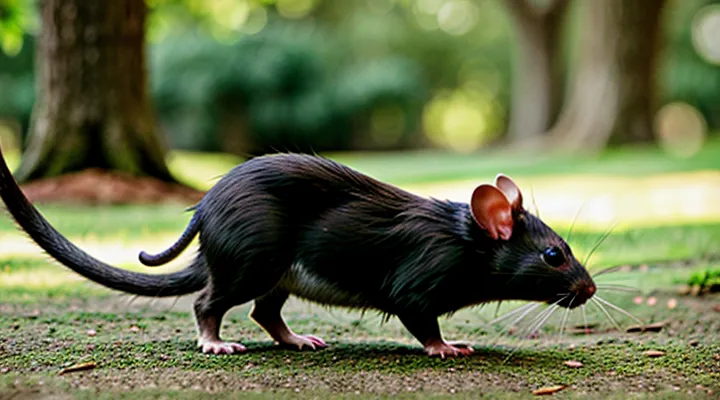
Understanding Rodents with Long Tails
Characteristics of Rat-Like Mammals
Physical Traits
Animals that resemble rats yet possess notably elongated tails share a distinct set of physical characteristics. Body length typically ranges from 15 cm to 30 cm, while tail length often exceeds body length by 20 % to 50 %. Fur is dense, coarse, and uniformly pigmented, providing insulation and camouflage across diverse habitats. Ears are proportionally large, mobile, and covered with a thin layer of hair that enhances auditory sensitivity.
Key morphological features include:
- Strong, continuously growing incisors with a chisel‑shaped edge, adapted for gnawing hard materials.
- Prominent, tactile whiskers (vibrissae) extending laterally from the snout, facilitating navigation in low‑visibility environments.
- A flexible vertebral column permitting agile climbing and swift maneuvering through narrow passages.
- Hind limbs slightly longer than forelimbs, supporting powerful leaping and rapid sprinting.
Skeletal structure reveals a lightweight skull with enlarged auditory bullae, contributing to acute hearing. The pelvis is broad, offering stability during rapid directional changes. Tail musculature is highly developed, enabling controlled prehension and balance when the animal ascends vertical surfaces. Skin pigmentation varies from gray‑brown to black, often matching the substrate of the animal’s native ecosystem.
Behavioral Similarities
Rodents possessing elongated tails display a consistent set of behavioral traits that differentiate them from short‑tailed counterparts.
Nocturnal foraging dominates daily cycles; individuals emerge at dusk to locate seeds, insects, and plant material. This activity aligns with heightened olfactory and tactile sensitivity, enabling efficient exploitation of low‑light environments.
Social organization centers on hierarchical colonies. Dominant members secure preferred nesting sites, while subordinates engage in cooperative brood care and communal grooming. Such interactions reduce parasite load and reinforce group cohesion.
Exploratory behavior manifests through extensive tunnel networks and vertical climbing. Species construct burrow systems that incorporate multiple chambers for food storage, waste disposal, and refuge. In arboreal contexts, long tails provide balance during ascent and descent, facilitating access to elevated food sources.
Problem‑solving abilities emerge in tasks requiring object manipulation. Individuals demonstrate dexterity in gnawing and chewing, allowing them to breach hard shells and access hidden resources.
Key behavioral parallels can be summarized:
- Night‑time activity patterns
- Structured social hierarchies with cooperative grooming
- Complex burrow or nest construction
- Arboreal navigation aided by tail balance
- Advanced gnawing and problem‑solving skills
These recurring traits underscore adaptive convergence among long‑tailed rodent species, reflecting evolutionary pressures that favor nocturnal, social, and resource‑efficient lifestyles.
Diverse Species Resembling Rats
Mouselike Rodents
Deer Mice
Deer mice (genus Peromyscus) belong to the family Cricetidae and are native to North America. They exhibit a slender body, large eyes, and a tail that often exceeds body length, a feature that aligns them with other rodent species possessing elongated tails.
Key characteristics include:
- Tail length typically 1.2 – 1.5 times the head‑body measurement, covered with sparse hair and a dark dorsal stripe.
- Fur coloration ranging from gray‑brown to reddish, providing camouflage in diverse habitats.
- Omnivorous diet comprising seeds, insects, and occasional fruit, supporting adaptability to seasonal resource fluctuations.
Habitat preferences span forest understories, grasslands, and rocky outcrops, where they construct shallow burrows or occupy existing crevices. Reproductive cycles peak in spring and summer, with litters of three to six offspring reaching independence within four weeks.
Ecologically, deer mice serve as prey for numerous predators, including owls, snakes, and carnivorous mammals, while also acting as vectors for hantavirus. Their morphological and behavioral traits illustrate convergent evolution with other long‑tailed rodents, offering insight into adaptive strategies employed by small mammals inhabiting similar ecological niches.
House Mice
House mouse (Mus musculus) belongs to the family Muridae and is one of the most widely distributed rodent species. It occupies urban, suburban, and rural environments worldwide, often coexisting with human settlements.
Physical characteristics include a head‑body length of 7–10 cm and a tail slightly longer than the body, typically 8–12 cm. Fur is short, grey‑brown on the dorsal side and lighter ventrally. Large, hairless ears and a pointed snout contribute to its agile movement.
Habitat and behavior:
- Primarily nocturnal, active during twilight hours.
- Omnivorous diet; consumes grains, seeds, insects, and human food waste.
- Reproductive cycle is rapid; females can produce several litters per year, each with 5–8 offspring.
- Highly adaptable; nests in walls, attics, and stored food containers.
Similarity to larger rodent relatives:
- Tail proportion resembles that of certain rat species, providing balance for climbing and rapid escape.
- Both groups exhibit keen sense of smell and whisker‑based tactile perception.
- Social structures are comparable, with hierarchies forming in dense populations.
Differences from typical rats:
- Body mass is markedly lower, averaging 20–30 g versus 200–300 g in common rats.
- Tail is slender and less robust, lacking the thick, scaly appearance of rat tails.
- Dental enamel shows subtle variation, reflecting distinct dietary preferences.
Overall, the house mouse exemplifies a small, long‑tailed rodent that shares many ecological and morphological traits with its larger counterparts while maintaining distinct size and physiological features.
Vole-Like Creatures
Meadow Voles
Meadow voles (Microtus pennsylvanicus) belong to the family Cricetidae and share several morphological traits with rodents that resemble rats and possess elongated tails. Their body length ranges from 10 to 15 cm, while the tail extends an additional 5 to 8 cm, providing a proportion comparable to the long‑tailed rat analogues discussed in related studies.
Key characteristics include:
- Dense, soft fur varying from brown to gray;
- Tail covered with fine hair, lacking the sparse, scaly appearance of true rats;
- Large, rounded ears positioned low on the skull;
- Strong incisors adapted for gnawing vegetation and roots.
Habitat preference centers on moist grasslands, meadows, and agricultural fields where dense cover offers protection from predators. Diet consists primarily of grasses, herbs, and seeds, supplemented by occasional insects. Reproductive cycles are rapid, with multiple litters produced each spring and summer, contributing to high population turnover. These attributes position meadow voles as a distinct yet comparable group within the broader category of long‑tailed, rat‑like rodents.
Bank Voles
The bank vole (Myodes glareolus) is a small rodent native to Europe and parts of western Asia. Adult individuals weigh 20–35 g and measure 10–12 cm in body length, with a tail approximately half the body length. Dense brownish fur covers the dorsal surface, while the ventral side is paler.
Preferred habitats include deciduous and mixed forests, shrublands, and riparian zones. The species constructs shallow burrows beneath leaf litter and dense vegetation, often near waterbanks. Diet consists primarily of seeds, grasses, buds, and occasional insects, reflecting an opportunistic foraging strategy.
Compared with common rats, the bank vole exhibits a proportionally shorter tail, finer body build, and a more herbivorous diet. Activity peaks at dusk and dawn, with a tendency toward solitary movement rather than the social colonies typical of larger murids.
Key characteristics:
- Tail length: 40–50 % of body length
- Fur coloration: brown dorsal, gray‑white ventral
- Habitat: forest floor, riverbanks, hedgerows
- Diet: seeds, grasses, buds, insects
- Social structure: primarily solitary, occasional pair bonding during breeding season
These traits place the bank vole among the group of long‑tailed rodents that resemble rats in size and ecological niche, while maintaining distinct morphological and behavioral attributes.
Other Notable Examples
Shrews
Shrews belong to the order Eulipotyphla and the family Soricidae. They are among the smallest terrestrial mammals, with body lengths ranging from 3 cm to 10 cm. The tail frequently extends to 60–80 % of total length, giving the appearance of a miniature, elongated‑tailed rodent.
Key morphological traits include:
- Dense, velvety fur covering the entire body
- Pointed snout equipped with a high density of sensory vibrissae
- Sharp, red‑pigmented teeth adapted for piercing exoskeletons
- Tail covered in short hairs, often tapering to a fine tip
Shrews inhabit a broad geographic range, occurring across North America, Europe, Asia, and parts of Africa. They occupy diverse ecosystems such as forests, grasslands, wetlands, and alpine meadows, though many species prefer moist microhabitats that sustain abundant invertebrate prey.
Metabolic rates in shrews exceed those of most mammals, necessitating constant foraging. Their diet consists chiefly of insects, arachnids, and earthworms; some species supplement with seeds or small vertebrates. High activity levels are supported by a rapid heartbeat and elevated respiration, enabling swift capture of prey.
Comparative assessment with long‑tailed rats reveals superficial similarity in size and tail proportion. Critical distinctions include dental structure—shrews possess a single set of sharp incisors, whereas rats have continuously growing gnawing incisors—and reproductive strategy, with shrews producing multiple litters of few offspring each year. Ecologically, shrews function as primary insect predators, while rats often exploit a broader omnivorous niche.
Overall, shrews exemplify small, elongated‑tailed mammals that share certain phenotypic traits with rat‑like species yet maintain unique anatomical and ecological characteristics.
Opossums
Opossums belong to the order Didelphimorphia and are the only marsupials native to North America. Their body size ranges from 20 cm to 50 cm, while the tail often exceeds the body length, reaching up to 45 cm. The tail is prehensile, allowing the animal to grasp branches and stabilize itself during arboreal locomotion, a feature that parallels the elongated, flexible tails of several rodent species.
Key traits that align opossums with rat‑like mammals featuring long tails include:
- Nocturnal activity – peak foraging occurs after dusk, similar to many nocturnal rodents.
- Omnivorous diet – consumption of fruits, insects, small vertebrates, and carrion, reflecting a broad trophic niche.
- Adaptable habitats – presence in forests, urban areas, and agricultural fields demonstrates ecological flexibility comparable to that of synanthropic rats.
- Tail morphology – a muscular, hair‑covered tail that functions as a fifth limb, enhancing balance and climbing ability.
Reproductive characteristics differ markedly: opossums give birth to underdeveloped young that complete development in a pouch, contrasting with the placental reproduction of rodents. Nevertheless, the combination of a long, functional tail, nocturnal habits, and opportunistic feeding places opossums among mammals that exhibit rat‑like morphology and behavior.
Bandicoots
Bandicoots are small, nocturnal marsupials native to Australia and New Guinea, distinguished by elongated, prehensile tails that exceed body length in several species. Their appearance—compact body, pointed snout, and long, hair‑covered tail—creates a superficial resemblance to certain rodent species, positioning them among mammals frequently compared to rats with extended tails.
Taxonomically, bandicoots belong to the order Peramelemorphia, comprising families such as Peramelidae and Thylacomyidae. Distribution ranges from arid interior zones to coastal rainforests, reflecting adaptability to diverse habitats while maintaining a consistent morphological pattern.
Key physical traits include a flexible tail used for balance during rapid ground movement, robust hind limbs for digging, and a dentition pattern featuring sharp incisors and molars suited for omnivorous diets. These characteristics parallel rodent adaptations, yet bandicoots retain marsupial reproductive traits, such as a short gestation period and pouch development.
Ecologically, bandicoots function as soil engineers; their foraging behavior aerates the substrate, facilitating nutrient cycling and seed dispersal. Predation pressure from introduced species and habitat fragmentation has prompted conservation measures, emphasizing habitat protection and predator control.
Comparative analysis with other long‑tailed, rat‑like mammals—such as marsupial mice, certain gerbil species, and elongated shrews—highlights convergent evolution in tail morphology and nocturnal foraging strategies, while underscoring the distinct marsupial lineage of bandicoots.
Ecological Roles and Habitats
Diet and Foraging Strategies
Animals with elongated tails that resemble rodents exhibit diverse dietary habits adapted to their ecological niches. Their feeding patterns combine opportunistic scavenging with selective herbivory, allowing exploitation of both terrestrial and riparian resources.
Primary food categories include:
- Seeds, grains, and nuts harvested from grasslands and forest understories.
- Aquatic vegetation and algae accessed by species inhabiting wetlands.
- Invertebrates such as insects, larvae, and mollusks captured during nocturnal foraging.
- Fruit pulp and fallen berries providing seasonal carbohydrate spikes.
Foraging strategies reflect morphological and behavioral specializations. Species possessing prehensile tail segments employ the tail as a stabilizing organ while navigating dense foliage, enabling precise extraction of seeds from narrow crevices. Aquatic-adapted forms use their tails for balance on floating debris, facilitating access to submerged plant matter and small crustaceans. Nocturnal foragers rely on heightened olfactory sensitivity to locate hidden food sources, often storing excess provisions in concealed burrow chambers for later consumption.
Energy intake is regulated by seasonal availability. During spring, emphasis shifts toward protein‑rich invertebrates to support reproductive development. Summer diets favor abundant vegetative material, while autumn sees increased consumption of high‑fat seeds in preparation for winter scarcity. This flexible approach ensures sustained body condition across fluctuating environmental conditions.
Reproduction and Lifespan
Rodents that possess elongated tails exhibit reproductive strategies adapted to rapid population turnover. Females typically reach sexual maturity within 6–10 weeks, producing multiple litters per year. Litter sizes vary from 3 to 9 offspring, depending on species and environmental conditions. Gestation periods are short, ranging from 20 to 28 days, facilitating swift generational replacement.
Lifespan among these long‑tailed species is limited by predation pressure and metabolic rate. In the wild, average adult survival spans 6 to 12 months, with some individuals persisting up to 18 months under favorable conditions. Captive specimens may exceed 2 years, reflecting reduced stress and access to consistent nutrition.
Key reproductive and longevity parameters:
- Sexual maturity: 6–10 weeks
- Gestation: 20–28 days
- Litters per year: 3–5
- Litter size: 3–9 young
- Wild adult lifespan: 0.5–1.5 years
- Captive adult lifespan: up to 2 years
Predators and Survival Mechanisms
Long‑tailed rodent‑like species occupy diverse habitats, from temperate forests to arid scrublands. Their survival depends on a suite of anti‑predator strategies that reduce detection, deter attacks, and enable rapid escape.
Predators include:
- Owls, hawks, and other raptors that hunt from above, relying on acute vision and silent flight.
- Small to medium carnivorous mammals such as foxes, mustelids, and feral cats, which use scent and stealth to locate prey.
- Reptilian hunters, notably snakes, that employ ambush tactics and heat detection.
- Avian scavengers like crows and magpies that exploit carcasses and may opportunistically capture weakened individuals.
Survival mechanisms are organized around three functional categories:
- Sensory vigilance – highly developed whisker arrays detect air currents and ground vibrations; large, mobile ears capture low‑frequency sounds; nocturnal species possess elongated retinas for low‑light vision.
- Physical defenses – agile bodies enable rapid, erratic locomotion; elongated tails provide balance during sudden directional changes; dense fur offers limited protection against bites.
- Behavioral tactics – nocturnal activity reduces exposure to diurnal predators; burrowing creates concealed refuges; communal nesting increases alarm signal efficiency and dilutes individual risk.
Effective predator avoidance results from the integration of these traits, allowing long‑tailed, rat‑resembling mammals to persist across ecosystems despite intense predation pressure.
Differentiating from True Rats
Anatomical Distinctions
Animals that resemble rats yet possess markedly elongated tails exhibit several distinct anatomical features. Their vertebral column extends further posteriorly, adding up to three additional caudal vertebrae compared to typical murids. This extension contributes to increased tail length and enhanced flexibility.
Key skeletal and muscular distinctions include:
- Cervical vertebrae: enlarged transverse processes support stronger neck muscles, facilitating rapid head movements while foraging.
- Pelvic girdle: broadened ilia provide greater attachment area for hind‑limb musculature, improving locomotor stability on narrow branches.
- Tail musculature: presence of well‑developed caudal flexor and extensor groups enables precise tail manipulation for balance and signaling.
- Dental formula: retention of a single pair of large incisors with enamel only on the outer surface, differing from the dual‑layer enamel pattern of common rats.
- Auditory bullae: expanded sinus cavities enhance low‑frequency hearing, advantageous for detecting predators in dense underbrush.
These morphological adaptations differentiate long‑tailed, rat‑like mammals from their more compact relatives, reflecting evolutionary responses to arboreal habitats and extended tail utility.
Habitat Preferences
Long‑tailed rodent analogues occupy a range of environments that provide shelter, food, and moisture. Their distribution reflects adaptations to specific ecological conditions rather than random occurrence.
- Wetland margins: dense vegetation and shallow water support species such as the coypu and marsh rice rat, which rely on aquatic plants and soft soils for foraging and burrowing.
- Grassland and savanna edges: open ground with scattered shrubs offers the African giant pouched rat access to seeds and insects while allowing quick escape routes.
- Forest understory: leaf litter and fallen logs create humid microhabitats favored by the long‑tailed mouse and certain vole species, providing concealment from predators.
- Human‑altered landscapes: sewers, basements, and agricultural storage areas attract adaptable forms that exploit waste resources and benefit from reduced competition.
Habitat selection is driven by moisture availability, vegetation density, and substrate suitability for tunnel construction. Species with agile, elongated tails often prefer habitats where vertical balance aids navigation through tall grasses or dense reeds. Food abundance, particularly seeds, insects, and aquatic plants, correlates with the presence of these mammals. Predation pressure influences the preference for complex cover, while temperature extremes are mitigated by burrow depth and insulation provided by surrounding material.
Overall, the ecological niches of long‑tailed rat‑like mammals demonstrate a consistent pattern: preference for environments that combine readily accessible nourishment with structural features that facilitate shelter construction and rapid movement.
Genetic Markers
Genetic markers provide a reliable means of distinguishing long‑tailed rodent‑like species that share morphological traits with rats. Mitochondrial DNA segments, such as cytochrome b and the control region, exhibit species‑specific polymorphisms useful for phylogenetic placement. Nuclear markers, including microsatellites and single‑nucleotide polymorphisms (SNPs) within the growth‑factor receptor gene (FGFR1), enable fine‑scale population analysis and detection of hybridization events.
Key marker categories include:
- Mitochondrial cytochrome b: high mutation rate, effective for resolving recent divergences.
- Control‑region D‑loop: variable length repeats, suitable for intra‑species differentiation.
- Nuclear microsatellites: highly polymorphic loci, valuable for assessing genetic diversity.
- SNP panels targeting FGFR1, MC1R, and KCNJ5: informative for adaptive traits linked to tail length and locomotor performance.
Application of these markers in field studies supports accurate taxonomic identification, informs conservation strategies, and clarifies evolutionary relationships among long‑tailed, rat‑resembling mammals.
Coexistence and Human Interaction
Pest Management Considerations
Long‑tailed rodent‑like pests require integrated strategies that address habitat, food sources, and population dynamics. Effective control begins with habitat modification: eliminating dense vegetation, sealing entry points, and reducing debris that provide shelter. Sanitation measures that limit access to grain, waste, and compost diminish attractants and lower reproductive rates.
Chemical interventions should target species‑specific vulnerabilities while minimizing non‑target impacts. Bait formulations containing anticoagulants or neurotoxic agents prove effective when placed in secured stations that prevent accidental exposure. Rotation of active ingredients mitigates resistance development and preserves efficacy.
Key considerations for sustainable management:
- Regular monitoring to detect early infestations and assess treatment outcomes.
- Use of physical barriers such as mesh screens and metal flashing to prevent ingress.
- Implementation of biological controls, including predators or pathogens adapted to the target species.
- Documentation of all actions to comply with regulatory requirements and facilitate adaptive planning.
Coordinated application of these measures reduces population pressure, protects infrastructure, and supports long‑term pest suppression.
Conservation Status of Similar Species
Long‑tailed rodent-like mammals occupy a range of habitats across Africa, Asia and the Americas. Their survival prospects vary according to habitat loss, hunting pressure and disease transmission. The International Union for Conservation of Nature (IUCN) provides the most widely accepted assessments of extinction risk.
- African giant pouched rat (Cricetomys gambianus): classified as «Least Concern», yet localized declines noted where agricultural expansion reduces savanna margins.
- Marsh rice rat (Oryzomys palustris): listed as «Near Threatened», with population fragmentation linked to wetland drainage in the southeastern United States.
- Long‑tailed chinchilla rat (Abrocoma longipilis): recorded as «Vulnerable», reflecting limited distribution in the Andean cloud forests and ongoing deforestation.
- Lesser bamboo rat (Cannomys badius): designated «Data Deficient», indicating insufficient information to evaluate trends despite known exploitation for food in parts of Southeast Asia.
- Small‑toothed rat (Tachyoryctes rex): evaluated as «Endangered», primarily due to mining activities that degrade its high‑altitude grassland environment.
Conservation measures focus on habitat protection, legal safeguards and community‑based monitoring. Protected‑area networks in East Africa and the Andes have demonstrated effectiveness in stabilizing populations of several species. Enforcement of hunting regulations in Southeast Asia contributes to reduced pressure on the bamboo rat. Continued field surveys are essential to resolve data gaps, particularly for taxa currently classified as «Data Deficient».
Research and Study of Rodents
Research on rodents that exhibit elongated tails and rat‑like morphology concentrates on taxonomy, ecological niches, and physiological adaptations. Comparative analyses identify species that share morphological traits such as a slender body, whisker‑rich snout, and tail length exceeding body length. These characteristics facilitate arboreal locomotion, balance, and thermoregulation.
Key findings include:
- Species within the family Muridae, notably certain Rattus subspecies, display tail lengths up to 1.5 times body size.
- Members of the family Cricetidae, such as the long‑tailed vole (Microtus longicaudus), possess tails proportionally similar to rat analogues.
- Southeast Asian bamboo rats (Rhizomys spp.) exhibit robust bodies and tails extending beyond 80 % of total length, supporting burrowing and climbing activities.
Laboratory investigations assess reproductive cycles, dietary preferences, and disease vectors. Genetic sequencing reveals conserved mitochondrial markers that delineate phylogenetic relationships among long‑tailed rodents. Field studies document habitat overlap with agricultural zones, indicating potential impact on crop storage and zoonotic transmission.
Future research priorities emphasize:
- Longitudinal monitoring of population dynamics in fragmented landscapes.
- Development of non‑invasive tracking technologies for nocturnal species.
- Integration of ecological modeling to predict range shifts under climate variability.
The synthesis of morphological, genetic, and ecological data advances understanding of how tail morphology influences survival strategies across diverse rodent taxa.