
Introduction à la comparaison morphologique
Caractéristiques générales des rongeurs
Rodents belong to the order Rodentia, the most diverse mammalian group, with over 2,800 species occupying nearly every continent. Their defining feature is a pair of continuously growing incisors in each jaw, equipped with enamel on the front edge and softer dentin behind, creating a self‑sharpening cutting edge. This dental arrangement enables persistent gnawing of wood, seeds, and other hard materials.
Body plans are generally compact, with a short tail, agile limbs, and a skull adapted for strong jaw muscles. Sensory systems emphasize tactile and olfactory cues; many species possess whiskers (vibrissae) that convey detailed environmental information. Reproductive strategies favor rapid maturation and large litters, allowing populations to expand quickly under favorable conditions.
Size variation spans from the diminutive African pygmy mouse (≈5 g) to the capybara, the world’s largest rodent (≈50 kg). Species that approach or exceed rat size share the same dental and skeletal traits while displaying adaptations for specific niches: beavers develop broad, flattened incisors for felling trees and constructing dams; porcupines possess reinforced skulls and quill‑covered coats for defense; capybaras exhibit semi‑aquatic limbs and social structures suited to wetland habitats. These larger, rat‑like mammals illustrate the morphological flexibility of rodent dentition and locomotion across diverse ecological contexts.
Distinction entre les rats et les espèces plus grandes
Rats belong to the genus Rattus within the family Muridae, whereas larger rodent-like mammals such as capybaras, beavers, and nutria are classified in different families (Caviidae, Castoridae, Myocastoridae). This taxonomic separation reflects evolutionary divergence that influences anatomy, ecology, and life history.
Key distinctions include:
- Body mass: Typical adult rats weigh 200–500 g; capybaras exceed 50 kg, beavers reach 30 kg, nutria average 5–9 kg.
- Skull structure: Rats possess a relatively short, narrow skull with a pronounced rostrum; larger species show expanded cranial cavities, stronger jaw muscles, and broader molar surfaces adapted for tougher vegetation.
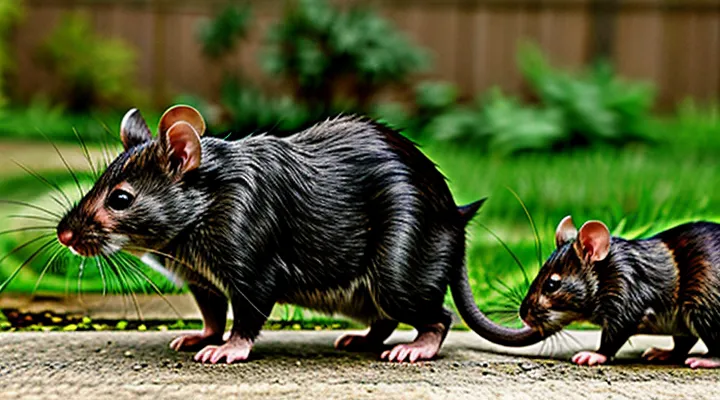
- Tail morphology: Rat tails are thin, hairless, and prehensile; beavers have flattened, scaly tails used for swimming and communication, while capybaras have short, hair‑covered tails.
- Habitat specialization: Rats thrive in urban and semi‑wild environments, displaying high adaptability; larger relatives occupy specific aquatic or semi‑aquatic niches, constructing lodges or burrows near water sources.
- Reproductive strategy: Rats produce large litters (6–12 offspring) with short gestation periods (~21 days); capybaras and beavers have smaller litters (1–4) and longer gestation (150–160 days for capybara, 115 days for beaver), resulting in slower population turnover.
These differences arise from divergent selective pressures, resulting in distinct morphological and ecological profiles despite superficial resemblance.
Espèces de rongeurs de grande taille
Capybara
Habitat et écologie
Large rodent‑like mammals occupy a range of ecosystems, from tropical floodplains to temperate woodlands. Capybaras (Hydrochoerus hydrochaeris) thrive in riverbanks, marshes and seasonally flooded grasslands where abundant aquatic vegetation provides both shelter and food. Beavers (Castor spp.) dominate temperate streams and lakes, constructing dams that create ponds, alter water flow and increase habitat complexity for numerous aquatic species. Nutrias (Myocastor coypus) prefer slow‑moving freshwater bodies, dense reed beds and cultivated wetlands, exploiting both plant matter and agricultural crops. Porcupines (Hystrix spp. and Erethizon spp.) inhabit forested hillsides, shrublands and desert margins, relying on woody vegetation and underground burrows for protection.
All four groups exhibit semi‑aquatic or burrowing adaptations that shape their ecological roles. Capybaras form large, cohesive colonies that forage on grasses and aquatic plants, contributing to nutrient cycling by depositing feces in water. Beavers engineer landscapes; their timber harvesting and dam building generate wetlands that support amphibians, fish and waterfowl, while also moderating flood peaks. Nutrias feed on a variety of herbaceous plants, sometimes causing vegetation loss in agricultural zones, yet their foraging creates open patches that benefit certain bird species. Porcupines consume bark, roots and fruits, influencing forest regeneration patterns and providing prey for large predators.
Reproductive strategies align with habitat stability. Capybaras produce litters of 3‑8 young after a gestation of 150 days, timing births with the rainy season to ensure water availability. Beavers have a single offspring per year, with both parents defending the lodge and teaching dam‑building skills. Nutrias yield 2‑4 pups after a 130‑day gestation, often in concealed burrows near water. Porcupines give birth to 1‑2 young after 120‑130 days, raising them within protected burrows until they can fend for themselves.
Key ecological functions of these larger rat‑like species include:
- Habitat modification: dam construction, vegetation trampling, burrow excavation.
- Food web integration: herbivory, seed dispersal, prey for carnivores.
- Nutrient redistribution: deposition of organic material in aquatic and terrestrial environments.
Understanding their habitat preferences and ecological impacts informs management practices, particularly where human activities intersect with their ranges.
Comportement social
Larger rodent‑like mammals exhibit diverse social structures that reflect adaptations to habitat, diet, and predation pressure. Species such as the capybara (Hydrochoerus hydrochaeris), the North American beaver (Castor canadensis), and the African crested porcupine (Hystrix cristata) form stable groups, maintain defined hierarchies, and employ a range of vocal, chemical, and tactile signals to coordinate activities.
- Capybaras live in colonies of 10–20 individuals, with a dominant male and several subordinate males. Group cohesion is reinforced by mutual grooming and synchronized vocalizations that signal alarm or feeding opportunities.
- Beavers construct family units consisting of a breeding pair and their offspring. Pair bonds are long‑term; offspring remain for several seasons, assisting in dam maintenance and territory defense. Scent marking on cheeks and tail slaps convey individual identity and reproductive status.
- Crested porcupines organize into small family groups, typically a monogamous pair with their young. Contact calls and pheromone‑laden urine trails facilitate coordination during foraging and nest building.
Social interactions among these species serve multiple functions: resource defense, predator avoidance, and offspring rearing. Hierarchical ranks influence access to food caches, burrow sites, and mating opportunities. Communication channels are species‑specific but share common mechanisms—auditory alarms, olfactory markers, and physical contact—that enable rapid information transfer within the group.
Castor
Adaptation à l’environnement aquatique
Capybaras, nutria, beavers, and Australian water rats represent the largest rodent‑like mammals that have transitioned to aquatic habitats. Their survival depends on a suite of morphological, physiological, and behavioral modifications.
Morphological changes include:
- Webbed or partially webbed hind feet that increase thrust during swimming.
- Flattened, paddle‑shaped tails that serve as rudders and provide additional propulsion in beavers.
- Dense, water‑repellent fur containing oil glands, which preserves insulation and reduces drag.
- Streamlined body contours that lower resistance in water.
Physiological adaptations consist of:
- Enlarged lungs and a high concentration of myoglobin in muscle tissue, allowing extended submersion times.
- Renal mechanisms that concentrate urine, minimizing water loss while maintaining electrolyte balance.
- Enhanced peripheral circulation that directs blood flow to vital organs during dives.
Behavioral strategies involve:
- Construction of burrow entrances near water sources, facilitating quick access to aquatic environments.
- Seasonal migration to deeper water during dry periods to maintain hydration and thermoregulation.
- Social foraging in groups, which improves detection of predators and efficient exploitation of submerged vegetation.
Collectively, these traits enable larger rat‑like species to exploit niches ranging from slow‑moving rivers to marshes and floodplain lakes, where they fulfill roles as herbivores, ecosystem engineers, and prey for larger carnivores.
Rôle dans l’écosystème
Larger rodent‑like mammals, such as capybaras, nutria, beavers, and giant African pouched rats, exert distinct influences on their environments.
Capybaras graze aquatic vegetation, controlling plant overgrowth and maintaining open water channels. Their feces deposit nutrients that stimulate primary productivity in wetlands.
Nutria feed on reeds and marsh plants, accelerating the turnover of vegetation and creating gaps that allow colonization by diverse flora. Burrowing activity aerates soils, improves drainage, and facilitates seed infiltration.
Beavers cut down trees and construct dams, reshaping hydrological regimes. Flooded areas generated by dams support amphibian breeding, increase habitat heterogeneity, and store carbon in accumulated sediments.
Giant African pouched rats consume a wide range of seeds and fruits, dispersing viable propagules across savanna and forest margins. Their foraging reduces seed predation pressure on other species and enhances plant community resilience.
Collectively, these animals:
- Modify vegetation structure through selective feeding
- Alter soil composition and moisture via burrowing
- Engineer water systems that create new habitats
- Serve as prey for carnivores, linking trophic levels
- Influence disease dynamics by hosting parasites that affect wildlife and, occasionally, humans
Their ecological functions sustain biodiversity, promote nutrient cycling, and shape landscape processes across varied ecosystems.
Coypu (Ragondin)
Répartition géographique
The geographic distribution of large rat‑like mammals varies across continents, reflecting habitat preferences and historical dispersal events.
Capybara (Hydrochoerus hydrochaeris) inhabits the lowland wetlands, riverbanks, and floodplains of South America, ranging from Panama through Brazil, Bolivia, Paraguay, and northern Argentina. Populations concentrate in the Amazon Basin, the Pantanal, and the Paraná River system.
Beaver (Castor spp.) occupies temperate zones of the Northern Hemisphere. The North American beaver (C. canadensis) extends from Alaska across Canada to the United States, reaching the northern Rockies and the Great Lakes region. The Eurasian beaver (C. fiber) occupies much of Europe and western Siberia, from the British Isles through Scandinavia, the Baltic states, and into the Volga basin.
Nutria (Myocastor coypus) originates from South America, primarily in Argentina, Uruguay, Brazil, and Paraguay. Introduced populations now thrive in the southern United States, the Gulf Coast, parts of Europe (France, Spain, Italy), and East Asia (China, Japan).
Southern African porcupine (Hystrix africaeaustralis) is native to sub‑Saharan Africa, spanning from Senegal and Sudan southward to Namibia, Botswana, and South Africa. It favors savanna, scrub, and semi‑arid environments.
Giant pouched rat (Cricetomys gambianus) occurs across West and Central Africa, from Senegal and Guinea eastward through Nigeria, Cameroon, the Democratic Republic of Congo, and into Uganda. It prefers forest edges, agricultural fields, and savanna mosaics.
Australian water rat (Hydromys chrysogaster) is restricted to eastern Australia, found from Queensland through New South Wales to Victoria, inhabiting streams, lakes, and coastal wetlands.
These species demonstrate a pattern of concentration in temperate and tropical freshwater systems, with some groups extending into arid or semi‑arid zones where suitable shelter and food sources exist. Their ranges have been altered by human activity, notably through intentional introductions (nutria) and habitat modification (beaver re‑colonization).
Impact sur l’environnement
Large rodent-like species, such as capybaras, nutria, beavers, and porcupines, modify ecosystems through foraging, burrowing, and dam construction. Their activities alter vegetation structure, water flow, and soil composition, producing measurable effects on biodiversity and nutrient cycles.
- Grazing pressure reduces plant biomass, favoring invasive grasses and decreasing habitat suitability for native flora.
- Burrow networks increase soil aeration, promote microbial activity, and accelerate decomposition, yet also destabilize riverbanks and agricultural fields.
- Dam building creates wetlands that enhance water retention, support amphibian populations, and filter sediments; simultaneously, it can flood forested areas, displace terrestrial species, and change downstream flow regimes.
- Chewing behavior fragments woody vegetation, opening canopy gaps that shift light availability and influence successional pathways.
Population expansions, often linked to human-mediated introductions, amplify these impacts. In regions where nutria have become invasive, extensive root consumption has led to shoreline erosion, loss of protective vegetation, and increased sedimentation in coastal waters. Conversely, beaver-engineered wetlands contribute to carbon sequestration and improve water quality, illustrating that ecological outcomes depend on species-specific behaviors and local context.
Management strategies must consider the dual nature of these effects. Control measures, such as targeted removal or habitat modification, aim to curb destructive activities, while conservation programs may harness beneficial engineering to restore degraded ecosystems. Effective policy requires quantitative assessments of population density, habitat overlap, and ecosystem services to balance negative and positive environmental consequences.
Marmotte
Hibernation et cycle de vie
Larger rodent‑like mammals such as capybaras, marmots, beavers, and porcupines exhibit distinct hibernation strategies and life‑cycle patterns that differ from those of smaller rats.
Marmots and ground squirrels enter deep torpor for several months, reducing metabolic rate to less than 5 % of normal levels. Capybaras remain active year‑round but increase fat storage during the dry season, allowing short periods of reduced activity when food is scarce. Beavers display seasonal reduction in foraging intensity, relying on stored woody material to sustain basal metabolism through winter. Porcupines experience brief torpor bouts lasting days, interspersed with feeding periods when ambient temperatures rise.
The life cycle of these species follows a consistent sequence:
- Reproduction: Seasonal mating occurs in spring; females produce litters of 2–8 offspring after gestation periods ranging from 30 days (marmots) to 150 days (beavers).
- Neonatal stage: Newborns are altricial, remaining in nests for 2–4 weeks while mothers provide thermoregulation and milk.
- Juvenile growth: Rapid weight gain accompanies weaning; individuals attain sexual maturity between 6 months (capybara) and 2 years (beaver).
- Adult phase: Individuals maintain territories, construct burrows or lodges, and accumulate fat reserves for winter.
- Senescence: Lifespan varies; marmots live up to 12 years, beavers up to 20 years, while capybaras reach 10 years in the wild.
These physiological and developmental adaptations enable larger rat‑like mammals to survive seasonal fluctuations without compromising reproductive success.
Communication et vocalises
Larger rodent-like species rely on a complex system of sounds and body signals to maintain social structure, warn of danger, and coordinate activities.
Auditory communication varies among taxa:
- Capybara (Hydrochoerus hydrochaeris) – produces low‑frequency clicks, whistles, and barks; calls intensify when predators approach, prompting group retreat.
- Coypu (Myocastor coypus) – emits high‑pitched squeals during aggressive encounters; soft chirps accompany grooming and mother‑young interactions.
- Beaver (Castor canadensis) – uses deep thuds on water or wood to signal territory; vocal repertoire includes growls, squeaks, and alarm whistles.
- Marmot (Marmota spp.) – employs a series of whistles to alert colony members of aerial or terrestrial threats; variations in pitch convey predator type.
- Muskrat (Ondatra zibethicus) – combines chirps and grunt‑like sounds during mating displays; underwater vocalizations travel efficiently in dense vegetation.
Non‑auditory cues complement vocal output. Visual displays such as tail slaps, ear positioning, and body posture transmit dominance or submission without sound. Chemical signals, chiefly scent marking with glandular secretions, reinforce individual identity and reproductive status.
Temporal patterns align with ecological demands. Diurnal species, like capybaras, increase vocal activity at dawn and dusk to synchronize foraging. Nocturnal relatives, such as beavers, concentrate calls during night‑time foraging bouts, reducing overlap with predator hearing ranges.
The integration of vocalizations, visual gestures, and olfactory markers creates a multimodal communication network that supports group cohesion, predator avoidance, and reproductive success across these sizable rat analogues.
Porc-épic
Mécanismes de défense
Larger rodent‑like mammals such as capybaras, beavers, nutria, and giant pouched rats possess a range of defense mechanisms that compensate for their size and habitat. These species rely on physical, behavioral, and chemical strategies to deter predators and protect their offspring.
Physical defenses include powerful incisors capable of delivering severe bites, reinforced skulls that resist crushing forces, and dense fur that reduces the impact of scratches. Some, like the beaver, develop large, flat tails that can be used as shields against attacks. The capybara’s robust body mass enables it to withstand bites from medium‑sized carnivores.
Behavioral tactics involve rapid retreat into water, extensive burrow networks, and group vigilance. Nutria often flee to aquatic environments where their streamlined bodies and strong tails enhance swimming speed. Capybaras form large, cohesive groups that maintain constant visual contact, allowing early detection of threats.
Chemical defenses are less common but present in certain species. The muskrat secretes a musky odor that discourages close contact, while the giant pouched rat releases a pungent scent from its anal glands when threatened.
Key defense mechanisms:
- Sharp incisors and strong jaws for inflicting wounds
- Thick, protective fur and reinforced cranial structures
- Tail adaptations serving as shields or propulsion devices
- Aquatic escape routes facilitated by webbed feet and muscular tails
- Complex burrow systems providing concealed refuge
- Social cohesion and coordinated alarm signaling
- Scent production that deters predators
These mechanisms collectively enhance survival prospects for large rat‑like mammals across diverse ecosystems.
Régime alimentaire
Large rodent‑like mammals that exceed the size of common rats exhibit diverse feeding habits shaped by habitat and anatomical adaptations.
-
Capybara (Hydrochoerus hydrochaeris) – Primarily herbivorous; consumes aquatic grasses, freshwater reeds, and tender shoots of terrestrial plants. Occasionally ingests bark and fruit when vegetation is scarce.
-
Nutria (Myocastor coypus) – Omnivorous with a strong preference for aquatic vegetation such as cattails, water lilies, and emergent grasses. Supplements diet with roots, tubers, and small invertebrates found in marsh soils.
-
Beaver (Castor canadensis) – Strictly herbivorous; fells trees to harvest bark, cambium, and twigs. Also gathers aquatic herbaceous plants, leaves, and woody stems for winter cache.
-
African giant pouched rat (Cricetomys gambianus) – Omnivorous; eats seeds, grains, fruits, and insects. Demonstrates opportunistic predation on small vertebrates when available.
-
Hispid cotton rat (Sigmodon hispidus) – larger subspecies – Primarily consumes grasses, forbs, and seed heads; adds insects and occasional carrion during drought periods.
These species share a common reliance on plant material, yet each adjusts its intake according to local resource availability, seasonal changes, and specific digestive capacities.
Facteurs influençant la taille chez les rongeurs
Évolution et adaptation
Large rodent‑like mammals illustrate how evolutionary pressure can increase body size while preserving core morphological traits of smaller relatives. Phylogenetic analyses place species such as capybaras, beavers, nutria, and porcupines within the same clade that includes rats, indicating a shared ancestry that diverged through selective pressures favoring greater mass, altered diet, and expanded ecological roles.
Adaptations that accompany increased size include:
- Reinforced skull and jaw structures to process tougher vegetation or bark.
- Enlarged incisors with continuous growth, enabling sustained gnawing on woody material.
- Modified limb proportions that support heavier bodies and facilitate swimming or burrowing.
- Enhanced thermoregulatory mechanisms, such as denser fur or increased metabolic rates, to maintain homeostasis in varied climates.
Convergent evolution appears repeatedly in these taxa: unrelated lineages develop similar solutions—robust incisors, strong forelimbs, and social structures—to exploit comparable niches. The result is a suite of large, rat‑like mammals that occupy roles ranging from aquatic herbivores to ecosystem engineers, demonstrating how evolutionary pathways can produce substantial size increases without abandoning the fundamental rodent bauplan.
Influence de l’environnement
Large rodent‑like mammals that exceed the size of typical rats are highly responsive to the conditions of their habitats. Temperature gradients dictate metabolic rates; cooler environments slow activity, while warmer zones accelerate growth and reproduction. Moisture levels affect burrow stability and food availability, influencing population density across arid and humid regions.
Resource distribution shapes foraging behavior. Abundant seed and fruit supplies promote larger body mass, whereas scarcity selects for increased mobility and opportunistic feeding. Predation pressure forces the development of defensive structures, such as thicker fur or more robust skeletal frames, especially in open terrains.
Key environmental drivers include:
- Seasonal temperature fluctuations
- Soil composition and moisture content
- Availability of plant matter and insects
- Presence of aerial and terrestrial predators
- Human‑altered landscapes, such as agricultural fields and urban waste sites
Each factor interacts with the others, producing distinct morphological and behavioral adaptations in these oversized, rat‑resembling species.
Conséquences écologiques et interactions
Compétition pour les ressources
Larger rodent‑like mammals, including capybaras, beavers, nutria and certain large gerbils, compete intensively for limited resources within shared habitats. Their dietary needs overlap; all consume aquatic vegetation, bark, roots or cultivated crops, creating direct food rivalry. When vegetation is scarce, individuals increase foraging ranges, intensify territorial patrols and, in some cases, form temporary hierarchies that dictate access to the most productive patches.
Water sources serve as another contested asset. Species that rely on ponds, rivers or irrigation channels must defend drinking and bathing sites, especially during dry periods. Competition manifests through aggressive encounters, scent marking and the construction of barriers such as beaver dams that restrict flow and limit availability for other occupants.
Reproductive spaces also become focal points of conflict. Nesting burrows, lodges and concealed banks provide shelter for offspring; the scarcity of suitable sites forces individuals to expand territories, displace rivals or share structures under strict dominance rules. The following factors summarize the primary arenas of competition:
- Food: overlapping diets, seasonal scarcity, crop raiding
- Water: limited ponds, riverbanks, irrigation channels
- Shelter: burrows, lodges, banks, artificial structures
- Space: territory size, overlap with conspecifics and other species
Understanding these competitive dynamics is essential for managing ecosystems where large rat relatives coexist, as resource pressure influences population distribution, disease transmission and human‑wildlife interactions.
Relations prédateur-proie
Large rodent‑like mammals such as capybaras, nutria, and sizable members of the Cricetidae family occupy a distinct niche in their ecosystems. Their body mass exceeds that of typical rats, yet they retain similar foraging habits and reproductive strategies.
Predators of these animals include:
- Large felids (jaguars, pumas) that ambush during nocturnal activity.
- Canids (wolves, feral dogs) that hunt in packs.
- Raptors (harpy eagles, large owls) that capture juveniles or isolated individuals.
- Reptiles (anacondas, large constrictor snakes) that seize prey near water sources.
- Humans, who harvest them for meat, fur, or control invasive populations.
The predator‑prey dynamic is shaped by size, habitat, and behavior. Increased body size reduces vulnerability to smaller carnivores but does not eliminate risk from apex hunters capable of subduing larger prey. Defensive adaptations—such as thick fur, powerful hind limbs for rapid escape, and social vigilance in groups—mitigate predation pressure. Conversely, predators develop specialized hunting techniques, including cooperative pursuit and ambush from water margins, to exploit these mammals.
Human exploitation intensifies mortality rates, often surpassing natural predation. Hunting pressure alters population density, which in turn affects predator abundance and the balance of surrounding food webs. Management programs that regulate harvest and protect critical habitats help maintain stable predator‑prey interactions for these larger rat analogues.
Importance de la conservation
Menaces et défis
Larger rodent-like species present distinct threats and challenges that demand coordinated response.
- Habitat alteration: aggressive burrowing and foraging damage wetlands, riverbanks, and cultivated fields, accelerating erosion and reducing biodiversity.
- Disease vectors: close genetic relation to common rats enables transmission of hantavirus, leptospirosis, and salmonellosis to humans and livestock.
- Agricultural loss: high reproductive rates and voracious feeding result in substantial crop destruction, especially in grain and vegetable production.
- Control complexity: nocturnal activity, aquatic proficiency, and resistance to conventional traps limit effectiveness of standard pest‑management tools.
- Regulatory gaps: ambiguous classification between wildlife protection and pest control creates legal obstacles for rapid intervention.
- Public health pressure: increased sightings in urban perimeters raise concerns among residents, prompting demand for immediate mitigation measures.
Addressing these issues requires integrated monitoring, targeted eradication programs, and clear legislative frameworks to balance ecological considerations with human safety.
Efforts de protection
Large rodent-like mammals such as capybaras, nutria, beavers, and giant pouched rats face habitat loss, hunting pressure, and invasive‑species competition. Conservation agencies, NGOs, and local governments implement targeted measures to mitigate these threats.
- Legal protection: inclusion in national wildlife statutes, designation of protected status, and enforcement of anti‑poaching regulations.
- Habitat preservation: establishment of wetlands, riverbanks, and forest corridors; restoration projects that reintroduce native vegetation and water sources.
- Population monitoring: systematic surveys, radio‑telemetry, and genetic sampling to assess population trends and health.
- Community engagement: education programs highlighting ecological roles, incentives for sustainable land use, and participation in citizen‑science initiatives.
- Invasive‑species control: removal of non‑native predators and competitors, combined with biosecurity protocols to prevent accidental introductions.
International collaboration supports these actions through funding mechanisms, knowledge exchange, and alignment with global biodiversity frameworks. Effective implementation reduces mortality rates, stabilizes populations, and preserves the ecological functions performed by these sizable rat analogues.