
«Understanding Rats»
«What Are Rats?»
«Common Species»
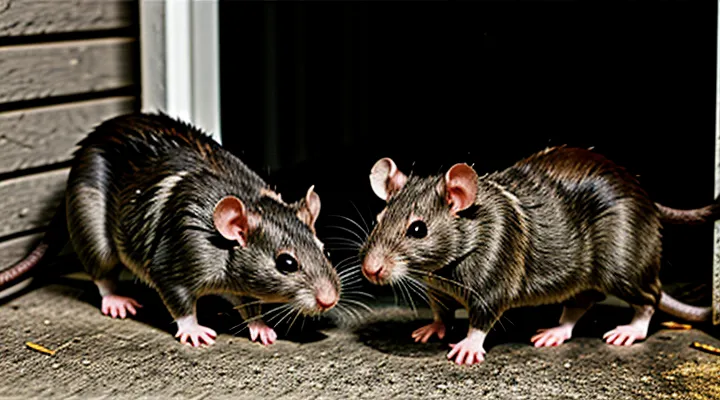
Rats encountered most frequently by humans belong to two primary species, each with distinct traits and geographic ranges. The brown rat (Rattus norvegicus) dominates temperate regions, thrives in sewers, basements, and agricultural settings, and reaches lengths of 20–25 cm excluding the tail. Its robust body, coarse fur, and blunt nose differentiate it from other rodents. The black rat (Rattus rattus) favors warmer climates, inhabits attics, ships, and tropical plantations, and measures 16–20 cm in body length. A slender build, pointed snout, and longer tail characterize this species. Both species exhibit nocturnal activity, omnivorous diets, and high reproductive rates, contributing to their success in urban and rural environments.
- Rattus norvegicus (Brown rat)
- Distribution: worldwide, especially Europe, North America, and Asia
- Habitat: burrows, sewers, farms, warehouses
- Size: 20–25 cm body, 25–30 cm tail
- Distinguishing features: heavy body, blunt muzzle, thick fur
- Rattus rattus (Black rat)
- Rattus exulans (Polynesian rat)
- Distribution: Pacific islands, introduced by human voyages
- Habitat: forest edges, cultivated fields, coastal areas
- Size: 12–14 cm body, 15–18 cm tail
- Distinguishing features: small stature, dark fur, high adaptability to island ecosystems
- Rattus tanezumi (Asian house rat)
These species account for the majority of rat sightings and infestations, each exploiting specific ecological niches while sharing common reproductive and dietary patterns.
«Physical Characteristics»
Rats exhibit a distinctive set of physical traits that enable adaptability across diverse habitats. Adult brown rats (Rattus norvegicus) typically measure 20–25 cm in head‑body length, with tails of comparable length, while black rats (Rattus rattus) possess slightly shorter bodies and longer, thinner tails. Body mass ranges from 150 g to 500 g, varying with species, age, and nutritional status.
- Fur: Dense, coarse hair provides insulation; coloration spans brown, gray, black, or mixed patterns. Seasonal shedding adjusts thermal regulation.
- Tail: Scaly, semi‑prehensile, lacking fur; serves as balance aid and thermoregulatory surface.
- Ears: Large, hairless pinnae enhance auditory acuity, detect frequencies up to 90 kHz.
- Eyes: Small, positioned laterally; vision optimized for low‑light environments, limited color discrimination.
- Dentition: Continuously growing incisors with enamel on the front surface and softer dentin behind, creating a self‑sharpening edge; molars suited for grinding plant material.
- Skeleton: Flexible spine with elongated lumbar vertebrae permits rapid, sinuous movement; robust forelimbs support climbing and digging.
- Paws: Five‑digit forefeet and hindfeet equipped with sharp claws for traction; pads contain scent glands for marking territory.
These characteristics collectively contribute to the rat’s reputation as a resilient and opportunistic mammal.
«Rat Behavior and Habits»
«Social Structure»
Rats organize themselves into hierarchical groups that facilitate resource distribution, reproduction, and predator avoidance. Within each colony, a dominant male and female typically assume leadership roles, directing access to food, nesting sites, and mating opportunities. Subordinate individuals recognize these leaders through repeated aggressive displays, scent marking, and vocalizations, which reinforce the rank order without constant physical confrontation.
Key elements of rat social organization include:
- Dominance hierarchy: Linear ranking based on age, size, and prior success in contests; higher-ranked rats receive priority access to resources.
- Kin-based subgroups: Families of related offspring remain together, sharing nests and cooperative grooming, which strengthens genetic cohesion.
- Territorial boundaries: Colonies defend defined perimeters marked by urine and glandular secretions; intruders are met with chase or bite attempts.
- Communication channels: Ultrasonic calls signal alarm, courtship, and social status; tactile grooming conveys affiliation and reduces tension.
- Reproductive coordination: Dominant females breed year‑round, while subordinate females experience delayed estrus, ensuring that offspring production aligns with colony capacity.
Stability of the social structure depends on continuous reinforcement of rank through brief, low‑intensity encounters. When a dominant individual is removed, rapid reshuffling occurs, with the next‑ranked rat assuming control after a series of brief challenges. This fluid yet orderly system enables rat populations to adapt quickly to environmental pressures while maintaining cohesion and efficient resource use.
«Diet and Foraging»
Rats are omnivorous mammals whose diet combines plant material, animal protein, and occasional inorganic matter. In the wild, they consume seeds, grains, fruits, insects, carrion, and small vertebrates, adjusting intake to seasonal availability. Urban populations exploit human-generated waste, incorporating processed foods, dairy, and meat scraps, which can lead to nutritional imbalances if consumed exclusively.
Foraging behavior relies on acute tactile and olfactory senses. Whisker contact evaluates texture, while scent detection identifies edible items and potential toxins. Nighttime activity peaks, with individuals traveling up to several hundred meters from nests to locate resources. Social learning enables younger rats to adopt efficient routes and preferred food sources observed in older conspecifics.
Captive care requires a balanced diet that mirrors natural nutrient ratios. Recommended components include:
- Commercial rodent pellets (minimum 18 % protein, 4–5 % fat)
- Fresh vegetables (broccoli, carrots, leafy greens) for fiber and vitamins
- Limited fruit pieces (apple, berries) for carbohydrates
- Occasional protein treats (hard‑boiled egg, cooked lean meat) for amino acids
- Clean water available at all times
Excluding high‑fat, sugary, or salty human foods reduces the risk of obesity, dental disease, and metabolic disorders. Monitoring intake and adjusting portions prevent overconsumption of calorie‑dense items commonly found in refuse piles.
Rats employ opportunistic foraging strategies, shifting between natural and anthropogenic sources based on accessibility. Understanding these patterns informs pest management, habitat modification, and optimal nutrition plans for both wild and domesticated populations.
«Reproduction and Life Cycle»
Rats reproduce rapidly, with sexual maturity reached at 5–6 weeks for females and 6–8 weeks for males. Breeding occurs throughout the year in temperate climates, but peaks in spring when food availability rises. After a single mating event, the female undergoes a gestation period of 21–23 days, resulting in litters of 5–12 pups on average; larger litters are common in laboratory strains.
Newborns are altricial, blind and hairless, and depend entirely on maternal care. They gain weight quickly, opening their eyes at 10–14 days and developing fur by 14 days. Weaning begins at 21 days, with full independence typically achieved by 28 days. Females can become pregnant again within 48 hours of giving birth, enabling overlapping litters.
The typical rat life cycle includes the following phases:
- Birth and neonatal stage (0–21 days) – maternal nourishment, rapid growth.
- Juvenile stage (21–45 days) – weaning, social learning, onset of sexual development.
- Adult reproductive stage (45 days onward) – repeated breeding cycles, peak fertility.
- Senescence (12–18 months) – gradual decline in reproductive output, increased susceptibility to disease.
- Death (average lifespan 2–3 years in the wild, up to 4 years under optimal laboratory conditions).
Environmental factors such as temperature, nutrition, and population density influence breeding frequency and litter size. High-density conditions may suppress estrus cycles, while abundant resources promote continuous breeding. Understanding these parameters is essential for effective population management and laboratory colony maintenance.
«Rats and Humans»
«Rats in Urban Environments»
«Disease Transmission»
Rats serve as reservoirs for a wide range of pathogens that can be transferred to humans, domestic animals, and wildlife. Transmission occurs through direct contact with rodent saliva, urine, feces, or bites, as well as indirectly via contaminated food, water, surfaces, and vectors such as fleas and ticks.
Key diseases transmitted by rats include:
- Leptospirosis – bacterial infection spread through contact with urine‑contaminated water or soil; symptoms range from mild flu‑like illness to severe kidney or liver failure.
- Hantavirus Pulmonary Syndrome – viral disease transmitted by inhalation of aerosolized particles from dried rodent excreta; leads to rapid respiratory distress and high mortality if untreated.
- Salmonellosis – bacterial infection acquired by ingesting food or water contaminated with rodent feces; causes gastrointestinal inflammation, fever, and diarrhea.
- Plague – caused by Yersinia pestis; fleas that feed on infected rats transmit the bacterium to humans, resulting in bubonic, septicemic, or pneumonic forms.
- Rat‑Bite Fever – bacterial infection (Streptobacillus moniliformis or Spirillum minus) introduced through bite wounds; produces fever, rash, and joint pain.
- Lymphocytic Choriomeningitis Virus (LCMV) – viral infection transmitted via contact with rodent secretions; may cause meningitis, encephalitis, or congenital abnormalities when acquired during pregnancy.
Control measures focus on reducing rat populations, sealing entry points, maintaining sanitation, and safely handling rodent carcasses. Personal protective equipment, such as gloves and masks, is essential when cleaning areas contaminated with rodent waste. Vaccination exists for leptospirosis in high‑risk occupational groups, while early diagnosis and antimicrobial therapy are critical for bacterial infections; antiviral treatment options remain limited for viral diseases, emphasizing the need for preventive strategies.
«Damage to Property»
Rats compromise building integrity through gnawing, nesting, and contaminating activities. Their incisors continuously grow, prompting persistent chewing on wood, plastic, and metal components. Structural beams, door frames, and flooring can develop holes that weaken load‑bearing capacity. Electrical systems are vulnerable when rats strip insulation from wiring, exposing live conductors and creating fire hazards. Insulation materials, especially fiberglass and foam, are shredded for nesting, reducing thermal efficiency and increasing energy costs. Food storage areas suffer from contamination as rats deposit urine, feces, and hair, leading to spoilage and potential health violations.
Typical indicators of property damage include:
- Visible chew marks on wires, pipes, or structural elements.
- Droppings concentrated near food sources, storage rooms, or insulation.
- Unusual odors, often described as musky or ammonia‑like.
- Small holes or tunnels in walls, ceilings, and foundations.
- Frequent tripping of circuit breakers or unexplained power outages.
Mitigation measures require immediate removal of rodents, repair of compromised structures, and reinforcement of vulnerable materials. Replace gnawed wiring with conduit‑protected cables, seal entry points with steel mesh or cement, and install rodent‑resistant insulation. Regular inspections, especially in basements, attics, and crawl spaces, detect early signs before extensive damage occurs. Integrated pest management programs combine sanitation, trapping, and habitat modification to sustain long‑term protection of property assets.
«Rats as Pets»
«Pet Rat Care»
Pet rats require a balanced diet, a safe enclosure, regular health checks, and mental stimulation.
A proper feeding plan includes commercial rat pellets as the staple, supplemented with fresh vegetables such as carrots, broccoli, and leafy greens. Small portions of fruit—apple, banana, or berries—can be offered a few times a week. Avoid high‑fat or sugary treats; they can lead to obesity and dental problems. Fresh water must be available at all times, ideally in a bottle with a metal spout to prevent contamination.
The cage should provide at least 2 sq ft of floor space per rat, with a solid base covered by bedding that absorbs moisture and controls odor. Aspen, kiln‑dried pine, or paper bedding are suitable choices; avoid cedar or aromatic woods that emit harmful oils. Include a hideout, a tunnel, and a climbing structure to encourage natural behaviors. Ensure the enclosure is escape‑proof, with secure wire mesh and latch mechanisms.
Health maintenance involves weekly observation for signs of illness: nasal discharge, wheezing, hair loss, or changes in appetite. Schedule a veterinary appointment with a small‑animal practitioner at least once a year for a physical exam and vaccination assessment. Trim nails and check teeth regularly; overgrown incisors can cause difficulty eating.
Handling should be gentle and consistent. Introduce the rat to the hand by offering treats, then allow it to climb onto the palm. Support the body with both hands to prevent stress and injury. Limit handling sessions to 10–15 minutes initially, gradually extending as the rat becomes comfortable.
Enrichment activities prevent boredom and promote wellbeing. Rotate toys such as chew blocks, cardboard tubes, and puzzle feeders. Provide opportunities for foraging by scattering small food pieces throughout the bedding. Social interaction is essential; keeping at least two rats together satisfies their innate group nature and reduces stress.
Cleaning routines include spot‑cleaning soiled bedding daily and a full cage change weekly. Use mild, unscented soap and warm water for cleaning accessories; rinse thoroughly to remove residue. Disinfectants should be avoided unless a disease outbreak is suspected, as they can irritate the respiratory system.
By adhering to these guidelines—nutrient‑rich diet, appropriate housing, vigilant health monitoring, careful handling, and regular enrichment—owners can ensure a pet rat’s longevity and quality of life.
«Benefits of Pet Rats»
Pet rats offer companionship comparable to traditional small mammals while requiring less space and lower expense. Their sociable nature encourages interaction, and their responsiveness to human cues makes them engaging partners for daily routines.
- Intelligent problem‑solvers; can learn tricks and navigate mazes.
- Highly social; thrive in groups, promoting cooperative behavior.
- Low‑maintenance; short grooming needs and modest dietary requirements.
- Compact size; suitable for apartments and limited living areas.
- Affordable; initial purchase and ongoing costs remain modest.
- Clean; produce minimal odor when housed in appropriate bedding.
- Long lifespan for rodents; average 2–3 years, allowing sustained bonding.
Research indicates that caring for a rat reduces stress markers, such as cortisol, and can improve mood through regular handling. Their curiosity drives owners to explore enrichment activities, fostering creativity and observational skills. Educational settings benefit from rat models that demonstrate basic biological concepts, behavioral conditioning, and ethical animal care practices.
Overall, pet rats combine practicality with emotional reward, making them a viable choice for individuals seeking an interactive, low‑maintenance companion.
«Rat Control Methods»
«Prevention Strategies»
Effective rat prevention requires a systematic approach that addresses food sources, entry points, and population control. The following strategies reduce infestation risk and support long‑term management.
- Eliminate accessible food and water: store dry goods in sealed containers, clean spills promptly, and repair leaky pipes.
- Remove shelter: keep vegetation trimmed, store firewood off the ground, and clear debris from foundations.
- Secure waste: use tightly fitting lids on trash cans, dispose of garbage regularly, and avoid compost piles that attract rodents.
Strengthen building integrity to block entry. Install metal flashing around utility penetrations, seal gaps larger than ¼ inch with steel wool and caulk, and repair damaged screens or door sweeps. Reinforce doors with self‑closing mechanisms and maintain proper ventilation to discourage nesting.
Deploy control devices judiciously. Place snap traps or electronic traps along walls, behind appliances, and near suspected runways. Use bait stations only where non‑target exposure is impossible, following label instructions and local regulations. Rotate trap locations to prevent habituation.
Implement a monitoring program. Conduct monthly inspections for droppings, gnaw marks, and fresh burrows. Record findings in a log, noting dates, locations, and actions taken. Adjust preventive measures based on trends, increasing sanitation or exclusion efforts where activity persists.
Consistent application of these measures creates an environment hostile to rats, minimizes health hazards, and protects property integrity.
«Trapping and Eradication»
Effective rat control begins with accurate identification of infestation size and activity patterns. Conduct a thorough inspection, noting droppings, gnaw marks, and nesting sites. Record entry points, food sources, and water availability to inform subsequent actions.
Select trap types based on environment and target species. Common options include:
- Snap traps: quick‑killing, suitable for indoor use, require regular checking.
- Live‑catch traps: humane capture, allow relocation, demand secure containment.
- Glue boards: passive, useful for monitoring, limited by non‑target capture.
- Electronic traps: rapid electrocution, low maintenance, higher cost.
Placement strategy enhances success. Position traps along walls, near runways, and close to suspected burrows. Maintain a 2‑inch gap between trap and surface to ensure proper activation. Use bait such as peanut butter, dried fruit, or processed meat; rotate bait types to prevent habituation.
Eradication proceeds through integrated measures. Seal identified entry points with steel wool, caulk, or metal flashing to prevent re‑entry. Remove food attractants by storing waste in sealed containers and cleaning spills promptly. Implement environmental sanitation to reduce shelter opportunities, including trimming vegetation and clearing debris. After trapping, dispose of captured rodents following local health regulations, typically by sealing in plastic bags and discarding in a designated waste bin.
Monitor progress for at least three weeks post‑intervention. Replace or reposition traps if activity persists, and reassess structural barriers. A systematic approach combining targeted trapping, exclusion, and sanitation yields sustainable rat population reduction.
«Professional Pest Control»
Professional pest control services address rat infestations through systematic assessment, targeted interventions, and ongoing monitoring. Technicians begin with a thorough inspection, identifying entry points, nesting sites, and activity trails. Evidence such as droppings, gnaw marks, and grease stains guides the placement of control measures.
Effective interventions combine multiple tactics:
- Exclusion: Sealing gaps larger than ¼ inch with steel wool, metal flashing, or concrete prevents new ingress.
- Sanitation: Removing food sources, securing waste containers, and eliminating standing water reduce attractants.
- Trapping: Snap traps, electronic devices, and multi-catch models provide immediate reduction of the population. Placement follows established pathways, typically along walls and near burrows.
- Rodenticides: Bait stations containing anticoagulant or non‑anticoagulant compounds are deployed according to regulatory guidelines. Proper labeling, secure housing, and restricted access protect non‑target species and humans.
- Integrated Pest Management (IPM): Ongoing evaluation adjusts tactics based on infestation levels, seasonal patterns, and structural changes.
Safety protocols govern all phases. Technicians wear personal protective equipment, follow Material Safety Data Sheet (MSDS) instructions, and maintain documentation for pesticide applications. Compliance with local wildlife protection statutes and the Environmental Protection Agency (EPA) ensures lawful operation.
After treatment, service providers schedule follow‑up visits to verify eradication, repair any newly discovered entry points, and advise property owners on preventive practices. Continuous education of occupants—such as proper food storage and waste disposal—supports long‑term control and minimizes recurrence.
In a comprehensive rat reference, professional pest control emerges as a critical component for managing rodent problems, offering expertise that combines scientific knowledge, regulatory adherence, and practical execution.
«Rats in Culture and History»
«Symbolism of Rats»
«Rats in Mythology»
Rats appear repeatedly in ancient narratives, serving as agents of creation, disease, and cunning. In Chinese mythology, the rat is the first sign of the zodiac, credited with winning a celestial race through speed and cleverness; the animal’s association with abundance derives from its capacity to store grain. Egyptian lore depicts the god Set transforming into a rat to infiltrate enemy realms, emphasizing the creature’s stealth and adaptability. Hindu texts reference the deity Ganesha, who, in certain regional stories, employs a rat as his vehicle, symbolizing the ability to navigate hidden pathways and overcome obstacles.
Greek tradition includes the myth of the plague‑bringing rodent swarm sent by Apollo to punish the city of Athens, illustrating the rat’s link to contagion and divine retribution. In Native American folklore, the Hopi recount a tale where a rat guides the people through darkness, representing guidance and resilience. Norse sagas reference the rat as a messenger of the gods, delivering prophetic dreams to warriors before battle.
Key mythological functions of rats can be summarized as follows:
- Creators – initiating cycles of renewal or agricultural prosperity.
- Harbingers – delivering disease, punishment, or warning.
- Messengers – conveying divine intent, secrets, or strategic information.
- Guides – navigating hidden routes, offering protection in perilous journeys.
Across cultures, rats embody duality: they sustain life through resourcefulness while also threatening health through rapid propagation. Their recurring presence in myth reflects humanity’s recognition of these contradictory forces, reinforcing the animal’s enduring symbolic weight.
«Rats in Literature and Art»
Rats have occupied a distinct position in literature and visual art, serving as symbols, protagonists, and subjects of detailed observation. Their representation reflects cultural attitudes, narrative functions, and artistic techniques across periods and regions.
In literary tradition, rats appear in diverse roles:
- Folklore and fables – Aesop’s “The Rat and the Elephant” illustrates cunning versus strength; Grimm’s “The Rats” warns against greed.
- Classic novels – Robert Louis Stevenson’s The Black Arrow uses a rat as a covert messenger; Franz Kafka’s The Metamorphosis portrays a transformed human as a giant insect, often associated with rat-like qualities in criticism.
- Modern fiction – James Patterson’s Rats presents a thriller centered on a deadly virus carried by rodents; Stephen King’s The Dark Half features a rat as an omen of hidden menace.
- Children’s literature – Beatrix Potter’s The Tale of Mrs. Tiggy-Winkle includes a helpful rat character; Roald Dahl’s The Twits depicts a rat as a victim of cruelty, highlighting moral lessons.
Visual art demonstrates parallel interest. Renaissance painters such as Albrecht Dürer rendered rats with anatomical precision, emphasizing realism. Baroque still lifes frequently incorporate rats to underscore themes of decay and mortality. In the 20th century, surrealist artists like Max Ernst integrated rat imagery to explore subconscious anxieties, while contemporary street artists employ stylized rats to comment on urban life and social marginalization.
Scientific illustration contributes another dimension, with detailed rat depictions in zoological atlases and medical textbooks. These images combine accuracy with aesthetic considerations, influencing public perception of the animal’s biological significance.
Overall, rats function as versatile motifs that convey moral caution, social critique, and aesthetic fascination, reflecting their complex role in human cultural production.
«Historical Impact of Rats»
«Rats and Plagues»
Rats have been central to the emergence and spread of several historic plague outbreaks. Their close association with human settlements provided a conduit for Yersinia pestis, the bacterium responsible for bubonic, septicemic, and pneumonic forms of the disease. In medieval Europe, the Black Death decimated populations after fleas infested commensal rats, transferred the pathogen to humans, and proliferated rapidly through trade routes. Subsequent epidemics in Asia and the Americas followed similar patterns, with rodent species adapting to local environments and maintaining bacterial reservoirs.
Key mechanisms linking rats to plague transmission include:
- Flea vectors (Xenopsylla cheopis and related species) acquire Y. pestis from infected rodent blood.
- Flea bites introduce bacteria into human skin, leading to bubonic infection.
- Secondary spread occurs when untreated buboes release bacteria into the bloodstream, causing septicemic plague.
- Respiratory droplets from pneumonic cases enable direct human‑to‑human transmission, bypassing rodent involvement.
Modern surveillance identifies endemic rodent populations in Africa, Madagascar, and parts of the United States, where plague persists in wildlife cycles. Control strategies focus on reducing rodent habitats, applying insecticides to limit flea populations, and implementing public health measures such as rapid diagnosis and antibiotic treatment. Continuous monitoring of rodent reservoirs and vector dynamics remains essential for preventing re‑emergence of plague in densely populated areas.
«Rats in Scientific Research»
Rats are among the most widely employed vertebrate models in biomedical research because of their genetic, physiological, and behavioral similarity to humans. Their short reproductive cycle, ease of handling, and well‑characterized genome facilitate experiments that require large sample sizes and rapid data acquisition.
In pharmacology, rats serve to evaluate drug efficacy, toxicity, and metabolism. Researchers administer test compounds, monitor plasma concentrations, and assess organ pathology to predict human responses. In neuroscience, rat models enable investigation of learning, memory, and neurodegenerative processes. Techniques such as intracranial electrode implantation, optogenetics, and behavioral maze testing provide precise measurements of neural activity and cognitive performance.
Key contributions of rat research include:
- Development of insulin therapy through studies of streptozotocin‑induced diabetes.
- Identification of antihypertensive agents via the spontaneously hypertensive rat model.
- Elucidation of pain pathways using tail‑flick and hot‑plate assays.
- Exploration of gut microbiota effects on metabolism and immunity.
Ethical oversight governs all rat‑based experiments. Institutional Animal Care and Use Committees review protocols to ensure compliance with the 3Rs principle—replacement, reduction, and refinement—minimizing animal numbers and distress while preserving scientific validity.
Advances in genetic editing, such as CRISPR/Cas9, have expanded the utility of rats. Targeted gene knockouts and transgenic lines now replicate specific human diseases, allowing mechanistic studies and preclinical testing of gene‑based therapies.
Overall, rat models remain indispensable for translating basic biological insights into clinical applications, providing a robust platform for discovering treatments, understanding disease mechanisms, and validating safety profiles.