
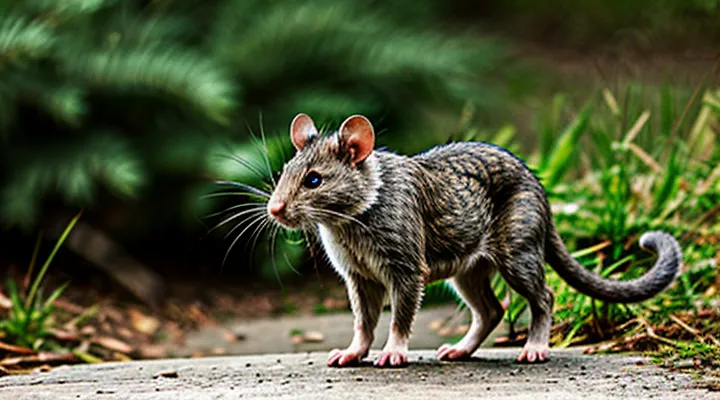
Understanding Wild Rats Through Photography
The Allure of Wild Rat Photography
Capturing Elusive Moments
Capturing fleeting behavior of wild rodents demands precise preparation, rapid response, and an understanding of species‑specific habits. Early morning and twilight provide the lowest ambient light and the highest activity levels for most rat species, allowing photographers to anticipate movement patterns while minimizing disturbance.
Key techniques include:
- Use of high‑frame‑rate burst mode to record multiple frames within a fraction of a second, ensuring at least one sharp image of a passing animal.
- Selection of lenses with focal lengths between 200 mm and 400 mm to maintain distance while filling the frame with detail.
- Application of silent autofocus and electronic shutter to eliminate audible cues that could startle the subject.
Understanding the target’s ecological niche refines positioning. Ground‑dwelling species favor burrow entrances and low vegetation, whereas arboreal variants occupy tree trunks and canopy branches. Align camera placement with these microhabitats, employing camouflage or blinds to blend with the environment.
Post‑capture processing should emphasize contrast and texture to reveal diagnostic features such as tail length, ear shape, and dorsal coloration. Adjusting exposure curves and sharpening selectively highlights fur patterns without introducing artifacts, producing images that serve both scientific documentation and visual storytelling.
Ethical Considerations in Wildlife Photography
Photographers who capture images of wild rats must prioritize the welfare of the animals and the integrity of their habitats. Ethical practice ensures that visual documentation of species and traits does not compromise the subjects or the ecosystems they inhabit.
- Avoid actions that cause stress: maintain a safe distance, use long lenses, and refrain from chasing or cornering individuals.
- Limit use of flash: bright light can disorient nocturnal rodents and alter natural behavior.
- Do not employ bait, traps, or feeding to attract subjects; such interventions may alter foraging patterns and increase predation risk.
- Secure necessary permits: respect local regulations governing wildlife observation and photography.
- Preserve habitat continuity: avoid trampling vegetation, disturbing burrows, or leaving equipment that could become hazards.
- Represent subjects accurately: refrain from staging scenes or manipulating animals for dramatic effect; images should reflect authentic behavior and appearance.
- Protect personal safety: recognize potential disease vectors and handle equipment with hygiene protocols to prevent cross‑contamination.
Compliance with these standards protects both the photographed rats and the scientific value of the images. Responsible conduct reinforces the credibility of visual records and supports ongoing research into rodent diversity.
Key Wild Rat Species in Photographs
The Brown Rat (Rattus norvegicus)
Identifying Characteristics in Photos
Photographic identification of wild rat species relies on a set of observable traits that remain consistent across individuals of the same taxon. Accurate interpretation of these traits enables researchers and photographers to distinguish between species without direct capture.
Key visual markers include:
- Body size and proportion – head‑to‑body length, tail length relative to body, and overall mass give immediate clues; for example, larger specimens with tails equal to or longer than the body often belong to the brown rat (Rattus norvegicus), while smaller forms with shorter tails typically represent the black rat (Rattus rattus).
- Fur coloration and pattern – dorsal fur ranges from brownish‑gray to black; ventral fur is usually lighter. Distinctive striping, mottling, or a glossy sheen can indicate specific subspecies.
- Ear shape and size – ears that are proportionally large and thin suggest the roof rat, whereas smaller, rounded ears are characteristic of the Norway rat.
- Facial structure – snout length, cheek musculature, and the presence of a pronounced whisker pad differentiate species; a longer, more pointed snout often signals the roof rat.
- Foot morphology – hind foot length, presence of a pronounced heel pad, and digit spacing aid identification; the Norway rat exhibits broader hind feet with a well‑developed heel pad.
- Tail features – scale pattern, presence of hair, and coloration provide additional confirmation; a sparsely haired, dark tail is typical of the brown rat, while a longer, hair‑covered tail with a lighter tip points to the roof rat.
Photographic technique enhances trait visibility:
- Capture subjects from multiple angles—lateral, dorsal, and cranial views—to reveal the full complement of diagnostic features.
- Use a scale reference (e.g., a ruler or known object) within the frame to verify size measurements.
- Ensure adequate lighting to avoid shadows that obscure ear and whisker details; diffused natural light or soft artificial illumination yields the most reliable results.
- Include background elements that suggest habitat, such as vegetation type or urban structures, which can further narrow species identification.
By systematically assessing these characteristics, observers can reliably assign species labels to wild rat photographs, supporting ecological surveys, pest management, and scientific documentation.
Habitat and Behavior Depicted
Photographs of wild rats reveal distinct habitats that correspond to species‑specific ecological niches. Urban environments host Rattus norvegicus and Rattus rattus, where images capture individuals navigating sewers, subway tunnels, and abandoned buildings. Rural settings display Mus musculus and Apodemus sylvaticus amid fields, hedgerows, and forest edges, often foraging among crops or under leaf litter. Coastal dunes and mangrove swamps feature the water‑adapted species Rattus exulans, shown climbing vegetation and scavenging near tidal pools.
Behavioral patterns observed in the imagery include:
- Nocturnal foraging: rats emerge at dusk, exploiting artificial lighting to locate food sources.
- Social grooming: groups engage in mutual cleaning, reinforcing hierarchy and reducing parasite load.
- Burrow construction: individuals excavate extensive tunnel systems, evident from cross‑sectional views of soil displacement.
- Territorial patrols: solitary individuals mark boundaries with scent glands while navigating familiar routes.
- Opportunistic scavenging: rats exploit human waste, carrion, and stored grain, demonstrated by close‑up shots of feeding bouts.
These visual records underscore the adaptability of wild rats to varied ecosystems and the consistent behavioral strategies that support survival across urban, agricultural, and coastal landscapes.
The Black Rat (Rattus rattus)
Distinguishing Features from the Brown Rat
Photographic documentation of wild rat species emphasizes the need to separate visually similar rodents from the common brown rat (Rattus norvegicus). Accurate identification relies on measurable and observable characteristics rather than anecdotal description.
Key distinguishing traits include:
- Body size: The brown rat typically reaches a head‑body length of 20–25 cm, whereas the black rat (Rattus rattus) averages 16–20 cm and the Polynesian rat (Rattus exulans) rarely exceeds 15 cm.
- Fur coloration: Brown rat fur ranges from medium brown to almost black; black rat displays a sleek, dark gray to black coat with a lighter belly, while the desert rat (Rattus pumilio) shows a sandy‑brown dorsal surface.
- Tail proportion: In brown rats the tail length approximates the body length; black rats possess a tail longer than the body, often 1.2–1.5 times greater.
- Ear size and shape: Brown rats have relatively small, rounded ears; black rats feature larger, more pointed ears that extend noticeably beyond the head outline.
- Foot morphology: The hind foot of the brown rat is broader with a well‑developed sole pad; other species, such as the Australian native Rattus fuscipes, exhibit narrower feet with reduced pads.
- Habitat preference: Brown rats favor underground burrows and urban sewers, while black rats are arboreal, frequently found in attics and trees; the Pacific rat prefers coastal vegetation and islands.
These criteria enable reliable separation of species in field photographs, supporting both scientific surveys and wildlife management efforts.
Arboreal Habits and Photographic Opportunities
Arboreal rats occupy forest canopies, shrub layers, and riparian trees, where vertical movement and nocturnal foraging shape their visual profile. Their slender bodies, elongated tails, and prehensile feet enable rapid ascent and precise navigation among branches, creating distinctive silhouettes against moonlit foliage.
Key tree‑dwelling species include:
- Rattus rattus (Black rat) – dark coat, long tail, frequent in urban trees and orchards.
- Rattus norvegicus (Brown rat) – larger size, robust limbs, often found in low‑lying branches near water sources.
- Niviventer confucianus (Chinese white‑bellied rat) – pale ventral fur, agile climber in temperate forests.
- Mastomys natalensis (Natal multimammate rat) – soft fur, prefers dense canopy thickets in savanna woodlands.
These taxa display predictable behaviors: night‑time foraging along branch corridors, nesting in hollow limbs, and territorial patrols that involve brief, high‑contrast exposure to moonlight or artificial illumination. Each activity produces brief moments of motion, posture, or interaction that can be captured with proper preparation.
Photographic recommendations:
- Use a fast‑lens (f/2.8 or wider) to isolate subjects against dim backgrounds.
- Set ISO 1600–3200 for low‑light sensitivity while maintaining acceptable noise levels.
- Employ a shutter speed of 1/500 s or faster to freeze rapid climbing.
- Position a portable LED or infrared light source at a 45‑degree angle to highlight fur texture without startling the animal.
- Focus on the eye using single‑point autofocus; lock focus before the rat enters the frame.
- Capture sequences of 5–7 frames per encounter to increase the chance of a sharp image.
Respect for wildlife remains paramount: maintain a distance of at least two meters, avoid bait that alters natural behavior, and limit exposure time to prevent stress. Following these guidelines yields high‑quality documentation of arboreal rat habits, enriching visual records of their ecological roles.
Other Notable Wild Rat Species
Roof Rats and Their Unique Traits
Roof rats (Rattus norvegicus) are the second most common urban rodent after the Norway rat. Their slender bodies, long tails, and smooth fur differentiate them from other species. Adults typically measure 15–20 cm in body length, with tails equal to or slightly longer than the body. Weight ranges from 120 to 250 g.
Key physical traits include:
- Dark brown to black dorsal pelage, lighter ventral side
- Slightly flattened head and pointed snout, facilitating entry through narrow openings
- Highly adaptable limbs allowing agile climbing on vertical surfaces and roofs
Roof rats prefer elevated habitats such as attics, eaves, and roof spaces. They exploit gaps as small as 1 cm, using their flexible bodies to navigate insulation, wiring, and ductwork. Their nocturnal activity pattern reduces competition with ground‑dwelling rodents.
Diet consists of fruits, nuts, seeds, and human food waste. Roof rats are efficient seed dispersers, often transporting food items to hidden caches. Their strong incisors enable gnawing of wood, plastic, and electrical cables, creating structural damage and fire hazards.
Reproductive capacity is high: a female can produce up to five litters per year, each containing 6–12 pups. Gestation lasts 21 days, and weaning occurs at 3 weeks. Rapid maturation allows populations to double within a few months under favorable conditions.
Behavioral observations from field photography show roof rats using vertical pathways, leaping between rafters, and exhibiting grooming routines that maintain coat condition. Their keen sense of smell and hearing support navigation in cluttered roof environments.
Control measures focus on sealing entry points less than 1 cm wide, removing food sources, and employing bait stations placed in concealed attic locations. Regular inspections of roof structures help detect early signs of activity, such as droppings, gnaw marks, and nesting material.
Asian House Shrews: Often Mistaken for Rats
Asian house shrews (Suncus murinus) frequently appear in images labeled as wild rats, yet they belong to a distinct mammalian order. Shrews are insectivores, whereas rats are rodents with omnivorous diets. This taxonomic difference influences body structure, sensory organs, and behavior, creating clear visual cues for accurate identification.
Physical characteristics separate shrews from rats. The head of a shrew is pointed, with a high forehead and a long, narrow snout. Teeth are sharp and pointed, adapted for crushing insects, whereas rats possess robust, gnawing incisors. Fur on shrews is generally smooth and lacks the coarse, scaly texture observed on many rat species. Tail length provides another clue: shrews have a short, hair‑covered tail, often less than half the body length, while rats display longer, scaly tails that may equal or exceed body length.
Key distinguishing features can be summarized:
- Snout shape: elongated and tapered (shrew) vs. blunt and rounded (rat)
- Ear size: small, concealed by fur (shrew) vs. prominent, visible (rat)
- Tail: short, furred, proportionally small (shrew) vs. long, partially scaly (rat)
- Dentition: sharp, insect‑crushing teeth (shrew) vs. large, gnawing incisors (rat)
- Body size: typically 10–15 cm total length for shrews, smaller than most urban rat species
Habitat preferences also differ. Asian house shrews thrive in human‑occupied structures, gardens, and agricultural fields, often nesting in wall voids or under debris. Rats, especially the common brown rat (Rattus norvegicus), favor sewers, basements, and outdoor burrows. Although both occupy synanthropic environments, shrews rarely establish large colonies, preferring solitary or paired territories.
Behavioral traits reinforce identification. Shrews exhibit rapid, erratic movement and a high metabolism requiring frequent feeding on insects, spiders, and small vertebrates. They emit high‑frequency vocalizations undetectable to human ears. Rats display more deliberate foraging patterns, social hierarchies, and vocalizations within the audible range.
Photographic documentation benefits from these distinctions. Close‑up shots that capture snout angle, ear visibility, and tail texture allow observers to differentiate shrews from rats without relying on size alone. Lighting that accentuates fur texture and dental structure further reduces misidentification. Accurate labeling supports scientific databases and public awareness, preventing the conflation of two ecologically distinct groups.
Photographic Techniques for Wild Rats
Equipment and Settings for Rat Photography
Lenses and Lighting for Low-Light Conditions
Photographing nocturnal rodents requires equipment that maximizes light capture while preserving image quality. Selecting a lens with a wide maximum aperture (f/1.4 – f/2.8) reduces the need for excessive ISO and shortens exposure times, preventing motion blur from quick movements. Prime lenses offer superior sharpness and larger apertures compared to zooms, but modern fast zooms (e.g., 24–70 mm f/2.8) provide flexibility when subjects change distance rapidly.
Sensor size influences low‑light performance; full‑frame or APS‑C sensors deliver higher photon efficiency and lower noise at elevated ISO settings. When a full‑frame body is unavailable, choose a camera with a sensor that supports native high‑ISO performance and includes noise‑reduction algorithms optimized for dark scenes.
Effective illumination complements lens selection. Continuous LED panels deliver stable, adjustable light without the need for synchronization, allowing real‑time assessment of exposure. For burst shooting, high‑speed flash units with short recycle times provide powerful, directional light; attaching a diffuser softens harsh shadows and mimics ambient moonlight. Reflectors positioned opposite the light source can fill in shadows and reveal fine fur detail.
Practical setup recommendations:
- Lens: 50 mm f/1.4 prime (standard view) or 100 mm f/2.8 macro (close‑up detail).
- Camera: Full‑frame or APS‑C body with ISO 3200 – 6400 native range.
- Lighting: LED panel (adjustable 200–800 lux) + small softbox; alternatively, flash with a 1/8‑second sync speed and a diffusion dome.
- Accessories: Tripod with a ball head for stability; remote shutter release to eliminate camera shake; removable UV filter to protect the front element without affecting low‑light transmission.
Balancing aperture, sensor sensitivity, and supplemental lighting yields sharp, well‑exposed images of wild rats in dim environments, preserving species‑specific characteristics such as whisker texture and fur coloration.
Camera Traps and Remote Triggers
Camera traps provide continuous, non‑intrusive observation of free‑roaming rodents, allowing researchers to gather high‑resolution images that reveal species distinctions and morphological traits. Devices operate autonomously for weeks, reducing human presence that could alter animal behavior.
Key technical attributes include:
- 12‑megapixel sensors delivering clear detail of fur patterns and body proportions.
- Infrared illumination that captures nocturnal activity without disturbing subjects.
- Adjustable motion‑sensitivity thresholds to filter out wind‑blown vegetation and focus on mammalian movement.
- Weather‑sealed housings ensuring reliable performance in humid or rainy environments.
Remote triggers expand monitoring capabilities beyond passive motion detection. Passive infrared (PIR) modules detect body heat, initiating capture within milliseconds. Pressure‑sensitive pads placed on burrow entrances record passage events, while wireless cellular or Wi‑Fi modules transmit alerts to field teams, enabling real‑time verification and rapid redeployment if necessary.
Effective deployment follows several practical guidelines. Position cameras at 15‑30 cm above ground to align with typical rat height, aim lenses toward known runways or feeding stations, and camouflage units with natural debris to prevent theft or avoidance. Bait such as grain or fruit increases visitation rates, improving sample size for statistical analysis.
Collected imagery feeds directly into species‑identification workflows. Software tools extract measurements of tail length, ear size, and dorsal coloration, supporting taxonomic classification and assessment of population health. Automated tagging and cloud storage streamline data review, allowing researchers to focus on ecological interpretation rather than manual sorting.
Best Practices for Capturing Wild Rat Behavior
Patience and Observation Skills
Patience enables photographers to wait for natural behavior that reveals distinguishing markings, tail length, and fur patterns unique to each rat species. Without prolonged stillness, a sudden movement can obscure critical details needed for accurate identification.
Observation skills convert fleeting moments into usable data. By tracking foraging routes, nesting sites, and social interactions, the photographer captures context that differentiates one species from another. Precise focus on eye contact, whisker orientation, and body posture informs both visual documentation and scientific description.
Effective field work relies on the following practices:
- Maintain a quiet, unobtrusive presence to reduce stress on the animals.
- Scan the environment continuously for subtle cues such as rustling leaves or droppings that indicate nearby activity.
- Adjust camera settings incrementally while monitoring lighting changes caused by canopy cover.
- Record environmental variables (temperature, humidity, time of day) alongside each image to support comparative analysis.
Consistent application of these techniques produces a comprehensive visual record that supports taxonomy, ecological research, and public education about urban and rural rat populations.
Minimizing Disturbance to Wildlife
Accurate visual documentation of free‑living rats requires careful management of human presence to avoid altering natural behavior. Observers should maintain a minimum separation of 15 meters when possible, using telephoto lenses to capture detail without approaching the animals. Approach routes must follow established trails to prevent trampling vegetation and exposing hidden burrows.
Timing of photographic sessions influences disturbance levels. Early morning or late evening periods, when rats are less active, reduce the likelihood of provoking defensive responses. Lighting equipment should be limited to natural illumination; artificial flashes are prohibited unless a low‑intensity, diffused source is essential for image clarity.
Key practices for minimizing impact:
- Plan sessions in advance using maps of known rat habitats.
- Employ motion‑triggered cameras to obtain images without direct human involvement.
- Record observations from a concealed position, avoiding sudden movements or noises.
- Remove all litter and equipment after each outing to leave the site unchanged.
- Review images on site to confirm that sufficient data have been captured, preventing unnecessary revisits.
Adherence to these guidelines preserves ecological integrity while providing high‑quality photographic records of rat species and their distinguishing features.
Analyzing Wild Rat Characteristics from Photos
Physical Attributes and Adaptations
Fur Coloration and Texture Variations
Fur coloration and texture provide reliable markers for distinguishing wild rat species in photographic records. Color patterns reflect genetic lineage, habitat preferences, and seasonal shifts, while texture indicates health, age, and environmental exposure.
Typical coloration ranges include:
- Uniform brown or gray coats, prevalent in temperate grasslands.
- Reddish‑brown fur, common among forest‑dwelling forms.
- Black or charcoal tones, observed in urban populations.
- Mixed or speckled patterns, characteristic of species inhabiting rocky outcrops.
Texture variations appear as:
- Dense, plush undercoat paired with a coarse dorsal layer, typical of cold‑climate rats.
- Fine, silky pelage with minimal guard hairs, found in tropical species.
- Sparse, frayed fur in individuals experiencing malnutrition or parasite load.
- Seasonal shedding that produces a temporary fluffier coat during breeding periods.
Color and texture correlate with ecological niches: darker coats improve concealment in dimly lit burrows; lighter shades reduce heat absorption in open fields; coarse pelage enhances insulation against wind; fine fur facilitates heat dissipation in humid environments. These relationships enable field researchers to infer habitat use and behavioral strategies from a single image.
Photographic assessment demands consistent lighting, appropriate depth of field, and scale references to avoid misinterpretation of hue and surface detail. Macro lenses reveal individual hair structure, while standardized exposure preserves true coloration across varying backgrounds. Accurate documentation of fur characteristics supports robust species classification and ecological monitoring.
Tail Length and Body Proportions
Tail length and body proportions provide reliable metrics for distinguishing wild rat species captured in field photography. Measurements derive from calibrated images, enabling comparisons without physical specimens.
Common species exhibit distinct ranges:
- Brown rat (Rattus norvegicus): total length 250–300 mm; tail length 120–180 mm; tail‑to‑body ratio 0.5–0.7.
- Black rat (Rattus rattus): total length 180–240 mm; tail length 150–210 mm; tail‑to‑body ratio 0.8–1.0.
- Polynesian rat (Rattus exulans): total length 150–200 mm; tail length 100–130 mm; tail‑to‑body ratio 0.6–0.8.
Proportional analysis employs the following ratios:
- Tail‑to‑body ratio – tail length divided by head‑plus‑torso length; separates arboreal from terrestrial forms.
- Head‑to‑body ratio – skull length relative to torso; assists in age determination.
- Mass‑adjusted tail length – tail length normalized to estimated body mass; highlights ecological adaptation.
Variation correlates with habitat and ontogeny. Arboreal individuals display longer tails relative to torso, supporting balance during climbing. Juveniles present reduced tail proportions that increase with maturity. Sexual dimorphism appears modest; males of R. norvegicus may exceed females by 5 % in tail length.
Photographic records that include a calibrated scale permit precise extraction of these dimensions. Applying the outlined ratios to image datasets improves species identification accuracy, informs population monitoring, and enhances ecological interpretation.
Behavioral Insights from Visual Evidence
Foraging Patterns and Food Preferences
Wild rat foraging behavior varies markedly among species captured in photographic surveys, reflecting adaptations to distinct habitats. Urban-dwelling individuals exploit anthropogenic waste, displaying opportunistic feeding that includes discarded processed foods, sugary items, and small vertebrate carcasses. Rural counterparts rely more on natural resources such as seeds, tubers, insects, and occasional fruits, demonstrating selective preferences aligned with seasonal availability.
Key patterns observed across the documented populations include:
- Temporal activity: Peak foraging occurs during crepuscular hours, with some species extending activity into nocturnal periods when human disturbance diminishes.
- Spatial selection: Rats prioritize locations offering shelter proximity and high food density, often establishing routes that connect burrows to predictable sources like dumpsters, grain stores, or fruiting trees.
- Dietary flexibility: Species exhibit plasticity, shifting from herbivorous to omnivorous intake when preferred items become scarce, a strategy evident in the varied stomach contents recorded in field photographs.
Understanding these foraging dynamics assists in interpreting visual evidence of rat ecology, informing both scientific assessment and pest management strategies.
Social Interactions and Group Dynamics
Photographic documentation of wild rat populations provides direct evidence of how individuals organize, communicate, and cooperate within their colonies. Images captured in natural settings reveal patterns that are difficult to infer from laboratory observation alone.
Colonies typically consist of a dominant breeding pair, subordinate adults, and offspring of varying ages. Hierarchical status is expressed through body posture, scent marking, and spatial positioning within the burrow network. Subordinate members often engage in allogrooming, which reinforces social bonds and reduces parasite load.
Key interaction categories observed in visual records include:
- Aggressive encounters that establish or reaffirm dominance.
- Cooperative foraging, where multiple rats exploit a food source simultaneously.
- Alarm signaling, characterized by rapid tail flicks and vocalizations that prompt collective retreat.
- Nest maintenance, with individuals sharing responsibilities for bedding material and tunnel repair.
Environmental context shapes group dynamics. Urban colonies exhibit higher population density, leading to increased frequency of territorial disputes and reliance on artificial structures for shelter. Rural groups display more dispersed territories, allowing extended foraging ranges and reduced aggression levels.
Research protocols combine high‑resolution stills with time‑lapse sequences to track individual movements across days. Marked individuals are identified by distinctive fur patterns or implanted tags, enabling longitudinal analysis of role changes, reproductive success, and mortality rates. This visual approach yields quantifiable data on social structure, interaction frequency, and adaptive strategies within wild rat communities.
The Importance of Accurate Identification
Differentiating Rats from Other Rodents
Mice vs. Rats: A Photographic Guide
The guide presents a side‑by‑side visual comparison of mice and rats, highlighting morphological traits that become evident in field photographs.
Mice typically measure 2–4 inches in body length, possess proportionally large ears, and display a slender, hairless tail that may be slightly shorter than the body. Rat specimens range from 5–9 inches, feature smaller ears relative to head size, and carry a thick, scaled tail often exceeding body length. These distinctions appear clearly in close‑up shots that emphasize head shape, ear placement, and tail texture.
- Body size: mice < 4 in vs. rats > 5 in.
- Ear proportion: mice ≈ 30 % of head width vs. rats ≈ 15 %.
- Tail characteristics: mice = hairless, thin; rats = scaly, robust.
- Fur coloration: mice often display uniform gray or brown tones; rats exhibit more varied dorsal shading, including darker dorsal stripes.
Habitat preferences emerge in landscape photographs. Mice favor low vegetation, grain stores, and indoor corners, often captured near seed heads or in narrow crevices. Rats frequent sewer systems, basements, and outdoor burrows; images show them near water sources, beneath debris, or within larger tunnel networks.
Representative species illustrated include the common house mouse (Mus musculus), the field mouse (Apodemus sylvaticus), the Norway rat (Rattus norvegicus), and the roof rat (Rattus rattus). Each photo emphasizes diagnostic features: whisker length, foot pad size, and dorsal patterning. The house mouse appears with a light gray coat and a delicate snout; the Norway rat shows a heavy body, coarse fur, and a pronounced snout.
For reliable identification, observers should:
- Capture the animal from multiple angles to expose ear and tail morphology.
- Include a scale reference (e.g., a ruler or known object) to assess size accurately.
- Record background context to correlate habitat with species expectations.
By applying these photographic criteria, researchers and enthusiasts can differentiate mice from rats with confidence, even when specimens share overlapping ranges.
Voles and Other Look-Alikes
Voles are small, burrowing rodents often mistaken for rats in field photographs. Their bodies are compact, ranging from 10 to 15 cm in length, with short, densely furred tails that rarely exceed half the body length. Unlike true rats, voles possess a blunt, rounded skull and lack the pronounced whisker pads seen in many murids. Their coloration varies from brown to gray, sometimes displaying a faint stripe along the spine, which can aid identification when visual cues are limited.
Other species that resemble voles in photographs include:
- Wood mice (Apodemus sylvaticus): Larger ears, longer tail, and a more pronounced muzzle.
- Harvest mice (Micromys minutus): Extremely small size, elongated tail with a tuft, and a preference for grassy habitats.
- Shrews (family Soricidae): Pointed snout, high metabolic rate, and a lack of visible tail fur.
Distinguishing features hinge on tail proportion, ear size, and cranial shape. Voles exhibit a relatively short tail covered in fur, whereas wood mice have a naked, longer tail. Harvest mice are identifiable by their tail tuft and diminutive stature, while shrews possess a sharply pointed nose and a markedly different dental formula.
Habitat preferences further separate these look‑alikes. Voles favor moist meadow soils and agricultural fields, constructing extensive tunnel networks. Wood mice occupy forest edges and hedgerows, often nesting in abandoned burrows. Harvest mice select dense vegetation near water sources, and shrews inhabit leaf litter or shallow burrows in damp environments.
Accurate field identification relies on close examination of these morphological and ecological traits, ensuring that photographic records correctly attribute each specimen to its proper taxonomic group.
Impact of Misidentification in Wildlife Management
Conservation Efforts and Pest Control
Photographic documentation of wild rat species provides essential data for both preservation initiatives and population management. Accurate visual records enable researchers to identify regional variations, assess health indicators, and monitor habitat changes that influence species survival.
Conservation programs rely on this information to prioritize actions. Key components include:
- Habitat restoration that reintroduces native vegetation and reduces urban encroachment.
- Protection of nesting sites through legal designations and community agreements.
- Monitoring of disease prevalence using captured images to track skin lesions, fur condition, and body size trends.
- Public education campaigns that present visual evidence of ecological roles, encouraging support for protective measures.
Pest control strategies benefit from the same photographic evidence, allowing targeted interventions that minimize non‑target impacts. Effective approaches consist of:
- Integrated pest management (IPM) that combines habitat modification, exclusion techniques, and limited chemical use.
- Deployment of live traps positioned according to observed movement patterns captured in field photos.
- Biological control employing predators or sterilization programs informed by species‑specific behavior documented visually.
- Community‑based reporting systems where residents submit images to verify infestation levels before treatment.
Balancing preservation with population regulation requires continuous data flow. Regularly updated image archives supply the empirical foundation for adaptive policies, ensuring that both ecological integrity and human health concerns are addressed with precision.
Public Perception and Education
Public attitudes toward free‑living rodents are shaped largely by visual representation. Images that emphasize dirty environments, aggressive behavior, or disease vectors reinforce negative stereotypes, while photographs highlighting natural habitats, social structures, and adaptive traits present a more balanced view.
Common misconceptions stem from limited exposure to scientific documentation. Many people equate all wild rat species with urban pest problems, overlook species‑specific ecological roles, and assume uniform health risks. These assumptions persist despite evidence that several species contribute to seed dispersal, soil aeration, and predator support.
Photographic archives of wild rodents serve as primary educational tools. High‑resolution images paired with factual captions enable educators to replace anecdotal fear with observable facts. By showcasing diversity in size, coloration, and behavior, visual resources demonstrate that not all rats fit a single, harmful archetype.
Key elements of an effective public‑education program include:
- Curated galleries featuring multiple species in natural settings.
- Comparative plates that contrast urban and wild individuals.
- Interactive modules where viewers match photographs to ecological functions.
- Distribution of printed field guides to schools, community centers, and wildlife NGOs.
When educators integrate accurate visual material into curricula, public perception shifts toward informed appreciation. Stakeholders—museum curators, conservation agencies, and media producers—should prioritize the dissemination of scientifically vetted photographs to reduce stigma and promote wildlife literacy.