
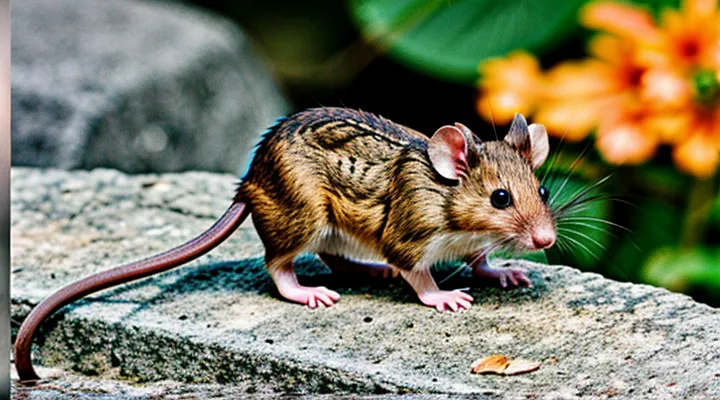
Understanding Wild Mice
What Defines a «Wild Mouse»?
A “wild mouse” refers to any member of the family Muridae that lives and reproduces without human assistance. The classification relies on biological and ecological attributes rather than domestication status.
Key attributes that delineate a wild mouse:
- Taxonomic placement – belongs to the genus Mus, Apodemus, Peromyscus, or related genera within Muridae.
- Habitat – occupies natural environments such as forests, grasslands, wetlands, or agricultural fields, avoiding permanent indoor settings.
- Dietary independence – obtains food from natural sources (seeds, insects, vegetation) rather than supplied feed.
- Reproductive behavior – mates and raises offspring in situ, with litters occurring in nests built in burrows, under debris, or within vegetation.
- Morphological traits – displays wild-type coloration, fur texture, and body proportions typical of the species, lacking the selective breeding alterations seen in laboratory or pet strains.
- Genetic integrity – retains the genetic diversity of wild populations, free from extensive inbreeding or genetic manipulation.
Photographic records capture these characteristics, allowing identification through visual cues such as coat pattern, ear size, tail length, and habitat context. Consistency across multiple images reinforces species-level classification and confirms the subject’s wild status.
Common Misconceptions and Distinctions
Wild Mice vs. House Mice
Wild mice and house mice represent two distinct ecological groups that frequently appear in photographic documentation of small mammals. The former inhabit natural environments such as fields, forests, and grasslands, while the latter are synanthropic, thriving in human‑occupied structures.
Taxonomy and distribution
- Wild mice: primarily species of the genus Apodemus (e.g., A. sylvaticus, A. flavicollis) and Micromys minutus. Their range covers temperate regions of Europe and Asia, extending into North America for some introduced populations.
- House mice: Mus musculus and its subspecies (M. m. domesticus, M. m. musculus). Global distribution follows human settlement patterns, with established populations on every continent except Antarctica.
Morphology
- Wild mice exhibit longer tails relative to body length (tail‑to‑body ratio ≈ 0.9–1.1), larger hind feet, and dorsal fur that matches natural substrates (brown, gray, or reddish tones).
- House mice possess shorter tails (ratio ≈ 0.7), a more compact body, and a uniform gray‑brown pelage. Their ears are proportionally larger, aiding thermoregulation in indoor environments.
Behavioral traits
- Wild mice are primarily nocturnal foragers, employing complex burrow systems and displaying territorial aggression toward conspecifics. Their diet includes seeds, insects, and plant material.
- House mice are opportunistic omnivores, capable of exploiting stored food, waste, and human‑provided resources. They reproduce year‑round under controlled indoor temperatures, achieving higher population turnover than wild counterparts.
Reproductive parameters
- Litter size for wild mice averages 4–6 offspring, with breeding seasons confined to spring and summer.
- House mice produce 5–8 offspring per litter, with up to ten litters per year in favorable indoor conditions.
Photographic considerations
- Wild mouse images often capture camouflaged coloration, natural lighting, and habitat context, requiring higher ISO settings and longer focal lengths to avoid disturbance.
- House mouse photographs typically involve artificial illumination, close‑up framing, and controlled environments, allowing lower ISO and faster shutter speeds.
Understanding these distinctions aids accurate identification, ecological assessment, and conservation planning in visual studies of small rodent species.
Other Small Rodents
The photographic documentation of wild mice often includes additional diminutive rodent species that share similar habitats. Recognizing these companions enhances species inventories and supports ecological assessments.
- Voles (Microtus spp.) – body length 10–15 cm, short tail, densely furred dorsal surface; prefer grasslands and moist meadows.
- Shrews (Sorex spp.) – elongated snout, reduced fur on the tail, size 5–9 cm; inhabit leaf litter and forest floor.
- Chipmunks (Tamias spp.) – striped dorsal pattern, bushy tail, length 15–20 cm; frequent woodland edges and rocky outcrops.
- Gerbils (Gerbillus spp.) – long hind limbs, sandy-colored coat, size 12–18 cm; found in arid scrub and dunes.
- Hamsters (Cricetinae subfamily) – stout body, cheek pouches, length 8–15 cm; occupy burrows in open fields and cultivated areas.
Photographic considerations for these rodents differ from those applied to wild mice. Voles and shrews often remain motionless in low light, requiring high‑ISO settings and fast lenses to capture detail without motion blur. Chipmunks display rapid, erratic movements; a high frame‑rate burst mode improves capture probability. Gerbils and hamsters possess reflective fur that can cause glare; polarizing filters reduce specular highlights and reveal texture.
Accurate visual records of these small mammals aid taxonomic verification and population monitoring. Inclusion of their images alongside mouse photographs creates a comprehensive visual dataset, facilitating comparative studies and informing conservation strategies.
Photography Techniques for Wild Mice
Essential Equipment for Wildlife Photography
Camera Bodies and Lenses
Photographing wild mice demands equipment that balances speed, resolution, and sensitivity. Modern mirrorless bodies with full‑frame or APS‑C sensors deliver high megapixel counts while maintaining low‑noise performance at ISO 800‑3200, essential for capturing rapid movements in dim forest understories. On‑board image stabilization reduces motion blur when handheld shooting, and advanced eye‑detect autofocus tracks small subjects with precision.
Key camera body attributes include:
- Sensor size: full‑frame for shallow depth of field; APS‑C for a lighter system with adequate reach.
- Maximum ISO: 6400 + with acceptable noise levels.
- Continuous shooting rate: 10 fps + to seize multiple frames of quick actions.
- Buffer depth: at least 50 RAW files before slowdown.
- Weather sealing: protection against dew and leaf litter.
Lens selection directly influences the ability to resolve fine fur detail and eye sparkle. Macro lenses in the 90‑105 mm range provide 1:1 magnification while preserving a comfortable working distance, minimizing disturbance. Wide‑aperture optics (f/2.8 – f/4) enable shallow depth of field and faster shutter speeds without raising ISO. For fieldwork where subjects may be farther away, a 70‑200 mm f/2.8 telephoto offers flexibility, while a 35‑70 mm f/2.8 zoom covers both environmental context and close‑up framing.
Recommended lens specifications:
- Focal length: 90‑105 mm (macro) or 70‑200 mm (telephoto).
- Minimum focus distance: ≤ 0.3 m for true macro work.
- Aperture: constant f/2.8 for consistent exposure across the zoom range.
- Optical stabilization: beneficial when shooting handheld at longer focal lengths.
- High‑resolution coating: reduces flare from dappled light.
Combining a high‑speed mirrorless body with a dedicated macro or telephoto lens yields the detail and responsiveness required to document the morphology and behavior of wild mice in their natural habitats.
Lighting and Accessories
Effective lighting and appropriate accessories are essential for capturing clear, detailed images of wild mice in their natural environments. Proper illumination reveals fur texture, eye reflections, and subtle color variations that distinguish species.
Natural light offers balanced color rendering but varies with weather and time of day. Early morning or late afternoon provides soft, directional light that emphasizes contours without harsh shadows. Overcast conditions produce diffused illumination, reducing contrast and allowing even exposure across the subject’s body.
Artificial lighting supplements natural sources when conditions are inadequate. A low‑power flash equipped with a diffusion panel softens harsh points and prevents overexposure of the mouse’s eyes. Ring flashes deliver uniform light around the lens axis, minimizing shadows on the animal’s face. When using flash, set the power to the minimum effective level and employ a bounce surface or translucent diffuser to spread light evenly.
Key accessories enhance image quality and ease of capture:
- Macro lenses (90–105 mm) with 1:1 reproduction ratio for detailed close‑ups.
- Extension tubes or bellows to increase magnification without sacrificing image sharpness.
- Focus rails for precise adjustment of depth of field and focus stacking.
- Tripods with fluid heads to stabilize the camera and allow smooth tracking of moving subjects.
- Remote shutter releases or wireless triggers to eliminate camera shake during exposure.
- Light‑weight, camouflage‑colored blinds or hides to reduce disturbance and maintain natural behavior.
- Reflectors (white, silver, or gold) to redirect ambient light onto the subject and fill shadows.
When selecting equipment, prioritize lightweight, weather‑resistant gear to withstand field conditions. Position lighting sources at a 45‑degree angle to the mouse’s body to create gentle shading that accentuates anatomical features while preserving natural coloration. Adjust white balance manually or shoot in RAW format to retain flexibility during post‑processing.
Ethical Considerations in Wildlife Photography
Minimizing Disturbance
When capturing images of wild mice, minimizing disturbance protects both the subjects and the integrity of the data collected. Maintaining a respectful distance reduces stress responses that can alter natural behavior and compromise species identification. Use a telephoto lens to keep the camera at least several meters away, allowing clear detail without approaching the animal’s immediate vicinity.
Key practices for low‑impact photography include:
- Approaching the habitat slowly and quietly; avoid sudden movements that may trigger flight.
- Employing natural lighting or a diffuser rather than a flash, which can startle and temporarily blind the animal.
- Limiting the number of shots per individual; record only essential frames to prevent repeated exposure.
- Selecting times of day when mice are less active, such as early morning or late evening, to observe without intrusion.
- Using camouflage clothing and equipment to blend with the environment, decreasing visual cues of human presence.
Equipment choices further support minimal disturbance. A camera with silent shutter mode eliminates the mechanical click that can be heard by nearby rodents. A tripod with a low profile prevents obstruction of pathways and reduces the risk of accidental contact. When possible, employ remote triggers or motion‑activated cameras positioned in advance, allowing data collection without a photographer present.
After capturing images, handle files responsibly. Store photographs in a secure, organized repository, labeling each with location, date, and observed behavior. This systematic approach facilitates comparative studies while ensuring that each image contributes meaningfully to the broader understanding of wild mouse diversity without compromising the subjects’ welfare.
Respecting Natural Habitats
Photographic documentation of wild mouse populations depends on intact ecosystems; any alteration of the environment directly influences the behavior and visibility of the subjects.
Preserving natural habitats requires maintaining native vegetation structure, protecting ground cover that supplies food and shelter, and preventing the introduction of invasive species that could displace native rodents.
Guidelines for field photographers:
- Remain on established paths to avoid trampling vegetation.
- Employ remote trigger devices to reduce human presence near burrows.
- Limit flash intensity and duration to prevent stress responses.
- Record GPS coordinates and habitat descriptors for each image to support ecological analyses.
Adhering to these practices safeguards the ecological context captured in images, enhances the reliability of species observations, and contributes to long‑term conservation objectives.
Capturing Wild Mice in Their Environment
Field Techniques and Approaches
Effective field work with small rodents demands precise planning, equipment selection, and ethical considerations. Researchers must first identify target habitats by consulting distribution maps and recent surveys, then allocate time for systematic transects that maximize encounter rates while minimizing disturbance.
Key components of a successful photographic survey include:
- Camera placement – Mount motion‑triggered cameras at ground level, angled 10–15° upward, and set a detection zone of 0.5–1 m to capture the full body of the mouse.
- Lighting control – Use infrared illumination for nocturnal activity; avoid visible flash to prevent behavioral alteration.
- Lens choice – Select macro lenses with focal lengths of 60–105 mm, aperture f/2.8–f/4, to resolve fur patterns and morphological details.
- Calibration – Include a scale bar or reference object in each frame to enable accurate measurement of body dimensions.
- Data logging – Record GPS coordinates, temperature, and vegetation type for each capture event to link photographic traits with environmental variables.
Ethical protocols require pre‑deployment permits, non‑invasive baiting, and immediate release of captured individuals. Field notes should document any handling, health assessments, and release locations to ensure compliance with wildlife regulations.
Post‑field analysis focuses on species identification through coat coloration, tail length, and ear size, supplemented by morphometric data extracted from images. Comparative studies across sites reveal population structure, habitat preferences, and potential phenotypic adaptations.
Utilizing Natural Lighting
Natural illumination provides the contrast, texture, and color fidelity required to document small, elusive rodents in their native environments. When light originates from the sun, it preserves the authentic palette of fur, whiskers, and surrounding vegetation, enabling precise identification of species and the observation of distinguishing morphological traits.
Advantages of direct daylight include:
- Soft directional shadows that reveal body contours and posture.
- Balanced color temperature that prevents artificial hue shifts.
- Dynamic range capable of capturing both bright foliage and darker fur without excessive post‑processing.
Effective use of sunlight involves several practical steps:
- Choose early morning or late afternoon when the sun sits low, producing elongated shadows that accentuate three‑dimensional form.
- Monitor cloud cover; partly cloudy conditions diffuse light, reducing harsh highlights while maintaining sufficient contrast.
- Position the camera at the animal’s eye level to align the primary light source with the subject’s face, minimizing glare on reflective eye surfaces.
- Adjust exposure settings (ISO, aperture, shutter speed) to match the intensity of ambient light, preserving detail in both highlights and shadows.
Species‑specific considerations:
- Lightly colored fur reflects more light; use slightly lower exposure to avoid blown‑out areas.
- Dark‑coated specimens benefit from side lighting that lifts texture from the background.
- Nocturnal or crepuscular mice exhibit pronounced eye shine; backlighting can capture this feature without overwhelming the overall image.
By adhering to these guidelines, photographers obtain images that accurately convey the physical characteristics and behavioral context of wild mice, supporting reliable species classification and ecological documentation.
Diverse Species of Wild Mice
North American Wild Mice
Deer Mouse («Peromyscus maniculatus»)
The deer mouse (Peromyscus maniculatus) is a small, adaptable rodent frequently encountered in wildlife photography that focuses on wild murine species. Its dorsal pelage ranges from gray‑brown to reddish tones, while the ventral side is lighter, providing clear contrast for detailed imaging. The species measures 8–10 cm in body length, with a tail of comparable length, enabling precise scale references in photographs.
Habitat flexibility allows the deer mouse to occupy forests, grasslands, tundra, and suburban areas across North America. This distribution results in varied background settings for photographers, from dense understory to open alpine meadows. Seasonal coat changes enhance visual interest, especially during autumn when fur darkens.
Key behavioral traits affect capture strategies:
- Nocturnal activity; peak foraging occurs after dusk.
- Opportunistic omnivory; individuals may be observed handling seeds, insects, or plant material.
- Agile climbing; the species often utilizes vertical structures such as stems and low branches.
- Pronounced tail movements; the tail flicks during locomotion, providing dynamic motion cues.
Photographic considerations include:
- Use of infrared or low‑light lenses to accommodate nighttime activity without disturbing natural behavior.
- Deployment of motion‑triggered cameras near seed sources to increase encounter rates.
- Selection of shallow depth of field to isolate the mouse against complex backgrounds while preserving detail of the fur pattern.
- Inclusion of scale objects (e.g., a ruler or leaf) to convey size accurately.
Morphologically, the deer mouse is distinguished by large, dark eyes, a relatively long, hairless tail, and a distinctive bicolored hind foot. These features aid identification in field images and differentiate it from sympatric species such as the white‑footed mouse (Peromyscus leucopus). Accurate labeling of these characteristics enhances the scientific value of photographic records.
White-footed Mouse («Peromyscus leucopus»)
The white‑footed mouse (Peromyscus leucopus) appears frequently in photographic surveys of North American rodents, offering a clear example of a wild mouse species whose visual traits aid reliable identification.
This species belongs to the family Cricetidae and occupies a broad range that includes eastern United States, southern Canada, and parts of the Midwest. Habitats span deciduous forests, suburban yards, and riparian zones, where the animal exploits ground cover and dense understory.
Key visual characteristics are:
- Dorsal fur: brown to grayish‑brown, often with a subtle reddish hue.
- Ventral side: whitish to pale gray, contrasting sharply with the darker back.
- Tail: bicolored, dark on top and light underneath, typically longer than the body.
- Feet: white to pale pink, a distinctive feature that gives the species its common name.
- Skull: elongated rostrum and relatively large auditory bullae, visible in high‑resolution close‑ups.
Behavioral notes relevant to photographers include nocturnal activity, arboreal foraging, and a propensity for nesting in leaf litter or under logs. Individuals are solitary or form brief breeding pairs, which can affect the likelihood of capturing multiple subjects in a single frame.
When composing images, aim for low‑angle lighting to emphasize the contrasting foot coloration and tail coloration. Use a shallow depth of field to isolate the mouse from surrounding debris, and consider motion‑blur techniques to convey the animal’s rapid, agile movements. These visual cues, combined with knowledge of habitat and activity patterns, enable accurate documentation of Peromyscus leucopus within broader studies of wild mouse photography.
European Wild Mice
Wood Mouse («Apodemus sylvaticus»)
The wood mouse (Apodemus sylvaticus) is a small rodent frequently captured in wildlife photography. It belongs to the family Muridae and is widespread across Europe, western Asia and parts of North Africa. Adults measure 8–10 cm in body length, with a tail of comparable length, and weigh 15–30 g. The dorsal fur is brownish‑gray, while the ventral side is pale gray to white; a distinct dark stripe runs along each flank. Large ears and a pointed snout aid identification in field images.
Key identification features:
- Body size: 8–10 cm, tail 7–9 cm
- Fur coloration: brown dorsal, pale ventral
- Ear length: proportionally large, visible in profile
- Tail: slender, often with a darker tip
- Foot pads: pink to light brown, visible when the mouse is perched
Habitat preferences include deciduous woodlands, hedgerows, gardens and agricultural fields. The species is nocturnal; activity peaks shortly after sunset and before sunrise. For photographers, optimal conditions involve low‑light equipment, such as fast lenses (f/2.8 or wider) and high‑sensitivity sensors (ISO 800‑3200). Use motion‑triggered cameras or quiet manual focus to capture natural behavior without disturbance. Positioning near known foraging sites—seed trays, berry bushes, or ground cover—enhances encounter rates.
Behavioral notes relevant to imaging:
- Foraging on the ground and low shrubs, often in short bursts
- Frequent grooming pauses that provide clear, still poses
- Social interactions limited to brief encounters, useful for capturing contact behavior
Conservation status is listed as Least Concern, reflecting a stable population across its range. Accurate photographic documentation supports monitoring efforts by providing visual records of distribution, seasonal coat changes and habitat use.
Striped Field Mouse («Apodemus agrarius»)
The striped field mouse (Apodemus agrarius) is a common constituent of European and Asian grassland ecosystems. Its dorsal pelage displays a distinct longitudinal stripe, a feature that facilitates identification in field photographs. Adult individuals measure 90–120 mm in head‑body length, with a tail roughly equal to the body length, and weigh 15–30 g. Morphologically, the species possesses sharp incisors, a robust skull, and well‑developed auditory bullae, all visible in high‑resolution close‑up images.
Ecologically, the mouse prefers open habitats such as cultivated fields, meadows, and riverbanks. It constructs shallow burrows and exhibits nocturnal foraging behavior, often captured on infrared or low‑light cameras. Seasonal coat changes—darker winter fur and lighter summer pelage—provide additional visual markers for photographers documenting phenological variation.
Key characteristics observable in photographic records:
- Distinct dorsal stripe extending from the shoulder to the rump.
- Tail coloration: bicolored, dark dorsally, lighter ventrally.
- Ear size: relatively large, with a naked inner surface.
- Facial markings: white or pale cheeks contrasting with a darker mask.
- Foot morphology: elongated hind feet adapted for leaping, evident in motion‑blur captures.
Behavioral notes relevant to imaging include:
- Nocturnal activity: peaks shortly after sunset, requiring sensitive sensors.
- Social structure: generally solitary, but occasional mating pairs may be observed.
- Diet: omnivorous, feeding on seeds, insects, and plant material, often seen foraging on the ground surface.
Photographic documentation benefits from positioning cameras near known runways and using bait stations to attract individuals. Consistent lighting and scale references enable accurate measurement of body dimensions, supporting comparative studies across geographic populations.
African Wild Mice
Multimammate Mouse («Mastomys natalensis»)
The multimammate mouse, Mastomys natalensis, is a rodent frequently encountered in photographic surveys of African savannas and agricultural fields. It is distinguished by a robust body, short tail, and dense, brown‑gray pelage that blends with the ground cover, facilitating identification in images where background vegetation is prominent.
Physical traits include:
- Head‑body length 10–15 cm; tail length 6–9 cm, often shorter than the body.
- Large, rounded ears with a pinkish hue.
- Prominent whiskers and a blunt muzzle.
- Six to twelve pairs of mammae in females, the basis for the common name “multimammate.”
Geographic range covers sub‑Saharan Africa, from West African coastlines through the Sahel to eastern highlands. Populations thrive in moist grasslands, cultivated fields, and riverbanks, where they exploit abundant seeds, insects, and plant material.
Reproductive characteristics:
- Breeding occurs year‑round in favorable climates.
- Litter sizes average 7–12 pups, reflecting the high number of mammary glands.
- Gestation period approximately 21 days, enabling rapid population growth.
Ecological impact is evident in photographic records that show the species as a primary seed disperser and, simultaneously, a pest in grain stores. Images often capture foraging behavior on the soil surface, burrow entrances, and occasional climbing on low vegetation.
Key photographic identifiers:
- Dark, uniform dorsal coloration without distinct stripes.
- Short, hair‑covered tail lacking the tufted tip seen in some other mouse species.
- Visible ear size relative to head width.
- Frequent presence near crop residues or water sources in field photographs.
Understanding these traits enhances accurate species recognition in visual surveys, supports ecological assessments, and informs management decisions where Mastomys natalensis interacts with human activities.
Spiny Mouse («Acomys cahirinus»)
The spiny mouse (Acomys cahirinus) frequently appears in visual records of free‑living murids, offering a distinct contrast to other photographed species.
Taxonomically, it belongs to the family Muridae, subfamily Deomyinae. Its native range extends across North Africa, the Levant, and parts of the Middle East, inhabiting arid and semi‑arid environments such as rocky outcrops, scrubland, and human‑adjacent structures.
Key morphological features observable in photographs include:
- Dense, coarse guard hairs interspersed with soft underfur, giving a spiny texture.
- Dorsal coloration ranging from reddish‑brown to grayish tones, often with a lighter ventral surface.
- Prominent, rounded ears and a relatively long tail lacking a distinct tuft.
- Hind feet equipped with robust, curved claws adapted for climbing and digging.
Behavioral traits captured in images often show the species foraging on the ground, climbing vegetation, or nesting in concealed crevices. The spiny mouse exhibits nocturnal activity, which can be inferred from low‑light photography that highlights its reflective eye pupils.
Reproductive data, relevant for population studies, indicate multiple litters per year, each containing 3–7 offspring. This high fecundity contributes to the species’ resilience in variable habitats, a factor reflected in the abundance of photographic records across its distribution.
Conservation assessments list the spiny mouse as Least Concern, a status supported by its wide distribution and adaptability, attributes readily documented through extensive visual surveys.
Asian Wild Mice
Asian House Mouse («Mus musculus castaneus»)
The Asian house mouse (Mus musculus castaneus) is a subspecies of the common house mouse that occupies a broad range across South‑East Asia, the Indian subcontinent, and parts of Oceania. Its natural distribution overlaps heavily with human settlements, where it exploits stored grains and refuse. Genetic analyses place this subspecies in a distinct clade separate from the western European Mus musculus domesticus and the northern Mus musculus musculus.
Morphologically, the Asian house mouse exhibits a reddish‑brown dorsal pelage, a comparatively longer tail proportionate to body length, and a slightly larger skull with a more pronounced rostrum. These traits facilitate reliable visual identification in field photographs, especially when captured from lateral or dorsal perspectives. The ventral side remains uniformly pale, lacking the darker markings typical of other subspecies.
Behavioral observations recorded in photographic surveys indicate a preference for dense vegetation edges, bamboo thickets, and the perimeters of agricultural fields. Activity peaks during twilight hours, and individuals often display rapid, erratic movements when startled, a pattern discernible in motion‑blur sequences. Social structure tends toward small, loosely organized groups rather than large colonies.
Key visual markers for photographic identification:
- Dorsal coat: chestnut to reddish‑brown, uniform without mottling
- Tail: length equal to or exceeding head‑body length, sparsely haired
- Ear: relatively large, pinkish, with minimal hair coverage
- Skull profile (visible in close‑up): elongated rostrum, well‑defined zygomatic arches
- Hind feet: larger than forepaws, with prominent pads
These characteristics enable accurate differentiation of the Asian house mouse from other house mouse subspecies in visual documentation and support precise taxonomic recording in photographic collections.
Field Mouse («Apodemus speciosus»)
The Japanese field mouse, Apodemus speciosus, belongs to the family Muridae and is native to the Japanese archipelago, extending from Hokkaido to Kyushu. It occupies deciduous and mixed forests, shrublands, and cultivated areas where leaf litter and undergrowth provide shelter.
Adults measure 8–10 cm in head‑body length, with tails nearly equal to body length. Dorsal fur ranges from reddish‑brown to grayish‑brown, often marked by a distinct dark stripe along the spine. Ventral pelage is lighter, typically white or pale gray. Ears are medium‑sized, rounded, and covered with fine hairs; whiskers are long and black, aiding tactile navigation.
The species is nocturnal, foraging on seeds, insects, and fruit. Nesting occurs in concealed burrows or in dense vegetation, where individuals construct shallow nests lined with grass and leaves. Breeding season peaks in spring, producing litters of four to six young after a gestation of approximately 21 days.
Photographic identification relies on several visual cues:
- dorsal stripe running centrally along the back;
- tail length matching or slightly exceeding body length;
- ear shape and proportion to head;
- coloration contrast between dorsal and ventral surfaces;
- presence of long, dark whiskers.
Effective field photography captures the mouse in low‑light conditions using flash or high‑ISO settings to reveal fine fur detail without overexposure. Positioning the camera at ground level enhances perspective, while shallow depth of field isolates the subject from surrounding debris.
Identifying Characteristics in Photographs
Pelage and Coloring
Variations by Species
Photographic records reveal distinct morphological and ecological traits among wild mouse species, allowing reliable identification across diverse habitats.
-
House mouse (Mus musculus): Small body length (6–10 cm), gray‑brown dorsal pelage with a lighter ventral side. Images often capture a slender tail with minimal hair, and eyes appear proportionally large relative to head size. Typical settings include human‑disturbed environments such as barns and urban alleys.
-
Yellow‑toothed vole (Microtus ochrogaster): Slightly larger (9–12 cm) with a robust build. Fur ranges from pale brown to reddish‑brown, featuring a distinct pale stripe along the sides. Photographs frequently show a short, thick tail and pronounced cheek pouches, characteristic of foraging behavior in grasslands.
-
Deer mouse (Peromyscus maniculatus): Medium size (7–11 cm), bicolored coat—dark brown dorsal fur contrasting with a white belly. Tail exhibits alternating dark and light bands, a key visual cue in field images. Habitat shots often include forest floor litter or rocky outcrops.
-
Woodland jumping mouse (Napaeozapus insignis): Length up to 12 cm, with soft, silvery‑gray dorsal fur and a white underbelly. Tail is long, tufted, and covered in fine hairs. High‑speed capture techniques highlight its characteristic leaping posture, reflecting adaptation to dense underbrush.
-
Southern red‑backed vole (Myodes gapperi): Compact body (8–10 cm) and dense, reddish‑brown fur along the back, fading to gray on sides. Tail is short and sparsely haired. Night‑time photographs display prominent whiskers and large, dark eyes suited for low‑light activity in coniferous forests.
These variations, documented through consistent photographic evidence, support precise species differentiation and contribute to ecological monitoring efforts.
Seasonal Changes
Photographic records reveal distinct seasonal patterns in wild mouse populations, highlighting variations in morphology, activity, and habitat use.
During spring, images frequently show lighter fur tones and increased body mass as individuals exploit abundant seed and insect resources. Breeding activity peaks, evident from the presence of pregnant females and juvenile cohorts. Nest sites shift toward dense undergrowth, providing protection from predators and temperature fluctuations.
Summer photographs capture heightened foraging range, with mice traversing open meadow edges and riparian corridors. Fur coloration often darkens to absorb solar heat, while nocturnal activity intensifies to avoid daytime temperatures. Photographers note increased competition among sympatric species, leading to observable territorial displays.
In autumn, visual evidence points to a gradual molting process, producing a mixed pelage that blends with leaf litter. Food storage behavior becomes prominent; images document mice gathering and caching seeds. Habitat preference moves toward forest margins where fallen debris offers concealment.
Winter imagery is characterized by reduced activity levels and compact body postures. Fur reaches its fullest thickness, providing insulation against low temperatures. Photographs often depict mice confined to burrows or snow-covered ground, with limited movement corridors evident in the snow track patterns.
Key seasonal observations:
- Fur coloration and density adjust to ambient temperature and camouflage needs.
- Reproductive cycles concentrate in spring, with a decline in summer and cessation in winter.
- Foraging range expands in warm months, contracts during cold periods.
- Habitat selection transitions from dense understory (spring) to open edges (summer) and back to sheltered microhabitats (autumn‑winter).
These photographic insights enable precise identification of species-specific adaptations and support ecological assessments of wild mouse populations across the annual cycle.
Body Shape and Size
Tail Length and Features
Tail length is a primary metric for distinguishing wild mouse species captured in field photographs. Measurements taken from the base of the vertebral column to the tip of the terminal vertebra provide reliable data for taxonomic comparison.
- Apodemus sylvaticus – tail length 70–95 mm, typically 90 % of head‑body length; sparsely haired, dark dorsal surface.
- Peromyscus maniculatus – tail length 80–110 mm, often exceeding head‑body length; densely furred, pale ventral side.
- Mus musculus – tail length 45–70 mm, generally shorter than head‑body length; scant hair, scaly appearance.
- Rattus rattus – tail length 120–190 mm, markedly longer than head‑body length; fully furred, tapered tip.
Tail morphology conveys additional diagnostic information. Scale patterns vary from smooth, overlapping scales in short‑tailed species to fine, flexible scales in longer tails, influencing flexibility and grip. Fur density correlates with habitat humidity; dense, long fur appears in species inhabiting moist environments, whereas sparse, short fur characterizes arid dwellers. Coloration often mirrors dorsal pelage, providing camouflage when the tail is exposed.
Photographic documentation should include a calibrated scale (e.g., ruler or known reference object) positioned alongside the tail. Images captured at a 45° angle reveal both dorsal and ventral surfaces, allowing assessment of scale texture and fur distribution. Consistent lighting minimizes shadow distortion, ensuring accurate visual analysis of tail length and structural features.
Ear Size and Shape
Ear morphology provides a reliable criterion for distinguishing wild mouse species captured in photographic surveys. Measurements recorded from field photographs show a range from 5 mm to 12 mm in ear length, with proportional variations that correlate with habitat type and phylogenetic lineage.
In open‑grassland environments, specimens display elongated, triangular ears that extend beyond the head outline, facilitating heat dissipation. In contrast, forest‑dwelling forms possess compact, rounded ears measuring 5–7 mm, reducing exposure to dense vegetation and predators. The following list summarizes typical ear dimensions and shapes for the most frequently photographed taxa:
- Apodemus sylvaticus – 8–10 mm, broad base, slightly pointed tip; edges often display faint fur fringes.
- Peromyscus maniculatus – 6–8 mm, oval outline, smooth margin; coloration matches dorsal pelage.
- Mus musculus domesticus – 5–6 mm, rectangular, minimal curvature; ears frequently appear glossy in high‑resolution images.
- Rattus norvegicus – 10–12 mm, elongated, narrow profile; pronounced vascularization visible under natural lighting.
Ear shape also influences acoustic performance. Species with larger, flatter surfaces generate lower‑frequency calls, whereas smaller, conical ears support higher‑frequency emissions. Photographic evidence confirms that ear positioning—upright versus flattened against the skull—varies with behavioral state, providing additional context for species identification.
Accurate interpretation of ear characteristics enhances taxonomic resolution in visual records, supports ecological assessments, and aids in the development of automated image‑recognition algorithms.
Distinctive Facial Features
Eye Placement and Color
Eye placement in wild mouse photography serves as a primary taxonomic indicator. Species such as the wood mouse (Apodemus sylvaticus) display laterally positioned eyes that align with the plane of the skull, creating a narrow field of binocular vision. In contrast, the meadow vole (Microtus pennsylvanicus) exhibits slightly forward‑shifted eyes, increasing overlap of visual fields and facilitating depth perception in dense grass. The African pygmy mouse (Mus minutoides) presents proportionally larger ocular orbits positioned near the mid‑line, a trait linked to nocturnal foraging habits.
Coloration of the iris and surrounding ocular tissue further differentiates species and reflects ecological adaptations. Common patterns include:
- Dark brown or black irises in temperate species, providing camouflage against shadowed forest floors.
- Light amber or reddish‑gold irises in desert‑dwelling mice, enhancing glare reduction under intense sunlight.
- Distinctive pale sclera visible through the pupil in some high‑altitude species, reducing eye glare at low atmospheric pressure.
Photographic documentation should capture eye orientation and iris hue at a consistent angle to allow reliable comparison across specimens. Precise rendering of these features supports accurate identification and informs studies of visual ecology in wild rodent populations.
Whiskers and Snout Morphology
Whiskers (vibrissae) of wild mice display a consistent pattern of long, stiff hairs arranged in four symmetrical rows on each side of the snout. Each vibrissa originates from a deep follicle richly supplied with blood vessels and nerve endings, providing high‑resolution tactile feedback. Length varies among species: larger, forest‑dwelling forms possess vibrissae up to 12 mm, while arid‑adapted species exhibit shorter hairs, typically 5–7 mm. The diameter of individual whiskers ranges from 50 to 120 µm, influencing bending stiffness and sensitivity to airflow.
Snout morphology correlates closely with feeding ecology and can be distinguished in photographic records. Key parameters include:
- Rostrum length: measured from the anterior edge of the nasal opening to the tip of the premaxilla; longer rostra (15–18 mm) appear in granivorous species, whereas insectivorous forms have shorter, more robust snouts (9–12 mm).
- Nasal bridge width: the distance between the paired nostrils; a narrow bridge (≈2 mm) often indicates a high‑speed forager, while a broader bridge (≈4 mm) suggests a burrowing habit.
- Muzzle curvature: convex profiles are typical of nocturnal hunters, whereas flatter profiles accompany diurnal foragers.
Photographic identification relies on visible cues: contrasting dark vibrissae against a lighter pelage, the angular relationship between whisker rows and the tip of the snout, and the silhouette of the rostral region. High‑resolution images captured at a 30‑mm focal length preserve these details, enabling taxonomic differentiation without invasive sampling.
Behavioral Clues
Foraging Patterns
Photographic records of wild mice reveal distinct foraging behaviors that correlate with species‑specific morphology and habitat use. Images captured at ground level show mice selecting seeds, insects, and fungi based on body size, dental structure, and whisker length. Larger species, such as the wood mouse (Apodemus sylvaticus), frequently appear with robust mandibles while handling hard seeds; smaller forms, like the striped field mouse (Apodemus agrarius), are often seen extracting soft-bodied arthropods from leaf litter.
Observations indicate temporal segregation in food acquisition. Morning shots display rapid, linear runs toward open seed patches, whereas dusk images illustrate cautious, ambush‑style hunting of nocturnal insects. This shift aligns with circadian rhythms documented in field studies.
Key foraging traits identified from the visual data include:
- Food type preference: seeds, insects, fungi, and detritus.
- Capture technique: swift snatching, probing with whiskers, or digging.
- Microhabitat selection: open ground, underbrush, or burrow entrances.
- Seasonal variation: increased seed consumption in autumn, higher insect capture in spring.
The spatial distribution of foraging activity reflects territorial boundaries visible in overlapping home‑range photographs. Individuals maintain exclusive feeding zones, reducing competition and supporting population stability. Evidence from sequential images shows repeated use of the same cache sites, indicating memory‑based resource management.
Overall, visual documentation provides a reliable framework for comparing foraging strategies across mouse species, linking morphological adaptation to ecological niche exploitation.
Social Interactions
Photographic records of wild mice reveal distinct patterns of social behavior that correspond to species-specific traits and ecological adaptations. Group formations appear in species that occupy dense understory habitats, where individuals maintain close proximity to share foraging sites and reduce predation risk. Solitary individuals dominate open‑field species, displaying brief, territorial encounters rather than sustained group cohesion.
Interaction types observable in images include:
- Grooming exchanges: Mutual cleaning between adjacent mice, indicating affiliative bonds and parasite control.
- Play bouts: Chasing and gentle biting among juveniles, reflecting developmental learning and hierarchy establishment.
- Aggressive displays: Tail flicking, vocalizations, and lunging during territorial disputes, marking dominance boundaries.
- Cooperative nesting: Shared burrow entrances and overlapping nest material, especially in species that breed communally.
These behaviors align with morphological characteristics such as body size, tail length, and coat coloration, which influence visibility and maneuverability within varied microhabitats. Larger‑tailed species exhibit more pronounced tail signaling during confrontations, while darker‑coated mice rely on nocturnal activity patterns that limit visual contact, resulting in fewer overt social displays.
Temporal analysis of sequential photographs shows that social interaction frequency peaks during breeding seasons, with increased grooming and nesting cooperation. Post‑breeding periods feature heightened aggression as individuals re‑establish territories. The documented patterns provide reliable indicators for species identification and ecological assessment without requiring direct observation.
Environmental Context in Photographs
Habitats and Their Influence
Forest Environments
Forest environments provide the structural diversity that determines where wild mice are most frequently captured on film. Dense canopy cover regulates light intensity, creating dappled illumination that enhances the contrast of fur patterns against leaf litter. Understory vegetation offers concealment and foraging opportunities, influencing the posture and movement recorded in photographs.
Key forest types affecting mouse imagery include:
- Temperate deciduous woods – abundant fallen leaves and moderate humidity create soft, muted backgrounds; mice often appear with earthy brown coloration.
- Coniferous stands – vertical needle layers generate sharp shadows; species exhibit darker, more uniform coats that stand out against the deep green understory.
- Mixed‑age tropical rainforests – high canopy density produces low light levels; mice display vivid dorsal markings that become prominent when illuminated by occasional sunflecks.
- Boreal taiga – sparse undergrowth and snow cover in winter yield high‑contrast scenes; white‑fur morphs are captured against stark white backgrounds.
Microhabitat features further shape photographic outcomes. Tree root systems and fallen logs serve as natural perches, allowing photographers to capture mice from lateral angles that reveal whisker and ear morphology. Moisture levels affect fur sheen, while seasonal leaf turnover alters ground coloration, influencing the overall palette of each image.
Understanding these environmental variables enables precise selection of equipment settings—such as aperture and ISO—to match the specific light conditions of each forest zone, resulting in clear, detail‑rich documentation of mouse species and their distinguishing traits.
Grassland and Field Ecosystems
Grassland and field habitats provide the open, low‑vegetation settings where many wild mouse species are most visible to cameras. These environments feature a mosaic of herbaceous plants, scattered shrubs, and occasional bare soil, creating a range of micro‑habitats that influence mouse activity patterns and exposure opportunities.
Photographic records commonly capture small rodent species such as the Eurasian field mouse (Apodemus sylvaticus), the meadow vole (Microtus pennsylvanicus), and the harvest mouse (Micromys minutus). Distinctive traits include elongated bodies, muted dorsal coloration that blends with grasses, and tail lengths proportionate to body size, which aid in rapid movement across open ground. Behavioral observations from images reveal crepuscular foraging, ground‑level nesting, and swift escape responses triggered by predator presence.
Key ecosystem characteristics that affect visual documentation:
- Dense herbaceous cover that offers concealment and foraging substrate.
- Seasonal variation in plant height, influencing line‑of‑sight and background contrast.
- Soil composition that determines burrow stability and nesting site availability.
- Presence of edge habitats where grassland meets woodland, increasing species diversity and photographic interest.
Understanding these habitat attributes enhances the interpretation of photographic evidence and supports accurate species identification within open terrestrial ecosystems.
Arid Regions
Photographic documentation of wild mice in dry environments reveals distinct adaptations that differentiate these populations from those in temperate zones. The scarcity of water and vegetation forces a reliance on physiological and behavioral traits that enhance survival under extreme heat and limited resources.
Key adaptations observable in images from arid habitats include:
- Reduced body mass, which minimizes water loss through respiration.
- Enlarged hind feet with thick, sand‑resistant pads that improve locomotion on loose substrates.
- Light‑colored dorsal fur that reflects solar radiation and provides camouflage against pale ground cover.
- Concentrated kidney function, inferred from the presence of small, well‑developed renal structures in dissected specimens associated with the photographed individuals.
These characteristics influence the visual profile of the rodents, affecting posture, activity patterns, and the timing of photographic opportunities. Photographers must account for crepuscular behavior, as mice in desert regions typically emerge during cooler dawn and dusk periods to avoid peak temperatures. Consequently, images captured at these times display heightened contrast between the animal’s silhouette and the low‑angle light, emphasizing morphological details that are less apparent under midday illumination.
Understanding the link between habitat aridity and mouse morphology enhances interpretation of photographic records, allowing researchers to infer ecological pressures directly from visual evidence. This approach supports accurate species identification and informs conservation strategies tailored to desert ecosystems.
Signs of Presence
Burrows and Nests
Photographic records of wild mice frequently capture the architecture of their burrows and nests, providing direct evidence of habitat preferences and behavioral adaptations. Burrows are excavated tunnels situated in soils ranging from loose sand to compact loam, often extending several meters horizontally and vertically. Typical features include:
- Entrance shafts reinforced with vegetation or stone fragments to prevent collapse.
- Main chambers lined with fine debris, creating a stable microclimate for thermoregulation.
- Side tunnels that serve as escape routes and predator‑avoidance pathways.
Nests, in contrast, are constructed within the burrow chambers or on the surface in concealed locations. Materials vary among species but commonly involve shredded plant matter, dried grasses, and occasional animal fur. Key characteristics include:
- Compact shape that reduces heat loss.
- Layered composition, with softer inner layers for insulation and outer layers for structural support.
- Seasonal modifications; for example, increased thickness during winter months.
Species‑specific differences emerge in both burrow depth and nest composition. The woodland mouse (Apodemus sylvaticus) prefers shallow, leaf‑lined burrows beneath dense canopy cover, while the desert pocket mouse (Chaetodipus penicillatus) constructs deeper tunnels with sand‑packed walls to maintain moisture. Photographers documenting these structures must adjust lighting angles to reveal tunnel depth and use macro lenses to capture fine nest textures without disturbing the occupants.
Overall, the physical attributes of burrows and nests observed in photographs serve as reliable indicators of ecological niche, predator avoidance strategies, and reproductive behavior across diverse wild mouse species.
Tracks and Droppings
Photographic documentation of wild mice often relies on indirect signs when the animals are not directly visible. Tracks and droppings provide reliable clues for species identification and behavioral interpretation.
Tracks exhibit the characteristic small, quadrupedal imprint with five toe marks on the forefoot and four on the hind foot. The forefoot prints are typically round, measuring 2–3 mm in diameter, while hind prints are slightly elongated, 3–4 mm long. Stride length ranges from 30 to 50 mm, reflecting the animal’s rapid, erratic movement. The presence of a distinct heel pad impression is a diagnostic feature that differentiates mouse tracks from those of larger rodents.
Droppings, commonly called scats, are cylindrical, 5–8 mm in length, and 1–2 mm in diameter. They contain fine, dark pellets with a slightly glossy surface. Microscopic examination often reveals undigested plant fibers, insect exoskeleton fragments, and occasional seed coat fragments, indicating a mixed omnivorous diet. The pellet’s shape, size, and content vary among species; for example, the wood mouse (Apodemus sylvaticus) produces slightly larger, more tapered scats than the house mouse (Mus musculus).
Key observations for field photographers:
- Locate fresh tracks on soft substrates such as sand, leaf litter, or snow; fresh prints retain crisp toe edges.
- Record track spacing and orientation to infer movement direction and speed.
- Collect droppings with sterile tweezers, preserving them in sealed containers for later laboratory analysis.
- Photograph tracks and scats in situ, using a scale bar (e.g., a ruler) to facilitate accurate measurements.
- Note environmental context—vegetation type, humidity, and recent weather—to correlate with activity patterns.
By systematically documenting these signs, researchers can confirm species presence, assess population density, and infer nocturnal foraging behavior without relying solely on direct visual capture.