
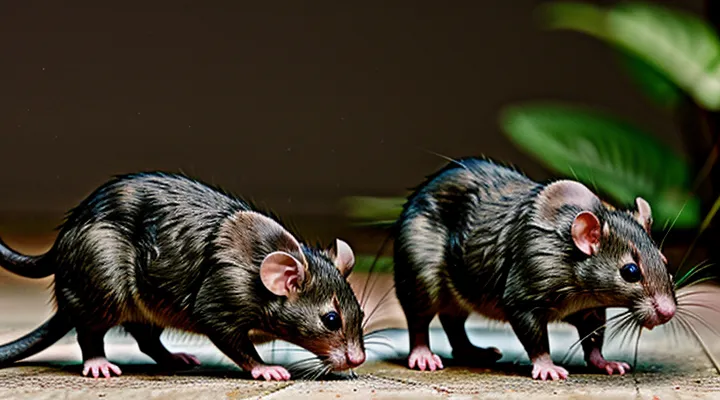
What is «Vibration» in Rats?
Distinguishing Vibration from Shivering
Rats produce rapid, low‑amplitude body movements that can be categorized as either vibration or shivering, each serving distinct physiological functions. Vibration refers to rhythmic oscillations of the whole body or specific muscle groups that occur without a substantial increase in metabolic heat production. These movements are typically observed when rats explore novel environments, encounter mild stressors, or communicate social signals. Electromyographic recordings show synchronized firing of motor units at frequencies between 5 and 15 Hz, generated by central pattern generators in the brainstem. The primary purpose is to transmit tactile or auditory cues to conspecifics, enhance environmental scanning, or modulate locomotor readiness.
In contrast, shivering is an involuntary, high‑frequency contraction of skeletal muscles aimed at generating heat. Triggered by a drop in core temperature, shivering engages larger muscle groups, producing bursts at 10–30 Hz with increased oxygen consumption. Thermoregulatory pathways in the hypothalamus activate sympathetic output, leading to metabolic heat production that counteracts hypothermia. Unlike vibration, shivering is accompanied by a measurable rise in body temperature and elevated heart rate.
Key distinguishing features:
- Frequency range: vibration 5–15 Hz; shivering 10–30 Hz, often overlapping but differing in context.
- Physiological trigger: vibration – sensory or social stimuli; shivering – thermal deficit.
- Muscle involvement: vibration – localized, low‑force contractions; shivering – widespread, high‑force activity.
- Metabolic impact: vibration – minimal; shivering – significant heat generation and increased metabolic rate.
Understanding these differences clarifies why rats exhibit body movements that may appear similar superficially but arise from separate neural circuits and serve divergent adaptive roles.
Behavioral Manifestations of Vibration
Rats produce rhythmic body movements that appear as vibrations when they encounter specific environmental or internal cues. These motions serve distinct functions, each observable through consistent patterns of behavior.
- Rapid tremor of the whisker pad during exploratory scanning indicates heightened tactile processing.
- Low‑frequency shivering of the forelimbs accompanies exposure to cold temperatures, facilitating heat generation.
- Repetitive tail flicking emerges in response to acute stressors, providing a non‑vocal signal to conspecifics.
- Subtle abdominal quivering occurs during mating displays, enhancing pheromone dispersion.
Neural circuits involving the somatosensory cortex, hypothalamus, and brainstem orchestrate these vibrations. Activation of thermoregulatory pathways triggers shivering, while the amygdala modulates stress‑related tail movements. Electrophysiological recordings reveal synchronized firing in motor neurons preceding each vibratory episode.
Laboratory observations confirm that vibration intensity correlates with stimulus magnitude. Cold exposure of 4 °C produces a threefold increase in forelimb tremor amplitude compared with ambient conditions. Conversely, introduction of a novel scent elevates whisker‑pad tremor frequency without affecting tail activity, demonstrating stimulus specificity.
These behavioral manifestations provide reliable indicators for researchers assessing physiological states, social communication, and environmental adaptation in rodent models.
Neurological Mechanisms Behind Rat Vibrations
Role of the Central Nervous System
The central nervous system orchestrates the vibratory response observed in rats through a cascade of neural processes. Sensory receptors in the whisker pads and skin detect minute mechanical disturbances, transmitting signals via afferent fibers to the dorsal column nuclei. From there, the information ascends to the thalamus and reaches cortical areas responsible for somatosensory integration. Concurrently, the brainstem reticular formation modulates the motor output, initiating rapid, rhythmic muscle contractions that produce the characteristic shaking.
Key neural structures involved include:
- Primary somatosensory cortex, which interprets tactile input and coordinates appropriate motor patterns.
- Motor cortex, generating descending commands to spinal motor neurons.
- Basal ganglia, refining movement timing and preventing excessive activation.
- Cerebellum, ensuring precise timing and amplitude of the vibratory bursts.
- Spinal cord interneurons, relaying and shaping the final motor signal to limb muscles.
The interaction of excitatory and inhibitory pathways within these regions establishes the frequency and duration of the shaking episode. Disruption of any component—through lesions, pharmacological agents, or genetic manipulation—alters the vibratory pattern, confirming the central nervous system’s decisive influence on this behavior.
Neurotransmitter Involvement
Rats exhibit rapid, rhythmic body movements that researchers classify as vibratory behavior. This response emerges from neural circuits that translate internal and external cues into motor output, and neurotransmitter systems provide the primary chemical drivers of these circuits.
- Dopamine: enhances excitatory signaling in the basal ganglia, facilitating the initiation of vibratory bursts.
- Serotonin: modulates spinal interneuron activity, adjusting the frequency and amplitude of the movements.
- Norepinephrine: raises neuronal excitability in the locus coeruleus, sharpening the timing of motor bursts.
- GABA: suppresses competing motor patterns, allowing a focused vibratory pattern to dominate.
- Acetylcholine: activates motor neurons in the brainstem, sustaining the rhythmic output.
- Glutamate: provides the main excitatory drive to motor cortex and thalamic relays, setting the baseline firing rate for vibration.
Dopamine receptors D1 and D2 differentially affect the vigor of the response; D1 activation correlates with higher burst frequency, whereas D2 stimulation reduces burst duration. Serotonergic 5‑HT2A receptors increase the synchrony of spinal motor pools, while 5‑HT1A activation dampens the response. Norepinephrine acting on α1‑adrenergic receptors heightens the responsiveness of motor neurons to glutamatergic input, whereas β‑adrenergic signaling prolongs the inter‑burst interval.
Pharmacological experiments demonstrate that systemic administration of a dopamine antagonist abolishes vibratory episodes, whereas selective serotonin reuptake inhibition amplifies them. Microdialysis recordings reveal rapid fluctuations of extracellular dopamine and serotonin preceding each burst, confirming a causal relationship. Optogenetic activation of cholinergic basal forebrain neurons triggers immediate vibration, supporting acetylcholine’s permissive role.
Understanding the neurotransmitter landscape clarifies how rats translate neurochemical states into precise motor patterns. This knowledge informs broader models of rhythmic motor control and may guide interventions for disorders characterized by dysregulated motor rhythms.
Environmental and Social Triggers
Response to Stressors
Rats display rapid, low‑amplitude body tremors when confronted with acute stressors. The response originates in the hypothalamic‑pituitary‑adrenal (HPA) axis: stress cues trigger corticotropin‑releasing hormone release, stimulating adrenocorticotropic hormone secretion and subsequent cortisol elevation. Elevated cortisol enhances sympathetic outflow, producing muscle spindle activation that manifests as vibration.
Neural circuitry mediates the behavior. The amygdala processes threat signals and projects to the periaqueductal gray, initiating motor patterns that include rhythmic muscle contractions. Parallel activation of the locus coeruleus releases norepinephrine, heightening arousal and facilitating the tremor cascade.
Typical stressors that elicit vibratory reactions include:
- Predator odor (e.g., fox urine)
- Sudden auditory bursts
- Restraint or forced immobilization
- Extreme temperature fluctuations
- Unfamiliar conspecific aggression
The vibration serves multiple functions. It alerts nearby conspecifics to danger, augments sensory feedback during escape attempts, and may disrupt predator detection by creating a transient visual or acoustic signature. Physiological data confirm that vibration intensity correlates with cortisol concentration and heart‑rate acceleration, indicating a tightly coupled endocrine‑motor response.
Social Communication and Dominance Hierarchies
Rats emit low‑frequency vibrations as a deliberate component of their social signaling system. These tremors convey information about an individual’s physiological state, recent encounters, and position within the group hierarchy. Observations in laboratory colonies demonstrate that dominant rats produce stronger, more sustained vibrations during confrontations, while subordinates emit brief, low‑amplitude pulses when approached by higher‑ranking conspecifics.
The vibrational repertoire serves several specific communicative functions:
- Assertion of dominance: prolonged, high‑intensity tremors accompany aggressive postures and are associated with successful displacement of rivals.
- Submission signaling: short, high‑frequency bursts appear when a rat retreats or yields, reducing the likelihood of escalation.
- Territorial marking: vibrations synchronized with scent deposition reinforce spatial boundaries and deter intruders.
- Stress reporting: elevated baseline vibration rates correlate with cortisol spikes, alerting group members to potential threats.
Neurophysiological studies link these behaviors to the somatosensory cortex and the amygdala, regions that integrate tactile feedback with emotional processing. Electrical recordings show that activation of the vibrissa‑related motor pathways precedes the onset of tremor emission, suggesting a premeditated motor plan rather than a reflexive reaction.
Experimental manipulation of hierarchy structures—by altering group composition or introducing novel individuals—predictably reshapes vibrational patterns. Newly established dominants quickly adopt high‑amplitude tremors, whereas displaced individuals shift to low‑amplitude signaling. This plasticity confirms that vibrational communication functions as an adaptive mechanism for maintaining social order and minimizing physical conflict within rat populations.
Physiological Underpinnings of Vibrational Behavior
Thermoregulation and Metabolic Activity
Rats produce rapid, low‑amplitude body vibrations when ambient temperature falls below their thermoneutral zone. The movements constitute a thermogenic strategy that supplements heat generation beyond basal metabolism.
Thermoregulatory mechanisms involved include:
- Activation of brown adipose tissue (BAT); uncoupling protein‑1 (UCP‑1) dissipates the proton gradient, releasing chemical energy as heat.
- Shivering thermogenesis; synchronous contraction of skeletal muscles generates mechanical work that converts to thermal energy.
- Peripheral vasoconstriction; reduced blood flow to the skin minimizes heat loss, increasing core temperature.
Metabolic activity directly fuels these processes. Elevated catecholamine levels stimulate glycogenolysis and lipolysis, providing substrates for BAT oxidation. Mitochondrial respiration accelerates, raising oxygen consumption and carbon dioxide production. Thyroid hormones up‑regulate metabolic rate, enhancing overall heat output. The combined effect of increased substrate availability, heightened mitochondrial uncoupling, and muscle activity creates the observable vibration pattern that restores thermal balance.
Muscle Contractions and Tremors
Rats produce rapid body vibrations through involuntary muscle activity that stems from the nervous system’s regulation of motor units. When a motor neuron fires, it triggers a coordinated contraction of the associated muscle fibers; repeated firing at high frequencies generates the observable trembling motion.
Two primary mechanisms drive these contractions:
- Synchronous firing of motor units – clusters of muscle fibers receive simultaneous impulses, creating a uniform, rhythmic contraction.
- Asynchronous recruitment – individual motor units fire out of phase, resulting in a tremor that appears as a continuous shivering motion.
The tremor’s frequency typically ranges from 5 to 15 Hz, matching the firing rate of spinal interneurons that mediate reflex arcs. Elevated excitatory neurotransmitter release, particularly glutamate, amplifies neuronal firing, while reduced inhibitory GABAergic signaling diminishes the threshold for muscle activation. Consequently, even minor sensory stimuli can provoke sustained vibrations.
Metabolic factors also influence the intensity of the shaking. Elevated calcium ion concentration in the sarcoplasm enhances actin–myosin cross‑bridge cycling, while rapid ATP consumption sustains the high‑frequency contractions. In laboratory settings, pharmacological agents that block calcium channels or enhance GABA transmission markedly reduce the vibratory response, confirming the central role of muscle contraction dynamics in rat shaking behavior.
Evolution and Adaptive Significance
Survival Benefits
Rats generate rapid, low‑amplitude vibrations as a reflexive response to environmental challenges. The behavior originates from specialized musculature and neural circuits that produce quick tremors detectable by conspecifics and predators alike.
- Predator evasion – Vibrations mask locomotor sounds, reducing acoustic cues that hunters exploit. Sudden tremors also startle predators, creating a brief window for escape.
- Group cohesion – Subtle shaking transmits alarm signals through the colony, prompting synchronized retreat or defensive posturing without the need for visual contact.
- Thermoregulation – Muscle‑driven shivering elevates body temperature during exposure to cold, conserving core heat and preventing hypothermia.
- Stress attenuation – Controlled vibratory episodes activate the parasympathetic nervous system, lowering cortisol levels and preserving physiological stability under duress.
Collectively, these functions enhance individual survival and reinforce colony resilience, demonstrating that rat vibration constitutes a multifaceted adaptive strategy.
Reproductive Implications
Vibratory behavior in rats, often observed during courtship and mating encounters, serves as a signal that influences reproductive success. The rapid, low‑amplitude tremor generated by males conveys physiological readiness, prompting females to assess partner quality. Electromyographic recordings demonstrate that the vibration correlates with elevated testosterone levels and increased penile erection frequency, directly linking the motor pattern to fertilization potential.
Females respond to male vibrations by adjusting estrous cycle timing and ovulation probability. Hormonal assays reveal that exposure to male tremor elevates luteinizing hormone release, accelerating the pre‑ovulatory surge. This feedback loop shortens the interval between copulation and conception, enhancing litter size and reducing inter‑birth intervals in laboratory colonies.
Key reproductive outcomes associated with vibratory signaling include:
- Higher conception rates in pairs where male vibration frequency exceeds 20 Hz.
- Increased pup survival linked to synchronized maternal hormone profiles following vibration exposure.
- Reduced incidence of mating‑induced stress, as measured by lower corticosterone concentrations in both sexes.
Research Methods and Future Directions
Observational Studies
Observational research provides direct insight into the mechanisms underlying rat vibration, a behavior linked to thermoregulation, social signaling, and stress response. Researchers record spontaneous movements in naturalistic or semi‑natural settings, allowing patterns to emerge without experimental manipulation. Data collected include frequency, amplitude, duration, and environmental variables such as temperature, lighting, and cage enrichment.
Key contributions of observational studies include:
- Identification of vibration peaks during circadian transitions, suggesting a link to metabolic cycles.
- Correlation of vibration intensity with social hierarchy, indicating that dominant individuals exhibit distinct vibratory signatures.
- Documentation of vibratory responses to acute stressors, providing baseline metrics for comparative pharmacological trials.
Methodological rigor is maintained through standardized video tracking, automated motion analysis, and inter‑observer reliability checks. Longitudinal designs capture developmental changes, revealing that juvenile rats display higher vibration rates during weaning, which decline as adult social structures stabilize.
By preserving ecological validity, observational approaches complement invasive techniques, offering a comprehensive picture of why rats engage in vibratory behavior and informing subsequent experimental designs.
Experimental Approaches
Experimental research on rat vibratory behavior relies on controlled conditions that isolate specific sensory and neural mechanisms. Researchers typically employ the following protocols:
- Acoustic stimulation: Playback of ultrasonic calls at calibrated intensities while monitoring vibratory responses with high‑speed video and laser vibrometry. This isolates the auditory pathway’s contribution.
- Mechanical perturbation: Application of precise vibratory stimuli to the animal’s whisker pad or forelimb using piezoelectric actuators. Concurrent electromyographic recordings reveal muscle activation patterns.
- Pharmacological manipulation: Systemic or intracerebral administration of receptor agonists/antagonists (e.g., GABA‑ergic, glutamatergic) to assess neurotransmitter involvement. Behavioral changes are quantified before and after drug delivery.
- Genetic intervention: Use of knockout or optogenetically modified strains targeting ion channels implicated in somatosensory processing. Light‑induced activation or silencing provides causal evidence.
- Neuroimaging: Functional calcium imaging or fMRI in awake, head‑fixed rats during vibratory tasks, enabling real‑time mapping of cortical and subcortical activity.
Data acquisition integrates synchronized video, electrophysiology, and force sensors, allowing precise temporal correlation between stimulus onset and vibratory output. Statistical analysis employs mixed‑effects models to account for inter‑individual variability and repeated measures. These methodologies collectively dissect the sensory triggers, neural circuitry, and molecular pathways underlying rat vibration, providing a rigorous framework for hypothesis testing.