
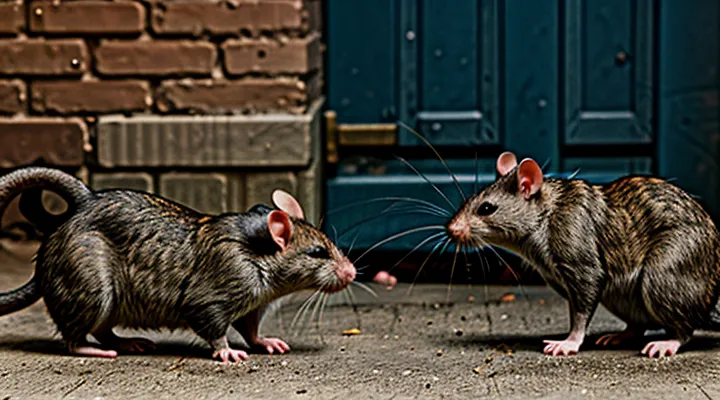
Understanding Rat Behavior
Social Dynamics in Rat Colonies
Hierarchy Establishment
Rats maintain social order through a hierarchical system that directly influences aggressive encounters. Dominance is established by repeated displays of strength, such as chasing, mounting, and biting, which create clear rank distinctions. Individuals that consistently win these contests gain priority access to resources, including food, nesting sites, and mating opportunities. This rank‑based allocation reduces uncertainty but also generates tension when lower‑ranking rats challenge the established order.
Key mechanisms driving hierarchy formation include:
- Physical contests – brief, high‑intensity fights resolve disputes over status.
- Chemical signaling – dominant rats emit higher levels of urinary pheromones that suppress rival aggression.
- Behavioral cues – posture, grooming of subordinates, and vocalizations reinforce rank without physical injury.
When a subordinate perceives an opportunity—such as a sudden resource surplus or the temporary absence of a dominant individual—it may initiate a challenge. Successful challenges restructure the hierarchy, prompting a cascade of confrontations as other members adjust to the new rank distribution. Consequently, the process of establishing and defending social rank accounts for a substantial proportion of observed rat aggression.
Resource Competition
Rats engage in aggressive encounters primarily when access to limited resources becomes contested. Competition for food, shelter, water, and mating opportunities creates direct pressure that triggers fights. When a valuable resource is scarce, individuals assess the cost of losing it against the risk of injury; the decision often favors confrontation.
Key resources that precipitate conflict include:
- Food sources: concentrated caches, grain spills, or feeding stations.
- Nesting sites: burrows, insulated cavities, or artificial shelters.
- Water: limited drinking points in arid environments or laboratory cages.
- Mates: receptive females during estrus periods.
Scarcity amplifies the value of each item, prompting rats to display dominance behaviors such as chasing, biting, and wrestling. Dominant individuals secure priority access, while subordinates may be forced to relocate or adopt alternative foraging strategies. Repeated exposure to resource shortage reinforces hierarchical structures, reducing the frequency of future disputes as the social order stabilizes.
Environmental factors that exacerbate competition encompass high population density, uneven distribution of food patches, and abrupt changes in resource availability. Management practices that evenly disperse supplies, provide multiple nesting options, and maintain adequate water access diminish the incentive for aggressive interactions.
Primary Causes of Aggression
Territorial Disputes
Scent Marking and Boundaries
Rats rely on urine, feces, and glandular secretions to delineate personal space. Each deposit contains a complex blend of pheromones that conveys individual identity, reproductive status, and dominance rank. The chemical signature persists on surfaces, allowing conspecifics to assess occupancy without direct contact.
When a rat encounters a foreign scent within its established perimeter, it interprets the signal as an intrusion. The animal responds by intensifying scent output, increasing patrol frequency, and, if the outsider persists, initiating aggressive displays. This pattern reduces the likelihood of cohabitation by reinforcing exclusive zones.
Typical outcomes of scent‑based boundary violations include:
- Rapid escalation to chases or bites once the intruder is detected.
- Heightened alarm vocalizations that summon nearby allies.
- Temporary suppression of foraging activity as the resident focuses on territorial defense.
Invasion by Outsiders
Rats respond aggressively when external individuals breach a established colony. The presence of non‑resident rats forces the resident group to defend limited supplies and spatial boundaries, prompting immediate confrontations.
Key mechanisms underlying this response include:
- Competition for food and water that intensifies as newcomers increase demand on shared stores.
- Encroachment on established burrow systems, which disrupts the spatial organization that resident rats rely on for shelter and escape routes.
- Disruption of the social hierarchy; dominant individuals must reassert authority when outsiders challenge rank, leading to direct attacks.
- Introduction of unfamiliar scents and pheromones that trigger heightened vigilance and territorial marking behavior.
- Transmission of pathogens that raise stress hormone levels, lowering tolerance for any additional threat and escalating aggression.
The cumulative effect of outsider invasion reshapes group cohesion. Residents may either expel intruders, reinforcing existing dominance structures, or experience increased mortality as fighting escalates. In either scenario, the colony’s stability hinges on the ability to neutralize external pressure quickly and decisively.
Mating Conflicts
Male-Male Competition
Male‑male competition is a primary driver of aggression among rats. When two males encounter each other, each assesses the opponent’s size, age, and recent fighting experience. The outcome determines access to resources that directly affect reproductive success.
Key factors that shape male‑male competition include:
- Territory ownership: established home ranges contain food caches and nesting sites; intruders provoke defensive attacks.
- Mating opportunities: dominant males secure proximity to estrous females, increasing paternity rates.
- Hormonal status: elevated testosterone amplifies aggression thresholds and reduces latency to attack.
- Physical condition: larger, healthier individuals win contests more often, reinforcing size‑based hierarchies.
- Social history: prior victories raise confidence, while repeated defeats diminish future aggression.
- Environmental pressure: high population density and limited resources intensify confrontations.
The competitive framework produces a stable dominance hierarchy. Dominant rats exhibit reduced stress hormones, higher breeding output, and priority access to shelters. Subordinate individuals adopt avoidance strategies, limiting exposure to injury. This system balances population dynamics, ensuring that the most fit males contribute disproportionately to the gene pool while maintaining overall group cohesion.
Female Receptivity and Aggression
Female receptivity exerts a powerful influence on the frequency and intensity of inter‑rat aggression. During estrus, hormonal fluctuations increase the likelihood that a female will emit ultrasonic vocalizations and pheromonal cues attracting males. These signals also heighten competition among neighboring females for access to preferred mates, prompting direct confrontations. Aggressive encounters often occur in the following contexts:
- Resource competition: Estrous females defend nesting sites and food caches that support offspring development.
- Mate guarding: A dominant female may repel rival females that attempt to approach a courting male, leading to swarming attacks.
- Territorial overlap: Overlapping home ranges during peak fertility create zones where receptive females encounter each other, escalating to biting and wrestling.
Neuroendocrine mechanisms link receptivity and aggression. Elevated estradiol and progesterone amplify activity in the ventromedial hypothalamus, a region associated with both sexual behavior and aggression. Simultaneously, increased dopamine release in the nucleus accumbens reinforces motivated pursuit of mates while lowering the threshold for aggressive responses toward competitors.
Behavioral observations confirm that aggression peaks within 24–48 hours of estrus onset and declines sharply after ovulation. Experimental manipulation of hormone levels—such as ovariectomy followed by estradiol replacement—reproduces this pattern, demonstrating causality rather than correlation.
In laboratory colonies, the presence of sexually receptive females predicts higher rates of fighting among both sexes. Management strategies that stagger estrous cycles or provide abundant, partitioned resources reduce conflict incidence, confirming that female receptivity is a central driver of aggression in rat populations.
Resource Scarcity
Food and Water Access
Rats depend on limited food and water sources, especially in dense colonies where supplies are unevenly distributed. When a resource is scarce, individuals increase patrol frequency around the item, detect intruders more rapidly, and react with aggression to defend access. This behavior reinforces hierarchical structures; dominant rats secure the most reliable supplies, while subordinates are forced to search farther, raising the likelihood of encounter and confrontation.
Key mechanisms linking resource competition to fighting include:
- Territorial marking: scent deposits around food or water stations signal ownership; breaches trigger immediate attacks.
- Resource monopolization: dominant individuals occupy high‑quality supplies, blocking others and provoking displacement fights.
- Temporal scarcity: brief availability periods concentrate activity, intensifying encounters at feeding times.
- Environmental stress: dehydration or hunger lowers tolerance thresholds, accelerating aggressive responses.
- Social hierarchy reinforcement: successful challenges restructure rank, prompting repeated bouts as rats test positions.
Empirical observations confirm that eliminating competition—through abundant, evenly spaced provisions—reduces aggressive incidents. Conversely, introducing a single, high‑value food or water source in a confined area reliably increases the frequency and intensity of fights. This pattern demonstrates that competition for nourishment and hydration is a primary driver of intra‑specific conflict among rats.
Shelter and Nesting Sites
Rats defend shelter and nesting sites with marked aggression when resources are limited. Competition for secure burrows or concealed crevices triggers territorial disputes that often end in physical confrontation.
Scarcity forces individuals to claim exclusive areas. Preferred sites provide protection from predators, stable microclimate, and proximity to food caches. When multiple rats attempt to occupy the same location, defensive behaviors such as charging, biting, and prolonged chases emerge.
Typical conflict mechanisms include:
- Establishment of exclusive burrow entrances and blockage of rival access.
- Deposition of urine and glandular secretions to reinforce ownership.
- Immediate attack on intruders that breach marked boundaries.
- Displacement of occupants through persistent harassment until the site is abandoned.
Environmental conditions intensify competition. High urban density concentrates populations in confined spaces, while seasonal temperature drops increase demand for insulated nests. Human activities that remove debris or alter building structures reduce the number of viable hiding places, forcing rats into closer contact.
Mitigation strategies focus on reducing pressure on limited shelters. Providing abundant nesting material, creating multiple artificial hideouts, and maintaining clutter-free yet structurally complex environments diminish the need for aggressive territorial defense.
Stress and Confinement
Overcrowding Effects
Overcrowding compresses the living area of a rat colony, forcing individuals into close proximity with limited access to food, water, and nesting material. The resulting competition for these essentials escalates tension, prompting aggressive encounters as rats attempt to secure personal resources.
Physiological stress rises when space is insufficient. Elevated cortisol levels impair social tolerance, reduce the threshold for attack, and accelerate the formation of dominant hierarchies that are enforced through frequent fighting.
Key effects of high density include:
- Reduced availability of personal shelter, leading to constant intrusion and defensive behavior.
- Increased frequency of bite wounds and disease transmission, which heighten irritability and provoke hostility.
- Disruption of established social order, causing repeated challenges to rank and frequent contests for supremacy.
Environmental Factors
Rats engage in aggressive encounters when environmental conditions limit access to essential resources or disrupt established spatial boundaries. Overcrowding forces individuals into close proximity, increasing the frequency of territorial breaches. Limited food supplies create competition that escalates into fighting, especially when high‑energy items are scarce. Uneven distribution of water sources produces similar pressure, prompting confrontations over hydration points.
Temperature extremes influence aggression levels. Cold environments reduce metabolic efficiency, prompting rats to defend heat‑retaining nests more fiercely. Heat stress diminishes tolerance, leading to heightened irritability and more frequent clashes. Light cycles affect circadian rhythms; irregular illumination can disturb activity patterns, causing unexpected encounters and subsequent disputes.
Human activity introduces additional stressors. Frequent handling, cage cleaning, or relocation disrupts familiar layouts, compelling rats to re‑establish dominance hierarchies. Noise and vibration from equipment generate anxiety, which often manifests as increased hostility toward conspecifics.
Key environmental drivers of rat conflict include:
- Overcrowding and limited space
- Scarcity or uneven distribution of food and water
- Temperature fluctuations (cold or heat stress)
- Disrupted light‑dark cycles
- Human‑induced disturbances (handling, cleaning, noise)
Research consistently links these factors to heightened aggression, demonstrating that modifying habitat conditions can reduce the incidence of fights among rats.
Health and Illness
Weakness and Vulnerability
Weakness and vulnerability shape the dynamics of rat aggression. Individuals perceived as fragile or at risk trigger confrontations that serve to protect resources, secure status, or eliminate perceived threats.
Physical frailty reduces a rat’s ability to escape, prompting opponents to initiate attacks rather than retreat. Injured or undernourished rats display heightened sensitivity to tactile cues, which can rapidly escalate minor contacts into full‑scale fights.
Social standing intertwines with vulnerability. Low‑ranking rats experience constant pressure to improve their position; the prospect of gaining dominance outweighs the risk of injury, leading them to challenge stronger peers more frequently.
Health impairments, such as parasitic load or respiratory infection, alter hormone levels and increase irritability. Compromised immune function lowers tolerance for social stress, causing affected rats to react aggressively to ordinary interactions.
Environmental exposure intensifies competition. Limited shelter or nesting sites force rats into close proximity, where any sign of weakness—shivering, reduced grooming, or sluggish movement—becomes a focal point for disputes.
Key mechanisms linking weakness to conflict:
- Physical injury → heightened defensive aggression
- Nutritional deficit → increased irritability and risk‑taking
- Low social rank → frequent challenges to ascend hierarchy
- Disease burden → hormonal shifts that amplify hostility
- Scarce shelter → amplified territorial battles over vulnerable individuals
Understanding these pathways clarifies why frailty does not deter combat but rather fuels it within rat populations.
Disease Transmission Concerns
Rats often engage in aggressive encounters when the presence of pathogens threatens the health of the colony. Infected individuals emit cues—such as altered scent signatures or increased stress hormones—that other rats perceive as a risk to group immunity. The resulting confrontations serve to isolate, expel, or eliminate compromised members, thereby reducing the chance of disease spread.
Key disease‑related factors that provoke conflict include:
- Respiratory pathogens that cause nasal discharge, making infected rats more detectable and prompting territorial challenges.
- Gastrointestinal parasites that alter fecal odor, signaling contamination and triggering defensive aggression.
- Blood‑borne viruses that affect coat condition and behavior, leading rivals to challenge weakened individuals.
- Bacterial infections that produce visible lesions, prompting attacks aimed at removing visibly sick rats.
These mechanisms reflect a form of social immunity: aggressive behavior functions as a selective pressure that curtails pathogen transmission within densely populated rodent communities.
Factors Influencing Aggression Levels
Age and Development
Juvenile Play Fights
Juvenile rats often engage in brief, reciprocal bouts that resemble fighting but serve primarily as practice for adult social interactions. These encounters involve rapid lunges, biting, and wrestling, followed by immediate cessation when one participant yields. The behavior is characterized by low intensity, short duration, and a clear absence of lasting injury.
During play fights, young rats test motor skills, learn bite inhibition, and establish dominance hierarchies without triggering the stress responses associated with genuine aggression. The outcomes influence future status within a litter, shaping how individuals will compete for resources such as food, nesting sites, and mating opportunities.
Key functions of juvenile play bouts include:
- Calibration of physical strength and coordination.
- Development of social cues that signal submission or escalation.
- Formation of stable rank order that reduces the need for severe conflicts later in life.
When play escalates into genuine aggression, the transition is marked by increased vocalizations, prolonged chases, and infliction of wounds. Such shifts frequently occur when individuals fail to recognize or respect the established hierarchy, when environmental stressors elevate competition for limited resources, or when prior social experiences have not adequately taught bite inhibition.
Understanding the dynamics of juvenile play fights clarifies how early, low‑risk interactions lay the groundwork for adult confrontations. By providing a controlled arena for skill acquisition and hierarchy formation, these bouts reduce the frequency and severity of later disputes, yet they also create the framework within which conflicts can arise when the learned signals break down.
Adult Dominance
Adult rats organize social structure around a dominance hierarchy that determines access to resources, mating opportunities, and territorial control. Dominant individuals assert authority through displays, scent marking, and occasional physical aggression, while subordinates recognize and avoid direct confrontation to reduce injury risk.
Hierarchy formation relies on repeated contests in which size, age, and previous victory history influence outcomes. Larger, older males typically initiate challenges, using rapid lunges, biting, and upright posturing to test rivals. Successful challengers replace incumbents, reinforcing the link between physical prowess and rank.
Key drivers of conflict linked to adult dominance include:
- Competition for limited food caches or nesting sites, prompting dominant rats to defend holdings against intruders.
- Presence of estrous females, which attracts multiple mature males and heightens territorial disputes.
- Introduction of unfamiliar adults, disrupting established rank order and triggering aggressive assessments.
- Seasonal fluctuations in hormone levels, especially testosterone, that amplify aggressive motivation.
Resolution of these encounters often results in clear rank assignment, reduced future aggression within the group, and optimized resource distribution. Persistent dominance struggles can increase injury rates and stress, influencing overall colony health and reproductive success.
Genetic Predisposition
Inherited Traits
Inherited traits shape the propensity of rats to engage in aggressive encounters. Genetic variations influence neural circuits that regulate territoriality, dominance, and response to intruders. Specific alleles affect the production and reception of neurotransmitters such as serotonin and dopamine, which modulate impulsivity and aggression levels.
Research identifies several hereditary components that predispose rats to conflict:
- Polymorphisms in the MAOA gene correlate with reduced serotonin breakdown, leading to heightened irritability.
- Variants of the AVPR1a receptor gene enhance vasopressin signaling, intensifying social dominance behaviors.
- Mutations in the DRD4 dopamine receptor gene increase novelty seeking and risk‑taking, contributing to escalated fights.
- Inherited differences in corticosterone metabolism affect stress reactivity, influencing the threshold for aggressive outbursts.
These genetic factors interact with developmental conditions. Offspring inherit baseline neurochemical profiles that determine how they perceive and react to conspecifics. Even when environmental pressures are identical, rats carrying aggression‑promoting alleles display more frequent and severe confrontations than genetically neutral individuals.
Selective breeding experiments confirm causality. Lines selected for high aggression retain elevated expression of the above genes across generations, while low‑aggression lines exhibit suppressed expression and reduced fight frequency. The persistence of these traits demonstrates that inherited biology constitutes a core driver of intra‑species conflict among rats.
Breed Specifics
Different rat strains exhibit distinct behavioral patterns that influence the likelihood of intra‑species aggression. Laboratory strains such as Sprague‑Dawley and Wistar display relatively low territoriality, which reduces the frequency of fights in confined environments. In contrast, outbred stock and wild‑derived rats maintain strong dominance hierarchies; they readily challenge unfamiliar conspecifics to establish rank.
Breed‑specific factors that affect conflict include:
- Territorial instinct – Wild‑type and some heritage breeds aggressively defend nest sites and foraging zones.
- Social hierarchy rigidity – Strains with pronounced dominance structures (e.g., Long‑Evans) initiate more frequent challenges when group composition changes.
- Stress sensitivity – Certain genetic lines exhibit heightened cortisol responses, leading to escalated aggression under crowding or resource scarcity.
- Sexual dimorphism – Males of many breeds show increased fight propensity during breeding seasons, while females generally display lower aggression unless defending offspring.
Understanding these breed characteristics clarifies why some rat populations engage in recurrent combat while others coexist with minimal conflict. Adjusting housing density, providing multiple shelters, and grouping compatible strains can mitigate aggression rooted in breed‑specific traits.
Hormonal Influences
Testosterone Levels
Testosterone is a primary endocrine variable linked to aggressive behavior in rodents. Elevated circulating concentrations correspond with increased frequency and intensity of confrontations among male rats.
Laboratory measurements reveal a positive correlation between serum testosterone and the number of attacks initiated during resident‑intruder tests. Individuals with higher levels display shorter latency to strike and sustain longer bouts of fighting.
Castration experiments produce a marked decline in aggression; subsequent administration of exogenous testosterone restores combativeness to pre‑surgical levels. These manipulations confirm a causal relationship rather than a mere association.
Androgen receptors concentrate in the amygdala, hypothalamus, and prefrontal cortex, regions governing threat assessment and impulse control. Binding of testosterone modulates dopamine and serotonin pathways, amplifying the motivational drive to dominate rivals.
Understanding testosterone dynamics clarifies one biological pathway that precipitates conflict among rats, offering a measurable target for studies of social hierarchy and competitive behavior.
Stress Hormones
Stress hormones trigger physiological changes that predispose rats to aggressive encounters. Elevated corticosterone, the primary glucocorticoid in rodents, amplifies vigilance and reduces tolerance for social challenges. Simultaneously, increased adrenaline mobilizes energy stores, sharpens motor responses, and heightens threat perception. These hormonal shifts interfere with the neural circuitry governing impulse control, particularly within the prefrontal cortex and amygdala, leading to rapid escalation of confrontations.
Key mechanisms linking stress hormones to rat fighting:
- Corticosterone surge – suppresses social bonding signals, enhances dominance signaling, and prolongs recovery after a conflict.
- Adrenaline spike – accelerates heart rate and respiration, supports sustained physical aggression, and intensifies fight-or-flight readiness.
- Interaction with dopamine – stress hormones modulate dopamine release, reinforcing reward pathways associated with successful aggression.
Consequences of chronic hormone elevation include heightened baseline aggression, reduced ability to de‑escalate, and increased frequency of fatal encounters. Managing environmental stressors—such as overcrowding, unpredictable food supply, and novel odors—mitigates hormonal overproduction and can lower the incidence of violent interactions among rats.
Resolution and Prevention of Conflict
Conflict Escalation and De-escalation
Warning Signals
Rats rarely engage in direct combat without first emitting a set of unmistakable warning cues that signal territorial or hierarchical disputes. These cues reduce the likelihood of injury by allowing opponents to assess the seriousness of the challenge and, when possible, withdraw before escalation.
- Ultrasonic vocalizations (USVs) in the 22‑kHz range, emitted during agitation, convey threat and distress.
- Scent marking with dense urinary deposits on the perimeter of a nest or food source, establishing a chemical boundary.
- Rapid tail flicks combined with stiffened body posture, indicating readiness to strike.
- Direct eye contact coupled with forward lunges, serving as a visual deterrent.
- Aggressive grooming or whisker flattening, which modifies tactile perception and signals heightened arousal.
Each signal functions as a graded alarm: low‑intensity cues, such as mild tail movements, permit a peaceful retreat, while high‑intensity signals, like sustained 22‑kHz USVs, often precede physical confrontation. The interaction of auditory, olfactory, and visual components creates a multimodal warning system that enables rats to negotiate dominance without resorting to costly fights.
The presence and intensity of these warnings predict the outcome of dyadic encounters. Experiments measuring USV frequency and tail‑flick rate reliably forecast whether a bout will culminate in aggression or de‑escalation. Consequently, researchers use these metrics to quantify social stress, assess the efficacy of pharmacological interventions, and model conflict resolution mechanisms in other species.
Understanding rat warning signals refines interpretations of conflict dynamics and informs the design of humane laboratory practices. Accurate identification of pre‑conflict cues allows early intervention, reduces animal suffering, and enhances the ecological validity of behavioral studies.
Physical Confrontations
Rats engage in direct physical confrontations when competition for limited resources intensifies. Encounters typically involve aggressive postures, rapid lunges, and forceful bites that can cause severe injury. These bouts serve to eliminate rivals and secure access to food, nesting sites, or mates.
Physical aggression manifests in several distinct behaviors:
- Boxing – forepaws raised, rapid swings aimed at the opponent’s head or body.
- Wrestling – interlocking of bodies, rolling on the substrate, and attempts to overturn the rival.
- Bite attacks – incisors directed toward the neck, limbs, or tail, often resulting in puncture wounds.
- Tail slashing – vigorous whipping of the tail to inflict pain or disorient the opponent.
Triggers for these actions include territorial infringement, hierarchical challenges, and heightened stress levels. When a dominant individual detects an intruder within its established range, the likelihood of a physical clash rises sharply. Similarly, the presence of estrous females amplifies competition, prompting males to resort to forceful displays.
Outcome of confrontations determines social ranking and resource allocation. Victors gain priority access, while losers experience reduced feeding opportunities and increased exposure to predators. Persistent injuries can affect reproductive success, reinforcing the evolutionary pressure for effective combat strategies.
Management Strategies
Environmental Enrichment
Environmental enrichment supplies stimuli that satisfy rats’ innate exploratory, foraging, and social needs. By providing objects such as nesting material, tunnels, chew blocks, and platforms, enrichment reduces the monotony of a barren cage and limits the buildup of stress that can trigger aggressive encounters.
When enrichment is absent, rats compete for scarce resources, experience heightened anxiety, and display redirected behaviors that manifest as fighting. The scarcity of shelter and the inability to perform natural digging or gnawing activities create frustration, which escalates into territorial disputes and bite wounds.
- Nesting material (e.g., shredded paper, cotton) offers secure micro‑habitats.
- Plastic or wooden tunnels create escape routes and visual barriers.
- Chewable objects (e.g., wooden blocks, sisal ropes) fulfill gnawing urges.
- Foraging devices disperse food, encouraging problem‑solving and reducing food‑related competition.
- Variable cage layouts prevent habituation and promote exploration.
Empirical data show that groups housed with a combination of the items above exhibit fewer aggressive bouts, lower incidence of injuries, and reduced cortisol levels compared with rats kept in minimally equipped cages. Quantitative assessments report a 30‑45 % decline in fight frequency after enrichment implementation.
Effective protocols integrate at least three enrichment categories, rotate items weekly to maintain novelty, and monitor individual behavior to adjust the provision according to hierarchy dynamics. Consistent application of these measures mitigates conflict and supports stable social structures among laboratory rats.
Group Introductions
Introducing new individuals into an established rat colony triggers a cascade of social assessments that often precipitate aggression. Existing members evaluate the newcomers for dominance potential, resource competition, and territorial intrusion. The intensity of these confrontations depends on several measurable variables.
- Prior social hierarchy – Established dominance structures resist alteration; unfamiliar rats challenge rank, prompting fights.
- Territorial familiarity – Rats defend known burrows and feeding zones; sudden presence of outsiders breaches perceived boundaries.
- Age and size disparity – Larger or older newcomers can intimidate residents, while smaller intruders may provoke defensive attacks.
- Genetic relatedness – Low kinship reduces cooperative tolerance, increasing the likelihood of hostile encounters.
- Environmental stressors – Limited shelter or food amplifies competition, magnifying the impact of group introductions.
Researchers observe that gradual, staged introductions—allowing visual and olfactory contact before physical interaction—lower conflict rates. Controlled exposure to scent cues enables residents to recognize newcomers as non‑threatening, facilitating smoother integration. Conversely, abrupt, simultaneous release of multiple unfamiliar rats typically escalates aggression, leading to injuries and potential mortality.
Effective management of group introductions therefore requires manipulation of hierarchy cues, spatial resources, and sensory exposure. By aligning these factors with the colony’s existing social framework, caretakers can minimize conflict and promote stable group dynamics.