
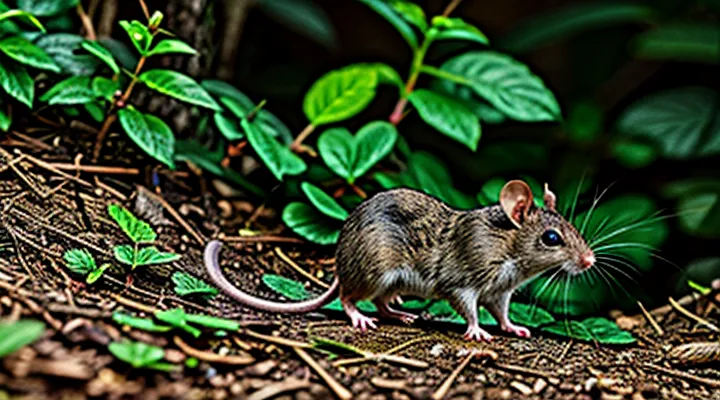
Their Position in the Food Web
Primary Consumers
Mice and rats occupy the primary consumer tier, directly converting plant matter into animal tissue. Their consumption of seeds, grasses, tubers, and insects transfers energy from producers to higher trophic levels.
Typical diet components include:
- Wild grains and cereals
- Seed pods and fallen fruit
- Herbaceous shoots
- Small invertebrates such as beetles and larvae
By removing seeds and seedlings, these rodents regulate plant population density, preventing dominance of a single species and promoting biodiversity. Their foraging behavior also disperses viable seeds to new locations, facilitating colonization and genetic exchange across habitats.
Predators—including owls, foxes, snakes, and raptors—depend on the abundant biomass supplied by mice and rats. The steady supply of prey stabilizes predator numbers, which in turn moderates populations of other small vertebrates and invertebrates.
Through ingestion, digestion, and excretion, rodents recycle nutrients. Their feces return nitrogen, phosphorus, and organic carbon to the soil, enhancing microbial activity and accelerating decomposition. This nutrient turnover supports plant growth and sustains the base of the food web.
Prey for Predators
Mice and rats provide a consistent energy source for a wide range of carnivorous and omnivorous species. Their rapid reproductive cycles generate abundant biomass, allowing predator populations to sustain themselves even when alternative prey are scarce. This steady supply supports the reproductive success and survival rates of predators such as owls, hawks, foxes, weasels, and snakes.
By serving as primary prey, these rodents facilitate the transfer of energy from primary producers to higher trophic levels. When predators consume mice and rats, nutrients accumulated in plant matter are moved upward through the food chain, reinforcing ecosystem productivity. The predation pressure also regulates rodent densities, preventing overgrazing and soil disturbance that could degrade vegetation and habitat structure.
Predator reliance on small rodents creates a feedback loop that enhances biodiversity. Diverse predator assemblages reduce the risk of any single species dominating, which promotes balanced community dynamics. The presence of mice and rats therefore underpins the stability of predator guilds and contributes to the resilience of the entire ecosystem.
Key predator groups that depend on these rodents:
- Birds of prey (e.g., barn owl, kestrel, red-tailed hawk)
- Mammalian carnivores (e.g., red fox, raccoon, stoat)
- Reptilian hunters (e.g., common garter snake, copperhead)
- Small carnivorous mammals (e.g., shrew, mink)
Ecosystem Engineering
Soil Aeration and Nutrient Cycling
Mice and rats burrow extensively, creating networks of tunnels that introduce air into compacted soil layers. The resulting channels improve oxygen diffusion, reduce anaerobic zones, and enhance root penetration for plants. Their digging activity also breaks up clods, increasing the contact surface between soil particles and water.
Through consumption of organic material, these rodents generate fecal deposits rich in nitrogen, phosphorus, and potassium. The waste is rapidly broken down by microbes, accelerating the release of nutrients that become available to vegetation. This process supplements natural decomposition pathways and shortens the turnover time of plant residues.
Key contributions to soil health include:
- Mechanical disruption of soil structure, fostering aeration and root growth.
- Redistribution of surface litter into deeper layers, expanding the zone of microbial activity.
- Production of nutrient-dense excreta that feed microbial communities and promote mineralization.
Collectively, the activities of small rodents sustain a dynamic soil environment, supporting plant productivity and overall ecosystem function.
Seed Dispersal
Mice and rats collect seeds that have fallen to the ground, store them in shallow burrows, and sometimes forget their locations. This behavior moves seeds from the immediate vicinity of the parent plant to new microhabitats where competition and predation pressures differ.
The dispersal process involves several steps:
- Removal of seeds from the soil surface reduces exposure to fungal pathogens.
- Burial in caches creates a moist, protected environment that enhances germination rates.
- Forgotten caches result in seeds being planted at distances ranging from a few meters to several hundred meters.
These actions increase plant genetic diversity by promoting cross‑population gene flow. Species that rely on rodent dispersal often exhibit seed traits such as high nutritional value and hard coats, which attract foraging mammals and improve the likelihood of successful implantation.
In ecosystems where mouse and rat populations decline, seed dispersal rates drop, leading to reduced regeneration of certain shrubs and trees. Consequently, vegetation structure becomes less heterogeneous, affecting other wildlife that depend on diverse plant communities for shelter and food.
Overall, the seed‑transport activities of these rodents support plant recruitment, maintain habitat complexity, and contribute to the resilience of ecological networks.
Population Dynamics and Control
Rapid Reproduction as a Survival Strategy
Mice and rats sustain ecosystem stability through a reproductive strategy that compensates for high mortality rates. Their ability to produce multiple litters each year, each containing several offspring, ensures a constant supply of prey for predators and a steady flow of organic material into the soil.
Key outcomes of rapid reproduction include:
- Immediate replenishment of population after predation or disease outbreaks.
- Continuous input of nutrients via carcasses, feces, and urine, enhancing microbial activity and soil fertility.
- Maintenance of seed dispersal and plant community dynamics, as rodents transport and consume seeds during foraging.
The strategy also buffers environmental fluctuations. When food availability declines, short gestation periods and early sexual maturity enable swift adjustments in population density, preventing collapse of the trophic links that depend on these rodents. Consequently, their prolific breeding underpins the resilience of the food web and nutrient cycles.
Impact on Plant Communities
Small rodents such as mice and rats exert direct and indirect pressure on plant communities, shaping composition and productivity. Their activities intersect with seed dynamics, soil structure, and herbivory, producing measurable effects on vegetation patterns.
- Seed predation and dispersal: Individuals consume a portion of seed stocks, reducing recruitment of dominant competitors; simultaneously, unattended seeds carried in fur or caches escape predation and germinate in novel microsites.
- Soil disturbance: Burrowing creates aerated channels, enhances water infiltration, and mixes organic matter, fostering conditions favorable for pioneer species and mycorrhizal associations.
- Herbivory pressure: Selective feeding on seedlings and tender shoots suppresses fast‑growing taxa, allowing slower‑growing, shade‑tolerant plants to persist.
- Nutrient cycling: Excreta deposit localized concentrations of nitrogen and phosphorus, creating nutrient hotspots that accelerate growth of nearby vegetation.
Collectively, these mechanisms increase heterogeneity within plant assemblages, promote coexistence of multiple species, and sustain regenerative capacity after disturbances. The presence of mice and rats therefore contributes to resilient plant communities that support higher trophic levels and overall ecosystem stability.
Indicators of Environmental Health
Sensitivity to Environmental Changes
Mice and rats possess heightened physiological and behavioral responsiveness to temperature, humidity, resource distribution, and predator cues. Rapid adjustments in metabolism, reproductive output, and movement patterns allow individuals and populations to reflect immediate environmental conditions.
Their short generation times produce swift demographic shifts. Population expansion occurs when food is abundant and conditions are favorable; rapid decline follows habitat degradation or increased predation pressure. These fluctuations generate real‑time signals for higher trophic levels and for researchers monitoring ecosystem health.
Key manifestations of sensitivity include:
- Altered foraging routes that track seasonal seed availability.
- Relocation of nests toward microhabitats offering optimal thermal stability.
- Variation in activity periods to avoid heightened predator activity.
- Modulation of reproductive cycles in response to food scarcity or excess.
Predators such as owls, foxes, and snakes adjust hunting effort based on the observed abundance of these rodents, linking predator success to the rodents’ environmental responsiveness. Soil aeration and seed dispersal rates change in tandem with rodent burrowing and caching behavior, which are themselves driven by local conditions. Consequently, the rodents’ acute perception of environmental change directly shapes energy flow, nutrient cycling, and species interactions throughout the ecosystem.
Role in Disease Transmission and Research
Mice and rats serve as natural reservoirs for numerous pathogens, facilitating the persistence and spread of diseases across wildlife, domestic animals, and humans. Their high reproductive rates and close proximity to human habitats enable sustained transmission cycles for agents such as hantaviruses, leptospira, and various bacterial strains. By harboring asymptomatic infections, these rodents maintain pathogen pools that can emerge under favorable ecological conditions, influencing epidemic patterns and informing public‑health surveillance.
In biomedical research, rodents provide reproducible models for studying disease mechanisms, drug efficacy, and vaccine development. Their genetic similarity to humans, short lifespans, and well‑characterized physiology allow precise manipulation of variables. Key contributions include:
- Development of insulin therapy through diabetic mouse models.
- Evaluation of antiviral compounds using rat models of respiratory infection.
- Investigation of neurodegenerative processes via transgenic mouse lines.
- Testing of immunogenicity and safety in pre‑clinical vaccine trials.
These functions underpin both ecological disease dynamics and the advancement of medical science.