
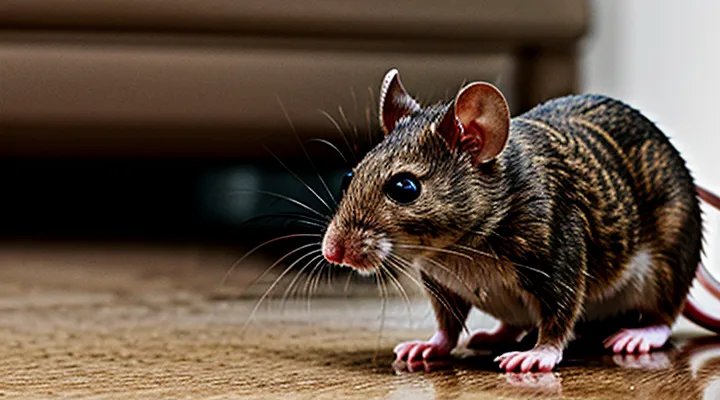
The Phenomenon of Musophobia
Historical and Cultural Context
«Folklore and Superstition»
Throughout history, folklore has repeatedly associated mice with feminine vulnerability. Tales from ancient Greece portray Artemis, goddess of the hunt, protecting women from vermin that threaten childbirth. In medieval Europe, superstitions linked mouse infestations to a woman’s loss of fertility, prompting rituals aimed at safeguarding reproductive health. These narratives embed a symbolic link between rodents and female bodily integrity, reinforcing apprehension.
Superstitious practices amplify the fear. Common beliefs include:
- A mouse entering a home signals an impending miscarriage or stillbirth.
- Women who encounter a mouse at night are thought to attract malevolent spirits that target their womb.
- Certain amulets—such as iron charms or dried herbs—are prescribed to repel mice and, by extension, protect female reproductive functions.
The persistence of such myths explains the disproportionate anxiety women display toward mice. Cultural transmission perpetuates the association, making the animal a recurring emblem of danger to female health and domestic stability.
«Media Portrayals of Mice and Reactions»
Media representations shape public attitudes toward small mammals, and the portrayal of mice is especially influential in forming female apprehension. Animated cartoons frequently depict mice as mischievous intruders that dart across kitchens or invade personal spaces, creating a visual cue of unpredictability. Horror films amplify this image by pairing squeaking sounds with sudden attacks, reinforcing a sense of danger despite the animal’s modest size. Advertisements for household products often use mice as symbols of infestation, positioning them as unwanted guests whose presence signals lack of cleanliness. These recurring motifs contribute to a cultural script that frames mice as threats to comfort and safety.
The audience response to such depictions follows a consistent pattern:
- Immediate physiological reaction (increased heart rate, startle reflex) when a mouse appears on screen.
- Verbal expressions of disgust or fear, often gender‑specific, noting a heightened sensitivity among women.
- Behavioral avoidance, such as turning away from scenes or refusing to engage with mouse‑related content.
Research on viewer surveys confirms that women report stronger emotional discomfort than men when exposed to mouse imagery, aligning with broader trends of heightened aversion to certain small animals. The correlation suggests that media cues amplify pre‑existing tendencies rather than generate them anew. Consequently, the way mice are rendered in visual media plays a pivotal role in sustaining and intensifying female unease toward these rodents.
Evolutionary and Biological Perspectives
«Innate Aversions and Survival Instincts»
Women’s heightened fear of mice aligns with innate aversions that have evolved to protect mammals from disease‑bearing pests. The nervous system treats rapid, unpredictable movements of small rodents as potential threats, prompting immediate defensive reactions.
- Evolutionary pressure favored individuals who avoided carriers of hantavirus, leptospirosis, and other zoonoses.
- Visual detection of whiskered, fast‑moving mammals triggers the amygdala, initiating a fight‑or‑flight cascade.
- Heightened cortisol release prepares the body for rapid withdrawal or aggression.
Physiological studies show that exposure to mouse cues elicits stronger startle responses in females than in males, reflecting sex‑specific modulation of the threat circuitry. Estrogen influences amygdala sensitivity, amplifying the perception of danger from rodents.
Cultural factors can reinforce the biological signal, but the core response derives from survival‑oriented mechanisms. The combination of disease avoidance, predator‑like stimulus detection, and hormone‑driven neural tuning accounts for the observed pattern of mouse fear among women.
«The Role of Pheromones and Sensory Cues»
Women’s aversion to mice often stems from biologically driven sensory processing rather than abstract cultural narratives. Rodent pheromones, especially those released by sexually mature males, contain volatile compounds that activate conserved olfactory pathways in mammals. Human olfactory receptors can detect these substances at low concentrations, triggering an innate defensive response that is more pronounced in females because estrogen modulates the sensitivity of the vomeronasal and main olfactory systems. Studies show that exposure to mouse urine or glandular secretions elicits increased heart rate and skin conductance in women compared with men, indicating a stronger autonomic reaction.
Sensory cues beyond scent contribute to the fear response. The following modalities are most relevant:
- Olfactory: detection of musky, urine‑derived chemicals that signal potential disease or aggression.
- Visual: rapid movement and small size activate the threat detection circuit in the superior colliculus and amygdala.
- Auditory: high‑frequency squeaks produce startle reflexes mediated by the brainstem.
- Tactile: unexpected contact with fur or whiskers generates a somatosensory alarm signal.
Each channel feeds into the limbic system, where the amygdala integrates the inputs and orchestrates a fear output. Hormonal fluctuations across the menstrual cycle further amplify olfactory acuity, making women more likely to register and react to mouse‑related cues. The convergence of pheromonal detection and multimodal sensory processing therefore explains the heightened fear response observed in many women.
Psychological and Sociological Factors
Learned Behaviors and Social Conditioning
«Parental and Peer Influences»
Women commonly display a stronger aversion to mice than men, and research links this pattern to early social conditioning. Parents contribute through direct and indirect mechanisms. When a mother or caregiver reacts fearfully to a mouse, the child observes and internalizes the response; repeated verbal warnings (“don’t touch that”) reinforce the association between rodents and danger. Positive reinforcement—praise for avoiding mice—strengthens avoidance behavior, while negative reinforcement—removing a feared stimulus after the child complies—solidifies the fear. Cultural narratives transmitted within the family, such as stories about disease or household contamination, add a cognitive layer that frames mice as hazardous.
Peers shape the same fear after the child enters broader social groups. Children exchange anecdotes about unpleasant encounters with rodents; peer groups often adopt a collective stance that labels mice as disgusting or threatening. Group conformity pressures encourage individuals to align their emotional reactions with the majority, amplifying personal discomfort. Observational learning occurs when a peer exhibits panic or revulsion, prompting imitators to mirror the response. Social media and school environments spread visual depictions of mice in negative contexts, further normalizing fear.
Key pathways through which parental and peer influences operate:
- Modeling of fearful behavior by adults or classmates
- Verbal reinforcement of danger associated with rodents
- Group norms that label mice as undesirable
- Observational learning from peers’ reactions
- Repetition of negative narratives in family and social settings
These mechanisms converge to produce a heightened, gender‑linked aversion to mice that persists into adulthood.
«Observational Learning from Others' Reactions»
Observational learning shapes fear responses when individuals witness others reacting fearfully to a stimulus. In the case of female aversion to rodents, the process unfolds through several mechanisms.
First, visual exposure to another’s startled behavior triggers a physiological mirroring response. The observer’s amygdala activates in tandem with the demonstrator’s, producing a rapid assessment of threat. This neural coupling occurs regardless of personal experience with the animal.
Second, verbal cues reinforce the visual signal. When a companion labels the mouse as “scary” or “dangerous,” the observer internalizes the appraisal, linking the animal to negative affect. Language amplifies the emotional weight of the observed reaction.
Third, social context dictates the strength of the learned fear. In environments where peers consistently display anxiety toward mice—such as households, workplaces, or media portrayals—the observer’s probability of adopting the same fear rises sharply. Repeated exposure consolidates the association between rodents and danger in memory networks.
Key findings supporting these points:
- Studies using video demonstrations show that participants develop heightened startle responses after watching actors recoil from a mouse, even when they had never encountered one before.
- Neuroimaging data reveal increased activity in the mirror‑neuron system and the insula during observation of fearful reactions.
- Surveys indicate that women who report frequent observation of others’ distress around rodents also score higher on standardized fear‑of‑animals scales.
Observational learning thus provides a direct pathway for the acquisition of mouse‑related fear among women, bypassing the need for personal negative encounters. The phenomenon underscores the role of social information in shaping specific phobias.
The Fight-or-Flight Response
«Physiological Manifestations of Fear»
Women’s aversion to small rodents triggers a cascade of physiological responses that reveal the body’s fear circuitry. Exposure to a mouse activates the amygdala, which signals the hypothalamus to initiate the sympathetic nervous system. The resulting surge of norepinephrine raises heart rate, increases cardiac output, and produces a rapid, shallow breathing pattern. Peripheral vasoconstriction redirects blood toward core muscles, causing pallor and cold extremities. Pupils dilate to enhance visual acuity, while the lacrimal glands may produce a thin tear film.
The endocrine system contributes additional markers. The adrenal medulla releases epinephrine, amplifying cardiac and respiratory effects. The hypothalamic‑pituitary‑adrenal axis secretes cortisol, which sustains alertness and modulates memory consolidation of the threatening encounter. Elevated cortisol levels can be detected in saliva within minutes of exposure.
Autonomic and endocrine changes are accompanied by somatic sensations that participants often report as:
- Tightness in the chest
- Tremor in the hands or fingers
- A sensation of “butterflies” in the stomach
- Muscular tension in the neck and shoulders
Neuroimaging studies show heightened activity in the insular cortex during rodent‑related fear, correlating with interoceptive awareness of these bodily signals. The combined autonomic, hormonal, and cortical responses constitute the physiological signature of fear when women encounter mice.
«Exaggerated Reactions to Small Stimuli»
Women frequently exhibit strong aversive responses to mice, a pattern that reflects broader tendencies to overreact to minimal threats. The phenomenon rests on several interrelated mechanisms.
Physiological sensitivity amplifies the impact of tiny, fast‑moving objects. The amygdala registers rapid motion as potential danger, triggering an immediate surge of cortisol and adrenaline. Heightened startle reflexes cause muscles to tense, heart rate to spike, and breathing to accelerate, even when the stimulus poses no real harm.
Cognitive appraisal compounds the physiological surge. People who have previously associated rodents with illness or disgust tend to overestimate the likelihood of injury. Memory retrieval favors vivid, negative encounters, reinforcing the belief that a mouse represents a serious risk. This bias leads to a disproportionate fear response relative to the actual danger.
Social and cultural conditioning shapes the expectation that women should be more cautious around small pests. Media frequently depict women reacting dramatically to rodents, while childhood narratives often reward squeamish behavior with attention. Repeated exposure to these cues ingrains a learned pattern of heightened vigilance.
Key contributors to exaggerated reactions include:
- Amygdala hyperreactivity to sudden motion
- Elevated cortisol and adrenaline release
- Threat overestimation driven by past negative experiences
- Cultural scripts that reinforce gendered fear expression
Together, these factors create a feedback loop in which minor stimuli, such as the sight of a mouse, provoke an outsized emotional and physiological reaction. Understanding this loop clarifies why the fear is more pronounced among women and points to targeted strategies—exposure therapy, cognitive restructuring, and media literacy—to moderate the response.
Gender-Specific Conditioning
«Societal Expectations of Feminine Vulnerability»
Women’s heightened fear of rodents aligns with cultural scripts that equate femininity with delicacy and susceptibility. From early childhood, girls receive messages that associate small, unpredictable creatures with danger, reinforcing a self‑image of vulnerability. This framing shapes physiological stress responses, prompting stronger aversive reactions when encountering mice.
Media reinforces the connection by repeatedly depicting women as startled or squeamish in scenes featuring rodents. Such portrayals normalize the expectation that women should exhibit visible discomfort, creating a feedback loop that validates personal fear.
Socialization practices contribute directly:
- Parents often shield daughters from insects and small animals, while encouraging boys to handle them.
- Educational settings may label fear of mice as “typical for girls,” discouraging girls from confronting the stimulus.
- Peer groups reward displays of apprehension, reinforcing the behavior as socially acceptable.
Empirical studies support the link. Surveys of adult populations show a statistically significant gender gap in reported mouse phobia, with women citing higher intensity scores. Neuroimaging research indicates greater activation in brain regions associated with threat perception among women exposed to rodent imagery, even after controlling for prior experience.
Collectively, societal expectations of feminine fragility cultivate and sustain the disproportionate fear of mice observed among women.
«The Impact of Gender Roles on Expressed Fear»
Women’s reported aversion to small rodents aligns with broader patterns of gender‑linked fear expression. Cultural scripts prescribe modesty, caution, and avoidance for females, while encouraging assertiveness and risk‑taking for males. These scripts condition how individuals interpret physiological arousal; a woman who feels a rapid heartbeat may label the sensation as fear, whereas a man might reinterpret the same cue as excitement or disregard it.
Social learning reinforces the pattern. From early childhood, girls receive more warnings about potential dangers, often framed with protective language. Media portrayals frequently pair female characters with squeamish reactions to insects or rodents, providing models that validate anxious responses. Repeated exposure to such models strengthens neural pathways linking the sight of a mouse to anxiety in women.
Biological factors intersect with social conditioning. Estrogen modulates amygdala activity, which can heighten threat detection. Research shows that during phases of elevated estrogen, women exhibit stronger physiological reactions to ambiguous threats, including unfamiliar animals. Hormonal influences do not act in isolation; they amplify socially learned expectations.
The combined effect produces measurable differences in reported fear intensity and behavioral avoidance. Empirical studies using standardized questionnaires and physiological monitoring reveal:
- Higher self‑reported fear scores for rodents among female participants.
- Greater skin‑conductance responses when women encounter live mice in laboratory settings.
- Increased likelihood of avoidance behavior, such as exiting a room or refusing to handle the animal.
These findings suggest that gender roles shape not only the expression but also the perception of fear toward small mammals. Interventions aiming to reduce disproportionate anxiety should address both cultural narratives and the underlying neurobiological mechanisms.