
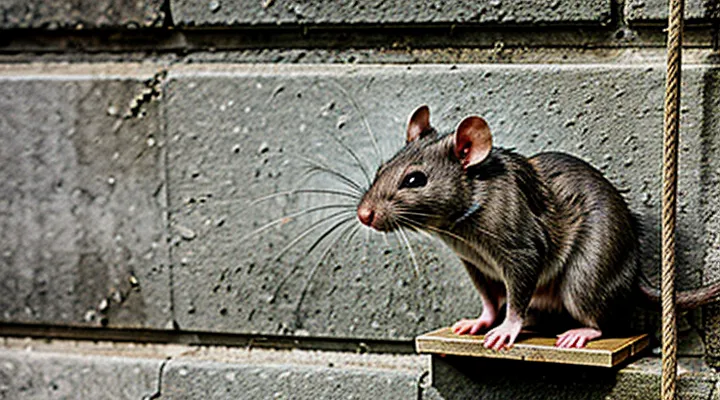
The Amazing Agility of Rats
Understanding Rat Anatomy for Climbing
Paws and Claws: Nature's Climbing Tools
Rats ascend vertical surfaces thanks to specialized extremities that combine mechanical and sensory adaptations. Their feet feature a dense array of flexible pads covered with microscopic setae that increase surface contact and generate friction. The pads contain sweat glands that excrete a thin, moist film, enhancing adhesion on smooth materials such as glass or painted walls.
Claws contribute a complementary grip. Each hind foot ends in a sharp, curved unguis capable of penetrating microscopic irregularities in the substrate. The curvature allows the claw to latch onto tiny protrusions, while the curvature of the toe joint maximizes leverage during pulling motions.
Sensory receptors embedded in the pads provide real‑time feedback on texture and pressure, enabling rapid adjustments in stance and force distribution. This proprioceptive network coordinates muscle activation to maintain balance on inclined or inverted planes.
Key anatomical features:
- Flexible pads with high‑density setae
- Moisture‑producing glands for increased surface tension
- Curved claws that engage micro‑asperities
- Integrated tactile receptors for dynamic grip modulation
Together, these elements form a self‑reinforcing system that allows rats to navigate walls, ceilings, and other vertical obstacles with efficiency and precision.
Flexible Skeletons: Navigating Tight Spaces
Rats scale vertical surfaces by exploiting a highly adaptable axial and appendicular skeleton. Their vertebrae possess elongated, lightly ossified processes that permit extensive bending without compromising structural integrity. This design allows the spine to twist sharply, aligning the body with narrow crevices and uneven substrates.
The rib cage contributes to flexibility through a loosely articulated costal cartilage network. The cartilage reduces rigidity, enabling the thorax to compress and expand as the animal squeezes through gaps as small as a few centimeters. Simultaneously, the scapular girdle remains loosely attached to the thorax, granting the forelimbs a wide range of motion essential for gripping irregular textures.
Key skeletal traits that facilitate navigation of confined spaces include:
- Highly mobile intervertebral joints with reduced interlocking facets.
- Prominent, retractable clavicles that allow shoulder rotation beyond typical mammalian limits.
- Hyperelastic tendons in the hindlimbs, storing and releasing energy for rapid adjustments.
- A reduced pelvis that can pivot laterally, aiding in lateral body shifts.
Collectively, these anatomical specializations create a skeletal framework that balances strength with extreme pliability, directly supporting the rat’s capacity to ascend walls and maneuver through tight environments.
The Science Behind Rat Climbing Abilities
Friction and Grip: A Key to Vertical Movement
Textured Surfaces: How Rats Find Footing
Rats ascend vertical structures by exploiting surface irregularities that provide reliable grip. Minute protrusions, ridges, and pores on a wall generate frictional forces that counteract gravity, allowing the animal to maintain stability without relying on suction or adhesive secretions.
The fore‑ and hind‑feet contain dense, pliable pads covered with keratinized scales. Each pad bears a network of mechanoreceptors that detect minute changes in pressure and shear. Sharp, retractable claws engage any protruding element, while the pads conform to micro‑textures, distributing load across a larger area and increasing contact friction.
When a surface presents roughness above a threshold of approximately 0.2 mm, rats adjust stride length and foot placement to align claws with the most prominent features. On smoother substrates, the animal increases the number of steps per unit distance, reduces stride speed, and relies more heavily on tactile feedback from whiskers and footpads to locate subtle imperfections.
Key factors that enable effective foothold on textured walls:
- Pad elasticity that adapts to irregular contours.
- High‑density mechanoreceptors delivering rapid sensory input.
- Retractable claws that lock onto protrusions.
- Dynamic gait modulation based on real‑time surface assessment.
These physiological and behavioral adaptations collectively allow rats to negotiate a wide range of wall textures, from coarse brickwork to moderately smooth concrete, by continuously seeking and exploiting the smallest available footholds.
The Role of Tail: Balance and Counterbalance
Rats achieve vertical locomotion through a combination of muscular strength, adhesive foot pads, and the dynamic use of their tails. The tail functions as an external gyroscope, extending the animal’s moment of inertia and allowing rapid adjustments to body orientation.
The tail is a muscular, flexible structure whose mass is distributed along its length. Sensory receptors in the skin and vertebrae transmit real‑time positional data to the central nervous system, enabling precise control of tail position during climbing.
Key mechanisms by which the tail supports wall ascent include:
- Extension of the tail away from the body creates a counter‑torque that stabilizes the trunk while the forelimbs push against the surface.
- Rapid retraction or lateral swing shifts the center of mass, preventing over‑rotation during sudden changes in direction.
- Continuous oscillation synchronizes with limb movements, smoothing the gait and reducing energy expenditure.
During high‑speed maneuvers, the tail acts as a counterbalance, offsetting angular momentum generated by the forelimbs. By adjusting curvature and angle, the rat can maintain a vertical trajectory without slipping, even on smooth or angled substrates.
Muscle Strength and Endurance
Powerful Hind Legs: Propelling Upwards
Rats ascend vertical surfaces primarily because their hind limbs generate the force needed to overcome gravity. Muscular fibers in the femur and tibia are densely packed with fast‑twitch fibers, allowing rapid contraction and high power output. Tendons transmit this force to the foot pads, creating a propulsive thrust that lifts the body upward with each hop.
Key anatomical adaptations that enhance this thrust include:
- Elongated femur‑tibia axis, increasing stride length.
- Robust gastrocnemius and soleus muscles, delivering strong plantar flexion.
- Elastic Achilles tendons that store and release energy, improving efficiency.
Combined with a low body mass and flexible spine, these hind‑leg characteristics enable rats to execute successive jumps that propel them upward, allowing them to negotiate walls that would be inaccessible to many other rodents.
Forelimb Dexterity: Grabbing and Pulling
Rats ascend vertical surfaces by exploiting the precision of their forelimbs, which combine strong grip and coordinated pulling motions. The forepaw’s anatomy features elongated digits, flexible joints, and dense clusters of mechanoreceptors that detect minute surface irregularities. Muscles such as the flexor digitorum and extensor digitorum control digit closure and release, while the brachioradialis and pronator teres generate the torque needed to lift the body upward.
Key functional elements include:
- Adhesive pads: keratinized pads with microstructures increase friction, allowing secure contact on smooth or textured substrates.
- Digit opposition: the ability to bring the thumb‑like digit opposite the other fingers creates a pincer action that captures small protrusions.
- Tendon elasticity: elastic tendons store energy during digit flexion and release it during extension, enhancing pulling efficiency.
- Sensory integration: rapid feedback from tactile receptors guides adjustments in grip force and finger placement, preventing slippage.
During climbing, a rat first secures a foothold with its forepaws, then contracts flexor muscles to grip, while simultaneously extending the elbow and shoulder to pull the torso forward. This sequence repeats rhythmically, enabling sustained ascent on walls that would be impassable for species lacking comparable forelimb dexterity.
Environmental Factors and Climbing
Types of Surfaces Rats Can Ascend
Rough Textures: Bricks and Wood
Rats ascend vertical structures by exploiting micro‑scale irregularities that generate friction between their pads and the substrate. Rough surfaces such as brickwork and timber provide the necessary grip for this locomotor strategy.
Brick façades consist of porous, uneven units with mortar joints that create a network of ridges and depressions. The irregularities engage the rats’ toe pads, which can spread to increase contact area. The resulting shear resistance prevents slippage even when the animal exerts upward force.
Wooden walls present a grain pattern formed by annual growth rings, knots, and occasional splinters. These features produce a textured profile that aligns with the flexible pads of rats. In addition, surface wear and moisture can deepen cracks, further enhancing traction.
Key characteristics that facilitate climbing on these materials:
- Surface roughness at the millimeter to micrometer scale
- Presence of linear or angular protrusions (mortar joints, wood grain)
- Variable hardness that allows pads to conform without damaging the substrate
- Ability of the material to maintain texture under environmental exposure (rain, dust)
Collectively, the tactile landscape of bricks and wood supplies the frictional interface required for rats to convert muscular effort into upward movement, enabling them to navigate walls that appear smooth to larger mammals.
Smooth Surfaces: The Challenge and Solutions
Rats can ascend vertical planes that appear smooth to human observers, yet their success depends on a combination of anatomical features and behavioral strategies. The lack of obvious texture forces rats to exploit micro‑scale irregularities and generate sufficient friction through rapid, alternating limb motions. Their lightweight bodies and low center of gravity reduce the normal force required to maintain contact, allowing even minimal surface imperfections to support their weight.
Key adaptations that overcome smooth‑surface limitations include:
- Microscopic toe pads: keratinized pads contain fine ridges that conform to microscopic asperities, increasing contact area.
- Sharp, retractable claws: when a micro‑groove is encountered, claws embed briefly, providing a temporary anchor.
- Dynamic gait: rapid, alternating steps produce transient suction and shear forces that prevent slippage.
- Tail assistance: the tail acts as a counterbalance, adjusting body orientation to maximize normal force on the front limbs.
- Surface‑seeking behavior: rats instinctively test edges and adjust trajectory to exploit any detectable texture.
These mechanisms operate together, allowing rats to transform an apparently featureless wall into a climbable substrate. The interaction of adhesive pad morphology, claw deployment, and precise locomotor control constitutes the primary solution to the challenge presented by smooth surfaces.
Overcoming Obstacles: From Pipes to Wires
Adaptability in Urban Environments
Rats’ capacity to scale vertical surfaces reflects a suite of physiological and behavioral traits that enable survival in densely built habitats. Their claws provide grip on rough textures, while a flexible skeleton allows rapid adjustments to uneven angles. Muscular endurance supports prolonged climbing, and sensory whiskers detect subtle surface variations, reducing the risk of misstep.
These traits combine with opportunistic foraging habits, allowing rats to exploit food sources hidden in high-rise structures, ventilation shafts, and rooftop gardens. Their ability to navigate narrow conduits and ascend walls grants access to shelter and breeding sites otherwise unavailable to less adaptable species.
Key factors of urban adaptability include:
- Strong adhesive pads on feet that increase friction on concrete and painted surfaces.
- Acute spatial memory that maps complex building layouts.
- High reproductive rate that compensates for mortality in hazardous environments.
- Social tolerance that facilitates sharing of limited resources across dense colonies.
Collectively, these characteristics illustrate how rats transform the challenges of vertical architecture into ecological niches, demonstrating the broader principle that physical agility and behavioral flexibility drive successful colonization of metropolitan ecosystems.
Exploiting Small Gaps and Crevices
Rats ascend vertical structures by inserting their bodies into minute openings that larger animals cannot access. Their flexible spine and elongated claws allow them to wedge into fissures as narrow as a few millimeters, creating a secure anchor point. Once a foothold is established, the animal pulls its weight upward, repeating the process along the surface.
Key aspects of this exploitation include:
- Body compression – ribs and pelvis can contract to fit through tight gaps, reducing the cross‑sectional area required for entry.
- Claw curvature – curved digits dig into the edges of cracks, providing friction and preventing slippage.
- Muscle coordination – synchronized contraction of forelimb and hindlimb muscles generates upward thrust while maintaining grip on the anchoring point.
- Sensory detection – whiskers and tactile receptors locate suitable crevices, guiding the rat toward optimal climbing routes.
By systematically using these adaptations, rats convert seemingly impenetrable walls into a series of navigable steps, enabling rapid movement across a wide range of built environments.
Preventing Rat Climbing
Identifying Entry Points and Pathways
Walls and Foundations: Common Routes
Rats exploit imperfections in masonry, concrete, and timber to gain vertical access. Cracks, joints, and surface irregularities provide footholds and channels for movement, allowing rodents to traverse walls that appear solid to humans.
- Narrow cracks in brick or blockwork
- Expansion joints between foundation slabs and walls
- Gaps around pipe penetrations and utility conduits
- Loose or deteriorated mortar joints
- Surface roughness of concrete or stucco
- Openings at roof‑wall intersections and eaves
These pathways share three characteristics: they create a continuous surface for claws, they often contain moisture that softens material, and they are difficult to detect without close inspection. Cracks widen under repeated loading, while joints may shift, forming crevices that accommodate a rat’s body and tail for balance. Moisture deposits reduce friction, enabling the animal to pull itself upward with minimal effort.
Mitigation requires sealing all identified openings, restoring mortar integrity, installing metal flashing at vulnerable joints, and maintaining a dry environment around the building envelope. Regular inspection of foundation walls and periodic maintenance of exterior finishes limit the formation of new routes, thereby reducing the likelihood of rodent ascent.
Utility Lines: Overhead Access
Rats ascend vertical surfaces by exploiting any available structure that offers grip, support, and a route to higher ground. Overhead utility lines create a network of such structures across urban and industrial environments.
The design of overhead access points includes:
- Cables with textured or grooved surfaces that provide traction.
- Insulators made of polymer or ceramic materials that rats can cling to without slipping.
- Cable bundles spaced at intervals allowing a rat to transition from one line to the next.
- Support poles with rust‑prone joints and brackets that develop micro‑cracks, forming footholds.
- Clearance gaps between cables and fixtures that are narrow enough for a rat’s body width but wide enough for passage.
These characteristics enable rats to travel along power, telecommunications, and gas lines without descending to ground level. The combination of adhesive pads on their feet, strong forelimb muscles, and the ability to balance on thin objects makes the overhead infrastructure an efficient conduit for vertical movement. Consequently, utility lines serve as a primary pathway for rats to reach elevated locations, bypass ground‑level obstacles, and access concealed areas such as building rooftops and interior shafts.
Strategies for Deterrence
Physical Barriers: Smooth Materials and Guards
Rats frequently bypass physical barriers that rely on smooth surfaces, exploiting the limits of material texture and guard design. Their claws and pads generate sufficient friction on microscopically uneven areas, even when the surface appears polished to the naked eye. Consequently, barriers labeled “smooth” often fail to prevent entry.
Key characteristics of smooth materials that affect rat penetration:
- Low surface roughness reduces macro‑scale grip but does not eliminate microscopic asperities.
- Non‑porous coatings (e.g., epoxy, acrylic) lack absorption, allowing claws to dig into minute imperfections.
- Hydrophobic finishes can repel moisture, yet rats maintain traction through dry adhesion mechanisms.
Effective guard configurations counteract these advantages:
- Overhanging lips extending outward 2–3 cm create a physical barrier that claws cannot grasp.
- Integrated metal or hardened steel strips interrupt continuous smooth planes, forcing rats to negotiate a series of sharp edges.
- Double‑layered barriers with an inner textured mesh prevent rats from squeezing through gaps left by the outer smooth panel.
Designing barriers that combine high‑grade texture with strategic guard geometry markedly reduces rat intrusion, even on surfaces traditionally considered impenetrable.
Repellents: Scent and Sound Based Approaches
Rats’ capacity to scale smooth vertical surfaces creates persistent intrusion problems in homes and warehouses. Controlling this behavior often relies on deterrents that disrupt sensory perception, chiefly through odor and acoustic stimuli.
Scent‑based repellents function by presenting volatile compounds that rats find aversive. Common agents include peppermint oil, citronella, eucalyptus, and ammonia. These substances trigger olfactory receptors, prompting avoidance of treated zones. Application methods range from soaked cloths and spray solutions to slow‑release gel dispensers. Advantages comprise ease of deployment, low cost, and immediate sensory impact. Limitations involve rapid dissipation of volatile compounds, habituation after repeated exposure, and potential irritation to humans or pets.
Sound‑based repellents employ frequencies that exceed the typical hearing range of humans but fall within the auditory sensitivity of rodents. Ultrasonic devices emit continuous or pulsed tones between 20 kHz and 70 kHz, producing a perceived nuisance that discourages presence. Some models also integrate low‑frequency vibrations that mimic predator footsteps. Benefits include non‑chemical operation and minimal maintenance. Drawbacks consist of limited penetration through solid barriers, reduced effectiveness against acclimated populations, and mixed results documented in field trials.
- Scent repellents: rapid onset, cheap, short‑term efficacy, possible habituation.
- Ultrasonic repellents: chemical‑free, continuous coverage, limited range, variable success.
Selecting an approach requires assessment of the infestation’s scope, environmental constraints, and tolerance for chemical versus acoustic interventions. Combining both modalities can enhance deterrence by attacking multiple sensory pathways simultaneously.