
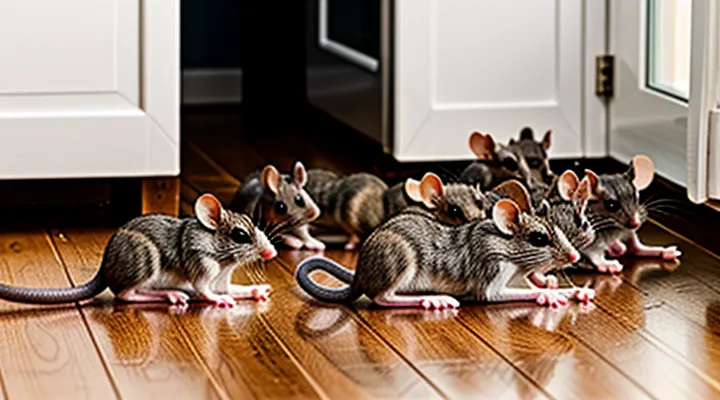
Understanding Mouse Behavior
Why Mice Enter Homes
Search for Food
Mice invade homes primarily because they locate and exploit food sources. Their keen sense of smell detects even minute residues, prompting repeated foraging trips that rapidly increase population density.
Typical attractants include:
- Open containers of grains, cereals, or pet food.
- Crumbs and spills left on countertops, floors, or under appliances.
- Unsealed garbage cans or compost bins placed indoors.
- Food stored in paper or cardboard packaging that can be chewed through.
When food is readily available, mice reproduce at a faster rate, producing several litters each month. The abundance of nourishment reduces competition, allowing juveniles to survive and disperse throughout the structure.
Effective control focuses on eliminating access to sustenance. Recommendations are:
- Transfer dry goods to airtight metal or glass containers.
- Clean surfaces after each meal, sweeping or vacuuming crumbs immediately.
- Store pet feed in sealed bins and remove leftovers promptly.
- Use trash cans with fitted lids and dispose of waste regularly.
By removing these nutritional incentives, the environment becomes inhospitable, curbing the influx of rodents and preventing further escalation.
Search for Shelter
Mice enter homes primarily to find safe, insulated spaces where they can build nests and avoid predators. Cracks around foundations, gaps under doors, and openings in walls provide direct routes to interior cavities that maintain stable temperatures and humidity levels. These micro‑environments protect rodents from extreme outdoor weather while offering easy access to stored food.
Key characteristics of suitable shelter include:
- Warmth generated by heating systems or sunlight‑warmed walls
- Concealment behind insulation, drywall, or stored items
- Proximity to food sources such as pantry goods or garbage bins
- Structural features that allow entry and exit without detection
When these conditions converge, mice establish colonies, reproduce rapidly, and expand their presence throughout the residence. Addressing entry points and eliminating interior nesting sites reduces the incentive for rodents to seek shelter indoors.
Search for Water
Mice enter homes primarily to satisfy their constant need for water. Their bodies lose moisture through respiration and excretion, creating a relentless drive to locate liquid sources. Sensory organs detect humidity gradients, allowing rodents to pinpoint even minor leaks.
Typical indoor water sources include:
- Dripping faucets or showerheads
- Leaking pipe joints and under‑sink connections
- Condensation on cold surfaces such as windows or refrigerator coils
- Pet water bowls left unattended
- Moist soil in houseplant pots
- Stagnant water in basins or tubs
Mice follow scent trails left by evaporating water, using whiskers to sense subtle changes in air moisture. They preferentially travel along walls, behind appliances, and through ceiling voids where humidity is higher. Once a reliable source is found, individuals establish a foraging route and may recruit others through pheromone marks.
Preventing mouse infestations requires eliminating these moisture points. Seal pipe joints, repair faucet drips, wipe condensation from surfaces, and store pet water containers in sealed lids. Keeping plant soil slightly drier and regularly emptying basins removes attractive cues, reducing the incentive for rodents to remain inside the structure.
Common Entry Points
Gaps in Foundations
Mice infiltrate homes primarily through openings that connect interior spaces to the surrounding soil. When a building’s foundation contains gaps, rodents gain unobstructed access to the crawl space, basement, or floor joists, leading to rapid population growth inside the structure.
Typical sources of foundation gaps include:
- Settlement cracks caused by soil movement or inadequate footings.
- Construction joints that were not properly sealed during the building phase.
- Utility penetrations (pipes, conduits, vents) that lack tight-fitting sleeves or flashing.
- Deteriorated concrete or mortar that has spalled, creating voids.
Mice exploit these openings because the required clearance is minimal; an aperture as small as ¼ inch permits entry. Once inside, they use the voids to travel between rooms, locate food sources, and establish nesting sites. The continuity of the gap network allows multiple individuals to move freely, accelerating infestation.
Effective mitigation focuses on eliminating the pathways:
- Conduct a thorough inspection of the foundation perimeter, noting all cracks and joint failures.
- Apply epoxy or polyurethane sealant to fill fissures and reinforce weakened areas.
- Install steel mesh or hardware cloth around utility openings, securing it with corrosion‑resistant fasteners.
- Replace or repair damaged concrete sections, ensuring a smooth, continuous surface.
By closing foundation gaps, the primary conduit for rodent entry is removed, substantially reducing the likelihood of a large mouse population establishing itself within the house.
Open Doors and Windows
Open doors and windows create direct pathways for rodents to enter a dwelling. Mice can slip through openings as small as 6 mm; a typical door gap or an unsealed window frame often exceeds this size. When a door is left ajar, the pressure differential between indoor and outdoor air draws rodents toward the interior, especially during cooler evenings when mice seek warmth.
The attraction is amplified by the presence of food sources near entry points. Crumbs on a kitchen counter, exposed garbage, or pet feed placed near a door or window provide immediate incentive for a mouse that has just gained access. Once inside, the animal can navigate along walls, using the same openings to move between rooms and eventually establish a nest in concealed areas such as wall voids or attic spaces.
Preventive actions focus on eliminating the physical routes that allow entry:
- Install door sweeps and weather‑stripping to close gaps at the bottom and sides of doors.
- Use fine‑mesh screens on all windows; repair tears promptly.
- Fit self‑closing hinges or automatic closers on frequently used doors.
- Seal cracks around frames, vents, and utility penetrations with steel wool and caulk.
- Keep exterior lighting low near entryways to reduce attraction of insects, which in turn draw mice.
Regular inspection of door and window seals, combined with prompt repair of any damage, reduces the likelihood that rodents will exploit these openings. By maintaining a continuous barrier, homeowners limit the primary route through which mice infiltrate residential spaces.
Utility Pipe Openings
Utility pipe openings provide direct pathways for rodents to enter residential structures. Gaps around water, gas, sewer, and HVAC pipes often lack proper sealing, creating accessible routes from the exterior to interior spaces.
- Gaps left after pipe installation or repair
- Uncapped or damaged pipe ends in basements and crawl spaces
- Openings around vent stacks and exhaust ducts
- Penetrations through exterior walls for sprinkler or irrigation lines
Mice exploit these openings because they require minimal clearance and offer protection from predators. Once inside, the network of pipes connects closets, cabinets, and storage areas, allowing rapid spread throughout the building. Sealing openings with steel wool, copper mesh, or approved caulking eliminates entry points and reduces the likelihood of infestation. Regular inspection of pipe junctions, especially after renovations, maintains a barrier against rodent intrusion.
Signs of a Mouse Infestation
Visual Sightings
Visual sightings provide the most immediate evidence of a mouse infestation. Mice are nocturnal but often appear in well‑lit areas during daylight when they search for food or shelter. Common visual indicators include:
- Small, gray‑brown bodies about 2–4 inches long, excluding the tail.
- Scaled, hairless tails that are roughly the same length as the body.
- Dark, beady eyes and a pointed snout.
- Rapid, darting movements along walls, baseboards, or countertops.
- Presence of droppings: cylindrical, dark pellets about ¼ inch long, often found near food sources.
Typical locations where mice are observed:
- Kitchen cabinets and pantry shelves, especially near accessible food packages.
- Behind appliances such as refrigerators, stoves, and dishwashers where heat and shelter converge.
- In ceiling voids and attic insulation, visible when light filters through gaps or during maintenance.
- Along utility lines and plumbing chases, where structural voids create continuous pathways.
When a mouse is seen, it usually pauses to sniff, then retreats to a concealed route. Repeated visual encounters in the same area suggest an established travel corridor. Identifying the exact points of entry—cracks, gaps around pipes, or poorly sealed doors—allows targeted exclusion measures. Continuous monitoring of visual sightings, combined with other signs such as gnaw marks and nesting material, confirms the scale of the problem and guides effective control strategies.
Droppings and Urine Trails
Mouse droppings appear as small, dark, cylindrical pellets about ¼ inch long. They are commonly found along walls, in cupboards, and near food sources. Fresh droppings are glossy; older ones become dry and crumbly. Concentrations indicate active foraging routes.
Urine trails are invisible but leave a distinct musky odor. Mice deposit urine while traveling, marking territory and establishing pathways. The scent is detectable by other rodents, reinforcing traffic patterns within a building.
Health risks stem from both waste types. Droppings and urine can harbor pathogens such as Hantavirus, Salmonella, and Leptospira. Inhalation of dried particles or contact with contaminated surfaces may cause respiratory illness or gastrointestinal infection.
Effective response includes:
- Wear disposable gloves and a mask when handling waste.
- Use a HEPA‑filtered vacuum to remove dry droppings; avoid sweeping to prevent aerosolization.
- Disinfect surfaces with a 1 % bleach solution or an EPA‑approved rodent sanitizer.
- Seal entry points, repair cracks, and eliminate food residues to reduce attractants.
- Install traps or bait stations in identified traffic zones and monitor for new droppings or odor.
Prompt identification and thorough sanitation interrupt mouse activity and lower the likelihood of further infestation.
Gnaw Marks
Gnaw marks are the most reliable indicator of rodent presence. Mice use their incisors to chew through a variety of materials, leaving distinctive, shallow, crescent‑shaped bites. The edges are clean, the interior of the bite is smooth, and the damage often appears in a series of parallel or overlapping cuts.
Typical locations include:
- Baseboards and trim where food particles accumulate.
- Electrical wiring insulation, posing fire hazards.
- Plastic containers, especially those storing pantry items.
- Furniture legs and wooden frames, revealing structural compromise.
Identifying gnaw marks helps differentiate mouse activity from other pests. Insect damage usually presents as irregular holes or shredded material, while rat bites are larger and deeper. The size of a gnaw mark correlates with the species: mouse incisors produce holes roughly ¼ inch wide, whereas rat incisors exceed ½ inch.
Once gnaw marks are confirmed, immediate action is required. Seal entry points larger than a quarter‑inch, replace damaged wiring, and store food in airtight containers. Regular inspection of vulnerable surfaces prevents escalating damage and reduces the likelihood of a full infestation.
Scratching Noises
Scratching noises are a primary indicator of rodent presence inside a dwelling. Mice generate these sounds while moving through walls, ceilings, and floor joists, where they seek shelter and travel between food sources. The noise pattern differs from typical household creaks: it is rapid, intermittent, and often heard near concealed spaces such as baseboards, kitchen cabinets, or attic insulation.
Key characteristics of mouse-generated scratching:
- Frequency: 4–10 clicks per second, occurring in short bursts.
- Location: concentrated around entry points, utility chases, and stored‑food areas.
- Timing: most intense during nighttime when mice are active.
Identifying the source of these sounds assists in locating infestation hotspots. Inspecting the areas where scratching is audible reveals:
- Gnaw marks on wood or plastic surfaces.
- Accumulated droppings, typically 3–5 mm long, dark brown.
- Disrupted insulation or shredded material.
Addressing the problem requires immediate sealing of entry gaps, removal of food residues, and deployment of traps or bait stations near the identified zones. Continuous monitoring of scratching activity after intervention confirms the effectiveness of control measures. Absence of the characteristic noise over several nights signals a significant reduction in mouse activity.
Factors Attracting Mice
Food Availability
Improper Food Storage
Improper food storage creates an easily exploitable resource that draws rodents into residential spaces. Open packages, uncovered bowls, and loosely sealed containers release odors that mice detect from great distances. When food residues accumulate on countertops, floors, or behind appliances, they provide a constant supply that sustains the population and encourages breeding.
Common storage errors include:
- Leaving cereal, chips, or baked goods in their original packaging without resealing.
- Storing pantry items in paper bags or thin plastic containers that can be chewed.
- Keeping pet food in open dishes overnight.
- Disposing of food waste in uncovered bins or leaving garbage bags on the floor.
- Ignoring spills and crumbs during routine cleaning.
These practices lower the threshold for mouse entry, allowing a few individuals to establish a foothold that quickly expands into a full infestation. The presence of readily available nutrition reduces the need for mice to forage outdoors, increasing the likelihood of indoor nesting and rapid population growth.
Effective mitigation requires strict control of food accessibility:
- Transfer all dry goods to airtight, metal or heavy‑plastic containers.
- Seal cereal boxes, snack bags, and candy wrappers after each use.
- Store pet food in sealed containers and feed only the amount needed for each meal.
- Clean surfaces immediately after meals; sweep or vacuum crumbs daily.
- Use trash cans with fitted lids and empty them regularly.
- Position food storage away from walls and baseboards to eliminate concealed pathways.
By eliminating attractive food sources, homeowners remove the primary incentive for rodents to enter and remain inside, thereby addressing one of the most significant factors behind high mouse activity in dwellings.
Pet Food Left Out
Pet food that is not stored securely creates a reliable food source for house mice. The scent of kibble or wet food spreads quickly through walls and floorboards, guiding rodents directly to the kitchen or pantry. Mice can survive on small portions, so even a few stray crumbs sustain a growing population.
When food is left out:
- Moisture in wet meals encourages bacterial growth, making the area more attractive to rodents.
- Crushed kibble releases fine particles that travel through ventilation ducts, extending the scent’s reach.
- Open containers allow easy access, eliminating the need for mice to gnaw through packaging.
The resulting increase in mouse activity leads to structural damage, contamination of surfaces, and heightened risk of disease transmission. Eliminating this attractant is the most effective single measure to reduce rodent numbers.
Practical steps:
- Store all pet food in sealed, rodent‑proof containers made of metal or thick plastic.
- Feed pets at designated times and collect uneaten portions immediately.
- Clean feeding areas daily, sweeping away crumbs and wiping surfaces with a mild disinfectant.
- Place feeding stations on non‑absorbent surfaces such as metal trays to prevent food from seeping into cracks.
- Inspect storage containers regularly for signs of damage or infestation.
By removing readily available nourishment, the incentive for mice to enter and remain in a residence diminishes sharply, leading to a noticeable decline in their presence.
Unsecured Trash Cans
Unsecured trash cans supply mice with easy access to food residues, water, and shelter, directly contributing to the high mouse presence in homes. Food particles left exposed attract foraging rodents, while the open design allows entry without effort. The resulting increase in food availability accelerates reproduction cycles, leading to rapid population growth inside the dwelling.
Key effects of unsecured waste containers:
- Immediate exposure of organic waste creates a reliable feeding source.
- Gaps and loose lids enable mice to slip inside and out, facilitating movement between the trash area and living spaces.
- Moisture from discarded produce or liquids sustains the rodents, supporting survival in otherwise dry indoor environments.
- Accumulated odors draw additional individuals, expanding the infestation radius.
Mitigation requires sealing containers with tight-fitting lids, regularly removing waste, and storing bins away from entry points. These actions eliminate the primary attractant, reducing mouse activity and preventing further intrusion.
Shelter Opportunities
Clutter and Debris
Clutter creates hiding places and travel routes that enable mice to move undetected through a home. Stacks of newspapers, cardboard boxes, and piles of laundry provide insulation from light and predators, allowing rodents to establish nests close to food sources. Loose insulation, shredded fabric, and accumulated dust further conceal activity and reduce the likelihood of early detection.
Mice exploit debris because it offers both shelter and a steady supply of organic material. When waste is not promptly removed, crumbs and food residues embed in the mess, creating a persistent feeding ground. The combination of shelter and readily available nutrition accelerates population growth and makes eradication more difficult.
Typical household items that contribute to rodent infestation include:
- Unsealed cardboard boxes and paper stacks
- Accumulated clothing and linens
- Untidy storage areas under appliances
- Piles of pet bedding or litter
- Loose insulation or building material debris
Eliminating these attractants reduces the number of viable nesting sites and forces mice to seek alternative, less hospitable environments. Regular decluttering and proper waste management are essential components of any effective rodent‑control strategy.
Accessible Basements and Attics
Mice enter homes through openings that lead to low‑traffic areas such as basements and attics. These spaces often lack regular human presence, providing shelter, warmth, and easy access to food sources stored elsewhere in the house.
- Small cracks in foundation walls, floor joists, or roof sheathing allow entry. Mice can squeeze through gaps as narrow as ¼ inch.
- Unfinished insulation and exposed wiring create nesting material. The absence of disturbance lets colonies develop undetected.
- Pipes, vents, and utility lines run through these levels, forming continuous pathways from the exterior to interior rooms.
- Accumulated debris, cardboard boxes, and forgotten items offer concealment and food storage, supporting population growth.
Effective control requires sealing all gaps with steel wool, caulk, or metal flashing, installing door sweeps on basement doors, and maintaining clear, organized spaces. Regular inspections of foundation and roof penetrations help identify new entry points before colonies become established.
Water Sources
Leaky Pipes
Leaking pipes generate continuous moisture that draws mice into residential spaces. Water seepage softens building materials, eroding sealants and creating gaps through which rodents can enter.
A reliable water source allows mice to survive without foraging outdoors. Moisture also promotes mold and insects, providing additional food for the pests.
Repeated pipe failures enlarge cracks in walls, floors, and foundations. These openings serve as permanent access routes, enabling colonies to expand throughout the home.
To eliminate the problem, take the following actions:
- Inspect all visible pipe joints and fittings for drips or corrosion.
- Repair or replace damaged sections with approved sealing materials.
- Apply waterproofing compounds to vulnerable wall and floor areas.
- Install rodent‑proof covers on all utility openings.
- Conduct regular maintenance checks to detect early signs of leakage.
Prompt repair of plumbing faults removes the moisture that sustains mouse populations and restores the integrity of the building envelope.
Pet Water Bowls
Pet water bowls provide a reliable source of moisture that can attract rodents seeking hydration. When a bowl is left uncovered, mice can drink directly, and any overflow creates damp spots that support their activity.
Spillage from the bowl creates wet flooring, softening wood and insulation, which facilitates nesting. Bowls placed near walls or under cabinets offer easy access to concealed routes that mice use to move through a home. Frequent refilling without cleaning leaves residues of food or mineral deposits that serve as additional attractants.
- Use bowls with sealed lids or weighted covers to prevent direct drinking and limit spill.
- Position bowls on elevated, non‑absorbent surfaces away from structural gaps.
- Clean and dry the bowl after each refill; remove any standing water within 15 minutes.
- Inspect surrounding areas for signs of gnaw marks or droppings; seal any openings larger than ¼ inch.
Maintaining a dry, sealed water source reduces the incentive for rodents to enter living spaces, thereby lowering the overall mouse population in the house.
Preventing Future Infestations
Sealing Entry Points
Caulk and Steel Wool
Caulk and steel wool form an effective barrier against rodent intrusion. Gaps around windows, doors, utility penetrations, and foundation cracks often provide entry points. When these openings are sealed with high‑quality silicone or acrylic caulk, the material adheres tightly to surrounding surfaces, eliminating the passageway. However, caulk alone may shrink or crack over time, especially in high‑traffic or moisture‑prone areas.
Steel wool addresses this weakness. Its dense, interlocking fibers resist chewing; mice cannot easily gnaw through the metal. By packing steel wool into the interior side of a gap before applying caulk, the combination creates a two‑layer defense:
- Insert steel wool tightly into the opening.
- Apply a continuous bead of caulk over the wool, smoothing to ensure full coverage.
- Allow the caulk to cure according to manufacturer instructions.
The steel wool remains embedded within the cured seal, providing structural reinforcement and a physical deterrent. In addition, the caulk’s adhesive properties prevent the wool from shifting, maintaining the integrity of the barrier. Regular inspection of sealed areas, especially after seasonal temperature changes, helps identify any degradation and allows prompt repair before mice exploit new openings. This method reduces the likelihood of rodent infestations by targeting the most common points of entry with a durable, low‑maintenance solution.
Repairing Damaged Screens
Damaged window and door screens provide direct pathways for rodents to enter living spaces. Even small tears or gaps can accommodate mice, which exploit any opening to reach food and shelter. Repairing these barriers eliminates one of the most common entry points and reduces indoor mouse activity.
Effective screen repair involves several precise actions:
- Inspect every screen for punctures, loose mesh, and warped frames. Pay special attention to areas near vents, utility openings, and basement egresses.
- Remove the screen from its frame if the damage is extensive. Clean the frame to ensure proper adhesion of repair materials.
- Use a fiberglass or metal mesh patch sized at least two inches larger than the tear. Secure the patch with a strong, weather‑resistant adhesive or with small staples for metal frames.
- For larger gaps, replace the entire screen section. Cut a new piece of mesh to match the frame dimensions, secure it with a spline, and tension it evenly.
- Seal all peripheral seams with a silicone-based caulk to prevent future tearing and to block tiny rodent entry points.
Regular maintenance further protects the home. Schedule quarterly visual checks, replace worn-out screens promptly, and keep surrounding vegetation trimmed to reduce mouse attraction. By systematically repairing and reinforcing screens, homeowners remove a primary conduit for rodents and sustain a healthier indoor environment.
Food Management
Airtight Containers
Mice enter homes primarily to obtain food, water, and shelter. When edible items are stored in containers that cannot be opened without force, rodents lose a major incentive to explore interior spaces.
Airtight containers are storage units that completely isolate their contents from external air. The seal prevents odors, moisture, and scent particles from escaping, eliminating cues that attract rodents. Construction typically involves rigid plastic, glass, or metal with a locking lid that engages a silicone or rubber gasket. The gasket compresses uniformly when the lid is closed, creating a pressure‑equalized barrier that resists chewing and prying.
Key attributes of effective containers include:
- Material strength: high‑density polyethylene, borosilicate glass, or stainless steel resist gnawing.
- Gasket integrity: food‑grade silicone maintains elasticity after repeated cycles.
- Secure closure: latch or snap‑fit mechanisms apply consistent pressure to the gasket.
- Size appropriateness: containers match the volume of stored items to limit empty space where mice could hide.
- Label clarity: markings indicate contents and expiration dates, reducing the need to open containers frequently.
To maximize protection, place containers on elevated shelves away from walls, avoid stacking directly on the floor, and inspect seals weekly for cracks or wear. Transfer bulk items into smaller, sealed units as they are removed for use, and discard any container that shows damage. Consistent use of these containers removes accessible food sources, thereby reducing the likelihood of rodent presence inside the residence.
Regular Cleaning
Regular cleaning removes food residues that attract rodents. Spilled grains, crumbs, and pet waste provide sustenance for mice; eliminating these sources reduces the incentive to enter living spaces.
A systematic cleaning routine should include:
- Daily wiping of kitchen countertops and dining tables.
- Immediate disposal of food scraps in sealed containers.
- Weekly vacuuming of floors, especially under appliances and furniture where droppings may accumulate.
- Monthly deep cleaning of storage areas, cupboards, and pantry shelves to detect hidden crumbs or mold.
Clutter creates hiding places and obstructs visual inspection of infestations. Decluttering countertops, shelves, and basements exposes potential nesting sites, allowing early detection and removal.
Moisture control complements sanitation. Drying sinks, fixing leaks, and using a dehumidifier prevent damp environments that support mouse activity.
Implementing these practices consistently lowers the availability of food and shelter, making the home less hospitable to rodents and decreasing the likelihood of a large mouse population establishing itself indoors.
Habitat Modification
Reducing Clutter
Clutter provides shelter, nesting material, and hidden pathways for rodents. When objects accumulate in corners, under appliances, or within storage areas, they create insulated spaces where mice can hide from predators and temperature extremes. Removing unnecessary items eliminates these micro‑habitats and forces rodents to seek more exposed areas, making detection and control easier.
Key actions to minimize clutter and limit mouse activity:
- Clear floor space beneath refrigerators, stoves, and washing machines; keep only essential items and store the rest on elevated shelves.
- Consolidate paperwork, magazines, and loose fabric into labeled containers with tight‑fitting lids.
- Dispose of broken furniture, cardboard boxes, and old wiring that could serve as chewable material.
- Organize pantry shelves so that food packages are sealed and positioned away from walls.
- Conduct regular audits of storage rooms, discarding items that have been unused for more than six months.
A tidy environment reduces the availability of food residues and nesting sites, directly decreasing the attractiveness of a residence to mice. Maintaining order is a practical, preventive measure that complements traps and exclusion methods, resulting in fewer rodent sightings and lower risk of damage.
Trimming Vegetation
Trimming vegetation around a residence removes the cover and food sources that attract rodents, thereby reducing the likelihood of indoor presence. Overgrown shrubs, tall grass, and dense ground cover create pathways for mice to travel from external habitats to entry points such as cracks, vents, and gaps in the foundation.
Effective vegetation management includes:
- Cutting back shrubs to a height of no more than six inches from the ground.
- Maintaining a grass length of two to three inches to discourage nesting.
- Removing piles of leaves, compost, or debris within fifteen feet of the building envelope.
- Pruning tree branches so they do not touch the roof or walls, eliminating bridge routes.
- Regularly disposing of fallen fruit or seed heads that serve as rodent attractants.
Implementing these measures limits shelter, reduces food availability, and forces mice to seek alternative habitats away from the home structure.
Professional Pest Control
When to Call an Expert
A mouse infestation that spreads beyond a few sightings requires professional intervention. When the population is visible in multiple rooms, when droppings accumulate on surfaces, or when gnaw marks appear on wiring, insulation, or structural wood, a certified pest‑control specialist should be engaged immediately. These indicators signal that the rodents have established a breeding colony capable of causing health hazards and property damage.
If residents experience unexplained allergic reactions, respiratory irritation, or notice a sudden increase in food contamination, the risk to human health escalates. In such cases, waiting for the problem to self‑resolve is unsafe; an expert can assess contamination levels, implement sanitation protocols, and apply targeted treatments that reduce disease transmission.
When structural damage is evident—such as compromised electrical components, chewed ducts, or weakened support beams—the potential for fire or collapse becomes a critical concern. A professional inspection identifies hidden damage, recommends repairs, and ensures that mitigation measures do not interfere with building safety codes.
Key moments to call an expert:
- Mice observed in more than one location over several days
- Accumulation of droppings, urine stains, or strong odor
- Damage to wiring, insulation, or structural elements
- Signs of food contamination or increased allergic symptoms
- Persistent activity despite DIY traps or baits
Prompt professional assistance prevents escalation, safeguards health, and preserves the integrity of the home.
Benefits of Professional Services
A noticeable increase in indoor mouse activity creates health risks, property damage, and food contamination. Homeowners who address the problem on their own often encounter incomplete eradication, unsafe chemical handling, and recurring infestations. Engaging qualified pest‑control professionals eliminates these shortcomings.
Key advantages of professional services
- Accurate species identification and assessment of entry points.
- Use of approved, low‑toxicity products applied according to safety standards.
- Integrated pest‑management plans that combine sanitation, exclusion, and monitoring.
- Warranty or guarantee that includes follow‑up visits and re‑treatment if necessary.
- Documentation that satisfies insurance or regulatory requirements.
- Time‑efficient resolution, reducing labor and material costs for the homeowner.
By relying on trained specialists, the likelihood of long‑term mouse control rises, while exposure to hazardous substances and repeated damage declines. The result is a safer, cleaner living environment achieved with measurable, accountable actions.