
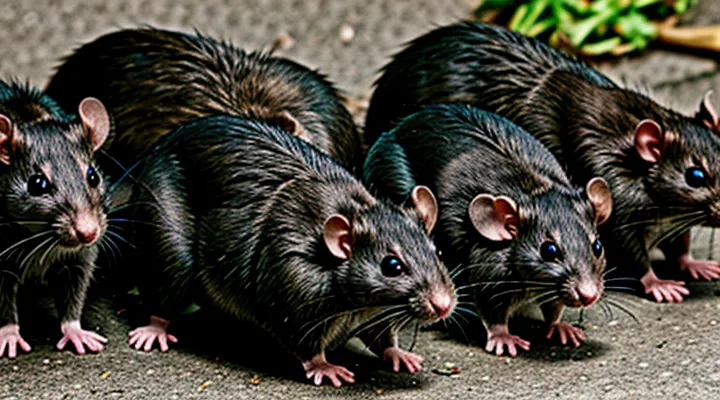
Understanding Rat Biology and Behavior
Reproductive Success
High Fecundity
Rats possess an exceptionally rapid reproductive cycle that directly fuels sudden increases in their numbers. Sexual maturity is reached at approximately five weeks, allowing individuals to enter the breeding pool within a short timeframe after birth. Gestation lasts about 21 days, after which a single female typically delivers five to twelve offspring. Because a female can become pregnant again within 24 hours of giving birth, she may produce six to eight litters per year under favorable conditions.
Key aspects of this reproductive capacity include:
- Short interbirth interval – continuous breeding without a defined seasonal pause.
- Large litter size – each birth contributes a substantial number of new individuals.
- Early maturity – juveniles join the breeding population quickly, accelerating growth.
- High survivorship of young – abundant food and shelter reduce juvenile mortality.
When food supplies are plentiful, shelter is accessible, and predation pressure is low, these biological traits translate into exponential population growth. Even modest improvements in resource availability can double or triple the number of litters a female produces annually, leading to rapid surges in local rat densities. Consequently, high fecundity serves as a primary engine behind the frequent spikes observed in urban and rural rodent populations.
Short Gestation Periods
Rats reproduce rapidly because their gestation lasts only about three weeks. After a single mating event, a female can give birth within 21‑23 days, producing 5‑12 offspring per litter. This brief developmental interval enables several litters each year; in temperate climates a female may have up to ten litters, resulting in more than a hundred descendants within a single reproductive cycle.
Key effects of the short gestation period:
- Accelerates population turnover, allowing cohorts to replace one another quickly.
- Reduces the time between birth and reproductive maturity; juveniles reach sexual readiness at 5‑6 weeks.
- Increases resilience to mortality spikes, as new litters appear before previous ones are fully depleted.
Combined with high litter sizes and early maturity, the brief pregnancy duration drives exponential growth when food, shelter, and favorable climate conditions are present. Consequently, environments that support abundant resources often experience sudden rat population explosions attributable largely to this rapid reproductive schedule.
Early Sexual Maturity
Rats reach reproductive capability at an unusually young age. In common species such as the brown rat (Rattus norvegicus), sexual maturity can occur as early as five weeks for females and six weeks for males, substantially earlier than many other mammals.
This rapid onset of fertility shortens the generational interval. A female rat can produce a litter of 6‑12 offspring every 21‑23 days, allowing multiple generations to develop within a single calendar year. Early maturity therefore multiplies the potential population size without requiring additional adult individuals.
When food supplies are plentiful and predation pressure is low, the effect of early sexual maturity intensifies. The combination of abundant nutrition and reduced mortality accelerates breeding cycles, leading to exponential growth in rat numbers.
Key quantitative impacts:
- Age at first estrus: 5–6 weeks (females), 6–7 weeks (males)
- Minimum inter‑litter interval: ~21 days
- Potential litters per year per female: 6–8
- Offspring per litter: 6–12
These parameters explain why rat populations can surge dramatically within short periods, especially in urban or agricultural environments where resources and shelter are readily available.
Adaptability and Resilience
Dietary Flexibility
Rats thrive when food sources are abundant and varied. Their digestive system can process grains, fruits, insects, meat scraps, and even synthetic waste, allowing them to exploit environments that other rodents cannot. This adaptability lets them survive in agricultural fields, urban dumpsters, and industrial sites alike, creating conditions for rapid population growth.
Key aspects of dietary flexibility include:
- Ability to metabolize high‑carbohydrate and high‑protein foods without specialized enzymes.
- Tolerance for low‑quality or contaminated items, such as spoiled produce or chemical residues.
- Opportunistic foraging behavior that expands into newly available resources after natural disasters or human waste management failures.
When human activity increases the range or volume of edible material—through crop storage, improper garbage disposal, or food processing waste—rats readily incorporate these inputs into their diet. The resulting boost in caloric intake accelerates breeding cycles, shortens gestation periods, and raises litter sizes, collectively driving noticeable spikes in rat numbers.
Environmental Tolerance
Rats thrive in environments that exceed the tolerance limits of many other species. Their thermoregulatory system maintains core temperature across a broad range, allowing activity from near‑freezing conditions to summer heat spikes. Moisture tolerance enables survival in both arid urban rooftops and damp sewers, where humidity supports rapid breeding cycles.
Physiological flexibility extends to diet and contaminants. Rats metabolize diverse food sources, from grains to refuse, and detoxify low levels of heavy metals and pesticides. This capacity reduces mortality when food supply fluctuates or when pollutants accumulate after waste management failures.
Key factors that amplify population growth through environmental tolerance:
- Wide temperature tolerance (0‑35 °C) reduces seasonal die‑off.
- High humidity tolerance (30‑80 % RH) sustains breeding in damp habitats.
- Ability to ingest and process varied refuse, including spoiled or chemically tainted material.
- Resistance to common urban toxins, limiting lethal exposure.
- Rapid reproductive response to favorable microclimates, shortening gestation and increasing litter size.
Collectively, these adaptive traits allow rats to colonize and proliferate in habitats where environmental conditions would suppress less resilient competitors.
Key Drivers of Rat Population Surges
Abundant Food Sources
Waste Management Issues
Improper waste handling creates abundant food sources and shelter for rats, directly fueling rapid population growth. Unsealed trash containers allow easy access to refuse, while irregular collection schedules leave garbage exposed for extended periods. Leaking or overflowing dumpsters generate moist environments that support nesting and breeding.
Key waste‑management failures that encourage rat proliferation include:
- Inadequate sealing of bins, permitting rodents to breach lids.
- Collection intervals longer than 24 hours, resulting in accumulated debris.
- Lack of routine cleaning around disposal sites, leaving residues that attract rats.
- Absence of pest‑control protocols integrated with waste services.
Municipalities that adopt strict container standards, enforce daily pickups, and conduct regular sanitation inspections report measurable declines in rodent sightings. Conversely, areas with lax enforcement experience recurring spikes in rat activity, especially during seasonal increases in food waste. Effective waste management therefore serves as a critical control point for limiting rat populations.
Agricultural Practices
Agricultural environments provide abundant food, shelter, and breeding sites, directly influencing the frequency and magnitude of rat population booms. Crops such as wheat, corn, and rice generate large quantities of residual grain and stalks, which serve as readily accessible nutrition for rodents. When harvests are stored in poorly sealed silos or left on the field after cutting, rats exploit these resources, leading to rapid increases in numbers.
Intensive farming methods amplify these effects. Mechanized planting and harvesting reduce labor oversight, often resulting in delayed removal of post‑harvest waste. Large‑scale irrigation creates moist soil conditions favorable for nest construction, while monoculture fields lack natural predators that would otherwise limit rodent growth. The combination of high‑density food sources and protected microhabitats accelerates reproductive cycles, producing multiple generations within a single growing season.
Key agricultural practices that contribute to rat surges include:
- Storing grain in open or damaged containers.
- Leaving crop residues on the ground after harvest.
- Using irrigation systems that maintain standing water.
- Applying fertilizers that increase plant vigor and seed production.
- Implementing monoculture cropping without integrated pest management.
Mitigating rodent outbreaks requires systematic changes: securing storage facilities, promptly removing field debris, managing water flow to avoid stagnant pools, and diversifying crops to enhance ecological balance. Consistent application of these measures reduces the attractiveness of farms as rat habitats and curtails population spikes.
Food Storage and Spillage
Food storage facilities that lack proper sealing create constant access points for rats. Gaps around doors, vents, and loading docks allow rodents to enter and locate abundant supplies. When storage areas are packed densely, heat and moisture rise, accelerating food spoilage and attracting foraging behavior.
Spillage during handling, transport, or processing leaves residual crumbs and organic matter on floors, pallets, and equipment. These remnants serve as immediate food sources, reducing the distance rats must travel to obtain nourishment. Accumulated waste also supports bacterial growth, which further sustains rodent populations.
Effective control relies on systematic practices:
- Install airtight doors, metal flashing, and mesh screens at all openings.
- Conduct regular inspections for breach points and repair them promptly.
- Implement a cleaning schedule that removes debris after every shift.
- Use sealed containers for bulk goods and employ conveyor systems that minimize manual handling.
- Deploy waste bins with tight-fitting lids and empty them frequently.
When storage integrity and spill management are maintained, the food availability that drives rapid rat reproduction diminishes, leading to stabilized rodent numbers.
Availability of Shelter and Harborage
Urban Infrastructure
Urban infrastructure creates conditions that enable rapid rat population growth. Dense networks of underground utilities, such as sewer lines and storm drains, provide continuous shelter, stable humidity, and easy movement between neighborhoods. These environments protect rats from predators and extreme weather, allowing breeding cycles to proceed uninterrupted.
Waste management systems directly affect rat numbers. When garbage collection is irregular, bins overflow, and litter accumulates on sidewalks and in alleys, abundant food sources become available. Improperly sealed containers and compost piles further increase accessible nutrition, shortening the time required for juveniles to reach reproductive maturity.
Transportation corridors amplify dispersal. Roadside gutters, railway tunnels, and subway stations offer linear pathways that connect isolated colonies. Vehicles generate vibrations that stimulate nesting behavior, while the constant flow of passengers introduces new food waste, expanding the rats’ foraging range.
Key infrastructure elements that promote surges include:
- Sewer networks with frequent access points and low flow rates
- Public waste receptacles lacking secure lids or timely emptying
- Stormwater basins that retain organic debris
- Subterranean transit hubs with high foot traffic and limited cleaning
Mitigation requires coordinated upgrades: sealing entry points in sewer systems, installing rat‑proof waste containers, increasing frequency of street cleaning, and designing drainage structures that discourage nesting. By addressing these structural factors, municipalities can reduce the ecological niches that support explosive rat population increases.
Derelict Buildings
Derelict buildings provide shelter, food sources, and breeding sites that enable rapid rat population growth. Crumbling walls, exposed insulation, and accumulated debris create protected niches where rats can nest undisturbed. Unmaintained plumbing leaks and stagnant water in these structures supply the moisture rats require for survival and reproduction.
Key characteristics of abandoned structures that favor rats include:
- Structural gaps and openings that allow easy entry and escape.
- Accumulated waste, such as discarded food containers, that serve as readily available nourishment.
- Lack of regular pest‑control interventions, resulting in unchecked colony expansion.
When a building is left vacant, the absence of human activity eliminates disturbances that would otherwise deter rodents. The resulting stable environment supports multiple breeding cycles per year, accelerating population surges in surrounding neighborhoods.
Urban planners and property managers can mitigate these effects by sealing entry points, removing debris, and scheduling periodic inspections. Prompt demolition or rehabilitation of abandoned sites eliminates the habitat that sustains high rat densities, thereby reducing the overall risk of infestation.
Natural Habitats
Rats thrive in natural environments where food, shelter, and breeding sites are abundant. Forest understories provide dense cover, protecting juveniles from predators and extreme weather. Ground litter and fallen leaves create nesting material and concealment, allowing rapid population growth during warm months.
Agricultural fields supply high‑calorie crops, grain residues, and irrigation water. These resources support multiple litters per year, especially when harvest cycles leave surplus grain on the ground. Irrigated paddies and floodplain wetlands also offer moist habitats that favor rat reproductive success.
Key ecological conditions that encourage surges include:
- Stable food supply from plant matter, seeds, and invertebrates.
- Presence of burrowable soil or debris for nest construction.
- Limited predator density, often reduced by habitat fragmentation.
- Favorable microclimate—moderate temperature and humidity that accelerates gestation.
Human expansion into forests and wetlands frequently creates edge habitats where rats encounter both natural shelter and anthropogenic food waste. The convergence of these factors explains recurrent spikes in rat numbers across diverse natural settings.
Lack of Natural Predators
Urban Ecosystem Imbalance
Urban environments that lack equilibrium in resource distribution, habitat connectivity, and predator presence create conditions favorable to rodent proliferation. When garbage collection is irregular, food waste accumulates in streets, sewers, and abandoned structures, providing a continuous energy source for rats. Fragmented green spaces limit natural competitors and shelter, while dense construction offers numerous nesting sites within walls, basements, and utility conduits.
Key contributors to the imbalance include:
- Inconsistent waste disposal schedules that leave organic matter accessible for extended periods.
- Sewer systems with frequent blockages, allowing rats to move between districts and access water.
- Reduction of urban raptors and feral cats through habitat loss and pest-control policies, diminishing natural predation pressure.
- Architectural designs that incorporate concealed voids and ventilation shafts, facilitating hidden breeding colonies.
- Climate‑induced temperature rises that extend breeding cycles and increase survival rates of juvenile rats.
These factors interact to amplify reproductive output, shorten generational intervals, and expand colony territories. The resulting surge in rodent numbers intensifies public‑health risks, damages infrastructure, and further destabilizes the urban ecological balance, creating a self‑reinforcing cycle that persists until corrective measures restore resource parity and predator presence.
Human Impact on Predator Populations
Human activities that reduce numbers of natural rat predators directly contribute to rodent population spikes. When carnivorous mammals, birds of prey, and reptiles decline, the top‑down control that normally limits rat reproduction weakens, allowing faster population growth.
Primary mechanisms of human‑driven predator loss include:
- Habitat fragmentation – development projects split forest and grassland, creating isolated patches unsuitable for hunting and nesting.
- Direct persecution – bounty programs, trapping, and illegal hunting remove individuals from predator communities.
- Chemical control – rodenticide use often results in secondary poisoning of raptors and carnivores.
- Road mortality – expanding transportation networks increase vehicle collisions with medium‑sized predators.
- Disturbance of breeding sites – recreational activities and noise disrupt nesting success of owls and hawks.
Secondary effects arise from broader anthropogenic changes. Climate alteration shifts prey availability and forces predators into suboptimal habitats, while urban expansion replaces natural foraging grounds with concrete surfaces. Waste management practices that generate abundant food sources for rats further diminish the necessity for predators to exploit these areas, accelerating the imbalance.
Overall, the reduction of predator populations through direct and indirect human actions removes a critical regulatory layer, facilitating unchecked rat reproduction and leading to observable surges in urban and rural settings.
Climate and Environmental Factors
Favorable Weather Conditions
Favorable weather conditions directly influence rat population dynamics by creating environments that support rapid breeding and survival. Mild temperatures reduce metabolic stress, allowing females to reproduce more frequently and litters to reach larger sizes. Consistently warm climates also extend the active season, shortening the interval between breeding cycles.
When precipitation levels rise, food sources become more abundant. Wet conditions promote growth of vegetation, insects, and fungal organisms that serve as supplemental nutrition for rats. Flooding can displace rodents from natural habitats, forcing them into human‑occupied structures where shelter and waste provide additional sustenance.
Key weather‑related mechanisms that trigger surges:
- Temperature stability – average daily highs between 20 °C and 30 °C accelerate gestation and weaning periods.
- Increased humidity – supports pathogen proliferation, weakening competitors and predators, thereby reducing natural checks on rat numbers.
- Seasonal rain patterns – boost grain and seed production, expanding the food base.
- Storm‑induced displacement – drives rodents into urban areas, concentrating populations and facilitating disease transmission.
Collectively, these climatic factors create optimal conditions for exponential growth, explaining why rat numbers often spike during periods of favorable weather.
Natural Disasters
Natural disasters frequently trigger abrupt increases in rat numbers. Displacement of human populations creates temporary shelters and storage sites where food waste accumulates, providing abundant resources for rodents. Destruction of built environments eliminates structural barriers, allowing rats to colonize new areas rapidly.
- Floods inundate basements and sewers, forcing rats onto dry ground where food supplies are concentrated.
- Earthquakes collapse walls and crates, exposing stored grains and generating open foraging zones.
- Hurricanes topple roofs and scatter debris, offering concealment and nesting material.
- Wildfires clear vegetation, driving rats from forest edges into adjacent urban zones.
- Landslides remove ground cover, pushing rats toward higher ground where human activity is dense.
Each event shares three core effects: loss of habitat, surge in accessible food, and temporary reduction of predators disturbed by the disaster. The combination accelerates breeding cycles, resulting in observable population spikes within weeks.
Effective response requires immediate waste management, sealing entry points, and targeted rodent control in post‑disaster zones. Prompt action limits the duration of infestations and reduces health risks associated with elevated rat presence.
Human Role in Rat Population Dynamics
Urbanization and Development
Habitat Alteration
Habitat alteration creates conditions that favor rapid rat population growth. Urban expansion replaces natural cover with buildings, sewers, and refuse sites, providing shelter and abundant food sources. When green spaces are fragmented, rats exploit the edges, moving easily between residential and commercial zones.
Changes in waste management directly affect rat abundance. Increased litter, unsecured garbage bins, and delayed collection generate continuous food supplies. Improper compost storage or open feed storage in agricultural settings supplies high‑calorie material that accelerates breeding cycles.
Climate‑related disturbances also reshape habitats. Flooding displaces rodents from burrows, pushing them into human‑occupied structures where shelter and food are readily available. Drought reduces natural foraging options, prompting rats to seek alternative resources in urban environments.
Key mechanisms of habitat alteration that drive surges include:
- Conversion of open land to dense construction, eliminating predators and creating nesting sites.
- Accumulation of organic waste in public and private areas, sustaining high reproductive rates.
- Disruption of natural watercourses, forcing rats to relocate to drainage systems.
- Modification of agricultural practices, such as large‑scale grain storage, providing concentrated food supplies.
Collectively, these habitat changes remove ecological constraints, allowing rat populations to expand quickly and persist at elevated levels.
Increased Waste Generation
Increased waste generation creates abundant food sources that sustain larger rat populations. Food scraps, packaging, and organic residues accumulate in landfills, dumpsters, and improperly sealed containers, providing continuous nourishment. Rats exploit these resources, reducing the time needed to locate meals and increasing reproductive rates.
Key mechanisms linking waste to rat surges include:
- Food availability: High‑calorie waste accelerates growth and breeding cycles.
- Shelter creation: Piles of discarded material offer nesting sites protected from predators and weather.
- Reduced competition: Abundant resources lower intra‑species competition, allowing more individuals to survive to reproductive age.
- Human‑rat interaction: Frequent waste handling by people creates additional pathways for rats to enter buildings and urban infrastructure.
Effective mitigation requires strict waste management practices: sealed bins, regular collection schedules, and prompt removal of organic waste. Implementing these measures limits the food and shelter that attract rats, thereby curbing population spikes.
Pest Control Practices
Ineffective Methods
Rising rodent numbers generate health risks, property damage, and economic loss. Numerous control attempts prove ineffective, allowing populations to expand unchecked.
-
Indiscriminate poison distribution
- Bait avoidance develops quickly; sublethal exposure fosters resistance.
- Non‑target species suffer, prompting regulatory restrictions that limit application.
-
Isolated trap placement
- Single‑point traps capture only a fraction of active individuals.
- Rats quickly learn trap locations, reducing capture rates over time.
-
Reliance on natural predators
- Urban environments lack sufficient predator densities.
- Predation pressure rarely suppresses large, established colonies.
-
Public awareness campaigns without actionable measures
-
Partial building sealants
- Incomplete caulking leaves numerous entry points.
- Rats exploit minor gaps, rendering the effort negligible.
-
Ultrasonic repellent devices
- Laboratory studies show short‑term discomfort, but habituation occurs within days.
- Field reports indicate no measurable decline in activity.
-
Seasonal fumigation without follow‑up monitoring
- Temporary reduction followed by rapid rebound due to surviving individuals.
- Lack of post‑treatment assessment prevents adjustment of strategies.
Each method fails because it addresses symptoms rather than the underlying conditions that support rat proliferation: abundant food, shelter, and insufficient long‑term habitat exclusion. Effective management requires integrated approaches that combine thorough sanitation, structural exclusion, targeted baiting, and continuous monitoring.
Resistance to Rodenticides
Resistance to rodenticides is a primary factor that undermines efforts to control expanding rat populations. Continuous exposure to anticoagulant compounds selects for individuals with genetic mutations that reduce drug efficacy, allowing survivors to reproduce and propagate resistant traits throughout the community.
Mechanisms that confer resistance include:
- Mutations in the VKORC1 gene, decreasing affinity for anticoagulants.
- Enhanced metabolic detoxification via up‑regulated cytochrome P450 enzymes.
- Behavioral avoidance of bait stations after repeated sub‑lethal encounters.
- Reduced bait consumption linked to altered taste perception.
These adaptations diminish the impact of conventional poisoning campaigns, necessitating alternative strategies such as rotating active ingredients, integrating non‑chemical control measures, and employing genetic monitoring to detect resistance alleles early. Failure to address resistance accelerates population rebounds and complicates long‑term management objectives.
Sanitation and Hygiene Practices
Sanitation and hygiene directly influence rodent abundance. Improper waste disposal creates accessible food sources, while cluttered environments provide shelter. When garbage accumulates in open containers, rats locate predictable feeding sites, leading to rapid colony expansion. Moisture from leaking pipes or standing water supports insect populations that serve as secondary food, further sustaining rat numbers.
Effective measures include:
- Securing refuse in sealed, rat‑proof bins and removing waste daily.
- Regularly cleaning food preparation areas to eliminate crumbs and spills.
- Maintaining clear pathways by removing debris, cardboard, and unused materials.
- Repairing leaks promptly and ensuring proper drainage to reduce moisture buildup.
- Implementing routine inspections of storage facilities to detect and eradicate potential nesting spots.
Consistent application of these practices reduces available resources and habitats, thereby limiting the conditions that trigger population spikes.