
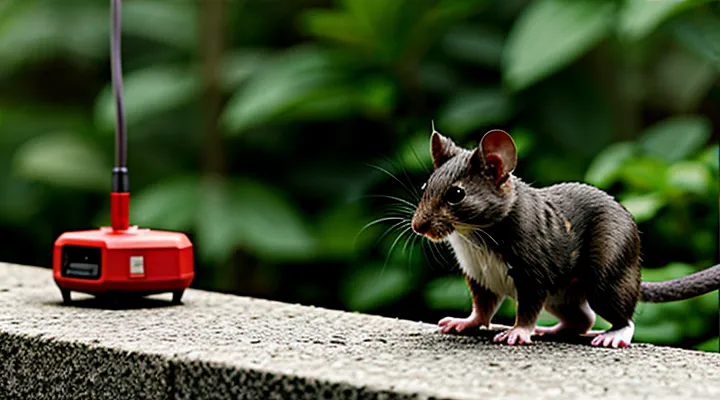
Understanding Ultrasonic Repellents
How Ultrasonic Devices Work
The Science Behind High-Frequency Sound
High‑frequency sound, commonly referred to as ultrasound, operates above the upper limit of human hearing (≈20 kHz). Mice possess auditory sensitivity extending to roughly 70–100 kHz, allowing them to detect ultrasonic emissions that are inaudible to people. When a sound wave in this range reaches a mouse, the cochlear hair cells translate rapid pressure fluctuations into neural signals, triggering an aversive response if the stimulus exceeds the species’ comfort threshold.
The deterrent effect hinges on three physical parameters:
- Frequency: Effective repellent frequencies typically lie between 30 kHz and 80 kHz, matching the peak hearing sensitivity of Mus musculus. Frequencies outside this band either remain undetected or fail to produce a strong discomfort signal.
- Amplitude: Sound pressure levels above 80 dB SPL are required to elicit a startle or avoidance reaction. Levels below this threshold often go unnoticed, while excessively high intensities risk tissue damage and may be counterproductive.
- Modulation: Continuous tones can lead to habituation; pulsated or frequency‑swept signals maintain novelty and sustain the avoidance behavior.
Ultrasonic emitters generate these waves through piezoelectric transducers that convert electrical oscillations into mechanical vibrations. The resulting acoustic field diminishes with distance according to the inverse‑square law, making placement critical for coverage. Reflective surfaces can cause standing waves that create zones of reduced intensity, allowing mice to navigate around the deterrent.
Alternative acoustic approaches include:
- Broadband noise: Extends beyond the ultrasonic range, creating an overall hostile acoustic environment.
- Low‑frequency hum: Exploits the startle reflex in rodents, though effectiveness varies with species and habituation rates.
- Variable‑frequency chirps: Mimic predator calls, leveraging innate fear responses.
Successful implementation requires integrating the physical characteristics of ultrasound with behavioral ecology. Properly calibrated frequency, sufficient sound pressure, and periodic modulation together produce a reliable aversive stimulus that discourages rodent intrusion without affecting human occupants.
Limitations of Ultrasonic Technology
Ultrasonic devices are marketed as a humane alternative to chemical rodenticides, yet several technical constraints limit their efficacy against mice.
- Frequency range mismatch – Mice detect sounds between 1 kHz and 70 kHz; most commercial units emit frequencies above 20 kHz, which many individuals cannot hear, reducing the stimulus intensity perceived by the animals.
- Habituation – Repeated exposure leads to neural adaptation, causing mice to ignore the signal after a few days. The effect diminishes rapidly without periodic variation in tone or intensity.
- Obstructed propagation – Ultrasonic waves attenuate sharply in air and are blocked by walls, furniture, and clutter. A single unit cannot cover an entire building; multiple devices are required to fill gaps, increasing cost and maintenance.
- Limited penetration – Solid materials such as wood, drywall, and concrete absorb high‑frequency energy, preventing the sound from reaching hidden nesting sites or burrows.
- Battery and power dependency – Continuous operation demands reliable electricity; power interruptions or low‑capacity batteries render the system ineffective until restored.
- Regulatory and safety concerns – Excessive ultrasonic exposure may affect pets, livestock, or human hearing in certain frequency bands, imposing restrictions on placement and intensity settings.
These factors explain why ultrasonic technology alone rarely achieves consistent, long‑term mouse control and why integrated pest‑management strategies often incorporate physical barriers, traps, or chemical deterrents alongside sound‑based devices.
Efficacy of Ultrasonic Repellents
Scientific Studies and Findings
Scientific investigations have measured the impact of acoustic emissions on rodent behavior, focusing on frequencies beyond human hearing and audible deterrents. Controlled laboratory trials consistently show that ultrasonic generators emitting tones between 20 kHz and 65 kHz produce a short‑term avoidance response in Mus musculus. The effect diminishes after 24–48 hours as mice habituate to the constant signal, indicating limited long‑term efficacy.
Field studies in agricultural storage facilities report mixed outcomes. Devices calibrated to emit intermittent bursts at 30–45 kHz reduce initial infestation levels by 15–30 % compared to untreated sites, but the reduction plateaus once rodents adapt. Trials that combine ultrasonic output with low‑frequency audible tones (2–5 kHz) mimicking predator vocalizations achieve higher sustained repellence, with a 40 % decrease in capture rates over a six‑week period.
Meta‑analyses of peer‑reviewed papers identify several methodological factors that influence results:
- Frequency range: efficacy peaks near 30 kHz; higher frequencies (>60 kHz) produce negligible behavioral change.
- Signal pattern: pulsed or modulated emissions outperform continuous tones.
- Environmental acoustics: reflective surfaces amplify sound intensity; open spaces attenuate it rapidly.
- Species specificity: house mice respond more strongly than Norway rats, which require lower frequencies for deterrence.
Recent electrophysiological research confirms that ultrasonic exposure activates the auditory cortex of mice, eliciting stress‑related neural pathways. However, chronic exposure leads to auditory desensitization, reducing the deterrent effect. Consequently, the consensus among researchers recommends integrating acoustic devices with complementary strategies—such as physical barriers, sanitation, and chemical baits—to achieve reliable rodent control.
Common Misconceptions
Many homeowners assume that any ultrasonic device will instantly eliminate a mouse infestation. This belief overlooks the fact that acoustic repellents rely on specific frequency ranges, exposure durations, and environmental conditions to affect rodent behavior.
- Mice are repelled only by frequencies above 20 kHz; devices emitting lower tones have no impact.
- Continuous operation is required; intermittent cycles give rodents time to habituate.
- All ultrasonic emitters are equally effective; performance varies with power output, speaker quality, and placement.
- Sound alone can eradicate an established population; repellents merely discourage entry and foraging, not eliminate existing individuals.
Research shows that mice quickly adapt to non‑threatening sounds, rendering generic or low‑intensity emitters ineffective. Effective acoustic deterrents combine precisely calibrated frequencies, sufficient power, and strategic positioning, often supplemented by physical barriers or sanitation measures.
Alternative Sound-Based Repellents
Auditory Deterrents Beyond Ultrasound
Low-Frequency Sounds
Low‑frequency acoustic emissions, typically below 20 kHz, are audible to both humans and mice. Research indicates that these sounds do not create a lasting aversive response in rodents. Mice quickly habituate to continuous tones, and brief bursts fail to trigger a strong flight reaction. Laboratory trials using frequencies between 100 Hz and 5 kHz showed no statistically significant reduction in mouse activity compared with silent controls.
Key observations from experimental data:
- Continuous low‑frequency tones produce initial startle, followed by rapid acclimation within minutes.
- Intermittent pulses (0.5–2 s) generate brief avoidance but do not sustain deterrence.
- Sound pressure levels below 80 dB SPL are insufficient to cause discomfort; levels above 90 dB risk hearing damage to humans and do not improve efficacy.
- Mice possess auditory sensitivity peaks around 10–20 kHz; frequencies far below this range lack relevance to their natural communication signals.
Practical implications for pest‑control applications:
- Devices relying solely on low‑frequency output are unlikely to provide reliable mouse exclusion.
- Integration with other modalities—such as ultrasonic frequencies, physical barriers, or environmental sanitation—offers a more comprehensive strategy.
- If low‑frequency sound is employed, it should be combined with variable patterns and higher intensity to reduce habituation, though effectiveness remains limited.
Overall, low‑frequency acoustic methods do not constitute a dependable means of repelling mice when used in isolation.
Predator Sounds
Predator vocalizations are employed as acoustic deterrents to discourage mouse activity. Recordings of natural hunters exploit the rodents’ instinctive avoidance of predation cues, triggering stress responses that reduce foraging and nesting.
Common predator sounds used in rodent control include:
- Owl hoots and screeches, covering frequencies from 500 Hz to 4 kHz.
- Hawk and falcon calls, typically ranging between 1 kHz and 5 kHz.
- Domestic cat meows and growls, concentrated around 2 kHz to 6 kHz.
- Ferret squeaks, featuring higher‑frequency components up to 8 kHz.
Effectiveness depends on several factors. Continuous playback at sufficient volume (≥ 70 dB SPL at the source) maintains aversive pressure, while intermittent schedules risk habituation. Placement near entry points, feeding stations, or nesting sites maximizes exposure. Environmental acoustics influence propagation; hard surfaces reflect sound, whereas soft insulation dampens it, requiring strategic speaker positioning.
Limitations arise from sensory adaptation. Mice exposed to unchanging recordings may become desensitized within days, diminishing repellent impact. Combining predator sounds with other modalities—ultrasonic emitters, physical barriers, or sanitation measures—mitigates habituation and enhances overall control. Regular rotation of recordings (different species, varied call patterns) prolongs deterrent effect.
Empirical observations indicate that predator vocalizations produce immediate behavioral changes, such as reduced movement and increased refuge seeking. Long‑term population suppression, however, requires sustained implementation and integration with comprehensive pest‑management practices.
Behavioral Response to Different Sound Frequencies
Mice Hearing Range and Sensitivity
Mice detect acoustic signals between approximately 1 kHz and 100 kHz, with peak sensitivity around 10–20 kHz. Auditory thresholds are lowest (i.e., hearing is most acute) in this mid‑frequency band, allowing mice to perceive faint sounds that are inaudible to humans. Above 20 kHz, sensitivity declines gradually, yet rodents remain capable of responding to frequencies up to 100 kHz, especially when sound pressure levels are high.
Key characteristics of murine hearing include:
- Frequency range: 1 kHz – 100 kHz (detectable), 10 kHz – 20 kHz (most sensitive).
- Thresholds: Approximately 0 dB SPL at 10 kHz, rising to 30–40 dB SPL near 80 kHz.
- Temporal resolution: Ability to discern rapid sound pulses as short as 5 ms.
- Directionality: Pinna orientation provides precise localization for frequencies above 5 kHz.
The auditory system of mice is adapted to detect ultrasonic vocalizations used in social communication and predator avoidance. Consequently, any repellent technology that emits sound within the 10–30 kHz window can exploit this heightened sensitivity, while frequencies above 30 kHz may be less effective unless delivered at elevated intensities. Understanding these parameters is essential for evaluating the potential of acoustic deterrents.
Habituation to Constant Noise
Constant noise can lose its deterrent effect on rodents when the animals become accustomed to it. Habituation occurs when repeated exposure to a sound reduces the physiological and behavioral response, allowing mice to ignore the stimulus that initially startled them. The process unfolds within hours to days, depending on intensity, frequency range, and the presence of other environmental cues.
Key factors that accelerate habituation include:
- Continuous operation without variation in pitch or amplitude.
- Absence of intermittent high‑frequency bursts that differ from the baseline tone.
- Lack of complementary stressors, such as vibrations or scent cues, that reinforce the aversive signal.
Research shows that ultrasonic emitters delivering a single, unchanging frequency rapidly become ineffective. Mice exposed to a steady 25 kHz tone for more than 48 hours typically resume normal foraging and nesting behavior. Introducing periodic frequency shifts (e.g., alternating between 22 kHz and 28 kHz) or brief silent intervals can disrupt the habituation cycle, extending the repellent period.
When evaluating acoustic deterrents, practitioners should measure not only immediate avoidance but also the rate at which the response declines. Protocols that incorporate variable sound patterns, combined with occasional non‑acoustic deterrents, achieve the longest sustained impact on mouse activity.
Practical Application and Best Practices
Integrating Sound Repellents with Other Methods
Multi-faceted Pest Control Strategies
Ultrasonic emitters generate frequencies above human hearing, typically between 20 kHz and 65 kHz, and have been marketed as a non‑chemical deterrent for rodents. Laboratory measurements confirm that continuous exposure at the appropriate intensity can induce aversion behavior in mice, reducing activity in the immediate vicinity of the device. Field reports indicate variable effectiveness, with diminished impact when rodents become habituated to a constant tone or when structural gaps allow sound leakage.
Sound‑based deterrents are only one component of an integrated approach. Effective control requires combining acoustic methods with physical, environmental, and biological measures to address the full spectrum of mouse behavior and habitat requirements.
- Seal entry points: install steel wool, copper mesh, or silicone caulk around utility penetrations, foundation cracks, and door thresholds.
- Reduce attractants: store food in airtight containers, maintain regular waste removal, and eliminate standing water.
- Deploy trapping systems: place snap traps or live‑catch devices along established runways, using bait that aligns with local dietary preferences.
- Apply low‑toxicity rodenticides: use bait stations that meet regulatory safety standards, positioning them in concealed locations to prevent non‑target exposure.
- Encourage natural predators: install owl boxes or attract barn owls and other avian hunters that prey on small rodents.
Monitoring and documentation complete the cycle. Record device placement, trap captures, and signs of activity (droppings, gnaw marks) on a weekly basis. Adjust ultrasonic unit frequency or relocate devices when habituation signs appear, and reinforce exclusion measures as new openings are identified. This systematic, data‑driven protocol maximizes the probability of sustained mouse population suppression.
Environmental Considerations
Acoustic mouse deterrents operate by emitting frequencies that can extend beyond the intended target, influencing surrounding ecosystems.
Non‑target species, especially insects, amphibians, and small mammals, may experience disorientation, stress, or altered behavior when exposed to ultrasonic or high‑frequency sounds. Laboratories have documented reduced foraging efficiency in pollinators and disrupted communication in bat colonies exposed to such frequencies.
Energy demand varies among devices. Battery‑powered units consume less electricity but require frequent replacement, generating waste. Plug‑in models draw continuous power, increasing household electricity usage and contributing to carbon emissions. Selecting models with low standby draw and renewable‑energy compatibility minimizes environmental footprint.
Human occupants may perceive high‑frequency emissions as audible hiss or experience indirect effects such as increased stress from constant background noise. Placement strategies that direct sound toward concealed entry points reduce exposure in living spaces.
Compliance with local wildlife protection statutes and indoor air quality regulations is mandatory. Failure to meet standards can result in fines and forced removal of devices.
Key environmental considerations:
- Impact on non‑target fauna and potential ecosystem disruption
- Energy efficiency and waste generation from power sources
- Human exposure to residual noise and associated health effects
- Alignment with regional wildlife and environmental legislation
When to Use Sound Repellents
Prevention vs. Infestation Control
Effective rodent management separates two distinct objectives. Prevention aims to stop mice from entering a structure, while infestation control seeks to reduce an established population. Sound‑based deterrents belong to both categories, but their contribution differs according to deployment stage.
Ultrasonic emitters generate frequencies above 20 kHz, beyond human hearing. Devices operate on continuous or intermittent cycles, broadcasting pulses intended to overload the auditory system of rodents. Laboratory data confirm short‑term avoidance when mice encounter high‑intensity tones, yet field reports show rapid habituation and diminished impact after a few days. Device placement must cover all entry points; gaps allow mice to bypass the acoustic field. Power consumption, battery life, and compliance with local regulations further influence practicality.
Other acoustic tactics include predator vocalizations, low‑frequency hums, and broadband noise. Predator calls (e.g., barn owl hoots) trigger innate fear responses, but only when paired with visual cues or when frequency matches natural prey signatures. Low‑frequency vibrations, transmitted through building structures, interfere with mouse communication and can suppress breeding activity. Broadband noise, such as white or pink sound, creates a hostile acoustic environment but may affect occupants and pets, limiting residential use.
A balanced program integrates sound deterrents with conventional prevention measures:
- Seal cracks, gaps, and utility penetrations to eliminate entry routes.
- Maintain clean storage areas, remove food residues, and secure waste containers.
- Install ultrasonic or predator‑call devices at verified entry points, monitoring for habituation.
- Conduct regular inspections, replace or reposition acoustic units as needed.
- Apply targeted baiting or trapping only after confirming that preventive barriers are intact.
Combining exclusion, sanitation, and strategically applied acoustic tools maximizes the likelihood of preventing mouse incursions and, when necessary, reducing an existing infestation.
Indoor vs. Outdoor Use
Acoustic deterrents function differently in enclosed spaces than in open environments. In indoor settings, ultrasonic emitters can maintain a constant frequency range of 20–65 kHz, which remains confined by walls, ceilings, and furniture. This confinement ensures that the sound intensity stays above the threshold that disrupts mouse hearing, typically 90–100 dB SPL at the source. Devices designed for interior use often include adjustable timers and multi‑frequency sweeps to prevent habituation.
Outdoor deployment faces variable factors such as wind, temperature gradients, and vegetation that attenuate high‑frequency waves. Ultrasonic waves lose energy rapidly beyond a few meters, making single‑point outdoor units ineffective. Effective outdoor strategies combine:
- High‑output ultrasonic panels positioned at ground level, spaced 2–3 m apart to create overlapping fields.
- Broadband acoustic emitters producing audible frequencies (10–20 kHz) that travel farther and can be heard by mice without disturbing most humans and pets.
- Integrated sound‑masking systems that emit intermittent pulses, reducing the chance of mice adapting to a constant tone.
Power requirements differ as well. Indoor models typically draw 5–10 W, while outdoor units may need 20–30 W to overcome environmental losses and often incorporate solar panels or battery packs for continuous operation.
Maintenance considerations also diverge. Indoor devices benefit from stable temperature and humidity, leading to longer component life and minimal calibration. Outdoor units require weather‑proof housings, periodic cleaning of debris, and verification of speaker integrity after exposure to rain or dust.
Overall, ultrasonic and related acoustic methods achieve reliable deterrence when matched to the spatial constraints of the intended environment. Indoor applications rely on confined, high‑intensity fields; outdoor applications depend on distributed, higher‑output emitters and supplemental audible frequencies to cover larger, less predictable areas.