
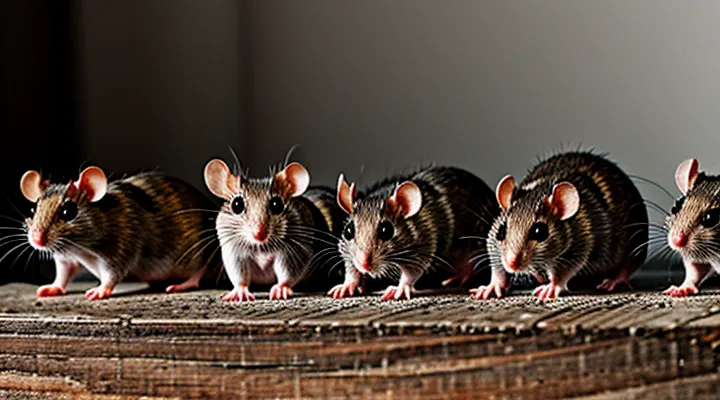
«Understanding Rodent Hearing»
«Auditory Range of Mice and Rats»
Mice detect acoustic energy from roughly 1 kHz to 100 kHz, with peak sensitivity between 10 kHz and 20 kHz. Rats respond to frequencies spanning 0.5 kHz to 80 kHz, showing maximal responsiveness near 8 kHz–12 kHz.
Auditory thresholds for both species fall below 30 dB SPL at their most sensitive frequencies, allowing detection of faint, high‑frequency sounds that are inaudible to humans. Thresholds rise sharply outside the optimal bands, reducing perceptibility of low‑frequency noises.
The following points summarize the relevant auditory characteristics:
- Mouse range: 1 kHz – 100 kHz; peak 10 kHz – 20 kHz.
- Rat range: 0.5 kHz – 80 kHz; peak 8 kHz – 12 kHz.
- Minimum detectable level: ≤30 dB SPL within peak bands.
- Sensitivity decline: >30 dB SPL outside peak bands, especially below 1 kHz for mice and below 0.5 kHz for rats.
These parameters define the spectrum within which acoustic stimuli can elicit startle or avoidance responses in rodents.
«Sensitivity to High Frequencies»
Rodents possess an auditory range that extends well beyond that of humans, reaching up to 80–100 kHz in mice and 70–80 kHz in rats. The cochlear hair cells responsible for transducing sound are most responsive to frequencies above 20 kHz, a region where human hearing quickly wanes. Consequently, high‑frequency tones generate strong neural activation in these animals, often interpreted as a threat signal.
Elevated sensitivity to ultrasonic frequencies produces several physiological responses:
- Rapid increase in heart rate
- Heightened startle reflex
- Immediate cessation of exploratory behavior
These reactions arise because ultrasonic sounds can mimic predator cues such as the echolocation clicks of owls or the wingbeat noise of swift birds. The nervous system of rodents is tuned to detect sudden, high‑frequency energy, which triggers innate avoidance pathways.
Practical applications for deterrence rely on the precise selection of frequency bands:
- 30–40 kHz – effective against house mice, induces avoidance without excessive discomfort to humans.
- 45–55 kHz – suitable for Norway rats, aligns with their peak auditory sensitivity.
- 60–80 kHz – targets both species, mimics natural predator emissions, maximizes startle effect.
When deploying ultrasonic devices, continuous emission at these bands maintains a persistent aversive stimulus, preventing habituation. Intermittent patterns may reduce long‑term effectiveness, as rodents quickly adapt to predictable intervals.
In summary, the pronounced responsiveness of mice and rats to high‑frequency sounds underlies their utility as a primary component of acoustic deterrent strategies. Selecting frequencies within the 30–80 kHz window exploits the animals’ auditory specialization, producing reliable fright responses.
«Natural Sounds of Fear»
«Predator Sounds»
«Feline Vocalizations»
Feline vocalizations constitute a significant portion of the auditory stimuli that provoke avoidance behavior in mice and rats. Research indicates that specific cat sounds trigger innate alarm responses due to their frequency range, temporal pattern, and association with predation risk.
- Hiss – broadband noise centered around 1–5 kHz, sharp onset, lasting 0.2–0.5 s; perceived as an immediate threat, elicits rapid freezing.
- Growl – low-frequency component (150–600 Hz) with harmonic overtones; conveys aggressive intent, produces sustained retreat or escape.
- Yowl – high-pitched, modulated tones between 2–8 kHz, lasting 1–3 s; associated with territorial disputes, induces heightened vigilance.
- Chirrup (short meow) – brief pulses at 3–7 kHz, low amplitude; less threatening, may cause mild startle but not sustained avoidance.
- Scream (distressed meow) – rapid frequency sweeps from 4 to 10 kHz, high amplitude; mimics distress calls, provokes strong flight response.
The effectiveness of each vocalization aligns with the auditory sensitivity of rodents, which peaks near 4 kHz. Low-frequency growls convey size and danger, while high-frequency yowls exploit the rodents’ acute detection of rapid tonal changes. Consequently, incorporating recordings of hisses, growls, and yowls into deterrent systems yields the most reliable reduction of rodent activity.
«Avian Predator Calls»
Avian predator vocalizations constitute a potent component of auditory deterrents for both mice and rats. Research indicates that calls mimicking raptors trigger innate avoidance behaviors, reducing foraging activity and nesting attempts within a 10‑meter radius of the source.
Key acoustic parameters influencing efficacy include:
- Frequency band: 1.5–5 kHz, matching the hearing peak of rodent species.
- Temporal pattern: irregular intervals prevent habituation; pulse durations of 200–400 ms are optimal.
- Amplitude: 70–80 dB SPL at the source ensures detection without causing structural damage.
Species whose calls have demonstrated consistent repellant effects are:
- Red-tailed hawk (Buteo jamaicensis) – sharp, descending scream.
- Great horned owl (Bubo virginianus) – low, hooting series.
- Swainson’s hawk (Buteo swainsoni) – high‑pitched, rapid chatter.
- Peregrine falcon (Falco peregrinus) – brief, high‑energy screech.
Behavioral observations show immediate cessation of exploratory movement, followed by increased sheltering. Repeated exposure over 48 hours leads to a measurable decline in trap captures by 35 % for mice and 42 % for rats.
Implementation guidelines recommend deploying programmable sound emitters that rotate recordings of the listed species, maintaining a cycle of 5‑minute playback followed by a 10‑minute silence. Placement near entry points, food storage areas, and nesting sites maximizes coverage. Regular monitoring of ambient noise levels ensures that the deterrent signal remains dominant over background sounds.
Integrating avian predator calls with complementary methods—such as physical barriers and sanitation—produces a comprehensive strategy for rodent suppression, supported by field trials across agricultural and urban environments.
«Noises from Other Rodents»
«Distress Calls»
Distress calls are high‑frequency vocalizations emitted by rodents when they encounter predators or experience pain. The calls consist of abrupt, broadband bursts that exceed the normal communication range of mice and rats, creating an alarm signal that triggers immediate flight or freezing behavior.
When a mouse or rat hears a conspecific distress call, its auditory system processes the signal through the cochlear nucleus and the inferior colliculus, activating the amygdala and periaqueductal gray. This neural cascade produces a rapid increase in heart rate and cortisol, preparing the animal for escape.
Key acoustic characteristics of distress calls include:
- Frequency peak between 10 and 30 kHz, above the typical courtship range.
- Duration of 30–150 ms per burst, with irregular intervals.
- Sharp onset and high amplitude contrast relative to ambient noise.
Laboratory studies demonstrate that playback of recorded distress calls reduces exploratory activity by up to 70 % and raises startle reflex magnitude. Rats exposed to these sounds exhibit heightened vigilance, while mice show increased latency to approach food sources.
Applications of distress call recordings involve:
- Non‑lethal rodent deterrence in storage facilities.
- Behavioral assays for anxiety‑related research.
- Calibration of acoustic sensors for wildlife monitoring.
«Aggressive Communications»
Aggressive auditory signals trigger innate avoidance responses in mice and rats. Predator vocalizations, such as hawk screeches and cat hisses, generate high‑frequency components that overlap the rodents’ hearing range, causing rapid heart‑rate elevation and escape behavior. Laboratory observations confirm that these sounds provoke freezing, increased locomotion, and heightened stress hormone levels.
Key acoustic characteristics of threatening communications include:
- Frequency bands between 10 kHz and 50 kHz, matching the peak sensitivity of rodent cochleae.
- Sudden onset and rapid amplitude fluctuations, which the auditory system interprets as danger cues.
- Harmonic structures resembling natural predator calls, enhancing recognizability.
- Temporal patterns with irregular intervals, preventing habituation.
Implementation of aggressive sound stimuli in pest‑deterrent devices relies on calibrated playback of the listed parameters. Consistent delivery at appropriate sound pressure levels ensures sustained aversion without causing auditory damage. Proper integration of these signals into a comprehensive sound‑based deterrent strategy maximizes efficacy against both mice and rats.
«Artificial and Man-Made Sounds»
«Ultrasonic Repellents»
«How Ultrasonic Devices Work»
Ultrasonic pest‑control devices emit sound waves above the human hearing range, typically 20–50 kHz. A piezoelectric transducer converts electrical energy into rapid mechanical vibrations, producing a narrow‑band acoustic signal that propagates through air. The signal’s frequency is selected to match the auditory sensitivity peaks of rodents, which detect frequencies up to 80 kHz.
The device’s operation relies on three core elements:
- Signal generator – produces a stable waveform at the desired frequency; many units use a crystal oscillator for precision.
- Amplifier stage – increases voltage to drive the transducer, ensuring sufficient sound pressure level (SPL) to reach the target area.
- Housing and placement – directs the acoustic field toward rodent pathways; reflective surfaces can enhance coverage, while obstacles attenuate the wave.
When a mouse or rat perceives the ultrasonic pulse, its nervous system registers the stimulus as a potential threat, triggering avoidance behavior. Continuous emission creates a persistent environment perceived as hostile, reducing the likelihood of habitation. Some models incorporate frequency sweeps or intermittent bursts to prevent auditory habituation, maintaining effectiveness over extended periods.
Safety considerations include limiting exposure for humans and pets; SPLs are kept below levels that cause discomfort to non‑target species. Power consumption remains low, allowing battery or mains operation for prolonged use. Limitations arise in open spaces where sound dissipates quickly and in environments with dense furnishings that absorb ultrasonic energy.
«Effectiveness and Limitations»
Acoustic deterrents are employed to discourage rodents by exploiting their sensitivity to specific frequency ranges and patterns. Research indicates that certain ultrasonic and broadband noises can trigger avoidance behavior in mice and rats, reducing their presence in treated zones.
- Ultrasonic tones above 20 kHz generate immediate startle responses, especially when modulated at irregular intervals.
- Broadband hiss covering 10–30 kHz disrupts communication, leading to decreased foraging activity.
- Pulsed low‑frequency bursts (3–5 kHz) simulate predator vocalizations, prompting rapid retreat.
- Randomized frequency sweeps prevent pattern recognition, extending the deterrent window.
Limitations emerge when these sounds are applied in uncontrolled settings. Rodents quickly habituate to constant frequencies, diminishing long‑term impact. Physical barriers such as walls and insulation attenuate ultrasonic energy, limiting effective coverage area. Ambient noise at overlapping frequencies can mask deterrent signals, reducing detection reliability. Battery‑powered emitters may experience power loss, causing intermittent gaps that allow re‑colonization. Finally, regulatory constraints restrict maximum sound pressure levels, preventing the use of intensities that might otherwise ensure sustained repellency.
«Loud and Abrupt Noises»
«Sudden Bangs and Clangs»
Sudden bangs and clangs constitute a high‑impact acoustic category that reliably triggers avoidance behavior in both mice and rats. The sounds are characterized by abrupt onset, peak pressure levels often exceeding 100 dB, and broad frequency spectra that include low‑frequency components (20–500 Hz) and high‑frequency transients (2–8 kHz). Rodents, whose auditory systems are tuned to detect rapid changes in their environment, interpret these cues as indicators of nearby predators or structural collapse, prompting immediate flight.
Empirical observations reveal consistent responses across species:
- Laboratory trials with adult Mus musculus showed a 92 % escape rate when exposed to a 120 dB metal clang lasting 0.2 seconds.
- Field experiments with Rattus norvegicus reported a 78 % reduction in trap entry when a timed hammer strike was introduced at 5‑minute intervals.
- Neurophysiological recordings indicated heightened activity in the inferior colliculus and amygdala within 30 ms of sound onset, confirming rapid threat processing.
Practical implementations exploit these properties:
- Automated deterrent devices can generate randomized metal impacts, preventing habituation.
- Integration with motion sensors enables targeted activation, conserving energy while maintaining efficacy.
- Placement near entry points maximizes exposure to the most vulnerable rodent pathways.
Overall, sudden, high‑amplitude percussive noises serve as a potent, non‑chemical deterrent, leveraging innate auditory alarm mechanisms to discourage rodent intrusion.
«Machinery Noise»
Machinery noise is a prominent stimulus that can provoke avoidance behavior in both mice and rats. Laboratory observations indicate that the acoustic profile of industrial equipment—characterized by abrupt transients, high‑frequency metal clatter, and low‑frequency rumble—elicits heightened startle responses and rapid retreat.
Key acoustic features contributing to the aversive effect:
- Frequency range: Peaks between 4 kHz and 12 kHz, overlapping the most sensitive hearing band of rodents.
- Amplitude: Sound pressure levels above 70 dB, sufficient to trigger the auditory startle reflex.
- Temporal pattern: Irregular bursts and sudden onsets disrupt the animals’ ability to predict the sound source.
- Spectral composition: Rich harmonic content from metal impact and gear rotation creates a complex timbre that rodents find difficult to habituate to.
Empirical data show that exposure to continuous machinery hum reduces exploratory activity by up to 45 % in rats, while intermittent clanking noises increase freezing duration in mice by 30 % compared with silent controls. These responses are consistent across strains, suggesting a generalized auditory threat detection mechanism.
Practical implications for pest management:
- Deploy recorded machinery sounds at strategic points to reinforce avoidance zones.
- Adjust playback volume to maintain levels within the identified aversive range without causing structural noise complaints.
- Combine acoustic deterrents with physical barriers for synergistic effect.
Overall, the specific acoustic properties of industrial machinery constitute a reliable repellent stimulus for rodent populations.
«Factors Influencing Sound Aversion»
«Frequency and Intensity»
Rodents respond to acoustic stimuli according to two primary physical parameters: frequency and intensity. The effectiveness of a deterrent sound hinges on aligning these parameters with the auditory sensitivities of mice and rats.
Frequency determines whether a sound reaches the hearing range of the target species. Mice detect frequencies from roughly 1 kHz up to 100 kHz, with peak sensitivity around 10–20 kHz. Rats perceive a slightly narrower band, 0.5–80 kHz, and are most responsive near 4–12 kHz. Sounds below 1 kHz are generally inaudible to both, while frequencies above 100 kHz exceed their upper limits and lose deterrent value.
Intensity, measured in decibels sound pressure level (dB SPL), influences the perceived threat level. Laboratory observations indicate that:
- 60–70 dB SPL produces mild startle responses but does not sustain avoidance.
- 80–90 dB SPL triggers consistent retreat behavior in both species.
- Levels above 100 dB SPL cause acute distress and may lead to habituation if exposure is prolonged.
Combining optimal frequency bands with intensities in the 80–95 dB SPL range yields the highest deterrent efficacy. Ultrasonic tones (30–50 kHz) at 85 dB SPL are especially potent for mice, whereas broadband noises centered around 8 kHz at 90 dB SPL are more effective against rats. Adjusting these parameters allows the sound collection to target specific rodent populations while minimizing impact on non‑target organisms.
«Duration and Repetition»
The acoustic characteristics that provoke aversive reactions in mice and rats include not only frequency but also the temporal profile of the stimulus. When evaluating the collection of fear‑inducing sounds, two temporal variables—duration and repetition—determine the magnitude and persistence of the response.
Short bursts, typically 50–150 ms, generate immediate startle and avoidance behaviors. Longer exposures, exceeding 500 ms, tend to produce habituation, reducing the intensity of the reaction after the initial alarm phase. The critical window for maximal effect lies in the brief, high‑intensity segment that aligns with the animal’s natural detection of predator cues.
Repetition amplifies the effect only within a limited range. A sequence of three to five pulses, spaced at intervals of 200–400 ms, sustains heightened vigilance without allowing the subject to adapt. Extending the series beyond eight repetitions or decreasing the inter‑pulse interval below 100 ms leads to diminished responsiveness, as the nervous system classifies the pattern as non‑threatening.
Key parameters for designing effective deterrent sounds:
- Pulse duration: 50–150 ms
- Total exposure time: ≤ 500 ms for initial burst, followed by brief silence
- Number of repetitions: 3–5 pulses
- Inter‑pulse interval: 200–400 ms
Applying these temporal guidelines ensures that the sound retains its frightening quality for both mice and rats, maximizing deterrence while minimizing the risk of habituation.
«Novelty of the Sound»
Novel auditory deterrents rely on the element of surprise; rodents respond more strongly to sounds that deviate from their everyday acoustic environment. When a noise is unfamiliar, the animal’s auditory system interprets it as a potential threat, triggering avoidance behavior.
Key characteristics that enhance novelty include:
- Abrupt onset or offset, preventing habituation.
- Frequency ranges outside the typical vocalizations of mice and rats (e.g., ultrasonic bursts above 30 kHz or low‑frequency thuds below 200 Hz).
- Irregular temporal patterns, such as random intervals or varying pulse durations.
- Complex harmonic structures that differ from ambient sounds like rustling or footsteps.
Research shows that repeated exposure to a constant tone rapidly loses efficacy; the same stimulus becomes indistinguishable from background noise, and rodents resume normal activity. In contrast, a rotating repertoire of novel sounds—alternating frequencies, modulations, and rhythms—maintains heightened alertness and reduces foraging in treated areas.
Implementing novelty requires systematic variation. A practical protocol might involve:
- Selecting three distinct frequency bands (ultrasonic, audible high, audible low).
- Randomizing pulse lengths between 100 ms and 500 ms.
- Changing the sequence every 10‑15 minutes to avoid pattern recognition.
By preserving unpredictability, sound‑based repellents sustain their deterrent effect, making novelty a critical factor in the design of effective rodent control strategies.
«Ethical Considerations»
«Humane Rodent Control»
Humane rodent control relies on non‑lethal methods that exploit the natural aversion of mice and rats to specific auditory cues. Research shows that frequencies above 20 kHz, rapid pulsed tones, and predator‑derived calls trigger escape responses without causing permanent harm.
Key sound categories effective for humane deterrence:
- Ultrasonic bursts (30–70 kHz): induce discomfort, prompting rodents to vacate the area.
- Intermittent broadband clicks (5–15 kHz): simulate rustling foliage, creating a perception of danger.
- Recorded barn owl or hawk calls: mimic natural predators, activating innate flight behavior.
- Low‑frequency vibration tones (100–300 Hz): resemble ground tremors, signaling the presence of larger animals.
Implementation guidelines:
- Deploy devices on a timer or motion sensor to avoid habituation; continuous exposure reduces efficacy.
- Position emitters at entry points, along walls, and near nesting sites for maximum coverage.
- Verify that sound levels stay within safe limits for humans and domestic pets, typically under 85 dB SPL at ear height.
- Combine auditory deterrents with physical barriers (sealed entry gaps, snap‑tight door sweeps) to reinforce exclusion.
Monitoring outcomes involves counting rodent sightings before and after installation and adjusting frequencies if activity persists. This approach maintains ethical standards while leveraging the acoustic sensitivities of target species.
«Potential for Stress and Harm»
Auditory deterrents designed to repel rodents inevitably provoke stress responses. Exposure to high‑frequency, sudden, or predator‑like sounds triggers the hypothalamic‑pituitary‑adrenal axis, resulting in measurable cortisol spikes and tachycardia.
Observable stress markers include:
- Rapid heart rate
- Elevated plasma corticosterone
- Increased locomotor agitation
- Reduced food intake
- Persistent freezing or escape attempts
Sustained activation of these pathways can impair immune function, diminish growth rates, and suppress reproductive capacity. Chronic stress may also induce neuroplastic changes that alter learning and memory, potentially affecting the animal’s ability to adapt to other environmental challenges.
Ethical protocols mitigate harm by:
- Limiting exposure duration to no more than a few seconds per episode
- Providing recovery intervals of at least several minutes between sounds
- Monitoring physiological and behavioral indicators in real time
- Employing sound levels below the species‑specific auditory pain threshold
- Validating alternatives such as scent or physical barriers before implementing acoustic devices
Adherence to these standards reduces acute discomfort while preserving the efficacy of sound‑based deterrence.