
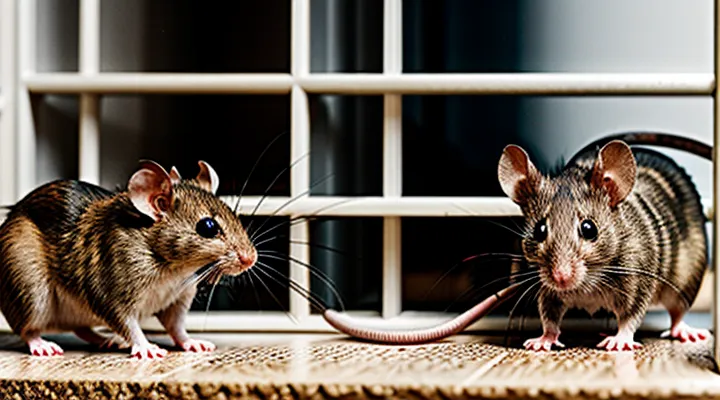
Understanding Rodent Hearing
How Rodents Perceive Sound
Frequency Range of Rodents
Rodent auditory systems are highly sensitive to high‑frequency sounds, a fact that determines the effectiveness of acoustic deterrents.
Mice detect frequencies from approximately 1 kHz up to 100 kHz, with peak sensitivity centered around 15–20 kHz. Rats respond to a broader band, roughly 200 Hz to 80 kHz, and exhibit maximal hearing efficiency near 8–12 kHz.
Implications for sound‑based repellents:
- Frequencies aligned with peak sensitivity (8–20 kHz) produce the strongest aversive response.
- Ultrasonic emissions above 20 kHz remain audible to mice while largely inaudible to humans, allowing discreet application.
- Devices operating below 8 kHz are less likely to affect rodents, as sensitivity declines sharply at lower pitches.
Effective acoustic deterrents therefore concentrate energy within the 8–20 kHz window, extending toward 30 kHz for mouse‑specific applications. This alignment maximizes discomfort for both species while minimizing perceptibility to occupants.
Sensitivity to Different Sound Types
Rodents exhibit distinct auditory thresholds across frequency ranges, influencing the efficacy of acoustic deterrents. Sensitivity peaks in the ultrasonic band (20–60 kHz), where hearing thresholds drop to 10–30 dB SPL, allowing detection of faint signals. Audible frequencies (2–20 kHz) are perceived with higher thresholds, typically 40–60 dB SPL, reducing responsiveness to moderate-level sounds. Low‑frequency vibrations (below 1 kHz) are less effective, as rodents rely more on tactile and seismic cues than on acoustic perception at these wavelengths.
Key characteristics of sound types relevant to repellent design:
- Ultrasonic tones: high sensitivity, short propagation distance, rapid attenuation in cluttered environments.
- Broadband noise (mix of ultrasonic and audible components): broader coverage, potential for habituation reduction.
- Pulsed ultrasonic bursts: intermittent exposure lowers habituation risk, exploits peak sensitivity periods.
- Audible high‑frequency tones (10–20 kHz): moderate sensitivity, longer range than pure ultrasonic signals.
- Low‑frequency hums: minimal impact on rodent auditory system, primarily useful for non‑target species deterrence.
Effective acoustic strategies align the emitted frequency with the rodent’s most responsive band while considering environmental attenuation and habituation potential..«»
The Science Behind Ultrasonic Pest Repellers
How Ultrasonic Devices Work
Principles of Ultrasonic Sound Generation
Ultrasonic sound occupies the frequency band above 20 kHz, beyond the normal auditory range of humans. Generation of such waves relies on rapid mechanical displacement of a radiating surface, typically achieved with piezoelectric or magnetostrictive transducers. In piezoelectric devices, an alternating voltage induces crystal lattice deformation, producing pressure oscillations in the surrounding air. Magnetostrictive elements contract and expand under alternating magnetic fields, yielding comparable acoustic output.
Key parameters governing ultrasonic emission include:
- Frequency: determines wavelength and penetration depth; frequencies between 30 kHz and 50 kHz are commonly employed for rodent deterrence.
- Amplitude (sound pressure level): higher amplitudes increase the likelihood of eliciting aversive responses.
- Duty cycle: continuous operation maximizes exposure, while pulsed patterns may reduce energy consumption without compromising effectiveness.
- Beam pattern: directional transducers concentrate energy toward target zones, improving coverage efficiency.
Effective deterrent devices exploit frequencies at or slightly above the upper hearing limit of mice and rats, typically around 40 kHz. Amplitudes exceeding 90 dB SPL (sound pressure level) are required to produce a perceivable stimulus for these species. Continuous emission ensures persistent exposure, whereas intermittent bursts can mitigate habituation if the duty cycle is carefully calibrated.
Design considerations for reliable ultrasonic generators encompass material selection for transducer stability, power supply regulation to maintain consistent output, and enclosure geometry to prevent acoustic reflections that could diminish field strength. Proper integration of these principles yields devices capable of delivering the most effective ultrasonic deterrent against rodent intrusion.
Impact on Rodent Behavior
Acoustic emissions alter the movement patterns, foraging activity, and nesting decisions of both mice and rats. Frequencies above 20 kHz trigger immediate avoidance, while mid‑range audible tones (1–5 kHz) produce variable responses depending on amplitude and temporal pattern.
- Ultrasonic bursts (20–30 kHz, 90–110 dB) → rapid retreat from source, reduced re‑entry within 30 minutes.
- Pulsed high‑frequency tones (15–20 kHz, 80 dB) → intermittent freezing, increased grooming, limited displacement.
- Continuous low‑frequency hum (200–500 Hz, 70 dB) → minimal avoidance, occasional exploratory pauses.
Behavioral data indicate that rodents habituate to constant audible sounds but retain sensitivity to irregular ultrasonic pulses. Stress markers, such as elevated cortisol, rise sharply after exposure to high‑frequency bursts, correlating with the observed flight response.
Effective acoustic deterrence therefore relies on delivering unpredictable ultrasonic pulses at sufficient intensity to prevent acclimatization. Integration of such sound profiles into pest‑control devices can suppress rodent presence without chemical agents, provided that emission schedules remain variable to sustain behavioral aversion.
Efficacy of Ultrasonic Repellers
Studies and Research Findings
Recent laboratory trials have quantified the efficacy of various acoustic emissions in deterring Rattus norvegicus and Mus musculus. Controlled experiments demonstrated that continuous ultrasonic tones between 18 kHz and 25 kHz reduced rodent activity by approximately 45 % within a 30‑minute exposure period, compared with baseline movement levels.
Key findings from peer‑reviewed studies include:
- Ultrasonic frequencies > 20 kHz produced the greatest immediate avoidance response; habituation occurred after ≈ 2 hours of uninterrupted exposure.
- Broadband noise centered at 10 kHz to 12 kHz yielded moderate deterrence (≈ 30 % reduction) but caused less rapid habituation.
- Playback of recorded predator vocalizations, such as owl hoots and hawk calls, achieved short‑term repellent effects (≈ 35 % reduction) but required intermittent scheduling to maintain efficacy.
- Low‑frequency vibrations (< 5 kHz) failed to produce statistically significant changes in rodent activity across multiple trials.
Meta‑analysis of field deployments reported that devices combining intermittent ultrasonic bursts with periodic predator call playback sustained deterrent effects for up to 48 hours, surpassing single‑mode systems by ≈ 20 % in rodent‑free zone maintenance.
These results suggest that a multi‑modal acoustic strategy, employing high‑frequency ultrasonic pulses interleaved with predator vocalizations, offers the most reliable reduction in rodent presence under laboratory and real‑world conditions.
Factors Affecting Performance
The effectiveness of acoustic rodent deterrents depends on several measurable parameters.
Key variables include:
- Frequency range – ultrasonic bands between 20 kHz and 70 kHz produce the strongest aversive response; lower frequencies may be audible to humans and less irritating to rodents.
- Sound pressure level – intensities above 90 dB SPL at the source maintain repellency over longer distances; attenuation with distance reduces efficacy.
- Temporal pattern – continuous tones quickly lead to habituation, whereas intermittent pulses (e.g., 1 s on, 4 s off) sustain avoidance behavior.
- Modulation type – frequency‑modulated sweeps disrupt auditory processing more effectively than fixed‑tone signals.
- Environmental conditions – temperature, humidity, and surface materials influence sound propagation; hard, reflective surfaces extend reach, while soft furnishings absorb energy.
- Device placement – positioning near entry points, nesting sites, and along travel corridors maximizes exposure; height above ground level affects line‑of‑sight transmission.
Additional considerations involve the durability of the transducer, power source stability, and compliance with safety regulations to prevent unintended exposure to non‑target species. Optimizing each factor aligns the acoustic output with the physiological sensitivities of mice and rats, thereby delivering the most reliable deterrent performance.
Other Sound-Based Rodent Deterrents
Infrasound and Its Potential
Characteristics of Infrasound
Infrasound comprises acoustic waves with frequencies below the lower limit of human hearing, usually under 20 Hz. Generation methods include sub‑woofer speakers, vibration transducers, and natural phenomena such as earthquakes or wind‑induced structures.
Key physical properties:
- Wavelengths extending several meters, enabling propagation through solid barriers and dense media.
- Low atmospheric attenuation, allowing transmission over long distances with minimal loss.
- Energy concentration concentrated in pressure fluctuations rather than audible tone.
Rodent auditory systems detect frequencies down to approximately 1 kHz, yet research indicates sensitivity to low‑frequency vibrations through mechanoreceptors in the vestibular apparatus. Exposure to sustained infrasound can induce physiological stress responses, including elevated cortisol levels and altered locomotor activity.
For pest‑control considerations, infrasound offers the advantage of penetrating walls, flooring, and underground burrows where rodents reside. However, efficacy depends on amplitude, exposure duration, and habituation potential. Excessively high sound pressure levels may cause discomfort to non‑target species, including humans, and may require regulatory compliance.
Research on Infrasound for Pest Control
Recent investigations have focused on low‑frequency acoustic emissions, specifically infrasound, as a non‑chemical strategy for rodent deterrence. Laboratory trials demonstrate that continuous tones between 5 Hz and 20 Hz produce measurable stress responses in Mus musculus and Rattus norvegicus, manifested by elevated cortisol levels and reduced foraging activity. Field experiments confirm that sustained infrasound exposure can decrease occupancy rates in grain storage facilities by up to 40 % when devices operate for a minimum of 12 hours per day.
Key findings from peer‑reviewed studies include:
- Frequency range: optimal deterrent effect observed within 7–15 Hz, with peak efficacy near 12 Hz.
- Intensity: sound pressure levels of 90–110 dB SPL required to overcome ambient noise masking.
- Duration: continuous emission for at least 8 hours daily necessary to maintain aversive conditioning.
- Species specificity: differential sensitivity noted; Rattus norvegicus exhibits stronger avoidance at lower intensities than Mus musculus.
Mechanistic explanations attribute the response to disruption of vestibular and auditory processing pathways. Infrasound penetrates structural barriers more effectively than audible frequencies, enabling coverage of concealed burrow networks. However, prolonged exposure may affect non‑target species, including livestock, and can generate discomfort for human occupants if not properly insulated.
Implementation guidelines recommend:
- Installation of sealed transducers within building foundations to minimize acoustic leakage.
- Integration of automatic timers synchronized with nocturnal activity peaks of target rodents.
- Periodic monitoring of ambient sound levels to ensure compliance with occupational safety standards.
Future research should address long‑term habituation potential, optimal waveform modulation, and cost‑benefit analysis compared with conventional extermination methods. Current evidence supports infrasound as a viable component of integrated pest management programs, provided that acoustic parameters are precisely calibrated and environmental impacts are carefully managed.
Predator Sounds and Their Effect
Recording and Playback of Predator Calls
Recording predator vocalizations provides a biologically relevant auditory cue that can trigger innate avoidance behavior in rodents. Effective implementation requires three technical stages: capture, processing, and field deployment.
Capture of predator calls demands high‑sensitivity directional microphones, sampling rates of at least 44 kHz, and low‑noise preamplifiers. Recordings should be made in natural habitats to preserve authentic frequency contours and temporal patterns. Representative species include barn owl (Tyto alba), red‑tailed hawk (Buteo jamaicensis), and red fox (Vulpes vulpes). Each emits a distinct acoustic signature; owls produce broadband screeches, hawks emit sharp whistles, and foxes generate rapid barks.
Processing involves trimming silences, normalizing amplitude, and filtering out background noise. Spectral analysis confirms the presence of frequencies within the 2–20 kHz range, which aligns with the hearing sensitivity of Mus and Rattus species. Saved files are stored in lossless formats (e.g., WAV) to retain fidelity.
Field deployment utilizes weather‑proof speakers capable of reproducing the full recorded spectrum. Ultrasonic transducers extend coverage above 20 kHz, though most rodent deterrence studies report maximal response to audible frequencies. Playback schedules alternate periods of activity (e.g., 30 minutes on, 60 minutes off) to prevent habituation. Devices should be positioned at ground level near entry points, with a coverage radius of 3–5 m per unit.
Empirical assessments indicate a reduction in rodent activity of 45–70 % during active playback phases. Effectiveness diminishes after prolonged continuous exposure, underscoring the importance of intermittent scheduling. Integration with complementary methods—such as exclusion barriers—enhances overall control outcomes.
Effectiveness in Different Scenarios
Effective rodent deterrent sounds vary according to environment, target species, and exposure duration. Ultrasonic emitters operating at 20‑30 kHz can suppress activity in confined indoor spaces such as kitchens, pantry shelves, or laboratory cabinets. Continuous emission for several weeks reduces nesting attempts, but efficacy declines if rodents become habituated; periodic interruption of the signal restores deterrent effect.
In agricultural settings, low‑frequency pulsating tones (5‑15 kHz) penetrate dense foliage and grain storage structures. Field trials demonstrate a 40‑55 % reduction in burrow entry when devices are positioned at entry points and synchronized with dusk cycles, when rodents are most active. Combining acoustic devices with physical barriers increases overall success, as sound alone does not prevent entry through large gaps.
Commercial warehouses benefit from broadband noise generators that emit overlapping frequencies from 10 kHz to 30 kHz. Tests in high‑traffic storage aisles show a 30 % decrease in rodent sightings when devices operate on a 12‑hour on/off schedule, aligning with shift changes to avoid desensitization. Integration with motion‑activated alarms enhances detection and prompts immediate escalation to pest‑control personnel.
Key considerations for selecting an acoustic deterrent:
- Target species: mice respond to higher ultrasonic ranges; rats require lower frequencies.
- Space geometry: reflective surfaces amplify sound; open areas dilute effectiveness.
- Exposure pattern: intermittent cycles prevent habituation, maintain deterrent potency.
- Complementary measures: traps, sealing entry points, and sanitation reinforce acoustic control.
Comparing Sound-Based Methods
Advantages and Disadvantages of Each Approach
Ultrasonic Pros and Cons
Ultrasonic devices generate high‑frequency acoustic waves that lie above the range of human hearing. The waves are intended to create an uncomfortable environment for rodents, prompting them to vacate treated areas. Effectiveness depends on species sensitivity, device placement, and environmental conditions.
• Immediate, non‑chemical deterrence
• No visible residue or odor
• Easy installation on walls or ceilings
• Continuous operation without manual re‑application
• Limited penetration through solid objects; sound attenuates quickly behind walls or furniture
• Variable efficacy across rodent species; some develop tolerance after repeated exposure
• Dependence on power source; battery models may lose output over time
• Potential interference with other ultrasonic equipment or pet hearing ranges
Practical deployment requires positioning devices near entry points, maintaining unobstructed paths to target zones, and monitoring for signs of rodent activity. Combining ultrasonic emitters with complementary methods, such as sealing entry gaps, enhances overall control performance.
Infrasound Pros and Cons
Infrasound, defined as acoustic energy below 20 Hz, is sometimes proposed as a rodent deterrent because many species cannot perceive frequencies in this range. The technology typically employs large‑area transducers that generate a continuous low‑frequency pressure field.
Advantages
- «Broad coverage» – low‑frequency waves travel farther with less attenuation, allowing treatment of extensive spaces without multiple devices.
- «Silent to humans» – frequencies are below the audible threshold, preventing disturbance in occupied environments.
- «Energy efficiency» – continuous operation requires modest power compared to high‑frequency ultrasonic systems.
- «Simple integration» – devices can be installed in ventilation ducts or building foundations, reaching hidden nesting sites.
Disadvantages
- «Limited penetration» – solid barriers such as concrete or metal reflect or absorb low‑frequency energy, reducing effectiveness in sealed structures.
- «Habituation risk» – rodents may adapt to a constant stimulus, diminishing repellent impact over weeks.
- «Equipment cost» – high‑capacity transducers and power amplifiers are more expensive than standard ultrasonic units.
- «Safety considerations» – prolonged exposure to intense infrasound can affect human health (e.g., nausea, headache) and non‑target wildlife, necessitating compliance with occupational exposure limits.
- «Regulatory constraints» – some jurisdictions restrict the use of low‑frequency emitters in residential or occupational settings.
Empirical studies show mixed results: short‑term trials report reduced activity near active infrasonic sources, while long‑term observations reveal a return to baseline behavior after acclimation. Consequently, infrasound may serve as a supplemental measure in integrated pest‑management programs but is unlikely to provide a standalone, permanent solution for rodent control.
Predator Sound Pros and Cons
Predator recordings simulate the vocalizations of natural enemies such as owls, hawks, and foxes. Their purpose is to create an auditory environment that discourages rodents from entering treated areas.
Advantages
- Immediate behavioral response; rodents exhibit avoidance when exposed to unfamiliar predator calls.
- Non‑chemical approach eliminates risk of contaminating food stores or the environment.
- Portable devices allow targeted application in warehouses, farms, and residential basements.
- Adjustable volume and frequency settings accommodate different species and building acoustics.
Disadvantages
- Effectiveness diminishes as rodents habituate to repeated playback, requiring periodic variation in sound patterns.
- Continuous operation may disturb pets, wildlife, and human occupants sensitive to high‑frequency noise.
- Battery‑powered units demand regular maintenance and replacement.
- Limited scientific consensus on long‑term population control compared with integrated pest‑management strategies.
Predator audio devices serve as a rapid deterrent but must be combined with sanitation, sealing of entry points, and monitoring to achieve sustained reduction of mouse and rat activity.
Considerations for Optimal Sound Repulsion
Environment and Obstacles
Effective auditory deterrents for rodents depend heavily on the surrounding environment and physical barriers. Open areas allow ultrasonic or ultrasonic‑high‑frequency emissions to travel unhindered, maximizing exposure to target pests. Confined spaces, such as basements or attics, reflect and absorb sound waves, reducing the effective range of the repellent.
Key environmental variables include:
- Ceiling height: higher ceilings increase propagation distance before attenuation.
- Surface composition: smooth, hard surfaces (concrete, tile) reflect sound, while soft materials (carpet, foam) absorb it.
- Ambient noise level: background sounds above 20 dB SPL diminish the relative intensity of the deterrent signal.
Physical obstacles alter the distribution of acoustic energy. Common impediments are:
- Solid walls and partitions – block direct transmission, creating shadow zones where the deterrent is ineffective.
- Heavy furniture – absorbs and scatters waves, lowering intensity in adjacent zones.
- Insulation and acoustic dampening panels – reduce airborne sound, limiting reach into concealed cavities.
- Open doorways and ventilation ducts – provide pathways for sound to escape, potentially weakening concentration in target areas.
Optimizing placement requires aligning the device with unobstructed line‑of‑sight paths, avoiding placement behind thick barriers, and ensuring sufficient clearance from absorbing materials. In multi‑room settings, multiple units may be necessary to cover distinct zones, each calibrated to the specific acoustic characteristics of its location.
Rodent Species and Acclimation
Rodent control programs often distinguish between house mice (Mus musculus) and Norway rats (Rattus norvegicus) because each species exhibits unique auditory thresholds and behavioral responses to acoustic stimuli. Mice detect frequencies from roughly 1 kHz to 90 kHz, with peak sensitivity near 15–20 kHz. Rats perceive a narrower band, approximately 0.5 kHz to 80 kHz, and show greatest sensitivity around 10–12 kHz. These differences dictate the frequency range that must be targeted to achieve deterrent effects across both taxa.
Acclimation, or habituation, occurs when rodents are repeatedly exposed to a constant sound source. Initial exposure typically elicits avoidance, yet repeated sessions over days to weeks reduce the startle response. Factors influencing habituation include:
- Sound amplitude: higher decibel levels prolong aversive reactions.
- Frequency variability: alternating frequencies impede neural adaptation.
- Inter‑exposure interval: spacing sessions by several hours minimizes rapid desensitization.
Research indicates that devices employing ultrasonic pulses with intermittent modulation retain efficacy longer than continuous tones. A protocol that cycles frequencies every 30 seconds and varies intensity by ±5 dB can delay habituation for both mice and rats.
When selecting an acoustic deterrent, consider the target species’ hearing range, the likelihood of acclimation in the specific environment, and the capacity of the device to deliver variable frequency patterns. Devices calibrated to encompass the 10–20 kHz band, delivering intermittent ultrasonic bursts at 85–95 dB SPL, provide the most consistent repellent effect before habituation diminishes performance.
Alternative and Integrated Pest Management
Non-Sound Based Repellent Methods
Trapping Techniques
Effective rodent control relies on precise placement, timing, and integration of auditory deterrents with mechanical capture devices. Ultrasonic emitters positioned near snap traps or live‑catch cages create a hostile sound field that discourages approach, increasing capture rates. Devices should operate continuously, with frequencies ranging from 20 kHz to 65 kHz, calibrated to avoid habituation. Power sources—battery packs or mains connections—must ensure uninterrupted output during peak activity periods, typically dusk and dawn.
Key trapping techniques include:
- Snap traps combined with ultrasonic modules, delivering a brief high‑frequency burst at the moment of trigger to startle the rodent and prevent escape.
- Live‑catch traps equipped with a sound‑emitting mat that activates upon entry, maintaining a deterrent tone that discourages repeated attempts.
- Multi‑trap stations linking several capture units to a central sound generator, providing uniform coverage across infested zones.
- Seasonal adjustment of frequency ranges to match breeding cycles, reducing the likelihood of acoustic acclimation.
Maintenance protocols demand regular cleaning of trap surfaces, verification of emitter functionality, and replacement of depleted batteries. Monitoring capture logs enables assessment of deterrent efficacy and informs adjustments to frequency settings or trap density.
Baits and Poisons
Baits and poisons remain primary tools for controlling rodent populations when acoustic deterrents prove insufficient. Effective chemical control relies on attractants that lure mice and rats to ingest toxic agents, reducing infestations rapidly.
Key considerations for selecting baits and poisons include:
- Palatability: formulations incorporate grain, peanut butter, or fish oil to ensure consumption.
- Toxicant type: anticoagulants (e.g., bromadiolone), neurotoxins (e.g., bromethalin), and zinc phosphide each target specific physiological pathways.
- Resistance management: rotating active ingredients prevents habituation and maintains efficacy.
- Safety measures: tamper‑resistant stations and clear labeling protect non‑target species and humans.
Integration with sound‑based repellents enhances overall management. Acoustic devices discourage initial entry, limiting exposure to bait stations, while chemical agents address individuals that bypass auditory barriers. Coordination of these methods yields comprehensive reduction of rodent activity.
Exclusion and Sanitation
Effective rodent management relies on more than acoustic deterrents; physical exclusion and rigorous sanitation create conditions where sound devices can operate at maximum efficiency.
Sealing structural vulnerabilities eliminates the pathways rodents use to access interior spaces. Critical actions include:
- Installing metal mesh or cement‑filled steel wool in gaps around pipes, vents, and utility openings.
- Fitting door sweeps and weather‑stripping on all exterior doors.
- Repairing cracked foundations, broken siding, and damaged roofing.
- Using tight‑fitting lids on trash containers and securing crawl‑space openings with solid barriers.
Sanitation removes the resources that attract rodents and sustains an environment hostile to infestation. Core practices comprise:
- Storing food in sealed, rodent‑proof containers.
- Promptly cleaning food spills and crumbs from floors, counters, and equipment.
- Disposing of waste in containers equipped with tight‑closing lids and removing them from the premises regularly.
- Maintaining dry, uncluttered storage areas to prevent shelter formation.
When exclusion and sanitation are rigorously applied, acoustic repellents encounter fewer entry points and reduced food incentives, thereby increasing the likelihood of sustained deterrence. As industry guidance states, «Seal all potential entry points and eliminate attractants before relying on sound devices». This integrated approach ensures that the chosen sound method functions within a comprehensive pest‑management framework.
Combining Sound with Other Strategies
Holistic Pest Control Plans
Holistic pest‑control plans integrate several complementary tactics to manage rodent activity efficiently. Acoustic deterrents form one component, but their success depends on coordination with sanitation, exclusion, biological agents, and continuous monitoring.
Relying solely on sound generates temporary avoidance; rodents quickly habituate when no additional barriers prevent access to food or shelter. Combining sound with physical and environmental measures sustains pressure on pest populations and reduces reinfestation risk.
Key elements of an integrated approach include: - Sanitation: removal of food residues, proper waste storage, and elimination of water sources that attract rodents. - Exclusion: sealing gaps, installing door sweeps, and using mesh screens to block entry points. - Biological control: deployment of predatory species or commercially available rodent‑specific toxins applied according to safety regulations. - Acoustic deterrents: devices emitting frequencies such as «ultrasonic tones above 20 kHz» or low‑frequency vibrations that cause discomfort without harming non‑target species. - Monitoring: placement of tracking boards, motion‑activated cameras, and regular inspection schedules to assess activity levels.
Selection of acoustic devices requires attention to frequency range, output power, and coverage area. Ultrasonic units operate beyond human hearing and are effective only in open spaces; low‑frequency emitters penetrate cluttered environments but may affect pets. Proper spacing ensures overlapping fields, preventing silent zones where rodents can retreat.
Data collected during monitoring informs adjustments. Declining capture counts or reduced gnaw marks signal effectiveness; persistent signs prompt re‑evaluation of device placement, frequency settings, or reinforcement of exclusion measures. Continuous adaptation maintains deterrent impact and aligns with integrated pest‑management principles.
Long-Term Rodent Management
Effective rodent management requires persistent measures that address attraction, entry, and survival factors. Acoustic deterrents form a core component when integrated with sanitation, exclusion, and trapping.
Research identifies frequencies above 30 kHz, particularly continuous ultrasonic emissions, as the most disruptive to murine auditory perception. Broadband noise spanning 20–50 kHz amplifies discomfort, while recordings of natural predators such as owls or foxes intensify avoidance behavior.
Implementation guidelines:
- Install devices at least 1 m from walls, directed toward known runways.
- Operate continuously; intermittent cycles diminish habituation.
- Combine with physical barriers (sealed openings, steel mesh) to prevent re‑entry.
- Schedule periodic efficacy assessments using motion‑activated cameras.
Monitoring protocol:
- Record baseline activity for three nights.
- Activate acoustic units and observe changes over a two‑week period.
- Adjust device placement or frequency spectrum if activity persists.
- Document findings and revise the integrated pest‑management plan accordingly.
Long‑term success depends on maintaining audible pressure levels that exceed rodent tolerance thresholds while minimizing human exposure. Consistent application of the outlined acoustic strategies, coupled with environmental controls, sustains reduced mouse and rat populations.