
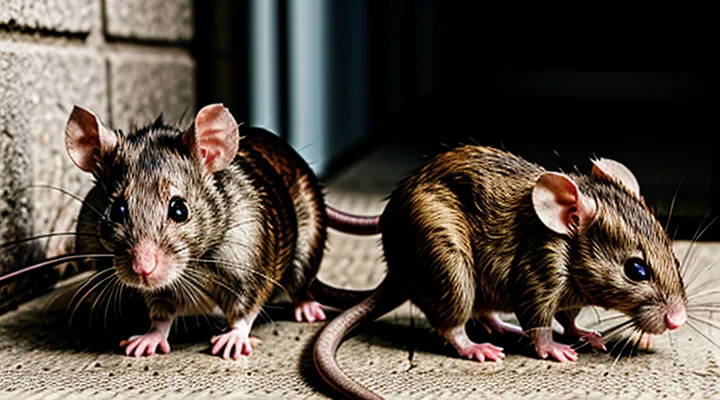
Understanding Rat Personalities: Males vs. Females
Male Rat Characteristics
Size and Build
Size and build constitute a primary consideration when deciding between male and female rats. Males usually exceed females in both body mass and skeletal dimensions, while females tend to be more compact.
- Average adult male weight: 300–350 g; length (nose‑to‑tail): 20–25 cm.
- Average adult female weight: 250–300 g; length (nose‑to‑tail): 18–22 cm.
- Male musculature is slightly more pronounced, leading to a broader chest and larger forepaws.
- Female skeletons display a narrower pelvis, which can affect cage space requirements.
These dimensional differences influence housing density, handling ease, and breeding logistics. Larger males may require cages with greater floor area to prevent overcrowding and reduce stress‑related behaviors. Their stronger grip can make routine handling more demanding for inexperienced caretakers. Conversely, the smaller stature of females allows for higher stocking densities without compromising welfare, and their lighter weight facilitates gentle handling, especially in educational or laboratory settings.
When breeding, the modest size of females eases pregnancy monitoring and parturition, while the greater mass of males supports more vigorous mating activity. Selecting the appropriate sex therefore depends on available space, handler proficiency, and specific experimental or husbandry objectives.
Temperament and Social Behavior
Male rats typically exhibit higher levels of aggression, especially when housed together. Their dominance hierarchies form quickly, leading to frequent territorial disputes. Female rats display lower aggression, maintain stable social groups, and engage in cooperative grooming more often. These behavioral patterns influence experimental outcomes that depend on stress levels, social hierarchy, or reproductive status.
In mixed‑sex housing, males dominate interactions, suppressing female activity and altering hormone profiles. Separate housing preserves natural social structures: females develop synchronized estrous cycles, while males establish clear dominance ranks. Researchers seeking consistent baseline behavior should consider these distinctions.
Key temperament and social behavior attributes include:
- Aggression: Males > females; peaks during adolescence.
- Social cohesion: Females > males; higher rates of affiliative behavior.
- Territoriality: Stronger in males; requires larger cage space.
- Maternal care: Exclusive to females; influences offspring development.
- Stress response: Males show heightened corticosterone after social defeat; females exhibit more resilient patterns.
Choosing the appropriate sex depends on the experimental variable. Studies focusing on stress, aggression, or male‑specific neurobiology benefit from male subjects. Investigations of social bonding, maternal effects, or female reproductive cycles require female subjects. Aligning the research question with these temperament and social behavior profiles ensures reliable, reproducible results.
Health Considerations
When choosing between male and female rats, health-related differences affect experimental outcomes, colony management, and animal welfare.
- Disease susceptibility: Male rats exhibit higher incidence of certain respiratory infections, while females are more prone to urinary tract infections linked to estrous cycling.
- Hormonal influence: Female hormonal cycles cause fluctuations in body temperature, metabolism, and stress‑hormone levels, potentially confounding physiological measurements. Male rats lack cyclic hormonal variation but display elevated testosterone, which can alter immune response and muscle development.
- Aggression and injury risk: Unneutered males often develop dominant behaviors leading to fights and bite wounds; females generally demonstrate lower aggression, reducing trauma-related morbidity.
- Reproductive health: Female rats require monitoring of estrus and pregnancy, introducing risks of dystocia and postpartum complications. Male rats do not present these reproductive hazards but may develop testicular tumors with age.
- Longevity and age‑related pathology: Studies report slightly longer median lifespan for females, accompanied by higher prevalence of age‑related neoplasms; males tend to die earlier from cardiovascular lesions.
Selecting the appropriate sex depends on the specific health parameters under investigation. Researchers must align the animal’s physiological profile with study goals to minimize confounding variables and ensure reliable data.
Female Rat Characteristics
Size and Build
When choosing between male and female rats for experimental or breeding purposes, size and build are primary considerations. Males typically weigh 300–500 g, while females range from 200–350 g. The greater body mass of males results in larger skeletal structures and more robust musculature, which can affect handling, cage space requirements, and dosing calculations. Females, being smaller, occupy less space and consume less feed, offering cost advantages in large‑scale colonies.
Key implications of size differences:
- Housing density – Smaller females allow higher cage occupancy without compromising welfare standards.
- Drug dosing – Precise dose calculations benefit from the more consistent weight range of females; male weight variability is higher.
- Physical manipulation – Larger males may be harder to restrain, increasing the risk of injury to both animal and handler.
- Physiological measurements – Muscle mass influences metabolic rate and thermoregulation, potentially confounding data if sex is not accounted for.
Overall, the decision hinges on experimental design constraints, resource allocation, and the specific physiological parameters under investigation.
Temperament and Social Behavior
Rats exhibit distinct temperament patterns that correlate with sex, influencing experimental reliability and colony management. Male rodents typically display higher levels of territorial aggression, especially when housed in groups, leading to increased incidents of fighting and potential injury. Female rodents, in contrast, demonstrate lower aggression thresholds, forming more stable social hierarchies and tolerating co‑housing with minimal conflict.
Key behavioral differences include:
- Exploratory activity – Males generally travel longer distances in open‑field tests, suggesting heightened novelty seeking; females show more cautious exploration, remaining closer to shelter zones.
- Stress responsiveness – Corticosterone spikes are more pronounced in males after social challenges, whereas females exhibit a blunted hormonal response, indicating greater resilience to acute stressors.
- Maternal and affiliative behavior – Only females engage in pup care, providing natural models for parental studies; they also display increased social grooming toward cage mates, reinforcing group cohesion.
Social dynamics further affect data interpretation. Male groups often require regular monitoring for dominance hierarchies, which can introduce variability in behavioral assays. Female groups maintain consistent social structures, reducing confounding factors related to hierarchy shifts. However, estrous cycle fluctuations can modulate female behavior, necessitating cycle tracking or synchronization for certain endpoints.
Overall, temperament and social behavior considerations suggest that female rats offer more predictable group interactions and lower aggression‑related loss, while male rats provide heightened exploratory drive and aggression models useful for specific research objectives. Selection should align with the experimental focus, balancing the advantages of each sex’s behavioral profile.
Health Considerations
When selecting a rat for experimental or husbandry purposes, health factors differ between the sexes and can influence study outcomes or animal welfare.
Key health-related differences include:
- Hormonal fluctuations: Females experience estrous cycles that alter hormone levels, potentially affecting metabolic, cardiovascular, and neurobehavioral measurements. Males maintain relatively stable androgen concentrations.
- Disease susceptibility: Certain infections, such as respiratory viral strains, show higher incidence in females, whereas males may be more prone to liver toxicity under specific chemical exposures.
- Growth and body composition: Males typically attain greater body mass and lean muscle proportion, which can affect dosing calculations and imaging parameters. Females often have higher body fat percentages, influencing pharmacokinetics.
- Longevity: Average lifespan tends to be longer in females, reducing age‑related attrition in long‑term studies.
- Reproductive considerations: Breeding females require monitoring of pregnancy and lactation, introducing additional variables; intact males may display aggression that necessitates single housing or environmental enrichment.
Choosing the appropriate sex depends on the specific health endpoints of interest. If hormonal stability is essential, males may provide more consistent baseline data. When studying conditions influenced by estrogen or reproductive physiology, females are the logical choice. Researchers must align sex selection with the health parameters most relevant to their objectives.
Factors to Consider When Choosing
Living Arrangements and Space
When selecting rats for a research colony, the spatial requirements of males and females differ enough to affect cage planning. Male rats typically establish larger personal territories and exhibit higher levels of intra‑sex aggression, especially during puberty. Consequently, a single male should occupy a cage that provides at least 0.05 m² of floor space, with additional vertical enrichment to reduce confrontations. Female rats, which form more stable social groups, can be housed in slightly smaller enclosures; a group of three to five females comfortably occupies 0.04 m² per individual.
Key considerations for cage configuration:
- Floor area per animal – allocate 0.05 m² for males, 0.04 m² for females.
- Vertical enrichment – include platforms, tunnels, and climbing structures to increase usable space and disperse activity.
- Group size – house males singly or in pairs with careful monitoring; house females in groups of three to five to promote natural social behavior.
- Barrier design – use solid partitions between male cages to prevent visual contact that can trigger aggression; provide perforated dividers for females to allow scent exchange without direct contact.
- Cleaning schedule – increase frequency for male cages due to higher urine output and potential wound contamination; maintain standard cleaning for female groups.
Space planning must also account for breeding cycles. Female rats require nesting material and a secluded corner during gestation; cages should include a removable nest box sized to fit within the allocated floor area. Male rats do not need nesting provisions but benefit from additional hiding spots to mitigate stress during dominance encounters.
Overall, the optimal living arrangement aligns cage dimensions, enrichment, and group composition with the distinct behavioral patterns of each sex, ensuring welfare standards while minimizing resource consumption.
Desired Interaction Level
When selecting rats for research or as pets, the level of human‑animal interaction that the caretaker expects is a decisive factor. Desired interaction level refers to the frequency and intensity of handling, the need for social bonding, and the tolerance for occasional aggression. It influences welfare outcomes, data consistency, and the practicality of routine husbandry.
Male rodents typically display stronger territoriality and may react defensively to frequent handling. They often establish dominance hierarchies that limit their willingness to engage in repeated close contact. Consequently, environments that require minimal daily handling or where brief, low‑stress interactions are sufficient tend to align with male behavior patterns.
Female rodents generally exhibit higher sociability and are more receptive to repeated handling. Their social structures are less rigid, allowing for frequent human contact without marked stress responses. Settings that involve regular grooming, training, or frequent observational sessions benefit from the female’s greater tolerance for interaction.
Key considerations for desired interaction level:
- Frequency of handling: males – low to moderate; females – moderate to high.
- Aggression risk during handling: males – higher; females – lower.
- Social bonding with caretaker: males – limited; females – strong.
- Suitability for tasks requiring daily manipulation: males – less suitable; females – more suitable.
Choosing the sex that matches the caretaker’s planned interaction intensity ensures optimal animal welfare and experimental reliability.
Potential for Multiple Rats
When a study requires more than one rat, the sex of the animals influences experimental design, animal welfare, and data interpretation. Male rats can be housed together without estrous cycles, reducing hormonal variability within a group. Female rats, however, allow assessment of sex‑specific responses and increase the relevance of findings to both sexes.
Key considerations for selecting multiple rats:
- Reproductive status – Unbred females avoid pregnancy‑related physiological changes; intact males eliminate the need for estrous monitoring.
- Social dynamics – Males may display dominance hierarchies that lead to aggression; females typically exhibit lower aggression but may form tight social bonds that affect behavior.
- Hormonal fluctuations – Female estrous cycles introduce periodic endocrine shifts; males maintain relatively stable hormone levels.
- Statistical efficiency – Including both sexes doubles group numbers to capture sex differences; using a single sex reduces required sample size but limits generalizability.
- Cage capacity – Males often require larger space to mitigate fighting; females can be housed at higher densities with appropriate enrichment.
Choosing the appropriate sex for multiple‑rat experiments depends on the balance between controlling biological variability and achieving comprehensive, translatable results.
Reproductive Considerations
When comparing male and female rodents for breeding programs, reproductive physiology dictates distinct management requirements. Female rats undergo a regular estrous cycle lasting four to five days, during which ovulation occurs spontaneously. Gestation lasts approximately 21‑23 days, producing litters of 6‑12 pups on average. Post‑natal maternal care influences pup survival and growth rates, making the presence of a dam essential for early development.
Male rats reach sexual maturity around five weeks of age and generate large quantities of sperm continuously. A single male can mate with multiple females within a short period, enabling rapid turnover of breeding cohorts. Sperm quality peaks between eight and twelve weeks, after which it declines modestly but remains sufficient for successful fertilization throughout most of the adult lifespan.
Reproductive planning must account for these characteristics:
- Female availability limits the number of concurrent breeding cycles; each dam can support one litter at a time.
- Male capacity allows multiple matings per day, reducing the number of sires needed to maintain genetic diversity.
- Estrous synchronization is unnecessary; females can be paired with males at any stage of the cycle, though detection of proestrus maximizes conception probability.
- Litter size and sex ratio are influenced by maternal health; optimal nutrition and housing conditions improve outcomes for both sexes.
Effective colony management therefore balances the finite number of breeding females with the greater mating flexibility of males, aligning reproductive output with experimental or production goals.
Common Misconceptions
Aggression Myths
Research on rodent behavior reveals several misconceptions about aggression that often influence decisions about whether to keep male or female rats.
First, the belief that males are inherently more aggressive than females lacks consistent empirical support. Studies measuring attack frequency, latency to aggression, and severity of fights show overlapping distributions between sexes. In many laboratory colonies, male rats display higher rates of territorial aggression only under specific conditions such as overcrowding or exposure to unfamiliar conspecifics. Female rats, when housed in groups, can exhibit comparable levels of agonistic behavior, especially during estrous cycles or when competing for limited resources.
Second, the assumption that female rats are universally docile is unfounded. Observations in both wild and captive populations indicate that females can initiate aggressive encounters, particularly in maternal contexts or when defending nest sites. Hormonal fluctuations modulate aggression in both sexes, but the direction and magnitude of effects depend on environmental stressors, not on sex alone.
Third, the notion that aggression is solely a genetic trait disregards the substantial role of environment. Enrichment, cage size, and social structure profoundly affect the expression of aggressive behaviors. Experiments controlling for these variables demonstrate that well‑provided housing reduces aggression in both males and females to similar low levels.
Key points summarizing the evidence:
- Male and female rats exhibit overlapping aggression metrics when environmental factors are equal.
- Female aggression peaks during reproductive phases and can match male aggression in intensity.
- Environmental enrichment and appropriate social grouping suppress aggression across sexes.
Consequently, selecting a rat sex based on presumed aggression differences is not justified by current data. Decisions should instead consider experimental goals, housing conditions, and individual temperament assessments.
Odor Differences
Odor characteristics vary markedly between male and female rats, influencing experimental outcomes that depend on chemical communication. Male rodents emit higher concentrations of testosterone‑derived volatile compounds, detectable in bedding and urine. Female rats release estrus‑related pheromones, such as estradiol‑binding metabolites, which fluctuate with the reproductive cycle. These divergent scent profiles affect social hierarchy formation, stress responses, and olfactory‑driven behaviors.
- Urine: males concentrate more proteinaceous odorants; females produce cyclically variable estrous cues.
- Fur and skin secretions: males exhibit a stronger musky note linked to androgen metabolism; females display a milder, estrogen‑associated scent.
- Bedding contamination: male cages accumulate persistent odorants that resist removal; female cages show periodic changes aligned with estrous phases.
When selecting a sex for studies where olfactory signaling is a variable, consider the stability of male odor versus the cyclical nature of female scent. Persistent male odor may confound assays requiring consistent background, while female odor can introduce hormonal timing effects that must be synchronized with experimental protocols.
Making an Informed Decision
When selecting rats for a laboratory or breeding program, the decision between males and females must be based on measurable factors rather than assumptions.
Key considerations include:
- Reproductive capacity: Females provide litters, allowing rapid colony expansion; males are required only in limited numbers for breeding.
- Hormonal variability: Female estrous cycles introduce physiological fluctuations that can affect experimental outcomes; males offer more stable hormonal profiles.
- Aggression and social hierarchy: Males often display dominant behavior, necessitating separate housing; females generally tolerate group housing but may exhibit maternal aggression postpartum.
- Size and growth rate: Males typically achieve greater body mass, which can influence dosing calculations and surgical procedures.
- Disease susceptibility: Certain pathogens exhibit sex‑biased prevalence; data should be consulted for the specific strain and disease model.
Cost implications follow directly from these factors. Maintaining a breeding colony of females incurs higher feed and space expenses due to larger litter sizes, while male‑only cohorts reduce housing density but may require additional monitoring for aggression.
For experimental design, align the sex choice with the study’s primary endpoint. If the research targets hormonal pathways, include both sexes or focus on the sex most relevant to the mechanism. When the endpoint is unrelated to sex hormones, selecting the sex with lower variability—often males—can improve statistical power.
In practice, develop a decision matrix that scores each factor according to project priorities. The matrix guides a transparent, data‑driven selection, ensuring that the chosen sex aligns with logistical constraints, scientific objectives, and animal welfare considerations.