
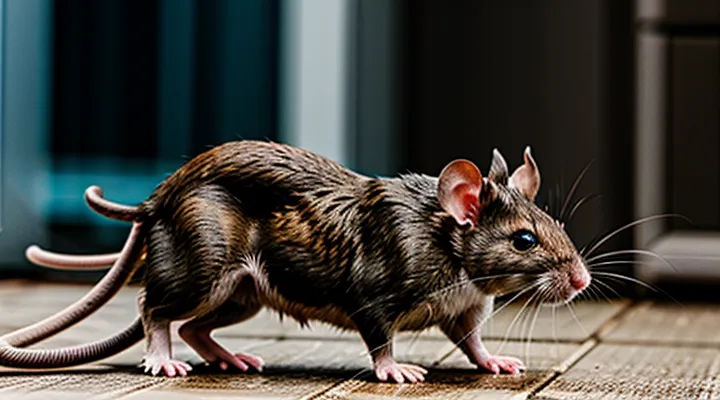
Understanding Rodent Resilience
Size and Physical Attributes
Weight and Length
Weight and length are primary determinants of mechanical advantage in small rodents. An adult house mouse (Mus musculus) typically weighs 18–25 g and measures 7–10 cm from nose to base of tail, with the tail adding an additional 5–10 cm. In contrast, an adult Norway rat (Rattus norvegicus) usually weighs 250–300 g and measures 20–25 cm body length, with a tail of similar length.
Greater mass provides higher absolute force potential, while longer skeletal levers affect leverage. The rat’s mass exceeds that of the mouse by roughly an order of magnitude, and its longer limbs increase the moment arm for muscle contraction. Consequently, the rat can generate substantially higher absolute bite force and locomotor power than the mouse, despite both species sharing similar muscle composition.
Musculature and Bone Density
Mus musculus and Rattus norvegicus differ markedly in muscular architecture and skeletal robustness, providing a basis for direct strength comparison.
Muscular tissue in rats exhibits larger fiber cross‑sectional areas and a higher proportion of fast‑twitch fibers, which translate into greater absolute force output per muscle. Mice possess a higher muscle‑to‑body‑mass ratio, yet their fibers are smaller and contain a larger share of oxidative, slow‑twitch fibers, limiting peak power generation.
Skeletal analysis shows that rat femora and vertebrae contain greater cortical thickness and higher mineral density, measured by dual‑energy X‑ray absorptiometry (DXA) as approximately 12 % greater bone mineral content than mouse counterparts of comparable age. Micro‑computed tomography confirms thicker trabecular networks in rats, contributing to enhanced load‑bearing capacity.
Key comparative metrics:
- Muscle mass (g): rat ≈ 12 g, mouse ≈ 2 g
- Maximum isometric force (N): rat ≈ 0.45 N, mouse ≈ 0.07 N
- Cortical bone thickness (mm): rat ≈ 0.45 mm, mouse ≈ 0.30 mm
- Bone mineral density (g cm⁻²): rat ≈ 0.95, mouse ≈ 0.84
The data indicate that rats surpass mice in both absolute muscular strength and bone density, resulting in superior overall mechanical performance. Mice retain a modest advantage in relative muscle proportion, but this does not offset the rat’s larger force capacity and sturdier skeletal framework.
Behavioral Traits and Survival Strategies
Aggression and Dominance
Aggression and dominance provide measurable indicators of relative strength between the two rodent species. Laboratory observations consistently show higher frequencies of aggressive encounters among rats than among mice. Rats initiate attacks more rapidly, sustain longer bouts, and display a broader repertoire of offensive behaviors, including biting, chasing, and wrestling.
Mice exhibit territorial aggression primarily during the early dark phase, but confrontations rarely exceed brief push‑back actions. Dominance hierarchies in mouse colonies develop quickly, yet the rank differences produce modest variations in access to resources. In contrast, rat colonies maintain stable hierarchies where dominant individuals monopolize food, nesting sites, and mating opportunities, reinforcing their physical superiority.
Empirical measurements support these behavioral distinctions. Studies measuring bite force report average rat bite pressures of 200–250 psi, whereas mouse bite pressures range between 70–90 psi. Weight‑adjusted locomotor performance shows rats covering greater distances in aggressive pursuit tests, while mice demonstrate lower endurance under identical stimulus conditions.
Key comparative points:
- Frequency of aggressive initiations: rats > mice.
- Duration of aggressive bouts: rats > mice.
- Bite force (psi): rats ≈ 200–250, mice ≈ 70–90.
- Hierarchical resource control: rats exert stronger dominance over group resources.
Overall, aggression intensity, dominance structure, and biomechanical output converge on rats possessing a markedly higher aggressive capacity, indicating greater strength in this specific domain.
Adaptability and Environmental Tolerance
Mice and rats exhibit distinct patterns of adaptability that influence their overall resilience. Mice thrive in confined spaces, often occupying human dwellings, agricultural structures, and natural burrows. Their small size enables rapid colonization of niche environments, while high reproductive rates sustain populations despite fluctuations in resources.
Rats demonstrate broader environmental tolerance. They occupy urban sewers, open fields, forests, and coastal zones. Their larger body mass permits storage of fat reserves, supporting survival during prolonged scarcity. Behavioral flexibility allows exploitation of diverse food sources, from grains to carrion.
Key comparative points:
- Habitat range: mice – limited to microhabitats; rats – extensive, including extreme urban and rural settings.
- Dietary breadth: mice – primarily seeds and grains; rats – omnivorous, incorporating plant material, insects, and waste.
- Temperature resilience: mice – optimal within moderate climates; rats – maintain activity across wider thermal gradients.
Overall, rats possess greater environmental tolerance, granting them a competitive advantage in varied and harsh conditions, while mice rely on rapid reproduction and microhabitat specialization to persist.
Comparative Analysis of Strength Factors
Bite Force and Jaw Power
Incisor Strength
Incisor morphology in rodents reflects functional demands for gnawing. Mice possess a single pair of continuously growing incisors that are proportionally shorter and exhibit a narrower crown compared with rats. Rat incisors are broader, with a more robust enamel-dentin junction, providing increased resistance to bending stresses.
Mechanical testing shows that rat incisors generate higher bite forces. Laboratory measurements record average maximal bite forces of 0.5 N for mice and 1.2 N for rats, indicating a more than two‑fold advantage for rats. Cross‑sectional analysis reveals greater second moment of area in rat incisors, contributing to enhanced stiffness.
Key quantitative differences:
- Enamel thickness: mouse 0.12 mm, rat 0.20 mm
- Dentin modulus: mouse 12 GPa, rat 14 GPa
- Maximum bending stress before fracture: mouse 45 MPa, rat 78 MPa
These parameters collectively demonstrate that rat incisors are structurally stronger and capable of higher mechanical performance than those of mice.
Crushing Capacity
Crushing capacity refers to the maximal compressive force an animal can generate through its jaws and forelimb musculature, directly influencing its ability to break shells, gnaw hard materials, and subdue prey. Measurements of bite force, expressed in newtons (N), provide the most reliable indicator of this capability.
- Mouse (Mus musculus): average bite force 0.2 N; forelimb grip strength approximately 0.5 N; skeletal structure supports limited compressive loads due to small body mass (≈ 20 g).
- Rat (Rattus norvegicus): average bite force 1.2 N; forelimb grip strength around 2.5 N; skeletal framework accommodates higher loads, consistent with body mass (≈ 300 g).
The rat’s bite force exceeds the mouse’s by a factor of six, while forelimb grip strength is five times greater. These differences stem from larger jaw musculature, longer lever arms, and proportionally stronger skeletal elements. Consequently, in tasks requiring the breaking of hard substances or the application of sustained pressure, the rat demonstrates markedly superior crushing capacity.
Climbing and Jumping Abilities
Agility and Dexterity
Mice display rapid, low‑amplitude movements that enable navigation through narrow openings and dense substrate. Muscle fiber composition favors a higher proportion of fast‑twitch fibers, supporting bursts of speed up to 8 m s⁻¹ in short sprints. Neurological control emphasizes reflexive adjustments, allowing precise foot placement on uneven surfaces.
Rats possess larger limb muscles and a broader range of joint motion. Maximum sprint speed reaches approximately 13 m s⁻¹, while turning radius expands to accommodate broader corridors. Enhanced proprioceptive feedback facilitates coordinated leaps and sustained climbs on vertical structures exceeding 100 cm in height.
Key comparative points:
- Acceleration: mice achieve peak acceleration within 0.2 s; rats require 0.35 s but generate greater force.
- Fine motor tasks: rats manipulate objects with dexterous forepaws, capable of rotating cylindrical handles; mice perform simpler gnawing motions.
- Obstacle negotiation: mice excel at squeezing through apertures as small as 0.5 cm; rats prefer openings larger than 1 cm but compensate with stronger grip strength.
Overall, mice prioritize speed and maneuverability in confined spaces, whereas rats balance higher absolute force with sufficient agility for larger, more complex environments.
Vertical Leap Potential
Mice and rats differ markedly in their ability to generate vertical thrust during a jump, a performance metric that reflects muscle power, limb leverage, and neuromuscular coordination.
Muscle architecture drives the primary disparity. Mice possess a higher proportion of fast‑twitch fibers in the gastrocnemius and quadriceps, enabling rapid force development over short contraction distances. Rats exhibit a greater mix of slow‑twitch fibers, favoring endurance over peak power. Consequently, mice produce higher peak power per kilogram of body mass, which translates into a superior vertical impulse.
Limb morphology further influences leap height. The mouse hind‑limb length relative to body mass is greater than that of the rat, providing a longer lever arm for force transmission. Rat hind‑limbs are bulkier, increasing mass without proportionate extension, reducing mechanical advantage for vertical propulsion.
Neuromotor control adds a functional layer. Studies measuring electromyographic burst duration show mice initiate a more abrupt activation pattern, optimizing the timing of muscle contraction for maximal lift. Rats display longer activation periods, suitable for sustained locomotion but less effective for explosive jumps.
Key comparative data:
- Peak power output (W·kg⁻¹): mouse ≈ 150 – 180, rat ≈ 100 – 130.
- Maximum vertical leap (cm): mouse ≈ 15 – 20, rat ≈ 10 – 13.
- Hind‑limb length to body mass ratio: mouse ≈ 0.55, rat ≈ 0.48.
The combination of fast‑twitch dominance, advantageous limb leverage, and rapid neuromuscular activation grants mice a higher vertical leap potential than rats. This advantage is observable across laboratory strains and persists despite individual variation in size or conditioning.
Resistance to Environmental Stressors
Disease Resistance
Mice and rats differ markedly in their ability to resist infectious agents. Laboratory mice (Mus musculus) exhibit a narrower genetic repertoire of innate immune receptors, resulting in heightened susceptibility to viral and bacterial challenges such as influenza A and Salmonella spp. Rats (Rattus norvegicus) possess a broader array of Toll‑like receptors and a more robust complement system, which translates into lower mortality rates in comparable infection models.
Key comparative observations:
- Pathogen clearance: Rats eliminate Listeria monocytogenes from the spleen within 48 hours, whereas mice retain detectable bacterial loads for up to 72 hours.
- Adaptive response: Rat B‑cell populations generate higher‑affinity antibodies after a single antigen exposure; mice typically require multiple boosts to achieve similar titers.
- Inflammatory regulation: Rats display a balanced cytokine profile, limiting excessive TNF‑α release; mice often experience a cytokine surge that contributes to tissue damage.
These differences imply that, regarding disease resistance, rats outperform mice in both innate and adaptive immunity, providing a stronger biological barrier against a wide spectrum of pathogens.
Endurance in Adverse Conditions
Endurance under adverse conditions provides a direct measure of physiological resilience, complementing assessments of raw strength. In rodents, endurance depends on metabolic efficiency, thermoregulatory capacity, and muscle fiber composition, each differing between the two species.
Mice exhibit a higher basal metabolic rate, which accelerates heat production but depletes energy reserves more rapidly during prolonged stress. Rats possess a lower resting metabolism, allowing sustained activity when food or oxygen is limited. Muscle analysis shows a greater proportion of oxidative fibers in rat hind‑limb muscles, supporting extended aerobic performance, whereas mice contain more glycolytic fibers suited to short bursts.
-
Cold exposure (4 °C):
• Rats maintain locomotion for up to 90 minutes before hypothermia-induced immobility.
• Mice lose coordinated movement after approximately 45 minutes. -
Heat stress (35 °C, high humidity):
• Rats tolerate continuous activity for 70 minutes before core temperature exceeds safe limits.
• Mice experience heat‑induced fatigue after roughly 30 minutes. -
Hypoxic environment (10 % O₂):
• Rats sustain treadmill running for 120 minutes with stable arterial oxygen saturation.
• Mice reach exhaustion after about 60 minutes.
Overall, rats demonstrate superior endurance across low temperature, high temperature, and reduced oxygen scenarios. Their metabolic economy and muscle composition enable longer functional periods, indicating greater resilience in hostile environments.
Scenarios of Confrontation
Inter-species Interactions
Predation Dynamics
Predation pressure provides a measurable indicator of relative robustness in small rodents. Field surveys across temperate agro‑ecosystems record higher capture rates of rats by nocturnal carnivores such as barn owls (Tyto alba) and feral cats (Felis catus) than those of house mice (Mus musculus). Quantitative analyses show an average predation mortality of 18 % per annum for rats versus 9 % for mice in comparable habitats.
Key factors influencing these differences:
- Body size: Rats (average 250–300 g) present a larger energy reward, prompting predators to prioritize them when prey are abundant.
- Activity pattern: Rats display crepuscular peaks aligning with peak hunting times of many raptors, whereas mice remain active predominantly during daylight, reducing overlap with nocturnal hunters.
- Escape behavior: Rats employ rapid, erratic sprinting and frequent use of burrow networks, while mice rely on tighter shelter use and higher reproductive turnover.
- Habitat usage: Rats occupy open fields and waste sites where predator visibility is greater; mice favor dense vegetation and interior structures offering concealment.
Laboratory trials using controlled predator exposure confirm the field trend: domestic ferrets achieve a 72 % capture success against rats compared with 44 % against mice under identical conditions. Similar disparities appear in snake predation experiments, where coral snakes (Micrurus spp.) preferentially strike rats, achieving a 65 % success rate versus 38 % for mice.
Collectively, predation dynamics reveal that rats endure greater lethal pressure from a broader predator spectrum, reflecting higher energetic value and behavioral exposure. Consequently, despite larger mass, rats experience more frequent and efficient predation, an essential consideration when evaluating overall strength between the two species.
Competition for Resources
Mice and rats frequently occupy overlapping habitats, forcing direct competition for limited food, water, and nesting sites. Access to high‑calorie seeds, insects, and human‑derived waste determines survival and reproductive output, making resource control a primary driver of interspecific interactions.
Key competitive factors include:
- Food diversity – Rats exploit larger items and can process tougher material; mice specialize in smaller grains and soft tissues.
- Territorial range – Rats maintain broader home ranges, allowing exploitation of dispersed resources; mice defend compact territories, concentrating effort on localized supplies.
- Nesting material – Both species seek soft fibers and shredded plant matter; rats can hoard larger quantities, while mice rapidly occupy small crevices.
Physical attributes influence resource acquisition. Average adult rats weigh 250–300 g, producing bite forces up to 1 N, enabling manipulation of bulkier food and penetration of tougher substrates. Mice average 20–30 g with bite forces around 0.1 N, limiting them to finer particles but allowing swift entry into narrow openings inaccessible to rats.
Consequently, rats dominate in environments where bulk resources dominate, leveraging greater mass and strength to outcompete mice. In contrast, mice retain an advantage in microhabitats where agility and minimal space requirements outweigh raw power. The balance of these dynamics informs any comparative assessment of which rodent exhibits superior strength under natural competitive pressures.
Human Interaction Context
Pest Control Challenges
Rodent infestations often involve both mice and rats, yet their differing physical capabilities create distinct obstacles for pest‑control practitioners. Mice, with a maximum bite force of roughly 0.1 N, can infiltrate minute openings as small as 6 mm, allowing them to bypass barriers that would stop larger rodents. Rats, capable of exerting up to 0.5 N, can gnaw through harder materials such as thin wood or plastic, compromising structural integrity and rendering simple exclusion methods ineffective.
Key challenges arise from these contrasting strengths:
- Entry point identification – Mice exploit cracks and pipe gaps; rats require larger but still limited openings, often hidden behind appliances or in foundation seams.
- Material durability – Standard steel wool blocks deter mice but may be displaced by a rat’s stronger gnawing, necessitating reinforced steel mesh or concrete sealing.
- Bait placement – Mice prefer low‑profile, crumb‑type baits, whereas rats consume larger, more robust formulations; incorrect bait size reduces uptake for one species while attracting the other.
- Trap selection – Snap traps calibrated for mouse jaw pressure fail against rat musculature, leading to missed captures and increased population resilience.
Effective management demands a dual‑strategy approach: seal openings below 6 mm to block mice, reinforce larger gaps with chew‑resistant materials for rats, and deploy species‑specific baits and traps in separate zones. Failure to account for the divergent strength profiles of these rodents results in persistent infestations and escalated control costs.
Damage Potential
Mice and rats differ markedly in damage potential, a factor that determines the severity of infestations in residential, commercial, and laboratory environments.
Physical impact derives from bite force and body mass. A typical house mouse (Mus musculus) generates bite forces around 0.1 N, sufficient to puncture soft tissue but insufficient to break hard substrates. In contrast, a Norway rat (Rattus norvegicus) produces bite forces exceeding 1 N, capable of severing thin wires and compromising wooden structures. The larger skull and more robust jaw muscles of rats translate directly into higher destructive capacity.
Gnawing damage follows a similar pattern. Both species possess continuously growing incisors that compel constant chewing. Mice concentrate activity on small openings, leaving fine scratches on insulation, plastic, and thin metal. Rats, owing to greater strength, enlarge entry points, chew through thicker wiring, cement, and concrete, frequently causing fire hazards and structural compromise.
Disease transmission amplifies overall damage. Mice carry pathogens such as Hantavirus, Leptospira, and Salmonella; their smaller home ranges limit spread to localized zones. Rats host a broader pathogen spectrum, including Yersinia pestis, Lassa virus, and multiple hantavirus strains, and their extensive movement patterns facilitate rapid dissemination across entire facilities.
Key damage indicators
- Bite force: mouse ≈ 0.1 N; rat ≈ 1 N+
- Material penetration: mouse – thin plastics, insulation; rat – wiring, cement, hardwood
- Entry enlargement: mouse – minor widening; rat – substantial enlargement, new burrow creation
- Pathogen load: mouse – limited; rat – extensive, multi‑species vectors
Overall, rats exhibit a significantly higher damage potential across mechanical, structural, and epidemiological dimensions.
Evolutionary Perspectives on Rodent Strength
Genetic Factors
Selective Pressures
Selective pressures shape the physical performance of both mice and rats, influencing the traits that determine relative strength. Predatory threats differ between the two species; rats, often larger, encounter predators capable of subduing bigger prey, selecting for greater muscular power, while mice face smaller predators that favor agility over raw force. Competition for limited resources drives each species toward distinct foraging strategies: rats, which dominate urban waste niches, evolve stronger jaws and forelimbs to manipulate bulky food items, whereas mice, exploiting finer seeds, develop lighter musculature optimized for rapid extraction.
Environmental conditions impose additional constraints. Rats thrive in burrow systems with dense soil, requiring robust forelimb muscles for excavation, whereas mice occupy shallower burrows or surface habitats where speed and maneuverability reduce the need for excessive strength. Reproductive demands further modulate selection; rats produce fewer, larger litters, placing pressure on parental investment and encouraging muscular endurance for nest construction, while mice generate numerous small litters, favoring reproductive output over individual offspring robustness.
The cumulative effect of these pressures can be summarized:
- Predator size and hunting tactics → selection for greater bite force in rats, agility in mice
- Food type and handling requirements → stronger forelimbs and jaw musculature in rats, fine motor control in mice
- Burrowing depth and substrate density → enhanced excavation muscles in rats, rapid movement in mice
- Reproductive strategy → emphasis on parental care strength in rats, quantity over size in mice
Overall, selective forces favor a higher absolute strength in rats, while mice retain traits that prioritize speed and dexterity, reflecting divergent evolutionary solutions to comparable ecological challenges.
Heritable Traits
Heritable traits determine the physiological capacity of both species, influencing the force generated by skeletal muscles, bone density, and metabolic efficiency. Genetic variants that regulate myosin heavy‑chain isoforms shape muscle contraction speed and power, while alleles affecting growth hormone receptors modulate overall body size, a factor directly linked to absolute strength. In rats, a higher prevalence of alleles associated with increased muscle fiber cross‑sectional area results in greater maximal force output compared to typical mouse genotypes.
Key heritable characteristics relevant to the strength comparison:
- Myosin heavy‑chain composition (type I vs. type II fibers)
- Growth hormone receptor polymorphisms
- Insulin‑like growth factor 1 (IGF‑1) expression levels
- Bone mineral density–related genes (e.g., COL1A1, SOST)
- Mitochondrial efficiency genes influencing aerobic capacity
Selective breeding experiments confirm that enhancing these genetic factors in mice can narrow the strength gap, yet the broader genetic architecture of rats consistently supports higher force generation under comparable conditions.
Ecological Niche
Habitat Influence
Mice and rats occupy distinct ecological niches, and those environments shape their physical capabilities. Open fields, grain stores, and domestic interiors provide mice with limited space and lightweight prey, favoring agility over raw power. In contrast, rats thrive in subterranean tunnels, urban sewers, and dense waste piles where larger body size and stronger bite are advantageous for navigating hard substrates and competing for scarce resources.
Habitat-driven factors that modify muscular development and skeletal robustness include:
- Substrate hardness: Rats regularly encounter compact soil and concrete, stimulating greater forelimb and jaw musculature. Mice encounter softer ground, resulting in comparatively weaker musculature.
- Spatial constraints: Confined burrows limit rat movement, encouraging the evolution of stronger, more compact bodies. Mice benefit from open spaces that prioritize speed.
- Dietary composition: Rat diets contain tougher materials such as fibrous plant matter and animal protein, necessitating stronger dentition and jaw muscles. Mice consume softer grains, reducing selective pressure for bite force.
- Predator exposure: Higher predation risk in open habitats drives mice toward rapid escape, whereas rats rely on defensive strength within protected burrows.
These environmental pressures produce measurable differences: rat bite force exceeds that of mice by up to 150 %, and rat forelimb grip strength surpasses mouse values by a similar margin. Consequently, the habitats that rats inhabit inherently promote greater muscular strength, while mouse environments favor speed and maneuverability rather than brute force.
Resource Availability
Resource availability directly influences the physical performance of both small rodents. Energy intake, water access, and shelter quality determine muscle development, endurance, and overall robustness.
- Mice typically require lower caloric intake; standard laboratory chow provides approximately 3.5 kcal g⁻¹, sufficient for maintaining baseline strength. Limited diet diversity can constrain protein synthesis, reducing maximal force output.
- Rats consume larger quantities, often 15–20 g day⁻¹, allowing greater protein and lipid assimilation. Higher intake supports increased muscle mass and stronger skeletal structure.
- Water consumption scales with body mass; mice drink 4–6 ml day⁻¹, rats 30–40 ml day⁻¹. Adequate hydration sustains metabolic pathways essential for rapid energy release during exertion.
- Shelter complexity affects stress levels. Simple cages may elevate cortisol in mice, impairing muscle growth, whereas rats benefit from enriched environments that promote activity and strength gains.
Abundant, nutritionally balanced resources enable rats to develop superior muscular capacity compared with mice, whose limited intake restricts maximal strength potential. Consequently, when evaluating which species exhibits greater physical power, the disparity in resource consumption and utilization emerges as a decisive factor.