
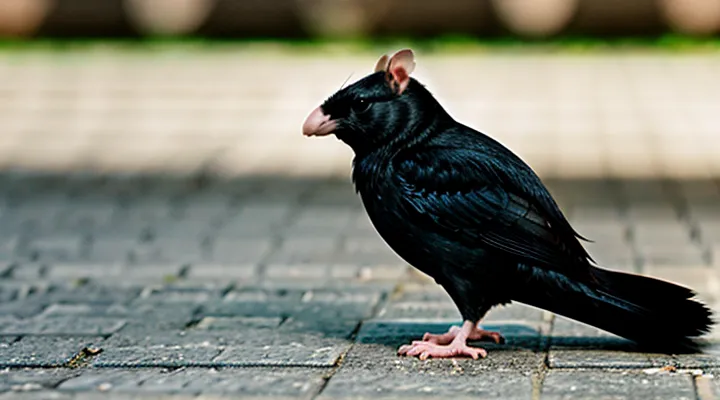
Introduction to Animal Cognition
Defining «Intelligence» in the Animal Kingdom
Different Metrics and Approaches
Rats and crows exhibit distinct cognitive profiles that can be evaluated through measurable criteria rather than anecdotal impressions.
- Problem‑solving ability: maze navigation, puzzle boxes, tool use.
- Social learning: transmission of behaviors within groups, imitation of conspecifics.
- Memory retention: duration of spatial, episodic, and associative memories.
- Innovation rate: frequency of novel solutions in novel tasks.
- Communication complexity: repertoire of vocalizations, symbolic signaling, referential calls.
Experimental designs differ in focus and methodology. Laboratory mazes quantify spatial reasoning by recording latency and error count, while multi‑step puzzle boxes assess causal inference and planning depth. Field observations of corvid foraging document spontaneous tool fabrication, whereas rat social groups are monitored for observational learning through demonstrator‑observer pairings. Long‑term retention tests employ delayed recall tasks to compare durability of learned associations. Acoustic analysis software measures call structure to evaluate information content and flexibility in vocal communication.
Integrating these metrics yields a multidimensional intelligence index. Weighting factors reflect ecological relevance: for urban environments, problem‑solving and innovation may dominate; for complex social structures, learning and communication gain prominence. Comparative scores derived from standardized protocols allow objective ranking of rat and crow cognitive performance across the identified dimensions.
Rat Intelligence: A Closer Look
Cognitive Abilities of Rats
Problem-Solving Skills
Rats and crows demonstrate distinct approaches to solving novel challenges, reflecting divergent evolutionary pressures. Rats excel in maze navigation, using tactile whisker feedback and spatial memory to locate rewards. Experiments show rapid adaptation when obstacles shift, indicating flexible route planning based on recent experience.
Crows employ tool use and causal reasoning. Field studies document individuals shaping twigs to extract insects from crevices, then modifying tool length when the target depth changes. Laboratory tests reveal the ability to solve multi-step puzzles, such as pulling a string to release a food platform, only after observing a conspecific’s successful attempt.
Key contrasts in problem‑solving abilities:
- Learning speed – Rats adjust to altered paths within a few trials; crows often require observation before attempting a new method.
- Tool manipulation – Crows regularly fabricate and adjust tools; rats rarely use external objects.
- Causal insight – Crows infer relationships between actions and outcomes; rats rely more on trial‑and‑error reinforced by reward proximity.
- Social transmission – Both species benefit from observing peers, but crows display higher fidelity in copying complex sequences.
Overall, rats display rapid spatial adaptation, while crows exhibit sophisticated tool use and causal reasoning. The combination of these traits determines which species outperforms the other in specific problem‑solving contexts.
Memory and Learning Capacity
Rats and crows exhibit distinct memory systems that reflect divergent ecological demands. Laboratory data show that rats rapidly acquire spatial routes in maze tasks, retain them for weeks, and adjust behavior after single‑trial reversals. Hippocampal place cells fire in predictable patterns, enabling precise navigation and contextual discrimination. Rats also demonstrate object‑recognition memory lasting up to several days, with performance declining sharply after prolonged intervals.
Crows possess episodic‑like memory that records the “what, where, and when” of cached food. Field observations confirm retrieval of items after months, even when stored in multiple locations. Experiments reveal that crows solve novel puzzles after a few exposures and retain the solution for extended periods. Their nidopallium caudolaterale supports flexible problem solving and social learning, allowing observation of conspecifics to shape future actions.
Key comparative points:
- Retention span: rats – weeks in controlled settings; crows – months in natural environments.
- Learning speed: rats – rapid acquisition of simple routes; crows – few trials needed for complex tool use.
- Flexibility: rats – efficient in repeated pattern reversal; crows – adapt strategies across unrelated tasks.
- Social transmission: rats – limited; crows – robust observational learning and cultural transmission.
Overall, memory architecture differs: rats rely on hippocampal spatial mapping, while crows integrate episodic details with advanced problem‑solving circuits. These differences shape each species’ capacity to store and apply information.
Social Intelligence and Empathy
Rats and crows provide distinct models for studying social cognition, allowing researchers to evaluate how each species processes information about conspecifics and the environment.
Social intelligence encompasses the ability to interpret social cues, coordinate actions, and predict the behavior of others. Empathy refers to the capacity to share or recognize the emotional states of another individual, often motivating supportive actions.
Rats display prosocial tendencies measurable through experiments in which a subject releases a trapped partner, indicating an awareness of another’s distress. Neurochemical analyses reveal activation of the anterior cingulate cortex during observation of pain in a conspecific, a pattern associated with affective resonance. Additional studies show rats preferentially allocate food to familiar individuals, demonstrating selective altruism.
Crows exhibit advanced group dynamics, including cooperative hunting, communal roosting, and hierarchical alliances. Field observations document individuals adjusting calls based on the knowledge state of peers, suggesting theory‑of‑mind capabilities. Controlled tests demonstrate that crows will retrieve objects for a partner who previously shared food, indicating reciprocal empathy. Their ability to remember and respond to the facial expressions of specific humans further illustrates nuanced social perception.
Comparative assessment:
- Rats: robust affective contagion, simple prosocial actions, well‑characterized neural substrates.
- Crows: complex social networks, evidence of perspective‑taking, flexible empathetic responses across species.
Overall, crows demonstrate broader social flexibility and higher-order empathy, while rats excel in immediate affective sharing. The divergence reflects evolutionary pressures: rodents prioritize rapid distress signaling; corvids develop sophisticated cooperation to exploit variable ecological niches.
Neurological Foundations of Rat Intelligence
Rats exhibit a compact yet highly organized central nervous system that supports complex behaviors such as spatial navigation, problem solving, and social learning. The dorsal hippocampus, densely packed with pyramidal neurons, encodes spatial maps and underlies the ability to remember routes in mazes. Synaptic plasticity within this region, measured by long‑term potentiation, provides a cellular mechanism for rapid acquisition of new information.
The prefrontal‑like cortex in rats, comprising the medial prefrontal area and orbitofrontal cortex, processes executive functions. Neuronal recordings demonstrate that these regions encode outcome expectations, adapt to changing reward contingencies, and integrate sensory inputs for decision making. Dopaminergic projections from the ventral tegmental area modulate this circuitry, facilitating reinforcement learning.
Key neurochemical systems that shape rat cognition include:
- Acetylcholine: regulates attention and memory consolidation in the hippocampus and cortex.
- Norepinephrine: enhances arousal and facilitates response to novel stimuli.
- Serotonin: influences mood, impulse control, and social behavior.
Structural connectivity further distinguishes rat intelligence. The corpus callosum links hemispheric processing, while the basal ganglia loop coordinates motor planning with habit formation. Diffusion tensor imaging reveals dense white‑matter tracts that support rapid signal transmission across these networks.
Overall, the rat brain integrates specialized regions, adaptable synaptic mechanisms, and modulatory neurotransmitter systems to produce flexible, goal‑directed behavior. These neurological foundations form the basis for evaluating rodent performance alongside avian counterparts in comparative cognition studies.
Crow Intelligence: A Deeper Dive
Cognitive Abilities of Crows
Tool Use and Innovation
Rats and crows both exhibit notable capacities for manipulating objects, yet their approaches differ markedly. Laboratory experiments demonstrate that rats can learn to pull levers, push buttons, and navigate mazes to obtain food, indicating basic tool‑use proficiency. In problem‑solving tasks, rats have been observed to modify simple devices—such as bending wires to reach hidden rewards—showing a degree of improvisation.
Crows display a broader repertoire of tool-related behaviors. Field observations record New Caledonian crows fashioning hooked sticks from twigs to extract insects from crevices, a process that requires sequential planning and material alteration. Controlled studies reveal that crows can solve multi‑step puzzles, combine separate tools, and adapt solutions when presented with novel obstacles, reflecting higher levels of innovation.
Key comparative points:
- Complexity of tool construction: rats modify existing objects minimally; crows reshape raw materials into functional tools.
- Sequential problem solving: rats typically solve single‑action tasks; crows execute multi‑stage procedures.
- Adaptability: rats adjust learned actions when conditions change; crows generate entirely new strategies for unfamiliar challenges.
These distinctions suggest that crows possess more advanced tool‑use and inventive capabilities, providing a strong argument for superior cognitive flexibility relative to rats.
Planning and Foresight
Rats demonstrate planning through maze navigation and food caching. When faced with a multi‑step route, they select optimal paths, adjust behavior after obstacles, and retain successful strategies for future trials. Experiments show that rats can anticipate delayed rewards, postponing immediate gratification to obtain larger benefits later.
Crows exhibit advanced foresight in tool use and future provisioning. They select appropriate sticks for extracting hidden food, modify tools for specific tasks, and store items for later consumption. Observations indicate that crows consider seasonal changes, preserving food when scarcity is expected, and retrieve cached objects after prolonged intervals.
Comparative evidence suggests crows possess broader temporal projection, while rats excel at rapid adaptation within constrained environments. Both species employ planning, yet the crow’s ability to manipulate external objects and anticipate long‑term needs surpasses the rat’s more immediate, route‑based strategy.
Social Structures and Communication
Rats and crows exhibit markedly different social organization, each supporting sophisticated communication systems that reflect their ecological niches.
In rodent colonies, individuals occupy a fluid hierarchy defined by dominance interactions, nest sharing, and cooperative foraging. Grooming exchanges reinforce alliances, while ultrasonic vocalizations convey alarm, food discovery, and reproductive status. Chemical cues deposited in scent marks provide long‑term information about territory boundaries and individual identity.
Crow societies are characterized by flexible flock structures and strong pair bonds. Cooperative breeding allows non‑parents to assist in chick rearing, enhancing group cohesion. Vocal repertoire includes distinct calls for predator alerts, food location, and social bonding, supplemented by gestural signals such as bill pointing and feather ruffling. Visual displays convey hierarchical position and reproductive readiness.
Key contrasts emerge in signal modality and scope. Rats depend heavily on low‑frequency acoustic and olfactory channels, enabling rapid, covert exchanges within confined burrow systems. Crows exploit a broad acoustic spectrum and conspicuous visual cues, supporting long‑distance coordination and complex problem solving.
These divergent communication strategies illustrate how each species optimizes information flow within its social framework, providing a basis for evaluating relative cognitive capacities.
Neurological Foundations of Crow Intelligence
Crows possess a brain-to-body mass ratio comparable to that of primates, indicating a high capacity for complex processing. Their forebrain, particularly the nidopallium caudolaterale (NCL), functions analogously to the mammalian prefrontal cortex, supporting executive functions such as planning, problem solving, and flexible decision‑making. The NCL exhibits dense connectivity with the mesopallium and the arcopallium, forming networks that integrate sensory input and motor output.
The avian hippocampal formation, known as the hippocampus, demonstrates extensive neurogenesis and a pronounced laminar organization, facilitating spatial memory and navigation. In crows, this region expands proportionally to that observed in rodents, enabling the storage of detailed environmental maps and the retrieval of cached food locations. Electrophysiological recordings reveal theta‑band oscillations synchronized with exploratory behavior, mirroring patterns identified in mammalian spatial cognition.
Key neural features underlying corvid intelligence include:
- Highly myelinated pallial tracts that accelerate inter‑regional communication.
- Elevated dopamine receptor density in the NCL, supporting reinforcement learning and reward evaluation.
- Expanded cerebellar folia, contributing to fine motor control and predictive modeling of physical interactions.
These anatomical and physiological characteristics collectively establish a robust neural substrate for the sophisticated cognitive abilities displayed by crows.
Comparative Analysis: Rats vs. Crows
Similarities in Cognitive Function
Rats and crows display several convergent cognitive abilities despite belonging to distant taxonomic groups. Both species solve novel problems, retain solutions over time, and adapt strategies when conditions change. Empirical studies show that:
- They manipulate objects to obtain food, indicating tool‑use competence.
- They learn by observing conspecifics, demonstrating social transmission of behavior.
- They navigate mazes and spatial tasks using working memory and landmark cues.
- They exhibit flexible decision‑making, altering choices after negative outcomes.
- They plan future actions, such as caching food for later retrieval.
Neurobiological investigations reveal comparable activation patterns in brain regions associated with executive function, suggesting parallel processing mechanisms. These shared traits form the basis for evaluating relative intelligence across the two taxa.
Key Differences in Problem-Solving Strategies
Rats and crows demonstrate distinct approaches to solving novel tasks. Rats rely on tactile exploration and incremental trial‑and‑error learning. Their whisker‑driven perception enables rapid assessment of physical constraints, while repeated attempts refine motor patterns. Crows, by contrast, employ visual analysis and abstract reasoning. They often pause to mentally simulate outcomes before manipulating objects, a behavior linked to their advanced cortical structures.
- Rats prioritize short‑term reinforcement; successful actions are reinforced immediately, leading to efficient habit formation.
- Crows integrate delayed rewards; they can plan sequences of actions that yield benefits only after several steps.
- Rats exhibit limited tool use, typically employing simple objects like sticks to reach food in confined spaces.
- Crows regularly fashion and modify tools, demonstrating foresight and adaptability across diverse environments.
- Social learning in rats occurs primarily through scent cues and direct observation of immediate outcomes.
- Crows transmit knowledge through vocalizations and demonstrative teaching, allowing complex strategies to spread within populations.
These contrasts illustrate that rats excel in rapid, sensorimotor problem solving, whereas crows specialize in flexible, foresight‑driven cognition. The divergence reflects evolutionary pressures: rodents adapt to burrowed habitats requiring tactile precision, while corvids navigate open, variable ecosystems demanding strategic planning.
Evolutionary Pressures Shaping Intelligence
Rats and crows have evolved under distinct ecological regimes that have sculpted their cognitive capacities. Mammalian rodents experience dense, resource‑variable habitats where rapid detection of food patches and avoidance of numerous predators demand quick learning, spatial memory, and flexible problem‑solving. Avian corvids occupy open and forested environments where caching, seasonal migration, and complex social hierarchies require long‑term planning, episodic-like memory, and sophisticated communication.
Key evolutionary pressures influencing intelligence in these taxa include:
- Resource unpredictability: drives development of associative learning and exploratory behavior.
- Predator diversity: selects for acute sensory processing and rapid threat assessment.
- Social interaction complexity: promotes theory‑of‑mind abilities and coordination.
- Environmental manipulation: encourages tool use, causal reasoning, and forward planning.
In rats, selection favors high reproductive rates and short generation times, accelerating the propagation of neural adaptations that enhance foraging efficiency and stress resilience. Their neocortical expansion supports pattern recognition and habit formation, allowing swift adaptation to changing laboratory and field conditions.
Crows exhibit enlarged nidopallium and hyperpallium regions, reflecting selection for advanced problem‑solving and abstract reasoning. Their long lifespan and delayed maturation provide extended periods for learning, reinforcing the retention of cultural knowledge and the transmission of innovations across generations.
Together, these pressures illustrate how divergent ecological demands produce convergent outcomes—enhanced cognition—yet manifest through different neural architectures and behavioral repertoires in rats and crows.
Factors Influencing Perceived Intelligence
Habitat and Ecological Niches
Rats occupy a wide range of environments, from densely populated cities to rural fields. They thrive in sewers, basements, grain stores, and open grasslands, exploiting any setting that provides shelter and food. Their ecological niche centers on omnivory and rapid reproduction, allowing them to function as both primary consumers of seeds and insects and as prey for a multitude of predators, including snakes, birds of prey, and domestic cats. By consuming waste and carrion, rats contribute to nutrient cycling and pathogen regulation within ecosystems.
Crows demonstrate comparable ecological flexibility. They inhabit forests, coastal cliffs, agricultural landscapes, and urban neighborhoods. Their niche involves opportunistic foraging, tool use, and complex social behavior. Crows consume insects, small vertebrates, fruits, and anthropogenic refuse, while also scavenging on carrion. Their role in seed dispersal, predation on pest species, and removal of dead animal matter supports biodiversity and ecosystem stability.
Key habitat characteristics for each species:
- Rats: underground burrows, building crevices, agricultural storage facilities, water-adjacent zones.
- Crows: tall trees for nesting, open fields for foraging, cliffs for roosting, human structures for roost sites.
Ecological functions:
- Rats: waste reduction, prey base, seed predation, disease vector control.
- Crows: carrion clearance, seed dispersal, pest regulation, cultural transmission of foraging techniques.
Understanding these habitats and niches provides essential context for evaluating the adaptive intelligence displayed by both rodents and corvids.
Sensory Modalities and Their Role
Rats and crows differ markedly in the composition and performance of their sensory systems, a factor that directly influences problem‑solving ability and adaptive behavior.
Rats rely heavily on olfaction, whisker‑mediated tactile perception, and acute hearing. Their nose detects chemical cues at concentrations far below human thresholds, guiding foraging, predator avoidance, and social interaction. Vibrissae provide high‑resolution spatial information in low‑light environments, enabling navigation through narrow passages. Auditory sensitivity to ultrasonic frequencies supports communication and detection of aerial threats.
Crows possess advanced vision, sophisticated auditory processing, and a well‑developed somatosensory system. Their eyes resolve fine detail across a broad spectrum, facilitating object discrimination, tool use, and aerial hunting. Auditory acuity detects subtle vocalizations and environmental sounds, supporting complex social signaling. Tactile feedback from beak and feet assists in manipulating objects and constructing nests.
The interaction of these modalities shapes each species’ cognitive repertoire:
- Information acquisition: Visual dominance in crows yields rapid assessment of distant resources; olfactory dominance in rats provides detailed local maps of food and danger.
- Memory encoding: Olfactory and tactile cues in rats form strong associative memories, whereas crows encode visual patterns and sequences with high fidelity.
- Problem solving: Crows integrate visual and auditory data to plan multi‑step solutions; rats combine scent trails and whisker feedback to navigate mazes and locate hidden food.
Overall, sensory architecture determines the strategies rats and crows employ when confronted with novel challenges, directly influencing comparative measures of intelligence.
Human Biases in Assessing Animal Intelligence
Human observers often judge animal cognition through lenses shaped by culture, experience, and experimental design. These lenses introduce systematic distortions that skew conclusions about the relative cleverness of rodents and corvids.
First, visual prominence biases attention toward species with striking plumage or expressive faces, granting birds like crows an advantage in behavioral studies that rely on visual cues. Rats, whose movements are less conspicuous, receive fewer opportunities for detailed observation.
Second, anthropocentric bias favors traits that resemble human problem‑solving, such as tool use or abstract reasoning. Corvids display these abilities, while rats excel in olfactory navigation and maze learning—behaviors that researchers may undervalue because they lack direct human analogues.
Third, familiarity bias results from repeated exposure to laboratory rodents. Decades of standardized tests create a rich performance dataset for rats, yet the same depth of data is rare for wild‑caught crows. Consequently, comparative metrics often rest on uneven foundations.
Fourth, experimental framing influences outcomes. Tasks designed for one species may impose unnatural constraints on another, leading to underperformance unrelated to innate intelligence. For example, lever‑pressing assays suit rats but do not capture a crow’s capacity for sequential planning.
Key biases can be summarized:
- Visual prominence bias
- Anthropocentric bias
- Familiarity bias
- Species‑specific task design
Recognizing these distortions clarifies why assessments of rodent versus corvid intelligence vary across studies. Adjusting methodologies to neutralize each bias yields more reliable comparisons, allowing researchers to evaluate cognitive strengths without the interference of human preconceptions.