
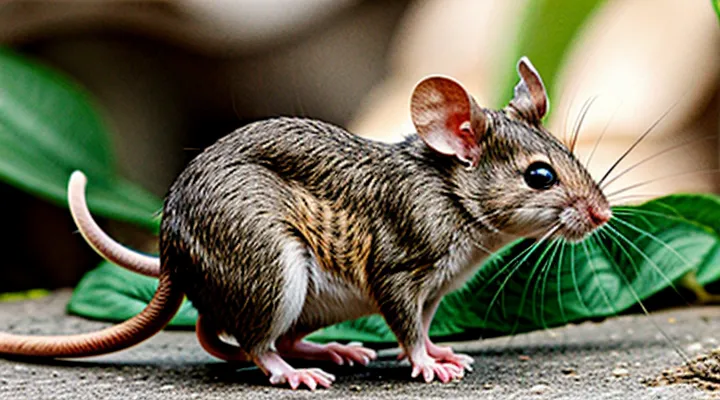
Understanding Biological Classification
The Linnaean System
The Linnaean system organizes living organisms into a hierarchy of ranks that reflect shared characteristics. Each rank narrows the group of organisms, culminating in the genus and species that identify a particular organism.
In the classification of the common mouse, the hierarchy is as follows:
- Kingdom: Animalia – multicellular eukaryotes that consume organic material.
- Phylum: Chordata – animals possessing a notochord at some stage of development.
- Class: Mammalia – warm‑blooded vertebrates with hair and mammary glands.
- Order: Rodentia – mammals characterized by continuously growing incisors.
- Family: Muridae – the largest rodent family, containing true mice and rats.
- Genus: Mus – the group that includes the house mouse and closely related species.
- Species: Mus musculus – the specific organism commonly encountered in laboratories and households.
The Linnaean framework assigns each taxonomic level a Latin name, providing a universal language for scientists worldwide. The genus name, always capitalized and italicized, together with the species epithet forms the binomial nomenclature that uniquely identifies the organism. This two‑part name, Mus musculus, conveys both the broader group (genus) and the exact species, enabling precise communication across disciplines.
The stability of the Linnaean ranks allows taxonomists to place new discoveries within an existing structure, facilitating comparison with known groups. When molecular data revise relationships, the hierarchy can be adjusted while preserving the fundamental rank system, ensuring continuity in the classification of rodents such as the mouse.
Taxonomic Ranks Explained
Kingdom
The mouse is placed in the Kingdom Animalia, a taxonomic group comprising multicellular, eukaryotic organisms that obtain energy through heterotrophic nutrition. Members of this kingdom exhibit differentiated tissues, a nervous system, and the capacity for locomotion at some life stage.
Within Animalia, the mouse belongs to the phylum Chordata, class Mammalia, order Rodentia, and family Muridae. This hierarchical placement reflects the mouse’s vertebrate structure, mammalian characteristics such as hair and mammary glands, and the specific rodent adaptations of continuously growing incisors.
Phylum
The mouse belongs to the phylum Chordata, a grouping defined by the presence of a dorsal nerve cord, a notochord, pharyngeal slits, and a post‑anal tail at some stage of development. Members of Chordata exhibit bilateral symmetry and a highly organized nervous system, traits that distinguish them from other animal groups.
Within Chordata, mammals form the class Mammalia, characterized by hair, mammary glands, and three middle ear bones. The mouse, as a mammal, inherits these features and further refines its classification through successive taxonomic ranks.
- Kingdom: Animalia
- Phylum: Chordata
- Class: Mammalia
- Order: Rodentia
- Family: Muridae
- Genus: Mus
The phylum therefore represents the broadest structural and developmental category that unites the mouse with all vertebrates and several closely related invertebrate groups.
Class
Mice are members of the class Mammalia, a taxonomic group distinguished by the presence of mammary glands, three middle ear bones, and hair covering the body. All mammals share a vertebrate skeletal structure, endothermic metabolism, and a diaphragm that separates the thoracic and abdominal cavities, enabling efficient respiration.
Key characteristics of Mammalia include:
- Mammary glands that produce milk for offspring nourishment.
- Hair or fur providing insulation and sensory functions.
- Three ossicles (malleus, incus, stapes) in the middle ear, facilitating acute hearing.
- Neocortex development, supporting advanced neural processing.
- Placental reproduction in most orders, though some groups retain marsupial or monotreme strategies.
Within Mammalia, the order Rodentia encompasses mice, characterized by continuously growing incisors adapted for gnawing. The rodent order falls under the subclass Theria, which includes all live‑bearing mammals. This hierarchical placement situates mice firmly in the mammalian class, linking them to a broad spectrum of vertebrate species that share the fundamental mammalian traits outlined above.
Order
The mouse belongs to the order Rodentia, the largest mammalian order with over 2,200 species. Rodentia is defined by a single pair of continuously growing incisors in each jaw, which require constant gnawing to maintain appropriate length. This dental arrangement distinguishes rodents from all other mammalian groups.
Taxonomically, the order sits between class Mammalia and family Muridae (the true mice and rats). The hierarchy proceeds as follows: Kingdom Animalia → Phylum Chordata → Class Mammalia → Order Rodentia → Family Muridae → Genus Mus (for the common house mouse) and related genera. The order therefore provides the broader framework that groups mice with squirrels, beavers, and guinea pigs based on shared morphological and genetic traits.
Key characteristics of Rodentia include:
- Two large, ever‑growing incisors per quadrant, coated with enamel on the front surface and dentin on the back, creating a self‑sharpening edge.
- A diastema separating the incisors from the cheek teeth, allowing efficient processing of plant material.
- Primarily herbivorous diets, though many species exhibit omnivorous behavior.
- High reproductive rates and adaptable physiology, contributing to the order’s extensive diversification.
Understanding the order’s defining features clarifies why the mouse is classified alongside other rodents and provides the taxonomic context necessary for pinpointing its genus within the rodent lineage.
Family
The mouse belongs to the family Muridae, the largest family within the order Rodentia. Muridae comprises over 700 species, including typical house mice, rats, and a diverse array of wild rodents. Members of this family share several morphological traits: a robust skull, continuously growing incisors, and a dental formula of 1.0.0.3/1.0.0.3.
Key characteristics of Muridae include:
- Presence of a well‑developed auditory bulla formed by the tympanic bone.
- Tail length generally equal to or longer than the head‑body length.
- Adaptations for gnawing, such as strong jaw muscles and enamel‑covered incisors.
Geographically, Muridae species inhabit most continents, thriving in habitats ranging from forests and grasslands to urban environments. Their ecological success derives from high reproductive rates and dietary flexibility, allowing exploitation of seeds, insects, and human‑derived food sources.
In taxonomic hierarchy, the family Muridae falls under the superfamily Muroidea, which also contains families such as Cricetidae and Nesomyidae. Within Muridae, the subfamily Murinae houses the genus Mus, to which the common mouse is assigned. This placement reflects both genetic analyses and comparative anatomy, confirming the mouse’s relationship to other murine rodents.
Genus
The genus is a primary rank in the Linnaean hierarchy, grouping species that share a recent common ancestor and exhibit similar morphological, genetic, and ecological traits. It sits above species and below family, providing a framework for naming and comparing organisms.
In rodent classification, the order Rodentia is divided into families such as Muridae, Cricetidae, and Dipodidae. Each family contains multiple genera, which in turn comprise the diverse array of species recognized as rodents.
The common house mouse belongs to the genus Mus, a group characterized by small body size, omnivorous diet, and a high reproductive rate. Other genera that include species commonly referred to as mice are:
- Peromyscus – North American deer mice, distinguished by larger ears and a tendency toward nocturnal activity.
- Apodemus – Eurasian field mice, noted for their preference for forested habitats.
- Rattus – Although often called rats, several species are colloquially termed mice in certain regions; they are larger and exhibit different behavioral patterns.
- Sigmodon – Cotton rats, which share several ecological traits with true mice but belong to a separate genus within Cricetidae.
Genus assignment relies on detailed analysis of dental formulae, cranial morphology, mitochondrial DNA sequences, and reproductive characteristics. Consistency across these data points confirms the placement of a species within a particular genus, ensuring taxonomic stability and facilitating scientific communication.
Species
The mouse belongs to the genus Mus, a group within the family Muridae that encompasses numerous species. Species represent the most specific taxonomic rank, defined by the ability of individuals to interbreed and produce fertile offspring under natural conditions. In rodent classification, each species is distinguished by a combination of morphological traits, genetic markers, and ecological preferences.
Key characteristics used to differentiate mouse species include:
- Skull and dental morphology, particularly the shape of the molars and the configuration of the zygomatic arches.
- Fur coloration and patterning, which often reflect adaptations to specific habitats.
- Chromosomal number and structure, observable through karyotype analysis.
- Mitochondrial and nuclear DNA sequences, providing molecular evidence of evolutionary relationships.
Representative species within Mus illustrate the diversity of the genus:
- Mus musculus – the common house mouse, worldwide in distribution, frequently associated with human settlements.
- Mus spicilegus – the mound-building mouse, native to southeastern Europe, known for constructing complex soil mounds for nesting.
- Mus caroli – the Ryukyu mouse, confined to the Ryukyu Islands, displaying distinct ear and tail proportions.
- Mus minutoides – the African pygmy mouse, among the smallest murid rodents, inhabiting savanna and grassland ecosystems.
Understanding species boundaries in mice supports accurate identification, informs ecological research, and underpins comparative studies across the broader rodent order.
The Order Rodentia
Characteristics of Rodents
Rodents represent the most diverse order of mammals, characterized by a single pair of continuously growing incisors in each jaw. These teeth possess a hard enamel front surface and a softer dentine behind, creating a self‑sharpening edge that necessitates constant gnawing on fibrous material. The dental arrangement limits chewing to a forward‑backward motion, distinguishing rodents from other mammals that employ lateral grinding.
Key morphological traits include:
- Compact skull with a robust zygomatic arch supporting strong masseter muscles.
- Short, fur-covered tail, often scaly at the tip, varying in length relative to body size.
- Highly adaptable limbs: forelimbs capable of precise manipulation, hind limbs suited for rapid locomotion or climbing.
- Well‑developed auditory bullae, enhancing low‑frequency sound detection.
Physiologically, rodents exhibit rapid reproductive cycles, high metabolic rates, and efficient water conservation mechanisms. Their digestive system features a large cecum that ferments plant fibers, allowing extraction of nutrients from low‑quality vegetation. Many species possess specialized cheek pouches for temporary food storage, facilitating foraging efficiency.
Behaviorally, rodents display strong territoriality and social structures ranging from solitary to complex colonies. Communication relies on ultrasonic vocalizations, scent marking, and tactile signals. Cognitive abilities include spatial learning and problem solving, supporting adaptability to diverse habitats from arid deserts to dense forests.
Diversity Within Rodentia
Rodents represent the most speciose mammalian order, encompassing over 2,300 described species that occupy virtually every terrestrial habitat. This taxonomic breadth arises from extensive adaptive radiation, which produced a range of body sizes from the diminutive pygmy mouse (≈ 5 g) to the capybara (≈ 65 kg). Morphological adaptations—such as variations in incisor enamel structure, skull morphology, and limb proportions—correlate with distinct ecological strategies, including granivory, folivory, omnivory, and fossorial lifestyles.
The order is divided into several families that illustrate its internal diversity. Key families include:
- Muridae: the largest family, containing true mice, rats, gerbils, and their relatives; characterized by a high reproductive rate and broad geographic distribution.
- Cricetidae: encompasses voles, lemmings, hamsters, and New World mice; notable for diverse dentition patterns adapted to varied diets.
- Sciuridae: squirrels, marmots, and chipmunks; distinguished by strong hind limbs and arboreal or terrestrial habits.
- Dipodidae: jerboas and birch mice; specialized for saltatorial locomotion in arid environments.
- Castoridae: beavers; unique for their engineering behavior and aquatic adaptations.
- Myocastoridae and Echimyidae: include the nutria and spiny rats, respectively; exhibit semi-aquatic and tropical forest niches.
Phylogenetic analyses based on mitochondrial and nuclear DNA consistently recover these families as monophyletic groups, supporting their evolutionary distinctiveness. Divergence time estimates place the origin of Rodentia in the early Paleocene, with rapid lineage splitting during the Eocene that established the major clades observed today.
Ecological partitioning among rodent taxa reduces interspecific competition, allowing multiple species to coexist within the same biome. For instance, sympatric mouse species may differ in seed size preference, activity period, or nesting substrate, thereby exploiting separate resource pools. Such niche differentiation underscores the order’s capacity for speciation and resilience across changing environments.
The Family Muridae
Defining Features of Muridae
The family Muridae encompasses the true mice, rats, gerbils and related species, representing the largest rodent family with over 700 described taxa. Members are characterized by a dental formula of 1/1, 0/0, 0/0, 3/3, indicating a single pair of incisors in each jaw and three molar rows without premolars. The incisors possess continuous growth and enamel restricted to the labial surface, creating a self‑sharpening chisel edge. Molars are typically brachydont and display cusps arranged in a pattern unique to murids, useful for species identification.
Skull morphology includes a relatively short rostrum, a well‑developed infraorbital foramen that transmits the masseter muscle, and a robust zygomatic arch. The auditory bullae are enlarged, contributing to acute hearing. Tail length varies but often equals or exceeds body length, with a sparsely haired or naked surface. Pelage is dense, with coloration ranging from brown to gray, and the ventral side generally lighter.
Key biological traits:
- High reproductive rate: short gestation (≈ 19‑21 days), litter sizes of 3‑12 pups.
- Broad ecological tolerance: inhabits forests, grasslands, deserts and human‑altered environments.
- Genetic markers: mitochondrial cytochrome b and nuclear IRBP sequences provide reliable phylogenetic resolution within the family.
These defining features differentiate Muridae from other rodent families and underpin the classification of mice at the genus level.
Subfamilies and Their Members
The mouse belongs to the subfamily Murinae, a principal division within the family Muridae. Murinae comprises the true mice and rats, with the genus Mus representing the common house mouse and related species. Other notable genera in this group include Rattus (true rats), Apodemus (field mice), Peromyscus (deer mice), and Niviventer (white-bellied rats).
Muridae contains several additional subfamilies, each characterized by distinct evolutionary lineages and representative genera:
- Deomyinae – includes Deomys (link rat), Lophuromys (brush-furred mice), and Acomys (spiny mice).
- Gerbillinae – encompasses Gerbillus (gerbils), Meriones (jirds), and Dipodillus (small gerbils).
- Arvicolinae – contains Microtus (voles), Myodes (red-backed voles), and Clethrionomys (bank voles).
- Cricetinae – comprises Cricetulus (dwarf hamsters) and Cricetus (European hamster).
- Neotominae – includes Neotoma (packrats) and Peromyscus (deer mice) in the New World.
Within Murinae, the taxonomic hierarchy proceeds from subfamily to tribe, then to genus and species. The primary tribe for the mouse is Murini, which unites Mus with closely related genera such as Rattus and Apodemus. This structure reflects phylogenetic relationships derived from morphological and molecular analyses, confirming the placement of the mouse in the genus Mus under Murinae.
Delving into the Genus Mus
Distinguishing Mus Species
The house mouse and its relatives belong to the genus Mus, a group of small, omnivorous rodents found across continents. Species within Mus are separated primarily by morphological traits, geographic distribution, and genetic markers.
Key diagnostic characteristics include:
- Cranial measurements – skull length, width of the interorbital region, and shape of the zygomatic arches differ among species.
- Pelage coloration – dorsal fur varies from uniform gray in M. musculus to brownish or speckled patterns in M. spretus and M. macedonicus.
- Tail morphology – relative tail length and the presence of hairless versus haired sections aid identification.
- Molar patterns – cusp arrangement and enamel ridge prominence provide reliable taxonomic signals.
- Mitochondrial DNA sequences – cytochrome b and COI gene fragments reveal phylogenetic relationships that often exceed morphological resolution.
Geographic data sharpen identification. M. musculus dominates Europe, North America, and parts of Asia, whereas M. spretus is confined to the Iberian Peninsula and adjacent regions. M. macedonicus occupies the Balkans and southeastern Europe, and M. minutoides occurs in sub‑Saharan Africa.
When field identification is required, a practical approach combines visible traits with locality information, then confirms species status through molecular analysis. This methodology ensures accurate classification within the Mus genus and supports ecological, biomedical, and conservation research.
Common Mouse Species and Their Habitats
The house mouse (Mus musculus) thrives in human structures, including homes, warehouses, and grain storage facilities. It tolerates a wide temperature range and exploits food waste, making it the most widespread commensal rodent.
The field mouse (Apodemus sylvaticus) occupies temperate woodlands, hedgerows, and cultivated fields. It builds nests in dense vegetation and prefers areas with abundant seed sources.
The deer mouse (Peromyscus maniculatus) inhabits North American grasslands, shrublands, and high‑altitude meadows. It utilizes rocky crevices and burrows, often near water bodies.
The white‑footed mouse (Peromyscus leucopus) favors deciduous forests, riparian zones, and suburban gardens. Its diet consists of seeds, insects, and fallen fruit.
The wood mouse (Apodemus flavicollis) is common in European forests, mountainous regions, and agricultural margins. It nests in leaf litter, under stones, or in abandoned burrows.
Key habitat characteristics:
- Proximity to shelter (e.g., burrows, nests, human structures)
- Availability of seeds, insects, or human‑derived food
- Moderate climate with seasonal variations
- Presence of ground cover or vegetation for protection
These species illustrate the ecological flexibility of mice, ranging from strictly commensal environments to natural ecosystems across temperate, subtropical, and montane zones. Their distribution reflects adaptations to specific habitat features rather than a single taxonomic grouping.
Evolutionary History of Mice
Ancestors of Modern Mice
Modern mice belong to the genus Mus, a lineage that traces back to several extinct rodent groups. Fossil evidence shows that the earliest Mus ancestors emerged in the late Miocene, around 10–7 million years ago, in Eurasia. These primitive forms possessed dental patterns that differ from contemporary species, indicating a gradual adaptation to varied diets.
Key ancestral taxa include:
- Mus (†Pseudomus) – a Miocene genus with simplified molar cusps, representing an early branch of the Mus lineage.
- Mus (†Protomus) – an early Pliocene group displaying transitional enamel structures between ancient murids and modern mice.
- Apodemus‑related murids – contemporaneous rodents that shared habitats with early Mus and contributed genetic material through occasional hybridization events.
The transition from these ancestors to present‑day mice involved incremental changes in skull morphology, auditory bullae enlargement, and increased reproductive rates. These adaptations facilitated the colonization of diverse ecological niches, ultimately leading to the global distribution of the genus Mus observed today.
Geographic Distribution and Adaptation
The house mouse (genus Mus) occupies a cosmopolitan range that extends across North America, Europe, Asia, Africa and Oceania. Native populations are concentrated in temperate zones of Eurasia, where the species originated. Human activity has facilitated expansion into agricultural lands, urban environments and coastal regions, allowing the mouse to establish colonies on virtually every continent except Antarctica.
Adaptations that support this broad distribution include:
- High reproductive output: short gestation (≈ 19 days) and large litter sizes enable rapid population growth.
- Omnivorous diet: ability to digest seeds, insects, carrion and human refuse provides nutritional flexibility.
- Behavioral plasticity: nocturnal foraging, burrowing and nest construction reduce predation risk and mitigate temperature extremes.
- Physiological tolerance: efficient thermoregulation allows survival from sub‑zero winter temperatures to tropical heat, aided by variable fur density and metabolic adjustments.
Genetic diversity within Mus populations reflects regional selective pressures. Alpine groups exhibit enhanced cold resistance, while desert variants display water‑conserving renal mechanisms. Urban colonies often develop resistance to rodenticides and display altered circadian rhythms aligned with human activity patterns.
The combination of reproductive strategy, dietary breadth, behavioral versatility and physiological resilience explains the mouse’s successful colonization of diverse habitats worldwide.