
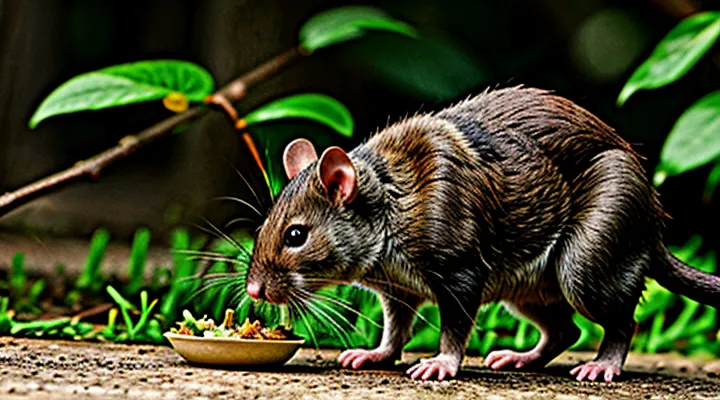
Characteristics of Wild Rat Nutrition
The Essential Omnivore
Rats thrive as adaptable omnivores, consuming a broad spectrum of organic matter available in natural habitats. Their digestive system processes plant material, animal protein, and detritus with equal efficiency, allowing rapid exploitation of fluctuating resources.
Typical wild rat diet includes:
- Seeds and grains harvested from grasses, shrubs, and seasonal crops.
- Fruits and berries that fall to the ground or ripen on low branches.
- Invertebrates such as insects, larvae, earthworms, and arachnids.
- Carrion and small vertebrate carcasses encountered during scavenging.
- Fungal fruiting bodies and mycelial mats found in moist substrates.
- Organic waste and decomposing plant matter within leaf litter.
Seasonal shifts dictate the relative importance of each component. During spring, fresh vegetation and emerging insects dominate intake; summer sees increased fruit and seed consumption; autumn introduces abundant nuts and fallen fruits; winter forces reliance on stored seeds, cached carrion, and persistent insects beneath insulating cover.
Nutritional balance derives from the combination of carbohydrates, proteins, lipids, and micronutrients supplied by these varied sources. This flexibility underpins the species’ capacity to colonize diverse ecosystems, from temperate forests to arid scrublands, and sustains population resilience amid environmental change.
Dietary Flexibility and Adaptive Feeding
Rats living in natural habitats demonstrate remarkable dietary flexibility, allowing them to exploit a wide range of food sources. Their omnivorous palate includes seeds, fruits, insects, carrion, and plant material, with the proportion of each component shifting according to seasonal availability. In temperate zones, consumption of high‑energy seeds peaks in autumn, while insects dominate summer intake; in arid environments, water‑rich vegetation becomes the primary resource during drought periods.
Adaptive feeding strategies emerge from both physiological and behavioral mechanisms. Rats possess a highly efficient digestive tract capable of extracting nutrients from fibrous plant matter and protein‑rich animal tissue. Enzymatic activity adjusts to the dominant substrate, enhancing digestion of starches during grain abundance and increasing protease production when animal prey is prevalent. Sensory acuity, particularly acute olfaction, enables rapid detection of novel food items, supporting opportunistic foraging.
Key adaptive behaviors include:
- Resource switching – immediate alteration of diet composition when preferred foods decline.
- Cache formation – storage of seeds and nuts for future consumption, reducing reliance on unpredictable supplies.
- Social learning – observation of conspecifics’ foraging success, facilitating rapid acquisition of new feeding techniques.
- Habitat exploitation – utilization of microhabitats (e.g., burrows, tree cavities) that concentrate specific food types.
These flexible and adaptive feeding patterns contribute to the ecological success of free‑living rodents across diverse ecosystems, ensuring survival despite fluctuations in resource distribution and competition pressure.
Factors Influencing Food Selection
Wild rodents select food based on a combination of ecological and physiological pressures that shape their foraging behavior. Availability of resources dictates the primary options; seasonal fluctuations alter the abundance of seeds, insects, fruits, and carrion, forcing rats to adjust their intake accordingly. Habitat type—urban, agricultural, or natural—introduces distinct plant species and waste streams, influencing the range of edible items encountered.
Key determinants of food choice include:
- Nutrient composition: High‑protein insects and seeds are preferred when energy demands rise, such as during breeding or growth periods.
- Energy density: Calorie‑rich items like grains or fatty seeds are prioritized during cold weather or when food scarcity looms.
- Taste and odor cues: Chemical signals guide rats toward palatable, non‑toxic substances and away from harmful compounds.
- Predation risk: Exposure to predators leads to selection of concealed or quickly consumable foods, reducing foraging time.
- Competition pressure: Presence of conspecifics or other species forces individuals to exploit less contested resources.
Physiological state further refines selection. Pregnant or lactating females increase intake of protein and calcium, while juveniles favor readily digestible carbohydrates. Seasonal hormonal changes modulate appetite, prompting shifts toward specific food categories. Collectively, these factors produce the diverse yet adaptable diet observed in free‑living rats.
Core Components of the Wild Rat Diet
Plant-Based Resources
Seeds, Grains, and Nuts
Wild rodents regularly incorporate seeds, grains, and nuts into their foraging repertoire. These food groups supply essential carbohydrates, proteins, and lipids that sustain growth, reproduction, and thermoregulation.
Seeds represent a readily accessible source of energy. Rats preferentially harvest:
- Small grass seeds (e.g., millet, wheatgrass)
- Legume seeds (e.g., pea, bean)
- Composite family seeds (e.g., dandelion, thistle)
Selection favors seeds with high starch content and thin hulls, enabling rapid extraction of nutrients. Seasonal abundance of wind‑dispersed seeds often triggers increased foraging activity in early summer.
Grains provide bulk carbohydrates and are consumed when standing crops or fallen kernels become available. Typical grain items include:
- Cereals such as wheat, barley, and oats
- Rice husks and broken kernels
- Maize kernels exposed on the ground
Rats exploit both cultivated fields and natural grasslands, adjusting intake based on harvest cycles and post‑harvest residue.
Nuts contribute dense lipid reserves crucial for periods of low ambient temperature. Commonly consumed nuts are:
- Acorns from oak species
- Hazelnuts and beech mast
- Pine seeds and pine nuts
Rodents often cache nuts in shallow burrows, creating a seasonal reserve that buffers against food scarcity during winter months.
Collectively, seeds, grains, and nuts constitute a flexible dietary component that enables wild rats to adapt to fluctuating resource availability across habitats and seasons.
Foraging for Fruits and Berries
Rats that inhabit natural environments regularly incorporate fruits and berries into their diet, exploiting seasonal abundance and nutritional value. They locate edible plant parts by scent, visual cues, and learned foraging routes, often traveling considerable distances to reach productive patches. Consumption of ripe fruit supplies carbohydrates, vitamins, and antioxidants, while berries contribute water and secondary metabolites that can deter parasites.
Typical fruit and berry items include:
- Wild cherries (Prunus spp.) – high in simple sugars.
- Mulberries (Morus spp.) – rich in anthocyanins.
- Hawthorn berries (Crataegus spp.) – source of fiber and vitamin C.
- Wild grapes (Vitis spp.) – provide fermentable sugars.
- Serviceberries (Amelanchier spp.) – contain carbohydrates and minerals.
During periods of fruit scarcity, rats shift to alternative resources such as seeds, insects, or plant material, but the intake of fleshy fruit remains a significant component of their overall intake when available.
Consumption of Roots and Fungi
Rats inhabiting natural ecosystems rely heavily on subterranean plant parts and fungal resources to meet their nutritional demands. Roots provide carbohydrates, fibers, and minerals that are scarce in above‑ground food sources, while fungi supply proteins, vitamins, and essential micronutrients.
Key characteristics of root consumption:
- Preference for young, tender taproots and fibrous lateral roots that are easier to gnaw.
- Seasonal shift toward deeper, energy‑dense roots during periods of low seed availability.
- Selective foraging based on soil moisture, which influences root softness and palatability.
Fungal intake displays similar adaptability:
- Opportunistic collection of mycelial mats and fruiting bodies encountered near burrow entrances.
- Inclusion of saprophytic species that decompose organic matter, enriching the rat’s diet with nitrogen and B‑complex vitamins.
- Increased fungal foraging in damp habitats where spore density is highest.
Together, these dietary components enable wild rats to maintain energy balance, support reproductive output, and sustain population resilience across diverse habitats.
Animal Protein Acquisition
Invertebrates and Arthropods
Wild rats incorporate a wide range of invertebrate prey into their diets, supplementing plant material and seeds with protein‑rich arthropods. Insect larvae, adult insects, spiders, and molluscs provide essential amino acids, lipids, and micronutrients that support rapid growth and reproductive output.
Common arthropod groups consumed include:
- Lepidopteran caterpillars (e.g., Spodoptera spp.) found on herbaceous vegetation.
- Coleopteran beetles and larvae, especially ground beetles (Carabidae) and wood‑boring larvae.
- Dipteran flies and maggots, frequently encountered in decaying organic matter.
- Hymenopteran ants and wasps, captured opportunistically near nests.
- Orthopteran grasshoppers and crickets, taken when ground cover is sparse.
- Arachnids such as wolf spiders (Lycosidae) and ground‐dwelling harvestmen.
Seasonal availability influences consumption patterns. Spring and early summer see peaks in caterpillar and fly larval abundance, prompting increased predation. Autumn brings a rise in beetle activity, while winter limits arthropod access, causing rats to rely more on stored seeds and stored carrion.
Predation techniques vary with prey size and mobility. Small, soft‑bodied insects are captured by rapid snatching with the incisors, whereas larger beetles are subdued by biting the thorax and crushing the exoskeleton. Spiders and other hard‑bodied arthropods are often immobilized with a combination of bite and vigorous shaking to break the exoskeleton before ingestion.
Nutritional analysis shows that arthropod intake can contribute up to 30 % of total caloric intake in habitats with abundant insect populations. This protein influx accelerates juvenile development, enhances immune function, and improves litter size, confirming the critical role of invertebrate prey in the foraging ecology of free‑living rodents.
Predation on Small Vertebrates
Rats in natural environments frequently supplement plant material with animal protein by capturing small vertebrates. This behavior is documented across several species, including the brown rat (Rattus norvegicus), the black rat (Rattus rattus), and various island endemics that have evolved heightened carnivorous tendencies.
Typical vertebrate prey includes:
- Amphibians such as frogs and toads, often seized near water margins.
- Reptiles, especially lizards and small snakes, captured on the ground or in low vegetation.
- Birds, primarily nestlings and eggs found in accessible nests.
- Juvenile fish trapped in shallow streams or puddles.
- Juvenile conspecifics or other rodent species when competition intensifies.
Rats employ opportunistic hunting tactics. They may stalk prey silently, use rapid pounce attacks, or exploit weakened individuals left by other predators. Scavenging of carrion provides an additional source of vertebrate tissue, especially during periods of food scarcity. Predation intensity rises in late summer and autumn when insect abundance declines and young vertebrates become more abundant.
The inclusion of vertebrate protein enhances growth rates, reproductive output, and survival of juveniles. Field observations indicate that predation on small vertebrates accounts for 5–15 % of the total caloric intake of wild rats, with higher percentages observed in habitats lacking abundant seeds or grains. This predatory activity influences local prey populations, contributing to the regulation of amphibian and reptile densities and affecting avian nesting success in some ecosystems.
Opportunistic Scavenging
Rats that live free in natural habitats frequently supplement their diet by exploiting readily available dead organic material. This behavior, classified as opportunistic scavenging, allows individuals to obtain nutrients without expending energy on active hunting.
Typical scavenged resources include:
- carcasses of small mammals, birds, and amphibians
- decaying plant matter such as fallen fruits and seeds
- insect remains left after predation by other animals
- discarded vertebrate remains found near water sources or predator lairs
- organic waste generated by herbivores, including dung and uneaten forage
Scavenging intensity varies with season. During periods of low seed production, rats increase reliance on carrion and animal waste. In wetter months, flooded areas expose additional dead tissue, providing a temporary boost in protein intake. Conversely, abundant seed crops reduce scavenging frequency but do not eliminate it, as rats retain the capacity to locate and consume sporadic animal remains.
The practice contributes to ecosystem processes by accelerating decomposition and recycling nutrients. By removing decaying matter, rats diminish disease vectors and facilitate nutrient flow back into the soil. Competition with other scavengers—such as foxes, birds of prey, and carrion beetles—is intense; rats exploit their superior agility and nocturnal activity to access resources that larger predators may overlook.
Overall, opportunistic scavenging represents a flexible foraging strategy that enhances survival across diverse environments and fluctuating resource availability.
Hydration and Water Sources
Wild rodents maintain fluid balance through regular access to water, which influences foraging patterns and overall health. In natural habitats, rats acquire moisture from multiple sources that complement their diet of seeds, insects, and plant material.
Typical water acquisition methods include:
- Direct consumption of standing or flowing water in ponds, streams, and rain‑filled depressions.
- Extraction of moisture from succulent vegetation, fruits, and tubers.
- Ingestion of damp soil or litter where humidity is high.
- Utilization of dew and precipitation collected on leaves or bark surfaces.
Seasonal variations affect availability; during dry periods, rodents increase reliance on high‑moisture foods and microhabitats with elevated humidity. Behavioral adaptations, such as nocturnal activity near water edges, reduce exposure to predators while ensuring adequate hydration.
Foraging Strategies and Behavior
Searching and Exploratory Patterns
Wild rats rely on dynamic searching strategies to locate diverse food sources across heterogeneous habitats. Their movements integrate olfactory, auditory, and tactile cues, allowing rapid assessment of potential items such as seeds, insects, and carrion. Sensory integration operates continuously; when a scent plume is detected, the animal initiates a directed approach, adjusting speed and trajectory based on signal strength.
Exploratory bouts follow a predictable sequence: initial broad-area scanning, localized probing, and post-consumption retreat. Broad scanning employs erratic, high‑frequency locomotion that maximizes area coverage while minimizing time spent in any single zone. Localized probing involves slower, deliberate movements, often accompanied by whisker‑driven tactile sampling to evaluate texture and edibility. After ingestion, rats typically withdraw to a sheltered site, reducing exposure to predators while processing the meal.
Key patterns governing food‑search behavior include:
- Spatial memory utilization: individuals retain maps of previously profitable locations, revisiting them when seasonal cues indicate resource availability.
- Risk–reward assessment: higher‑value items trigger increased exposure tolerance, whereas low‑nutrient resources prompt rapid abandonment.
- Social information transfer: conspecifics influence foraging routes through scent marks and vocalizations, leading to aggregated exploitation of abundant patches.
- Seasonal modulation: colder periods shift activity toward stored seeds and underground insects; warmer months expand diet to include surface fruits and human refuse.
These mechanisms collectively ensure that free‑living rodents maintain flexible, efficient foraging routines despite fluctuating environmental conditions and predation pressure.
The Practice of Food Caching and Hoarding
Wild rodents frequently store surplus food to mitigate periods of scarcity. This behavior, known as caching or hoarding, directly influences their dietary composition and survival prospects.
Rats select items that retain nutritional value and resist rapid decay. Commonly cached resources include:
- Seeds and grains rich in carbohydrates
- Nuts containing fats and proteins
- Insects offering high protein content
- Small fruits that provide sugars and vitamins
- Detritus such as leaf litter that harbors microorganisms
Storage techniques vary with habitat structure. Burrow chambers serve as insulated caches, while surface debris piles provide quick‑access reserves. Some individuals conceal food in multiple micro‑sites to reduce loss from theft or environmental exposure.
Seasonal fluctuations drive cache intensity. In temperate zones, autumn sees heightened accumulation of seeds and nuts, whereas arid regions prompt year‑round opportunistic hoarding of moisture‑rich items. Temperature, humidity, and predator pressure modulate both the quantity stored and the depth of burial.
Caching influences ecosystem dynamics. Deposited seeds may germinate, contributing to plant dispersal. Hoarded insects affect arthropod community composition. Moreover, cache depletion patterns shape foraging routes and social interactions among conspecifics.
Overall, the practice of food storage constitutes a strategic adaptation that expands dietary breadth, stabilizes energy intake, and links rodent populations to broader ecological processes.
Determining Palatability and Toxicity
Assessing what free‑living rodents find appealing and safe requires systematic field and laboratory protocols. Researchers first quantify palatability by measuring spontaneous intake of candidate foods under natural foraging conditions. Portable feeding stations present a range of seeds, fruits, insects, and detritus, each marked with a unique identifier. Consumption is recorded through weight loss, video monitoring, or RFID‑tagged food items. Preference indices are calculated as the proportion of total bites or mass taken from each food type relative to its availability. Parallel captive trials use choice arenas where individual rats encounter identical portions of each item; latency to first bite, bite frequency, and total consumption over a fixed period provide complementary data on hedonic value.
Toxicity assessment follows a two‑stage approach. In the field, researchers collect plant and animal matter that rats encounter and analyze chemical composition for known secondary metabolites, heavy metals, and mycotoxins using chromatography and mass spectrometry. Detected compounds are cross‑referenced with established lethal dose (LD₅₀) values for rodents. Laboratory validation involves controlled dosing experiments: test groups receive graded concentrations of the isolated substance mixed with a neutral carrier, while control groups receive the carrier alone. Endpoints include mortality, sublethal physiological effects (e.g., liver enzyme elevation), and behavioral changes. Results are expressed as dose‑response curves, allowing estimation of safe consumption thresholds for each natural item.
Key procedural elements:
- Field palatability assays: weight‑based intake, video observation, RFID tagging.
- Laboratory preference tests: latency, bite count, total consumption.
- Chemical screening: chromatography, mass spectrometry, toxin databases.
- Dose‑response trials: graded concentrations, mortality and sublethal metrics, curve fitting.
Combining these methods yields a quantitative profile of which wild food sources are both attractive and non‑lethal, clarifying the nutritional landscape that shapes rodent foraging strategies.
Environmental and Seasonal Impact on Diet
Dietary Shifts in Urban and Suburban Settings
Dependence on Human Waste
Rats living in urban and peri‑urban environments frequently rely on refuse generated by humans. The relationship is driven by the high caloric density, consistent availability, and reduced foraging effort associated with discarded food.
- Household garbage bags provide carbohydrates, proteins, and fats that complement natural diets.
- Open dumpsters and market stalls contain raw produce, meat scraps, and dairy, offering seasonal variety.
- Landfills supply large quantities of processed foods, sugary drinks, and packaging waste, sustaining large colonies.
- Sewage systems and storm drains convey organic residues, allowing rats to access liquids and soft matter without direct exposure to surface waste.
Dependence on anthropogenic refuse influences population dynamics. Access to abundant calories shortens gestation periods, increases litter size, and reduces juvenile mortality. In areas where waste management is poor, rat densities can exceed 200 individuals per hectare, whereas well‑controlled environments maintain densities below 20 per hectare.
The reliance on human waste also shapes foraging behavior. Rats develop nocturnal patterns aligned with waste collection schedules, exhibit learned avoidance of toxic substances through trial and error, and display increased boldness toward humans when food is regularly provided.
Mitigation strategies that limit waste accessibility—secure containers, regular removal of organic refuse, and sealed landfill covers—directly reduce the nutritional support that sustains rat populations. Consequently, controlling human‑derived food sources is a primary method for managing free‑living rodent abundance.
Consumption in Commercial Structures
Rats inhabiting commercial facilities exploit readily available human-derived resources. Their foraging behavior adjusts to the spatial layout of warehouses, processing plants, and retail outlets, where food waste, packaging remnants, and stored products present high‑calorie options. Consumption patterns reflect opportunistic selection of items that are easy to access, transport, and digest.
Typical food categories encountered in these settings include:
- Grain and flour residues from bulk storage
- Processed snacks and confectionery, often rich in sugars and fats
- Animal by‑products such as meat trimmings, fish off‑cuts, and dairy spillages
- Soft plastics and packaging materials that may be ingested incidentally
Rats prioritize foods with high energy density, minimal handling time, and low risk of detection. They often establish runways along structural gaps, utility conduits, and shelving units to move between feeding sites and nesting chambers. Seasonal variations in commercial activity—such as increased produce deliveries in summer or heightened meat processing in winter—directly influence the composition of their diet.
The presence of commercial waste streams can alter the nutritional balance of wild rodent populations, leading to increased body mass, accelerated reproductive cycles, and heightened disease transmission potential. Management strategies that limit food exposure, secure waste containers, and seal structural entry points reduce the attractiveness of these environments and mitigate the associated health risks.
Seasonal Availability and Dietary Adjustments
Winter Survival Diets
Rats inhabiting temperate regions confront pronounced food shortages when temperatures drop below freezing. Their winter diet reflects opportunistic exploitation of whatever resources remain accessible, supplemented by behavioral adaptations that maximise caloric intake.
- Seed and grain remnants: Discarded cereal kernels, fallen acorns, and stored grain caches provide high‑energy carbohydrates. Rats locate these items by scent and memory of previous foraging routes.
- Plant material: Bark, cambium, and twigs of deciduous and evergreen shrubs become primary carbohydrate sources. Rats gnaw bark to expose nutrient‑rich cambium, then consume the soft tissue.
- Animal matter: Invertebrates trapped under leaf litter, dead insects, and occasional carrion supplement protein requirements. Some species raid bird nests for eggs or fledgling prey.
- Human‑derived waste: Snow‑covered refuse piles, compost heaps, and insulated structures offer predictable food supplies. Rats infiltrate basements, garages, and barns to access stored pet food, grain bags, or discarded leftovers.
To offset the scarcity of fresh vegetation, rats increase intake of high‑fat seeds and store surplus portions in burrow chambers. These caches sustain individuals during prolonged cold spells. Metabolic adjustments, such as reduced basal temperature and heightened brown adipose tissue activity, further conserve energy.
Geographic variation influences winter menus. In northern latitudes, bark and seed caches dominate, while in milder climates rats rely more on residual crops and human refuse. Regardless of location, the winter diet remains a flexible combination of plant, animal, and anthropogenic resources, allowing free‑living rodents to maintain body condition until spring reintroduces abundant foraging opportunities.
Summer Abundance and Reproduction Needs
During the warm months, natural habitats provide a surge of high‑energy resources that align with the breeding cycle of free‑living rodents. Insects, seeds, fruits, and tender vegetation become plentiful, delivering protein, carbohydrates, and lipids essential for gamete development and gestation. The increased intake of protein‑rich arthropods supports ovarian follicle maturation in females, while carbohydrate‑dense seeds and fruits supply the caloric reserve needed for litter growth and parental care.
Key dietary components that rise in summer and directly influence reproductive output include:
- Invertebrates (e.g., beetles, larvae): primary source of amino acids for gonadal tissue synthesis.
- Ripening seeds and nuts: dense in fats and starches, augment maternal body condition.
- Soft fruits and berries: provide vitamins and sugars that sustain milk production post‑parturition.
- Green shoots and herbaceous stems: offer moisture and minerals that facilitate hydration and electrolyte balance during gestation.
The temporal overlap of food abundance and reproductive timing enables rats to allocate energy efficiently, resulting in larger litters, higher pup survival, and accelerated population growth during the summer season.