
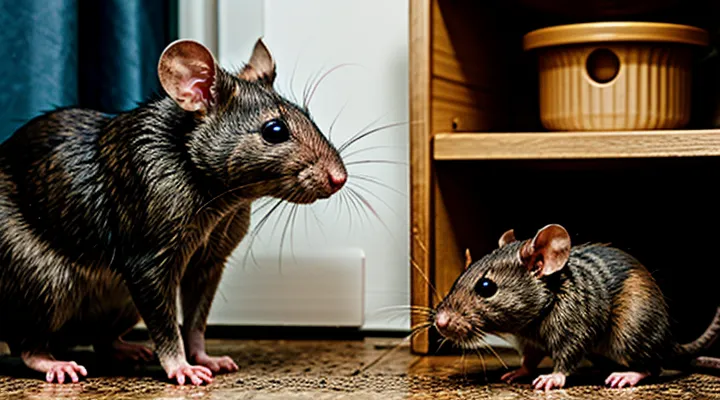
The Natural Predator-Prey Dynamic
Fear of Larger Animals
Rats living in residential spaces display a pronounced aversion to animals that exceed their own size. The reaction originates from evolutionary conditioning that associates larger predators with lethal threat.
Key sensory triggers include:
- Olfactory signatures of carnivores or domestic pets.
- Rapid, low‑frequency vibrations generated by heavy footsteps.
- Visual silhouettes that surpass the rat’s body dimensions.
When these cues are detected, rats adopt a consistent set of defensive actions. Immediate freezing reduces movement that could attract attention. Subsequent rapid retreat leads to concealment within burrows, wall voids, or cluttered corners. Repeated exposure strengthens the avoidance pattern, limiting foraging range to safe zones.
Physiological measurements confirm heightened stress: elevated catecholamine levels, accelerated heart rhythm, and increased glucocorticoid secretion. These responses prepare the animal for flight but also suppress digestion and reproduction, affecting overall health.
For homeowners, the presence of larger animals—especially cats, dogs, or sizable birds—necessitates strategic habitat management. Effective measures comprise sealing entry points, providing alternative shelter away from pet activity zones, and minimizing scent transfer through regular cleaning. Implementing such controls reduces rat exposure to intimidating stimuli and curtails the cycle of fear‑driven movement within the dwelling.
Human Presence and Activity
Rats in domestic spaces react strongly to the presence and activity of people. Continuous human movement creates unpredictable patterns that rodents interpret as threats, prompting avoidance of areas where activity is highest. The combination of visual, auditory, and olfactory cues generated by occupants disrupts the rats’ sense of safety and limits their foraging routes.
Key elements of human‑related disturbance that elicit fear in rats include:
- Sudden motion or abrupt changes in direction, which trigger a flight response.
- Loud or irregular sounds such as footsteps, doors closing, or household appliances, producing acoustic stress.
- Bright or flickering light, especially during daytime, which reduces cover and heightens exposure.
- Human scent, including sweat and skin oils, signaling the proximity of a predator.
- Chemical residues from cleaning products or pest control agents, acting as irritants and deterrents.
- Direct contact with traps or bait stations, providing a learned association between human activity and danger.
Repeated exposure to these stimuli can lead some rats to develop limited tolerance, yet the core aversion to unpredictable human presence remains a primary factor restricting their habitat use within homes.
Sensory-Based Fears
Auditory Stimuli: Loud Noises and Unexpected Sounds
Rats in residential settings respond sharply to auditory disturbances because their survival instincts prioritize detection of predators and environmental hazards.
Loud noises exceeding 70 dB, such as vacuum cleaners, power tools, or sudden bangs, trigger a cascade of physiological and behavioral responses. The sudden increase in sound pressure activates the auditory nerve, leading to elevated heart rate, release of catecholamines, and a freeze‑or‑flight reaction. Typical manifestations include:
- Immediate cessation of foraging or grooming activities.
- Rapid retreat to concealed burrows, wall voids, or hidden corners.
- Emission of high‑frequency alarm vocalizations that can be detected by conspecifics.
Unexpected sounds—brief, irregular noises without a predictable pattern—produce comparable fear responses even at lower intensities. The unpredictability overrides habituation mechanisms, prompting heightened vigilance. Observable outcomes are:
- Repeated pauses in movement, accompanied by scanning of the environment.
- Increased thigmotaxis, with rats staying close to walls and avoiding open spaces.
- Escalated use of escape routes, such as gaps under doors or ventilation shafts.
Understanding these auditory triggers informs practical measures for minimizing distress and preventing infestation escalation. Effective actions include:
- Scheduling noisy household tasks during periods when rats are less active, typically daylight hours.
- Employing sound‑absorbing materials (e.g., rugs, acoustic panels) to reduce echo and reverberation.
- Installing continuous low‑level background noise, such as white noise, to mask abrupt sounds and promote habituation.
These strategies align with evidence that controlled acoustic environments diminish fear‑driven behaviors, thereby reducing the likelihood of rats seeking alternative shelter or reproducing within the home.
Olfactory Stimuli: Predators' Scents and Deterrents
Rats depend heavily on their sense of smell to detect danger. When a household contains odors associated with natural predators, the animals exhibit avoidance behavior, reducing their willingness to explore or nest in the affected area.
- Ferret or weasel scent: strong musty odor, triggers flight response.
- Fox urine: contains sulfur‑rich compounds, induces stress and relocation.
- Owl feather extract: carries volatile fatty acids, discourages nocturnal activity.
- Snake skin oil: emits musky molecules, prompts immediate retreat.
Synthetic products replicate these cues. Common formulations include predator‑derived pheromones blended with carrier agents that prolong release. Natural alternatives rely on essential oils such as peppermint, eucalyptus, and citronella; their high‑volatility compounds interfere with rodent olfactory receptors, creating an uncomfortable environment.
Effective deployment follows a consistent pattern:
- Apply deterrent near entry points, food storage, and nesting sites.
- Re‑apply at intervals dictated by product volatility, typically every 2–4 weeks.
- Monitor rodent activity; reduced sightings and droppings indicate successful olfactory disruption.
Combining multiple scents, rotating them regularly, and maintaining cleanliness enhances the overall deterrent effect, limiting rat presence in residential spaces.
Visual Stimuli: Sudden Movements and Unfamiliar Objects
Rats in residential settings rely heavily on visual information to assess threats. Rapid changes in the visual field activate innate alarm circuits, prompting immediate defensive actions.
Sudden movements trigger a cascade of responses. The animal may freeze to avoid detection, dash to a concealed route, or emit ultrasonic distress calls. Physiological markers include elevated heart rate and adrenaline release. Typical patterns are:
- Immediate cessation of activity (freezing) lasting 0.5–2 seconds.
- Rapid locomotion toward the nearest burrow or shelter.
- Emission of high‑frequency vocalizations detectable only with specialized equipment.
Unfamiliar objects provoke neophobic behavior. When a novel item appears, rats conduct a cautious appraisal before deciding whether to explore or retreat. Initial actions consist of peripheral sniffing, low‑intensity tail‑raising, and brief pauses near the object's edge. If the object remains motionless and non‑threatening, the rat may gradually approach, exhibiting:
- Short, tentative advances of 2–5 cm.
- Repeated pauses for visual re‑assessment.
- Gradual reduction of escape distance over successive exposures.
Both stimulus types feed into a risk‑assessment loop that balances the need for food and shelter against potential predation. Rapid visual cues prioritize immediate escape, while static unfamiliar items are evaluated over longer intervals. Understanding these patterns helps homeowners minimize stressors that can disrupt rodent behavior and increase the likelihood of human–rat conflicts.
Environmental Threats and Anxieties
Lack of Shelter and Hiding Spots
Rats living in a household experience acute stress when they cannot find adequate shelter or concealment. Without secure crevices, nests, or insulated corners, they remain exposed to light, temperature fluctuations, and human activity, triggering a constant state of vigilance.
The absence of hiding places produces several observable effects:
- Increased nocturnal foraging, as rats seek safe zones under appliances or in wall cavities.
- Heightened aggression toward conspecifics and humans, reflecting competition for limited refuge.
- Frequent grooming and repetitive movements, indicators of nervous tension.
- Reluctance to explore new areas, limiting access to food sources and reducing overall health.
Physiologically, chronic exposure to perceived danger elevates cortisol-like hormones in rodents, impairing immune function and growth. Behavioral adaptations, such as constructing makeshift nests from shredded material, represent attempts to compensate for the deficit, yet these structures remain vulnerable without stable, concealed locations.
Providing discrete, insulated spaces—e.g., sealed boxes, dense fabric bundles, or sealed wall voids—restores the rats’ sense of security, reduces stress markers, and normalizes feeding and social interactions.
Exposure to Open Spaces
Rats perceive large, unobstructed areas within a home as threatening because such spaces reduce opportunities for rapid escape and increase the likelihood of predator detection. Their survival instincts, honed in natural habitats, drive a preference for tight, concealed routes where visual cover and tactile feedback are abundant.
Open‑space aversion stems from several sensory cues:
- High illumination that reveals movement.
- Absence of vertical structures that provide anchoring points.
- Smooth or polished flooring that offers little traction.
- Greater distance from walls, limiting immediate retreat paths.
When confronted with an exposed zone, rats typically exhibit one or more of the following behaviors:
- Immediate retreat to the nearest shelter or wall.
- Rapid, erratic movement toward hidden crevices.
- Temporary freezing to assess risk before fleeing.
- Utilization of existing clutter to create a makeshift barrier.
These responses indicate that any design element that enlarges visible floor area or eliminates cover heightens perceived danger. Effective control measures therefore focus on reducing open patches: installing baseboard trim, placing furniture to break sightlines, sealing gaps under doors, and maintaining low‑light conditions in rarely used rooms. By limiting exposure to open spaces, homeowners can diminish the stress cues that attract rats and impede their ability to navigate the interior safely.
Traps and Other Control Measures
Rats in domestic settings respond to threats that mimic natural predators, sudden movements, and unfamiliar odors. Effective control exploits these instinctive aversions by using devices and methods that create immediate, perceivable danger.
Snap traps, when positioned along established runways, deliver rapid incapacitation. Placement should target concealed pathways, behind appliances, and near wall voids. Bait selection must align with local food sources to ensure attraction; peanut butter, dried fruit, and meat scraps are most reliable. Regular inspection, at least once daily, prevents escape and reduces exposure to non‑target species.
Live‑capture cages operate on the same principle of lure and confinement. They require frequent monitoring to avoid stress‑induced mortality. Once captured, rats should be released at a distance of at least five miles from the residence, following local wildlife regulations.
Electronic traps emit high‑frequency pulses that overload the nervous system, causing instant death without physical injury. These units demand a power source and periodic cleaning of debris to maintain efficacy.
Chemical deterrents, such as rodent‑specific repellents, leverage scent aversion. Application to entry points, baseboards, and storage areas creates an environment rats perceive as hostile. Effectiveness diminishes after exposure to moisture; reapplication is necessary every two weeks in humid conditions.
Structural modifications eliminate shelter opportunities. Seal cracks larger than ¼ inch, install door sweeps, and fit screens on vents. Maintaining a clutter‑free interior removes hiding places, reducing the perceived safety of the habitat.
Integrated pest management combines the above tactics: mechanical removal, environmental alteration, and monitoring. Continuous assessment of activity signs—droppings, gnaw marks, and nesting material—guides adjustments in trap density and placement, ensuring sustained suppression of the rodent population.
Chemical Deterrents and Poisons
Rats exhibit strong aversion to volatile chemicals that signal danger or contamination. When a household introduces strong odors such as ammonia, peppermint oil, or citrus extracts, rats quickly retreat from the treated area. The sensory irritation caused by these compounds disrupts their olfactory navigation, prompting avoidance behavior that reduces their presence in the home.
Chemical deterrents function primarily as repellents rather than lethal agents. Their effectiveness depends on concentration, frequency of application, and placement in concealed pathways. Commonly used repellents include:
- Ammonia solutions applied on cotton pads in corners and entry points.
- Peppermint oil diluted with water and sprayed along baseboards.
- Capsaicin‑based sprays targeting gnawing surfaces.
- Commercial rodent‑repellent granules containing plant‑derived essential oils.
Poison formulations rely on toxicants that interfere with physiological processes. Anticoagulant baits, such as bromadiolone or difenacoum, inhibit blood clotting, causing internal hemorrhage after ingestion. Acute neurotoxins, like bromethalin, disrupt cellular energy production, leading to rapid incapacitation. Both categories require secure placement to prevent accidental exposure of non‑target species and to ensure that rats encounter the bait before developing bait aversion.
Safety considerations dictate that all chemical treatments be used in accordance with label instructions, with attention to ventilation, protective equipment, and proper disposal of unused product. Integration of repellents with strategically positioned baits creates a multi‑modal approach that exploits rats’ natural fear of unfamiliar scents while delivering a lethal option for individuals that persist despite deterrence.
Social and Internal Stressors
Intraspecies Aggression and Dominance Disputes
Rats living inside human dwellings experience stress when conspecific competition escalates. Intraspecies aggression manifests through biting, chasing, and mounting, while dominance disputes involve ritualized posturing, scent marking, and brief physical confrontations. These interactions generate acute fear responses that can disrupt feeding, nesting, and exploration.
Key drivers of aggression include limited space, scarcity of resources, and the presence of unfamiliar individuals. Overcrowding forces multiple individuals into overlapping territories, increasing the likelihood of territorial incursions. When food or water sources become contested, dominant rats assert control, causing subordinates to exhibit heightened vigilance and avoidance behaviors. Scent cues from dominant individuals, such as elevated pheromone concentrations, amplify stress in lower‑ranking rats, prompting retreat to hidden areas and reduced activity.
Consequences of persistent dominance conflicts are measurable. Elevated cortisol levels indicate chronic stress, which impairs immune function and slows growth. Subordinate rats may experience delayed maturation and lower reproductive success. Aggressive encounters also raise the probability of injury, leading to secondary health risks such as infection.
Mitigation strategies focus on environmental modification. Providing multiple, evenly distributed feeding stations reduces competition. Adding nesting modules and vertical pathways expands usable territory, allowing individuals to establish separate zones. Regular cleaning diminishes residual scent marks that reinforce hierarchical signals. Introducing gradual, controlled exposure to new rats can lower the intensity of initial confrontations by allowing individuals to assess each other's status without immediate physical conflict.
By addressing spatial constraints, resource distribution, and scent management, caretakers can reduce the frequency and severity of intraspecies aggression, thereby alleviating a significant source of fear for rats residing in domestic environments.
Isolation and Loneliness
Rats are highly gregarious mammals; separation from conspecifics produces measurable anxiety. In a domestic setting, solitary confinement elevates corticosterone levels, reduces immune function, and accelerates weight loss. Behavioral indicators include excessive grooming, repetitive pacing, and diminished exploration of novel objects.
Key physiological and behavioral responses to prolonged isolation:
- Elevated stress hormones (corticosterone, adrenaline) detectable in blood and saliva.
- Decreased production of oxytocin, a hormone linked to social bonding.
- Increased incidence of self‑injurious behavior, such as bar‑biting and hair plucking.
- Reduced response to food rewards, reflecting anhedonia.
Mitigation strategies focus on restoring social contact and environmental complexity. Providing a compatible cage mate eliminates the primary source of loneliness; pairing should consider age, sex, and temperament to prevent aggression. Supplemental enrichment—tunnels, nesting material, and rotating toys—offers mental stimulation that partially compensates for reduced companionship. Regular, gentle handling by a caretaker reinforces trust and reduces fear of human presence, further lowering stress markers.
When isolation cannot be avoided, short, frequent interaction periods (15–20 minutes, three times daily) mitigate cortisol spikes and maintain baseline activity levels. Monitoring weight, coat condition, and vocalizations provides early warning of deteriorating welfare, allowing timely intervention before chronic stress develops.
Sickness and Injury
Rats living inside houses constantly assess the risk of becoming ill or wounded. Their survival instincts drive them away from sources that could introduce disease or cause physical damage.
Common hazards include:
- Spoiled or moldy food that can harbor bacteria and parasites.
- Contaminated water from leaky pipes or standing puddles, which may contain pathogens such as Salmonella or Leptospira.
- Sharp objects, broken glass, or exposed nails that can puncture skin or damage internal organs.
- Mechanical traps, glue boards, and snap devices that inflict injury or death.
- Predatory pets, especially cats, whose attacks often result in wounds that become infected.
When faced with these threats, rats exhibit avoidance behaviors: they seek dry, clean feeding sites; they travel along concealed routes to bypass hazardous zones; and they retreat to hidden burrows or wall voids when exposed to sudden pain or illness. Their heightened sensitivity to odors, temperature changes, and tactile cues enables rapid detection of unsafe conditions, reducing the likelihood of infection and injury.
Strategies for Mitigating Rat Fears
Creating a Less Inviting Environment
Rats avoid spaces where they perceive predators, bright illumination, and unfamiliar vibrations. Reducing these cues makes a dwelling less attractive.
- Seal cracks, gaps, and openings larger than ¼ inch; rats cannot enter sealed structures.
- Store food in airtight containers; eliminate accessible crumbs and spills.
- Keep garbage cans covered and empty them regularly; odor draws rodents.
- Install motion‑activated lights or maintain consistent bright lighting in storage areas; rats retreat from sustained illumination.
- Remove clutter, especially cardboard boxes and stacked papers; clutter provides hiding places and nesting material.
- Maintain low humidity; damp environments encourage nesting and increase scent trails.
Limit access to water by fixing leaks, drying wet surfaces, and using sealed pet‑water dispensers. Regularly inspect and repair ventilation ducts, utility lines, and crawl spaces to prevent concealed pathways. By systematically eliminating shelter, food, water, and sensory triggers, a home becomes hostile to rats, reducing the likelihood of infestation.
Humane Trapping and Removal Techniques
Rats in residential settings react strongly to predator cues, sudden illumination, and unfamiliar odors. These instinctive aversions can be leveraged to capture the animals without causing injury.
Humane capture methods rely on the same stimuli:
- Live‑catch cage baited with high‑protein food such as peanut butter or dried fruit; the cage is placed near walls or behind appliances where rats travel.
- Snap‑type trap fitted with a padded interior and a reduced force spring; the trigger is calibrated to immobilize rather than crush, and the lure mirrors the same scents that trigger avoidance of predators.
- Escape‑friendly funnel trap that directs the rat into a holding chamber when it follows a dark tunnel; the entrance is illuminated only when the animal is inside, exploiting fear of sudden light.
- Exclusion combined with baited trap stations; sealing entry points forces the rat to use known pathways, increasing trap encounters.
Removal proceeds in three steps. First, position the chosen device along established runways and check it at intervals not exceeding two hours to prevent prolonged stress. Second, transport the captured rat to a release site at least 5 km from the residence, preferably in a wooded area with natural cover. Third, clean and disinfect the capture area, then apply sealing material to all identified entry gaps to prevent re‑entry.
By aligning trap design with rats’ natural fear responses, homeowners can eliminate infestations while maintaining ethical standards.
Understanding Rat Psychology for Effective Management
Rats navigate domestic spaces by relying on sensory cues that signal safety or danger. Visual shadows, sudden movements, and unfamiliar vibrations trigger heightened alertness, while strong odors, especially those associated with predators, generate avoidance behavior. Exposure to open, brightly lit areas intensifies stress, as rats prefer concealed routes and dim environments.
Key anxieties observed in residential settings include:
- Exposure to bright, unshielded light sources.
- Presence of sudden, unpredictable sounds.
- Contact with unfamiliar human scents or chemicals.
- Access to open floor spaces lacking cover.
- Direct visual contact with larger animals or moving objects.
Effective management stems from manipulating these stressors. Strategies focus on altering the environment to align with rat preferences for concealment and stability:
- Install low‑profile lighting that reduces glare and shadows.
- Seal gaps and cracks to limit entry points and create continuous barriers.
- Employ scent‑based deterrents that mimic predator odors without harming occupants.
- Position furniture and storage to provide visual obstructions, reducing perceived exposure.
- Maintain consistent noise levels, avoiding abrupt spikes that can startle rodents.
By applying knowledge of rat psychology, homeowners can reduce the likelihood of infestation and encourage humane relocation when necessary. The approach combines environmental modification with targeted deterrents, ensuring control measures address the underlying fear responses that drive rat behavior in residential contexts.