
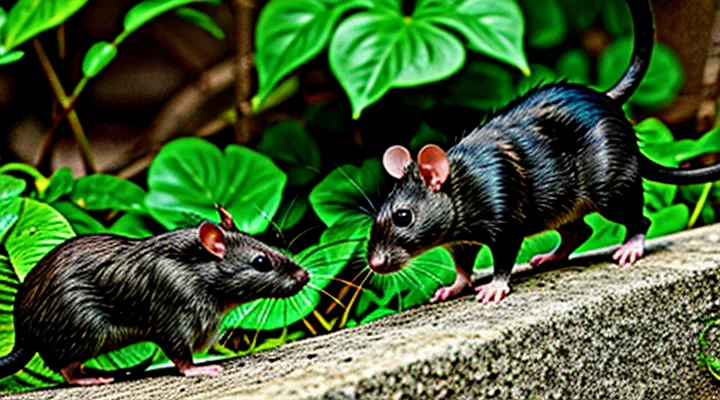
The Often Misunderstood Role of Rats in Ecosystems
Dispelling Common Misconceptions About Rats
«Beyond Pests: Re-evaluating Our Perception»
Rats often evoke negative reactions, yet their ecological functions warrant a more balanced assessment. In natural and urban habitats, these mammals influence multiple processes that sustain biodiversity and ecosystem stability.
• Seed dispersal: consumption of fruits and subsequent transport of viable seeds extend plant colonization zones, particularly for species with limited wind or animal vectors.
• Soil turnover: burrowing activity aerates substrate, promotes water infiltration, and accelerates decomposition of organic matter, thereby enhancing nutrient cycling.
• Predator support: presence of rats sustains populations of raptors, snakes, and carnivorous mammals, contributing to trophic regulation.
• Scavenging: removal of carrion and waste reduces pathogen loads, limiting disease proliferation among other wildlife.
Re‑evaluating perception requires recognizing these contributions without romanticizing the species. Management strategies that mitigate human‑rat conflicts while preserving their ecological roles can align public health objectives with conservation goals. The phrase «Beyond Pests: Re‑evaluating Our Perception» encapsulates this shift toward evidence‑based understanding of rat‑driven ecosystem dynamics.
«The Ecological Niche of Rodents»
Rats occupy a distinct ecological niche characterized by omnivorous feeding habits, high reproductive rates, and adaptability to diverse habitats. Their presence influences trophic dynamics, nutrient cycling, and habitat structure across urban, agricultural, and natural ecosystems.
Key ecological functions include:
- Consumption of seeds and fruits, which regulates plant population density and promotes selective germination.
- Burrowing activity that mixes soil layers, enhances aeration, and facilitates water infiltration.
- Predation by higher trophic levels, providing a reliable food source for birds of prey, carnivorous mammals, and reptiles.
- Scavenging of carrion and organic waste, accelerating decomposition and reducing disease vectors.
- Transport of fungal spores and microorganisms, supporting microbial diversity and symbiotic relationships.
These functions sustain ecosystem productivity and resilience. By modulating plant community composition, rats indirectly shape habitat availability for other organisms. Their role in nutrient redistribution supports soil fertility, which benefits primary producers and, consequently, the entire food web.
Overall, «The Ecological Niche of Rodents» exemplifies a multifaceted contribution to ecosystem health, underpinning processes that maintain biodiversity and ecological balance.
Ecological Contributions of Rats
Seed Dispersal and Plant Propagation
«Rats as Unwitting Gardeners»
Rats frequently transport seeds unintentionally while foraging, moving them from storage sites to new locations where germination becomes possible. Their movement patterns create dispersed seed caches that escape predation and benefit from reduced competition.
Rats modify soil structure through burrowing activities. Tunnels introduce oxygen, improve water infiltration, and mix organic material into deeper layers, thereby enhancing nutrient cycling.
- Seed dispersal across fragmented habitats
- Creation of micro‑habitats within burrow walls that favor seedling establishment
- Consumption of fungal spores, followed by deposition in nutrient‑rich feces that stimulate mycorrhizal associations
- Removal of invasive plant seeds, reducing competitive pressure on native flora
- Aeration of compacted soils, promoting root penetration and microbial activity
Collectively, these processes increase plant diversity, support regeneration after disturbance, and reinforce trophic links that sustain broader ecological stability.
«Impact on Forest Regeneration»
Rats influence forest regeneration through several mechanisms that shape plant community dynamics. Their foraging behavior transports seeds away from parent trees, increasing spatial distribution and reducing density‑dependent mortality. By consuming fruits and excreting viable seeds, rats contribute to the establishment of seedlings in microhabitats favorable for growth.
Soil modification represents another pathway. Burrowing activity loosens compacted layers, enhances water infiltration, and promotes microbial activity. These changes improve nutrient availability and create niches for germinating seeds.
Predation on herbivorous insects directly benefits young plants. Rats capture a variety of arthropods that would otherwise feed on seedlings, thereby reducing herbivory pressure and supporting higher survival rates.
Key impacts include:
- Expanded seed dispersal range, mitigating competition among conspecific seedlings.
- Enhanced soil structure, facilitating root penetration and moisture retention.
- Lowered seedling loss due to insect herbivory, increasing recruitment success.
Collectively, these processes sustain regenerative cycles, maintain species diversity, and reinforce forest resilience.
Soil Aeration and Nutrient Cycling
«Burrowing Activities and Soil Health»
Rats construct extensive tunnel networks that modify the physical structure of the soil. Their burrowing displaces compacted layers, creates channels for water infiltration, and increases aeration. These actions enhance root penetration for vegetation and reduce surface runoff, thereby limiting erosion.
Key effects on soil health include:
- Improved soil porosity, facilitating gas exchange and microbial activity.
- Redistribution of organic matter, as surface litter is carried underground and mixed with mineral particles.
- Enhanced nutrient cycling, because burrow walls host micro‑fauna that accelerate decomposition.
- Creation of microhabitats that support a diverse community of invertebrates, contributing to overall ecosystem resilience.
«Decomposition and Organic Matter Turnover»
Rats act as efficient scavengers, accelerating the breakdown of dead organic material and facilitating the movement of nutrients through ecosystems. By consuming carrion, plant residues, and waste, they reduce the time that organic matter remains undecomposed, creating conditions favorable for microbial activity.
The process involves several mechanisms:
- Direct ingestion of tissue and plant debris, converting complex organic compounds into simpler forms.
- Production of feces and urine rich in nitrogen, phosphorus, and potassium, which integrate into the soil matrix.
- Transport of microbial communities from the gut to external environments, enhancing decomposition rates in new locations.
These actions increase the availability of essential nutrients for plants, improve soil structure, and support higher trophic levels that rely on enriched habitats. The cumulative effect sustains ecosystem productivity and resilience, illustrating the significance of rat‑driven «Decomposition and Organic Matter Turnover».
Food Source for Predators
«Key Component of the Food Web»
Rats occupy a central position in terrestrial food webs, converting plant matter, detritus, and carrion into biomass that supports higher trophic levels. Their omnivorous diet enables rapid energy transfer from primary producers and decomposing material to predators.
Predators that rely on rat populations include:
- Owls, such as barn and great horned species
- Raptors, including hawks and kestrels
- Mammalian carnivores, for example foxes, coyotes and mustelids
- Reptiles, notably snakes and monitor lizards
By sustaining these predators, rats help regulate predator numbers and maintain balanced predator‑prey dynamics. Their presence also influences scavenger communities, as carcasses of rats provide additional food sources for insects and carrion feeders.
Research consistently documents this trophic function. One study observes that «Rats constitute a substantial prey base for a variety of raptors, contributing significantly to their reproductive success». Consequently, rat populations act as a conduit for energy flow, reinforcing ecosystem stability through their role as a primary prey item.
«Supporting Apex Predators»
Rats constitute a substantial food source for many top‑level carnivores. Their abundance and reproductive speed generate predictable prey availability, enabling predators to maintain viable populations without extensive foraging effort.
Key apex predators that depend on rat populations include:
- Owls, especially barn and screech species, which capture rats during nocturnal hunts.
- Raptors such as hawks and falcons, which seize rats in open fields and urban edges.
- Small wild felids, including bobcats and feral cats, that incorporate rats into their diet.
- Mustelids like weasels and martens, which pursue rats within dense vegetation.
- Large carnivores, for instance foxes and coyotes, that opportunistically consume rats when other prey are scarce.
Sustained rat numbers stabilize predator breeding success. Consistent prey reduces juvenile mortality, supports higher litter sizes, and limits the need for long-distance displacement. Consequently, predator presence regulates rodent populations, preventing unchecked growth that could damage crops and spread disease. This predator‑prey feedback loop reinforces biodiversity, preserves habitat structure, and upholds ecosystem resilience.
«Rats as a Vital Link in Biodiversity»
«Rats as a Vital Link in Biodiversity»
Rats occupy a central position in terrestrial food webs, linking primary producers with higher trophic levels. Their high reproductive capacity and adaptability ensure constant presence across diverse habitats, from forests to urban margins.
Key ecological functions include:
- Transport of viable seeds from fruiting plants to new germination sites, enhancing plant community diversity.
- Provision of prey for a wide range of predators such as owls, foxes and snakes, supporting predator population stability.
- Removal of carrion and organic waste, accelerating decomposition and nutrient recycling.
- Soil bioturbation through burrowing activity, improving aeration and water infiltration.
- Regulation of parasite loads by serving as intermediate hosts, influencing pathogen dynamics within ecosystems.
- Suppression of competing small mammal populations through competitive interactions, maintaining balanced community structure.
Through these mechanisms rats contribute to the resilience and functional diversity of ecosystems. Their interactions promote energy flow, nutrient cycling and species coexistence, reinforcing overall biodiversity health.
Pest Control in Certain Contexts
«Predation on Insects and Other Invertebrates»
Rats serve as effective predators of insects and a variety of invertebrates, directly reducing numbers of species that can cause agricultural loss, transmit pathogens, or compete with native fauna. Their foraging behavior targets ground‑dwelling and aerial insects alike, limiting outbreaks that would otherwise require chemical control.
Common prey includes:
- Beetles (Coleoptera) such as grain weevils and cutworms
- Lepidopteran larvae, notably cabbage moth caterpillars
- Hymenopteran pests, for example earwigs and carpenter ants
- Arachnids, including garden spiders and scorpions
- Mollusks like garden snails and slugs
Predation pressure influences population dynamics, leading to lower herbivory rates on crops and natural vegetation. Consumption of invertebrates also contributes to nutrient redistribution; waste products from rats enrich soil organic matter, supporting microbial activity and plant growth.
Through these mechanisms, rats enhance ecosystem resilience, maintaining balanced trophic interactions and supporting biodiversity without reliance on human intervention.
«Mitigating Other Pest Populations»
Rats exert pressure on numerous insect and small‑vertebrate species that compete with humans for stored food, damage crops, or act as disease vectors. By predating on these organisms, rats reduce the intensity of infestations that would otherwise require chemical or mechanical interventions.
- Direct consumption of grain‑boring beetles, moth larvae, and weevils limits losses in stored products.
- Predation on flea‑bearing rodents and shrews curtails secondary disease transmission cycles.
- Competition for shelter diminishes populations of invasive mice and other opportunistic pests.
- Scavenging behavior removes carrion that could attract flies and maggots, interrupting decomposition‑related pest blooms.
These interactions lower reliance on pesticides, decrease economic damage to agriculture, and reduce the prevalence of pest‑associated pathogens. The net effect aligns with sustainable pest‑management strategies, reinforcing the ecological service described as «Mitigating Other Pest Populations».
Scientific and Medical Contributions (Indirect Ecosystem Benefits)
Research Models for Disease and Physiology
«Advancements in Human Health»
Rats possess physiological and genetic characteristics that closely mirror those of humans, allowing precise modeling of disease mechanisms and therapeutic testing. Their short reproductive cycles and well‑documented genome facilitate rapid experimental iteration, providing reliable data for translational research.
Key contributions to medical progress include:
- Development of insulin therapy through early rat pancreatic studies.
- Validation of anticoagulant drugs, such as warfarin, using rat coagulation models.
- Evaluation of neuroprotective agents for stroke and traumatic brain injury, with rat behavioral assays indicating efficacy.
- Screening of vaccine candidates for viral pathogens, where rat immune responses predict human outcomes.
- Investigation of microbiome‑host interactions, revealing pathways that influence metabolic and immune disorders.
Beyond laboratory use, rats support ecosystem functions that indirectly safeguard human health. Their role as seed dispersers and soil engineers promotes biodiversity, which sustains microbial communities essential for nutrient cycling. Healthy ecosystems reduce exposure to zoonotic disease vectors and maintain environmental resilience, thereby complementing the direct medical benefits derived from rat‑based research.
«Understanding Biological Processes»
Rats influence ecosystem functioning through multiple biological mechanisms. Understanding these mechanisms clarifies how rodent populations affect environmental stability.
Key processes include:
- Conversion of organic waste into mineral nutrients, accelerating soil fertility.
- Transport of seeds and spores, facilitating plant colonization across fragmented habitats.
- Regulation of invertebrate populations, reducing herbivore pressure on vegetation.
- Interaction with pathogens, shaping disease dynamics within wildlife communities.
Investigation of these mechanisms relies on analysis of metabolic pathways, reproductive cycles, and foraging behavior. Laboratory assays quantify nutrient excretion rates, while field observations track movement patterns and dispersal events. Genetic markers reveal population structure, informing predictions of ecological impact.
Integrating data on metabolism, reproduction, and movement provides a comprehensive view of rat-driven ecosystem services. This perspective supports informed management decisions that recognize rodents as active participants in ecological processes.
Behavioral and Psychological Studies
«Insights into Learning and Adaptation»
Rats exhibit rapid acquisition of novel foraging techniques, demonstrating flexible problem‑solving abilities that support resource exploitation across varied habitats. Their capacity for associative learning allows swift adjustment to seasonal food availability, reducing competition with less adaptable species and stabilizing trophic dynamics.
Social transmission of foraging strategies occurs through observation and mimicry, enabling groups to disseminate efficient behaviors without genetic change. This cultural diffusion accelerates adaptation to urban environments, where novel waste sources require quick behavioral shifts. Consequently, rat populations contribute to ecosystem resilience by maintaining functional redundancy in seed predation and dispersal.
Key contributions derived from rat cognition include:
- Enhanced seed dispersal through scatter‑hoarding, promoting plant regeneration in disturbed soils.
- Regulation of invertebrate populations via predation, limiting pest outbreaks.
- Soil turnover from burrowing activity, increasing aeration and nutrient cycling.
«Insights into Learning and Adaptation» underscore the role of individual and collective learning processes in shaping these ecological functions. Continuous behavioral innovation ensures that rats remain effective agents of ecosystem modulation, even as environmental conditions fluctuate.
«Contribution to Neuroscience»
Rats have long served as indispensable subjects in neuroscience, providing data that shape understanding of brain structure and function. Their relatively small size, rapid breeding cycle, and well‑mapped genome enable controlled experiments that generate statistically robust results.
Key attributes that make rats valuable for neural research include:
- Genetic similarity to humans sufficient for translational insights while allowing manipulation of specific genes.
- Established behavioral paradigms that quantify cognition, memory, anxiety, and sensory processing.
- Compatibility with invasive techniques such as electrophysiology, optogenetics, and in vivo imaging.
- Predictable pharmacokinetic responses that support drug efficacy and safety testing.
Research employing rat models has clarified mechanisms underlying neurodegenerative disorders, stroke, and psychiatric conditions. Findings derived from rats accelerate identification of therapeutic targets, inform clinical trial design, and reduce reliance on larger mammals. The cumulative knowledge base, built on decades of rat‑based experimentation, continues to inform novel interventions for human brain health.
Ethical frameworks governing animal research emphasize refinement, reduction, and replacement. Advances in rat husbandry, analgesia, and non‑invasive monitoring enhance welfare while preserving scientific validity. As a result, rat studies contribute to the ethical progression of neuroscience without compromising experimental rigor.
«The rat remains a cornerstone of experimental neuroscience», noted a leading laboratory director, underscoring the species’ enduring relevance to the field.
Mitigating Negative Impacts of Rat Populations
Managing Overpopulation
«Conservation Strategies for Balance»
Rats contribute to nutrient cycling by consuming organic waste and dispersing seeds, thereby enhancing soil fertility and plant regeneration. Their burrowing activity creates microhabitats that support a diversity of invertebrates and small vertebrates, increasing overall biodiversity.
Population pressures, habitat fragmentation, and disease outbreaks can disrupt these ecological functions. Maintaining a balanced rat presence safeguards ecosystem services while reducing conflicts with human interests.
Effective measures to achieve equilibrium include:
- Protection of natural habitats that provide shelter and foraging resources.
- Management of predator populations to prevent excessive predation or overabundance.
- Monitoring of disease vectors to mitigate health risks for wildlife and humans.
- Public outreach programs that convey the ecological value of rats and promote coexistence.
- Research initiatives focused on population dynamics, genetic diversity, and ecosystem interactions.
- Implementation of integrated pest management that combines non‑lethal control methods with habitat enhancement.
Adopting these strategies promotes sustainable rat populations, preserves their ecological contributions, and supports broader environmental stability.
«Promoting Natural Predation»
Rats constitute a highly productive food source for a wide range of vertebrate and invertebrate predators. Their abundance supports the reproductive success of species such as owls, hawks, foxes, snakes, and certain arthropods, thereby sustaining predator populations that would otherwise decline in habitats lacking sufficient prey.
- Owls and hawks: consume large numbers of nocturnal and diurnal rats, increasing fledgling survival rates.
- Foxes and coyotes: obtain protein from rat carcasses, enhancing winter stamina and litter size.
- Snakes and lizards: regulate rat numbers through opportunistic hunting, reducing competition for insects.
- Insectivorous beetles and spiders: exploit rat larvae and carrion, contributing to decomposition processes.
Predator reliance on rats creates a feedback loop: robust predator communities exert pressure on rat densities, preventing unchecked population growth that could lead to crop loss, disease transmission, and habitat degradation. This natural predation also diminishes the need for chemical rodent control, preserving soil health and non‑target species.
In ecosystems where rats are present, the trophic cascade initiated by their role as prey promotes biodiversity, stabilizes food webs, and enhances ecosystem resilience. «The presence of rats sustains predator diversity», underscoring their indirect contribution to ecological balance.
Addressing Disease Transmission
«Public Health Considerations»
Rats serve as essential indicators in public‑health monitoring. Their presence and population dynamics reflect sanitary conditions, enabling early detection of environmental contamination and the spread of pathogens. Surveillance programs routinely sample rodent populations to identify emerging diseases, providing data that inform risk assessments and intervention strategies.
In biomedical research, rats contribute to the development of vaccines, pharmaceuticals, and diagnostic tools. Their physiological similarity to humans allows for the testing of drug efficacy and safety, accelerating the translation of laboratory findings into clinical applications. Results derived from rat models support regulatory approvals and guide therapeutic guidelines.
Public‑health policies rely on rat‑related data to design control measures. Integrated pest‑management programs combine habitat modification, sanitation improvements, and targeted rodent control to reduce disease transmission. Monitoring rodent resistance to anticoagulants informs the selection of effective compounds, preventing the escalation of pesticide‑resistant populations.
Key public‑health considerations include:
- Surveillance of zoonotic pathogens carried by rats.
- Utilization of rat models for vaccine and drug development.
- Assessment of rodent‑borne disease risk in urban and rural settings.
- Implementation of evidence‑based rodent control to mitigate health hazards.
«Coexistence and Disease Prevention»
Rats contribute to ecological stability while supporting «Coexistence and Disease Prevention». Their foraging behavior limits populations of insects and small vertebrates that serve as disease vectors, thereby lowering pathogen transmission risk to humans and livestock.
Research demonstrates that the diverse microbiota inhabiting rat gastrointestinal tracts can suppress harmful bacteria through competitive exclusion, reducing the prevalence of zoonotic agents in shared environments.
Effective strategies for harmonious interaction with rat populations focus on habitat design, population monitoring, and targeted public‑health interventions. Key actions include:
- Maintaining urban green spaces that provide natural food sources, discouraging rats from seeking refuge in human dwellings.
- Implementing regular surveillance of rodent colonies to detect early signs of disease emergence.
- Applying environmentally safe rodenticides only when necessary, preserving beneficial predator‑prey dynamics.
- Educating communities about proper waste management to minimize attractants.
These measures foster a balanced relationship that leverages rats’ ecological functions while mitigating health threats.