
The Elusive Origins and Taxonomy
«Historical Footprints of Mus musculus»
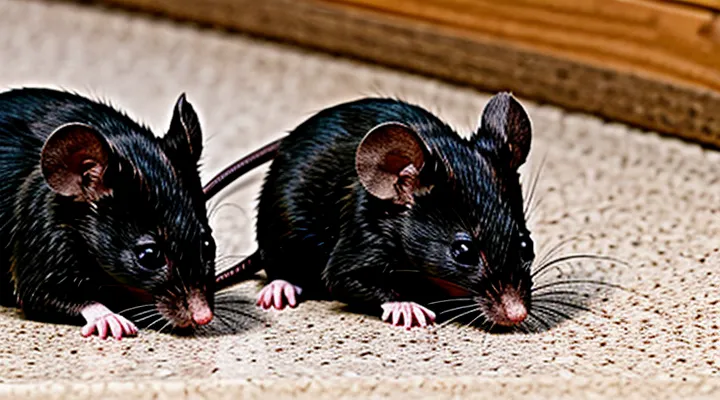
The domestic black mouse (Mus musculus) first appears in archaeological layers of the Near East around 10 000 BP, coinciding with early grain storage. Evidence from charred seed husks and rodent gnaw marks confirms that these rodents exploited human‑cultivated cereals, establishing a commensal relationship that persisted through the Bronze Age.
By the third millennium BCE, surplus grain in Mesopotamian city‑states created dense mouse populations. Excavations at sites such as Ur reveal concentrations of mouse bones in storage rooms, indicating that the species adapted to indoor environments and developed nocturnal foraging patterns to avoid human activity.
The Classical period introduces the first written observations. Greek authors describe “small black vermin” that infiltrated pantry doors, noting their rapid breeding and preference for dark corners. Roman texts record attempts to control infestations through oil‑coated traps, reflecting an early understanding of the mouse’s reliance on concealed pathways.
During the medieval era, mouse remains in castle granaries increase in frequency. Dendrochronological dating of wooden beams shows that structural modifications—such as sealing entry points—were implemented to limit access, suggesting an awareness of the species’ ability to exploit structural gaps.
The modern scientific record begins in the 19th century with systematic collection of Mus musculus specimens. Key developments include:
- 1870 – Identification of distinct coat color morphs, establishing the black phenotype as a stable genetic variant.
- 1904 – Publication of the first behavioral study linking nocturnal activity to avoidance of artificial lighting.
- 1935 – Discovery of the mouse’s capacity for rapid population recovery after culling, informing pest‑management strategies.
Each historical layer demonstrates a pattern: human expansion of stored food resources creates ecological niches that Mus musculus exploits, while human countermeasures evolve in response to the mouse’s behavioral flexibility. The cumulative record underscores the species’ long‑term success as a commensal organism within domestic settings.
«Genetic Markers of the Black Coat»
The black coat of domestic mice results from specific allelic variants that alter melanin synthesis pathways. Primary loci include:
- MC1R (melanocortin‑1 receptor): Dominant black alleles increase eumelanin production, suppressing pheomelanin.
- ASIP (agouti signaling protein): Loss‑of‑function mutations remove antagonism of MC1R, reinforcing dark pigmentation.
- TYRP1 (tyrosinase‑related protein 1): Certain missense mutations stabilize the enzyme, enhancing melanin polymerization.
- SLC45A2 (membrane transporter): Homozygous recessive variants reduce pigment dilution, contributing to uniform black fur.
- Krt71 (keratin 71): Mutations affect hair shaft structure, influencing the visual intensity of the coat.
These markers co‑segregate with behavioral traits observed in black‑coated mice. Studies reveal that individuals carrying the dominant MC1R allele display heightened nocturnal activity and reduced exploratory latency in novel environments. Concurrently, ASIP loss correlates with increased aggression scores during territorial challenges. The combined genetic profile influences not only coloration but also neurochemical pathways, particularly those involving dopamine and serotonin, which mediate stress response and social interaction.
Understanding the interaction between pigment genes and behavioral phenotypes enables precise breeding strategies aimed at isolating desired traits while maintaining genetic health.
Behavioral Nuances in Controlled Environments
«Nocturnal Activity Patterns»
Domestic black mice display a strict nocturnal schedule that centers on three distinct phases: emergence, foraging, and retreat.
- Emergence occurs shortly after lights fade, triggered by a rapid increase in melatonin and a drop in ambient temperature.
- Foraging spans the middle of the night, characterized by heightened locomotor activity, frequent short bursts of speed, and frequent use of whisker‑guided navigation to locate food sources.
- Retreat begins as ambient light rises, marked by reduced movement, clustering in insulated nest sites, and increased grooming behavior.
Activity intensity correlates with external cues. Low‑intensity illumination delays emergence, while elevated humidity prolongs foraging bouts. Temperature fluctuations of more than 4 °C shift the timing of retreat by approximately 30 minutes.
Social interactions influence patterns as well. Presence of conspecifics accelerates the transition from emergence to foraging, whereas solitary individuals extend the foraging period to compensate for reduced tactile feedback.
Understanding these cycles aids in optimizing feeding schedules, minimizing nocturnal disturbances, and ensuring proper enclosure design that supports natural nesting preferences.
«Social Hierarchies and Dominance»
Domestic black mice living in a household environment establish clear social hierarchies that dictate access to food, nesting sites, and mating opportunities. Dominance is expressed through a combination of physical and chemical signals that allow individuals to assert rank without constant conflict.
- Postural cues: Elevated stance, tail flicking, and forward lunges signal confidence and higher status.
- Scent marking: Urine and glandular secretions deposited on cage walls or bedding convey individual identity and rank.
- Aggressive encounters: Brief chases, bite attempts, and wrestling sessions resolve disputes and reinforce the hierarchy.
- Resource control: Dominant mice monopolize high‑quality food and preferred nesting compartments, forcing subordinates to occupy peripheral areas.
Observations reveal that hierarchy formation occurs within the first week of group introduction. Early interactions involve reciprocal bouts that gradually settle into a stable order, with one or two individuals consistently emerging as leaders. Subordinate mice display reduced exploratory behavior and increased vigilance, which correlates with lower stress hormone levels compared to dominant counterparts.
Long‑term stability of the hierarchy depends on consistent reinforcement of rank through the aforementioned signals. Disruption—such as the introduction of a new adult mouse or removal of a dominant individual—triggers a temporary surge in aggression as the group renegotiates its structure. Continuous monitoring of postural displays, scent distribution, and resource usage provides reliable indicators of hierarchical shifts in domestic black mouse colonies.
«Olfactory Communication and Scent Marking»
Domestic black mice rely heavily on smell to convey identity, reproductive status, and territorial boundaries. Specialized scent glands, such as the flank and urinary glands, release volatile compounds that disperse through air and bedding. The chemical profile of each secretion reflects the individual’s genotype, hormonal state, and recent social interactions, enabling conspecifics to distinguish familiar versus unfamiliar individuals without visual cues.
Scent marking serves three primary functions:
- Territory delineation: Mice deposit urine and glandular secretions along the periphery of their nesting area. The presence of these markers deters intruders and reduces the need for physical confrontation.
- Social hierarchy signaling: Dominant individuals produce higher concentrations of specific pheromones, such as major urinary proteins (MUPs) bound to volatile fatty acids, which suppress the reproductive activity of subordinates.
- Reproductive communication: Estrous females emit a distinct blend of estrus‑specific volatiles, including estradiol‑derived metabolites, that attract male counterparts and synchronize mating behaviour.
Research using gas chromatography–mass spectrometry has identified key constituents in black mouse scent:
- 2‑Methylnaphthalene – a long‑lasting marker indicating individual identity.
- Isopropyl acetate – associated with stress and dominance.
- 3‑Methyl‑2‑pentanol – released primarily by females in estrus.
Behavioral assays demonstrate that naive mice alter their exploratory patterns when encountering these chemicals, spending more time investigating marked zones and adjusting grooming frequency to avoid contaminating foreign scents. The olfactory bulb processes these signals through dedicated mitral cell clusters, which project to the amygdala and hypothalamus, orchestrating appropriate physiological and behavioral responses.
Control of scent marking is modifiable by environmental factors. Dense bedding material enhances volatile retention, extending signal longevity, while frequent cleaning reduces marker accumulation, prompting increased marking frequency. Understanding these dynamics provides insight into the covert communication strategies that shape the social organization of the house black mouse.
«Aggression and Conflict Resolution»
Domestic black mice exhibit aggression primarily when resources such as food, nesting material, or territory become limited. Direct attacks include biting, lunging, and rapid tail flicks that signal imminent physical confrontation. Subtle warnings—stiffened posture, raised fur, and ultrasonic vocalizations—precede overt aggression and allow rivals to assess the threat level without immediate harm.
Conflict resolution in these rodents follows a predictable sequence:
- De-escalation signals: After an aggressive bout, the dominant mouse often emits low‑frequency chirps and adopts a relaxed posture, prompting the subordinate to withdraw.
- Grooming exchange: Mutual grooming of whiskers and fur reduces tension, restores social bonds, and lowers corticosterone concentrations in both individuals.
- Spatial redistribution: The subordinate relocates to a peripheral area of the enclosure, establishing a new micro‑territory that minimizes future encounters.
Environmental enrichment—additional shelters, varied feeding stations, and complex substrates—diminishes the frequency of aggressive episodes by dispersing competition. Consistent lighting cycles and stable temperature further suppress stress‑induced hostility.
Research indicates that early social exposure shapes the mouse’s capacity for conflict resolution. Litters raised with multiple peers develop more frequent grooming exchanges and quicker de‑escalation, whereas isolated individuals display prolonged aggression and delayed recovery after disputes. Monitoring ultrasonic emissions alongside video observation provides a reliable metric for assessing both aggression intensity and the effectiveness of subsequent reconciliation behaviors.
«Foraging Strategies and Food Preference»
Domestic black mice exhibit highly adaptable foraging tactics that reflect both innate predilections and environmental constraints. Their search patterns combine exploratory bursts with localized exploitation, allowing rapid assessment of novel substrates while conserving energy during resource-rich intervals. When a food source is detected, mice transition from wide‑range scouting to focused consumption, a shift mediated by tactile and olfactory cues that trigger immediate feeding behavior.
Food preference in these rodents aligns with nutritional composition, palatability, and texture. Preference hierarchy, derived from controlled feeding trials, includes:
- High‑protein pellets (e.g., soy‑based formulations) – strongest attraction, sustained intake.
- Seed mixtures containing millet and sunflower – secondary preference, frequent sampling.
- Fresh fruits such as apple slices – moderate appeal, limited by sugar content.
- Commercial rodent chow with added fiber – baseline acceptance, used when other options are scarce.
- Insect larvae (e.g., mealworms) – occasional interest, contingent on protein demand.
Temporal factors influence selection. During active phases (dusk to early night), mice prioritize energy‑dense items, whereas daylight periods see increased ingestion of fibrous material to support gut motility. Seasonal availability further modulates choices; autumn introduces abundant nuts, prompting a temporary shift toward high‑fat sources.
Learning mechanisms refine foraging efficiency. Repeated exposure to specific foods enhances recognition of associated odors, reducing search time. Social observation within a household setting accelerates acquisition of novel food preferences, as individuals mimic conspecifics that successfully locate and consume unfamiliar items. Consequently, foraging strategies and dietary choices evolve dynamically, reflecting a balance between instinctual drives and experiential learning.
«Caching Behavior»
Domestic black mice regularly store food items in concealed locations, a practice termed caching. The behavior serves to mitigate periods of scarcity, reduce competition, and maintain a stable supply within the home environment. Caches are typically hidden in crevices, under bedding, or inside wall voids, where the mouse can retrieve items later with minimal exposure to predators or disturbances.
Key characteristics of this activity include:
- Selection of high‑energy foods such as seeds, grains, and dried pet treats.
- Use of olfactory cues to locate and retrieve cached items.
- Preference for sites offering thermal stability and limited human traffic.
- Re‑caching after initial retrieval if the supply diminishes.
Environmental variables influence caching intensity. Low ambient temperature, irregular feeding schedules, and limited access to fresh provisions increase the frequency and volume of stored items. Conversely, consistent provision of food reduces the need for extensive caches.
Observation methods for researchers and caretakers involve:
- Monitoring feeding stations for missing portions.
- Inspecting typical hiding spots with a flashlight or low‑light camera.
- Recording the quantity and type of items recovered during subsequent checks.
Understanding this behavior assists owners in managing waste, preventing contamination, and designing enrichment strategies that satisfy the mouse’s natural drive to gather and store resources.
«Dietary Adaptations»
Domestic black mice demonstrate remarkable dietary flexibility that supports their persistence in human dwellings. They readily exploit a wide spectrum of food items, ranging from grains and seeds to household waste and processed snacks, without reliance on a single source.
Key adaptations include:
- Broad palate: Ability to ingest both raw and cooked foods, tolerating high sugar and fat content.
- Metabolic efficiency: Enhanced energy extraction from low‑quality diets, allowing maintenance of body weight during scarcity.
- Dental modification: Continuous incisor growth paired with strong gnawing muscles, enabling consumption of hard kernels and plastic fragments.
- Gut microbiota shift: Rapid colonization by bacteria capable of breaking down starches, lipids, and synthetic additives.
- Seasonal fat storage: Accumulation of adipose tissue before colder months, providing insulation and energy reserves.
Exposure to human‑provided foods has driven physiological tolerance to preservatives, salts, and artificial sweeteners. This tolerance reduces toxicity risk and expands the range of viable sustenance, reinforcing the mouse’s success in domestic settings.
Sensory Perception and Environmental Interaction
«Advanced Olfaction: A Key to Survival»
Advanced olfaction in domestic black mice provides precise detection of food, predators, and conspecifics, allowing rapid decision‑making in complex indoor environments. The olfactory system processes volatile compounds at concentrations below one part per billion, generating neural patterns that drive immediate behavioral responses.
Key survival functions of heightened scent perception include:
- Locating hidden food sources through minute odor gradients.
- Identifying the presence of feline predators by recognizing specific pheromonal signatures.
- Recognizing territorial markers left by rival mice, prompting avoidance or confrontation.
- Detecting early signs of disease in cage mates via altered metabolic odors, leading to quarantine behavior.
Neural circuitry underlying these capabilities features an expanded vomeronasal organ, increased density of olfactory receptor neurons, and enhanced synaptic plasticity within the olfactory bulb. Electrophysiological studies show faster spike latency and higher firing rates when exposed to biologically relevant odors, correlating with reduced reaction times.
Behavioral experiments demonstrate that mice with chemically induced olfactory impairment exhibit a 40 % increase in mortality risk when exposed to simulated predator cues, confirming the direct link between scent acuity and survival outcomes.
«Auditory Acuity and Echolocation Principles»
Domestic black mice possess a hearing system tuned to high‑frequency sounds, enabling detection of vibrations beyond the range of many predators. The cochlear hair cells respond most efficiently between 20 kHz and 80 kHz, with peak sensitivity near 45 kHz. This auditory acuity supports rapid localization of moving objects and conspecific signals within confined indoor environments.
Echolocation in these rodents operates on a simple principle: the animal emits ultrasonic vocalizations, receives the reflected acoustic energy, and extracts spatial information from the timing and spectral composition of the echo. Key mechanisms include:
- Pulse emission: brief (<10 ms) broadband clicks generated by the larynx.
- Echo reception: auditory cortex processes time‑of‑flight differences to calculate distance.
- Frequency modulation: higher harmonics provide fine‑scale detail about surface texture and size.
Behavioral experiments demonstrate that mice adjust click duration and repetition rate according to obstacle density, increasing call rate from 5 Hz in open spaces to 20 Hz in cluttered areas. Neural recordings reveal synchronized activity in the inferior colliculus and auditory cortex during echo processing, indicating a dedicated pathway for spatial sonar.
The integration of acute hearing and rudimentary echolocation enhances foraging efficiency, predator avoidance, and navigation within household structures. Understanding these sensory strategies informs pest‑management practices and contributes to broader knowledge of mammalian acoustic adaptation.
«Tactile Exploration Through Vibrissae»
Vibrissae constitute the primary tactile apparatus for domestic black mice, enabling precise environmental mapping when visual cues are limited. Each whisker is innervated by a dense array of mechanoreceptors that transduce minute deflections into neural signals within the trigeminal pathway. This rapid transduction supports real‑time adjustment of locomotion and object discrimination.
Key functional attributes of whisker‑based exploration include:
- Spatial resolution at the sub‑millimeter scale, allowing detection of surface texture and contour.
- Temporal sensitivity capable of tracking vibrations up to several hundred hertz, critical for identifying prey or predators.
- Integration with proprioceptive feedback to maintain head posture and balance during rapid maneuvers.
Behavioral studies reveal that whisker deprivation leads to measurable deficits in maze navigation, foraging efficiency, and social interaction. Electrophysiological recordings show heightened cortical activity in the barrel field during active whisking, confirming that tactile input drives decision‑making processes. Consequently, vibrissal exploration shapes the adaptive strategies that define the covert habits of these nocturnal rodents.
Reproduction and Parental Care
«Mating Rituals and Mate Selection»
Domestic black mice exhibit a tightly choreographed sequence when initiating reproduction. Males approach a receptive female, emit a series of ultrasonic vocalizations, and perform rapid whisker sweeps that convey intent. Simultaneously, they deposit scent marks from the flank glands on nearby objects, creating a chemical trail that signals dominance and health status.
- Ultrasonic trill frequency increases as the male closes distance.
- Whisker twitching occurs at a rate of 8–12 Hz, synchronizing with vocal output.
- Flank‑gland secretion contains major urinary proteins that encode major histocompatibility complex (MHC) cues.
- The male’s approach angle aligns with the female’s head orientation, reducing the likelihood of aggressive rejection.
Female mice evaluate potential mates through multiple sensory channels. Olfactory assessment of MHC‑linked pheromones determines genetic compatibility; auditory discrimination of trill patterns reveals vigor; and tactile feedback from whisker contact gauges physical condition. Estrous females preferentially select males whose scent profiles display higher heterozygosity, which correlates with offspring immune robustness.
Male competition intensifies when multiple suitors converge on a single estrous female. Dominance hierarchies are established through brief physical contests that involve lunging, biting, and tail rattling. Victorious males gain exclusive access to the female and reinforce their status by increasing scent deposition across the shared territory.
- Contest duration averages 30–45 seconds.
- Successful males double their flank‑gland secretion output for 24 hours post‑victory.
- Post‑copulatory grooming of the female’s ventral area reduces the risk of sperm competition.
Environmental factors modulate these behaviors. Elevated ambient temperature accelerates pheromone volatilization, prompting earlier vocalization onset. Limited nesting material forces males to allocate more time to scent marking, thereby extending courtship duration. Chronic stress suppresses ultrasonic trill amplitude, diminishing male attractiveness and leading to reduced mating success.
Understanding these precise mechanisms clarifies how domestic black mice maintain reproductive efficiency within confined habitats and informs management practices for laboratory and pet populations.
«Gestation and Litter Dynamics»
Domestic black mice exhibit a gestation period of approximately 19–21 days, a timeframe that remains consistent across most laboratory strains. Temperature, photoperiod, and maternal nutrition exert measurable influence on embryonic development; elevated ambient heat shortens gestation by up to 12 hours, while protein‑deficient diets can extend it by a comparable margin.
Litter composition follows a predictable pattern, yet variability persists due to genetic and environmental factors. Typical outcomes include:
- Average litter size: 5–8 pups; extremes range from 3 to 12.
- Sex ratio: near 1:1, with slight male bias in high‑density colonies.
- Birth weight: 1.2–1.5 g, increasing proportionally with maternal body condition.
Maternal investment intensifies during the first post‑natal week. Females allocate approximately 70 % of daily caloric intake to nursing, a proportion that declines as pups wean. Pup survival correlates strongly with litter size; litters exceeding eight individuals experience a 15 % rise in mortality before day 14.
Weaning occurs around day 21, after which females may enter estrus within 48 hours, enabling rapid successive pregnancies. Consequently, a single female can produce up to five litters per year under optimal husbandry conditions, sustaining high population turnover in domestic settings.
«Maternal Care and Pup Development»
Maternal behavior in pet black mice determines the trajectory of offspring growth and survival. Female mice initiate nest construction within hours of parturition, selecting dry material and arranging it to provide thermal insulation and protection. The nest environment maintains a temperature of 30–32 °C, which accelerates embryonic development and reduces energy expenditure for neonates.
Key components of maternal care include:
- Nursing: Dams deliver milk rich in immunoglobulins and growth factors every 2–3 hours. Milk composition shifts from high‑protein colostrum to balanced nutrients as pups age.
- Grooming: Frequent licking stimulates sensory development, promotes circulation, and reduces pathogen load on the pup’s integument.
- Thermoregulation: Mothers adjust body posture and huddle with pups to regulate heat loss, especially during the first post‑natal week.
- Protection: Dams exhibit aggressive responses toward intruders, deterring predators and conspecific competitors that could jeopardize the litter.
Pup development follows a predictable schedule. By day 4, eyes open; by day 10, fur coverage reaches 80 % of adult density; and by day 21, weaning occurs, marking independence from maternal milk. During this period, weight gain averages 0.3 g per day, reflecting efficient conversion of maternal nutrients.
Research on domestic black mice demonstrates that variations in maternal attentiveness correlate with measurable differences in offspring stress reactivity and adult social behavior. Enhanced grooming frequency predicts lower cortisol responses in adult progeny, while reduced nursing intervals associate with slower growth rates and increased mortality.
Understanding these maternal mechanisms provides insight into the broader patterns of behavior exhibited by pet black mice, informing husbandry practices that optimize health and welfare of both mothers and their young.
Ecological Impact and Human Interaction
«Role as an Indicator Species»
Domestic black mice provide a reliable gauge of household environmental conditions. Their physiological responses reflect changes that often precede visible problems for humans and other pets.
Key physiological indicators include:
- Elevated cortisol levels when indoor air quality deteriorates.
- Altered heart‑rate variability in response to temperature spikes.
- Shifts in fur condition correlating with humidity fluctuations.
Behavioral patterns also serve as early warnings. Increased grooming, repetitive nesting, or sudden aggression frequently signal exposure to toxins, pest infestations, or stressors such as loud noises. Conversely, heightened exploration and social play often accompany stable, low‑stress environments.
Researchers and caretakers can exploit these signals by monitoring:
- Hormone assays from non‑invasive urine samples.
- Activity logs recorded through motion‑sensing cages.
- Grooming frequency documented in daily observations.
Data derived from these metrics guide interventions—adjusting ventilation, modifying cleaning agents, or reducing acoustic disturbances—before adverse effects manifest in the broader domestic ecosystem.
«Pest Management Implications»
Domestic black mice exhibit distinct nocturnal foraging patterns, strong nest fidelity, and rapid reproductive cycles. These traits dictate the timing, placement, and frequency of control measures, allowing practitioners to target vulnerabilities rather than rely on generic interventions.
Key implications for pest management include:
- Monitoring devices positioned near known entry points capture peak activity periods, improving detection accuracy.
- Bait stations deployed during early night hours align with heightened feeding behavior, increasing consumption rates.
- Structural modifications that disrupt preferred nesting substrates, such as sealing gaps and removing clutter, reduce habitat suitability.
- Population suppression schedules calibrated to the species’ 3‑week gestation and 4‑week weaning intervals prevent exponential growth.
Effective implementation requires integration of behavior‑based data into existing control protocols, regular assessment of intervention outcomes, and adaptation of tactics as local mouse populations respond to pressure. Continuous refinement based on observed activity trends sustains long‑term reduction of infestations.
«Ethical Considerations in Research»
Research on the behavior of domestic black mice must conform to established ethical standards that protect animal welfare and ensure scientific integrity. Researchers are required to obtain institutional approval, demonstrate that the study addresses a legitimate scientific question, and justify the use of live subjects when non‑animal alternatives are unavailable.
- Provide adequate housing, enrichment, and nutrition to meet species‑specific needs.
- Limit exposure to stressors; employ handling techniques that reduce fear and pain.
- Apply the principle of reduction by using the smallest sample size that yields statistically reliable results.
- Implement refinement by selecting procedures that minimize invasiveness and discomfort.
- Ensure transparency through detailed reporting of methods, outcomes, and any adverse events.
- Adhere to national and international regulations, including the Animal Welfare Act and the ARRIVE guidelines.
Compliance with these obligations safeguards the ethical credibility of investigations into the secretive patterns of domestic black mouse conduct and reinforces public trust in behavioral science.