
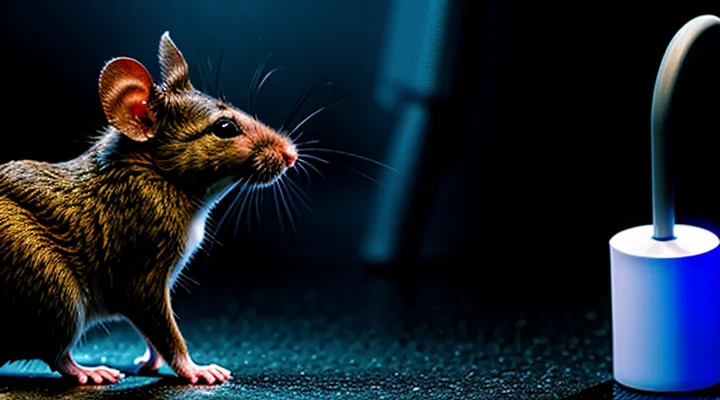
The Nature of Rodent Ultrasound
What is Ultrasound?
Beyond Human Hearing: The Ultrasonic Spectrum
Rodent ultrasonic emissions occupy the frequency band from roughly 20 kHz to 100 kHz, well above the upper limit of human auditory perception. Mice typically generate calls centered around 40–70 kHz, while rats produce vocalizations near 20–30 kHz and occasional higher‑frequency bursts up to 80 kHz. These signals serve communication, predator avoidance, and social coordination among conspecifics.
The ultrasonic spectrum can be divided into functional sub‑ranges:
- Low ultrasonic (20–30 kHz): Dominant in rat distress calls; detectable with standard condenser microphones.
- Mid ultrasonic (30–60 kHz): Primary range for mouse mating songs; requires broadband ultrasonic transducers for accurate capture.
- High ultrasonic (60–100 kHz): Employed in brief alarm chirps; captured only by specialized piezoelectric sensors.
Acoustic analysis relies on high‑sampling‑rate recordings (≥250 kHz) and Fourier‑transform methods to resolve rapid frequency modulations. Calibration against known tone generators ensures precise amplitude measurements, allowing quantitative comparisons across species and experimental conditions.
Physiological studies link these frequencies to the cochlear mechanics of rodents, whose basilar membranes are tuned to respond maximally within the same ultrasonic intervals. Neural pathways convey the detected signals to auditory cortex regions specialized for temporal precision, enabling rapid discrimination of call structure and context.
Key Characteristics: Frequency and Wavelength
Rodent ultrasonic emissions occupy the 20–100 kHz band, with most species concentrating energy between 30 kHz and 80 kHz. The frequency determines the acoustic wavelength according to λ = c/f, where c ≈ 343 m s⁻¹ in air at room temperature. At 30 kHz the wavelength is about 11 mm; at 80 kHz it shortens to roughly 4.3 mm. These dimensions are comparable to the size of facial whiskers and the spacing of auditory hair cells, enabling efficient coupling of sound to peripheral receptors.
Key parameters:
- Frequency range – defines the spectral window for communication, predator avoidance, and environmental scanning.
- Wavelength – governs beam directivity and attenuation; shorter wavelengths experience higher atmospheric absorption but provide finer spatial resolution.
- Speed of sound – varies with temperature and humidity; a 5 °C increase reduces wavelength by ≈ 2 % for a given frequency.
- Harmonic structure – rodents often emit multiple harmonics; each harmonic inherits the same relationship between frequency and wavelength, expanding the effective acoustic footprint.
Understanding these characteristics clarifies how mice and rats generate, transmit, and perceive ultrasonic signals, and informs experimental designs that replicate natural acoustic conditions.
Why Mice and Rats Use Ultrasound
Communication in the Wild
Rodents emit ultrasonic pulses that travel efficiently through dense vegetation and underground burrows, allowing individuals to exchange information without alerting predators. The high frequency (20–100 kHz) exceeds the hearing range of most carnivores, reducing eavesdropping risk while preserving signal integrity over short to moderate distances.
Ultrasonic communication serves several functions:
- Territorial advertisement – males broadcast repetitive chirps to delineate occupied space and deter rivals.
- Mate attraction – females respond to specific pulse patterns, synchronizing reproductive timing.
- Alarm signaling – abrupt broadband bursts trigger immediate escape behavior in conspecifics.
- Social cohesion – low‑amplitude trill sequences maintain group coordination during foraging and nest construction.
Signal propagation is shaped by environmental acoustics. In leaf litter, scattering attenuates frequencies above 80 kHz, so rodents adjust pulse duration and amplitude to match substrate characteristics. Within tunnels, reflections create standing wave patterns that enhance detection range for low‑intensity calls.
Physiological adaptations support this communication channel. Specialized laryngeal muscles generate rapid vocal fold vibrations, while cochlear hair cells tuned to ultrasonic ranges provide acute sensitivity. Neural circuits in the auditory cortex exhibit phase‑locking to pulse intervals, enabling precise temporal decoding of caller identity and intent.
Field recordings confirm that ultrasonic exchanges persist across diverse habitats—from temperate grasslands to arid scrub—demonstrating a robust, predator‑evading signaling system that underpins rodent social organization in the wild.
Navigational Tools
Ultrasonic research on laboratory rodents relies on precise spatial orientation to capture and analyze high‑frequency emissions. Researchers employ a suite of navigational instruments that ensure consistent positioning of transducers, microphones, and subjects throughout experiments.
- Motorized XYZ translation stages provide micron‑scale adjustments, allowing the probe to be moved along defined trajectories without manual intervention.
- Laser‑based alignment systems project reference lines onto the animal’s cranial surface, establishing a reproducible coordinate framework for repeated measurements.
- Inertial measurement units (IMUs) attached to the recording apparatus deliver real‑time feedback on pitch, roll, and yaw, correcting drift caused by vibrations or thermal expansion.
- Optical tracking cameras, paired with reflective markers placed on the animal’s head, generate three‑dimensional motion data that can be synchronized with acoustic recordings.
These tools collectively reduce positional error, facilitate automated scanning protocols, and support the generation of high‑resolution acoustic maps. By integrating mechanical precision with real‑time feedback, investigators achieve reproducible data sets essential for interpreting ultrasonic communication and physiology in mice and rats.
Mechanisms of Ultrasound Production
Anatomy of Sound Production
Laryngeal Structures in Rodents
The larynx of mice and rats is a compact organ positioned at the cranial end of the trachea, composed of cartilage, muscles, and a specialized vocal fold system that generates ultrasonic emissions. The epiglottis is reduced to a thin, flexible plate that does not obstruct airflow during high‑frequency sound production. The thyroid cartilage forms a narrow, horseshoe‑shaped framework, providing attachment sites for intrinsic laryngeal muscles while maintaining a lightweight structure suitable for rapid vibration.
Key components governing ultrasonic output include:
- Vocal folds (vocal cords): Paired, thin, elastic bands of lamina propria and muscle fibers; their length (≈ 1 mm in mice, ≈ 2 mm in rats) and tension are adjusted by the cricothyroid and thyroarytenoid muscles to achieve frequencies up to 100 kHz.
- Cricothyroid muscle: Directly stretches the vocal folds, increasing tension and elevating fundamental frequency.
- Thyroarytenoid muscle: Shortens and relaxes the vocal folds, lowering pitch when necessary.
- Arytenoid cartilages: Pivot to modulate glottal aperture, influencing airflow speed and acoustic pressure.
- Subglottic air column: Shortened tracheal segment beneath the larynx creates a resonant cavity that reinforces high‑frequency harmonics.
Histological studies reveal that the vocal fold epithelium lacks a dense keratinized layer, allowing maximal pliability. Under electron microscopy, the lamina propria displays tightly packed collagen fibers aligned longitudinally, a configuration that supports rapid oscillation without excessive damping.
Physiological recordings demonstrate that during ultrasonic vocalization, the cricothyroid muscle contracts synchronously with expiratory thoracic muscles, producing a subglottal pressure surge of 1–2 kPa. This pressure drives the vocal folds into self‑sustained vibration, generating a tonal output that matches the species‑specific frequency range used in social communication and predator avoidance.
In summary, the rodent larynx integrates a streamlined cartilage skeleton, finely tuned intrinsic musculature, and ultra‑thin vocal folds to produce the high‑frequency sounds characteristic of murine ultrasonic communication.
The Role of Airflow and Vibrations
Rodent ultrasonic vocalizations originate from rapid airflow through the larynx, which forces the vocal folds into oscillation. The pressure gradient generated by inspiratory muscles creates a high‑velocity stream that initiates tissue vibration at frequencies above 20 kHz.
Airflow dynamics control several parameters:
- Subglottal pressure sets the threshold for fold activation.
- Flow velocity influences the amplitude of the resulting acoustic wave.
- Turbulence in the supraglottic region shapes harmonic content.
Vibratory mechanisms translate this airflow into sound. The vocal folds act as compliant structures; their mass, stiffness, and tension determine the fundamental frequency. Oscillation patterns produce a series of harmonic overtones, while slight adjustments in tension modulate pitch in real time.
The interaction between airflow and vibration is bidirectional. Increased pressure amplifies fold displacement, raising sound intensity; conversely, the resulting vibration alters the local airflow, stabilizing the oscillatory cycle. This feedback loop enables rodents to generate precisely timed, high‑frequency calls for communication and environmental exploration.
Understanding these physical processes informs experimental design. Accurate measurement of subglottal pressure and laryngeal displacement allows researchers to replicate natural calls in playback studies, while manipulation of airflow parameters aids in dissecting neural control of vocal production.
Types of Ultrasonic Vocalizations («USVs»)
Social Calls: Courtship and Aggression
Ultrasonic vocalizations emitted by laboratory rodents serve as primary channels for social interaction. In reproductive settings, males produce high‑frequency calls that attract females and synchronize mating behavior. These courtship signals typically range from 40 to 80 kHz, exhibit rapid frequency modulation, and are emitted in bursts coinciding with sniffing and pursuit. Female responses consist of brief, lower‑amplitude calls that reinforce male activity and facilitate pair bonding.
Aggressive encounters generate a distinct set of ultrasonic emissions. Dominant individuals emit longer, broadband calls centered around 50 kHz during confrontations, while subordinates produce short, high‑pitch chirps (70–90 kHz) that signal submission. The temporal pattern of these calls aligns with physical displays such as tail rattling and lunging, providing an acoustic warning that can de‑escalate conflict without physical injury.
Key acoustic features differentiate courtship and aggression calls:
- Frequency range: courtship (40–80 kHz), aggression (50–90 kHz)
- Duration: courtship bursts (10–30 ms), aggression chirps (5–15 ms)
- Modulation: rapid sweeps in courtship, steady tones in aggression
- Emission context: paired with approach behavior for courtship, with retreat or attack for aggression
Experimental recordings demonstrate that manipulation of call playback alters social outcomes. Playback of male courtship calls increases female locomotion and investigation, whereas playback of aggressive calls triggers avoidance and heightened stress markers in conspecifics. Pharmacological blockade of the auditory pathway abolishes these behavioral responses, confirming reliance on ultrasonic perception.
Species comparisons reveal that mice produce more complex syllable structures during courtship than rats, which favor simpler, repetitive calls. Conversely, rat aggression calls display higher amplitude and longer latency, reflecting differences in territoriality and social hierarchy between the two species.
Overall, ultrasonic social calls encode precise information about reproductive intent and competitive status, enabling rodents to coordinate behavior efficiently within dense acoustic environments.
Distress Calls: Warning and Predator Avoidance
Mice and rats emit ultrasonic distress calls when confronted with threats, delivering immediate warning signals to conspecifics and deterring predators. These vocalizations occupy the 20–100 kHz range, exceed the auditory threshold of many avian and reptilian predators, and are modulated in duration and amplitude to convey urgency.
Key functional aspects of distress calls include:
- Rapid propagation through dense vegetation, ensuring reception by nearby group members within milliseconds.
- Frequency bands that overlap with the hearing range of common mammalian predators, creating an acoustic “red flag” that triggers avoidance behavior.
- Temporal patterns—short bursts followed by silent intervals—that reduce habituation and maintain predator attention.
Behavioral studies demonstrate that exposure to these calls elicits freezing, escape, or increased vigilance in both conspecifics and heterospecifics. Predator experiments show heightened flight responses and reduced attack success when distress calls are present, confirming their role as an effective anti‑predator mechanism.
Exploratory Calls: Echolocation and Spatial Awareness
Mice and rats emit high‑frequency exploratory calls that serve as a biological sonar system. These ultrasonic pulses, typically ranging from 40 kHz to 100 kHz, are produced by rapid contraction of the laryngeal muscles and released through the vocal tract. The calls are brief (5–20 ms) and repeated at intervals of 100–300 ms, creating a temporal pattern that enables continuous sampling of the environment.
When a pulse encounters an object, a portion of the acoustic energy reflects back as an echo. The auditory cortex extracts echo delay, intensity, and spectral content to calculate distance, size, and texture of nearby obstacles. This processing relies on specialized high‑frequency hair cells in the cochlea and fast‑conducting auditory pathways that preserve microsecond timing precision.
Exploratory calls support spatial awareness in several ways:
- Obstacle detection: Echoes reveal barriers within a few centimeters, allowing rapid course correction.
- Terrain mapping: Sequential echoes generate a three‑dimensional representation of the surrounding space.
- Predator avoidance: Sudden changes in echo characteristics trigger immediate escape responses.
- Social navigation: Overlapping calls from conspecifics provide collective information about group movement and shelter location.
Laboratory investigations employ ultrasonic microphones, high‑speed video, and electrophysiological recordings to correlate call structure with behavioral outcomes. Manipulating call frequency or intensity alters navigation performance, confirming that these vocalizations constitute an active sensory modality rather than a mere by‑product of communication.
Decoding Rodent Ultrasound
Research Methods and Tools
Ultrasonic Microphones and Recorders
Ultrasonic microphones designed for rodent vocalizations operate above the human hearing range, typically from 20 kHz to 150 kHz. The transducer element converts pressure fluctuations into electrical signals with a flat frequency response across the target band, minimizing distortion. Piezoelectric ceramics and MEMS (micro‑electromechanical systems) are the most common sensing technologies; ceramic sensors provide higher sensitivity, while MEMS devices offer compact size and integrated preamplification.
Recorders paired with these microphones must sustain high sampling rates, generally 250 kHz to 500 kHz, to satisfy the Nyquist criterion for the highest expected frequencies. Bit depth of 16 bits or greater preserves dynamic range, allowing detection of both loud calls and faint ultrasonic clicks. Real‑time signal processing modules often include band‑pass filtering (e.g., 20–100 kHz) to suppress environmental noise and improve signal‑to‑noise ratio.
Key performance criteria for selecting equipment include:
- Sensitivity (mV/Pa) sufficient to capture low‑amplitude emissions from mice and rats.
- Frequency response flatness (≤ ± 3 dB) across the ultrasonic band.
- Low self‑noise (≤ 30 dB SPL) to avoid masking weak vocalizations.
- Robustness to temperature variations typical of laboratory cages.
Calibration procedures involve generating reference tones with a calibrated ultrasonic speaker, measuring output levels, and adjusting gain settings to ensure quantitative comparability across experiments. Consistent documentation of microphone placement relative to the animal, recording settings, and environmental conditions is essential for reproducible acoustic analysis.
Spectrogram Analysis: Visualizing Sound
Spectrograms convert ultrasonic waveforms emitted by rodents into a two‑dimensional representation of frequency versus time, with color or intensity indicating signal amplitude. The method isolates the brief, high‑frequency clicks and chirps typical of mouse and rat vocalizations, allowing precise measurement of carrier frequency, bandwidth, and temporal structure.
Key parameters for reliable analysis include:
- Sampling rate ≥ 250 kHz to capture frequencies up to 120 kHz without aliasing.
- Window length of 1–5 ms, balancing frequency resolution against temporal precision.
- Overlap of 50 % or greater to ensure smooth transitions between consecutive slices.
- Frequency axis displayed on a logarithmic scale for better visual discrimination of low‑frequency harmonics and high‑frequency components.
Amplitude scaling options—linear, logarithmic, or decibel—highlight subtle variations in call intensity, facilitating comparison across individuals or experimental conditions. Noise reduction through band‑pass filtering (e.g., 20–100 kHz) removes environmental artifacts while preserving biologically relevant components.
Interpretation focuses on distinct patterns: constant‑frequency tones appear as horizontal bands, frequency sweeps as diagonal traces, and broadband bursts as wide, diffuse regions. Quantitative extraction of these features, using automated peak detection or machine‑learning classifiers, yields metrics such as peak frequency, duration, and modulation rate, which directly inform models of how rodents produce and perceive ultrasonic signals.
Automated Detection Software
Automated detection software processes ultrasonic recordings from laboratory rodents to identify, classify, and quantify acoustic events without manual intervention. The system accepts raw waveform files, applies band‑pass filtering tuned to the 20‑100 kHz range typical of mouse and rat vocalizations, and extracts time‑frequency representations using short‑time Fourier transform or wavelet analysis. Feature extraction modules compute parameters such as peak frequency, bandwidth, duration, and amplitude envelope, which feed into machine‑learning classifiers (e.g., support vector machines, convolutional neural networks) trained on curated datasets of known call types.
Key capabilities include:
- Real‑time detection of syllable boundaries with millisecond precision.
- Automated labeling of call categories (e.g., ultrasonic vocalizations, distress cries, mating calls) based on probabilistic scoring.
- Batch processing of hundreds of recordings, generating summary statistics and exportable spreadsheets.
- Integration with experimental control software to trigger stimulus delivery or data logging upon detection.
Validation procedures involve cross‑validation against expert annotations, reporting metrics such as precision, recall, and F1‑score. Performance benchmarks typically exceed 90 % accuracy for common call types, with lower false‑positive rates achieved through adaptive thresholding. The software’s modular architecture allows customization of preprocessing steps, classifier models, and output formats to suit diverse research protocols.
By eliminating subjective manual scoring, the tool enhances reproducibility, accelerates data throughput, and facilitates large‑scale analyses of rodent ultrasonic communication.
Interpreting USV Patterns
Frequency Modulation and Amplitude
Rodent ultrasonic vocalizations occupy the 20–100 kHz band, with mice typically reaching 70–100 kHz and rats producing calls around 20–80 kHz. The acoustic signal carries information through rapid changes in frequency (frequency modulation, FM) and variations in sound pressure (amplitude).
FM in these calls appears as upward or downward sweeps, multi‑step jumps, or complex chirps lasting from a few milliseconds to several hundred milliseconds. The sweep rate can exceed 10 kHz ms⁻¹, allowing precise temporal encoding of social cues such as aggression, courtship, or distress. Frequency trajectories often contain inflection points that differentiate call types, enabling receivers to discriminate between contexts without relying on absolute frequency.
Amplitude modulation shapes the perceived loudness and can convey urgency or distance. Peak pressures range from 50 dB SPL up to 90 dB SPL at the source, with rapid rises and falls that produce envelope patterns distinguishable by the auditory system. Amplitude envelopes may be:
- Simple on‑off bursts,
- Sinusoidal tremolos at 10–30 Hz,
- Complex multi‑peak structures synchronized with FM sweeps.
Both FM and amplitude patterns are measurable with high‑frequency microphones and analyzed using spectrographic software, providing quantitative metrics for behavioral studies and neurophysiological investigations.
Call Duration and Repetition
Ultrasonic vocalizations emitted by laboratory rodents consist of brief acoustic events whose temporal structure is defined by individual call length and the pattern of successive emissions.
In mice, single syllables typically last 3–30 ms, with a median around 10 ms; in rats, calls extend from 5 ms to over 100 ms, median near 30 ms. Longer durations are associated with low‑frequency components and complex harmonic structures, whereas brief calls dominate high‑frequency, broadband emissions.
Repetition is quantified by the number of calls per burst and the interval between them. Common patterns include:
- Burst trains: 5–20 calls separated by inter‑call intervals of 10–50 ms.
- Rapid sequences: >30 calls with intervals <10 ms, observed during intense social encounters.
- Sparse emission: isolated calls with intervals exceeding 200 ms, typical of exploratory behavior.
Temporal parameters are extracted using high‑sampling‑rate microphones (≥250 kHz) coupled with spectrographic analysis software. Algorithms detect onset and offset thresholds, compute duration, and measure inter‑call gaps, enabling automated classification of call types.
Variations in call duration and repetition rate correlate with specific behavioral contexts: short, high‑rate bursts accompany male‑female courtship; prolonged, low‑rate sequences accompany distress or predator exposure. Precise measurement of these metrics provides a reliable index of affective state and facilitates cross‑study comparisons in neurobehavioral research.
Context-Dependent Vocalizations
Rodent ultrasonic calls vary dramatically with immediate circumstances, allowing individuals to convey specific information without attracting predators. When a mouse encounters a novel object, it emits a series of short, high‑frequency pulses (≈70–80 kHz) that differ in duration and spacing from the alarm calls produced during predator exposure (≈90–100 kHz, longer bouts). These variations are encoded by distinct neural circuits in the brainstem and forebrain, which adjust the vocal motor output according to sensory input.
During social interaction, the same species can switch between courtship trills, male‑directed chirps, and submissive whines. Each pattern is characterized by precise temporal structure:
- Courtship trills: continuous tones lasting 200–400 ms, frequency sweep from 50 kHz to 70 kHz.
- Male‑directed chirps: brief (~30 ms) bursts with rapid frequency modulation, repeated at 5–10 Hz.
- Submissive whines: lower amplitude, irregular intervals, frequency plateau around 60 kHz.
The production of these calls depends on hormonal state, previous experience, and ambient acoustic background. In rats, exposure to a conspecific’s distress vocalization triggers immediate emission of low‑frequency (≈22 kHz) alarm sounds, while the same animal will produce high‑frequency (≈50 kHz) appetitive calls when presented with a food cue. This bidirectional shift demonstrates how auditory feedback and contextual cues jointly shape vocal output.
Neurophysiological recordings reveal that context‑dependent modulation originates in the periaqueductal gray, which integrates limbic signals with auditory cortex inputs. Lesions in this region abolish the ability to alter call structure in response to environmental changes, confirming its central role in adaptive ultrasonic communication.
The Significance of Rodent Ultrasound in Research
Behavioral Studies and Animal Welfare
Stress and Pain Indicators
Ultrasound applications in laboratory rodents demand systematic assessment of stress and pain to ensure data integrity and animal welfare. Reliable evaluation relies on physiological and behavioral parameters that respond rapidly to acoustic exposure.
Key physiological indicators include:
- Elevated plasma corticosterone, reflecting activation of the hypothalamic‑pituitary‑adrenal axis.
- Increased heart rate and blood pressure measured by telemetry implants or non‑invasive pulse oximetry.
- Changes in respiratory frequency captured with plethysmography.
- Altered body temperature detected by infrared thermography.
Behavioral signs provide complementary evidence:
- Reduced locomotor activity in open‑field tests.
- Decreased nest‑building quality and delayed nest completion.
- Increased self‑directed grooming or facial grimacing scored with the Mouse Grimace Scale.
- Vocalization patterns, particularly ultrasonic vocalizations, that shift in frequency or duration after exposure.
Measurement protocols should combine continuous physiological monitoring with periodic behavioral scoring. Data collection must begin before ultrasound exposure to establish baseline values, continue during the acoustic session, and extend for at least 30 minutes post‑exposure to capture delayed responses.
Mitigation strategies focus on minimizing aversive stimuli: use calibrated acoustic pressure levels below thresholds known to elicit nociception, apply gradual ramp‑up of intensity, and provide habituation sessions prior to experimental runs. Implementing these practices reduces confounding stress responses and enhances the reliability of ultrasonic investigations in mice and rats.
Social Interactions and Communication Breakdown
Ultrasonic vocalizations serve as the primary channel for affiliative and agonistic exchanges among laboratory rodents. Mice emit brief, high‑frequency calls during courtship, pup‑maternal reunions, and territorial disputes, while rats produce longer, modulated sweeps in social grooming and dominance encounters. The acoustic structure—frequency range, duration, and harmonic content—encodes information about the emitter’s age, sex, and emotional state, enabling rapid assessment by conspecifics.
When the acoustic signal is distorted, masked, or absent, the receiver’s ability to decode intent deteriorates. Disruption can arise from:
- Environmental noise that overlaps the ultrasonic band, reducing signal‑to‑noise ratio.
- Genetic mutations affecting vocal fold tension, leading to atypical call spectra.
- Auditory deficits in the listener, such as age‑related cochlear degeneration.
- Experimental manipulation of the sound‑producing apparatus, e.g., restraint or anesthesia.
Each factor interferes with the temporal precision required for call recognition, resulting in misdirected aggression, impaired maternal care, or failure to locate peers. Empirical recordings demonstrate that pups exposed to filtered or silent conditions exhibit delayed weaning and heightened stress hormone levels, confirming a causal link between signal integrity and social competence.
Restoring acoustic fidelity—through sound‑proof chambers, playback of species‑typical calls, or genetic rescue of vocal pathways—normalizes interaction patterns. These interventions underscore the dependence of rodent societies on reliable ultrasonic communication and illustrate how breakdowns propagate through behavioral networks.
Neurological and Genetic Insights
Brain Regions Involved in USV Production
Ultrasonic vocalizations in rodents are generated by a coordinated network of forebrain and brainstem structures. The periaqueductal gray (PAG) integrates emotional and social cues and drives the motor pattern for sound emission. The anterior cingulate cortex (ACC) modulates vocal output in response to social context. The amygdala processes threat and reward signals that influence call frequency and duration. The hypothalamus, particularly the ventromedial and paraventricular nuclei, regulates hormonal state and initiates vocal bouts during mating and aggression. Motor cortex activity precedes syllable onset, providing precise timing for laryngeal muscle contraction. The nucleus ambiguus and surrounding reticular formation coordinate respiration and laryngeal movement necessary for high‑frequency sound production. Basal ganglia circuits, including the striatum, contribute to the selection and sequencing of call types.
Key brain regions and their primary contributions:
- Periaqueductal gray (PAG): central command center for vocal motor pattern generation.
- Anterior cingulate cortex (ACC): contextual modulation of call rate and structure.
- Amygdala: emotional valence processing that shapes call acoustics.
- Hypothalamus (VMH, PVN): hormonal and motivational control of vocal initiation.
- Motor cortex: timing and execution of laryngeal muscle activation.
- Nucleus ambiguus & reticular formation: coordination of respiration and laryngeal movements.
- Basal ganglia (striatum): selection and sequencing of vocal elements.
Experimental lesions or optogenetic inhibition of these areas result in reduced call frequency, altered syllable structure, or complete loss of ultrasonic vocal output, confirming their functional necessity in the production of rodent ultrasound.
Genetic Basis of Vocalization Differences
Ultrasonic vocalizations produced by laboratory rodents are governed by a defined set of genetic determinants that shape acoustic structure, timing, and social relevance. Comparative studies reveal that divergent syllable repertoires between strains arise from variation in genes controlling neural circuitry, muscle function, and auditory feedback.
- Foxp2 – transcription factor influencing cortico‑striatal pathways; loss‑of‑function alleles reduce call complexity and alter frequency modulation.
- Tmem16a – calcium‑activated chloride channel expressed in laryngeal muscles; mutations shift fundamental frequency and restrict call duration.
- Otof – calcium sensor in inner‑hair cells; homozygous disruptions impair detection of self‑generated sounds, leading to compensatory changes in call amplitude.
- Nr3c1 – glucocorticoid receptor affecting stress‑responsive circuits; polymorphisms correlate with increased call rate during isolation.
- Sox10 – regulator of peripheral nervous system development; haploinsufficiency yields irregular call patterns and reduced syllable diversity.
Allelic differences in these loci produce measurable shifts in spectral features such as peak frequency, bandwidth, and harmonic content. For example, mouse strains carrying the Tmem16a Glu354Lys variant emit calls averaging 2 kHz lower than wild‑type counterparts, while Foxp2‑mutant rats display a 30 % reduction in syllable transition probability.
Experimental validation employs quantitative trait locus mapping, CRISPR‑mediated gene editing, and electrophysiological recordings from brainstem nuclei controlling vocal motor output. Knock‑in models confirm causality: insertion of the rat Nr3c1 stress‑responsive allele into mice reproduces the heightened call emission observed in stressed conspecifics.
Understanding the genetic architecture of rodent ultrasound informs the design of behavioral assays for neuropsychiatric disorders, where aberrant vocalization serves as a proxy for communication deficits. Precise manipulation of identified genes enables the creation of phenotypic panels that reflect human speech impairments while preserving the natural ultrasonic signaling system of the animal model.
Future Directions in Ultrasound Research
Therapeutic Applications and Drug Discovery
Ultrasound research in rodents provides a platform for developing therapeutic strategies and accelerating drug discovery. In mice and rats, focused acoustic energy can be delivered with precision, allowing manipulation of biological tissues without invasive surgery. The resulting physiological effects enable several medical applications.
Key therapeutic uses include:
- Targeted drug delivery – acoustic pressure enhances permeabilization of cell membranes, facilitating intracellular uptake of chemotherapeutics or nucleic acids.
- Transient blood‑brain barrier disruption – low‑intensity pulses open tight junctions temporarily, permitting central nervous system drug penetration while preserving overall barrier integrity.
- Tumor ablation – high‑intensity focused bursts generate localized heating, inducing necrosis in malignant tissue with minimal impact on surrounding structures.
- Tissue regeneration – repetitive low‑frequency stimulation promotes angiogenesis and extracellular matrix remodeling, accelerating healing in muscle, bone, and nerve injuries.
- Neuromodulation – pulsed ultrasound modulates neuronal activity, offering non‑pharmacological control of pain pathways and seizure activity.
In drug discovery, ultrasound‑enabled platforms contribute to:
- Phenotypic screening – acoustic stimulation of cultured cells or organoids reveals compound effects on mechanosensitive pathways, uncovering novel targets.
- High‑throughput permeability assays – rodent‑derived endothelial monolayers subjected to ultrasound provide rapid assessment of candidate molecules’ ability to cross physiological barriers.
- Mechanotransduction profiling – systematic variation of acoustic parameters identifies signaling cascades activated by mechanical stress, informing structure‑activity relationships for new drug classes.
- In vivo efficacy validation – real‑time imaging combined with therapeutic ultrasound in living animals enables immediate observation of drug distribution and therapeutic outcomes.
The integration of acoustic techniques with established rodent models shortens development cycles, improves translational relevance, and expands the repertoire of interventions that can be tested before clinical translation.
Environmental Monitoring and Conservation
Rodent ultrasonic vocalizations occupy the 20‑100 kHz band, exceed human hearing thresholds, and are emitted in response to physiological and environmental stimuli. High‑resolution microphones and digital signal processors capture these emissions without disturbing the subjects, enabling continuous acoustic surveillance in laboratory and field settings.
Quantitative analysis of call frequency, duration, and pattern reveals alterations linked to habitat degradation, chemical exposure, and predator presence. Shifts in vocalization metrics correlate with stress biomarkers, providing a non‑invasive indicator of ecosystem health. Consequently, ultrasonic monitoring integrates directly into environmental assessment protocols.
Data acquisition systems employ band‑pass filters, fast Fourier transforms, and machine‑learning classifiers to differentiate species‑specific calls from ambient noise. Automated pipelines generate real‑time alerts when predefined acoustic thresholds are exceeded, supporting rapid response to emergent threats.
Conservation strategies benefit from early detection of ecological stressors, allowing targeted interventions before population declines become irreversible. Acoustic indicators complement traditional surveys, expand monitoring coverage, and reduce reliance on visual observations.
Key advantages of rodent ultrasound in environmental monitoring and conservation:
- Continuous, passive data collection minimizes habitat disturbance.
- High sensitivity to subtle physiological changes enhances early warning capability.
- Scalable deployment across diverse habitats supports large‑scale biodiversity assessments.
- Integration with remote sensing platforms facilitates multi‑modal analysis.
Implementation of ultrasonic surveillance advances precision in habitat evaluation, informs management decisions, and strengthens adaptive conservation frameworks.