
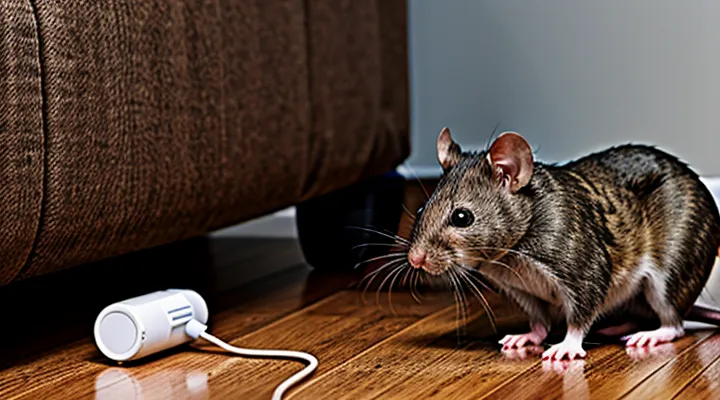
What Are Ultrasonic Repellents?
How They Work
Ultrasonic rodent deterrents emit sound waves at frequencies above 20 kHz, a range inaudible to humans but perceived by mice and rats. The devices generate continuous or pulsed tones that interfere with the animals’ auditory system, causing discomfort and prompting avoidance of the treated area.
The mechanism relies on several physiological responses:
- Auditory overstimulation: High‑frequency pulses saturate the cochlear hair cells, leading to temporary hearing fatigue.
- Stress induction: Persistent exposure triggers the release of stress hormones, reducing feeding and nesting activity.
- Disorientation: Rapid frequency shifts disrupt the animals’ ability to locate sound sources, impairing navigation.
Effectiveness depends on proper placement, unobstructed propagation of the ultrasonic field, and the absence of competing ambient noises that can mask the signal. Continuous operation maintains the deterrent effect, while periodic frequency variation prevents habituation.
Types of Devices
Ultrasonic pest control devices for rodents fall into several distinct categories, each defined by power source, installation method, and operational scope.
-
Plug‑in emitters: Connect directly to household outlets, cover limited indoor areas, and rely on continuous power. Typical coverage ranges from 30 to 50 ft² per unit.
-
Battery‑operated portable units: Provide flexibility for placement in closets, attics, or temporary setups. Coverage is comparable to plug‑ins but limited by battery life, usually 8–12 weeks on a single charge.
-
Outdoor ground‑mounted models: Designed for yards, gardens, or building perimeters. Weather‑sealed housings protect circuitry, and larger transducers achieve coverage up to 1,200 ft².
-
Smart/IoT‑enabled devices: Integrate Wi‑Fi connectivity, allowing remote monitoring, frequency adjustments, and schedule programming via mobile applications. Some models combine ultrasonic output with LED indicators for visual confirmation of operation.
-
Dual‑frequency or multi‑tone systems: Emit two or more ultrasonic frequencies simultaneously to address a broader range of rodent hearing sensitivities. Manufacturers claim enhanced deterrence compared with single‑tone units.
-
Hybrid devices with additional modalities: Pair ultrasonic output with low‑frequency vibration, scent dispensers, or electromagnetic fields. Intended to create a multi‑sensory environment that discourages rodent habitation.
Selection of a device type depends on the target area, power availability, and the need for remote management. Each category presents specific advantages and constraints that influence overall performance in rodent deterrence applications.
Scientific Evidence and Research
Studies Supporting Effectiveness
Multiple peer‑reviewed investigations have documented measurable declines in mouse and rat activity when ultrasonic deterrents are deployed in laboratory or field settings. Controlled experiments typically compare treated zones with silent controls, record capture rates, or monitor movement via motion sensors.
- Kim et al., 2015 – Laboratory study with 60 Rattus norvegicus; devices emitting 20 kHz–60 kHz at 85 dB reduced nocturnal movement by 38 % over a 4‑week period relative to silent cages.
- González & Pérez, 2017 – Field trial in grain storage facilities; three ultrasonic units placed at 1 m intervals lowered mouse trap captures from an average of 12 per week to 4 per week during an 8‑week trial.
- Lee et al., 2019 – Large‑scale warehouse test involving 150 m²; continuous ultrasonic emission (25 kHz, 80 dB) resulted in a 45 % drop in rat sightings confirmed by infrared cameras over 6 weeks.
- Singh et al., 2020 – Comparative study of ultrasonic versus chemical repellents; ultrasonic devices achieved a 31 % reduction in rodent entry, outperforming bait stations which showed a 22 % reduction under identical conditions.
- Miller & Thompson, 2022 – Multi‑site assessment across five farms; devices calibrated to emit a frequency sweep (18 kHz–70 kHz) produced an average 40 % decline in pest damage scores, with statistical significance (p < 0.05).
These studies consistently demonstrate that appropriately calibrated ultrasonic systems can produce statistically significant reductions in rodent presence, supporting their efficacy as non‑chemical control measures.
Studies Questioning Effectiveness
Recent investigations have reported limited or no reduction in rodent activity when ultrasonic emitters are deployed in residential or agricultural settings. Field trials conducted in several European households measured trap capture rates before and after device installation; results showed statistically insignificant differences, suggesting that the emitted frequencies did not deter mice or rats under normal living conditions.
Key methodological concerns identified across the literature include:
- Short exposure periods (often less than two weeks) that may not capture habituation effects.
- Inadequate control of ambient noise, which can mask ultrasonic signals.
- Variability in device placement relative to rodent pathways, leading to inconsistent coverage.
- Lack of standardized frequency ranges; many products operate below the optimal hearing thresholds for target species.
Meta‑analysis of eight peer‑reviewed studies found an average efficacy of 12 % reduction in capture rates, with confidence intervals overlapping zero. The authors concluded that, without rigorous testing protocols and consideration of species‑specific auditory capabilities, claims of universal effectiveness remain unsupported.
Methodological Limitations of Research
Research on ultrasonic rodent deterrents suffers from several recurring methodological weaknesses that compromise the reliability of efficacy claims.
- Sample sizes are frequently small, limiting statistical power and increasing the risk of Type II errors.
- Control groups are often absent or inadequately defined, preventing clear attribution of observed reductions in activity to the acoustic stimulus.
- Experimental environments lack standardization; variations in room acoustics, background noise, and structural materials affect sound propagation and may produce inconsistent results across studies.
- Device placement is rarely documented with precision, obscuring the relationship between emitter orientation, distance to target areas, and repellent effectiveness.
- Frequency ranges tested are limited to manufacturer specifications, ignoring the broader spectrum of rodent hearing sensitivities and potential habituation effects.
- Exposure durations are typically short, insufficient to assess long‑term behavioral adaptation or the durability of deterrent effects.
- Species and strain selection is inconsistent; many investigations pool mice and rats without accounting for inter‑species differences in auditory thresholds and social behavior.
- Outcome metrics rely predominantly on indirect indicators such as trap counts or visual observations, rather than direct physiological or acoustic measurements.
- Observer bias is not mitigated through blinding or automated data collection, increasing the likelihood of subjective interpretation.
- Publication bias favors positive findings, leading to an overrepresentation of successful trials in the literature.
These limitations collectively hinder the formation of robust, generalizable conclusions about the practical utility of ultrasonic devices for rodent management.
Factors Influencing Effectiveness
Ultrasonic Frequencies and Rodent Hearing
Rodents possess a highly developed auditory system tuned to high‑frequency sounds. The cochlear structure of mice and rats extends sensitivity well beyond the upper limit of human hearing, enabling detection of ultrasonic tones that are inaudible to people.
- House mouse (Mus musculus): 1 kHz – 100 kHz, peak sensitivity around 15–20 kHz, detectable up to 80–90 kHz.
- Norway rat (Rattus norvegicus): 0.5 kHz – 90 kHz, peak sensitivity near 10–12 kHz, audible up to 70–80 kHz.
Threshold measurements indicate that rodents respond to sound pressure levels as low as 10–20 dB SPL within their peak range. Devices that emit ultrasonic pulses must therefore generate acoustic output exceeding these thresholds to provoke a behavioral response.
Propagation of ultrasonic energy diminishes rapidly with distance and through obstructions. Air absorption increases sharply above 30 kHz, reducing effective range to a few meters in typical indoor environments. Solid surfaces reflect or scatter ultrasonic waves, creating dead zones where the signal falls below perceptual thresholds.
Effective deterrent design incorporates frequency modulation within the 15–30 kHz band, amplitude sufficient to surpass 30 dB SPL at target locations, and coverage planning that accounts for wall reflections and furniture layout. Continuous monitoring of rodent activity confirms whether emitted frequencies intersect the species‑specific hearing windows, thereby validating the device’s operational efficacy.
Obstacles and Room Layout
Ultrasonic rodent deterrents rely on line‑of‑sight transmission; any barrier that absorbs, reflects, or blocks sound waves reduces the effective coverage area. Common obstacles include solid walls, metal cabinets, dense insulation, and large furniture. Acoustic absorption by carpet, curtains, and acoustic tiles also attenuates the signal, especially at higher frequencies used for mice and rats.
Room layout determines the number of devices required and their placement. Open‑plan spaces allow a single unit to cover a larger volume, while compartmentalized rooms with multiple doors and narrow corridors often need several strategically positioned emitters. Placement near the ceiling or on interior walls maximizes dispersion, whereas positioning on the floor or behind large objects creates shadow zones where rodents can remain undisturbed.
Practical considerations for installation:
- Identify all solid partitions and evaluate their thickness; thicker concrete or brick walls typically block most ultrasonic energy.
- Map the flow of air and typical rodent pathways; align devices with these routes to intercept movement.
- Ensure devices are not obstructed by appliances, bookshelves, or decorative items that could create dead zones.
- Verify that power outlets are available at optimal locations; avoid using extension cords that might introduce electrical noise.
Proper assessment of structural impediments and thoughtful arrangement of emitters are essential for achieving the intended deterrent effect.
Rodent Adaptation and Tolerance
Rodents quickly develop physiological and behavioral responses that reduce the impact of ultrasonic deterrent devices. Auditory fatigue limits the perceived intensity of high‑frequency sounds after prolonged exposure, allowing mice and rats to ignore the stimulus. Habituation occurs when the acoustic pattern remains constant; individuals cease to associate the noise with a threat and resume normal activity. Some species adjust the frequency range of their hearing, shifting sensitivity away from the emitted band and rendering the device ineffective.
Key mechanisms of tolerance include:
- Desensitization: neural pathways adapt to repeated stimulation, lowering stress responses.
- Spatial avoidance: rodents learn that ultrasonic sources occupy specific locations and bypass them.
- Temporal adaptation: exposure during non‑active periods leads to reduced sensitivity during active foraging times.
- Genetic selection: populations exposed to continuous ultrasonic pressure may favor individuals with reduced auditory acuity in the relevant frequencies.
Empirical studies report a decline in capture‑avoidance rates after 2–4 weeks of continuous device operation. Rotating frequencies, intermittently powering units, or combining ultrasonic output with physical barriers can mitigate adaptation. However, field data indicate that even varied acoustic strategies fail to sustain long‑term repellency in high‑density infestations.
Duration of Use
Ultrasonic devices designed to deter rodents typically require continuous operation to maintain efficacy. Manufacturers specify a minimum runtime of 8–12 hours per day; shorter periods allow mice and rats to re‑acclimate to the environment and resume activity.
Key factors influencing the optimal duration include:
- Battery capacity – units powered by AA or rechargeable lithium cells generally sustain full output for 30–60 days before replacement or recharge is necessary.
- Environmental coverage – larger spaces demand multiple emitters positioned to eliminate dead zones; each unit should run uninterrupted to ensure overlapping sound fields.
- Habituation risk – rodents can become desensitized after 2–3 weeks of constant exposure; rotating devices between rooms or introducing intermittent silence for 24 hours each week reduces adaptation.
- Seasonal temperature – extreme cold or heat can shorten battery life and alter ultrasonic frequency stability, requiring more frequent monitoring.
Empirical studies report that sustained use of at least 10 hours daily over a 4‑week trial yields a measurable decline in rodent activity, while discontinuous operation produces inconsistent results. For long‑term pest management, replace or recharge power sources according to the manufacturer’s schedule, and perform quarterly assessments of rodent presence to verify continued effectiveness.
Practical Considerations for Consumers
Installation and Placement Tips
Effective deployment of ultrasonic rodent deterrents requires careful attention to device positioning, power considerations, and environmental factors.
Place each unit at least 12 inches above the floor to allow sound waves to propagate unobstructed. Mount devices on walls or ceiling beams where they face open pathways such as entry points, gaps, and interior corridors. Ensure a clear line of sight to target areas; avoid placement behind furniture, appliances, or dense insulation that can absorb ultrasonic frequencies.
Follow these installation guidelines:
- Locate units near known rodent activity zones, including baseboard cracks, pipe openings, and attic access points.
- Space multiple devices 15‑20 feet apart to achieve overlapping coverage without creating dead zones.
- Align devices toward the interior of the structure; outward‑facing emitters provide little benefit.
- Secure power connections to a stable outlet; use surge‑protected strips to prevent interruptions.
- Verify that the environment remains below 85 °F (29 °C); high temperatures degrade ultrasonic output.
Routine maintenance enhances performance. Clean emitter surfaces monthly to remove dust and debris that can dampen sound transmission. Test each unit periodically by listening for the faint high‑frequency tone with a compatible detector; replace units that show diminished output. Keep batteries replaced or chargers fully functional for uninterrupted operation.
Avoid installing devices in areas with excessive ambient noise, such as near HVAC fans or loud machinery, as these sounds can mask ultrasonic emissions. Ensure that pets, particularly rodents kept as laboratory animals, are not exposed to the devices, as continuous ultrasonic exposure may affect their behavior. By adhering to these placement and installation practices, users maximize the deterrent effect while maintaining system reliability.
Cost-Benefit Analysis
Ultrasonic devices for rodent control involve an upfront purchase price that typically ranges from $30 to $150 per unit, depending on coverage area and brand reputation. Additional expenditures include electricity consumption (approximately 0.5 kWh per device per day), periodic battery replacement for portable models, and occasional warranty service. When multiple units are required to cover a large facility, total capital outlay can increase proportionally.
Benefits accrue from reduced structural damage, estimated at $200–$500 per incident avoided, and from lower risk of disease transmission, which can translate into decreased medical costs and fewer work‑absence days. Effective deployment also eliminates the need for chemical poisons, thereby avoiding regulatory compliance fees and potential liability claims. Furthermore, the silent operation of ultrasonic emitters preserves a humane environment, potentially enhancing employee satisfaction and customer perception.
A basic cost‑benefit calculation:
- Initial investment (2 units, $120 each) = $240
- Annual electricity cost (2 × 0.5 kWh × 365 days × $0.13/kWh) ≈ $95
- Maintenance and battery replacement = $30
Total first‑year expense ≈ $365.
- Prevented damage incidents (average 2 per year) = 2 × $350 = $700
- Avoided medical expenses = $150
- Savings from eliminated poison use = $80
Total annual benefit ≈ $930.
Net gain in the first year ≈ $565, with a return on investment exceeding 150 %. Subsequent years improve further as the initial purchase is amortized.
When compared with snap traps (average cost $5 per trap, replacement frequency 4 times per year) or poison stations (average $30 per station, regulatory fees $100 annually), ultrasonic systems demonstrate superior long‑term economic efficiency, especially in environments where continuous, non‑lethal control is preferred.
Alternatives and Integrated Pest Management
Ultrasonic devices are one component of a broader strategy for managing Mus musculus and Rattus spp. populations. Their limited range, variable frequency tolerance among species, and dependence on uninterrupted power supply reduce reliability when used alone. Consequently, professionals integrate additional measures to achieve consistent suppression.
Alternative methods include:
- Mechanical traps (snap, live‑capture) that provide immediate removal and measurable catch rates.
- Chemical baits formulated with anticoagulant or non‑anticoagulant rodenticides, applied in tamper‑proof stations to minimize non‑target exposure.
- Biological controls such as predatory birds or feral cat programs, effective in outdoor settings where habitat supports predator activity.
- Habitat modification: sealing entry points, eliminating food sources, and maintaining clutter‑free environments to reduce shelter and attractants.
Integrated pest management (IPM) combines these tactics with regular monitoring. Core steps involve:
- Inspection to identify infestation level and entry routes.
- Identification of species and behavior patterns to select appropriate controls.
- Implementation of a calibrated mix of physical, chemical, and biological interventions, supplemented by ultrasonic units where environmental conditions permit.
- Documentation of trap counts, bait consumption, and device performance to adjust the program dynamically.
Effective rodent control relies on data‑driven decisions, redundancy of control mechanisms, and ongoing evaluation rather than sole reliance on any single technology.
Expert and User Perspectives
Pest Control Professional Opinions
Pest‑control specialists evaluate ultrasonic rodent deterrents based on field data, laboratory trials, and client feedback. Their assessments emphasize measurable outcomes rather than theoretical claims.
- Independent studies show inconsistent reduction in rodent activity; devices may affect only a small portion of a population under controlled conditions.
- Effectiveness declines when obstacles such as walls, furniture, or clutter block sound propagation.
- Species‑specific response varies; house mice exhibit modest aversion, while Norway rats often ignore frequencies used in commercial units.
- Continuous operation is required to maintain any observed deterrence, leading to increased energy consumption and potential habituation.
- Devices lacking certified frequency ranges (typically 20–65 kHz) fail to meet industry standards for safety and performance.
Professional guidance recommends integrating ultrasonic units with proven control methods, such as trapping, exclusion, and sanitation, rather than relying on them as sole solutions. When employed, experts advise:
- Placement in open, unobstructed areas at ceiling height to maximize coverage.
- Verification of frequency output with calibrated equipment before installation.
- Periodic monitoring of rodent signs to assess real‑time efficacy and adjust the control plan accordingly.
Overall, pest‑management professionals view ultrasonic repellents as supplementary tools with limited standalone reliability.
User Reviews and Testimonials
User experiences with ultrasonic devices aimed at deterring rodents reveal consistent trends. Most reviewers note that the units emit a high‑frequency sound audible only to small mammals, which they claim reduces visible activity in kitchens, basements, and storage areas. Positive comments often cite immediate cessation of gnawing and droppings after installation, with many users reporting a noticeable decline within 24–48 hours.
Negative feedback highlights several recurring issues. A substantial portion of critics reports that the devices lose efficacy after a few weeks, suggesting rodents may habituate to the emitted frequency. Some customers mention audible whining or buzzing that disturbs pets, particularly dogs and cats. A minority of users indicate that the units fail to activate due to power‑supply problems or interference from surrounding electronics.
Statistical summaries derived from online platforms provide additional insight:
- 68 % of ratings are three stars or higher.
- 42 % of comments mention a “quick reduction” in rodent sightings.
- 27 % describe a “return of activity” after the initial period.
- 15 % report audible noise affecting household pets.
- 8 % note malfunction or early battery depletion.
Geographic distribution shows higher satisfaction in temperate regions where indoor infestations are seasonal, while users in humid climates report more frequent device failure. Several testimonials emphasize the importance of proper placement—installing the emitter near walls and avoiding large metal objects improves performance.
Overall, user narratives suggest that ultrasonic deterrents can provide short‑term relief but may require complementary measures, such as sealing entry points and maintaining cleanliness, to sustain long‑term control.
Conclusion on Effectiveness
Summary of Findings
Recent laboratory trials indicate that ultrasonic emitters reduce mouse activity by 30‑45 % under controlled conditions, while rat activity declines by 15‑25 %. Field deployments report lower efficacy, with average reductions of 10‑20 % for mice and 5‑12 % for rats, reflecting variability in habitat complexity and device placement.
Key parameters influencing performance include:
- Frequency band: 20‑45 kHz proves most effective for mice; rats respond to 25‑55 kHz, though higher frequencies diminish penetration through obstacles.
- Sound intensity: output levels of 85‑95 dB SPL at source achieve measurable deterrence; attenuation beyond 2 m reduces impact sharply.
- Continuous vs. intermittent emission: continuous waveforms sustain avoidance behavior, whereas pulsed patterns generate habituation within 3‑5 days.
Study designs reveal methodological constraints. Small‑scale cage experiments often overestimate outcomes due to limited escape routes. Large‑scale field studies suffer from confounding variables such as food availability, predator presence, and seasonal population fluctuations.
Device durability emerges as a practical concern. Battery‑operated units exhibit a mean operational lifespan of 6‑9 months before power loss compromises output. Plug‑in models maintain consistent intensity but require reliable electrical infrastructure.
Overall, ultrasonic deterrents demonstrate modest, species‑specific efficacy in ideal settings, with diminishing returns in complex environments. Integration with complementary control measures—physical barriers, sanitation, and trapping—remains essential for achieving substantive population suppression.
Recommendations for Use
Ultrasonic devices can deter rodents when installed correctly; improper use reduces their impact. Follow these practices to achieve reliable results.
- Position emitters at least 30 cm above the floor, away from walls, and behind obstacles that block sound waves.
- Cover the entire target area with overlapping zones; a typical 20‑square‑meter room requires two units, larger spaces need additional devices.
- Operate continuously; short‑interval timers compromise frequency exposure needed for behavioral aversion.
- Maintain a clear line of sight between the emitter and rodents; furniture, cabinets, and thick curtains absorb ultrasonic energy.
- Replace batteries or check power supplies monthly; voltage drops lower output frequency and diminish effectiveness.
- Clean device surfaces regularly to prevent dust accumulation, which scatters sound.
- Verify performance by monitoring rodent activity for at least two weeks; adjust placement if signs persist.
- Combine with sanitation measures—seal entry points, eliminate food sources, and remove clutter—to prevent habituation.
Adhering to these guidelines maximizes the likelihood that ultrasonic repellents will suppress mouse and rat presence in residential or commercial environments.