
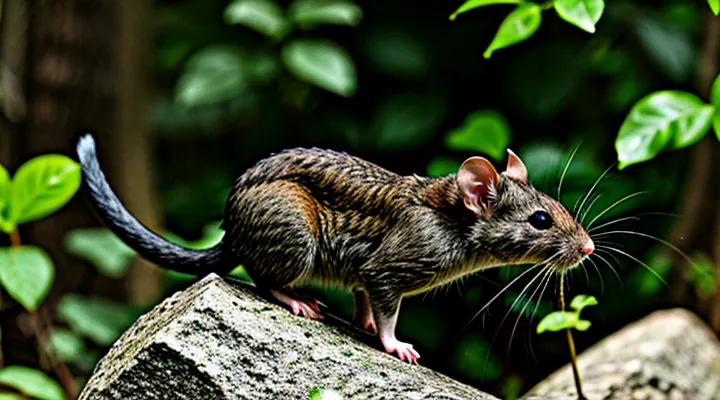
Understanding Wild Rats
What are Wild Rats?
Wild rats are non‑domesticated members of the family Muridae that live and reproduce in natural or semi‑natural environments. They differ from laboratory or pet rats in genetics, behavior, and ecological impact. Their populations thrive in fields, forests, urban alleys, and sewage systems, where they exploit diverse food sources and shelter.
Key characteristics of wild rats include:
- Adaptability to varied climates and habitats.
- High reproductive rate, with multiple litters per year.
- Strong gnawing ability that enables access to seeds, insects, and human waste.
- Aggressive foraging behavior that can spread pathogens and cause structural damage.
Species diversity is extensive; common representatives are the brown rat (Rattus norvegicus), the black rat (Rattus rattus), and several Asian and African endemic forms. Each species exhibits distinct coloration, body size, and ecological niche, which are identifiable through photographic documentation and taxonomic naming.
Why Differentiate Wild Rats?
Differentiating among wild rat species is essential for accurate disease surveillance, effective pest management, and ecological research. Each species carries distinct pathogen profiles, habitat preferences, and behavioral patterns that influence human health risks and agricultural impact.
- Pathogen specificity: Certain rats transmit hantavirus, while others are vectors for leptospirosis or plague.
- Habitat adaptation: Some species thrive in urban sewers, others inhabit forest floor litter, affecting control strategies.
- Reproductive rates: Variation in breeding cycles determines population growth and timing of intervention measures.
- Dietary habits: Differences in food preferences alter crop damage potential and competition with native fauna.
Clear identification enables targeted monitoring, reduces unnecessary pesticide use, and supports conservation decisions by distinguishing invasive rats from native relatives.
Common Types of Wild Rats
Rattus norvegicus (Brown Rat / Norway Rat)
Characteristics
Wild rats display distinct morphological and ecological traits that facilitate reliable identification.
-
Brown rat (Rattus norvegicus)
- Body length: 20–25 cm; tail length roughly equal to body.
- Fur: coarse, dark brown to gray.
- Head: blunt muzzle, small ears.
- Habitat: urban sewers, agricultural fields, riverbanks.
- Behavior: nocturnal, strong swimmer, highly adaptable.
- Diet: omnivorous, consumes grains, meat, waste.
- Reproduction: gestation 21–23 days; litter size 6–12; multiple litters per year.
-
Black rat (Rattus rattus)
- Body length: 15–20 cm; tail longer than body, slender.
- Fur: sleek, black to reddish‑brown.
- Head: pointed muzzle, large ears.
- Habitat: attics, trees, tropical islands, ship cargo.
- Behavior: excellent climber, prefers higher elevations.
- Diet: seeds, fruits, insects, stored food.
- Reproduction: gestation 21–24 days; litter size 5–10; rapid turnover.
-
Polynesian rat (Rattus exulans)
- Body length: 12–15 cm; tail slightly shorter than body.
- Fur: gray‑brown, fine texture.
- Head: delicate features, small ears.
- Habitat: island interiors, forest edges, human settlements.
- Behavior: shy, primarily ground‑dwelling, limited climbing.
- Diet: seeds, fruits, invertebrates, occasional carrion.
- Reproduction: gestation 20–22 days; litter size 4–7; fewer litters than larger species.
-
Asian house rat (Rattus tanezumi)
- Body length: 18–22 cm; tail proportionate to body.
- Fur: reddish‑brown to gray, dense.
- Head: robust, moderate ear size.
- Habitat: rural villages, rice fields, secondary forests.
- Behavior: nocturnal, opportunistic forager, tolerant of human presence.
- Diet: grains, insects, small vertebrates.
- Reproduction: gestation 21 days; litter size 5–9; high reproductive rate.
-
Bandicoot rat (Bandicota bengalensis)
- Body length: 22–27 cm; tail short, thick.
- Fur: coarse, brown to black.
- Head: large, powerful jaws.
- Habitat: cultivated lands, grasslands, near water sources.
- Behavior: burrowing, aggressive when cornered, primarily ground‑dwelling.
- Diet: tubers, roots, stored grains.
- Reproduction: gestation 21 days; litter size 6–12; multiple litters annually.
These characteristics—size, fur coloration, tail proportion, habitat preference, behavioral tendencies, diet, and reproductive parameters—provide a reliable framework for distinguishing among wild rat species in field observations and photographic documentation.
Habitat
Wild rats inhabit a broad spectrum of environments, ranging from natural ecosystems to human‑altered landscapes. Their distribution reflects adaptations to climate, food availability, and shelter options.
- Brown rat (Rattus norvegicus) – prefers riverbanks, wetlands, and agricultural fields; frequently occupies burrows near water sources.
- Black rat (Rattus rattus) – thrives in tropical and subtropical regions; commonly found in trees, roofs, and stored‑grain facilities.
- Polynesian rat (Rattus exulans) – inhabits coastal forests and island scrub; nests in leaf litter and low vegetation.
- Roof rat (Rattus tanezumi) – colonizes urban rooftops, warehouses, and gardens; utilizes elevated structures for nesting.
- Bush rat (Rattus fuscipes) – occupies dense undergrowth of rainforests and wet sclerophyll forests; constructs ground burrows among roots.
- Australian swamp rat (Rattus lutreolus) – restricted to swamp margins, marshes, and grassy floodplains; builds nests in dense reeds.
These habitats illustrate the ecological versatility of wild rat species, highlighting their capacity to exploit both pristine and modified settings.
Behavior
Wild rat species exhibit distinct behavioral patterns that influence their ecological impact and interactions with humans.
The Norway rat (Rattus norvegicus) prefers burrowing in soil or under structures, displays nocturnal foraging, and forms hierarchical colonies where dominant individuals control access to food sources. It demonstrates strong territoriality, marking boundaries with scent glands, and adapts quickly to urban environments by exploiting waste.
The Black rat (Rattus rattus) climbs readily, inhabits elevated sites such as roofs and trees, and shows crepuscular activity. Social groups are less rigid than those of Norway rats, with frequent dispersal of juveniles seeking new nesting sites. Aggressive encounters are brief, relying on vocalizations and tail flicks to establish dominance.
The Roof rat (Rattus tanezumi) shares climbing proficiency with the Black rat but specializes in tropical and subtropical regions. It constructs nests in dense vegetation or attics, maintains small family units, and displays opportunistic feeding, targeting fruits, grains, and insects. Seasonal migrations occur when food availability declines.
The Polynesian rat (Rattus exulans) occupies isolated islands, exhibits solitary foraging, and avoids direct competition with larger rat species. Its diet includes seeds, nuts, and invertebrates; it can store surplus food in shallow caches. Limited territorial aggression reduces intra‑species conflict.
Common behavioral traits across these species include:
- Nocturnal or crepuscular activity cycles
- Gnawing behavior that enables entry into confined spaces
- High reproductive rates, with multiple litters per year
- Adaptability to diverse habitats, from sewers to forest canopies
- Use of scent marking for communication and territory delineation
Understanding these behaviors assists in accurate identification, effective pest management, and preservation of ecological balance.
Rattus rattus (Black Rat / Roof Rat)
Characteristics
Wild rat species exhibit distinct physical and ecological traits that enable identification in the field.
-
Norway rat (Rattus norvegicus): robust body, length 20–25 cm; coarse brown to gray fur; tail shorter than body, scaly; prefers lowland burrows, sewers, and agricultural settings; omnivorous, favoring grains, fruits, and carrion; highly adaptable, displays strong territoriality.
-
Black rat (Rattus rattus): slender build, length 16–20 cm; glossy black or dark brown coat; tail longer than body, hair‑covered; occupies attics, trees, and coastal regions; diet includes seeds, insects, and human waste; more arboreal, capable of climbing smooth surfaces.
-
Roof rat (Rattus rattus, roof variant): similar to black rat but with larger ears and lighter coloration; tail proportionally long; inhabits urban rooftops and eaves; feeds on grains, nuts, and stored food; exhibits rapid reproductive cycles.
-
Wood rat (Neotoma spp.): medium size, 15–25 cm; reddish‑brown fur with a distinct white underbelly; tail long, hairless, with a tuft; constructs nests from twigs and leaves in forested areas; primarily herbivorous, consuming seeds, berries, and foliage; known for collecting and caching food.
-
Marsh rat (Rattus palustris): moderately sized, 18–22 cm; dark brown to black fur; tail relatively short, scaly; inhabits wetlands, marshes, and riverbanks; diet consists of aquatic plants, insects, and small vertebrates; shows strong swimming ability and tolerance for high humidity.
Understanding these characteristics assists researchers, pest managers, and wildlife photographers in correctly classifying and documenting each species.
Habitat
Wild rats occupy a wide range of environments, from dense forests to arid deserts, and from coastal mangroves to urban sewers. Their adaptability allows each species to exploit specific niches that provide shelter, food, and breeding sites.
- Black rat (Rattus rattus) – nests in trees, cliffs, and abandoned structures; commonly found in tropical and subtropical regions where vegetation offers cover.
- Brown rat (Rattus norvegicus) – prefers ground‑level habitats such as riverbanks, agricultural fields, and underground burrows; thrives in temperate zones with abundant water sources.
- Roof rat (Rattus rattus domestica) – inhabits rooftops, attics, and elevated platforms; frequently associated with human settlements in warm climates.
- Polynesian rat (Rattus exulans) – occupies island forests, coastal scrub, and cultivated gardens; limited to Pacific islands where it exploits both natural and anthropogenic resources.
- Mongolian rat (Rattus mongolicus) – found in steppe grasslands and semi‑desert areas; utilizes burrows and rock crevices for protection from extreme temperatures.
Each habitat selection reflects the species’ physiological tolerances and dietary preferences, enabling survival across diverse geographic zones.
Behavior
Wild rats display a range of behavioral patterns that differentiate species and influence their ecological roles. Each species adapts its foraging strategy, social organization, and reproductive tactics to local conditions.
- Foraging – Some species scavenge in urban waste, while others harvest seeds and insects in grasslands. Food selection reflects digestive efficiency and competition pressure.
- Social structure – Certain rats form hierarchical colonies with dominant males, whereas others live in loose aggregations where individuals interact sporadically. Hierarchies are maintained through aggression, grooming, and scent marking.
- Territoriality – Species occupying limited niches defend burrow systems using urine and glandular secretions. Overlap of territories triggers vocal and olfactory warnings.
- Nocturnal activity – Most wild rats are primarily active at night, employing keen whisker sensitivity and low-light vision to navigate complex habitats.
- Grooming – Self‑grooming and allogrooming reduce ectoparasite load and reinforce social bonds; frequency varies with population density.
- Reproductive behavior – Breeding cycles align with seasonal resource availability; some species produce multiple litters per year, while others limit reproduction to optimal conditions. Courtship includes ultrasonic vocalizations and tactile stimulation.
- Communication – Ultrasonic calls convey alarm, dominance, and mating signals. Chemical cues transmitted through urine and feces supplement acoustic messages, enabling long‑distance information exchange.
Understanding these behaviors clarifies how distinct rat species occupy diverse environments and interact with human‑altered landscapes.
Bandicota indica (Greater Bandicoot Rat)
Characteristics
Wild rat species display a consistent set of physical and ecological traits that allow identification in the field. Body length typically ranges from 15 cm to 30 cm, with tail length equal to or exceeding the body, providing balance for arboreal movement. Fur coloration varies among species, from gray‑brown on the common field rat to reddish‑brown on the bush rat, reflecting adaptation to different substrates. Ear size correlates with thermoregulation needs; larger ears are common in desert‑dwelling forms, while forest species possess smaller, more concealed ears.
Key ecological characteristics include:
- Habitat preference: grasslands, forests, wetlands, or urban fringes.
- Diet composition: grains and seeds for granivorous types; insects, small vertebrates, and carrion for opportunistic omnivores.
- Reproductive capacity: litter sizes from 3 to 9 offspring, with gestation periods of 20–23 days, enabling rapid population growth.
- Activity pattern: predominantly nocturnal, with peak foraging at dusk and dawn; some species exhibit crepuscular tendencies in open habitats.
Behavioral markers aid differentiation. Aggressive territorial displays, such as scent marking and vocalizations, are prominent in highly competitive species, whereas more solitary forms rely on stealth and burrow systems. Seasonal coat changes occur in temperate rats, producing denser fur in winter to conserve heat. These characteristics, when combined with photographic documentation and taxonomic nomenclature, provide a reliable framework for distinguishing among the diverse wild rat taxa.
Habitat
Wild rats occupy a broad range of environments, from dense forests to arid deserts, each species adapting to specific ecological niches. Their success stems from flexible nesting habits, dietary opportunism, and tolerance of human‑altered landscapes.
- Norway rat (Rattus norvegicus): prefers sewers, basements, and riverbanks; thrives in temperate urban and agricultural zones.
- Black rat (Rattus rattus): inhabits attics, warehouses, and tropical coastal areas; favors warm, humid climates with abundant shelter.
- Bush rat (Rattus fuscipes): found in Australian scrubland and forest understory; relies on leaf litter and fallen timber for concealment.
- Polynesian rat (Rattus exulans): occupies Pacific islands, often nesting in coconut palms and low‑lying vegetation; tolerates coastal sand dunes.
- Rice field rat (Rattus argentiventer): concentrates in Southeast Asian paddy fields; utilizes flooded crop rows and nearby hedgerows.
In natural settings, wild rats exploit burrows, hollow logs, and rock crevices, while in urban contexts they exploit infrastructure such as pipe networks and building voids. Seasonal shifts may prompt relocation to higher ground during floods or deeper burrows during extreme cold, demonstrating the species’ capacity to modify habitat use in response to environmental pressures.
Behavior
Wild rats exhibit diverse behavioral traits that reflect adaptation to distinct habitats, food sources, and social structures. Activity cycles range from strictly nocturnal for most species to crepuscular patterns in environments with high predation pressure. Territoriality varies; some species defend small burrow complexes, while others form loosely organized colonies with overlapping ranges. Foraging strategies include opportunistic scavenging, seed caching, and selective predation on invertebrates, often driven by seasonal resource availability.
- Norway rat (Rattus norvegicus): Constructs extensive underground networks; displays hierarchical dominance; prefers omnivorous diet with strong reliance on human waste.
- Black rat (Rattus rattus): Occupies arboreal niches; exhibits agile climbing; favors fruit and grain; forms smaller, fluid social groups.
- Polynesian rat (Rattus exulans): Utilizes both ground and low vegetation; demonstrates opportunistic feeding on seeds and insects; maintains minimal territorial aggression.
- Bush rat (Rattus fuscipes): Primarily terrestrial; exhibits solitary foraging; specializes in native plant material and occasional carrion.
- Wood rat (Rattus leucopus): Shows strong nest-building behavior using vegetation; engages in communal nesting during colder periods; diet includes bark, seeds, and fungi.
Neotoma (Woodrats / Packrats)
Characteristics
Wild rats exhibit distinct physical and ecological traits that aid identification and inform management strategies. The Norway rat (Rattus norvegicus) typically measures 20–25 cm in body length, possesses coarse brown fur, a thick, hair‑covered tail shorter than the body, and strong incisors adapted for gnawing. It favors burrows near water sources, displays nocturnal activity, and consumes a varied omnivorous diet that includes grains, fruits, and carrion. Reproductive cycles are rapid, with litters of up to eight offspring produced every 21 days under favorable conditions.
The Black rat (Rattus rattus) reaches 16–20 cm in body length, features sleek black or dark brown fur, a long, hairless tail exceeding body length, and a slender build. Preference for arboreal habitats leads to frequent presence in attics, trees, and elevated structures. Diet emphasizes seeds, fruits, and insects, while breeding occurs year‑round in warm climates, yielding litters of five to seven young.
The Roof rat (Rattus rattus frugivorus) shares many characteristics with the Black rat but is distinguished by a more pronounced pinkish‑gray coat and a tail with a slightly scaly texture. It thrives in tropical and subtropical regions, occupying roof spaces, gutters, and palm trees. Feeding habits focus on fruit, nuts, and cultivated crops; reproductive output mirrors that of other Rattus species, with gestation lasting 21 days.
The Marsh rat (Rattus palustris) measures 18–22 cm, displays dark brown to black fur with a slightly oily sheen, and a moderately long, sparsely haired tail. It inhabits wetlands, marshes, and riverbanks, where it builds nests of vegetation near water. Diet consists mainly of aquatic insects, small fish, and plant material. Breeding peaks during spring, producing litters of three to five pups.
The Polynesian rat (Rattus exulans) is the smallest of the group, reaching 10–14 cm in body length, with light brown to gray fur and a tail roughly equal to body length, covered in fine hairs. It occupies islands and coastal forests, often in proximity to human settlements. Feeding behavior emphasizes seeds, fruits, and invertebrates. Reproductive cycles are shorter, allowing up to three litters annually, each containing two to four offspring.
Habitat
Wild rat species occupy a wide range of environments, each adapted to specific ecological conditions.
- Brown (Norway) rat (Rattus norvegicus) – thrives in temperate zones; common in sewers, basements, agricultural fields, and riverbanks where soil is soft and water sources are abundant.
- Black rat (Rattus rattus) – prefers warm, humid regions; inhabits rooftops, attic spaces, tropical forests, and coastal mangroves, often nesting in elevated structures that provide shelter from predators.
- Roof rat (Rattus rattus) – similar to the black rat but more associated with human dwellings in subtropical climates; occupies eaves, barns, and abandoned buildings, exploiting gaps in roofing and insulation.
- Marsh rice rat (Oryzomys palustris) – restricted to wetland habitats; found in marshes, swamps, and floodplain grasses where dense vegetation offers cover and abundant food.
- Australian water rat (Hydromys chrysogaster) – lives in freshwater ecosystems; occupies riverbanks, lakeshores, and streamside burrows, relying on proximity to water for foraging.
These habitats reflect the ecological flexibility of wild rats, enabling them to exploit both natural and anthropogenic niches. Their distribution correlates with resource availability, shelter options, and climate tolerance, illustrating the adaptive strategies that sustain their global presence.
Behavior
Wild rat species exhibit distinct behavioral patterns that reflect adaptations to their habitats and resource availability. Activity cycles differ among species; some are primarily nocturnal, emerging after dusk to forage, while others display crepuscular peaks, exploiting low‑light periods to avoid predators.
Social organization varies widely. Certain species form large colonies with hierarchical structures, maintaining defined territories and using scent marking to communicate hierarchy and reproductive status. Others live solitarily, establishing transient home ranges and relying on brief encounters for mating.
Feeding strategies are tailored to environmental conditions. Opportunistic omnivores, such as the brown‑field rat, consume seeds, insects, and human refuse, demonstrating high dietary flexibility. In contrast, the sand‑dune rat favors seeds and small arthropods, employing meticulous hoarding behavior to buffer seasonal scarcity.
Reproductive behavior aligns with climatic cues. Many species initiate breeding in spring, producing multiple litters per year, while desert‑adapted rats limit reproduction to periods of rainfall, synchronizing offspring emergence with peak food abundance.
Less Common or Regional Wild Rat Species
Rattus exulans (Polynesian Rat / Pacific Rat)
Characteristics
Wild rat species exhibit distinct physical and behavioral traits that aid identification and inform ecological studies. Size, fur coloration, tail length, and cranial structure vary markedly among species, reflecting adaptations to specific environments.
- Brown rat (Rattus norvegicus) – robust body, dark brown to black fur, short hair, tail shorter than head‑body length, strong incisors, prefers urban sewers and riverbanks, omnivorous diet.
- Black rat (Rattus rattus) – slender build, glossy black or dark brown coat, long tail exceeding head‑body length, agile climber, inhabits attics and trees, feeds on grains, fruits, and insects.
- Polynesian rat (Rattus exulans) – small stature, grayish‑brown fur, relatively long tail, native to Pacific islands, primarily ground‑dwelling, consumes seeds and invertebrates.
- Bush rat (Rattus fuscipes) – medium size, reddish‑brown fur, moderately long tail, forest floor resident, nocturnal, diet includes seeds, fungi, and small arthropods.
- Australian swamp rat (Rattus lutreolus) – elongated body, soft gray‑brown pelage, tail proportionate to body, thrives in wetlands, semi‑aquatic habits, eats aquatic plants and insects.
Key characteristics for all wild rat species include high reproductive rates, keen sense of smell, and gnawing ability enabled by continuously growing incisors. Behavioral patterns such as territorial marking, nocturnal activity, and opportunistic foraging are common, yet each species displays unique variations shaped by habitat constraints and food availability.
Habitat
Wild rats occupy a wide range of environments, from arid deserts to dense forests, each species adapting to specific conditions that influence its distribution and behavior.
- Brown rat (Rattus norvegicus): Prefers urban sewers, waterfronts, and agricultural fields; thrives near water sources and human waste.
- Black rat (Rattus rattus): Inhabits tropical and subtropical regions; commonly found in trees, attics, and stored grain facilities.
- Roof rat (Rattus rattus): Occupies coastal cliffs, mangroves, and roof spaces; favors warm, humid climates with abundant vegetation.
- Polynesian rat (Rattus exulans): Lives on islands throughout the Pacific; nests in forest understory and cultivated gardens.
- Bush rat (Rattus fuscipes): Resides in Australian bushland and rainforests; utilizes ground litter and hollow logs for shelter.
- Swamp rat (Rattus lutreolus): Found in wetlands and riverbanks of southeastern Australia; constructs burrows near water edges.
Habitat selection reflects each species’ dietary preferences, predator avoidance strategies, and reproductive requirements, shaping their geographic range and population density.
Cricetomys gambianus (Gambian Pouched Rat)
Characteristics
Wild rat species exhibit distinct physical and ecological traits that allow identification without visual references. Size ranges from a modest 100 mm body length in the lesser field rat to over 300 mm in the giant water rat. Fur coloration varies between species, including the reddish-brown coat of the brown rat, the grayish hue of the roof rat, and the silver‑gray pelage of the water rat. Tail proportions differ markedly; some species possess tails equal to body length, while others have tails up to twice as long, a key diagnostic feature.
- Body size – Small (80–120 mm), medium (150–250 mm), large (300 mm+).
- Fur color – Reddish‑brown, gray, silver‑gray, black, or mottled patterns.
- Tail length – Short (≤ body length), medium (≈ body length), long (≥ 1.5 × body length).
- Ear size – Proportionally large in roof rats, moderate in brown rats, reduced in water rats.
- Habitat preference – Open fields, coastal marshes, urban structures, forest understory.
- Dietary habits – Omnivorous grain feeders, insect‑rich coastal foragers, opportunistic scavengers.
- Reproductive rate – Litter size from 3 to 12, gestation 20–23 days, breeding cycles year‑round in temperate zones.
These attributes collectively enable precise classification of wild rats and support field identification efforts.
Habitat
Wild rats occupy a wide range of ecosystems, each species adapting to specific environmental conditions that support feeding, breeding, and shelter.
The most widely distributed species, the brown rat (Rattus norvegicus), thrives in urban centers, sewers, and waterfronts where abundant waste supplies food. Rural populations inhabit grain storage facilities, barns, and floodplain margins, exploiting cultivated fields and natural vegetation.
The black rat (Rattus rattus) prefers warmer climates and is commonly found in tropical and subtropical regions. Its habitat includes tree canopies, roof spaces, and abandoned structures, where it nests in elevated locations to avoid ground predators.
The Polynesian rat (Rattus exulans) is associated with island ecosystems. It occupies coastal scrub, forest edges, and agricultural plots, often introduced by human activity and capable of surviving in limited resource settings.
The bush rat (Rattus fuscipes) inhabits dense undergrowth of Australian forests and heathlands. It utilizes ground burrows and leaf litter for concealment, relying on native seeds and insects for sustenance.
The Himalayan field rat (Rattus nitidus) occupies high‑altitude grasslands and agricultural terraces across the Himalayas. It tolerates cooler temperatures and exploits cultivated crops and natural grasses.
Key habitat characteristics across these species include:
- Availability of food sources (waste, grains, seeds, insects)
- Access to shelter (burrows, nests, crevices, vegetation)
- Proximity to water (streams, drainage systems, moist soil)
- Minimal competition from larger predators or aggressive conspecifics
Understanding these ecological niches informs surveillance and management strategies for wild rat populations worldwide.
Identification Tips for Wild Rats
Size and Build
Wild rats display a broad spectrum of dimensions and physical structures, reflecting adaptation to diverse habitats. Body length, tail proportion, and weight vary markedly among species, influencing foraging behavior and predator avoidance.
- Norway rat (Rattus norvegicus) – head‑to‑body length 20–25 cm; tail length 15–20 cm; weight 250–500 g. Stout torso, thick neck, and strong limbs support burrowing and surface foraging.
- Black rat (Rattus rattus) – head‑to‑body length 16–20 cm; tail length 19–25 cm; weight 150–250 g. Slender frame, elongated tail exceeding body length, and agile paws enable climbing and nest building in elevated sites.
- Bush rat (Rattus fuscipes) – head‑to‑body length 12–15 cm; tail length 13–16 cm; weight 80–120 g. Compact body, moderate tail, and robust hindquarters facilitate rapid movement through dense vegetation.
- Polynesian rat (Rattus exulans) – head‑to‑body length 10–13 cm; tail length 11–14 cm; weight 45–80 g. Small, lightweight skeleton and proportionally long tail assist in navigating narrow island crevices.
- Brown rat (Rattus brunneus) – head‑to‑body length 18–22 cm; tail length 14–18 cm; weight 200–350 g. Muscular build and short, thick tail suit terrestrial habitats with abundant ground cover.
Overall, larger species possess dense musculature and shorter tails relative to body length, favoring ground excavation and resistance to cold. Smaller species exhibit streamlined bodies and longer tails, enhancing grip and balance for arboreal or confined environments. Size and build directly affect diet range, reproductive capacity, and territorial scope across the various wild rat taxa.
Tail Length
Wild rat species exhibit a wide range of tail lengths, a metric that assists in field identification and ecological assessment. Tail proportion relative to body size varies among habitats, foraging strategies, and phylogenetic lineages, providing reliable clues for distinguishing taxa without reliance on visual documentation.
Key measurements for common wild rat taxa are summarized below. Lengths represent average adult values; individual variation may occur.
- Brown rat (Rattus norvegicus): tail 18–25 cm, typically 85 % of head‑body length.
- Black rat (Rattus rattus): tail 20–30 cm, often exceeding head‑body length by 10–20 %.
- Pacific rat (Rattus exulans): tail 12–18 cm, roughly 70 % of body length.
- Polynesian rat (Rattus tanezumi): tail 15–22 cm, proportion similar to brown rat.
- Swamp rat (Rattus lutreolus): tail 16–22 cm, slightly shorter than body length.
Tail length, expressed in centimeters or as a percentage of head‑body length, remains a primary morphological parameter for taxonomic keys and habitat suitability models. Accurate measurement supports population surveys, biodiversity inventories, and conservation planning.
Ear Size
Ear size varies markedly among wild rat species and serves as a reliable visual cue for identification in photographs. In larger desert-adapted rats, such as the Kangaroo Rat, pinnae can exceed 15 mm in length, providing enhanced heat dissipation. Smaller forest dwellers, like the Woodrat, typically display ears measuring 8–10 mm, a proportion that reduces surface area and conserves moisture.
Measurement ranges for common species are:
- Kangaroo Rat (Dipodomys spp.) – ear length 14–18 mm; broad, rounded tips.
- Brown Rat (Rattus norvegicus) – ear length 10–12 mm; thin, slightly pointed.
- Black Rat (Rattus rattus) – ear length 9–11 mm; modestly rounded.
- Woodrat (Neotoma spp.) – ear length 8–10 mm; compact, low‑profile.
Ear morphology correlates with habitat temperature and predator detection. Larger ears improve auditory acuity and thermoregulation in hot, open environments, while reduced ear size minimizes heat loss in cooler, dense vegetation. Photographers can use these dimensions to differentiate species when color patterns overlap.
Accurate ear measurements enhance field guides and databases, supporting both scientific research and public education on rat biodiversity.
Fur Color
Wild rats display a range of fur colors that aid identification and reflect adaptation to diverse habitats. Coloration varies among species, geographic populations, and seasonal molts.
- Brown or gray dorsal coats – typical of the Norway rat (Rattus norvegicus) and the brown rat (Rattus rattus). The dorsal pelage is uniformly dark, while the ventral side remains lighter.
- Black or dark brown fur – observed in the black rat (Rattus rattus) populations inhabiting urban environments. Melanin concentration provides camouflage in shadowed alleys.
- Reddish or cinnamon tones – characteristic of the Asian house rat (Rattus tanezumi). The warm hue blends with dry, leaf‑laden ground cover.
- Pale or sandy coloration – found in desert‑dwelling species such as the sand rat (Psammomys obesus). Light fur reduces heat absorption.
- Spotted or mottled patterns – present in the grassland rat (Rattus nitidus), where irregular patches break up the animal’s outline among grasses.
Fur color can change with age; juveniles often exhibit softer, lighter coats that darken as they mature. Seasonal shedding may produce a denser, darker winter coat and a thinner, paler summer coat. Accurate description of fur coloration, combined with photographic documentation, supports reliable classification of wild rat species.
Risks Associated with Wild Rats
Disease Transmission
Wild rats serve as reservoirs for numerous pathogens that affect humans and domestic animals. Each species exhibits a distinct profile of microbial agents, reflecting variations in habitat, diet, and behavior.
The most frequently encountered disease agents include:
- Hantavirus – primarily linked to the Norway rat (Rattus norvegicus) and the black rat (Rattus rattus); transmission occurs through inhalation of aerosolized urine, feces, or saliva.
- Leptospira spp. – found in the brown rat (Rattus norvegicus) and the Asian house rat (Rattus tanezumi); humans acquire infection through contact with contaminated water or soil.
- Salmonella enterica – associated with the Pacific rat (Rattus exulans) and the roof rat (Rattus rattus); spread results from ingestion of food contaminated by rat droppings.
- Yersinia pestis – historically transmitted by the Siberian rat (Rattus sibiricus) and other wild species; fleas feeding on infected rodents act as vectors to humans.
- Rat‑borne viruses (e.g., Lymphocytic choriomeningitis virus) – detected in multiple wild rat taxa; transmission routes include direct contact with rodent tissues or inhalation of contaminated aerosols.
Environmental factors influence pathogen prevalence. Urban populations of R. norvegicus display higher hantavirus seropositivity due to dense sewage systems, whereas rural habitats favor leptospirosis because of frequent flooding and open water sources. Seasonal fluctuations affect flea activity, thereby modulating plague risk in regions where R. sibiricus thrives.
Control measures focus on interrupting the chain of transmission:
- Eliminate food and shelter sources that attract wild rats.
- Implement sanitation protocols to reduce contamination of surfaces and water.
- Conduct regular rodent surveillance, documenting species identification and associated pathogen load.
- Apply targeted rodenticide programs while monitoring non‑target impacts.
- Educate at‑risk communities about protective practices, such as using personal protective equipment when handling rodents or cleaning contaminated areas.
Accurate species identification, often supported by photographic records, enhances the precision of epidemiological assessments and informs targeted interventions. By aligning visual documentation with taxonomic data, public health agencies can prioritize resources toward the rat species most responsible for disease spread in a given locale.
Property Damage
Wild rats inflict extensive damage on structures, utilities, and stored goods. Their incisors gnaw through wood, insulation, plastic, and wiring, creating entry points for additional pests and increasing fire risk. Burrowing activity undermines foundations, walls, and garden beds, leading to cracks and soil displacement.
Common damage categories include:
- Structural compromise: chewed beams, joists, and drywall.
- Electrical hazards: exposed or frayed wires that can short circuit.
- Water intrusion: perforated pipes and damaged plumbing fixtures.
- Food contamination: gnaw marks on containers and droppings on surfaces.
- Material loss: shredded fabrics, paper, and stored products.
Each rat species exhibits distinct preferences that influence the damage pattern. Roof-dwelling varieties concentrate on attic insulation and roof sheathing, while ground-dwelling types target basements, crawl spaces, and underground utilities. Recognizing these tendencies aids in targeted inspection and remediation. Prompt identification and sealing of entry points, combined with professional pest control, mitigate the economic impact of rat‑induced property damage.