
The Vertebrate Lineage
Mammalian Characteristics
Warm-bloodedness
Mice belong to the class Mammalia, which is defined by endothermy— the ability to regulate internal temperature independent of ambient conditions. Warm‑blooded organisms sustain a relatively high and stable body temperature through metabolic heat production, a trait that distinguishes them from reptiles, amphibians, and fish, which rely on external heat sources.
Key physiological mechanisms that enable endothermy in mammals include:
- High basal metabolic rate that continuously generates heat.
- Insulating body coverings such as fur, which reduce heat loss.
- Specialized vascular structures (e.g., counter‑current heat exchangers) that conserve core temperature.
- Behavioral responses like shivering and seeking shelter to adjust heat production and loss.
These mechanisms allow a mouse to maintain a core temperature around 37 °C, ensuring optimal enzymatic activity and neural function across a wide range of environmental temperatures. The presence of endothermy, together with other mammalian characteristics (hair, mammary glands, three middle ear bones), confirms the mouse’s placement in the warm‑blooded biological group.
Hair or Fur
Mammalian integument typically includes a dense covering of keratinous fibers known as hair; in many species this material appears as fur, a specialized form adapted for thermoregulation and protection. The structural basis of hair consists of a central medulla, surrounding cortex, and outer cuticle, each contributing to durability and insulation. Chemical composition, growth cycles, and follicular arrangement distinguish fur from other epidermal appendages.
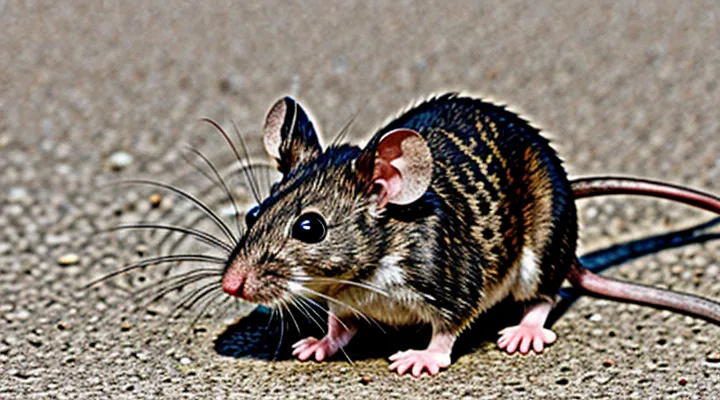
The common house mouse (Mus musculus) exhibits a short, fine fur covering the body, with longer guard hairs on the dorsal surface. Coloration varies from gray to brown, reflecting melanin distribution within the cortex. Guard hairs possess a thicker cortex and a more pronounced cuticle, providing resistance to abrasion, while the underfur consists of finer fibers that trap air for heat retention. The mouse’s pelage follows a seasonal molt, shedding denser winter fur in favor of a lighter summer coat.
Fur characteristics reinforce the mouse’s placement within the class Mammalia and the order Rodentia. Presence of true hair, mammary glands, and a single set of incisors align with mammalian diagnostic criteria. Within rodents, the combination of a modestly sized body, continuously growing incisors, and a distinctive pelage pattern differentiates mice from other mammalian groups such as lagomorphs, which possess longer ears and a different fur structure. Consequently, the mouse’s hair—specifically its fur—serves as a reliable morphological marker for its taxonomic classification.
Live Birth
Mice belong to the class Mammalia, a group defined by the presence of live birth. In mammals, embryos develop inside the mother’s uterus and receive nourishment through a placenta, distinguishing them from oviparous vertebrates that lay eggs.
Live birth, or viviparity, involves several physiological adaptations:
- Development of a uterus that provides a protected environment for the embryo.
- Formation of a placenta that mediates nutrient, gas, and waste exchange between mother and fetus.
- Hormonal regulation that sustains gestation and initiates parturition.
These features are central to mammalian reproductive strategy. The mouse’s reproductive system exhibits all typical mammalian traits: a well‑developed uterus, a chorioallantoic placenta, and a gestation period of approximately 19–21 days, after which fully formed offspring are delivered.
Because viviparity is exclusive to mammals among vertebrates, the presence of live birth unequivocally places the mouse within the mammalian biological group. This classification aligns with other mammalian characteristics such as hair, three middle ear bones, and mammary glands.
Mammary Glands
Mice belong to the class Mammalia, a group distinguished by the presence of mammary glands. These glands are specialized skin appendages that synthesize and secrete milk to nourish offspring. In mice, the mammary system consists of five pairs of glands located along the ventral midline, each comprising a ductal network, secretory alveoli, and a surrounding stromal capsule.
The development of mouse mammary glands follows a well‑characterized sequence: embryonic placode formation, bud outgrowth, branching morphogenesis, and functional differentiation during pregnancy. Hormonal regulation involves estrogen, progesterone, prolactin, and growth factors, which together drive alveolar proliferation and milk protein synthesis.
Key functional attributes include:
- Production of casein, whey proteins, and lipids essential for neonatal growth.
- Ability to undergo involution, a reversible remodeling process after weaning.
- Accessibility for experimental manipulation, making the mouse a primary model for studying lactation biology and breast cancer.
Understanding mammary gland physiology in mice clarifies why this organ serves as a defining trait of the mammalian lineage and provides a foundation for comparative studies across vertebrates.
Specialized Teeth
Mice are mammals belonging to the order Rodentia, a group defined largely by a distinctive dental architecture. The rodent dentition consists of a single pair of ever‑growing incisors in each jaw, accompanied by a reduced set of cheek teeth that lack enamel on the occlusal surface.
The incisors exhibit several specialized features:
- Chisel‑shaped crowns adapted for gnawing.
- Enamel restricted to the labial (front) surface, creating a self‑sharpening edge as dentine wears away.
- Continuous eruption that compensates for wear, maintained by a periodontal ligament and a growth zone at the root apex.
- Absence of true roots, allowing unrestricted vertical movement.
Molar teeth in mice are brachydont, with low crowns and a simple cusp pattern optimized for grinding plant material and occasional insects. The dental formula for a typical mouse is 1.0.0.3/1.0.0.3, reflecting the loss of premolars that characterizes most rodents.
These dental characteristics serve as primary criteria for placing mice within Rodentia. The combination of ever‑growing incisors with a specific enamel distribution and a reduced molar complement distinguishes rodents from other mammalian orders, confirming the mouse’s classification as a rodent mammal.
Order and Family Classification
The Rodentia Order
Defining Features of Rodents
Mice are members of the order Rodentia, a mammalian group distinguished by several anatomical and physiological traits. The most conspicuous characteristic is the presence of a single pair of continuously growing incisors in each jaw. These teeth possess a hard enamel front surface and a softer dentine rear, creating a self‑sharpening edge that enables persistent gnawing.
Key defining features of rodents include:
- Dental formula: I 1/1, C 0/0, P 0/0, M 3/3 (total of 16 teeth).
- Incisors that erupt throughout life and require constant wear.
- Absence of canines, resulting in a diastema separating incisors from molars.
- Highly developed masseter muscles that facilitate powerful biting.
- Skull morphology with a relatively short rostrum and enlarged auditory bullae.
- Rapid reproductive cycle: short gestation, large litter sizes, early sexual maturity.
These attributes collectively separate rodents from other mammalian orders and confirm that a mouse, possessing the described dental and cranial structures, belongs unequivocally to this taxonomic group.
Global Distribution
The mouse, a member of the order Rodentia and family Muridae, originated in the arid and temperate zones of South‑East Asia. Fossil evidence and genetic analyses locate its ancestral populations in regions that now comprise parts of China, India, and surrounding countries.
Human activity has expanded the species far beyond its native range. Accidental transport in grain shipments, stowaway rodents on ships, and deliberate introductions for laboratory use have established feral populations on every inhabited continent except Antarctica. The species thrives in urban, suburban, and agricultural environments where food resources are abundant and shelter is readily available.
Current distribution can be summarized as follows:
- North America: widespread from Canada to Mexico, predominating in cities and farms.
- South America: present in most countries, especially in coastal and high‑density human settlements.
- Europe: established in all nations, often coexisting with native rodent species.
- Africa: common in northern and sub‑Saharan regions, particularly in urban centers.
- Asia: native and introduced populations across the continent, from the Himalayas to the Middle East.
- Oceania: found in Australia, New Zealand, and numerous Pacific islands, largely as an introduced species.
The mouse’s global presence results from its high reproductive rate, dietary flexibility, and close association with human habitats, which together enable rapid colonization of new territories.
The Muridae Family
Common Mouse Genera
Mice belong to the order Rodentia, family Muridae, and are classified into several well‑studied genera. Each genus comprises species adapted to distinct ecological niches and geographic regions.
- Mus – the true mice, including the widely used laboratory species Mus musculus. Members are small, nocturnal, and inhabit diverse habitats from grasslands to human settlements across Europe, Asia, and Africa.
- Apodemus – the field or wood mice found primarily in Europe and parts of Asia. Species such as Apodemus sylvaticus prefer woodland edges and display a more robust body compared with Mus.
- Peromyscus – the deer mice of North America. Species like Peromyscus maniculatus occupy deserts, forests, and alpine zones, showing high adaptability and a tendency toward larger ears.
- Rattus – while commonly called rats, some taxa, such as Rattus rattus (black rat), exhibit mouse‑like dimensions and behaviors, especially in island ecosystems.
- Micromys – the harvest mouse, represented by Micromys minutus in Eurasia. It is the smallest murid, specialized for tall grasses and reed beds.
- Onychomys – the grasshopper mouse of North America, noted for its carnivorous diet and aggressive predatory habits.
These genera illustrate the taxonomic breadth of murid rodents commonly referred to as mice. Their classification reflects morphological traits, genetic relationships, and ecological specializations, providing a clear framework for identifying mouse species within the broader biological group.
Evolutionary Adaptations
Mice belong to the class Mammalia and the order Rodentia. Their evolutionary history has produced a suite of adaptations that distinguish this lineage from other vertebrates and reinforce its placement within these taxonomic groups.
Morphological traits include continuously growing incisors, a skull structure that supports powerful gnawing muscles, and a compact body plan that facilitates rapid movement through narrow burrows. These features are hallmarks of rodent evolution and differentiate mammals with specialized herbivorous dentition from carnivorous or omnivorous relatives.
Physiological adaptations enhance survival in diverse environments. Mice exhibit high reproductive rates, a short gestation period, and the ability to enter torpor during extreme temperatures. Their metabolic flexibility allows efficient processing of seeds, grains, and occasional insects, reflecting the omnivorous diet typical of many small mammals.
Key behavioral adaptations reinforce ecological success:
- Burrowing and nest-building provide shelter and temperature regulation.
- Social structures ranging from solitary to hierarchical groups support cooperative foraging and predator avoidance.
- Exploratory learning and memory enable rapid assessment of new food sources and habitats.
Collectively, these evolutionary developments confirm the mouse’s classification among mammals and specifically within the rodent order, illustrating how anatomical, physiological, and behavioral modifications have shaped its niche and taxonomic identity.
Species and Subspecies Differentiation
Common House Mouse
Scientific Name: «Mus musculus»
Mus musculus, commonly known as the house mouse, is classified within the hierarchical system of biological taxonomy. The species belongs to the following groups:
- Kingdom: Animalia – multicellular eukaryotic organisms that ingest organic material.
- Phylum: Chordata – animals possessing a notochord at some stage of development.
- Class: Mammalia – warm‑blooded vertebrates with hair and mammary glands.
- Order: Rodentia – mammals characterized by continuously growing incisors.
- Family: Muridae – the largest family of rodents, encompassing true mice and rats.
- Genus: Mus – a group of small, nocturnal rodents.
- Species: Mus musculus – the specific epithet designating the house mouse.
This taxonomic placement identifies the mouse as a mammalian rodent within the Muridae family, confirming its membership in the order Rodentia. The scientific name precisely locates the organism in the global classification scheme used by biologists.
Behavioral Traits
Mice are small, warm‑blooded vertebrates classified within the order Rodentia, a subgroup of mammals. Their behavioral repertoire provides clear evidence of this taxonomic placement.
- Primarily nocturnal; activity peaks during darkness.
- Socially organized in colonies with defined hierarchies.
- Engage in extensive self‑grooming, reflecting mammalian skin and fur maintenance.
- Exhibit opportunistic foraging, using tactile whiskers to locate food.
- Demonstrate rapid learning and memory formation in maze and conditioning tasks.
- Defend territories using scent marking and ultrasonic vocalizations.
- Communicate through a range of vocal frequencies, including ultrasonic calls not heard by humans.
Other Mouse Species
Field Mice
Field mice are small, nocturnal rodents that inhabit grasslands, forests, and agricultural areas across temperate regions. Their anatomy, reproductive strategy, and ecological role align them with the mammalian order of rodents.
- Kingdom: Animalia – multicellular, heterotrophic organisms.
- Phylum: Chordata – presence of a dorsal nerve cord and notochord during development.
- Class: Mammalia – hair-covered bodies, three‑bone middle ear, and mammary glands.
- Order: Rodentia – continuously growing incisors adapted for gnawing.
- Family: Muridae – the largest rodent family, characterized by a robust skull and a short tail.
- Genus: Apodemus – includes the common field mouse, distinguished by a dorsal stripe and a preference for open habitats.
Field mice possess the hallmark mammalian traits of endothermy and live birth, while their incisors and gnawing behavior confirm placement within Rodentia. The combination of these characteristics solidifies their classification as members of the Muridae family, specifically the genus Apodemus, within the broader mammalian clade.
Deer Mice
Deer mice belong to the order Rodentia, which comprises mammals characterized by continuously growing incisors. Within this order they are placed in the family Cricetidae, a diverse group that includes voles, lemmings, and New World rats. The genus Peromyscus contains the species most commonly referred to as deer mice, with Peromyscus maniculatus being the most widespread.
Key taxonomic levels for deer mice are:
- Class: Mammalia
- Order: Rodentia
- Family: Cricetidae
- Subfamily: Neotominae
- Genus: Peromyscus
- Species: P. maniculatus (and related species)
Morphologically, deer mice differ from the common house mouse (Mus musculus) in tail length, fur coloration, and cranial features. Their tails are typically longer than the body and lack the scaly texture seen in house mice. The dorsal pelage displays a brownish hue with a distinct white underbelly, a pattern that aids identification in the field.
Ecologically, deer mice inhabit a broad range of North American environments, from coniferous forests to arid shrublands. They are omnivorous, consuming seeds, insects, and plant material, and serve as a primary prey item for numerous predators, including owls and snakes. Their adaptability to diverse habitats underpins their extensive geographic distribution.
In summary, deer mice are classified as rodents within the Cricetidae family, specifically the Peromyscus genus, and exhibit distinct anatomical and ecological traits that separate them from other mouse species.
The Significance of Mouse Classification
Role in Ecosystems
Prey Animals
The mouse is a small mammalian rodent classified in the order Rodentia, family Muridae. Within ecological hierarchies it occupies the primary consumer level, feeding on seeds, grains, and insects, and consequently serves as a prey species for a wide range of predators.
As prey, the mouse exhibits traits that increase vulnerability and survivability: rapid breeding cycles, nocturnal activity, and cryptic coloration. These characteristics sustain predator populations and maintain energy flow through ecosystems.
Typical predators of mice include:
- Raptors such as hawks and owls
- Snakes, especially colubrids and pit vipers
- Carnivorous mammals like foxes, weasels, and domestic cats
- Amphibians, notably large salamanders
- Arthropods, for example large spiders and centipedes
Through these predator‑prey interactions, mice contribute to regulating community structure, influencing species diversity, and supporting trophic dynamics.
Seed Dispersal
Mice belong to the class Mammalia, order Rodentia, and family Muridae. Their anatomical features—hair, three‑chambered heart, and mammary glands—place them firmly within the mammalian lineage, distinguishing them from reptiles, birds, and amphibians.
In seed dispersal, mice act as both consumers and transporters. When a mouse gathers seeds for storage, it often buries them in shallow caches. Some cached seeds remain uneaten, later germinating in the soil. This behavior contributes to plant colonization beyond the immediate parent plant’s vicinity.
Key aspects of mouse‑mediated seed dispersal include:
- Caching: Temporary burial of seeds for future consumption.
- Scatter hoarding: Distribution of multiple caches across a habitat, increasing seed spread.
- Secondary dispersal: Predators or other animals retrieve cached seeds, moving them further.
- Germination enhancement: Burial protects seeds from predators and environmental extremes, improving seedling survival rates.
Mice’s role in seed movement complements their taxonomic identity as rodents, linking mammalian behavior to ecological processes that shape plant community structure.
Research and Medical Relevance
Genetic Similarities to Humans
Mice are classified as mammals within the order Rodentia, a placement confirmed by morphological traits and phylogenetic analysis. Their genome shares a high degree of homology with that of humans, providing a robust basis for comparative studies.
Key genetic parallels include:
- Approximately 85 % of protein‑coding genes are conserved between mouse and human, enabling functional inference across species.
- Orthologous gene families exhibit similar regulatory elements, allowing transcriptional networks to be mapped with comparable accuracy.
- Syntenic blocks cover more than 70 % of the mouse genome, preserving gene order and facilitating cross‑species genome alignment.
These similarities justify the mouse as a primary model for investigating human disease mechanisms, drug metabolism, and developmental biology. The extensive conservation of disease‑related genes, such as those involved in cancer, neurodegeneration, and metabolic disorders, permits the translation of experimental findings to human clinical contexts with measurable reliability.
Model Organisms
Model organisms are species selected for detailed study because they combine experimental tractability with relevance to broader biological questions. The mouse (Mus musculus) exemplifies this approach, offering a vertebrate system that is genetically manipulable, short‑lived, and physiologically comparable to humans.
Taxonomically, the mouse belongs to the kingdom Animalia, phylum Chordata, class Mammalia, order Rodentia, family Muridae, and genus Mus. This placement identifies the mouse as a mammal and a rodent, distinguishing it from invertebrate and non‑mammalian model species such as fruit flies or zebrafish.
Key attributes that justify the mouse’s status as a model organism include:
- Genome fully sequenced and amenable to targeted editing (CRISPR, knockout technologies).
- Well‑characterized immune system, facilitating translational research in disease models.
- Availability of extensive inbred strains and transgenic lines for reproducible experiments.
- Compatibility with high‑throughput phenotyping platforms and standardized protocols.
These features align the mouse’s biological group with the requirements of modern biomedical research, making it a cornerstone species for investigating genetics, development, neurobiology, and pathology.