
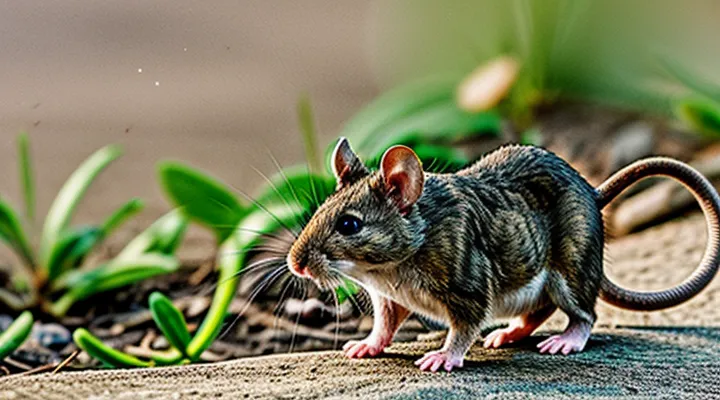
Dietary Habits and Their Ecosystem Impact
Herbivory: Seed Dispersal and Plant Succession
Mice consume a wide range of seeds and fruits, converting plant material into energy while influencing vegetation dynamics. Their foraging behavior reduces seed predation pressure on dominant species and creates opportunities for less competitive plants to establish. By selectively harvesting seeds, mice modify the composition of the seed bank, directly affecting which species germinate after disturbances.
During seed transport, mice carry edible portions to nests or storage sites, where residual seeds may be discarded or forgotten. This accidental deposition results in spatially heterogeneous seed distribution, promoting colonization of new microsites. The process supports several stages of plant succession:
- Dispersal of pioneer species into open or recently disturbed patches.
- Introduction of mid‑successional species into developing understory layers.
- Facilitation of late‑successional taxa by creating microsites with reduced competition.
Through these actions, mice contribute to the turnover of plant communities, enhancing biodiversity and stabilizing ecosystem functions. Their herbivorous activities thus intersect with seed dispersal mechanisms, shaping the trajectory of vegetation recovery and succession.
Insectivory: Pest Control and Population Regulation
Mice consume a wide range of arthropods, directly reducing numbers of insects that damage crops, stored food, and timber. By preying on seed‑eating beetles, grasshoppers, and moth larvae, they lower the incidence of plant loss and diminish the need for chemical interventions. Their foraging activity also curtails populations of disease‑carrying vectors such as fleas and ticks, limiting pathogen transmission to humans and livestock.
The regulatory effect of mouse insectivory extends to community dynamics. Removing dominant herbivorous insects allows less competitive plant species to establish, enhancing biodiversity. Simultaneously, predation pressure on opportunistic pest species prevents population spikes that could trigger secondary outbreaks.
Key outcomes of mouse‑driven pest control include:
- Decreased reliance on pesticides, reducing environmental contamination.
- Stabilized grain and stored‑product inventories through continuous low‑level consumption of larvae.
- Lowered incidence of vector‑borne diseases in agricultural and residential settings.
- Promotion of plant heterogeneity, supporting pollinators and soil organisms.
Overall, mouse predation on insects serves as a natural mechanism for maintaining equilibrium within terrestrial ecosystems, contributing to sustainable resource management and health protection.
Prey Species: A Cornerstone of Food Webs
For Predators: Sustaining Diverse Carnivore Populations
Mice provide a reliable, high‑reproduction food source that stabilizes carnivore populations across habitats. Their abundance fluctuates with seasonal cycles, offering predators predictable prey during breeding periods and supporting year‑round survival. This dynamic reduces the risk of starvation for species that depend on small mammals for energy intake.
Predators that rely heavily on mice include:
- Red foxes (Vulpes vulpes) – use mice to supplement diets during pup rearing.
- Barn owls (Tyto alba) – achieve high reproductive success when mouse densities rise.
- American martens (Martes americana) – maintain territory size with mouse availability.
- River otters (Lontra canadensis) – supplement fish diet with terrestrial rodents during low aquatic prey periods.
Mice also influence predator community structure. High mouse productivity allows multiple carnivore species to coexist by reducing direct competition for larger prey. When mouse numbers decline, specialist predators may experience reduced breeding output, leading to population contraction and potential trophic cascades.
Conservation measures that sustain mouse habitats—such as preserving grasslands, hedgerows, and seed‑producing vegetation—directly benefit carnivore diversity. Management practices that avoid broad‑scale rodent eradication preserve the prey base essential for maintaining balanced predator assemblages.
Scavengers: Nutrient Cycling and Ecosystem Health
Mice routinely consume dead organisms, plant remnants, and discarded material, positioning them as effective scavengers across diverse habitats. Their opportunistic foraging rapidly removes organic waste that would otherwise accumulate on the ground surface.
Through consumption and subsequent excretion, mice convert complex tissues into feces and urine rich in nitrogen, phosphorus, and trace minerals. These by‑products integrate into the soil matrix, where microbial communities further mineralize them, making nutrients readily available to plants. The process shortens the decomposition timeline and sustains a continuous flow of essential elements.
The resulting nutrient influx enhances soil fertility, supports primary productivity, and stabilizes microbial diversity. In turn, healthier vegetation structures provide shelter and food for a broad spectrum of organisms, reinforcing overall ecosystem resilience. Additionally, by reducing carcass exposure, mice limit opportunities for pathogen proliferation, contributing to disease regulation within the community.
Key contributions of mouse scavenging include:
- Rapid removal of carrion and organic debris
- Transformation of high‑energy tissue into bioavailable nutrients
- Stimulation of microbial activity that accelerates mineralization
- Promotion of plant growth through enriched soil chemistry
- Mitigation of pathogen reservoirs by decreasing waste persistence
Habitat Modifiers: Engineering the Environment
Burrowing: Soil Aeration and Water Infiltration
Mice construct extensive tunnel networks that intersect soil layers, creating continuous channels of open space. These channels disrupt compacted zones, allowing atmospheric gases to move deeper into the ground profile.
Soil aeration resulting from mouse burrows increases oxygen availability for root systems and aerobic microorganisms. Enhanced oxygen diffusion accelerates organic matter decomposition, releasing nutrients in forms readily absorbed by plants.
Water infiltration improves as burrow passages expand the effective pore space. Rainfall and meltwater travel through the tunnels, reaching deeper horizons that would otherwise remain dry. This process diminishes surface runoff, promotes uniform moisture distribution, and reduces the risk of erosion.
Key ecological outcomes of mouse‑induced soil modification:
- Faster nutrient turnover supporting higher primary productivity
- More stable soil structure that resists compaction
- Increased water retention benefiting drought‑prone vegetation
- Creation of microhabitats for invertebrates and predators
Collectively, these physical changes enhance ecosystem resilience and maintain functional soil processes.
Nest Building: Providing Shelter for Other Species
Mice construct nests from grasses, leaves, shredded plant material, and occasional animal fibers. The structures are compact, insulated, and positioned in burrows, under logs, or within dense vegetation. Construction techniques vary with species, season, and habitat, resulting in nests that maintain stable temperature and humidity.
These nests serve as opportunistic shelters for a range of organisms that lack the ability or resources to build their own refuges. Small arthropods, such as beetles and spiders, occupy vacant chambers to escape predators and extreme weather. Juvenile amphibians, including salamanders, use the moist microenvironment for short-term refuge during migration. Certain bird species, notably ground-nesting passerines, may lay eggs in abandoned mouse burrows where ground cover offers concealment.
Benefits extend to the broader community through increased survival rates of nest‑associated species. Higher recruitment of insects and amphibians contributes to pest regulation and nutrient cycling. The presence of mouse nests also creates microhabitats that support fungal growth, enhancing decomposition processes.
Key groups that regularly exploit mouse nests include:
- Ground beetles (Carabidae)
- Harvestmen (Opiliones)
- Salamander larvae (Plethodontidae)
- Ground‑nesting songbirds (e.g., sparrows, warblers)
Indicators of Environmental Health
Bioindicators: Responding to Habitat Change
Mice inhabit virtually every terrestrial biome, exposing them to a wide range of environmental pressures. Their short life cycles, high reproductive rates, and sensitivity to microhabitat alterations allow rapid detection of ecosystem change.
Effective bioindicators must exhibit measurable responses, be abundant enough for statistical analysis, and occupy multiple trophic levels. Mice satisfy these criteria: population density fluctuates with resource availability, stress hormones rise in polluted air or water, and genetic diversity shifts when corridors are disrupted.
Examples of habitat change captured by mouse monitoring:
- Decline in forest understory diversity after logging, reflected in reduced species richness and altered foraging patterns.
- Increased pesticide residues in agricultural fields, evidenced by elevated liver enzyme activity and reproductive impairment.
- Rising temperature extremes, leading to altered breeding season timing and expanded range northward.
- Urban expansion, causing fragmented populations with lower genetic heterozygosity.
Data derived from mouse surveys inform land‑use planning, pollutant mitigation, and climate adaptation strategies. Early warnings derived from rodent health metrics enable targeted interventions before irreversible damage occurs to broader community structures.
In summary, mice provide a cost‑effective, responsive gauge of habitat integrity, reinforcing their relevance to ecosystem assessment and management.
Population Dynamics: Reflecting Ecosystem Stress
Mice populations fluctuate rapidly in response to changes in resource availability, predation pressure, and disease incidence. High reproductive capacity allows numbers to surge when food is abundant, while sharp declines follow increases in predator density or habitat degradation. These oscillations serve as measurable signals of ecosystem stress, because the underlying drivers affect multiple trophic levels simultaneously.
Key drivers of mouse population dynamics include:
- Food supply: Seasonal seed bursts or crop residues boost breeding success; scarcity limits litter size.
- Predator activity: Growth in raptor, snake, or carnivore populations raises mortality rates, producing immediate population dips.
- Pathogen load: Outbreaks of hantavirus or ectoparasite infestations suppress reproduction and increase death rates.
- Habitat alteration: Urban expansion, logging, or fire modify shelter availability, influencing survival odds.
- Climate variability: Temperature extremes and precipitation shifts affect both food production and predator behavior.
Monitoring mouse abundance through live‑trapping grids, remote cameras, and genetic sampling provides early warnings of ecological imbalance. Rapid population growth may indicate overabundant primary production, while sudden crashes often precede trophic cascades or habitat loss. Integrating these data with vegetation surveys and predator counts yields a comprehensive picture of ecosystem health.
Management strategies that stabilize mouse populations—such as maintaining heterogeneous habitats, controlling invasive predators, and preserving natural fire regimes—help mitigate stress signals. By tracking population dynamics, researchers can anticipate broader ecological shifts before they manifest in more visible components of the environment.
Human Interaction and Conservation
Agricultural Impact: Pests and Benefits
Mice interact with cultivated lands through feeding, burrowing, and seed dispersal, producing measurable outcomes for farmers.
- Grain kernels, vegetable seedlings, and root crops suffer direct loss when mice consume or damage tissue.
- Burrow systems destabilize soil structure, increasing erosion risk and complicating mechanical planting.
- Stored produce experiences contamination from urine and feces, raising spoilage rates and health concerns.
- Populations expand rapidly under favorable conditions, leading to exponential damage cycles.
Conversely, mice contribute to agricultural systems in several ways.
- Predation on insect larvae and weed seeds reduces competition for crops and lowers pesticide demand.
- Their foraging activity aerates topsoil, enhancing water infiltration and root penetration.
- Fecal material enriches organic matter, supporting microbial activity and nutrient cycling.
- Presence attracts raptors and barn owls, which provide secondary biological control of larger pest species.
Balancing these opposing effects requires integrated management that mitigates loss while preserving ecological services.
Disease Vectors: Understanding Transmission Pathways
Mice frequently serve as reservoirs for pathogens that affect wildlife, livestock, and humans. Their high reproductive rate and adaptability to diverse habitats increase contact with other species, creating opportunities for disease transmission.
Key transmission pathways include:
- Direct contact: bites, scratches, or skin-to-skin interaction transfers bacteria and viruses.
- Contaminated excreta: urine and feces introduce hantavirus, leptospira, and salmonella into soil, water, and food sources.
- Indirect vectors: fleas, ticks, and mites acquire pathogens from mice and later infect new hosts.
- Aerosolization: dried droppings become airborne particles that can be inhaled, spreading respiratory infections.
- Predation and scavenging: predators ingest infected tissue, potentially acquiring zoonotic agents.
Understanding these mechanisms clarifies why mouse populations influence disease dynamics across ecosystems. Monitoring rodent density, habitat overlap, and vector activity provides data essential for managing outbreak risks and preserving ecological balance.
Conservation Efforts: Balancing Control and Protection
Mice contribute to seed dispersal, soil aeration, and serve as prey for a wide range of predators. Their populations influence trophic dynamics, making their management a matter of ecological stability.
Conservation programs aim to preserve native mouse species while limiting the impact of invasive or overabundant populations. Effective strategies combine habitat protection, population monitoring, and targeted control measures.
Key components of a balanced approach include:
- Protection of natural habitats through land‑use policies and restoration projects.
- Monitoring of population trends using live‑trap surveys and genetic sampling.
- Implementation of humane control methods—such as exclusion fencing and fertility regulation—in areas where mouse densities threaten crops or native biodiversity.
- Public education campaigns that explain the ecological functions of mice and the rationale behind management actions.
Coordinated efforts require collaboration among wildlife agencies, agricultural stakeholders, and research institutions. By aligning protection of beneficial mouse communities with precise control of problematic groups, managers maintain ecosystem services while preventing economic loss and biodiversity decline.